/pre-wedding-photoshoot
What to wear for a pre-wedding photoshoot in Mekong Delta
Pre-wedding shoots in the Mekong Delta suit lightweight, flowing outfits that photograph well in the region's soft, humid dawn light and won't cling in afternoon heat. Traditional ao dai works beautifully on water—the fabric catches light and the silhouette reads clearly in wide shots—but modern couples also choose linen, cotton or silk blouses with tailored trousers or skirts. The Mekong's best light runs 5:30–7:00 am (floating markets) and 4:30–6:00 pm (rice fields, golden hour); avoid midday glare. Cáo Studio runs pre-wedding shoots in Hanoi and Ho Chi Minh City; if you're based in Saigon, we can advise on timing and outfits for a Mekong session with a local photographer. Check the dry season (Dec–Apr) for the clearest water and colours; May–Nov brings humidity and afternoon downpours that complicate logistics.
The Mekong Delta stretches across nine provinces in the south of Vietnam, a landscape of narrow canals, stilted villages, and floating gardens that holds water like a mirror at dawn. Pre-wedding couples choose it for the raw, rural light and the sense of stepping into a world few tourists see. But the region's heat, water access and seasonal shifts mean outfit choices matter far more than they do in air-conditioned Hanoi studios.
This guide covers what fabrics and styles work, how light changes through the year, and how to find and vet a photographer who knows the Delta's rhythms—because the best pre-wedding frames depend on both what you wear and who's behind the camera.
Why does the Mekong's light demand different outfit choices than Hanoi or Saigon shoots?
The Delta has no high buildings, no shade. Light bounces off water all morning, creating a soft, diffused glow that flatters pale fabrics and detail work—embroidery, beading, texture—but also bleaches muted tones. Dark colours (navy, black, deep burgundy) read well in wide landscape shots, where they anchor the frame against the pale sky. Lightweight fabrics are essential: cotton and linen don't cling to skin in 28–32°C heat, and they catch the morning light without looking heavy or wrinkled. Silk and ao dai silk move in the breeze, creating shapes the camera sees. Avoid structured jackets, tight sleeves and anything that will show sweat in the first hour of shooting. The water's reflective surface also means bright white and pale pastels can overexpose in close-up portraits; a warm cream or soft gold reads better. Test your outfit in natural window light before the shoot day—if it looks dull indoors, the Delta's diffused dawn light will flatten it further.
📸 Book on WhatsApp — pre-wedding photoshoot
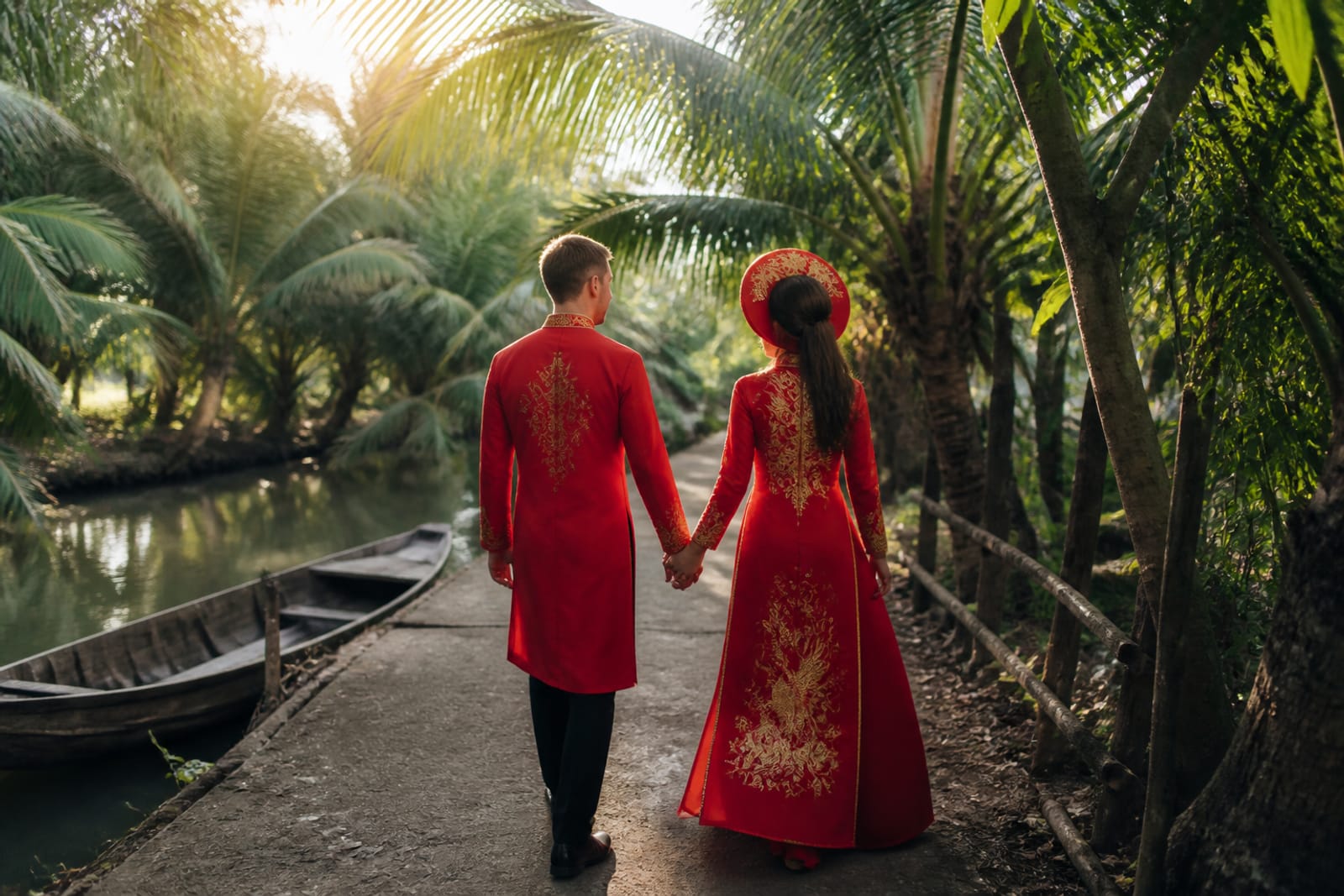
Should you wear an ao dai or Western dress for a Mekong pre-wedding shoot?
Both work, but they serve different moods and demand different logistics. An ao dai—the traditional Vietnamese tunic over trousers—reads beautifully in wide shots on water: the long lines draw the eye, the fabric moves in the breeze, and the silhouette photographs distinctly against flat horizons. The contrast between the couple's outfits (one in ao dai, one in Western suit) also creates a visual hierarchy that editorial photographers love. However, an ao dai requires a dresser or your partner's help to adjust after sitting in a boat, and heat can wilt the fabric if it's silk. Western pre-wedding dresses (tea-length, A-line, or tailored separates) move faster and suit couples who want to walk, run or climb into small boats without fussing. A linen or cotton wedding dress photographs well in the Delta; avoid heavy satin or tulle that will stick to skin or drag in canal water. If you're renting locally, confirm the shop has your size and a backup—Delta towns have limited inventory. If you're flying in with your own dress, pack it in a garment bag and plan an extra hour to steam and air it the night before. The choice hinges on how much time you want to spend standing still versus moving with your photographer through markets and fields.
How does the Mekong's dry and wet seasons shape your outfit and shoot timing?
The Mekong's dry season (Dec–Apr) offers clear skies, stable water levels, and the cleanest light for pre-wedding shoots. Water reflects the sky without the brown sediment of the flood season, colours stay saturated, and morning mist is thinner and more photogenic. Humidity is lower; your outfit will hold its shape through a 3–4 hour shoot. Wet season (May–Nov) brings afternoon downpours, higher water levels (flooding some lower-lying paths), and thicker morning mist that softens light but also obscures detail. Late October through November sees typhoons; avoid booking then. If you're shooting in the wet season, plan for two outfits—one in a quick-dry fabric (linen, technical cotton) in case of rain—and brief your photographer to shoot fast, moving indoors or under stilted houses if a storm rolls through. Humidity peaks Jun–Sep; stick to breathable cotton, linen or lightweight silk, avoid synthetic blends that trap sweat. The trade-off: wet season light is often softer and moister, which some couples and photographers prefer for romantic, diffused portraits. Check the exact province and ask your photographer which weeks are safest in your chosen month.
| Aspect | Dry Season (Dec–Apr) | Wet Season (May–Nov) | Why it matters for outfits |
|---|---|---|---|
| Water clarity | Reflective, saturated colour | Brown sediment, higher levels | Light colours (pale ao dai, cream dress) work best dry season |
| Morning mist | Thin, quick to burn off | Dense, lasts until 7–8 am | Mist softens detail; wet season suits bold, simple silhouettes |
| Humidity | 60–75% | 75–95% | Dry season: silk, structured fabrics hold shape; wet: breathable cotton only |
| Heat midday | 26–28°C, manageable | 28–32°C, intense | Dry season allows longer shoots; wet season: dawn only, or indoor/water work |
| Rain risk | Rare | Frequent afternoon showers (May–Nov; worst Oct–Nov) | Dry season: normal fabrics; wet: pack quick-dry backup outfit |
| Best shooting windows | 5:30–7:00 am, 4:30–6:30 pm | 5:30–6:30 am only (before storms) | Outfit must handle dawn-only sessions in wet season |
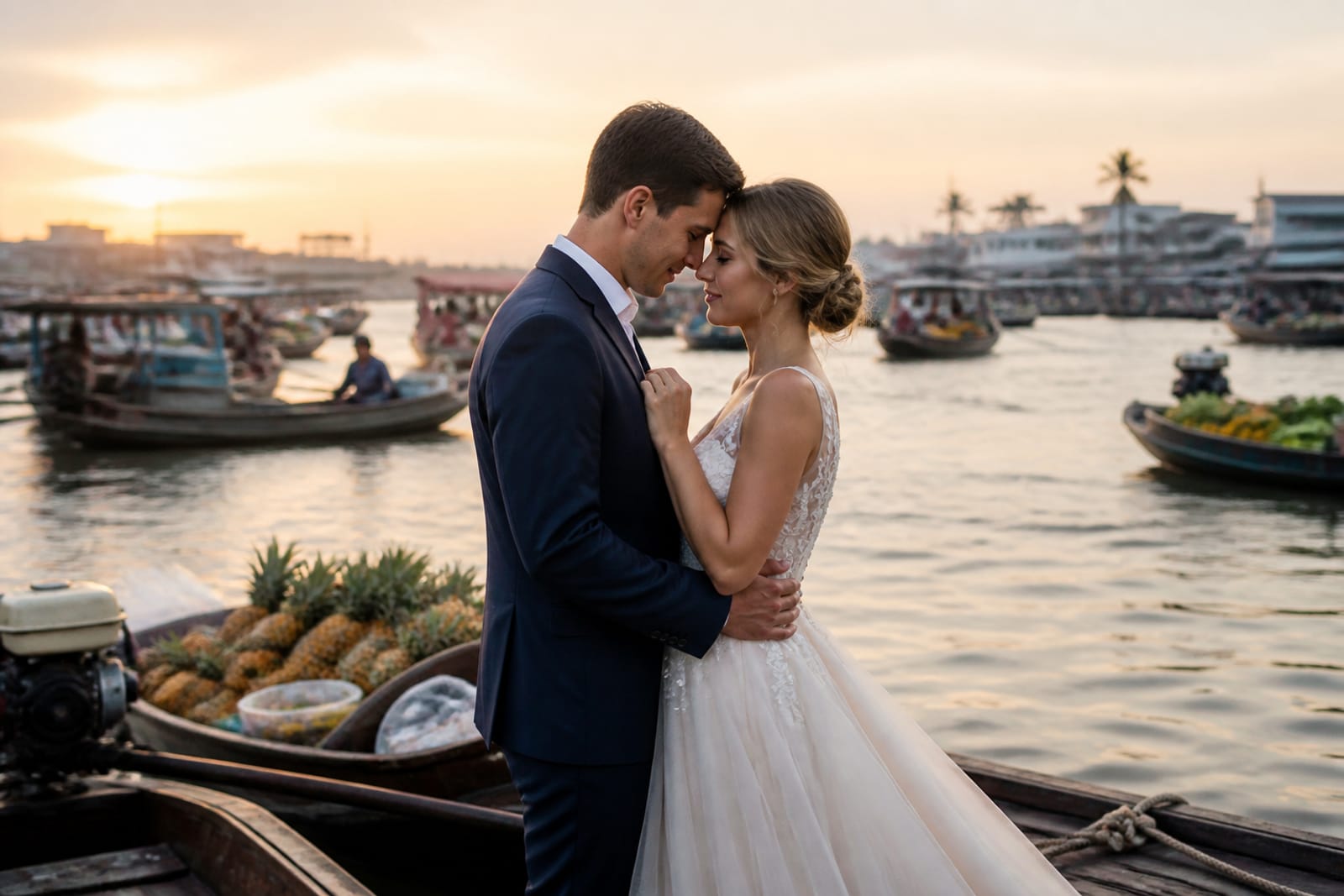
What fabrics and colours photograph best against water and rice fields?
Water and pale sky form the background for most Mekong shots, so your outfit's contrast and texture matter more than at studio shoots. Dark, saturated colours (deep green, navy, charcoal, burgundy) read clearly in wide landscape frames—they sit in front of the pale sky, not blend into it. Patterns (fine stripes, subtle checks, small florals) add visual interest in close shots but can vibrate or muir on camera if they're too dense; test any pattern in daylight before committing. Solid colours with interesting texture (linen with a weave, structured cotton, raw silk) photograph better than flat synthetics. Gold, bronze and warm metallics reflect light and read as elegant without the harshness of silver. Avoid pure white, which overexposes in water's reflected light; a warm cream or ivory sits softer. Fabrics must breathe: linen (wrinkles naturally, reads as authentic), cotton (holds colour, dries fast if wet), silk (moves beautifully, needs careful packing and pressing), cotton-linen blends (balance of movement and structure). Synthetic blends trap sweat and photograph shiny. Jewellery should be minimal and warm-toned; silver can create lens flare off water, and large statement pieces distract in landscape wide shots. A simple bracelet, small earrings, or a ring read better than clusters of metal.
How do you find and vet a local Mekong Delta photographer for your pre-wedding shoot?
The Mekong Delta has few dedicated pre-wedding studios; most couples hire freelancers or small teams based in Can Tho, Long Xuyen or My Tho (the largest towns). Ask your hotel or villa for local photographer recommendations—properties used to hosting couples often have trusted contacts. Check their portfolio for: (1) exposure and colour accuracy in water/morning light (not over-brightened or with blown-out skies), (2) poses that feel natural and movement-based, not stiff monument shots, (3) consistency in editing style across 20+ images, (4) wide shots that show the landscape, not just close-ups. Request samples from the exact locations you want—floating market, rice field at sunrise, stilted village—because light and crowds vary by spot. Confirm they know the market opening times (usually 4:30–6:00 am, busiest before 7:00 am), have boats booked, and carry backup batteries (humidity drains power fast). Ask how they deliver photos: raw files, or edited JPGs? How long does editing take? What if weather cancels the shoot—do they reschedule free, or charge a partial fee? Clarify outfit changes—do they budget time for you to dress/undress on the boat, or do they expect you to arrive in your first outfit? Vetting a local photographer takes more work than booking Cáo Studio in Hanoi or Saigon, but it also means shorter logistics and a photographer who knows the water, seasons and light intimately. If you're based in Ho Chi Minh City or Saigon, Cáo Studio can advise on pre-wedding timing and outfit planning and recommend a trusted local partner.
What should you check before booking your Mekong pre-wedding shoot?
Confirm the exact location, light window and rain plan. Floating markets open at dawn (ask which market—some are touristy, others quieter). Rice fields photograph best 5:30–7:00 am and 4:30–6:30 pm; midday is flat and harsh. If your photographer doesn't mention these times, they may not know the Delta's rhythms. Ask: "If it rains, do we reschedule or pivot indoors?" and "Which backup spots do you use if the main location floods?" Verify outfit logistics. How much time is budgeted for outfit changes? If you're wearing two looks (say, ao dai at dawn, Western dress at golden hour), confirm the photographer has a plan—a boat stop, a private room in a stilted house, or a pre-positioned second outfit. Check equipment and backup. Humidity and water spray corrode electronics; ask if the photographer carries backup batteries, weather-sealed lenses, and a rain cover for the camera. Get a written timeline. A sample day might look: 5:30 am pick-up, 6:00–7:30 am floating market (first outfit), 8:00 am breakfast/outfit change, 9:30 am–12:00 pm rice field or village walk (second outfit), 4:00 pm return to hotel. If the photographer can't articulate a timeline, that's a red flag. Confirm edit delivery and timeline. Will you see previews before final edits? How many edited photos do you get? When will they arrive? A reputable photographer delivers within 2–4 weeks; anything longer suggests a backlog or unclear workflow.
For couples planning a pre-wedding photoshoot in Hanoi or Ho Chi Minh City, Cáo Studio handles outfit, makeup, hair and photography as one team—no coordination gaps, no waiting for three vendors to sync. If you're drawn to the Mekong's light and water but unsure how to organize the logistics, reach out on WhatsApp and we can walk you through outfit choices and recommend a trusted local photographer who knows the region's seasons and light.
FAQ
Can I wear a rented ao dai to a Mekong Delta pre-wedding shoot, or should I buy one?
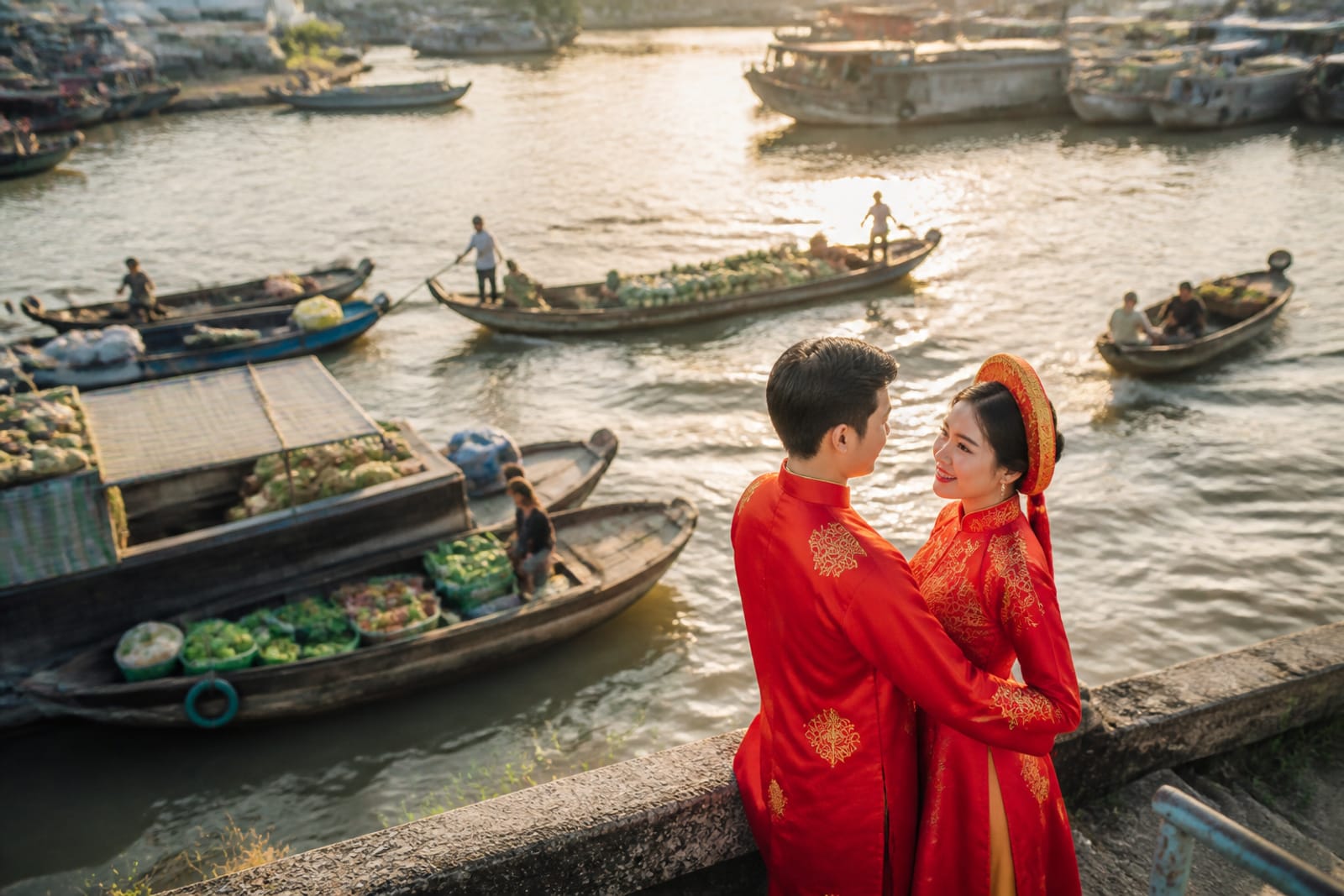
Both work. Rental is faster and cheaper; buying lets you keep the outfit. If renting, order 2–3 weeks ahead from a Hanoi or Saigon shop, and confirm fit in person—custom ao dai sewn in 1–2 weeks fits better than off-the-rack. Bring the ao dai to your hotel the night before, steam it, and hang it open to air. A dresser or experienced stylist should travel with you to retie and adjust after boat rides.
What if I'm worried my outfit will get wet on the boat?
Choose quick-dry fabrics (linen, technical cotton blends) for the boating portion. Wear a lightweight shawl or overshirt you can remove for photos. Confirm with your photographer that they'll shoot from a stable angle and won't position you where water spray reaches your outfit. If the Delta is in monsoon season (Oct–Nov), pack a waterproof backup outfit.
How far in advance should I book my Mekong pre-wedding photographer?
4–6 weeks is standard in the dry season (Dec–Apr); during monsoon (May–Sep), book 2–3 weeks ahead—fewer couples shoot then, so availability is easier, but rain cancellations are common. Ask about their rescheduling policy before paying any deposit.
Should I do makeup and hair in my hotel, or trust a local Mekong salon?
Hotel makeup is safer if you're not local. It's convenient, avoids salon surprises, and the artist can touch you up before the 5:30 am pickup. If using a local salon, book a trial run days ahead and bring photos of your desired style. Confirm the salon opens early (before 6:00 am) and has experience with pre-wedding makeup.
What's the difference between hiring a Mekong local photographer and booking Cáo Studio for a pre-wedding shoot?
A local Mekong photographer knows the Delta's light, water, and logistics intimately; they're essential if you want location-specific authenticity and shorter travel. Cáo Studio, based in Hanoi and Ho Chi Minh City, excels at coordinating outfit, makeup, hair and photography as one unified team, minimizing gaps and ensuring consistent aesthetic—ideal if you're flying in and want seamless logistics. For a Mekong shoot, Cáo Studio can advise on outfits and timing, then introduce you to a trusted local partner who handles the day.
FAQ
Can I wear a rented ao dai to a Mekong Delta pre-wedding shoot, or should I buy one?
Both work. Rental is faster and cheaper; buying lets you keep the outfit. If renting, order 2–3 weeks ahead from a Hanoi or Saigon shop, and confirm fit in person—custom ao dai sewn in 1–2 weeks fits better than off-the-rack. Bring the ao dai to your hotel the night before, steam it, and hang it open to air. A dresser or experienced stylist should travel with you to retie and adjust after boat rides.
What if I'm worried my outfit will get wet on the boat?
Choose quick-dry fabrics (linen, technical cotton blends) for the boating portion. Wear a lightweight shawl or overshirt you can remove for photos. Confirm with your photographer that they'll shoot from a stable angle and won't position you where water spray reaches your outfit. If the Delta is in monsoon season (Oct–Nov), pack a waterproof backup outfit.
How far in advance should I book my Mekong pre-wedding photographer?
4–6 weeks is standard in the dry season (Dec–Apr); during monsoon (May–Sep), book 2–3 weeks ahead—fewer couples shoot then, so availability is easier, but rain cancellations are common. Ask about their rescheduling policy before paying any deposit.
Should I do makeup and hair in my hotel, or trust a local Mekong salon?
Hotel makeup is safer if you're not local. It's convenient, avoids salon surprises, and the artist can touch you up before the 5:30 am pickup. If using a local salon, book a trial run days ahead and bring photos of your desired style. Confirm the salon opens early (before 6:00 am) and has experience with pre-wedding makeup.
What's the difference between hiring a Mekong local photographer and booking Cáo Studio for a pre-wedding shoot?
A local Mekong photographer knows the Delta's light, water, and logistics intimately; they're essential if you want location-specific authenticity and shorter travel. Cáo Studio, based in Hanoi and Ho Chi Minh City, excels at coordinating outfit, makeup, hair and photography as one unified team, minimizing gaps and ensuring consistent aesthetic—ideal if you're flying in and want seamless logistics. For a Mekong shoot, Cáo Studio can advise on outfits and timing, then introduce you to a trusted local partner who handles the day.
Ao dai, makeup, hair and a local photographer in Hanoi or Saigon — one WhatsApp message.