/pre-wedding-photoshoot
What to Wear for a Pre-Wedding Photoshoot in Phong Nha
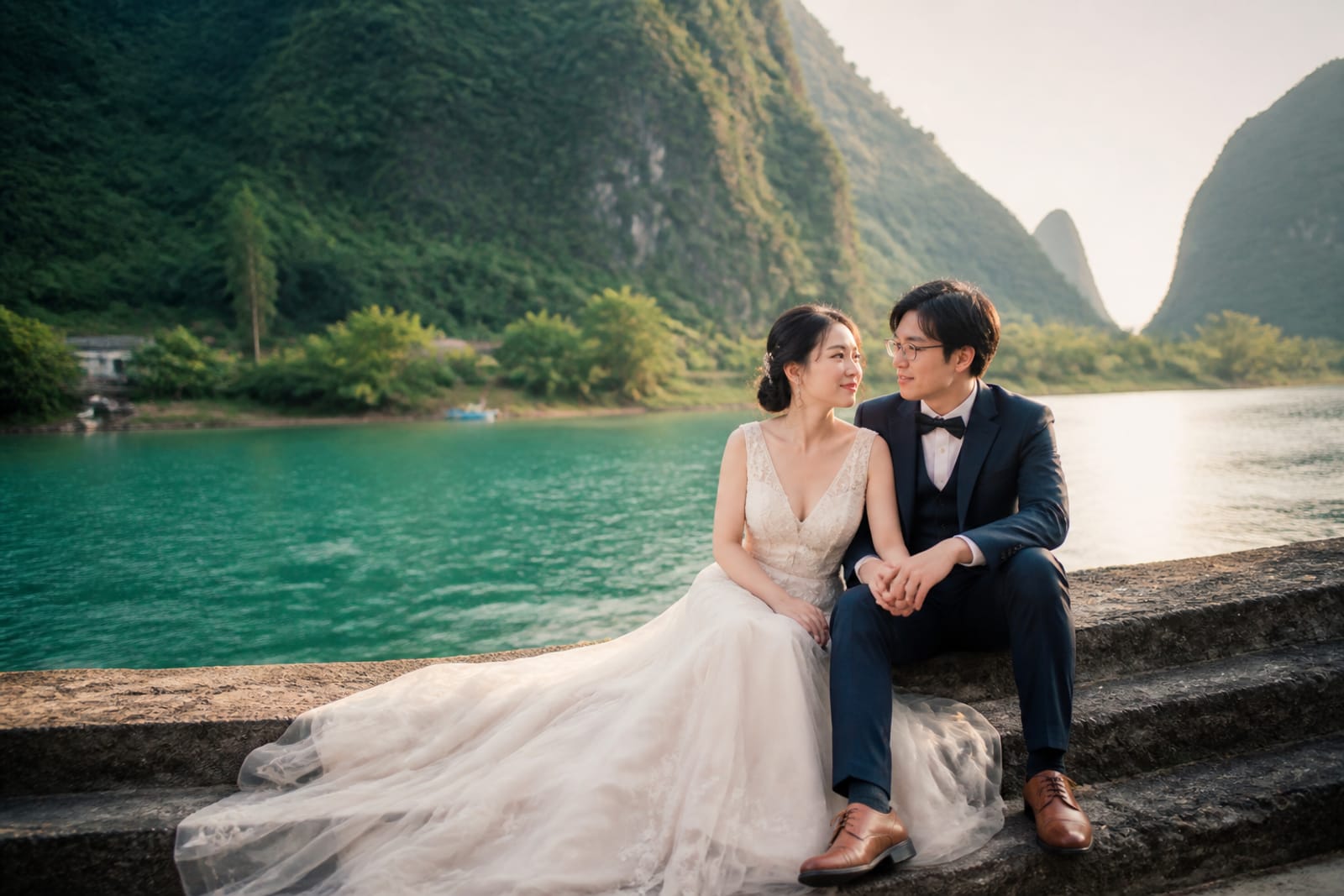
A pre-wedding photoshoot in Phong Nha means dressing for dramatic natural light, limestone terrain, and river access. The region's best shooting months are February to August, when light is clearer and water trails are safe. Typical outfits include a lightweight ao dai (flows well on boats and in cave light), a tailored neutral suit, and a casual second outfit for walking scenes. Avoid heavy fabrics and long trains—caves are tight, boats are wet, and you'll climb. Cáo Studio guides couples through outfit choice on WhatsApp before the session, matching fabric weight and movement to specific locations and the director's shot list. Book early; Phong Nha photoshoots require travel coordination and weather flexibility. ---
Why Phong Nha Light Shapes What You Wear
Phong Nha's landscape—caves, jungle, water—controls light in ways that matter for fabric and color choice. Inside Son Doong or Paradise Cave, soft overhead light falls through openings; outside, the morning sun hits limestone at a raking angle, creating shadow and texture on cloth. This means your outfit either catches that light or disappears into it.
A flowing ao dai catches cave light beautifully; heavy satin flattens under dim stone. A light-colored suit shows the water's reflection; dark fabric absorbs it and reads as shadow. Movement matters too—if you're walking through jungle or stepping onto a boat, fitted clothing that moves with your body photographs better than stiff, layered pieces. The director shoots around the landscape first, then places you in the light that's already there, which is why outfit weight and drape are technical decisions, not just aesthetic ones.
Outfit Type Comparison: What Fits Phong Nha
| Outfit | Best for | Light & Terrain | Why It Works |
|---|---|---|---|
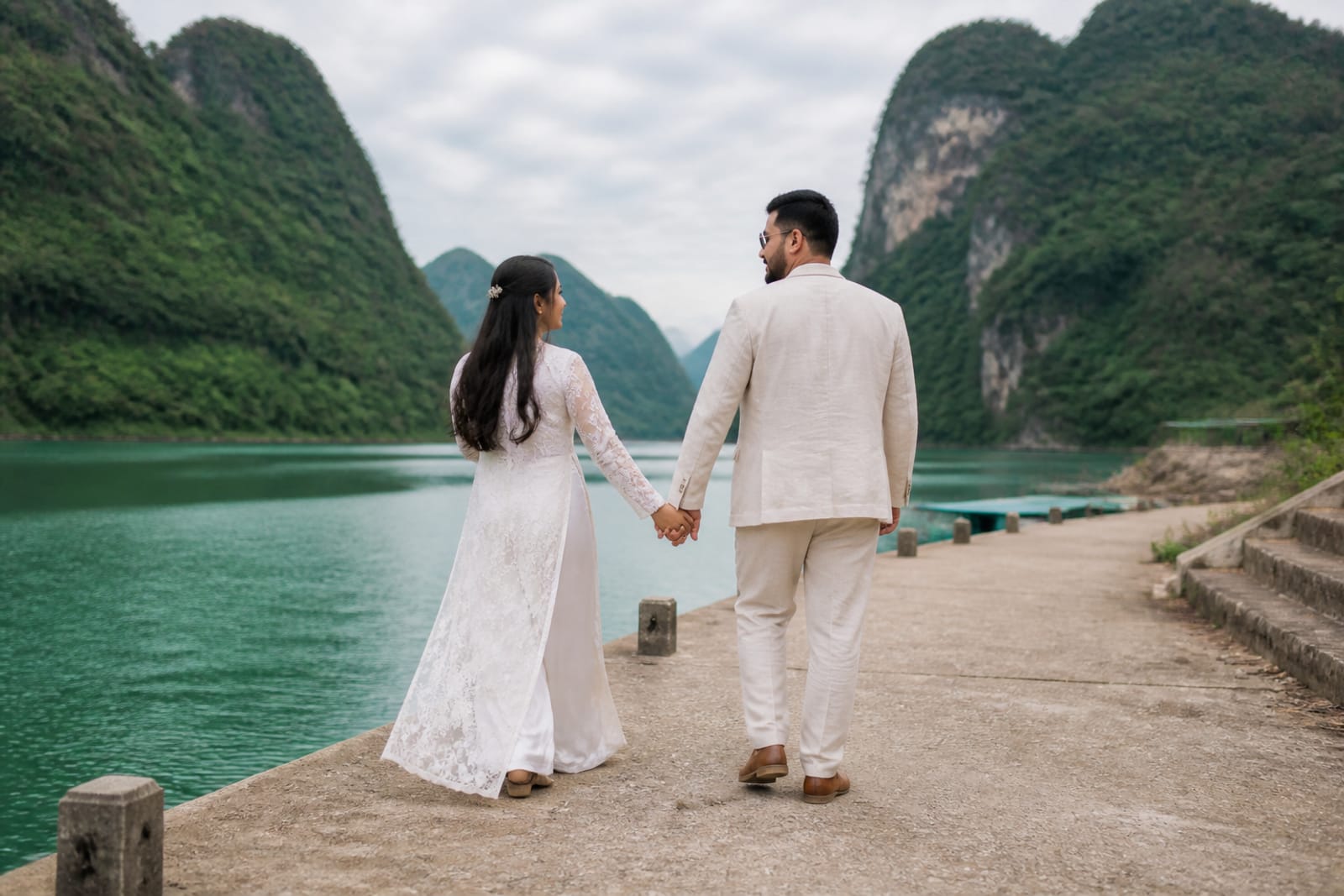
| Ao dai (light silk or cotton blend) | Cave + water scenes | Soft interior light, raking morning sun | Flows on boats, catches cave glow, moves in wind |
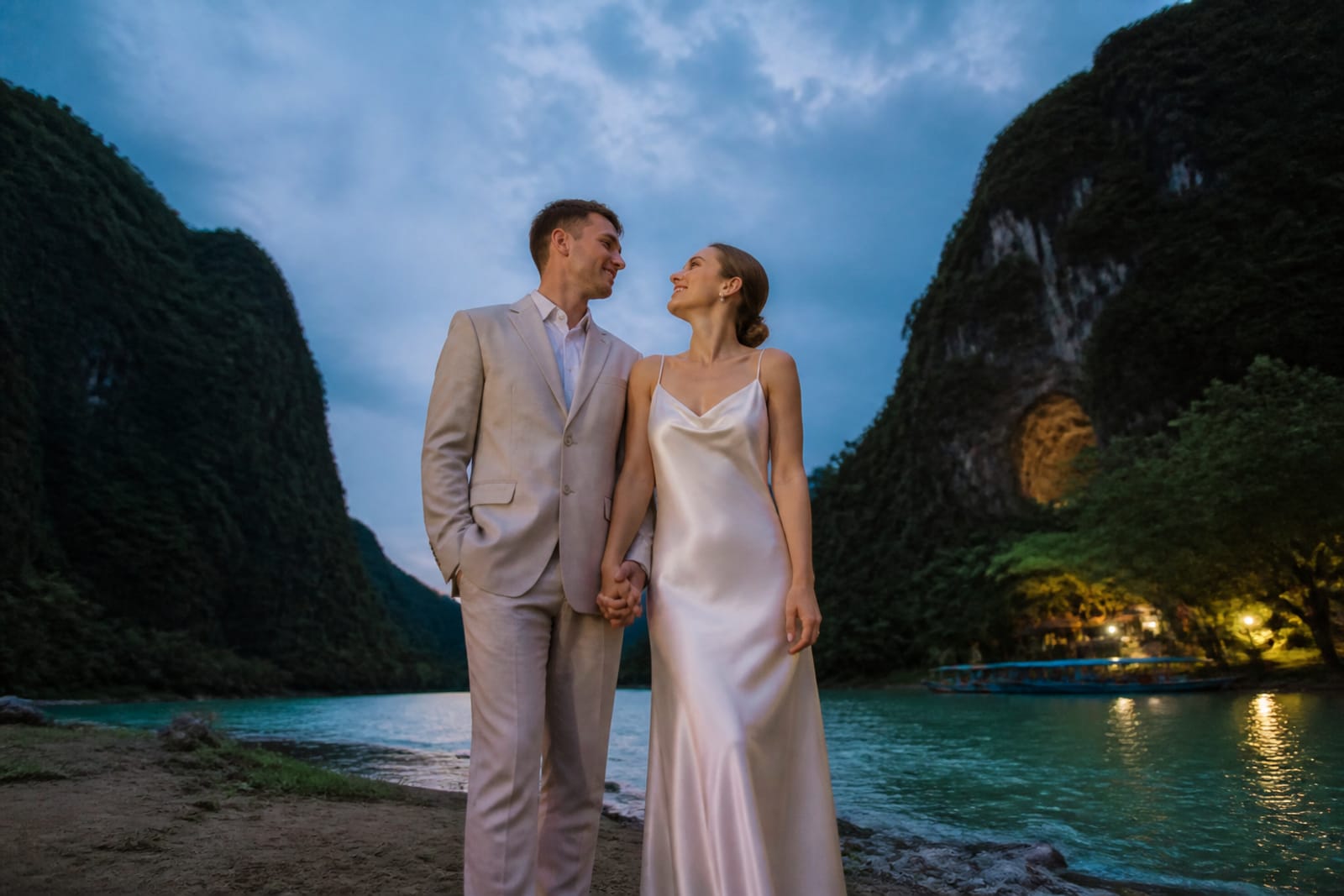
| Tailored suit (linen or cotton) | Walking, river edge, limestone | Golden hour, side light | Clean lines read on stone, cool fabric for heat, easy to move in |
| Casual second outfit (linen shirt, simple trousers) | Between-location scenes, jungle walks | Dappled shade, afternoon light | Photographs naturally, no snagging on cave walls |
| Formal dress (heavy satin, long train) | ❌ Not suited | — | Gets damaged, restricts movement, absorbs cave moisture |
| White or cream layers | ✓ Where suitable | Morning exterior light | Reflects light well; check if layers snag on terrain |
The director's notes on WhatsApp will specify: "First location is Paradise Cave (soft interior light) — ao dai best. Second is the river edge at 6:15 am (golden side light) — bring the suit. Third is a walk through jungle — casual outfit with secure footwear." This specificity means you don't overpack or second-guess.
When to Shoot: Season and Light Windows
Phong Nha's best photoshoot months are February through August. During this period, cave trails stay open, river crossings are manageable, and morning light is clearest. October and November bring heavy rain and occasional flooding that can close cave access and boat routes—checking conditions locally 1–2 weeks before is essential.
Within those months, the hour matters more than the day. A pre-wedding shoot here typically runs 5–6 hours: starting at 6:00–6:30 am for golden light outside the caves, moving into Paradise or Son Doong around 8:00–9:00 am (when the light shifts inside), and finishing with a river or jungle walk as light softens in late afternoon. Outfit changes happen at natural breaks—usually after the cave section and before the final location.
The director confirms the exact shooting window on WhatsApp after discussing your preferences (do you prefer caves or river? Morning or afternoon energy?), current weather forecasts, and boat/guide availability. This isn't booked far in advance; it's confirmed 5–7 days out.
Fabric and Footwear: Avoiding What Doesn't Work
Phong Nha terrain—wet limestone, cave steps, muddy trails—ruins delicate fabrics and improper footwear. Heavy silk satin absorbs water and stains easily. Long trains catch on cave railings. Delicate lace snags on stone. Stiff tulle shows water damage. These aren't rare accidents; they're predictable wear on this landscape.
Bring sturdy footwear for the shoot day itself—waterproof hiking shoes or sandals that grip wet rock. (The director will photograph your feet only if the shot includes them; otherwise, wear functional shoes and change into styled footwear at the final location if it's part of the shot.) Ao dai should be lightweight cotton or a cotton-silk blend that dries quickly. Suits should be linen or cotton-linen, not pure wool or heavy dress suiting. A second casual outfit should have pockets and no loose ends.
Pack a small towel or microfiber cloth for the team—water on a camera or lens matters more than water on fabric, and the guide will manage this. Bring a change of clothes for after the shoot; river water and cave spray will dampen your outfit, and you'll want to change before traveling back.
How to Choose Between Ao Dai, Suit, or Mixed Outfits
Your outfit choice depends on whether you want the shoot to emphasize traditional Vietnamese elements, modern couple aesthetics, or both.
An ao dai-first approach (you in ao dai, him in tailored suit or áo groom) grounds the shoot in the location's cultural context and pairs beautifully with cave interiors and water. The ao dai's drape photographs exceptionally well in Phong Nha's specific light. This works if both partners are comfortable with that styling—no obligation if it doesn't feel authentic to you.
A mixed approach (ao dai for one location, casual or formal Western outfits for others) gives variety and lets the landscape shift the mood. You might wear ao dai inside the cave, a light dress and shirt for the river, and casual linen for the final jungle walk. This requires more outfit coordination but often feels more like a real day.
A Western-only approach (both in suits, or casual + formal mix) works if you prefer to let the landscape carry the story without traditional layers. Phong Nha's stone and water are strong enough to anchor the frame without cultural costume.
The director discusses this on WhatsApp before booking and builds the shot list around your choice—same location, different emotional energy depending on outfit. Ask which approach best suits the light and landscape you're drawn to.
📸 Book on WhatsApp — ao dai photoshoot
What to Check Before You Book
Location specifics: Confirm which sites the photographer will shoot (Son Doong, Paradise Cave, river sections, jungle trails). Not all guides access all locations; availability depends on permit status and current conditions.
Outfit inclusions: Check whether the studio provides ao dai rental, suit rental, or expects you to bring your own. Cáo Studio offers rental for ao dai and suits—ask on WhatsApp which outfits are included in your pre-wedding package or available to add.
Weather flexibility: Ask how the shoot reschedules if rain or flooding affects cave access. A solid studio has a backup location plan.
Makeup and hair: Confirm whether the team includes a makeup artist and hair stylist, or whether you need to arrange these separately. Hotel-based makeup and hair can be booked in advance if you're staying nearby.
Editing and delivery: Clarify turnaround time for edited photos and whether video is included. Ask for examples of editing style in low-light cave settings (cave photos require careful exposure correction).
Transport: Confirm who arranges transport to Phong Nha, how you get to each location, and whether the photographer's fee covers travel time.
Local permits: Some sites (Son Doong, for instance) require advance permits or guide reservations. Ask whether the studio handles this or whether you need to book independently.
---
Why Cáo Studio Doesn't Shoot Phong Nha (And What to Do Instead)
Cáo Studio is based in Hanoi with a Saigon base—photoshoots there and in Ho Chi Minh City are our strength, and we also travel to Hoi An by appointment. Phong Nha is a 3+ hour drive from Hanoi and requires dedicated local guides familiar with cave permits, boat routes, and seasonal flooding. To shoot there properly, we'd need to partner with local guides on every session, which changes our model of "one team, one message."
Instead, here's how to plan a Phong Nha pre-wedding shoot:
- Find a local Phong Nha–based photographer who knows the caves, times the light correctly, and has current relationships with guides and boat operators. Ask on travel forums or Instagram for recent recommendations—look for photographers who shoot couples in caves and include location details in their captions.
- Vet the photographer on logistics, not just aesthetics. Ask how they handle weather reschedules, whether they've shot inside Son Doong (it requires a specific guide), and how they manage exposure in cave light. Request a portfolio of cave shoots specifically.
- Book your own guides and permits through local Phong Nha tourism sites, or ask the photographer if they include this. Paradise Cave allows walk-in visits; Son Doong requires advance booking through licensed operators.
- Plan outfit and makeup locally. Phong Nha towns have small tailors and makeup services. Bring outfits you've already tested, or have simple pieces tailored there (a few days before the shoot). Hotel-based makeup is often arranged by your accommodation.
- If you want Cáo Studio's approach (one team, directed light, specific shot list, fast turnaround) consider a pre-wedding shoot in Hanoi, Saigon, or Hoi An instead. We can build a session around iconic locations near each city—Hoan Kiem Lake and Old Quarter in Hanoi, Bitexco and riverside in Saigon, Ancient Town and river in Hoi An—with the same outfit strategy and directorial approach. Explore our pre-wedding options.
---
Real-World Timing and What Goes Wrong
A typical Phong Nha pre-wedding shoot runs 5–6 hours: an early start (5:30 am pickup) to catch golden light outside caves, cave exploration with outfit changes, a midday break for lunch or rest, and a final location in soft afternoon light. Transport between locations—driving to trailheads, walking to cave entrances, boat time on the river—often takes longer than expected. A 30-minute hike can turn into 45 minutes if the trail is muddy or the group moves slowly.
What goes wrong:
- Delayed cave access. If the guide is late, permits aren't processed, or weather has affected trails, you lose golden light. Budget an extra 30 minutes for permits.
- Makeup and hair in humidity. Cave entrances and river areas are humid; makeup can shift by midday. Bring blotting papers and a small makeup kit for touch-ups.
- Outfit saturation. If you're moving between water locations, fabrics get damp and stay damp. Bring a quick-dry towel and a change of clothes for between shots.
- Light fatigue. Shooting inside and outside caves (dramatic shifts in exposure) is harder on camera sensors and skin. The photographer needs experience with cave lighting; ask for examples.
How to avoid these:
- Confirm the shooting window 5–7 days before, not weeks ahead.
- Wear outfit layers that dry quickly; avoid velvet, heavy satin, or delicate lace.
- Start early (before 6:00 am); late starts mean you shoot in harsh midday light or lose the final golden window.
- Hire a makeup artist familiar with cave humidity, or build in a 15-minute refresh break.
- Trust the photographer's location changes—they're moving to follow light, not just for variety.
---
FAQ
Can I wear a traditional white wedding dress to a Phong Nha photoshoot?
Heavy satin wedding dresses absorb water and restrict movement in caves and on boats. If you want a formal white dress for one location, ask the photographer to shoot it outside the caves in morning or golden light, and change into a lightweight ao dai or casual outfit for cave and river scenes. This limits the dress to one or two frames but protects it.
What's the best time of year to shoot in Phong Nha for a pre-wedding?
February through August offers clear light and safe cave/river access. October and November have heavy rain and occasional flooding that can close trails. April and May are hot but have the clearest cave light. Confirm actual conditions 1–2 weeks before your shoot date.
Do I need a makeup artist, or can I do makeup myself?
Cave interiors and water spray affect makeup throughout the day. If you're comfortable with touch-ups and have makeup designed for humidity and water exposure, you can manage. A local makeup artist familiar with cave shoots (or your hotel's services) is safer and gives consistent results across outfit changes.
How should I style my hair for a cave and river photoshoot?
Loose waves and updos both work depending on cave width and water exposure. Ask the photographer which styles they recommend for the specific locations; some caves are narrow (tight hairstyles work better), and river scenes risk wind and spray (secure styles are practical). Bring bobby pins and a hair tie for quick repositioning between locations.
Can the photographer shoot video as well as photos?
Some photographers offer video; most don't include it automatically. Ask on WhatsApp if you want a short film alongside photos. Video adds complexity in cave lighting and requires additional equipment, so confirm this early and ask about turnaround time and editing style.
What if the weather changes and caves close?
A solid photographer has a backup location (riverside, jungle walk, limestone overlook) that works in rain. Confirm the backup plan before booking. If you need to reschedule entirely, clarify the rescheduling policy—whether you can move the date without losing your deposit or booking fee.
Do you need a permit to shoot inside Son Doong Cave?
Yes. Son Doong requires a guide license and advance booking through authorized tour operators. Not all photographers can access it; ask specifically if your photographer works with Son Doong permits. If permit requirements change, the photographer will advise you to shoot Paradise Cave or Hang En instead.
Should I bring jewelry for a cave photoshoot?
Minimal jewelry photographs better in cave light; metals and stones can catch harsh shadows. Bring one or two meaningful pieces (a ring, a delicate necklace) rather than a full set. Avoid dangling earrings—they're distracting when you're looking at each other, and water spray can make them uncomfortable. ===
FAQ
Can I wear a traditional white wedding dress to a Phong Nha photoshoot?
Heavy satin wedding dresses absorb water and restrict movement in caves and on boats. If you want a formal white dress for one location, ask the photographer to shoot it outside the caves in morning or golden light, and change into a lightweight ao dai or casual outfit for cave and river scenes. This limits the dress to one or two frames but protects it.
What's the best time of year to shoot in Phong Nha for a pre-wedding?
February through August offers clear light and safe cave/river access. October and November have heavy rain and occasional flooding that can close trails. April and May are hot but have the clearest cave light. Confirm actual conditions 1–2 weeks before your shoot date.
Do I need a makeup artist, or can I do makeup myself?
Cave interiors and water spray affect makeup throughout the day. If you're comfortable with touch-ups and have makeup designed for humidity and water exposure, you can manage. A local makeup artist familiar with cave shoots (or your hotel's services) is safer and gives consistent results across outfit changes.
How should I style my hair for a cave and river photoshoot?
Loose waves and updos both work depending on cave width and water exposure. Ask the photographer which styles they recommend for the specific locations; some caves are narrow (tight hairstyles work better), and river scenes risk wind and spray (secure styles are practical). Bring bobby pins and a hair tie for quick repositioning between locations.
Can the photographer shoot video as well as photos?
Some photographers offer video; most don't include it automatically. Ask on WhatsApp if you want a short film alongside photos. Video adds complexity in cave lighting and requires additional equipment, so confirm this early and ask about turnaround time and editing style.
What if the weather changes and caves close?
A solid photographer has a backup location (riverside, jungle walk, limestone overlook) that works in rain. Confirm the backup plan before booking. If you need to reschedule entirely, clarify the rescheduling policy—whether you can move the date without losing your deposit or booking fee.
Do you need a permit to shoot inside Son Doong Cave?
Yes. Son Doong requires a guide license and advance booking through authorized tour operators. Not all photographers can access it; ask specifically if your photographer works with Son Doong permits. If permit requirements change, the photographer will advise you to shoot Paradise Cave or Hang En instead.
Should I bring jewelry for a cave photoshoot?
Minimal jewelry photographs better in cave light; metals and stones can catch harsh shadows. Bring one or two meaningful pieces (a ring, a delicate necklace) rather than a full set. Avoid dangling earrings—they're distracting when you're looking at each other, and water spray can make them uncomfortable. ===
Ao dai, makeup, hair and a local photographer in Hanoi or Saigon — one WhatsApp message.