/pre-wedding-photoshoot
What to wear for a pre-wedding photoshoot in Sapa
Pre-wedding photoshoots in Sapa revolve around one constraint: the mountain weather changes fast, and the best light depends on season. Cold-season (Mar–May, Sep–Nov) shoots suit wool, long sleeves and layering; summer (Jun–Aug) is wet and misty, which works for moody frames but demands quick decisions. Sapa's rice terraces, stone villages and dawn mist are photogenic at any time, but you need a team that understands mountain logistics—permits aren't required for personal shoots, but travel to Cat Cat Village takes time, and light windows are narrow. If you're booking a session locally in Sapa, vet the photographer's portfolio for real mountain light (not over-edited fantasy), confirm they handle cold weather and have a plan B for sudden cloud cover. Cáo Studio operates from Hanoi and Saigon; if you're traveling to Sapa from one of those cities, ask on WhatsApp about coordination options before your trip. 📸 Book on WhatsApp — pre-wedding photoshoot ---
What season gives the clearest light in Sapa?
March to May and September to early October are the sharpest windows. During these months, dawn fog burns off by 7–8 am, revealing terraces and distant ridges. Winter (Dec–Feb) can be foggy for days, and summer (Jun–Aug) brings afternoon downpours that trap clouds in the valleys. If you're flexible, plan for late September or April: dry mornings, warm midday light and fewer tourists crowding Cat Cat Village or O Quy Ho pass. Confirmation: check the 10-day forecast two weeks before your shoot date and have a backup location (Old Town light, homestay garden) if mist persists.
Takeaway: Clear light arrives in spring and autumn; plan your outfit for those windows.
---
Which outfit fabrics hold up in cold mountain weather?
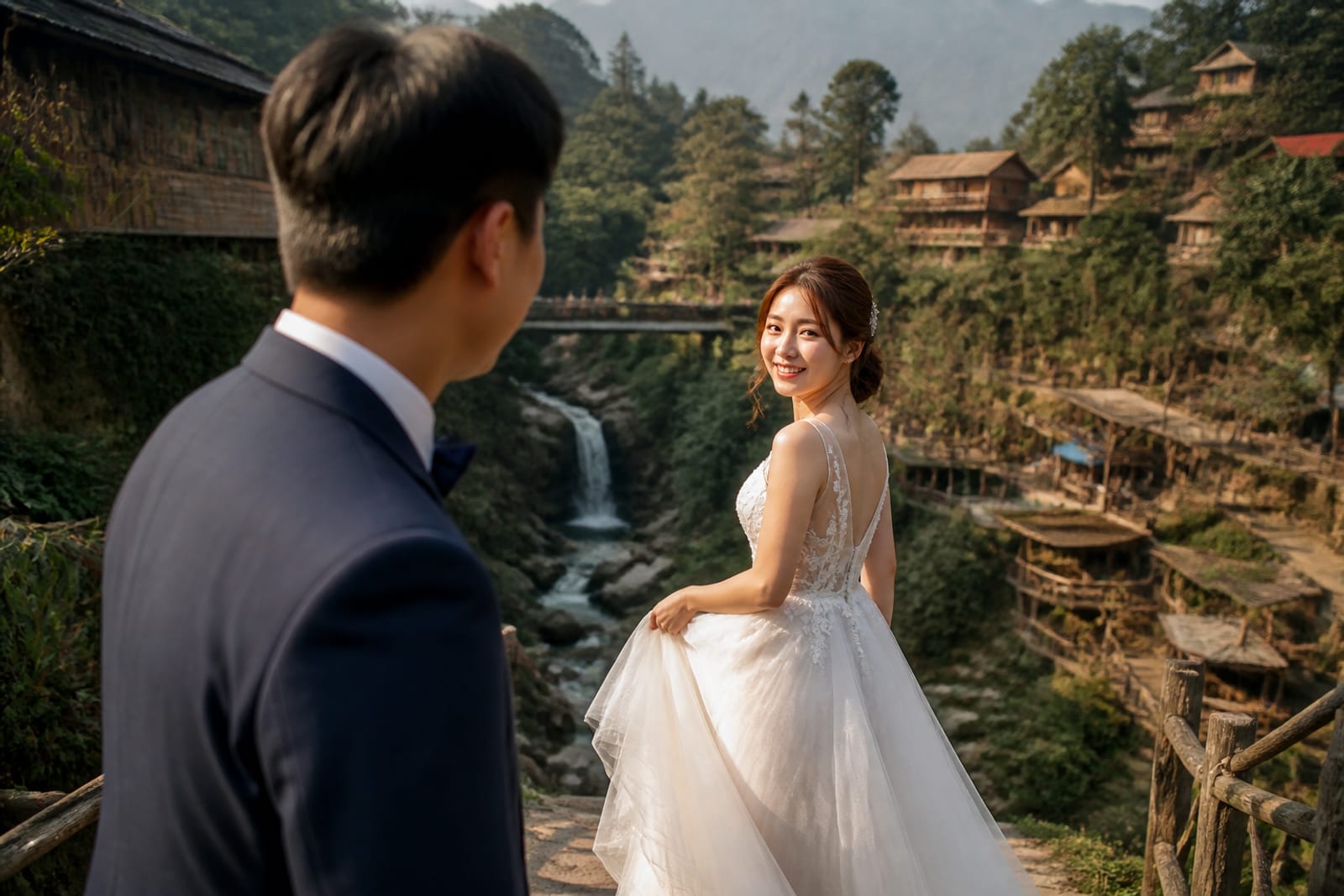
Sapa sits at 1,600 m, and morning temperatures drop to 8–12°C even in shoulder seasons. Wool, cotton-blend layers and structured fabrics photograph better than silk or thin chiffon; they don't wrinkle in wind and hold their shape through walking. Avoid loose fabrics that billow unpredictably—mountain wind can ruin a frame in seconds. If you're shooting an ao dai, bring a fitted cardigan or linen overshirt to layer; the garment's grace reads through it, and you gain warmth. Jeans and a fitted sweater work well; so do tailored trousers with a long-sleeve top. Test movement before the shoot: can you walk on uneven terrace steps, kneel on soil and turn without the fabric folding awkwardly?
Takeaway: Wool and structured cotton last all day; silk and loose chiffon fold and shift in wind.
---
Should you shoot in traditional ao dai or Western wear?
| Outfit Type | Best For | Season/Light | Practical Win |
|---|---|---|---|
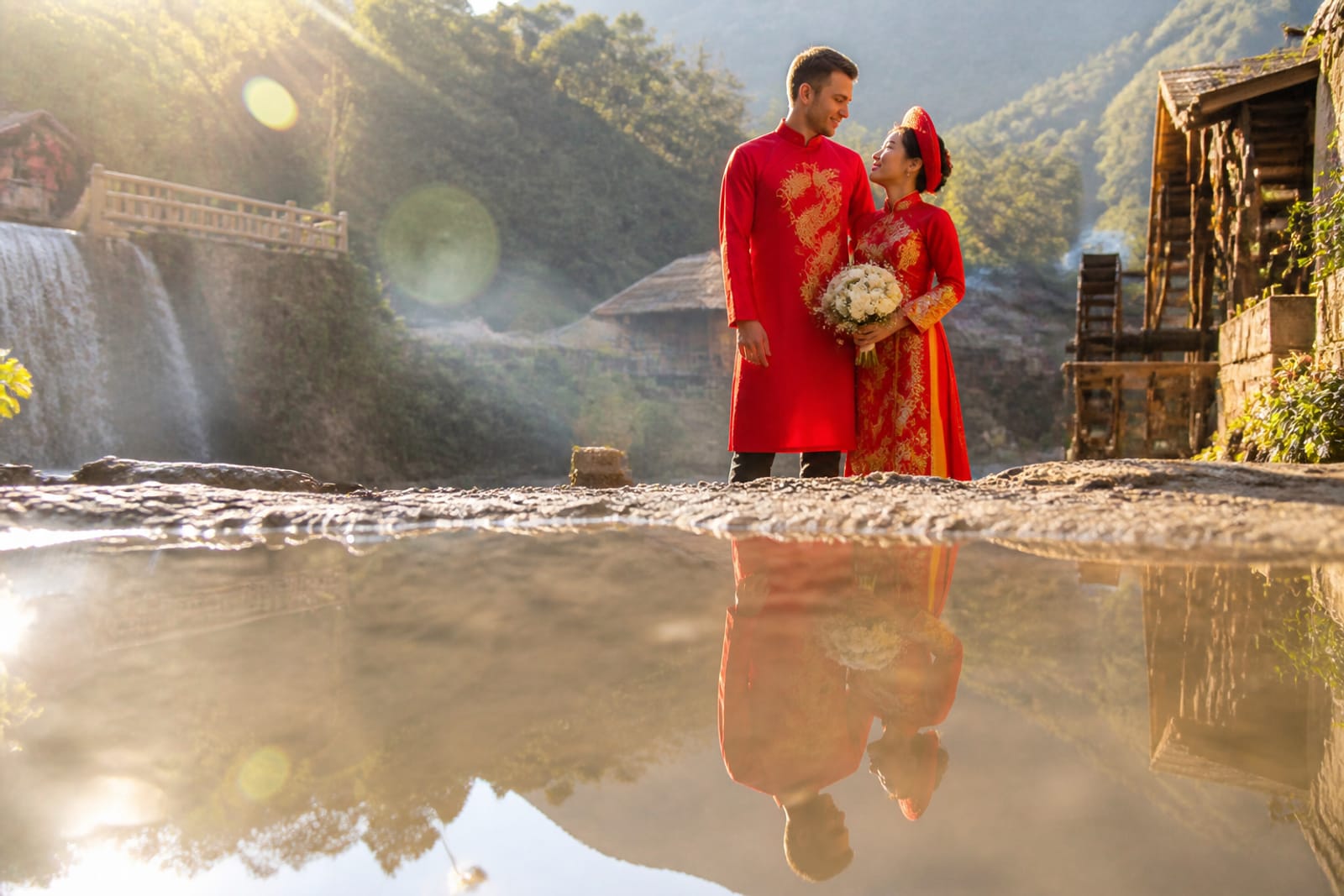
| Ao dai + cardigan | Cultural frames, romance, heirloom feel | Any (layer in winter) | Guides natural walking, silhouette readable through layers |
| Fitted jeans + sweater | Intimate, candid, modern couple vibe | Mar–May, Sep–Oct | Moves freely on steep terrain, suits windy light |
| Structured dress + boots | Moody mist frames, editorial tone | Jun–Aug (low light) | Dark tones hold detail in fog; boots grip wet stone |
| Mix (one in ao dai, one in casual) | Comparison frames, storytelling | Any | Gives editor flexibility; suits longer 4–6 hour sessions |
The ao dai works best if you choose a pre-wedding photoshoot that includes makeup and hair—mountain wind and humidity demand professional fixing. Casual outfits let you move faster on narrow terrace paths; they suit couples who prioritize comfort over ceremony. One practical angle: if you're hiring a local Sapa photographer, ask if they've shot ao dai in rain or fog before. Some teams avoid it (fabric tangles in mud, makeup runs, drying takes hours). If cultural frames matter to you, confirm their experience first.
Takeaway: Ao dai suits cultural frames; casual wear suits steep terrain. Match the outfit to the photographer's strength.
---
How do you find a photographer who understands Sapa's light?
Local Sapa photographers advertise on Instagram and wedding booking platforms, but portfolios often show edited fantasy—soft filters, artificial saturation and posed couples that don't reflect real mountain light. Here's what to check:
- Raw light clarity. Request unedited or lightly edited samples. Mountain mist should read as mist, not romantic blur. Stone villages should show texture, not dreaminess.
- Terrain proof. Look for shots on actual terrace paths, not studio-style framing in front of one landmark. Can the photographer work on unstable ground?
- Weather agility. Ask directly: "Show me your best frame from a cloudy morning" or "How do you light a couple when there's no sun?" A strong answer beats a deflection.
- Logistics clarity. Confirm they own transport to Cat Cat Village, know the timing to O Quy Ho pass at sunrise, and have a backup plan if weather turns.
- Contract and timing. Agree on a delivery date in writing. Sapa's internet is slow; clarify whether you'll get files in-person, via download link or by post.
When you reach out, ask for references from other couples who shot in Sapa, not just selected testimonials. A real photographer will offer two or three names you can message.
Takeaway: Compare unedited portfolios, ask for weather examples, and check logistics clarity before you book.
---
What are the hidden costs and timing traps?
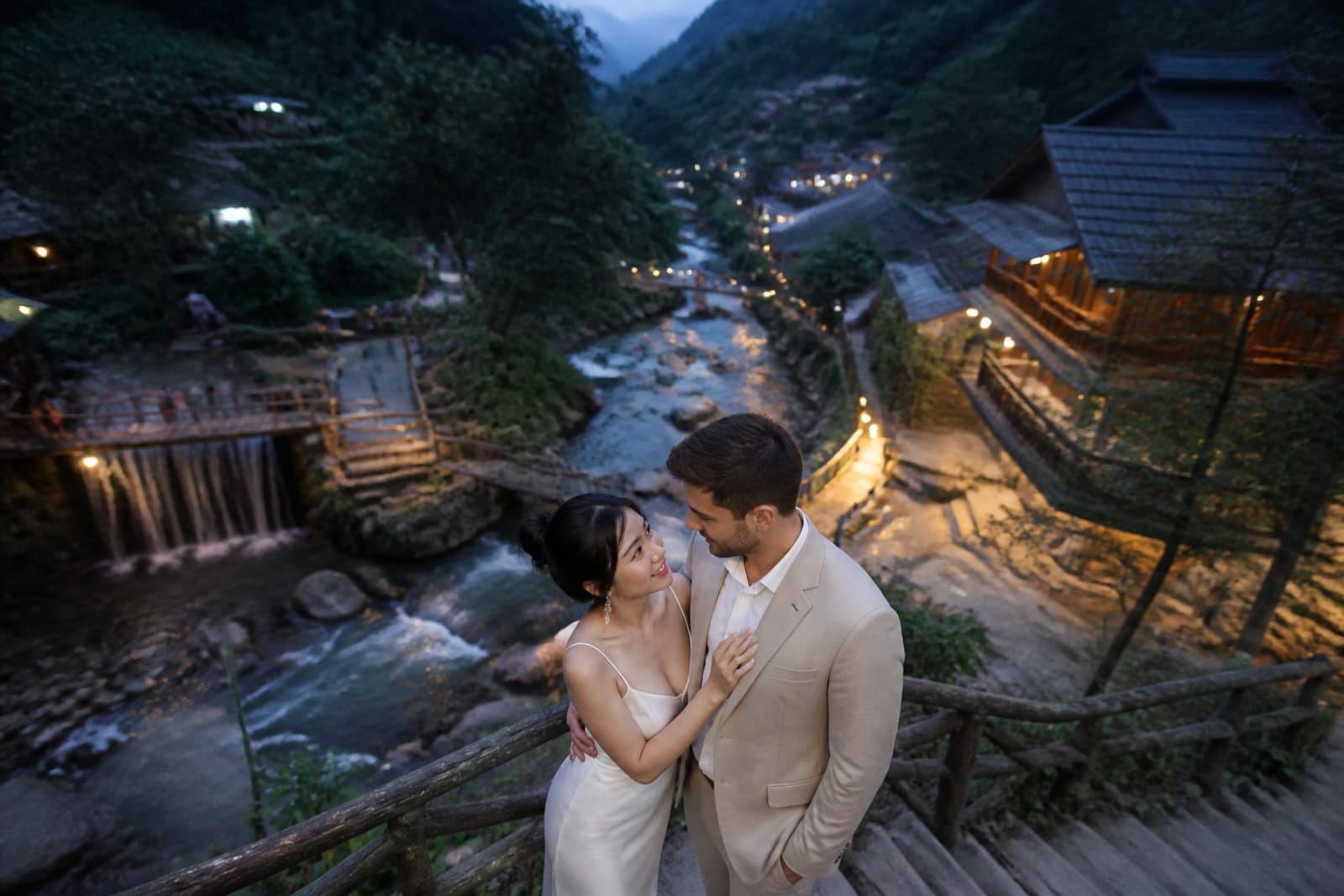
Sapa sessions often run longer than expected because light is unpredictable and terrain is slow. A sunrise shoot at Cat Cat Village requires a 5 am start from town (30–45 min walk or jeep ride uphill), an hour or two of shooting as light shifts, and a 30 min descent. By the time you're back at your hotel for breakfast, 4–5 hours have passed—and that's one location. If your photographer proposes multiple spots (Old Town, terraces, Stone Church), add travel time between each, and plan for a full day.
Equipment costs and permits are low: personal photography needs no permit in Sapa's public areas, but if you're bringing a professional crew or using drones, check current local rules with the Sapa District office before traveling (regulations change). Travel costs are the real variable—jeep hire from town, local guide (optional but valuable for smooth access), meals and weather contingencies add up. Sapa's roads are winding; some travelers get altitude sickness (rare but plan for it).
One honest angle: Photographers who promise 2–3 hours and one location may deliver rushed frames. Invest in a full-day shoot with realistic location time, or expect to return for a second session if you want both cultural and candid depth.
Takeaway: Plan 5–8 hours; confirm transport, weather backup and editing timeline before booking.
---
Why consider Cáo Studio as a planning partner from Hanoi?
Cáo Studio operates from Hanoi with teams trained in pre-wedding directing—framing, light timing and outfit layering. If you're traveling to Sapa from Hanoi (3–4 hours by car or bus), you could book makeup and hair services in Hanoi on departure day, coordinate outfit selection and receive a Sapa photographer recommendation based on your style. Alternatively, if you prefer a shoot in or near Hanoi before or after your Sapa trip, Cáo Studio handles pre-wedding and elopement sessions with full styling—often faster and simpler than coordinating a new team in the mountains.
Ask on WhatsApp if Cáo Studio's network includes trusted Sapa partners or if your timeline suits a Hanoi session instead. Some couples split their pre-wedding shoot: styled frames in Hanoi's urban light, candid moments in Sapa's landscape. Cáo Studio's lookbook shows how directing and outfit choice transform location light.
Takeaway: Plan your Hanoi connection first; Sapa's light works best with a clear outfit and light strategy.
---
What to check before you book
- Portfolio clarity. Request 5–10 unedited frames from the same couple or location. Look for readable light, not fantasy.
- Weather contingency. Does the contract include a reschedule date if conditions turn dangerous?
- Outfit trial. Wear your chosen outfit for 2 hours on the terrace to test wind, movement and temperature comfort.
- Editing timeline. When do you get files? Week-of, or month-later? Agree in writing.
- Local knowledge. Ask the photographer to name the three best light spots in Sapa and the exact times they're clearest.
- Transport included? Clarify if jeep hire, village access and guide fees are in the quote or separate.
---
FAQ
Do I need a permit to shoot pre-wedding photos in Sapa?
Personal photography in public areas (terraces, villages, roads) needs no permit. Professional crews or drone use may have restrictions—check with Sapa District office before traveling. A local guide helps navigate access.
What month has the worst weather for a Sapa pre-wedding shoot?
June to August brings frequent afternoon rain and thick fog; Oct–Nov carries typhoon risk and unpredictable downpours. Mar–May and Sep–early Oct are most stable, though no day is guaranteed.
Should I book a full day or half day in Sapa?
Full day (5–8 hours) lets you shoot at least two locations with real light changes. Half day (3 hours) forces you to pick one spot; light may not shift enough for variety or mood change.
Can I wear an ao dai for a pre-wedding shoot on terrace steps?
Yes, if your photographer and makeup artist have mountain experience. The fabric can tangle in mud and wind. Confirm the team has fixed ao dai in wind and wet terrain before booking.
How do I find a trustworthy local Sapa photographer?
Review their unedited portfolio for real light (not over-filtered), ask for references from previous couples, confirm weather contingency in writing, and discuss logistics (transport, backup plan, editing timeline) before booking.
Does Cáo Studio shoot in Sapa?
Cáo Studio operates from Hanoi and Saigon. We don't have a Sapa team, but we can advise on outfit strategy, light timing and photographer vetting. Message us on WhatsApp if you're coordinating a Sapa shoot from Hanoi.
What's the best time of day for clear light on Sapa terraces?
Dawn (6–8 am) on clear days; mist burns off by mid-morning. Afternoon light (2–4 pm) is clean on clear days but rare in summer. Overcast days suit moody portraits best.
Should I book a solo session or couple session in Sapa?
Couple photoshoots suit narrative framing (walking, looking, interacting). Solo or family sessions work if you want candid landscapes. Sapa's terrain favors movement—discuss your vision with the photographer first.
FAQ
Do I need a permit to shoot pre-wedding photos in Sapa?
Personal photography in public areas (terraces, villages, roads) needs no permit. Professional crews or drone use may have restrictions—check with Sapa District office before traveling. A local guide helps navigate access.
What month has the worst weather for a Sapa pre-wedding shoot?
June to August brings frequent afternoon rain and thick fog; Oct–Nov carries typhoon risk and unpredictable downpours. Mar–May and Sep–early Oct are most stable, though no day is guaranteed.
Should I book a full day or half day in Sapa?
Full day (5–8 hours) lets you shoot at least two locations with real light changes. Half day (3 hours) forces you to pick one spot; light may not shift enough for variety or mood change.
Can I wear an ao dai for a pre-wedding shoot on terrace steps?
Yes, if your photographer and [makeup artist](/makeup-and-hair) have mountain experience. The fabric can tangle in mud and wind. Confirm the team has fixed ao dai in wind and wet terrain before booking.
How do I find a trustworthy local Sapa photographer?
Review their unedited portfolio for real light (not over-filtered), ask for references from previous couples, confirm weather contingency in writing, and discuss logistics (transport, backup plan, editing timeline) before booking.
Does Cáo Studio shoot in Sapa?
Cáo Studio operates from [Hanoi](/hanoi) and [Saigon](/saigon). We don't have a Sapa team, but we can advise on outfit strategy, light timing and photographer vetting. Message us on WhatsApp if you're coordinating a Sapa shoot from Hanoi.
What's the best time of day for clear light on Sapa terraces?
Dawn (6–8 am) on clear days; mist burns off by mid-morning. Afternoon light (2–4 pm) is clean on clear days but rare in summer. Overcast days suit moody portraits best.
Should I book a solo session or couple session in Sapa?
[Couple photoshoots](/couple-photoshoot) suit narrative framing (walking, looking, interacting). Solo or [family sessions](/family-photoshoot) work if you want candid landscapes. Sapa's terrain favors movement—discuss your vision with the photographer first.
Ao dai, makeup, hair and a local photographer in Hanoi or Saigon — one WhatsApp message.