/pre-wedding-photoshoot
What to Wear for Couple Photos at Ba Son Bridge
Ba Son Bridge in Hanoi offers an exposed-brick, urban-romantic setting ideal for couple photoshoots that blend industrial and intimate tones. The bridge's rust-red steel frame and weathered surfaces work best during golden hour (early morning or late afternoon) when side-light sculpts texture and softens shadows. Traditional Vietnamese ao dai reads striking against the raw backdrop; casual separates (linen, denim, neutral layers) create a modern, editorial feel; formal wear (tailored suit, evening dress) works for anniversary milestones. Sessions typically run 1–2 hours depending on outfit changes and location movement. Cáo Studio – Makeup & Photoshoot's Hanoi team knows the bridge's light patterns and can advise on weather—early morning avoids harsh midday glare and crowds. Check WhatsApp for exact timing and whether the bridge has active foot traffic on your date; sometimes weekend mornings are quieter than afternoons. 📸 Book on WhatsApp — ao dai photoshoot
Should I Wear Ao Dai or Casual Clothes at Ba Son Bridge?
Ao dai creates a stark, elegant contrast against industrial brick and steel—the silk or satin drape catches light beautifully, and the traditional silhouette photographs timeless. Casual wear (linen shirt, tailored trousers, comfortable layers) suits couples wanting an intimate, everyday-romantic mood; it's practical for moving around the bridge's uneven surfaces. Formal wedding attire (groom's suit, bridal gown or elegant dress) works for milestone sessions but can feel overdressed without ceremony context. Ao dai wins if you want heritage and drama; casual wins for approachability and comfort; formal works only if the narrative matches (e.g., anniversary, renewal). Choose based on the story you're telling in the photo.
| Outfit Style | Best For | Ba Son Light | Why It Works |
|---|---|---|---|
| Ao dai | Timeless, heritage-focused couples | Golden hour (6–7 AM, 5–6 PM) | Silk drape and embroidery catch warm light; contrast against rust bridge is striking |
| Casual (linen, denim, layers) | Modern, intimate couples | Early morning or late afternoon | Neutral tones blend with urban setting; easier movement on uneven surfaces |
| Formal (suit, evening dress) | Anniversaries, milestone shoots | Golden hour, clear skies | Tailored lines photograph sharp; backdrop must feel intentional, not accidental |
What Colors Work Best at Ba Son Bridge's Brick and Steel Setting?
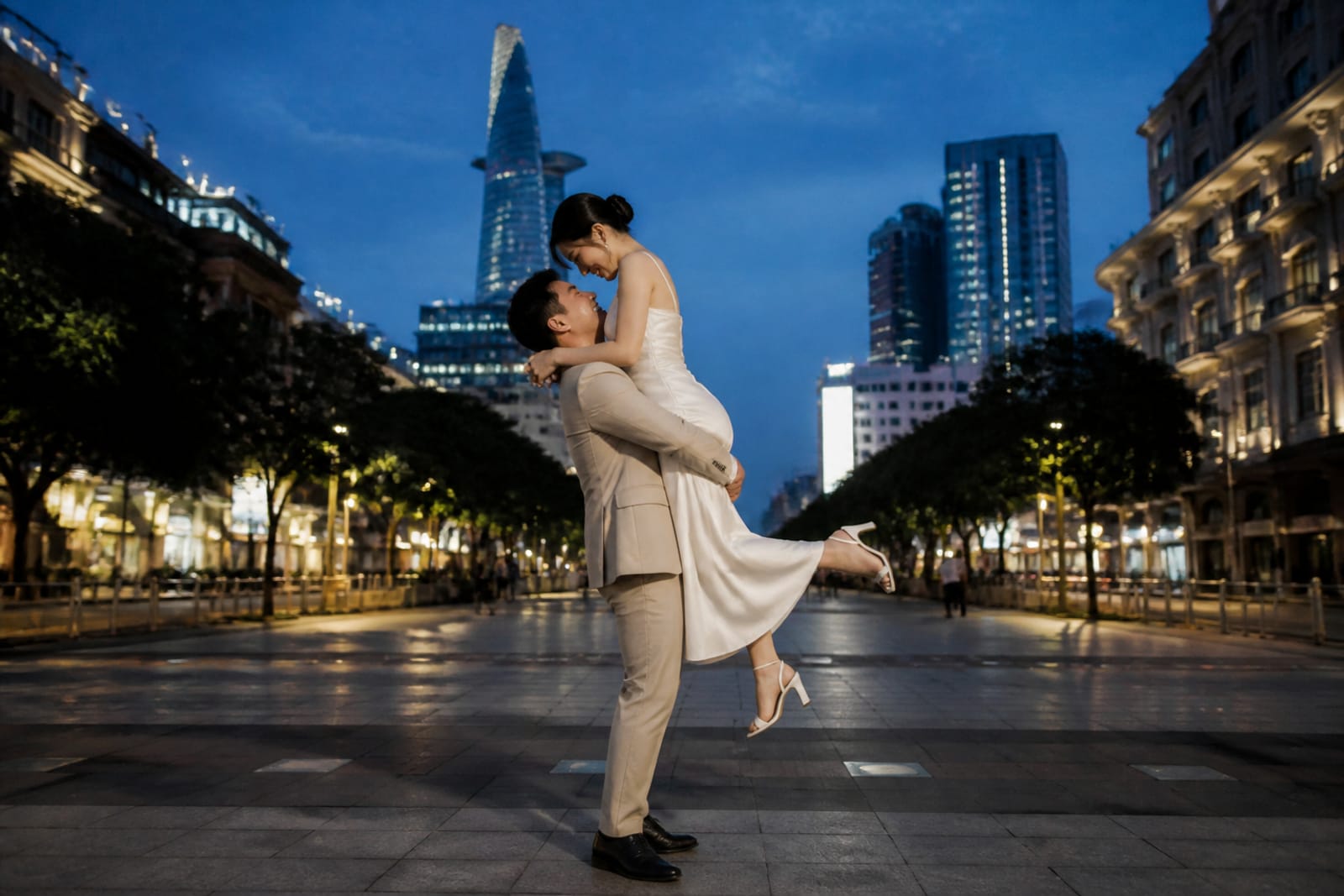
Warm neutrals (cream, beige, soft gold, champagne) harmonize with rust-red brickwork and steel's cool grey-blue tones—they sit between warm and cool without competing. Deep jewel tones (emerald, sapphire, burgundy) add richness and photograph with depth; they read formal but not costume. Bright white and stark black create graphic contrast but can flatten in midday harsh light. Blush, mauve, and soft pastels can wash out against industrial grey unless shot in early golden light. Avoid neon or very pale pastels unless you're intentionally chasing a vintage or editorial look. Coordinate both partners' palettes—one warm, one cool, or both in the same temperature range—so the couple reads as unified rather than clashing. Ask Cáo Studio for a visual mood board during booking to test your colors against the bridge's actual tones.
When Should I Schedule Ba Son Bridge Photos to Get the Best Light?
Early morning (6–7:30 AM) offers cool, directional light with minimal crowds—ideal for intimate, clean shots where the couple is the focus, not foot traffic. Late afternoon (4:30–6 PM) delivers warm golden light that softens the bridge's harsh industrial edges and flatters skin tones. Midday (10 AM–3 PM) produces harsh overhead shadows that create unflattering lines across faces and uneven skin texture in close-ups; avoid this window. Overcast mornings (Nov–Feb, frequent in Hanoi) provide even, soft light suitable for any outfit but require patience—clouds thicken as midday approaches. Check the weather forecast 3–5 days before your shoot; Cáo Studio's Hanoi team can advise on rescheduling if rain threatens. Tet (late Jan–mid Feb) brings crowd surges and reduced natural light; book well ahead if scheduling around the holiday.
Do I Need Separate Outfits for Different Ba Son Bridge Locations?
Yes, if you want editorial variety—the bridge spans multiple zones: the main arch (most photographed, open, dramatic), the underneath (moody, shadowed, intimate), the flanking waterfront (softer, more natural). One outfit per zone typically works; changing outfits between zones adds 15–20 minutes per change and raises session length. A single outfit works well for a focused 1-hour session capturing different angles. Two outfits (e.g., ao dai for the arch, casual for the waterfront) give two distinct narratives and suit 2-hour sessions. Three or more outfits require 3+ hours and may exceed the bridge's visitor-tolerance window (late morning onward brings school groups and tourists). Discuss outfit count and session length with Cáo Studio when booking—the team can estimate timing based on your choices and advise on efficiency.
What Should I Avoid Wearing at Ba Son Bridge?
Avoid very loose, billowing fabrics (flowy maxi skirts, wide palazzo pants) unless styled intentionally—they tangle on the bridge's metal edges and railings, slowing movement and creating safety hazards. Heavily printed or loud patterned fabrics compete with the brick and steel for visual attention; solid colors and subtle textures let the couple's connection lead. Very long heels are impractical on the bridge's uneven, sometimes wet surfaces—opt for flat shoes, low heels, or elegant sneakers. Reflective or shiny fabrics (lamé, vinyl, heavy sequins) can blow out in bright light and photograph as distracting glare. Avoid pure white for casual looks unless shot in low light—it glows harshly in midday sun and reads washed-out. Clothing with visible logos, bold slogans, or busy layering dilutes the couple's focus. Choose garments that fit snugly enough to move freely and photograph cleanly against the industrial backdrop.
What Styling Choices Complement Ba Son Bridge's Aesthetic?
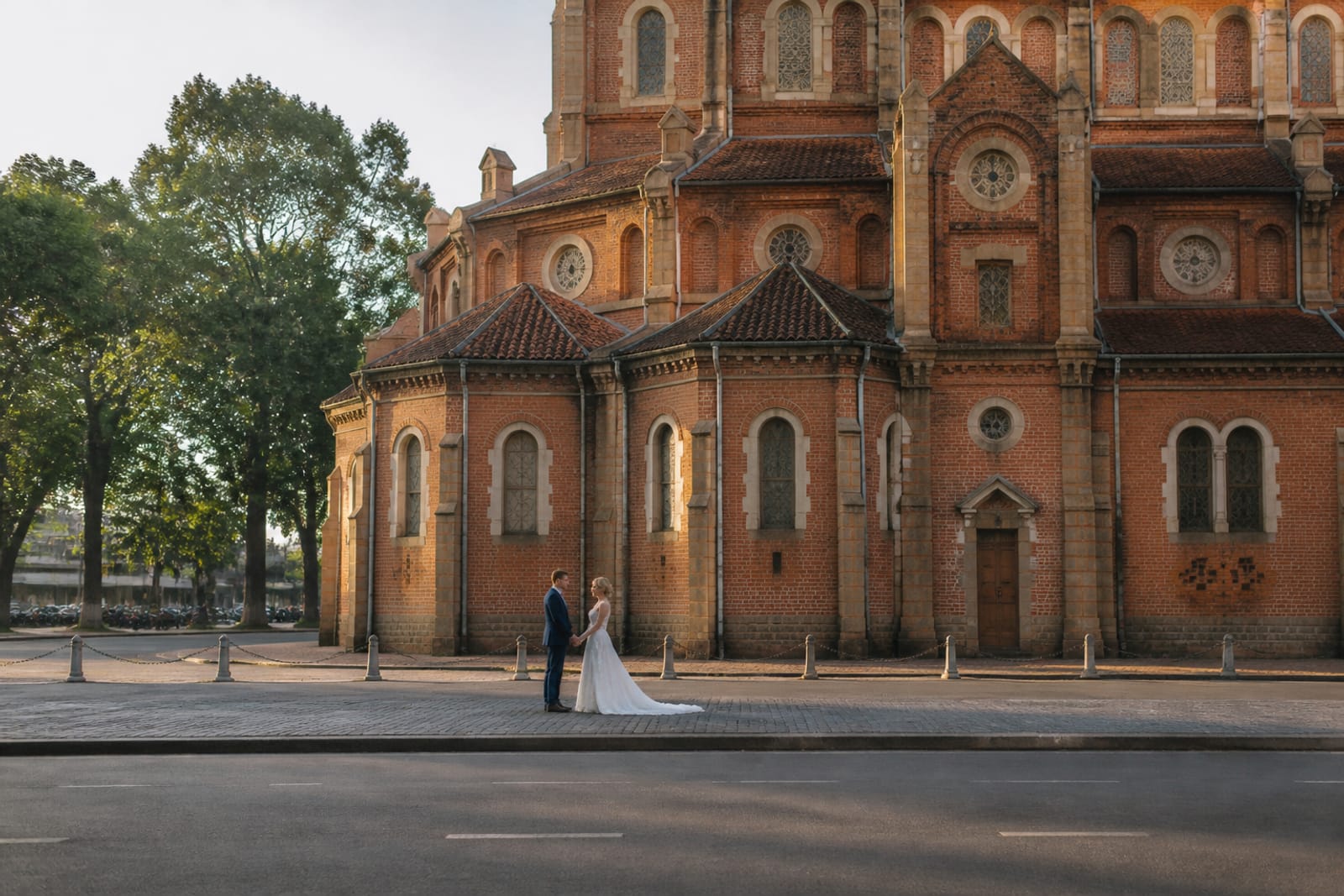
Minimal accessories (delicate jewelry, small clutch) keep the focus on the couple and the setting's geometry. Hair worn half-up or sleek works better than heavy volume, which can obscure the face in outdoor wind and compete with the architectural lines. Makeup should be soft and natural for daytime, or bold and graphic for editorial mood—the bridge's cool tones can make cool-based makeup (grey, taupe, plum) photograph beautifully. For ao dai, keep jewelry simple and let the textile shine; add a silk shawl or light wrap for warmth and visual flow. For casual looks, layering (open shirt over fitted tee, structured blazer over basics) adds depth and photos better than flat single layers. Groom styling should echo the bride's temperature (if she's warm tones, he wears warm-neutral; if cool, he coordinates cool). Bring a hair tie and safety pins for last-minute adjustments between takes.
📸 Book on WhatsApp — ao dai photoshoot
How Do Weather and Season Affect Outfit Planning at Ba Son Bridge?
November–February (Hanoi cool, dry season): Overcast morning light is soft and shadowless. Layer with cardigans, blazers, or light jackets; ao dai looks especially rich in this muted light. Cooler air means comfortable movement but bring a shawl for warmth between shots. Occasional drizzle requires water-resistant touch-ups and quick-dry fabrics.
March–May (warming, clear skies): Golden hour is bright and directional; strong backlighting creates rim-lighting on hair and fabrics. Lighter clothing (linen, cotton) is practical; ao dai silk drapes elegantly. Midday glare intensifies—schedule earlier or later to avoid harsh shadows.
June–September (hot, humid, occasional rain): Early morning (before 8 AM) is essential to avoid sweat-stained clothing by mid-morning. Breathable fabrics (cotton, linen) and minimal layers are practical. Afternoon rain squalls can force rescheduling; confirm weather-reschedule terms with Cáo Studio. Humidity affects hair; plan for a touch-up midway through.
October (transition, typhoon risk): Unpredictable light and frequent rain showers. Check forecasts closely and confirm rescheduling flexibility with the studio.
What's the Difference Between Booking a Ba Son Bridge Session and Other Hanoi Couple Photoshoot Locations?
Ba Son Bridge suits industrial-romantic narratives; other Hanoi locations offer distinct aesthetics. Old Quarter narrow streets read intimate and layered; Ba Son is open, geometric, and editorial. Traditional temples (Tran Quoc, One Pillar) photograph heritage and spiritual mood; Ba Son photographs modernity and rawness. French colonial architecture (historic villas, Opera House area) leans elegant and nostalgic; Ba Son leans bold and contemporary. Green spaces (Botanical Garden, Hoan Kiem lakeside) feel natural and soft; Ba Son feels constructed and cool-toned. Session choice depends on your aesthetic preference—Cáo Studio's team can walk you through each location's light, crowds, and outfit compatibility during consultation. See the lookbook to compare moods across locations.
Should I Book a Full Pre-Wedding Shoot at Ba Son Bridge or a Standalone Couple Session?
A standalone couple session (typically 1–2 hours) at Ba Son works well for engagement, anniversary, or couples wanting a single-location focus with minimal time investment. A pre-wedding photoshoot usually spans multiple locations over several hours or days—Ba Son might be one stop among 3–5 locations. Choose a standalone session if Ba Son's industrial aesthetic is your priority and you want streamlined timing. Choose pre-wedding if you want to explore Hanoi's variety (old architecture, nature, urban grit, heritage) across one shoot. Pre-wedding typically includes more wardrobe changes and allows comparison of styles across settings. Both can include makeup and hair—clarify with Cáo Studio whether that's included or booked separately via hotel makeup & hair. Ask WhatsApp for the specific inclusions matched to your vision and budget timeline.
What Should I Check Before Booking a Ba Son Bridge Shoot With Cáo Studio?
Confirm availability and weather policy. Ask WhatsApp whether Ba Son is available on your preferred dates and what happens if rain or unexpected bridge closure occurs—is rescheduling free, or is there a fee structure?
Verify timing and light windows. Specify your preferred time (early morning, late afternoon) and ask the team to confirm whether it aligns with seasonal light patterns on your date.
Clarify outfit expectations. Tell Cáo Studio your outfit plan (ao dai, casual, formal, or a combination) and ask whether the team recommends adjustments for current weather and their ability to style your look. If makeup and hair are not included, ask for referrals.
Check location access and crowd patterns. Ask whether the bridge is open to the public on your shoot date and whether foot traffic typically interferes—weekday mornings often are quieter than weekends.
Discuss session inclusions. Confirm the exact number of edited photos, the delivery timeline, and whether additional outfit changes incur extra time fees. These details are confirmed on WhatsApp, not on the website.
Request a location scout or mood board. If you've never seen Ba Son, ask Cáo Studio to share reference photos or recommend a pre-visit to assess light and setting in person.
FAQ
Can I wear ao dai at Ba Son Bridge if I'm not Vietnamese?
Absolutely. Ao dai is a stunning garment for photoshoots regardless of heritage—it photographs beautifully and is respectful when worn in a cultural context like a photoshoot. Cáo Studio's team can advise on authentic tailoring and styling.
What's the best season for Ba Son Bridge couple photos?
November–February offers soft overcast light and cool temperatures ideal for movement; March–May provides golden hour drama; June–September requires early-morning scheduling to avoid heat and humidity. Avoid October's typhoon risk. Check weather with Cáo Studio 3–5 days before your date.
How much time should I allow for outfit changes at Ba Son Bridge?
One outfit change takes 10–15 minutes (including touch-ups, repositioning, and camera settings). Two outfits fit comfortably into a 2-hour session; three or more require 3+ hours and may hit crowd-traffic window limits in late morning.
Do I need special shoes to walk on Ba Son Bridge during a photoshoot?
Flat shoes, low heels, or elegant sneakers are safest—the bridge has uneven metal grating and edges. Avoid tall heels, which catch on railings and slow movement. Bring backup shoes if your outfit requires formal heels but walking is impractical.
What if it rains on my Ba Son Bridge shoot date?
Light drizzle is sometimes workable with quick-dry fabrics and touch-up powders; heavy rain typically forces rescheduling. Confirm Cáo Studio's rain policy (free reschedule, fee, or no reschedule) when you book. Check weather forecasts 3–5 days ahead and ask the team about backup indoor locations if rain is likely.
Can I bring my own outfits or do I have to rent from Cáo Studio?
You can wear your own outfits. Cáo Studio does not require rental—bring pieces you already own or have tailored. The team offers optional ao dai rental and suit rental if you prefer; ask WhatsApp for rental availability and scheduling.
How far in advance should I book a Ba Son Bridge session?
Book 2–4 weeks ahead to secure your preferred date and time, especially in peak light seasons (Mar–May, Nov–Feb). Peak wedding season (Oct–Dec, Jan–Feb) fills quickly; book 1–2 months early if those months matter to you. Shorter notice may be possible—ask WhatsApp about real-time availability.
FAQ
Can I wear ao dai at Ba Son Bridge if I'm not Vietnamese?
Absolutely. Ao dai is a stunning garment for photoshoots regardless of heritage—it photographs beautifully and is respectful when worn in a cultural context like a photoshoot. Cáo Studio's team can advise on authentic tailoring and styling.
What's the best season for Ba Son Bridge couple photos?
November–February offers soft overcast light and cool temperatures ideal for movement; March–May provides golden hour drama; June–September requires early-morning scheduling to avoid heat and humidity. Avoid October's typhoon risk. Check weather with Cáo Studio 3–5 days before your date.
How much time should I allow for outfit changes at Ba Son Bridge?
One outfit change takes 10–15 minutes (including touch-ups, repositioning, and camera settings). Two outfits fit comfortably into a 2-hour session; three or more require 3+ hours and may hit crowd-traffic window limits in late morning.
Do I need special shoes to walk on Ba Son Bridge during a photoshoot?
Flat shoes, low heels, or elegant sneakers are safest—the bridge has uneven metal grating and edges. Avoid tall heels, which catch on railings and slow movement. Bring backup shoes if your outfit requires formal heels but walking is impractical.
What if it rains on my Ba Son Bridge shoot date?
Light drizzle is sometimes workable with quick-dry fabrics and touch-up powders; heavy rain typically forces rescheduling. Confirm Cáo Studio's rain policy (free reschedule, fee, or no reschedule) when you book. Check weather forecasts 3–5 days ahead and ask the team about backup indoor locations if rain is likely.
Can I bring my own outfits or do I have to rent from Cáo Studio?
You can wear your own outfits. Cáo Studio does not require rental—bring pieces you already own or have tailored. The team offers optional [ao dai rental](/ao-dai-rental) and [suit rental](/suit-rental) if you prefer; ask WhatsApp for rental availability and scheduling.
How far in advance should I book a Ba Son Bridge session?
Book 2–4 weeks ahead to secure your preferred date and time, especially in peak light seasons (Mar–May, Nov–Feb). Peak wedding season (Oct–Dec, Jan–Feb) fills quickly; book 1–2 months early if those months matter to you. Shorter notice may be possible—ask WhatsApp about real-time availability.
Ao dai, makeup, hair and a local photographer in Hanoi or Saigon — one WhatsApp message.