/pre-wedding-photoshoot
What to Wear for Couple Photos at Bai Dinh Pagoda
Bai Dinh Pagoda, located in Ninh Binh province, is a working Buddhist temple where couple photoshoots are possible with respectful dress and timing. Visitors must cover shoulders, knees and avoid tight, transparent or predominantly black clothing—guidelines that apply year-round. The best light falls in early morning (6–8 a.m.) or late afternoon (4–6 p.m.); mid-day sun creates harsh shadows on the marble grounds. Plan a 3–4 hour session to capture the main pagoda, courtyards and golden Buddha statue without clashing with worship hours or crowds. Choose breathable fabrics in pastel, earth or jewel tones; avoid synthetic materials that cling in humidity. Cáo Studio – Makeup & Photoshoot coordinates Bai Dinh shoots from Hanoi with a local photographer experienced in temple etiquette and timing—confirm logistics and outfit details on WhatsApp before booking to ensure cultural and visual harmony. 📸 Book on WhatsApp — pre-wedding photoshoot --- Bai Dinh Pagoda draws couples for its architectural scale and spiritual backdrop, but the setting demands thoughtful planning. The temple's marble courtyards, intricate carvings and towering statue create dramatic frames—yet poor outfit choices and timing can undermine even the best locations. This guide walks you through fabric, color, season and logistics so your couple photos honor the space and look polished on camera.
What colors and fabrics work best at Bai Dinh?
Bai Dinh's white marble and gold-leafed details respond best to soft, jewel and earth tones that neither wash out nor compete with the architecture. Pastels (dusty rose, sage, pale blue), muted golds, terracotta and forest green all photograph clearly against the stone. Avoid pure black, white (risks blown-out reflections on marble) and neon or hot colors that distract from composition.
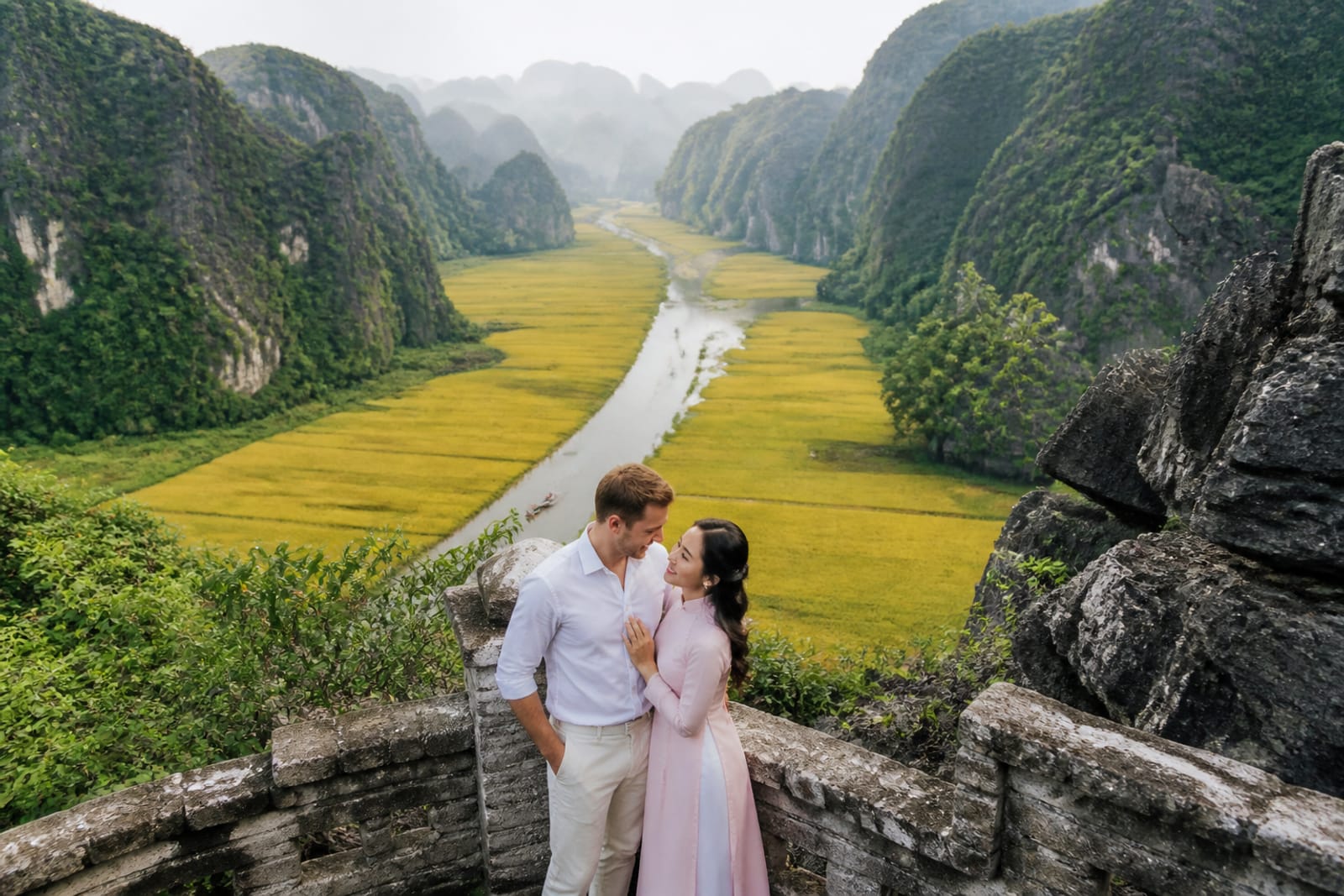
Fabric matters as much as color. Linen, cotton blends, silk-like polyester and structured cotton keep their shape through a 3–4 hour session in humidity (Ninh Binh averages 75–85% humidity, especially Mar–May and Sep–Oct). Tight lycra, thin polyester and mesh cling to skin and wrinkle visibly in heat. Loose, flowing cuts—midi skirts, wide-leg trousers, oversized linen shirts—move gracefully and respect temple dress codes. If wearing an áo dài, choose unlined or linen-blend versions; traditional heavy silk can feel oppressive in warm months and expensive to preserve outdoors.
Avoid anything predominantly black (considered unlucky in Buddhist spaces) or overly sheer without layering. Bring a lightweight scarf if your dress is sleeveless—temple guides may ask you to cover shoulders during worship times, and the prop adds compositional depth.
🌸 Explore ao dai rental for a spiritual, temple-respectful look
How do seasons affect outfit choice and session timing?
Northern Vietnam's climate splits into four distinct windows; each shapes how fabrics behave and when light peaks.
| Season | Best Months | Light & Weather | Outfit Strategy | Why It Matters |
|---|---|---|---|---|
| Cool & Clear | Dec–Feb | Soft, even light; cool temps; occasional grey days | Layered: lightweight knit + structured midi dress or tailored trousers; scarf as prop | Bright colors pop without fading in harsh sun; layers work for temperature swings |
| Warm Spring | Mar–May | Golden morning/evening light; 28–32°C; high humidity | Breathable linen, cotton blends; loose silhouettes; minimal undergarments | Fabrics won't cling; golden hour light flatters skin; humidity won't wilt clothes within 4 hours |
| Hot & Rainy | Jun–Aug | Bright, diffused midday light; afternoon storms; 32–35°C | Fast-dry blends, sleeveless + cover-up scarf; jewel tones over pastels | Heat risks visible sweat; storms postpone sessions; afternoon thunder limits booking windows |
| Autumn | Sep–Nov | Golden light returns; 24–28°C; typhoon risk (Oct–Nov worst) | Mid-weight fabrics, longer sleeves; darker earth tones; waterproof backup plan | Golden light equals the best camera output; early Sep still humid; Oct–Nov brings flood warnings and rescheduling risk |
Mar–May and Sep–Oct offer the highest photo quality: light is warm but not harsh, humidity is manageable, and outfit choices expand. June–Aug heat means fabric must be breathable and light-colored to avoid visible moisture; fast-dry polyester blends replace linen. Dec–Feb suits couples who like soft, cool conditions but must accept that grey skies flatten colors and reduce golden-hour windows (both partners may need darker, richer tones to stand out).
💄 Book makeup & hair at your hotel to prepare
Do couple outfits need to match, and how close should they be?
Matching outfits—identical color, theme or even outfit swap—became trendy but often backfire at Bai Dinh: the marble and gold detail dominate, and identical clothing risks flattening the composition and erasing individuality.
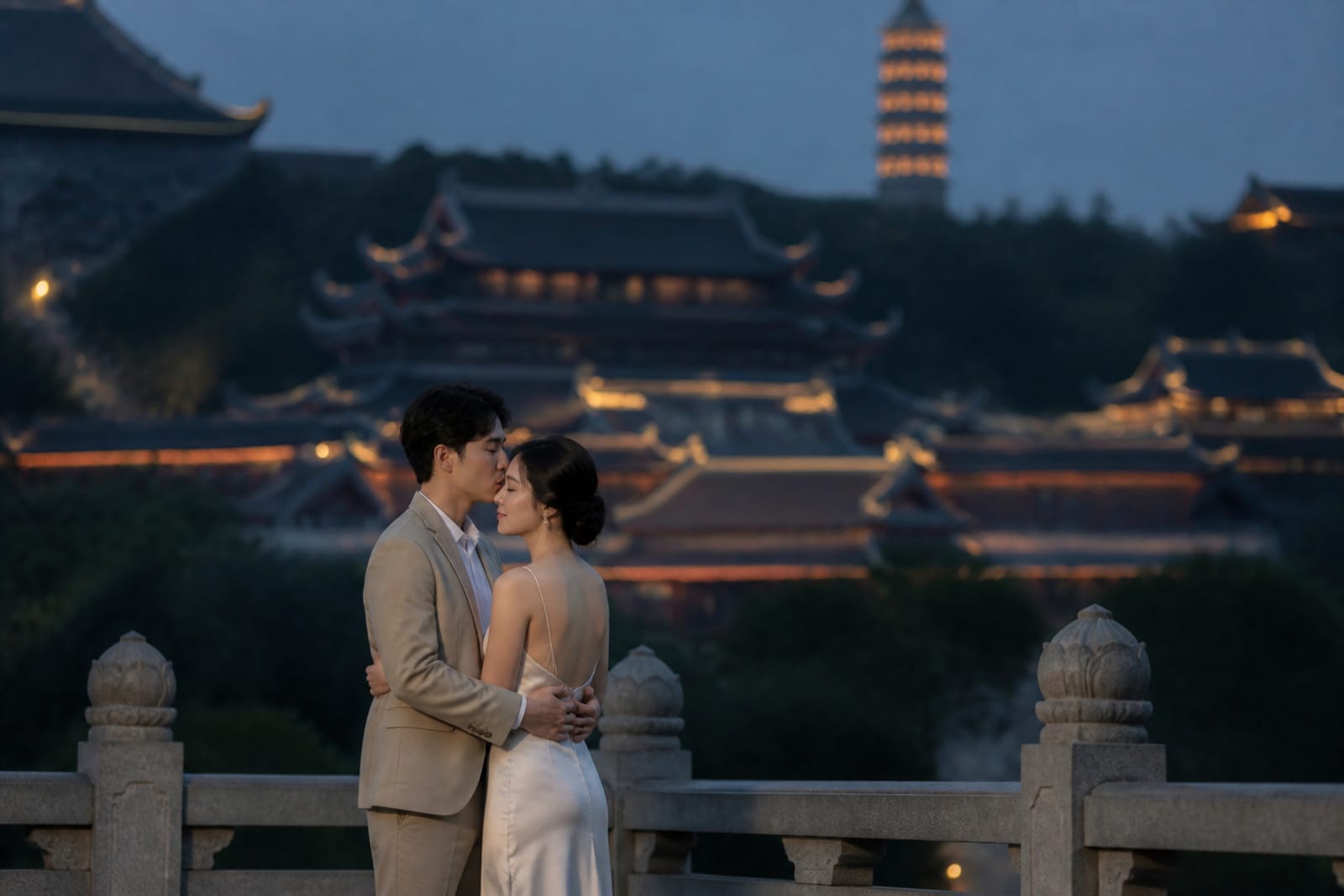
A stronger approach is coordinated contrast: one partner in jewel tone (emerald, sapphire), the other in complementary earth (terracotta, taupe, cream). This creates visual rhythm without uniformity and suits the temple's layered architecture. Alternatively, tonal coordination—both in shades of one color family (e.g., dusty rose and mauve, or sage and olive)—photographs as deliberate and intimate without feeling costume-like.
Couples often ask whether to match formality levels: yes, always. If one wears a tailored áo dài, the partner should wear structured trousers or a formal midi dress, not casual athleisure. Mismatched effort reads as unplanned.
A third option, suited to pre-wedding shoots, is narrative outfits: each partner wears something meaningful (a family heirloom textile, a color tied to a shared memory, a dress one wore when they met). This approach requires creative framing and a photographer experienced in cultural detail—ask Cáo Studio about your story and how to translate it into visual choices.
What about temple dress codes and timing restrictions?
Bai Dinh is an active worship site; respect for dress codes and schedule directly affects whether your session happens and how smoothly it runs.
Mandatory rules:
- Knees covered (no shorts, no thigh-high slits without opaque leggings underneath).
- Shoulders covered (sleeveless only with a scarf or jacket layered).
- No see-through fabrics without a slip or full lining.
- No predominantly black clothing (cultural sensitivity to mourning).
- No hats indoors in the main pagoda; sunhats are fine outdoors.
Timing restrictions: The pagoda is busiest 7–9 a.m. (morning worship) and 5–6 p.m. (evening prayers). Photographers book 8–11 a.m. or 3–5 p.m. slots to avoid crowds and active ceremonies. Weather can tighten windows: if rain is forecast for late afternoon, a morning shoot becomes mandatory. Typhoon season (Oct–Nov) may force rescheduling with little notice.
Practical steps before booking:
- Confirm your outfit with your photographer via WhatsApp; they'll flag dress-code risks.
- Ask whether your session will include the interior pagoda (requires stricter dress codes) or focus on courtyards (slightly more flexible).
- Bring a backup scarf or lightweight shawl in case temple staff request additional coverage.
- Check weather 3 days before and be ready to shift your session 2–3 hours if storms approach.
Cáo Studio coordinates directly with local temple guides to ensure your shoot respects worship schedules and cultural expectations—part of pre-booking confirmation on WhatsApp.
How does your outfit choice change for a pre-wedding shoot vs. a casual couple session?
The distinction shifts outfit strategy. A pre-wedding photoshoot is formal, often multi-outfit, and emphasizes narrative and polish; a casual couple photoshoot prioritizes comfort and authenticity in a single, carefully chosen look.
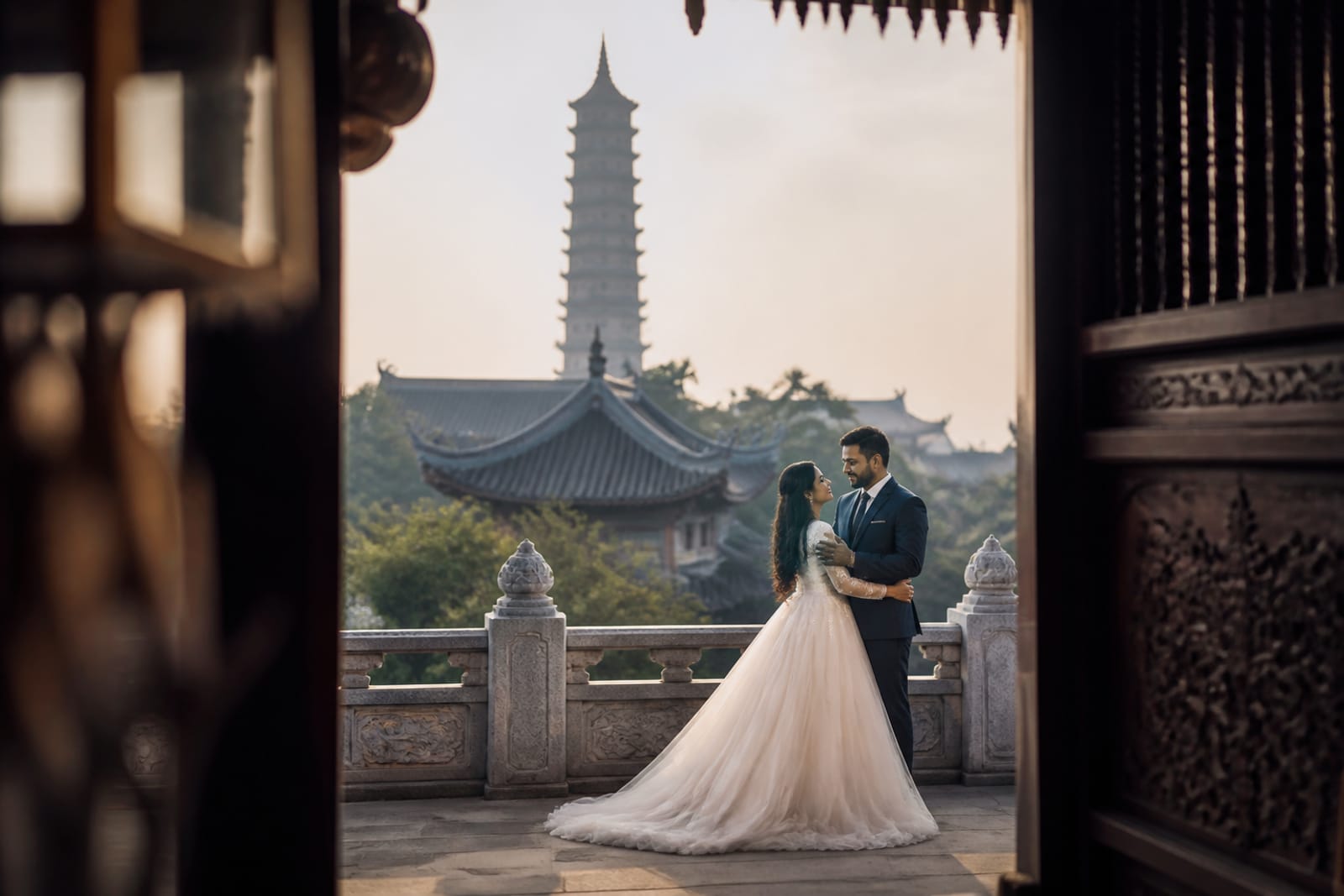
Pre-wedding at Bai Dinh typically involves 2–3 outfit changes: a formal áo dài or tailored dress-and-groom-suit combination, a semi-formal linen or lace option, and sometimes a casual reveal (jeans, soft sweater). Each outfit is coordinated with makeup, hair and location pacing. You're building a story arc, so changes should feel intentional—early morning in formal wear as light is softest, mid-session in semi-formal for golden-hour light, casual looks for intimate close-ups. Fabrics must transition between outfits without visible wrinkles or sweat marks; breathable blends and loose silhouettes are non-negotiable.
Casual couple sessions work with one outfit that reflects both partners' style and the temple's energy. The goal is ease: wear something you genuinely feel good in, that fits the season and meets dress codes. A single thoughtful outfit often photographs better than rushed outfit swaps because the couple relaxes and the photographer captures authentic moments rather than staged transitions.
Pre-wedding shoots at Bai Dinh run 4–6 hours; casual sessions fit into 2–3 hours. Budget outfit choices accordingly—heat, humidity and sitting/kneeling for temple-blessing photos all factor in. Ask your photographer whether the session includes makeup touch-ups between outfits (many do); this affects how heavy or dewy you want to start.
📸 Book a couple or pre-wedding shoot
What should you check and plan before booking?
A practical checklist ensures your outfits align with the shoot plan, season and logistics:
- Weather & season: Confirm the date 3 weeks ahead; if it's typhoon season (Oct–Nov), discuss rescheduling terms. Check Ninh Binh's forecast 5 days before and adjust fabric weight or color if needed.
- Outfit details with your photographer: Send photos or descriptions of planned outfits via WhatsApp; ask for feedback on color harmony, dress codes and practicality for the location. If wearing an áo dài, confirm whether you're renting or bringing your own—rental timelines affect your booking window.
- Makeup & hair prep: Bai Dinh's humidity (and temple incense) can disrupt makeup. Book makeup & hair services on-location or ask your photographer which local services they trust. Discuss sweat-proof foundations and hair styling that moves naturally (not rigid updos).
- Physical comfort: Bai Dinh involves walking marble courtyards, climbing stairs and kneeling for blessing photos. Wear shoes you can slip off easily and that won't leave marks on white stone. Test your outfit for restriction of movement—if you can't bend or walk easily, the photographer will notice tension in photos.
- Backup outfit or props: Bring a lightweight shawl, scarf or unstructured linen jacket in a complementary color. If your main outfit needs coverage for temple reasons, the backup layers are ready.
- Finalize timing: Confirm your session start time 1 week before. Early morning (6:30–8 a.m.) offers the softest light and fewest crowds but requires early waking and cooler clothing; late afternoon (4–6 p.m.) maximizes golden-hour drama but risks weather and lengthens your day.
Reach out to Cáo Studio on WhatsApp with your date, outfit ideas and any concerns about the location or cultural fit. The team will clarify exact inclusions—what makeup, retouching and file delivery look like for your session—so you book with confidence.
🌸 See the lookbook for outfit inspiration
---
What to Check Before You Book
- Outfit photos sent to your photographer for dress-code approval and color feedback.
- Makeup & hair plan: on-location service vs. self-prep, with sweat-proof products if summer.
- Timing confirmation 1 week before; understand light quality at your start time.
- Physical prep: comfortable shoes you can remove, tested outfit range of motion.
- Weather buffer: rescheduling terms if typhoon or heavy rain forecast (Oct–Nov especially).
- Inclusions clarity: ask on WhatsApp what file count, retouching and turnaround you receive.
---
FAQ
Can I wear a Western white wedding dress at Bai Dinh?
No. Pure white risks overexposure on the marble, and Western bridal gowns typically show cleavage or have sleeveless designs that conflict with temple dress codes. An áo dài or a tailored, modest dress in ivory or cream with a structured jacket is more appropriate and photographs better.
What if I'm uncomfortable with the dress code for religious reasons?
Bai Dinh is an active Buddhist temple, so dress codes apply to all visitors regardless of faith. If you have strong objections, discuss alternative Hanoi or Ninh Binh locations with Cáo Studio on WhatsApp—secular historical sites like Hoa Lư or nature backdrops offer full outfit freedom.
Do I need to rent an áo dài, or can I wear my own?
Both work. If you own or inherit an áo dài, wearing it is meaningful and authentic. Rentals (available through Cáo Studio or local Hanoi vendors) are convenient if you want multiple colors or fits without ownership. Confirm ownership or rental timeline when you book so makeup and photo logistics align.
How do I prevent sweat marks or wrinkles during a 4-hour pre-wedding session?
Wear breathable blends (linen, cotton, moisture-wicking polyester), not pure silk or tight synthetics. Bring tissues, blotting papers and a small facial spray for touch-ups between outfits. If using makeup & hair service, request sweat-proof foundations and hairstyles with built-in texture (waves hold better than rigid curls in humidity).
Can my partner and I wear casual clothes like jeans and t-shirts?
Not at Bai Dinh. Jeans and casual wear breach temple dress codes and photograph poorly against the formal architecture. Opt for tailored casual—structured linen trousers, a fitted long-sleeve shirt, and a simple belt or jewelry—that respects the space and looks intentional on camera.
What's the best season for a couple shoot at Bai Dinh?
March–May and September–early October offer ideal light (golden, soft), manageable humidity and low typhoon risk. December–February is cool and clear but often grey. June–August is hot and humid; sessions may feel physically taxing. October–November risk typhoons and rescheduling.
Should we hire a makeup artist specifically experienced with temple shoots?
Recommended. Temple incense and humidity require sweat-proof products and hands-on touch-ups. Cáo Studio can coordinate on-location makeup & hair services or guide you to vetted local artists who understand Buddhist space etiquette and photo-ready finishes for outdoor light.
How much time do we need for outfit changes during the shoot?
10–15 minutes per change, including touch-ups and repositioning. Plan outfit changes during natural breaks (moving between courtyards, rest moments). Three outfit changes typically stretch a session to 5–6 hours; two fits comfortably into 4 hours. Confirm change timing with your photographer when you book.
FAQ
Can I wear a Western white wedding dress at Bai Dinh?
No. Pure white risks overexposure on the marble, and Western bridal gowns typically show cleavage or have sleeveless designs that conflict with temple dress codes. An áo dài or a tailored, modest dress in ivory or cream with a structured jacket is more appropriate and photographs better.
What if I'm uncomfortable with the dress code for religious reasons?
Bai Dinh is an active Buddhist temple, so dress codes apply to all visitors regardless of faith. If you have strong objections, discuss alternative Hanoi or Ninh Binh locations with Cáo Studio on WhatsApp—secular historical sites like Hoa Lư or nature backdrops offer full outfit freedom.
Do I need to rent an áo dài, or can I wear my own?
Both work. If you own or inherit an áo dài, wearing it is meaningful and authentic. Rentals (available through Cáo Studio or local Hanoi vendors) are convenient if you want multiple colors or fits without ownership. Confirm ownership or rental timeline when you book so makeup and photo logistics align.
How do I prevent sweat marks or wrinkles during a 4-hour pre-wedding session?
Wear breathable blends (linen, cotton, moisture-wicking polyester), not pure silk or tight synthetics. Bring tissues, blotting papers and a small facial spray for touch-ups between outfits. If using makeup & hair service, request sweat-proof foundations and hairstyles with built-in texture (waves hold better than rigid curls in humidity).
Can my partner and I wear casual clothes like jeans and t-shirts?
Not at Bai Dinh. Jeans and casual wear breach temple dress codes and photograph poorly against the formal architecture. Opt for tailored casual—structured linen trousers, a fitted long-sleeve shirt, and a simple belt or jewelry—that respects the space and looks intentional on camera.
What's the best season for a couple shoot at Bai Dinh?
March–May and September–early October offer ideal light (golden, soft), manageable humidity and low typhoon risk. December–February is cool and clear but often grey. June–August is hot and humid; sessions may feel physically taxing. October–November risk typhoons and rescheduling.
Should we hire a makeup artist specifically experienced with temple shoots?
Recommended. Temple incense and humidity require sweat-proof products and hands-on touch-ups. Cáo Studio can coordinate on-location makeup & hair services or guide you to vetted local artists who understand Buddhist space etiquette and photo-ready finishes for outdoor light.
How much time do we need for outfit changes during the shoot?
10–15 minutes per change, including touch-ups and repositioning. Plan outfit changes during natural breaks (moving between courtyards, rest moments). Three outfit changes typically stretch a session to 5–6 hours; two fits comfortably into 4 hours. Confirm change timing with your photographer when you book.
Ao dai, makeup, hair and a local photographer in Hanoi or Saigon — one WhatsApp message.