/pre-wedding-photoshoot
What to Wear for Couple Photos at Bai Tu Long Bay
Couple photos at Bai Tu Long Bay require clothing that balances soft fabric drape with durability against salt water and wind. Choose breathable, quick-dry materials in white, cream, pastels or muted jewel tones—dark colors absorb boat heat. Wear fitted silhouettes that won't blow unpredictably; avoid loose hemlines and heavy layers. Bring a change of outfit if your budget allows, and plan shots around golden hour (early morning or late afternoon) when the limestone cliffs glow and wind often softens. Cáo Studio – Makeup & Photoshoot does not operate at Bai Tu Long Bay; book a local Hanoi photographer familiar with the port logistics, weather windows and boat permissions, or arrange a pre-wedding session in Hanoi before or after your cruise.
Bai Tu Long Bay—Ha Long's quieter neighbor—attracts couples seeking intimate, dramatic landscapes without the cruise-ship crowds. The water is calm early in the season, the light is generous, and the karst formations frame subjects beautifully. But clothing choices made on dry land fail fast on a boat. Wind tangles hair, humidity wrinkles cotton, spray stains dark fabrics, and heavy materials cling uncomfortably. Understanding how outfit choice changes image quality, comfort and logistics helps you book the right photographer and pack the right bag.
Can light and season change what I should wear?
Yes. Bai Tu Long's best-light season (March–May and September–November) has cooler mornings and variable humidity; summer (June–August) brings intense midday heat and afternoon downpours; winter (December–February) is cool but often grey and misty, flattening color contrast. In warm, bright seasons, lightweight whites and pastels hold color and reflect heat. In grey months, muted jewel tones (sage, slate, terracotta) read better against overcast skies and limestone. Avoid black and navy: they absorb heat, muddy in soft light, and show every water splash. Check the 10-day forecast before your shoot; if rain is forecast, ask your photographer whether they reschedule or move to sheltered spots on the boat.
What fabrics work on water without falling apart?
Cotton wrinkles, holds moisture and dries slowly—poor choice for a boat. Linen looks elegant but creases permanently once wet. Synthetic blends (polyester, nylon, spandex mixes) dry fast, resist salt stains and move fluidly—ideal for water shoots. Silk-like synthetics drape beautifully in photos while shedding water and wind. Avoid heavy denim, thick knits and embellished fabrics that absorb spray and add bulk underwater. Test any outfit at home: pour water on it, wring it gently and watch how fast it dries and whether stains set. Bring a microfiber towel or quick-dry cloth in your kit; you'll use it between outfit changes.
| Fabric Type | Best for Bai Tu Long | Why It Works | Season | Common Issue |
|---|---|---|---|---|
| Synthetic blend (poly/nylon mix) | Lightweight dresses, shirts | Dries fast, resists salt, drapes cleanly | Mar–Nov | Can feel cheap if low-quality |
| Linen-look synthetic | Relaxed fits, resort wear | Breath-able, soft in photos, quick-dry | Apr–Oct | Wrinkles on boat motion |
| Silk-weight polyester | Flowy skirts, scarves, overlay | Fluid drape, catches light, lightweight | Any | Slips in wind without grip |
| Performance stretch blend | Fitted pants, leggings, base layer | Comfortable, moves with you, dries in hours | Mar–Nov | Limited color range |
| Organic cotton (thin) | Light layering only | Breathable, soft feel | Apr–May, Sep–Oct | Wet = cold, dries slowly |
Which colors and fits photograph best on a boat?
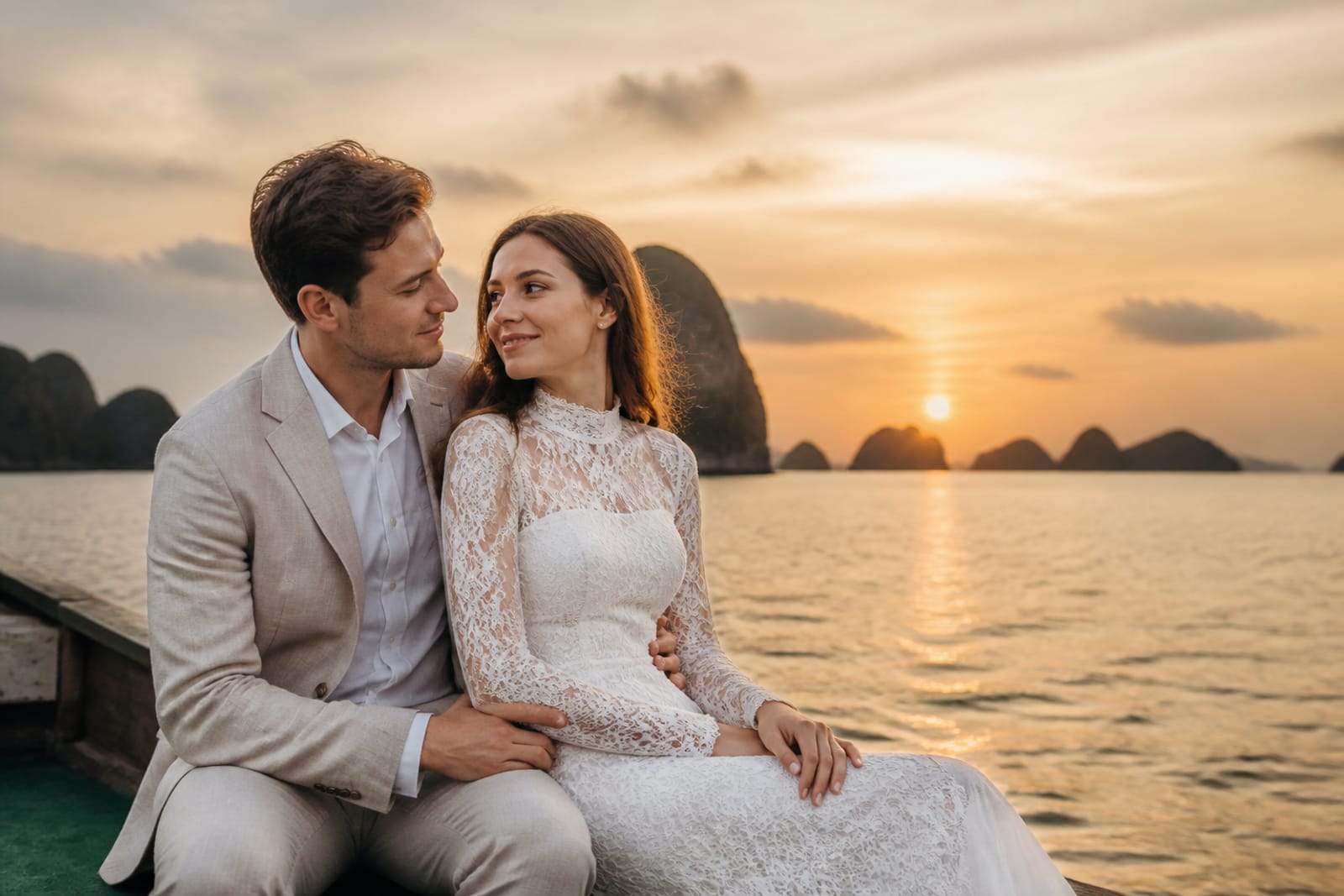
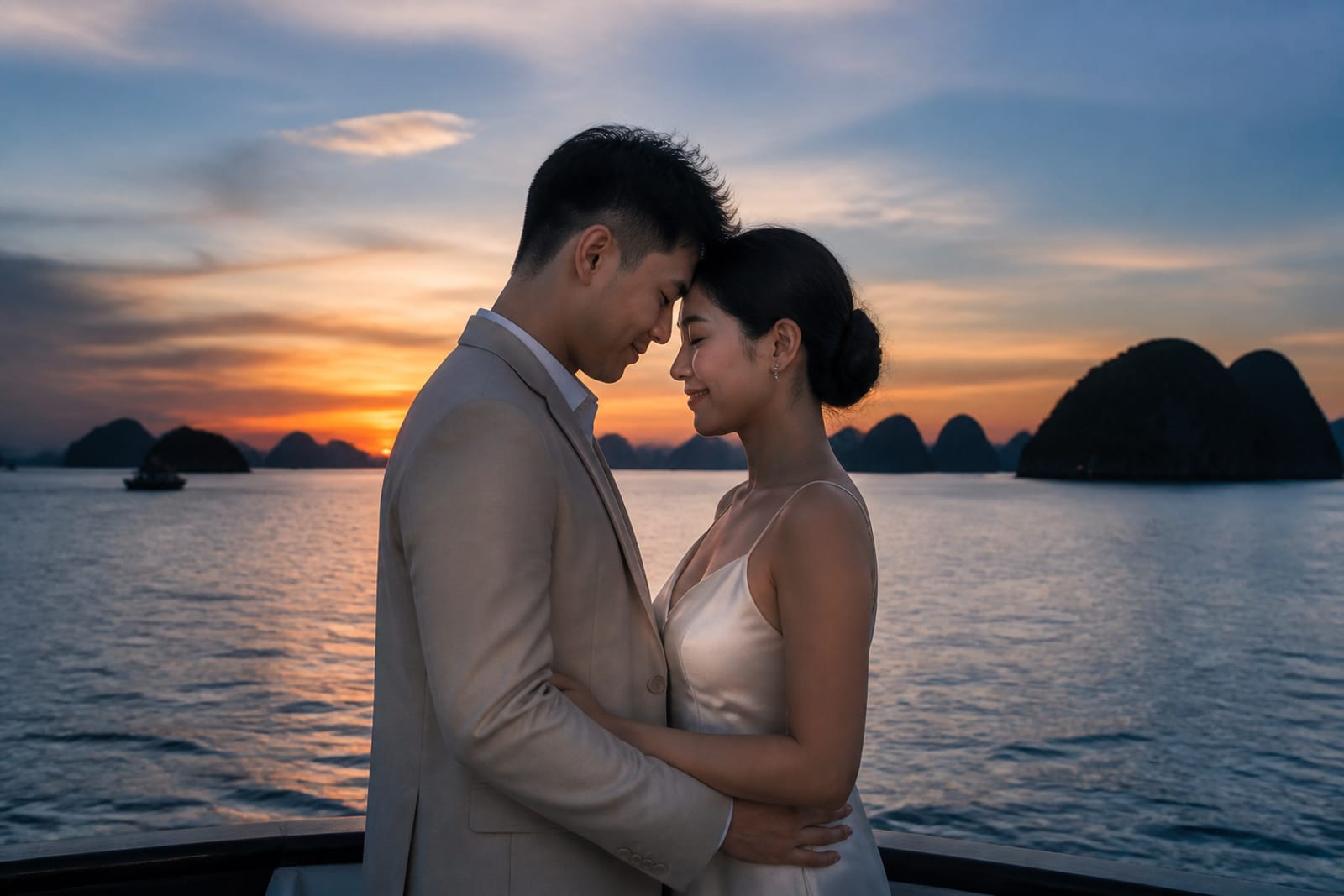
White and cream are classic couple-shoot choices: they reflect light, flatter skin tones, and keep you cool. Pastels (soft pink, pale yellow, dusty blue) add personality without competing with the landscape. Muted earth tones (taupe, warm grey, sage) work well in overcast seasons and make limestone glow by contrast. Avoid matching outfits exactly—photographers prefer complementary colors that show you as a couple without erasure. Fitted silhouettes photograph crisper than oversized: cinched waists, tailored shorts, form-fitting dresses hold shape in wind. Loose hems, billowing sleeves and flowy skirts look romantic in still-air portraits but become chaos on a rocking boat—wind catches them, they obscure legs, and movement blurs the frame. Choose one flowing piece (a shawl, sarong or unstructured overshirt) rather than layering multiple loose items. If you want movement in photos, ask the photographer to shoot during calmer moments (sheltered coves, early morning) rather than fighting wind all day.
How should I plan outfits if the budget allows two changes?
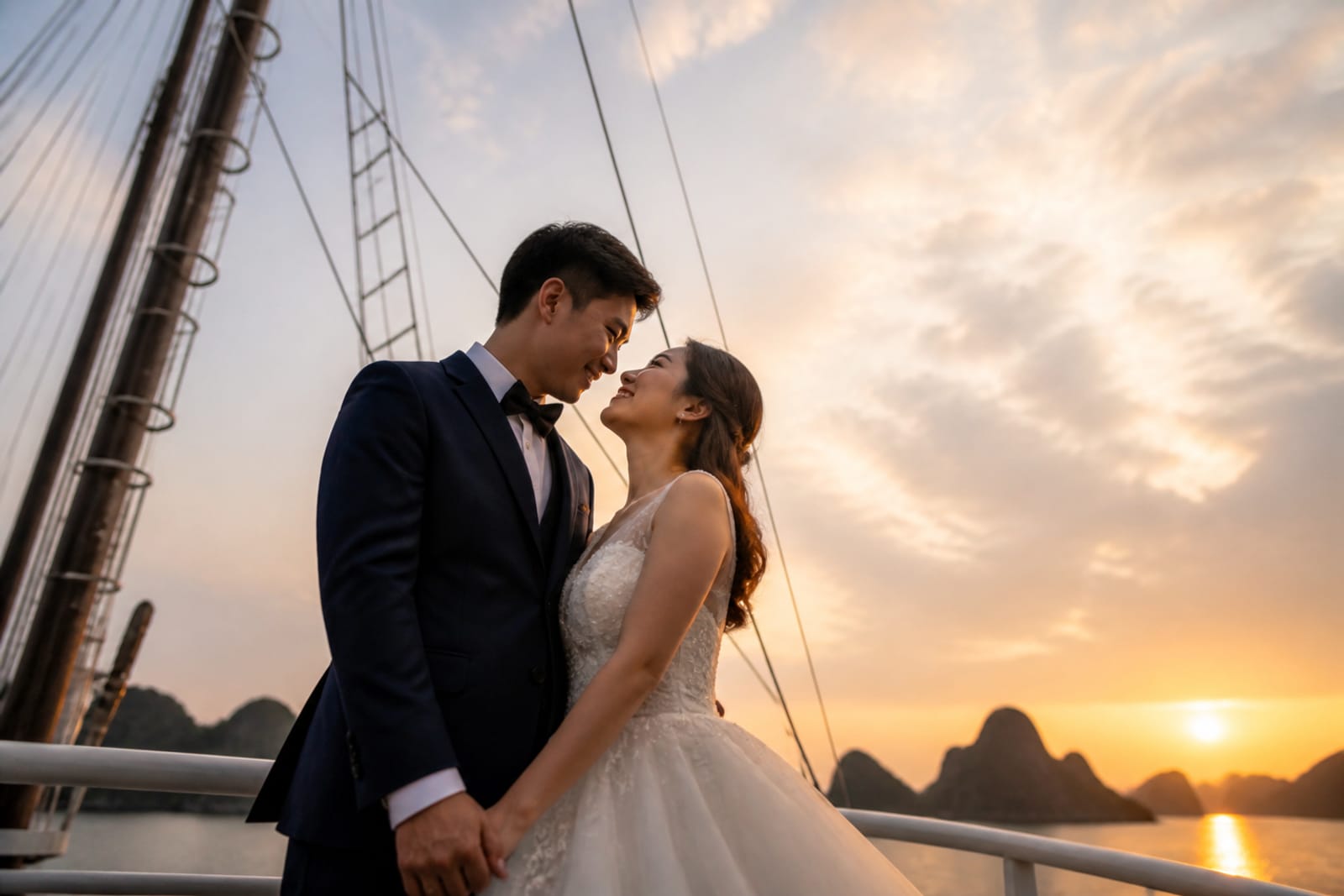
Two outfits let you capture different moods: a relaxed daytime look and a dressy evening set. First outfit—worn in golden morning light or afternoon glow—works best in comfortable, casual pieces (lightweight trousers, breathable dress, simple shirt). Second outfit, shot at sunset or near the boat cabin, can be dressier (a silky wrap dress, tailored jumpsuit, or ao dai if your photographer offers styling). Pack both in a lightweight dry bag; ask the boat operator where you can change (usually a cabin or sheltered deck area). Bring slip-on shoes—sandals or light sneakers—rather than laces you'll struggle with on a wet deck. One change takes 10–15 minutes; build that into your shoot timeline with your photographer. If budget is tight, one well-chosen outfit works fine; focus on fit and fabric instead.
What should I avoid and what's the honest reality of shooting on water?
Avoid: dark colors (too hot, stain visibly), stiff fabrics (uncomfortable and photo-restrictive), jewelry that dangles (catches on boat railings, jingles in sound), heavy makeup that sweats off (ask about makeup & hair at your hotel beforehand—waterproof products and professional application matter). Avoid scheduling in June–August if possible; heat exhaustion and midday harsh light are real challenges. Avoid loose hairstyles; wind tangles hair in 60 seconds. Ask your photographer or the boat crew whether spray from the water engine is likely; if yes, cover electronics and accept that your hem may get damp.
Honest reality: Boat shoots are active, sometimes physically uncomfortable, and full of wind and motion your outfits must survive. You will get slightly damp. Your makeup will shift. Hair that was perfect at 6 am will be wind-blown by 7:30 am. The best couple photos from water shoots are unpolished—genuine smiles while gripping each other, faces relaxed, clothes imperfect—so plan outfits that allow movement and accept imperfection as part of the aesthetic. Calm seas matter far more than perfect fabrics; a cancelled shoot due to weather beats a miserable one in a storm.
📸 Book on WhatsApp — pre-wedding photoshoot
How do I book a local photographer and what should I confirm?
Cáo Studio – Makeup & Photoshoot operates in Hanoi and Saigon; Bai Tu Long Bay requires a local Hanoi-based photographer familiar with the port, boat operators and permit requirements. Search for "couple photoshoot Bai Tu Long Bay Hanoi" and check portfolios for actual water shoots (not just boat deck backdrops). Before booking, confirm: (1) whether they've shot at that specific port and with that boat operator; (2) timing of sunrise/golden-hour arrivals; (3) outfit changes and where you'll dry off; (4) their experience with quick-dry styling and waterproof makeup; (5) whether they own water-safe camera gear and insurance; (6) the exact number of edited photos and delivery timeline. Ask for references from previous couples and check recent work—old portfolios may not reflect current boat crowds or schedule changes. Once booked, visit Hanoi earlier in your trip for a couple photoshoot in parks or temples if you want a second session with a trusted team, or use local shoot for primary couple images and plan additional portraits on land.
💄 Makeup & hair at your hotel | 🌸 See the lookbook
What to check before you book your Bai Tu Long Bay shoot
- Photographer experience: Have they shot at Bai Tu Long or Ha Long, not just generic "boat" backdrops? Ask for 3–5 recent couple portfolios and check image quality (sharpness, color, light handling).
- Boat logistics: Confirm the boat name, port time, duration, and whether the photographer has shot with that operator before. Some boat captains restrict photographer movement or require permits.
- Season and weather: Check the forecast 5–7 days before; ask the photographer their cancellation/reschedule policy if weather is poor.
- Outfit plan: Discuss colors, fabrics and two-outfit timing in advance. Ask whether they style shoots or whether you bring all pieces.
- Makeup: Book a waterproof, humidity-resistant makeup session with a professional—opt for makeup & hair at your hotel if traveling through Hanoi, or confirm your local photographer's makeup partner.
- Delivery timeline: Water shoots mean longer editing (salt spray, bright sun, complex light). Confirm when edited photos arrive—usually 2–4 weeks.
- Cost factors: A private boat hire + photographer is pricier than group cruises; a second outfit adds time; sunrise shoots often cost more due to early port arrival. Ask what's included and whether add-ons (drone, printed album, video) have separate fees on WhatsApp.
---
FAQ
Is white really the best color for couple photos on a boat, or will it get stained?
White photographs beautifully and reflects heat, but yes, salt spray and motor oil stains happen. Wear white only if you're confident in rinsing quickly after the shoot and accept minor spots as part of authenticity. Cream and pale ivory hide marks better while keeping the same visual effect. Bring a microfiber cloth and rinse hands and hems with fresh water immediately after the boat returns.
Can I wear an ao dai for a Bai Tu Long Bay photoshoot?
Yes, if your photographer approves the plan. An ao dai is elegant but heavy silk absorbs water and dries slowly; synthetic ao dai or lightweight silk works better. Wear fitted, water-resistant leggings underneath. Discuss fitting and drying logistics with your photographer before committing—many water shoots reserve ao dai for sunset indoor shots on the boat rather than deck photos.
What if I get seasick or uncomfortable on the boat—can we just shoot in calm water or in port?
Yes. A skilled photographer will scout calm coves, sheltered bays and slower-boat anchoring spots. Communicate seasickness concerns when you book; they can plan shorter excursions or static deck shots near the port. Some couples prefer a quick 2–3 hour shoot in protected water rather than a full-day cruise—ask whether that's available and how it affects the package.
Should I wear a wetsuit or rash guard if the photographer wants some water-entry shots?
Only if you've discussed it beforehand and the photographer has experience with that style. Wetsuits and rash guards read as activity wear in photos, not couple fashion. If you want playful water shots, wear your regular outfit, accept it will get wet, and plan to change immediately after. Confirm with the photographer whether they've shot wet-outfit couple photos successfully.
Do I need to bring multiple shoe changes for a Bai Tu Long shoot?
Bring one pair of slip-on waterproof shoes (sandal or light sneaker) and go barefoot for intimate shots if the boat deck is clean and safe. Avoid lace-up shoes—they're slow to remove and photograph bulky. If you're doing two outfits with different looks (casual then dressy), coordinate shoes that work for both or plan to change shoes during your outfit swap.
FAQ
Is white really the best color for couple photos on a boat, or will it get stained?
White photographs beautifully and reflects heat, but yes, salt spray and motor oil stains happen. Wear white only if you're confident in rinsing quickly after the shoot and accept minor spots as part of authenticity. Cream and pale ivory hide marks better while keeping the same visual effect. Bring a microfiber cloth and rinse hands and hems with fresh water immediately after the boat returns.
Can I wear an ao dai for a Bai Tu Long Bay photoshoot?
Yes, if your photographer approves the plan. An ao dai is elegant but heavy silk absorbs water and dries slowly; synthetic ao dai or lightweight silk works better. Wear fitted, water-resistant leggings underneath. Discuss fitting and drying logistics with your photographer before committing—many water shoots reserve ao dai for sunset indoor shots on the boat rather than deck photos.
What if I get seasick or uncomfortable on the boat—can we just shoot in calm water or in port?
Yes. A skilled photographer will scout calm coves, sheltered bays and slower-boat anchoring spots. Communicate seasickness concerns when you book; they can plan shorter excursions or static deck shots near the port. Some couples prefer a quick 2–3 hour shoot in protected water rather than a full-day cruise—ask whether that's available and how it affects the package.
Should I wear a wetsuit or rash guard if the photographer wants some water-entry shots?
Only if you've discussed it beforehand and the photographer has experience with that style. Wetsuits and rash guards read as activity wear in photos, not couple fashion. If you want playful water shots, wear your regular outfit, accept it will get wet, and plan to change immediately after. Confirm with the photographer whether they've shot wet-outfit couple photos successfully.
Do I need to bring multiple shoe changes for a Bai Tu Long shoot?
Bring one pair of slip-on waterproof shoes (sandal or light sneaker) and go barefoot for intimate shots if the boat deck is clean and safe. Avoid lace-up shoes—they're slow to remove and photograph bulky. If you're doing two outfits with different looks (casual then dressy), coordinate shoes that work for both or plan to change shoes during your outfit swap.
Ao dai, makeup, hair and a local photographer in Hanoi or Saigon — one WhatsApp message.