/pre-wedding-photoshoot
What to Wear for Couple Photos at Cau Dat Tea Hills
Cau Dat tea hills sit 1,500 metres above sea level near Da Lat, a highland region with cool, misty dawns and dappled afternoon light ideal for couple portraits. Visits run 3–5 hours (sunrise to mid-morning for best light); wear layers—thermal base, neutral jumpers or linen, a light jacket—because temperature swings 10°C between dawn and noon. Avoid bright whites (overexpose in mist) and busy patterns (distract from faces). The dry season (December–April) brings clearer skies and less mud; rainy season (May–November) offers thicker mist but muddy paths. Cáo Studio – Makeup & Photoshoot operates in Hanoi and Ho Chi Minh City; for a Cau Dat shoot, book a local Da Lat photographer or ask our Hanoi team on WhatsApp about guest-photographer coordination. Plan 4–6 weeks ahead to secure dates and confirm outfits with your photographer. ---
What makes Cau Dat different from other couple shoot locations?
Cau Dat's terraced tea plantations create natural leading lines that frame couples without needing props or heavy backdrops. The mist at sunrise wraps the hills, softening shadows and flattening perspective—a look film stock and filters can't replicate in studio. Unlike crowded Da Lat town spots (Dalat Flower Gardens, Thien Vien Truc Lam), the working tea farms stay quieter before 8 a.m. One real constraint: muddy paths after rain soak shoes within metres, and your outfit hems absorb red soil within steps. Morning light (5:30–8:00 a.m.) is cool and even; by 10 a.m. the sun climbs above the hills and contrast sharpens, losing that soft wrap. Bring extra shoes and plan your outfit before the shoot, not on arrival.
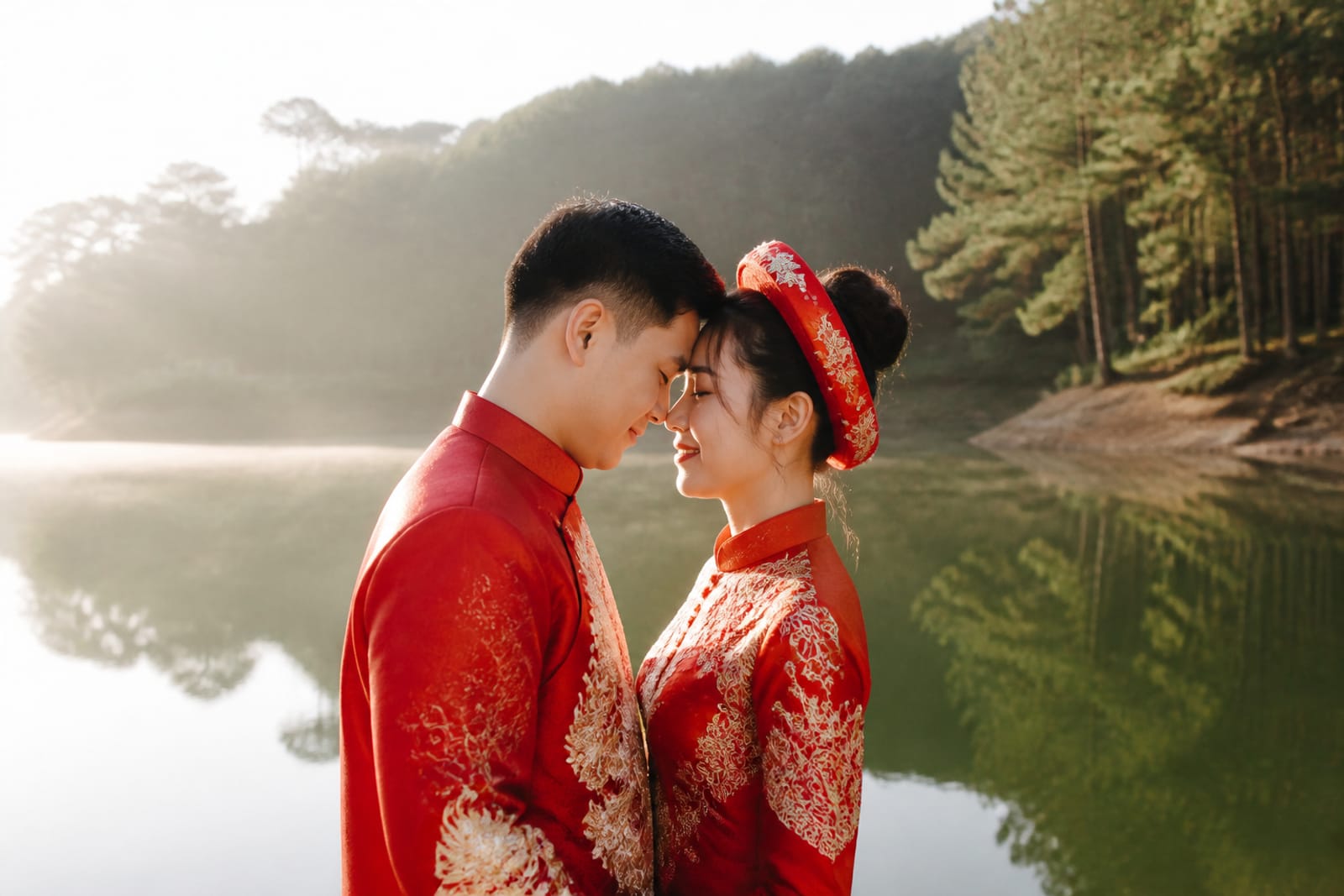
Should you hire a local Da Lat photographer or travel with your Hanoi team?
| Option | Best for | Light & season | Why it works |
|---|---|---|---|
| Local Da Lat freelancer | budget-conscious, flexible timing | Dry Dec–Apr for clear skies; rainy season for mist | knows farm access, avoids peak hours, no travel cost |
| Hanoi team coordination | couples wanting consistent style, makeup, timeline | Requires 5-day notice; winter clearer, spring misty | familiar with your vision, handles full day (hair, outfit, props) |
| Self-guided + phone photographer | adventurous DIY couples | Any season if you scout early morning | cheapest; risk of light waste and poor composition |
Hiring local cuts costs because no travel time; your photographer walks daily routes and knows which tea-picker shifts disrupt shots. A Hanoi team (like Cáo Studio's pre-wedding service) brings continuity—same stylist, makeup artist, editor you've briefed—but requires 4–5 weeks' notice and coordination via WhatsApp. If you're already in Da Lat (say, a honeymoon trip), book local. If you're flying in for the shoot, a Hanoi team handles hotels, transport, and full-day logistics end-to-end.
What should you actually wear to flatter the light and the landscape?
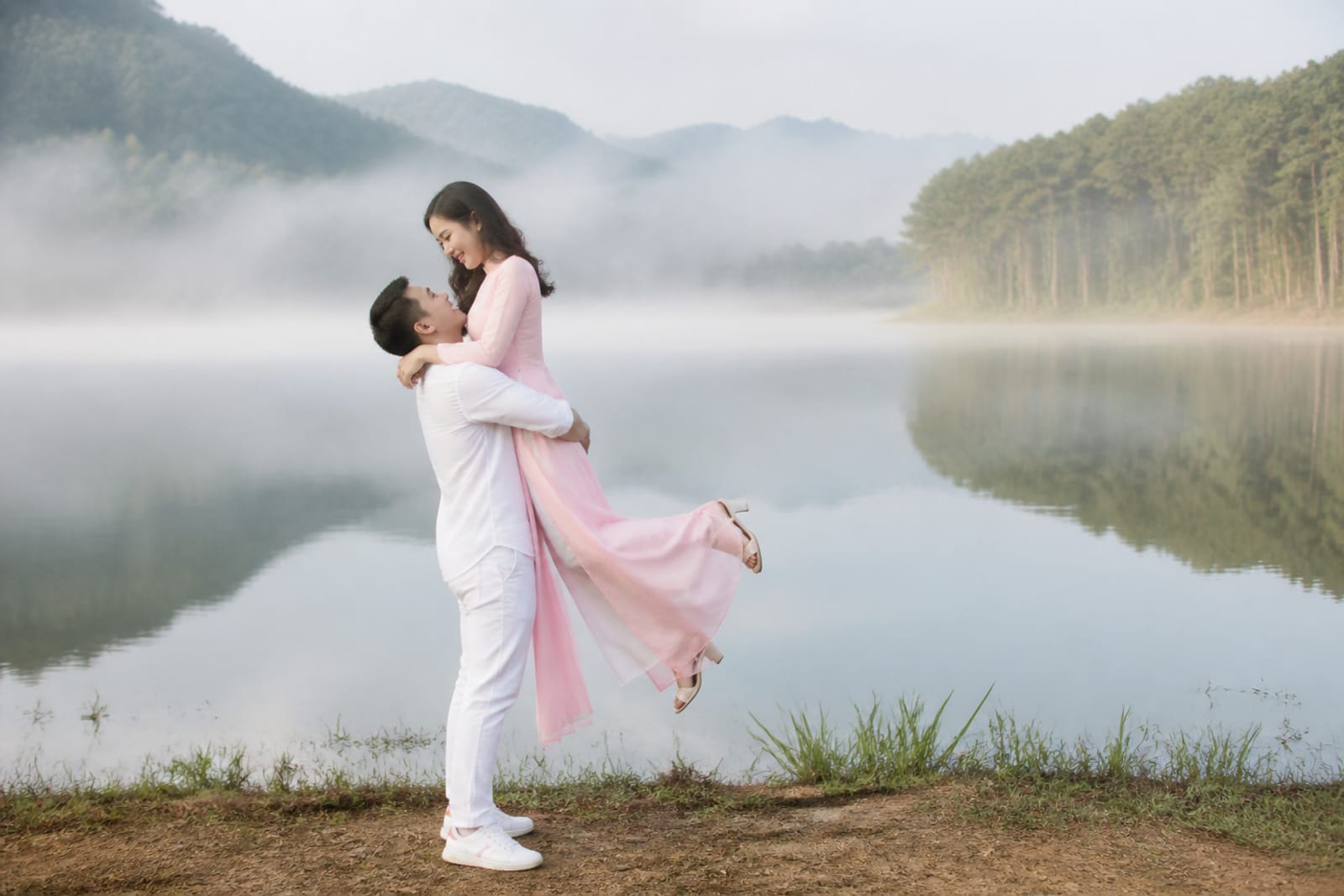
Dress in layers and jewel tones: terracotta, olive, burgundy, charcoal, cream. These sit between the greens of tea and the grey mist, reading clearly in soft light without washing out. Avoid neons, pure white, and black (black swallows into shadows; white glares in mist). Wear:
- Base layer: fitted thermal or linen (warmth + shape). Thin fabrics billow in wind and look shapeless in wide shots.
- Mid layer: loose linen shirt, lightweight jumper, or unstructured jacket in a solid colour. Texture (cable knit, linen weave) catches light and adds visual interest.
- Outer layer: a denim jacket, linen overshirt, or lightweight parka for wind on the hillside. Avoid puffy coats (bulk flattens couples in frame).
- Footwear: waterproof hiking boots or slip-on trainers that grip mud. Heels and canvas sink; plan to change shoes after the tea fields if you want a town shot later.
- Accessories: a small woven bag or leather crossbody (avoids bulky backpacks). Avoid large jewellery (catches glare, distracts from faces).
For the second outfit (if the shoot runs 4+ hours), pack a lighter layer—linen or cotton—so you can peel off the jacket as temperature rises. Bring a change of socks and shoe covers or zip-lock bags for muddy footwear.
📸 Book on WhatsApp — ao dai photoshoot
How do seasons and weather actually affect what you wear and when you shoot?
Dry season (December–April): Clear skies appear by 8 a.m.; wear a single jumper or shirt and a light jacket. You can shoot until 10:30 a.m. without harsh contrast. Best choice if you want unobstructed views of surrounding hills. Mist is thinner—bring it yourself by arriving at 5:30 a.m. before the valley warms.
Rainy season (May–November, worst October–November): Thick mist blankets the hills 5:30–8:00 a.m., then burns off by 9:30 a.m. Paths are soggy; wear water-resistant trousers (not jeans—they stay heavy and cold when wet) and bring a second pair of socks. The mist is a built-in diffuser—soft light, no shadows—but you'll shoot in 50–60% of dry-season brightness. Plan an earlier start (5:00 a.m.) to capture the thickest mist.
Real constraint: If it rains hard (afternoon showers), the tea farm may close access or ask you to leave. Check the Da Lat weather forecast 2 days before and confirm with your photographer that morning. Avoid shooting on heavy-rain days even if you're determined—paths become treacherous, and light drops to near-useless levels by 9 a.m.
What should you check with your photographer before you book?
Before committing, confirm in writing (WhatsApp or email):
- Access & timing: Does the farm allow photo sessions? What time do you enter and leave? Is there a guide fee or permit?
- Outfit count: How many outfit changes fit in the scheduled time? One outfit = 1.5–2 hours. Two outfits = 3–4 hours.
- Backup plan: If weather is poor, can you reschedule? Does the photographer offer a rain date or refund?
- Logistics: Does the photographer arrange transport from your hotel, or do you meet on-site? Who brings props, layers, water?
- Editing style: Will the photographer edit for the soft, cool mist aesthetic (lifted blacks, warm tones), or do you prefer bright, contrasty images? Ask to see a portfolio sample from a mist/overcast shoot.
- Delivery: How many edited photos? When do you receive them? Are prints or albums an add-on?
For couples shooting in Hanoi or Ho Chi Minh City, Cáo Studio can advise on outfit fit and style before you travel to Da Lat, and coordinate with a local photographer via WhatsApp. If you're a pre-wedding couple booking a multi-day trip, ask about combining a Da Lat day with an ao dai shoot in Hanoi or Ho Chi Minh City for contrast.
How do you avoid looking uncomfortable or out of place on a working tea farm?
Tea pickers start work around 6:00 a.m. If you're shooting then, expect to see people in the rows. Be respectful: don't block their paths, don't touch plants without permission, and let them work. Position your photographer to frame you between rows or on cleared paths, not directly in front of workers. This respects their livelihood and keeps your images authentic—couples among working farms feel more real than a sterile backdrop.
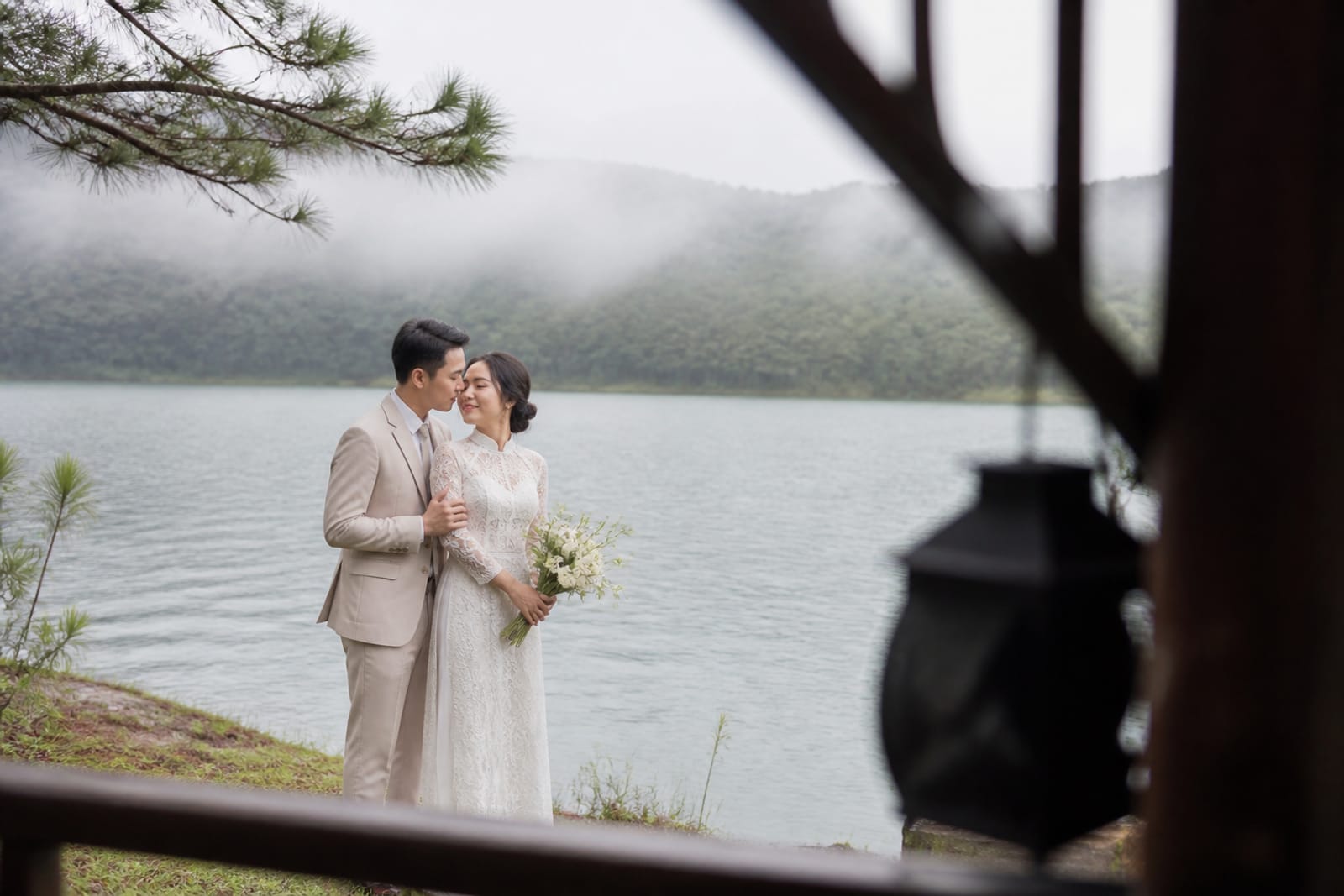
Wear clothes that belong on a farm: natural fibres, neutral colours, practical footwear. Avoid formal wear (wedding dress, tuxedo) unless you're doing a deliberate formal-in-nature contrast—and if so, bring a change because formal clothes won't dry if you step in mud. Smile naturally; forced grins look wooden in wide landscape shots. Let the photographer guide you—they'll ask you to walk, stand, embrace—and trust the composition instead of checking your phone between frames.
---
What to check before you book
- Your photographer's Da Lat portfolio: see a mist shoot, not just a sunny one. Mist and clear sky are visually different.
- Farm access rules: some farms require guides; others charge a filming fee. Ask your photographer to confirm.
- Weather forecast: check 2 days before. If heavy rain is predicted, reschedule.
- Outfit fit: try your layers on together at home. You'll be moving—climbing slight slopes, walking paths—for 3–4 hours. Discomfort shows in your face.
- Shoe condition: muddy paths destroy shoes. Wear ones you don't mind losing or bring spares.
- Sunrise time: in winter (December–February), sunrise is around 6:30–7:00 a.m. Plan transport the night before so you're on-site by 5:30 a.m.
---
FAQ
What time of year is best for Cau Dat couple photos?
Dry season (December–April) offers clearer skies and firmer paths. Rainy season (May–November) gives thicker mist and softer light but muddier terrain. Pick dry if you want landscape views; pick rainy if you prefer dreamy, diffused light. Check the forecast 48 hours before to confirm.
Can I wear my wedding dress at Cau Dat?
Yes, but only if you plan to change afterward or have a second outfit for the tea fields. Wedding dresses absorb mud, water, and cold within minutes on a hillside. Reserve them for studio or town shots; wear everyday layers in the fields, then change for a formal portrait session later.
Do I need a professional photographer or can I ask a friend?
A professional knows the light windows (5:30–8:00 a.m.) and composition tricks (using rows as leading lines, managing mist depth-of-field) that amateurs miss. Mist photography is technical. If budget is tight, hire a local Da Lat photographer—often cheaper than flying a team in—and brief them via photos of your style.
How much does it cost to shoot at Cau Dat?
Farm access, photographer rates, and transport vary. Ask your local photographer or a Hanoi studio (like Cáo) on WhatsApp for a quote. Factors include season, outfit count, travel distance, and whether a guide is required.
Can Cáo Studio shoot at Cau Dat?
Cáo Studio operates in Hanoi, Ho Chi Minh City, and Hoi An. For a Cau Dat shoot, book a local Da Lat photographer or ask our Hanoi team on WhatsApp about coordinating with a guest photographer. We can brief you on outfit styling and timeline before you travel.
What should I bring to a Cau Dat shoot besides clothing?
Bring water, snacks, a second pair of socks, waterproof bag for electronics, sunscreen, and a change of shoes. Arrive early (5:30 a.m. for sunrise) and plan a 3–4 hour session. Eat something light before—shooting on an empty stomach shows in your face in close-ups.
FAQ
What time of year is best for Cau Dat couple photos?
Dry season (December–April) offers clearer skies and firmer paths. Rainy season (May–November) gives thicker mist and softer light but muddier terrain. Pick dry if you want landscape views; pick rainy if you prefer dreamy, diffused light. Check the forecast 48 hours before to confirm.
Can I wear my wedding dress at Cau Dat?
Yes, but only if you plan to change afterward or have a second outfit for the tea fields. Wedding dresses absorb mud, water, and cold within minutes on a hillside. Reserve them for studio or town shots; wear everyday layers in the fields, then change for a formal portrait session later.
Do I need a professional photographer or can I ask a friend?
A professional knows the light windows (5:30–8:00 a.m.) and composition tricks (using rows as leading lines, managing mist depth-of-field) that amateurs miss. Mist photography is technical. If budget is tight, hire a local Da Lat photographer—often cheaper than flying a team in—and brief them via photos of your style.
How much does it cost to shoot at Cau Dat?
Farm access, photographer rates, and transport vary. Ask your local photographer or a Hanoi studio (like Cáo) on WhatsApp for a quote. Factors include season, outfit count, travel distance, and whether a guide is required.
Can Cáo Studio shoot at Cau Dat?
Cáo Studio operates in Hanoi, Ho Chi Minh City, and Hoi An. For a Cau Dat shoot, book a local Da Lat photographer or ask our Hanoi team on WhatsApp about coordinating with a guest photographer. We can brief you on outfit styling and timeline before you travel.
What should I bring to a Cau Dat shoot besides clothing?
Bring water, snacks, a second pair of socks, waterproof bag for electronics, sunscreen, and a change of shoes. Arrive early (5:30 a.m. for sunrise) and plan a 3–4 hour session. Eat something light before—shooting on an empty stomach shows in your face in close-ups.
Ao dai, makeup, hair and a local photographer in Hanoi or Saigon — one WhatsApp message.