/pre-wedding-photoshoot
What to Wear for Couple Photos at Cholon and Thien Hau Pagoda
Couple photos at Cholon and Thien Hau Pagoda work best with outfits that complement the ornate architecture and natural light. Morning (6–9 a.m.) light is soft and shadows are gentle; avoid midday glare (11 a.m.–2 p.m.). Wear layers—colors that pop against red temple doors and gold trim are ideal. Ao dai (traditional Vietnamese long tunic) photographs beautifully and aligns with the sacred setting; casual romantic wear (fitted blouses, tailored trousers) is also elegant if the pagoda permits daywear couples. Cáo Studio – Makeup & Photoshoot in Saigon handles temple shoots, styling guides, and hair & makeup onsite or at your hotel. Book your session and confirm what the pagoda allows before finalizing your outfit plan—temple etiquette matters. Sessions typically include a pre-shoot consultation on WhatsApp to align style with location vibe. 📸 Book on WhatsApp — couple photoshoot ---
Why Cholon and Thien Hau Draw Couple Photographers
Cholon (District 5's Chinatown) and Thien Hau Pagoda are iconic couple-shoot destinations in Ho Chi Minh City. The pagoda's red walls, ornate roof tiles, and incense-filled courtyards create a dreamlike, intimate backdrop. Cholon's narrow alleys, lantern-lit storefronts, and vintage architecture photograph as moody, romantic scenes. Light here is predictable in morning hours, and crowds thin early. Most couples choose this pairing because it blends spiritual reverence with visual drama—both elements suit engagement or pre-wedding narratives. The challenge: temple rules limit exposure and require modest dress, and midday heat wilts styling fast.
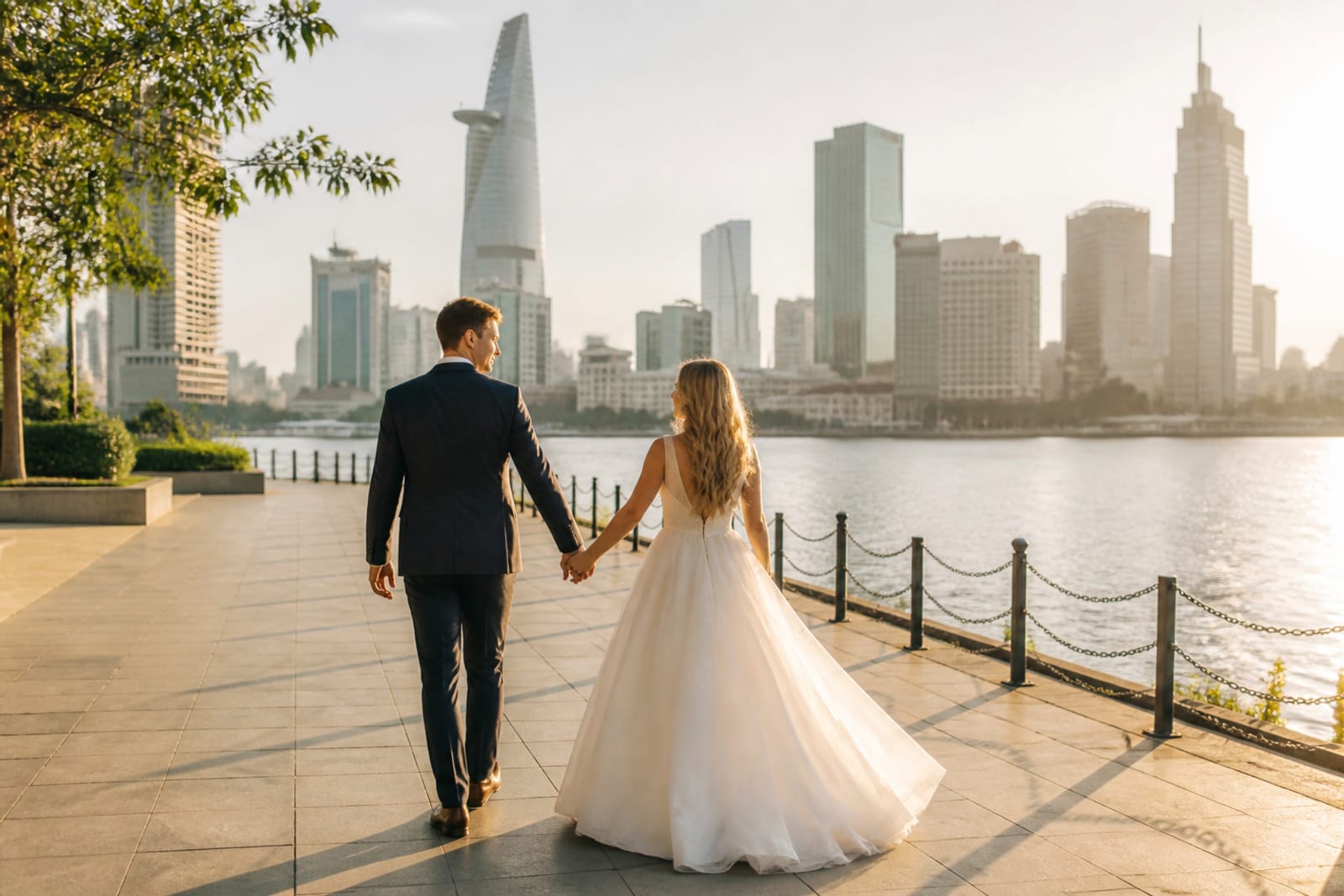
Should You Wear Ao Dai or Casual Romantic Outfits?
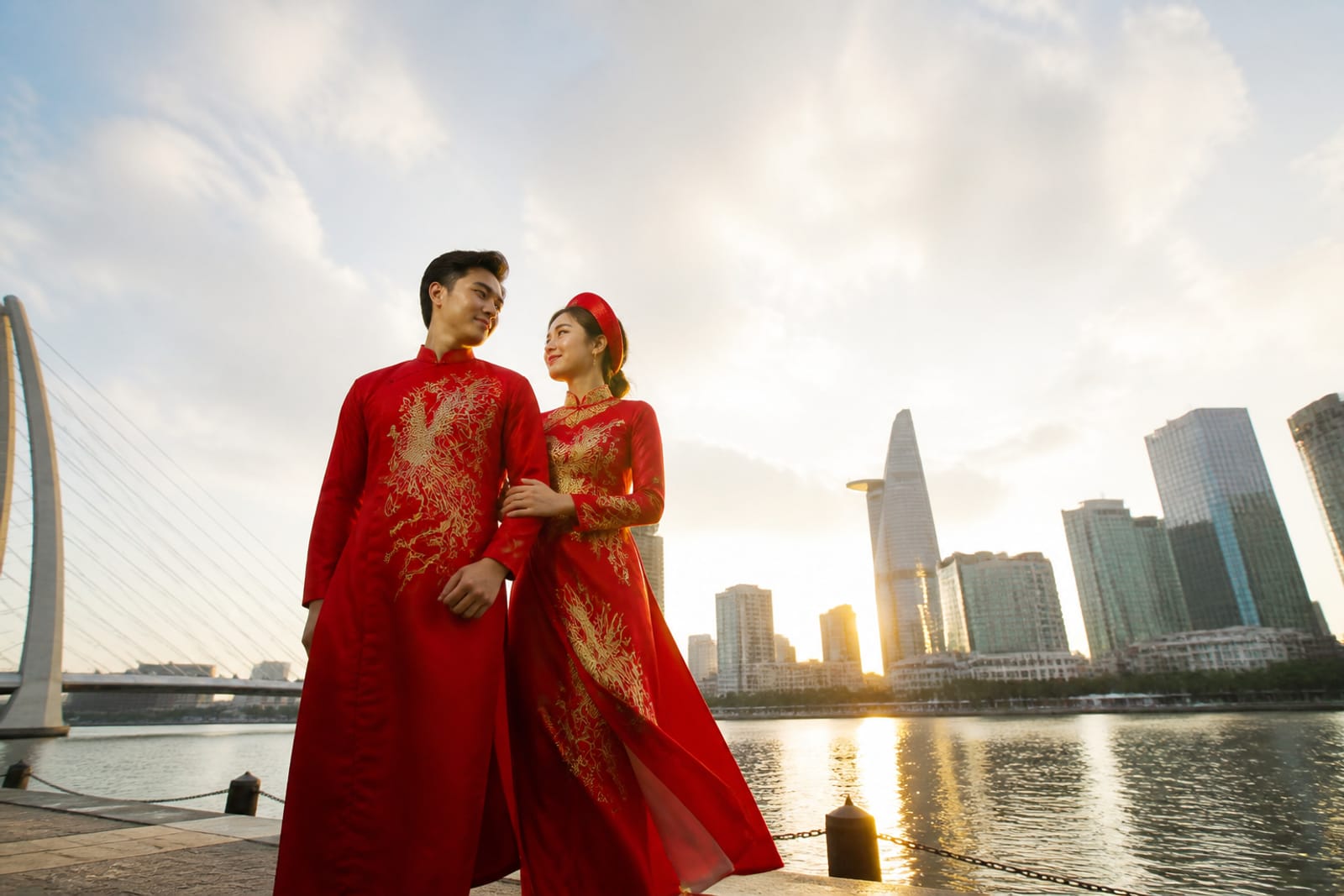
Ao dai (traditional long tunic & pants) is the ceremonial choice. It reads as respectful, photographs with flowing elegance, and suits Thien Hau's sacred energy. Ao dai also hides much of the body, honoring temple etiquette. The downside: tailoring must be perfect for movement, and morning light sometimes bleaches delicate pastels. Casual romantic wear (tailored blouse, high-waisted trousers or midi skirt) is faster to style and works if Thien Hau approves daywear. It suits Cholon's street-style intimacy better than formal temple dress.
| Outfit Choice | Best For | Light Window | Why It Works |
|---|---|---|---|
| Ao dai (traditional) | Couples seeking formal, reverent look | 6–9 a.m., 4–6 p.m. | Respectful, flows beautifully, hides body |
| Casual romantic (blouse + trousers/skirt) | Relaxed, modern couple narrative | 6–9 a.m., late afternoon | Easier styling, faster setup, Cholon-friendly |
| Matching pastels or jewel tones | Cohesive couple aesthetic | 7–8:30 a.m. | Colors pop against red walls, skin tones stay warm |
| Contrasting neutrals (one dark, one light) | Visual balance, editorial feel | Any morning hour | Separates subjects, draws eye to faces |
Ao dai rental is available through Cáo Studio—ask on WhatsApp if you want professional tailoring without buying. Casual wear should be fitted, not baggy; temples photograph best when outfits define the silhouette.
Timing, Light, and Seasonal Outfit Adjustments
Ho Chi Minh City runs hot year-round (roughly 25–35°C). The dry season (Dec–Apr) is the safest window: mornings are cooler, humidity lower, and styling holds longer. Wet season (May–Nov) brings short afternoon downpours, so early morning shoots (6–8 a.m.) are mandatory if you book May through November.
December–February: Coolest season. Ao dai in heavier silk or cotton blends works well; casual wear can be long-sleeved without overheating. Skin looks fresher, makeup sets faster. Light is bright but not harsh at 7–8 a.m.
March–April: Heating up. Ao dai in breathable cotton; pastels and whites reflect heat. Makeup requires setting spray. Shoot by 8 a.m. to avoid 9+ a.m. sweat damage.
May–November: Hot and humid. Ao dai in lightweight linen or silk; casual wear in breathable cotton. Plan for touch-ups between locations (Cholon to Thien Hau is a 10–15 minute drive). Waterproof makeup is non-negotiable. Shoot 6–8 a.m. only; afternoon storms risk equipment and dress.
Thien Hau's incense smoke and temple humidity affect makeup longevity—waterproof foundation and long-wear lip tint are practical, not optional.
Color and Fabric Choices That Work Against Thien Hau's Architecture
Thien Hau Pagoda's dominant colors are red (walls, doors, pillars), gold (roof trim, altar details), and dark wood. Outfit colors should either complement (jewel tones: emerald, sapphire, burgundy) or contrast (creams, whites, soft grays). Avoid orange-reds, mustards, or yellows that compete with the temple's warmth.
Fabric weight matters: Heavy brocade ao dai can look stiff in photos; silk or cotton blend moves naturally. Casual fabrics should not be translucent (temple modesty); linen and structured cotton read better. Wrinkles show in temple's sharp morning light, so fabrics that hold a crisp finish (cotton blends with a touch of polyester) photograph sharper than 100% linen.
Cholon's alley backdrop is darker and moody, so fabrics with subtle sheen (silk, satin-cotton blend) will glow; matte cotton can disappear into shadows. Cáo Studio stylists advise on fabric-to-light pairing during your WhatsApp pre-shoot consultation.
Temple Etiquette: What Thien Hau Allows and What It Doesn't
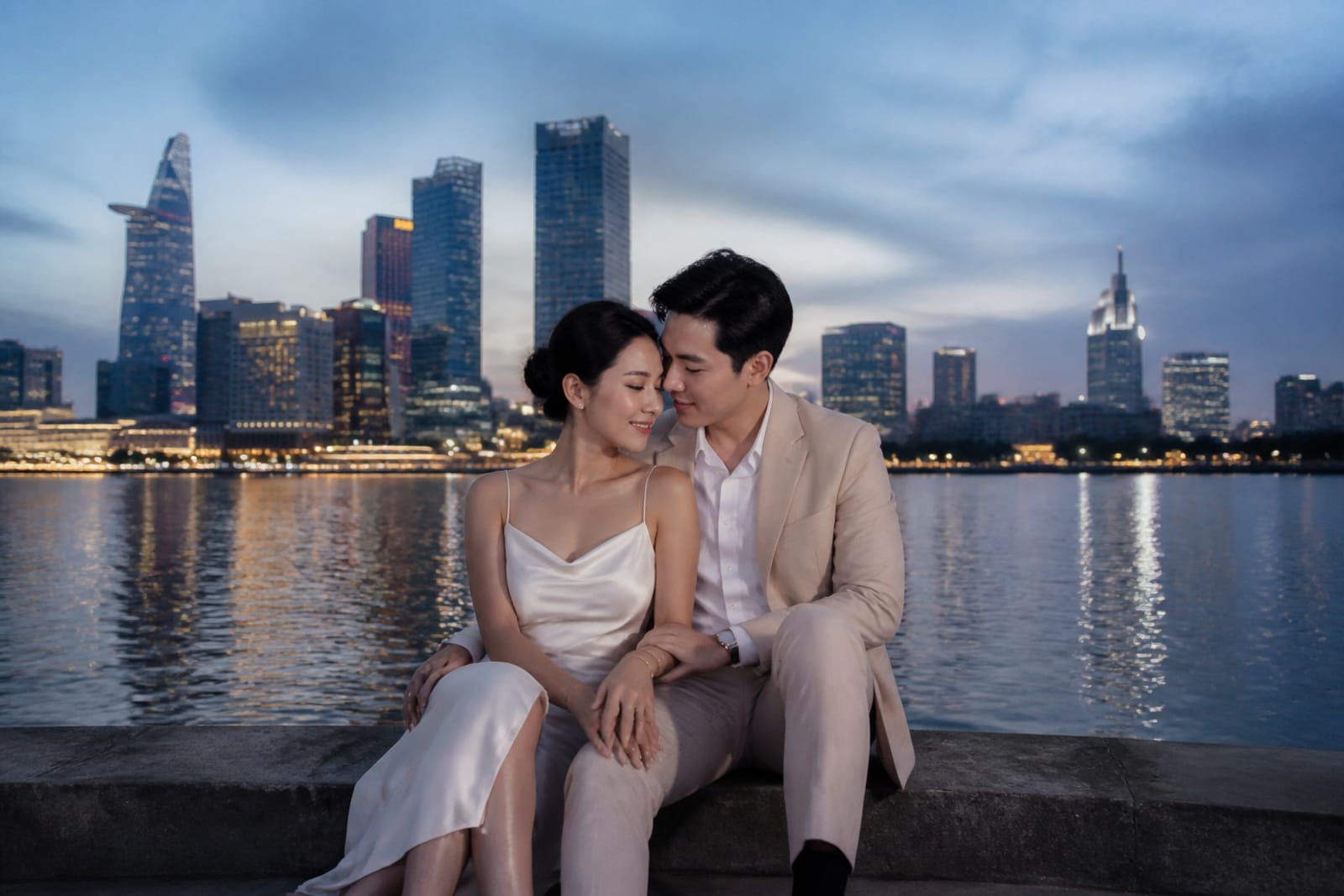
Thien Hau Pagoda is an active Buddhist temple. Photography etiquette is strict but clear. Allowed: Couples in ao dai or modest casual wear in public courtyards and exterior areas. Not allowed: Exposed shoulders, knees, or midriffs; posing on altars; flash photography near shrines; couples in swimwear or sheer fabrics.
Many couples assume "casual wear" means any outfit; it doesn't. Sleeveless tops, shorts, and short skirts are disrespectful and may result in denial of entry or being asked to leave mid-shoot. The pagoda occasionally enforces a sarong requirement for immodest dress—a frustrating delay.
Best practice: Wear ao dai (the safest, most elegant choice) or confirm your casual outfit with the temple staff before your shoot date. Cáo Studio has shot Thien Hau dozens of times and can advise what passes; mention your outfit plan on WhatsApp when you book. If in doubt, bring a shawl or sarong to cover shoulders and knees quickly.
Cholon's narrow alleys are less restricted, but the same modest dress principle applies if you move between Cholon and the pagoda in one session (which most couples do).
What to Check Before You Book Your Couple Shoot
1. Temple access: Confirm Thien Hau is open on your shoot date. Occasionally it closes for festivals or maintenance—check 1 week prior or ask Cáo Studio to verify.
2. Outfit approval: If wearing casual dress, describe it to Thien Hau staff or send a photo to Cáo Studio. Ao dai needs no pre-approval.
3. Makeup longevity: Tell Cáo Studio if you want waterproof makeup (especially May–Nov). Hair should be pinned for temple wind and incense.
4. Lighting plan: Ask your photographer whether you'll shoot Cholon at sunrise (earlier light, fewer crowds) or Thien Hau mid-morning when the pagoda is slower. Timing shapes outfit choice (heavier fabrics work better in cooler dawn; lighter fabrics in late morning when it warms).
5. Rental vs. ownership: Decide if you want to rent ao dai or bring your own. Rental is faster and ensures proper tailoring; ownership is an heirloom. Cáo Studio offers ao dai rental—ask on WhatsApp for colors and sizing.
6. Season and weather: Confirm your shoot season with the photographer. Dry season (Dec–Apr) is easier for styling; wet season (May–Nov) requires early morning and backup plans.
7. Number of outfits: Cholon-to-Thien Hau shoots often include 2–3 outfit changes. Plan whether all are ao dai, all casual, or a mix. Changes happen quickly in cars between locations, so coordinate with Cáo Studio on timing and touch-up logistics.
8. Hair and makeup timing: Book makeup & hair at your hotel if your accommodation is close to the shoot start; it saves travel time and keeps styling fresh before the camera rolls.
---
Why Cáo Studio Saigon Handles This Better
Cáo Studio operates a Saigon branch with experience shooting Cholon and Thien Hau in all seasons. The team knows temple access, light patterns by time of year, and which fabrics photograph cleanest against each backdrop. They also manage outfit logistics: rental, touch-ups between locations, and styling tweaks if the pagoda has last-minute dress code questions. Pre-shoot WhatsApp consultations walk you through outfit choices before the camera day, so nothing surprises you onsite. If you're flying in for an engagement or pre-wedding shoot, hotel makeup & hair can be arranged the morning of your session, and the stylist travels with you to Cholon and Thien Hau.
Browse the couple photoshoot page and pre-wedding photoshoot page to see session styles and examples. The lookbook shows outfit pairings in real Saigon locations—use it as a styling reference.
---
FAQ
Can I wear a Western wedding dress to Thien Hau Pagoda?
No. White Western gowns are not permitted in Buddhist temples as they conflict with local tradition and modesty expectations. Ao dai or modest cocktail attire are the respectful choices. Confirm your outfit with the temple or Cáo Studio before booking.
What shoes should I wear for Cholon and Thien Hau photos?
Wear comfortable, modest shoes—closed-toe flats, sandals with ankle straps, or low heels. Temple floors are uneven and sometimes wet from incense cleaning; avoid anything too delicate or slippery. You may remove shoes at certain altars, so ensure socks or bare feet look neat.
Do I need to rent ao dai, or can I bring my own?
Either is fine. Renting ensures proper tailoring and a fresh garment; owning is meaningful if it's an heirloom. Cáo Studio offers ao dai rental in multiple colors—ask on WhatsApp for inventory and sizing. If you bring your own, have it fitted snugly; loose ao dai photographs as sloppy in sharp temple light.
How much should I spend on an outfit for this shoot?
Focus on fit and fabric quality, not brand cost. A well-fitted ao dai or elegant casual outfit in breathable fabric matters more than price. Rental is often faster and more affordable than buying if you don't plan future wears. Ask Cáo Studio on WhatsApp about rental pricing factors and outfit options.
Can I do a couple shoot at Thien Hau without booking through Cáo Studio?
Yes, you can hire any photographer, but temple access rules and styling advice will be on you. Cáo Studio's local expertise simplifies permissions and outfit planning. They handle makeup, hair, and outfit coordination onsite, which saves stress on the day.
What if it rains the morning of my Cholon and Thien Hau shoot?
Light rain in Cholon can add mood and texture; Thien Hau's courtyards have covered areas. However, heavy rain (May–Nov wet season) may force rescheduling. Book shoots in dry season (Dec–Apr) if weather is a concern, or confirm your photographer's rain-day plan before committing.
FAQ
Can I wear a Western wedding dress to Thien Hau Pagoda?
No. White Western gowns are not permitted in Buddhist temples as they conflict with local tradition and modesty expectations. Ao dai or modest cocktail attire are the respectful choices. Confirm your outfit with the temple or Cáo Studio before booking.
What shoes should I wear for Cholon and Thien Hau photos?
Wear comfortable, modest shoes—closed-toe flats, sandals with ankle straps, or low heels. Temple floors are uneven and sometimes wet from incense cleaning; avoid anything too delicate or slippery. You may remove shoes at certain altars, so ensure socks or bare feet look neat.
Do I need to rent ao dai, or can I bring my own?
Either is fine. Renting ensures proper tailoring and a fresh garment; owning is meaningful if it's an heirloom. Cáo Studio offers ao dai rental in multiple colors—ask on WhatsApp for inventory and sizing. If you bring your own, have it fitted snugly; loose ao dai photographs as sloppy in sharp temple light.
How much should I spend on an outfit for this shoot?
Focus on fit and fabric quality, not brand cost. A well-fitted ao dai or elegant casual outfit in breathable fabric matters more than price. Rental is often faster and more affordable than buying if you don't plan future wears. Ask Cáo Studio on WhatsApp about rental pricing factors and outfit options.
Can I do a couple shoot at Thien Hau without booking through Cáo Studio?
Yes, you can hire any photographer, but temple access rules and styling advice will be on you. Cáo Studio's local expertise simplifies permissions and outfit planning. They handle makeup, hair, and outfit coordination onsite, which saves stress on the day.
What if it rains the morning of my Cholon and Thien Hau shoot?
Light rain in Cholon can add mood and texture; Thien Hau's courtyards have covered areas. However, heavy rain (May–Nov wet season) may force rescheduling. Book shoots in dry season (Dec–Apr) if weather is a concern, or confirm your photographer's rain-day plan before committing.
Ao dai, makeup, hair and a local photographer in Hanoi or Saigon — one WhatsApp message.