/pre-wedding-photoshoot
What to Wear for Couple Photos at Fansipan Summit
Fansipan's 3,143-metre summit offers dramatic cloud-break light but demands thermal layers under your chosen outfit—dress, traditional áo dài, or tailored jacket—plus a windproof outer shell you remove for frames. Best shooting windows are March to May and September to November, when weather is stable enough to hold light for 30–50 minutes at the top; avoid December to February (fog, near-freezing temps, icy cable car waits) and June to August (afternoon rain squalls). A local Sapa photographer experienced with summit logistics—cable car timing, model safety in wind, when clouds part—costs less than flying a team from Hanoi but requires vetting their portfolio for real summit light, not studio editing. Cáo Studio does not operate in Sapa; this guide helps you plan and find a vetted local team.
Why Fansipan's Light Changes Faster Than a Studio Shoot?
Fansipan's 3,143-metre altitude means weather shifts every 10–15 minutes. Cloud cover can erase directional light in seconds; a clear-sky frame turns grey within one shot cycle. Unlike a Hanoi riverside shoot where you control timing over three hours, a summit session gives you one 45-minute window of workable light—often split between cloud-break moments. A photographer who understands this either shoots fast and wide first (capturing the landscape and your silhouette before clouds thicken) or waits for a second break if the first clouds over. Most couples underestimate how much time vanishes to cable car queues (especially April–May and September), breathing at altitude, and safety briefings. Budget two hours on the mountain to secure 40 usable minutes of shooting.
📸 Book on WhatsApp — pre-wedding photoshoot | 💄 Makeup & hair at your hotel | 🌸 See the lookbook
What Layers Go Under a Dress or Áo Dài Without Showing?
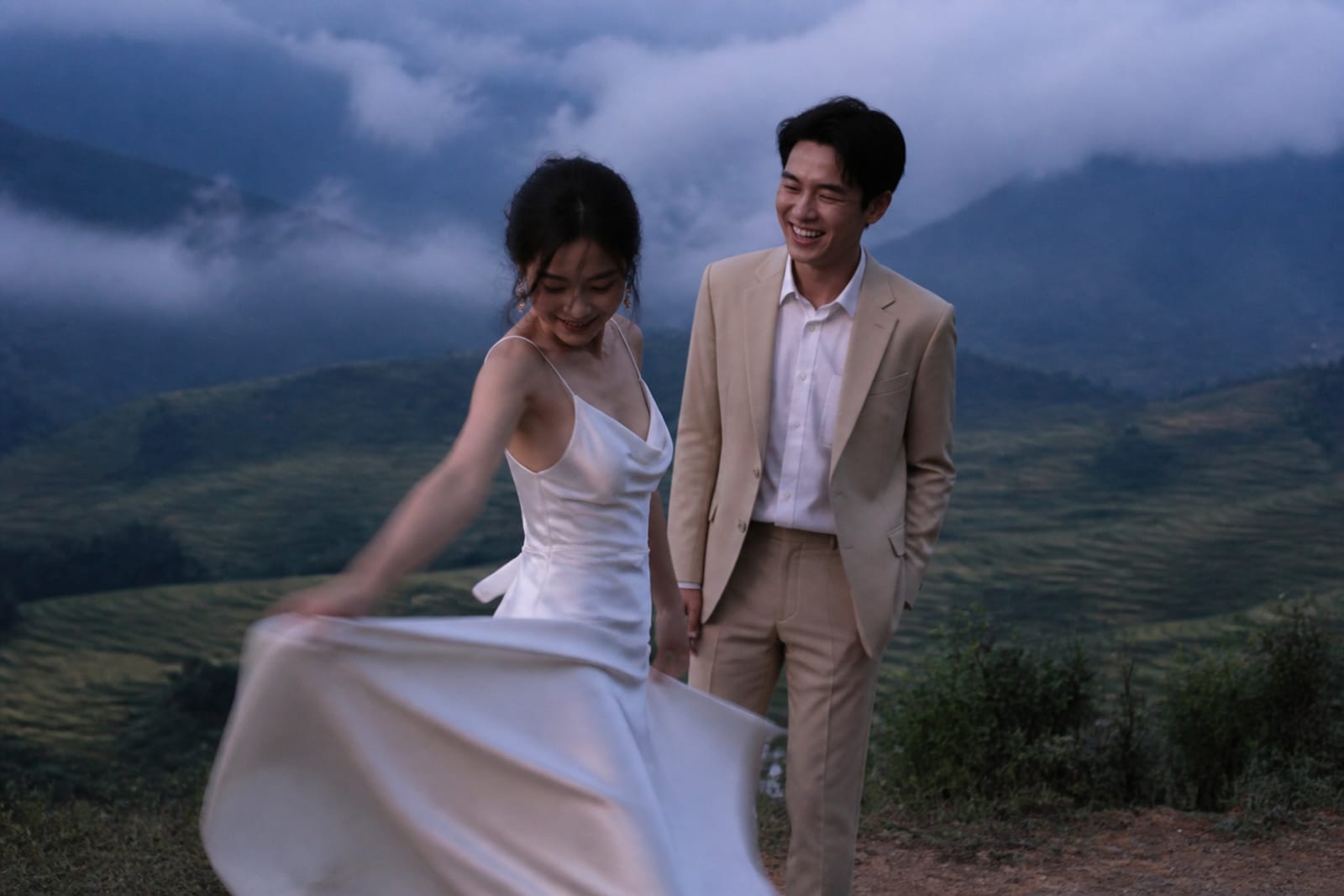
Your outer outfit (wedding dress, áo dài, or tailored blazer) is what the camera sees—but underneath, thermal leggings, a moisture-wicking base layer (silk or merino, not cotton), and a thin merino sweater keep you functional at 3,143 metres without bulk. The cardinal rule: every layer must be darker or colour-matched to your outer outfit, or it shows at edges and necklines. Avoid bra straps or thermal tops peeking above your neckline; a seamless bra or custom-fitted undergarment solids half your wind-related discomfort. If you choose an áo dài, ask the rental studio (or bring it to a local tailor) to ensure the silk isn't translucent over thermal wear—backlit summit light exposes every layer. Pack a windproof jacket (neutral grey or black, not bright) that you shed for the actual shoot; it stays in a crew bag just out of frame. One couple wore a formal dress with thermal leggings and a biker jacket for the climb, then removed the jacket for 25 frames before cloud cover returned—total time in wedding attire at altitude was 12 minutes.
Should You Shoot in an Áo Dài or a Western Dress?
| Outfit Type | Best For | Light/Season Window | Why It Works |
|---|---|---|---|
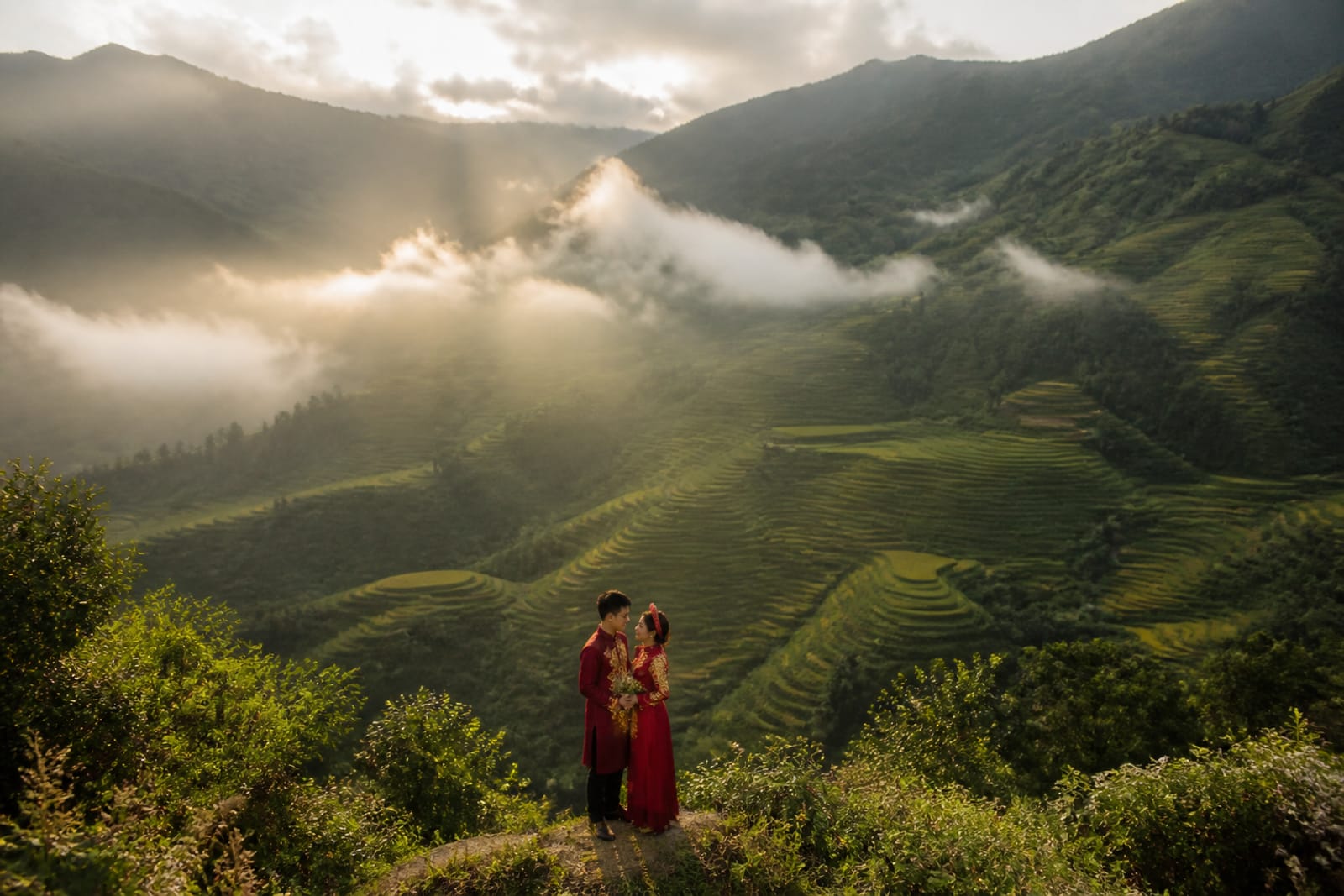
| Áo dài (silk, tailored) | couples honouring Vietnam tradition; drama in wind | March–May, Sept–Nov; shoot 8–9am or 4–5pm cable car | Wind shapes the silk; traditional silhouette reads at distance; easier to layer underneath |
| Western wedding dress (simple, lightweight) | destination elopements; formal couple frames | Same; requires seamstress check for transparency; avoid 3+ layers of skirt | Clean lines against clouds; lighter fabrics move less; easier to step/balance in wind |
| Tailored blazer + dress pants or skirt | practical, non-traditional; active couples | Same; fewer undergarment worries | Wind-resistant; easier movement on narrow paths; photographs well in grey-sky light |
Áo dài wins for drama—the silk catches light and wind in ways Western fabrics don't—but requires a rental or custom fit and a seamstress who ensures the inner layer isn't visible. Western dresses photograph cleaner in overcast light (no shadow from billow) but run cold at altitude unless thermal leggings are flawless. A tailored blazer with dress pants is the safest play if you're uncertain: it suits active poses (walking, sitting on rocks, facing the wind), photographs well in flat light, and keeps you warm without fussing. The best choice depends on your comfort in wind and whether you prioritize drama or practicality.
How to Vet a Sapa Photographer Before You Book?
Fansipan photography is a specialist skill—not every Hanoi photographer excels in high-altitude logistics. Ask a local team these five questions: (1) "Show me three complete Fansipan couple shoots, shot in the last 12 months, with full-resolution previews"—avoid portfolios with only one or two frames or heavy editing that masks flat light. (2) "What time do you recommend the cable car, and do you scout the weather the night before?"—a seasoned team has a weather protocol and a backup time slot. (3) "What happens if cloud cover lasts the whole session?"—listen for honesty, not promises ("we'll shoot anyway and edit magic in Photoshop"). (4) "Do you include a short vertical video or just stills?"—compare offerings before cost. (5) "Who handles model safety if wind gusts or altitude affects balance?"—responsible photographers brief couples on handholds and safe positions. A local Sapa-based photographer will likely cost less than a Hanoi team driving 5+ hours but check their altitude experience portfolio, not just wedding photos from lowland cities.
When Does Weather Lock Out Fansipan Shoots, and What's Your Backup Plan?
December to February: fog, temperatures near 0°C, and icy cable car platforms make shooting nearly impossible. Even if you get to the summit, direct light is rare and model safety (wind, slippery stone, low visibility) becomes the priority. June to August: afternoon downpours hit without warning; morning windows (6–8am) are your only bet, but crowds and humidity limit good frames. March to May and September to November are statistically the most reliable—clear mornings, stable 12–18°C temperatures, wind between 10–15 km/h (manageable). Within these windows, a photographer should have a secondary plan: an alternative location (Sapa town's Silver Waterfall, the Old French Hill station, or a terraced rice valley 30 minutes away) if the summit refuses to clear. Never book a Fansipan shoot without a backup location in writing, and confirm your photographer has shot that location in similar light. One couple booked a March session, hit unexpected afternoon clouds, and pivoted to a rice-terrace shoot 20 km away—their photographer knew the light there and captured their best frames in golden hour instead.
Should Cáo Studio Shoot Your Fansipan Session?
Cáo Studio operates in Hanoi, Ho Chi Minh City, and Hoi An—not Sapa or Fansipan. Our model is "one team, one message": we handle outfit, hair, makeup, and camera in one booking so every frame is directed, not posed. A Fansipan summit session requires a photographer embedded in Sapa logistics (cable car timing, local weather patterns, safety protocols) that we don't operate. Instead, use this guide to vet a local Sapa team, then book a pre-wedding photoshoot with Cáo Studio before or after your Fansipan trip—perhaps makeup & hair at your Sapa hotel the morning of the climb, or a couple photoshoot at a lower-altitude Sapa location where we could coordinate. If you're planning a broader Vietnam trip (Hanoi to Sapa loop, or Ho Chi Minh City + highlands), ask us on WhatsApp about combining a Cáo Studio session at a location we do serve with your local Fansipan team. Many couples shoot their Fansipan frames first, then book us for a formal ao dai photoshoot in Hanoi or a couple photoshoot in a city with stable light—that way you get both the mountain drama and the studio-calibre frames.
What to Check Before You Book a Fansipan Photographer?
- Portfolio depth: At least three full Fansipan couple sessions, recent (last 12 months), with unedited preview quality visible.
- Weather protocol: Does the photographer have a documented plan for overcast days, and a backup location in a different microclimate?
- Cable car logistics: Do they know current cable car opening hours, peak times, and crowd windows? Can they confirm the date they'll scout weather?
- Outfit knowledge: Have they shot in áo dài at altitude? Do they know how wind affects fabric and light?
- Safety experience: Can they brief you on handholds, safe positions, and altitude acclimatisation during the shoot?
- Deliverables in writing: How many edited photos? Timeline to delivery? Video or stills-only? Confirm exact inclusions before paying.
- References: Ask for one or two couple contacts (not reviews from the site). WhatsApp them directly about their experience.
---
FAQ
Can I wear a traditional áo dài at Fansipan without thermal layers showing?
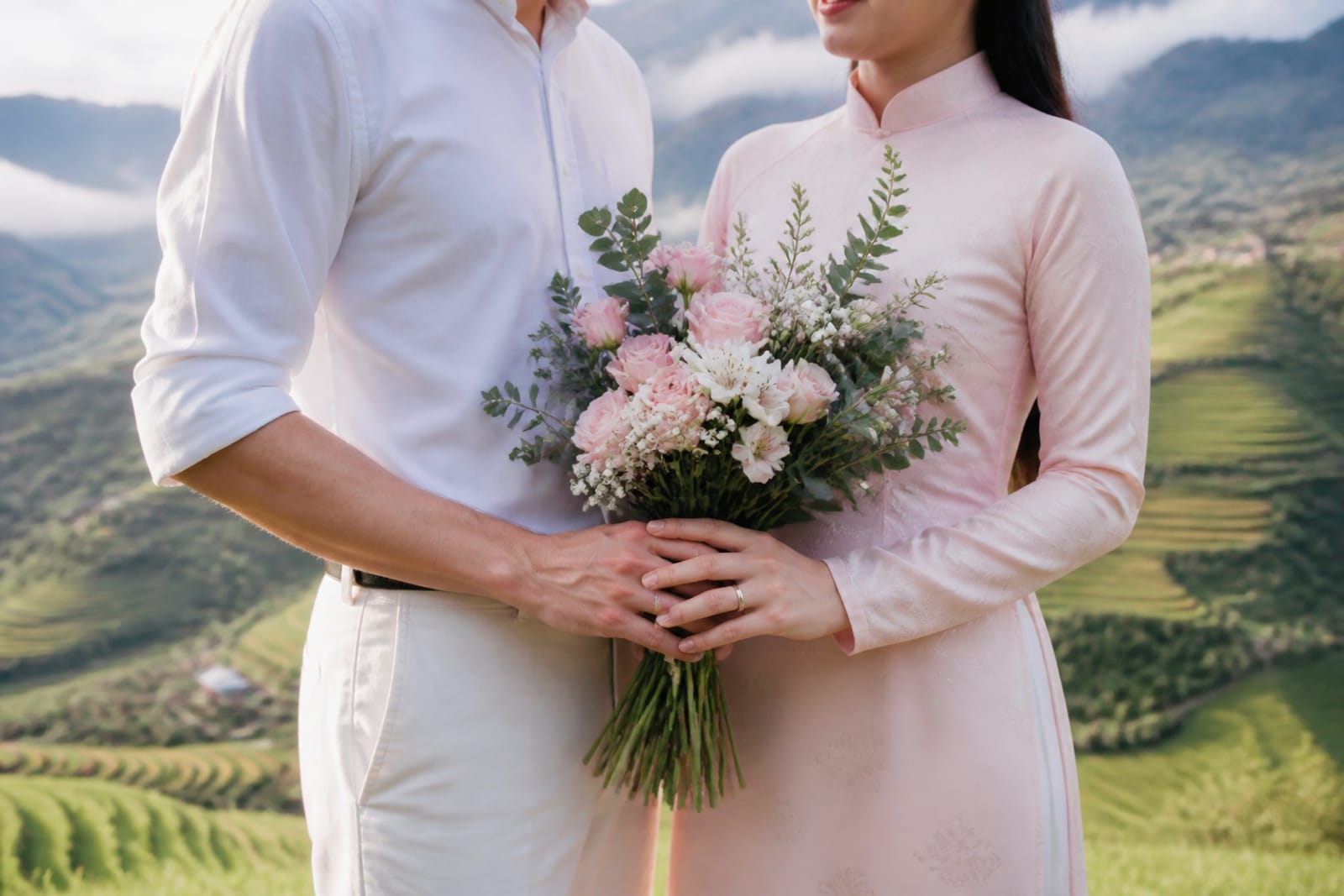
Yes, if the rental studio ensures the silk is opaque and not backlit, and you wear a colour-matched or darker thermal base layer underneath. Ask the rental or tailor to check transparency before you commit. Backlit summit light reveals every layer, so test the fit under natural light first.
What's the best month to shoot at Fansipan?
March to May and September to November offer the most stable weather (12–18°C, fewer clouds, manageable wind). December to February is too foggy and cold; June to August brings afternoon rain. Within your chosen window, book a morning cable car slot to catch early light before crowds.
Do I need a Hanoi-based photographer, or is a local Sapa team better?
A local Sapa photographer costs less and knows cable car timing and weather patterns firsthand. A Hanoi team may offer broader styling expertise but requires a 5+ hour drive. Choose based on portfolio quality and vetting answers, not location—a strong local team beats a distant brand.
What happens if clouds cover the summit the entire session?
Confirm your photographer has a backup location (Silver Waterfall, Old Hill station, or a rice-terrace valley nearby) and has shot there before. Never book without a written backup plan. Budget a second shooting day if weather is unstable, or plan a lower-altitude Sapa session as your safety frame.
How long does a Fansipan shoot actually take?
Plan two hours on the mountain (cable car queue, safety brief, acclimatisation) to secure 40–50 minutes of usable light. Most couples shoot 8–12 strong frames in that time. If you're combining Fansipan with a Hanoi or city session, book the city shoot separately with Cáo Studio for deeper styling and frame variety.
Should I carry my own clothes or rent a dress locally?
Rent locally if you want to avoid airline baggage fees and ensure the fabric suits high-altitude wind. If you're bringing a dress, choose lightweight, wind-resistant materials (not tulle or heavy layered skirts) and test it for transparency. Most couples rent an áo dài in Sapa or Hanoi for heritage drama, then wear Western dress for practical frames.
Can Cáo Studio shoot my Fansipan session?
Cáo Studio operates in Hanoi, Ho Chi Minh City, and Hoi An only. We don't have a Sapa team, so we recommend vetting a local photographer using this guide. You're welcome to book a Cáo Studio session before or after your Fansipan trip—ask us on WhatsApp to combine it with your mountain shoot for a full-trip package.
FAQ
Can I wear a traditional áo dài at Fansipan without thermal layers showing?
Yes, if the rental studio ensures the silk is opaque and not backlit, and you wear a colour-matched or darker thermal base layer underneath. Ask the rental or tailor to check transparency before you commit. Backlit summit light reveals every layer, so test the fit under natural light first.
What's the best month to shoot at Fansipan?
March to May and September to November offer the most stable weather (12–18°C, fewer clouds, manageable wind). December to February is too foggy and cold; June to August brings afternoon rain. Within your chosen window, book a morning cable car slot to catch early light before crowds.
Do I need a Hanoi-based photographer, or is a local Sapa team better?
A local Sapa photographer costs less and knows cable car timing and weather patterns firsthand. A Hanoi team may offer broader styling expertise but requires a 5+ hour drive. Choose based on portfolio quality and vetting answers, not location—a strong local team beats a distant brand.
What happens if clouds cover the summit the entire session?
Confirm your photographer has a backup location (Silver Waterfall, Old Hill station, or a rice-terrace valley nearby) and has shot there before. Never book without a written backup plan. Budget a second shooting day if weather is unstable, or plan a lower-altitude Sapa session as your safety frame.
How long does a Fansipan shoot actually take?
Plan two hours on the mountain (cable car queue, safety brief, acclimatisation) to secure 40–50 minutes of usable light. Most couples shoot 8–12 strong frames in that time. If you're combining Fansipan with a Hanoi or city session, book the city shoot separately with Cáo Studio for deeper styling and frame variety.
Should I carry my own clothes or rent a dress locally?
Rent locally if you want to avoid airline baggage fees and ensure the fabric suits high-altitude wind. If you're bringing a dress, choose lightweight, wind-resistant materials (not tulle or heavy layered skirts) and test it for transparency. Most couples rent an áo dài in Sapa or Hanoi for heritage drama, then wear Western dress for practical frames.
Can Cáo Studio shoot my Fansipan session?
Cáo Studio operates in Hanoi, Ho Chi Minh City, and Hoi An only. We don't have a Sapa team, so we recommend vetting a local photographer using this guide. You're welcome to book a Cáo Studio session before or after your Fansipan trip—ask us on WhatsApp to combine it with your mountain shoot for a full-trip package.
Ao dai, makeup, hair and a local photographer in Hanoi or Saigon — one WhatsApp message.