/pre-wedding-photoshoot
What to Wear for Couple Photos at Hai Van Pass
Hai Van Pass couple photoshoots work best Feb–Aug when the central coast is dry and visibility is clear; Sep–Dec brings typhoon risk and grey skies. Layers win here: wind gusts are real, and mist rolls in fast, so avoid loose silk or flowing fabrics that catch and billow uncontrollably. Jeans or tailored trousers with fitted tops, or an ao dai (which photographs beautifully against the pass's stone backdrop but needs anchoring in wind), suit the landscape. A pre-wedding photoshoot at Hai Van Pass runs 2–3 hours including travel time from Da Nang; you'll shoot during golden hour when the sun sits low over the sea, casting long shadows across the pass road. Cáo Studio – Makeup & Photoshoot does not operate in Da Nang—hire a local photographer to ensure they know the pass's light shifts, permit access (confirm with your photographer), and safety around traffic. Plan for cooler temperatures than the city and bring a windbreaker or shawl you don't mind appearing in frames. ---
Why Hai Van Pass demands different outfit rules than lowland beaches
Couple photos at sea-level beaches let fabric flow. Hai Van Pass, at 500 m elevation and fully exposed to the South China Sea, creates wind that turns loose fabric into a distraction. Tailored silhouettes—fitted jeans, structured dresses, tucked shirts—stay in control and frame your faces clearly. Layering also matters: the pass often feels 3–5 °C cooler than Da Nang city, and mist can arrive within minutes, making a light jacket or cardigan essential, not optional. Loose scarves and wide-brimmed hats risk flying away mid-shot. Stick to secured accessories: narrow belts, fitted caps, and hair tied or pinned.
Conclusion: Wind-resistant, fitted clothing prevents reshoots and keeps focus on you.
---
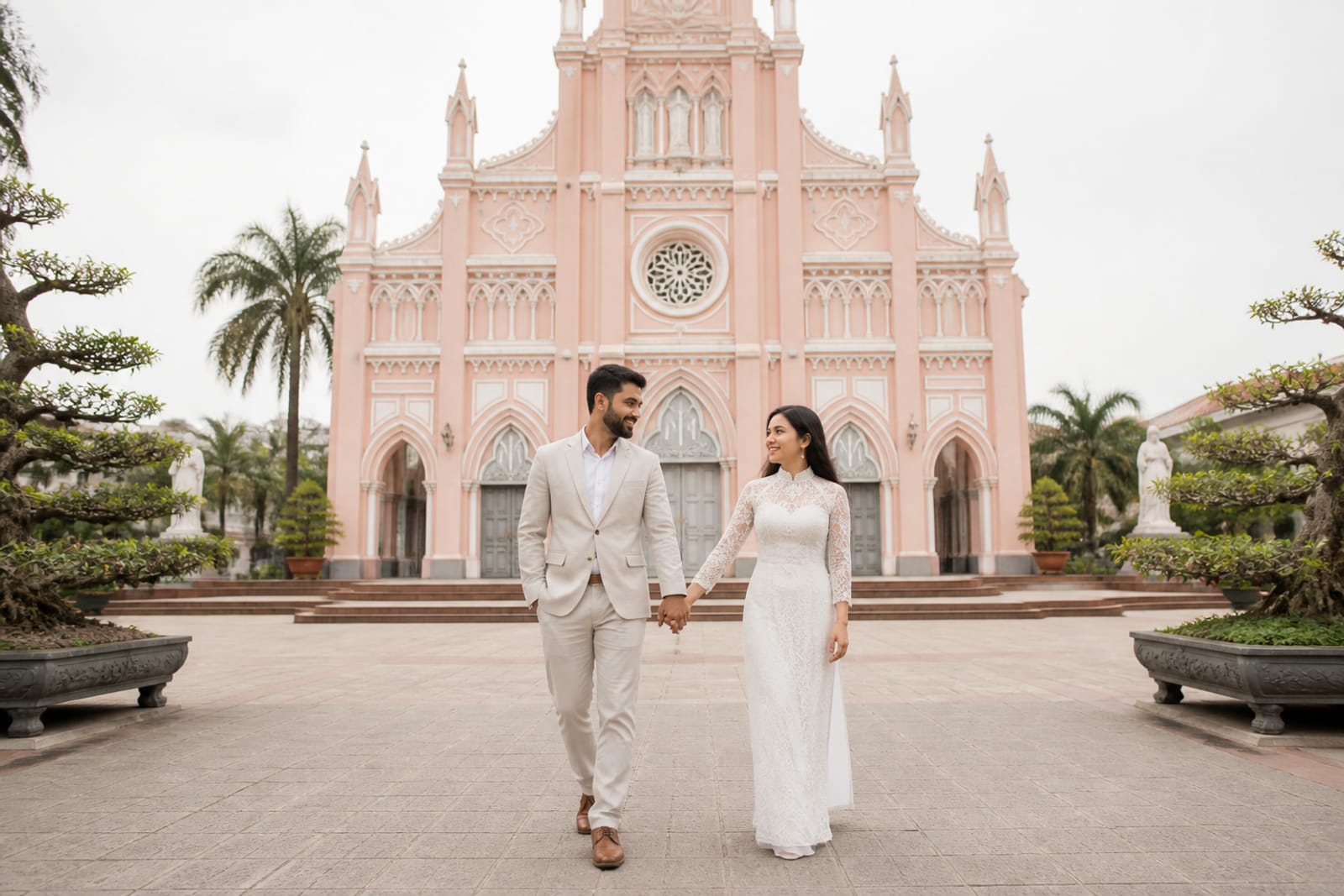
Ao dai vs. Western wear: which reads better at Hai Van Pass
| Option | Best for | Light & Season | Why It Works |
|---|---|---|---|
| Ao dai (traditional silk tunic + trousers) | Cultural narrative, luxury feel | Feb–Aug, golden hour, clear skies | Long vertical lines photograph elegantly against stone; silk catches light beautifully when still |
| Jeans + fitted top | Modern couple, ease of movement | Year-round if dry, early morning or late afternoon | Timeless, casual elegance; easy to layer; less wind resistance |
| Formal Western dress (knee-length) | Elopement or anniversary vibe | Feb–Aug, midday or golden hour | Structured skirts don't billow; pairs well with the pass's monumental landscape |
| Layered casual (sweater + trousers) | Cold-season comfort, effortless vibe | Dec–Jan, morning light | Warmth + style; grey skies suit moody, intimate tones |
An ao dai photoshoot at Hai Van Pass is striking because the tunic's long panels create vertical drama against horizontal stone cliffs. However, wind is the catch: if your photographer lacks experience anchoring fabric in gusts, the ao dai can become unruly. Ask your local photographer directly: Have you shot ao dai at Hai Van Pass in wind? and Do you know how to pose it so it photographs, not flaps? Western wear is safer for spontaneous movement and laughter—you won't worry about your tunic flying sideways. If you choose traditional dress, schedule the shoot for early morning (6–7 a.m.) or late afternoon (4–5 p.m.) when wind typically calms, and bring a waterproof cover-up in case mist condenses into drizzle.
Conclusion: Ao dai wins for drama but requires wind expertise; Western wear gives you freedom to move naturally.
---
Timing, light, and weather: the hidden outfit constraints
Hai Van Pass's best light window is 06:00–07:30 and 16:00–17:30 (Feb–Aug). During these slots, the sun sits low enough to cast long shadows on your faces and across the pass road, creating depth. Midday (11:00–14:00) bleaches the landscape and makes shadows under eyes harsh—avoid it. Light also changes fast: within 30 minutes, mist can roll in and flatten all contrast. A couple photoshoot here often runs tight on schedule because the photographer is racing against weather and light.
Season breakdown:
- Feb–Aug (dry season): Clear skies, stable wind, predictable light. Best window for outfits in lighter fabrics (cotton, linen blends) and shorter sleeves. Humidity is high (May–Aug), so breathable layers work best.
- Sep–Dec (rainy/typhoon season): Mist and sudden showers common. Ground is often wet and slippery. Darker, water-resistant outfits (darker denim, wool blends, technical fabrics) hide moisture and mud splashes. Typhoon season (Oct–Nov) can close the pass entirely—avoid booking then.
Temperature on the pass runs 18–22 °C in winter (Dec–Feb) and 20–25 °C in summer (May–Aug), but wind chill makes it feel colder. A fitted windbreaker or denim jacket—in a color that complements your partner's outfit—is not optional; it's part of the shoot. Wear layers you're happy to be photographed in, not just for warmth.
Conclusion: Dry-season shoots suit light, flowing layers; rainy-season shoots demand dark, water-resistant fits.
---
How to vet a local Da Nang photographer before booking
Cáo Studio – Makeup & Photoshoot operates in Hanoi, Ho Chi Minh City, and Hoi An; Da Nang is outside our service area. Hire a local photographer who understands the pass's hazards and light cycles. Ask these specific questions:
- How many couple shoots have you done at Hai Van Pass? (Look for at least 5–10; it's a technical location.)
- What happens if mist closes visibility mid-shoot? (They should have a backup indoor spot or a rescheduling policy.)
- Do you have images of ao dai shoots in wind? (If you're choosing traditional dress, see their wind management.)
- Are you insured for traffic liability? (The pass road is active; professional photographers carry insurance.)
- What's your backup plan if typhoon warnings rise? (Sep–Dec bookings need clear cancellation terms.)
- Do I need a permit to shoot there? (Local photographers know current permit rules; check with them before committing.)
Ask to see a full gallery (at least 30 images) from a recent Hai Van Pass couple shoot—not just highlights. Look for sharpness, color accuracy, and how the photographer frames the landscape around you. Avoid photographers who can't show work from the specific location; "similar beaches" don't count.
Conclusion: Vet portfolio depth and ask about contingencies before paying a deposit.
===== Makeup & Hair for your Hai Van Pass shoot
If you're booking a Hai Van Pass photoshoot and want professional makeup to survive wind and mist, book makeup & hair at your hotel in Da Nang before heading up. Wind-resistant makeup (waterproof mascara, matte foundation, long-wear lip) and pinned or braided hair are non-negotiable; a professional stylist applies these techniques far better than DIY. Confirm with your makeup artist that they've worked at the pass before—they'll know which products hold in humidity and wind gusts. Expect to arrive at your hotel 90 minutes before sunrise shoots so makeup sets properly.
💄 Makeup & hair at your hotel | 🌸 See the lookbook
---
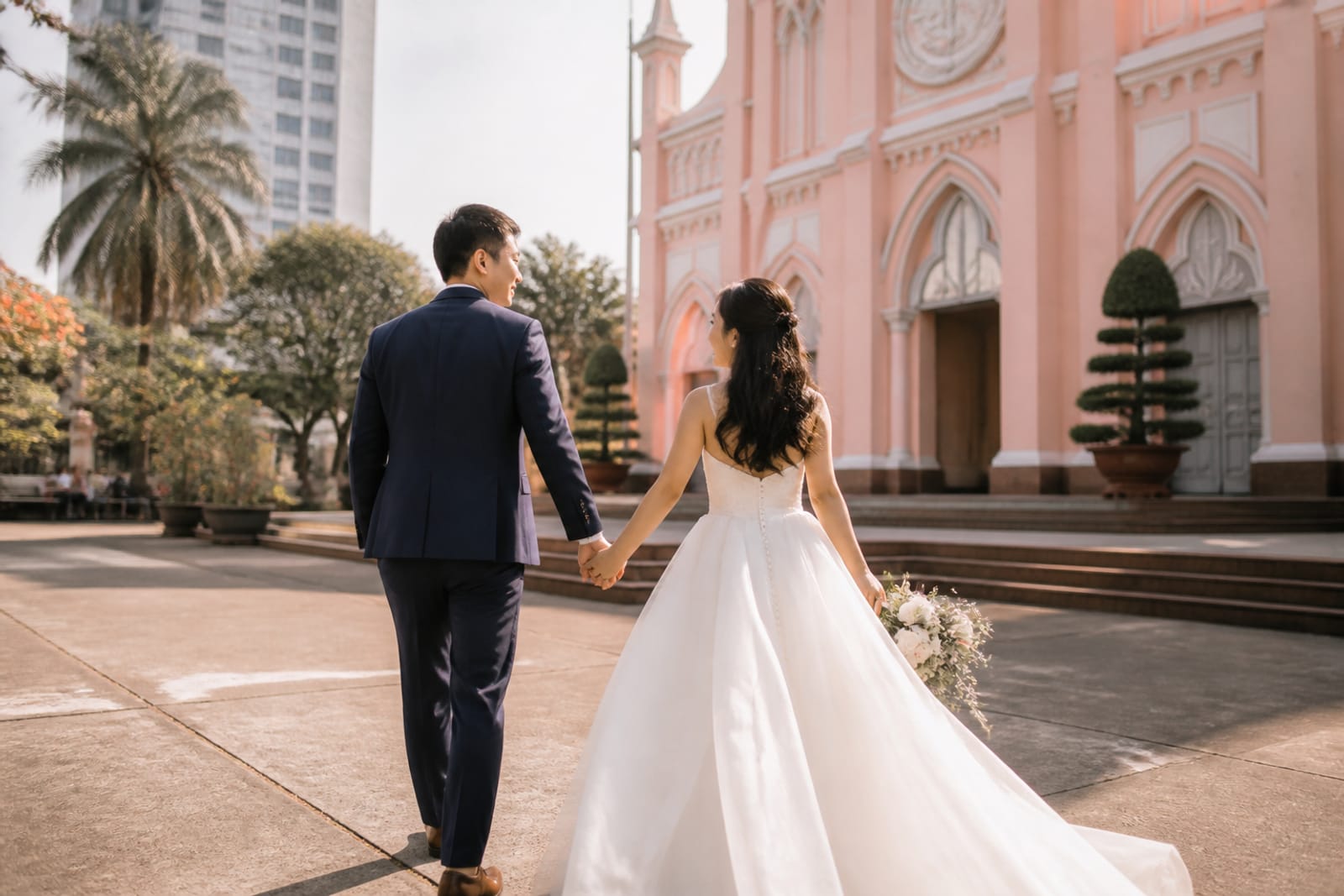
Building an outfit checklist before your Hai Van Pass session
Use this checklist to avoid mid-shoot wardrobe failures:
- [ ] Main outfit: Fitted silhouette (jeans + top, dress, or ao dai) in a color that photographs well against grey stone and blue sky.
- [ ] Backup outfit: A second look in contrasting tone—lighter if your first is dark, or vice versa—for variety over the 2–3 hour shoot.
- [ ] Layers: Fitted cardigan, denim jacket, or windbreaker that you're comfortable appearing in (not a utility shell you'll regret later).
- [ ] Footwear: Flat shoes or low heels (the pass road is uneven stone; avoid stilettos). Test them on gravel before booking.
- [ ] Accessories: Minimal, secured (no loose scarves, wide hats, or dangly jewelry that move in wind).
- [ ] Hair plan: Confirm with your stylist if it's pinned, braided, or secured with clips—not loose strands.
- [ ] Undergarments: Nude-toned bra and shorts that don't show if wind catches your skirt; avoid visible bra straps if wearing ao dai.
- [ ] Weather backup: Waterproof jacket for Sep–Dec bookings; sunscreen for Feb–Aug.
Comparing Hai Van Pass to other Da Nang couple photoshoot locations
If you're in Da Nang and weighing options:
| Location | Light Quality | Wind Exposure | Best Outfit | Logistics |
|---|---|---|---|---|
| Hai Van Pass | Golden hour drama, long shadows | Very high | Fitted + layers | 30 min drive, permit needed, traffic risk |
| My Khe Beach | Sunrise glow, soft light | Moderate | Casual, flowing | 10 min walk, crowded early, no permit |
| Marble Mountains | Dappled light, stone backdrop | Low (sheltered) | Any style | 20 min drive, stairs, temple etiquette |
| Tho Quang Fishing Village | Golden hour, authentic mood | Moderate | Casual, earthy tones | 15 min drive, narrow paths, tide-dependent |
Hai Van Pass wins for drama and isolation but demands outfit precision and wind strategy. My Khe Beach is easier logistically but more crowded and less distinctive. If you prefer a simpler, lower-stakes shoot, My Khe or Marble Mountains reduce wardrobe stress; if you want an iconic, windswept-romantic narrative, invest the effort in Hai Van Pass outfit planning.
Conclusion: Match your outfit risk tolerance to the location's demands.
---
What to check before you book a Hai Van Pass couple photoshoot
- Photographer experience at this location: Ask for Hai Van Pass–specific portfolio, not generic beach shots. This is non-negotiable.
- Season & mist risk: Book Feb–Aug if possible; Sep–Dec carries typhoon closure and mist unpredictability.
- Outfit fit & movement: Do a dry run of layers and shoes on uneven ground. Climb a few stairs in your outfit; if you feel restricted, change it.
- Backup & reschedule terms: Confirm the photographer's policy if the pass closes due to weather or low visibility.
- Makeup & styling durability: Book a professional who knows wind-resistant techniques, not a beginner. Confirm they've worked at the pass.
- Traffic safety: Confirm the photographer's insurance and their traffic-management plan. The pass road is active; safety is non-negotiable.
- Travel time & fatigue: Hai Van Pass is 30+ minutes from Da Nang city. Plan rest time before the shoot so you're not exhausted by the time light peaks.
---
📸 Book on WhatsApp — ao dai photoshoot | 💄 Makeup & hair at your hotel | 🌸 See the lookbook
---
Does Cáo Studio shoot at Hai Van Pass?
No. Cáo Studio – Makeup & Photoshoot operates in Hanoi, Ho Chi Minh City, and Hoi An. Da Nang and Hai Van Pass are outside our service area. For a pre-wedding photoshoot here, hire a local Da Nang photographer who knows the pass's specific light, wind, and permit rules. If you're traveling to Hoi An for a couple session, we can help—photoshoots in Hoi An include heritage villages and beaches in our service area. For Hanoi or Ho Chi Minh City couple shoots, book on WhatsApp.
FAQ
Can I wear an ao dai at Hai Van Pass, or will wind ruin it?
Ao dai photographs beautifully at the pass, but wind is a real risk. Hire a photographer experienced with ao dai in wind (ask for Hai Van Pass portfolio). Book early morning or late afternoon when wind calms. Bring a windbreaker backup and confirm your stylist knows how to anchor the tunic with pins.
What's the best time of year to shoot at Hai Van Pass as a couple?
Feb–Aug (dry season) is safest: clear skies, stable wind, predictable light. Sep–Dec brings mist, typhoon risk, and ground wet from rain. If you must book Sep–Dec, avoid Oct–Nov (worst typhoon season) and choose the driest day your photographer forecasts.
Do I need special footwear for Hai Van Pass couple photos?
Yes. The pass road is uneven stone and gravel. Avoid heels; wear flat shoes or low heels with good grip. Test shoes on gravel beforehand. If you're in ao dai, comfortable flat sandals or ballet flats show your feet best in shots.
How long does a Hai Van Pass couple photoshoot take?
Typically 2–3 hours including 30-minute travel time from Da Nang city, light-setup time, and outfit changes. Confirm exact duration with your local photographer; it depends on number of outfit changes and backup location visits if mist arrives.
What layers work best in February–August at the pass?
Light, fitted layers: linen blend cardigan, denim or cotton jacket, or a fitted windbreaker in a neutral tone. Avoid silk or loose fabrics—they catch wind and distract from your faces. Breathable fabrics (cotton, linen) manage humidity; synthetic blends dry fast if mist condenses into light rain.
Is there a permit needed to shoot at Hai Van Pass, and how do I get one?
Permit rules change seasonally and by local authority. Ask your photographer—they handle permitting or will advise you on current requirements. Do not assume no permit is needed; this is a protected scenic area with traffic. Confirm with your photographer before booking.
FAQ
Can I wear an ao dai at Hai Van Pass, or will wind ruin it?
Ao dai photographs beautifully at the pass, but wind is a real risk. Hire a photographer experienced with ao dai in wind (ask for Hai Van Pass portfolio). Book early morning or late afternoon when wind calms. Bring a windbreaker backup and confirm your stylist knows how to anchor the tunic with pins.
What's the best time of year to shoot at Hai Van Pass as a couple?
Feb–Aug (dry season) is safest: clear skies, stable wind, predictable light. Sep–Dec brings mist, typhoon risk, and ground wet from rain. If you must book Sep–Dec, avoid Oct–Nov (worst typhoon season) and choose the driest day your photographer forecasts.
Do I need special footwear for Hai Van Pass couple photos?
Yes. The pass road is uneven stone and gravel. Avoid heels; wear flat shoes or low heels with good grip. Test shoes on gravel beforehand. If you're in ao dai, comfortable flat sandals or ballet flats show your feet best in shots.
How long does a Hai Van Pass couple photoshoot take?
Typically 2–3 hours including 30-minute travel time from Da Nang city, light-setup time, and outfit changes. Confirm exact duration with your local photographer; it depends on number of outfit changes and backup location visits if mist arrives.
What layers work best in February–August at the pass?
Light, fitted layers: linen blend cardigan, denim or cotton jacket, or a fitted windbreaker in a neutral tone. Avoid silk or loose fabrics—they catch wind and distract from your faces. Breathable fabrics (cotton, linen) manage humidity; synthetic blends dry fast if mist condenses into light rain.
Is there a permit needed to shoot at Hai Van Pass, and how do I get one?
Permit rules change seasonally and by local authority. Ask your photographer—they handle permitting or will advise you on current requirements. Do not assume no permit is needed; this is a protected scenic area with traffic. Confirm with your photographer before booking.
Ao dai, makeup, hair and a local photographer in Hanoi or Saigon — one WhatsApp message.