/pre-wedding-photoshoot
What to Wear for Couple Photos at Hang Mua Viewpoint
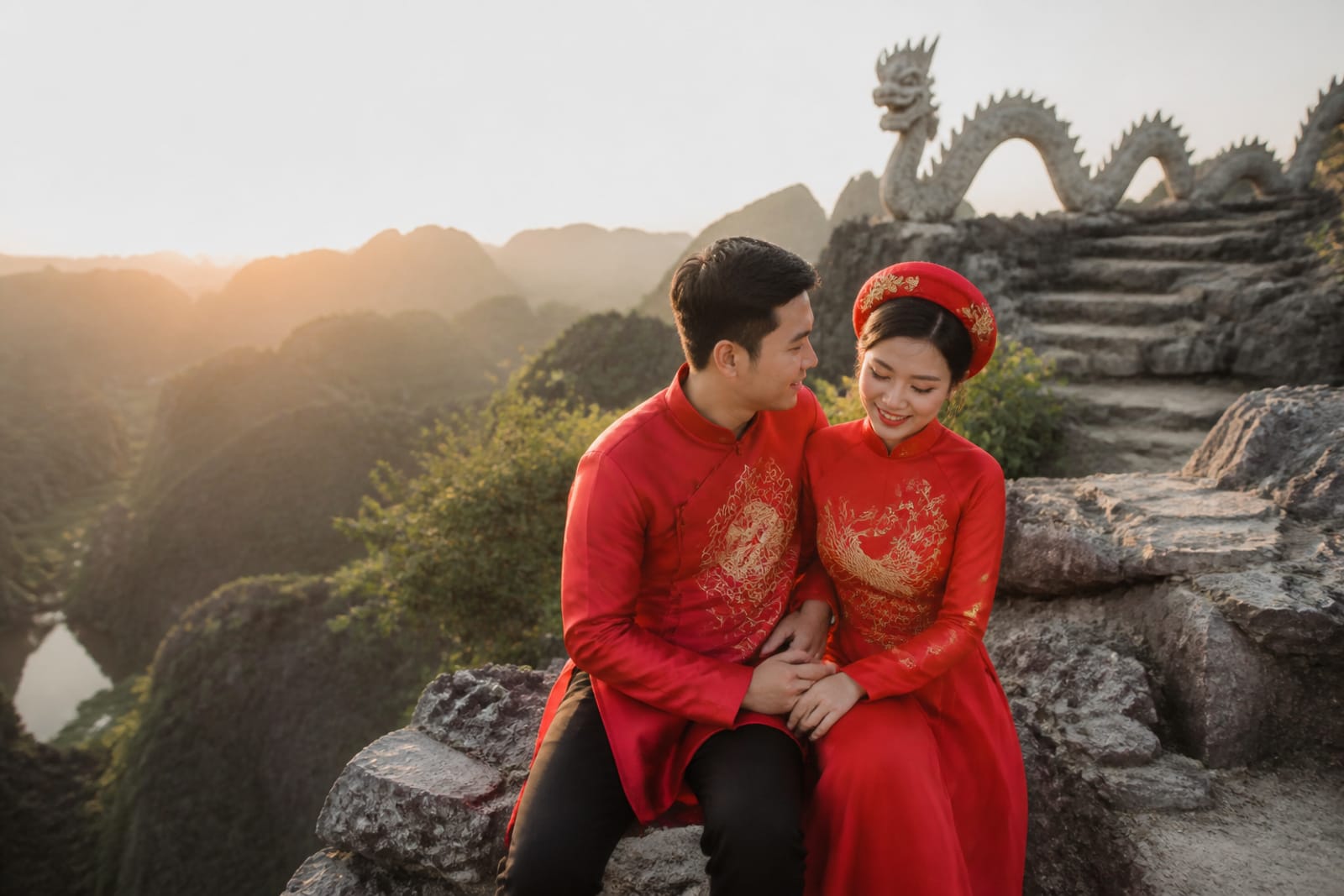
Hang Mua viewpoint sits 286 meters above Ninh Binh's rice valley, accessible by ascending roughly 500 stone steps through karst terrain. A couple photoshoot there typically runs 2–3 hours, including the climb, outfit changes, and multiple takes as light shifts. Wear breathable, fitted or flowing layers (linen, cotton, silk blends avoid baggy wrinkles and sweat stains) in jewel tones or pastels that contrast the grey limestone; avoid pure white (overexposes against sky) and busy patterns (distract from faces). Shoes must grip wet stone—leather soles slip; bring a spare pair or wear climbing sandals to the summit and change for photos. If you're booking with a Hanoi photographer like Cáo Studio – Makeup & Photoshoot, confirm they've shot Hang Mua before and know the light angles; if hiring locally, vet their portfolio for couple work on steep terrain and request an early start (6:30–8:00 a.m.) to avoid midday glare and crowds.
Hang Mua's steep stone staircase and panoramic rice-field backdrop make it one of Ninh Binh's most sought couple-photoshoot locations. The climb is relentless—nearly 500 uneven steps, many moss-covered or wet—so outfit choice affects both comfort and image quality. Your clothing must survive sweat, movement, and stone texture while looking composed in the frame.
What Color Works Best at Hang Mua's Light?
Hang Mua limestone glows grey-blue in morning light (6:30–9:00 a.m.), golden-grey at midday, and orange-grey in late afternoon (4:30–6:00 p.m.). Jewel tones—emerald, sapphire, burgundy, deep plum—photograph richly against neutral stone without competing with it. Soft pastels (blush, sage, dusty blue) work well on clear, sunny days; on grey or cloudy mornings they can flatten. Pure white washes out against the sky and limestone; cream or off-white is safer if that's your aesthetic. Avoid neon, fluorescent, or high-contrast patterns; they distract from your faces and date the photos. Test your color choice in similar outdoor light before the shoot—phone photos in your actual lighting help predict results. If you're unsure, ask your photographer's recommendation based on the booked date and forecast.
📸 Book on WhatsApp — couple & family photoshoot
Which Fabrics Photograph Well and Don't Sweat-Show?
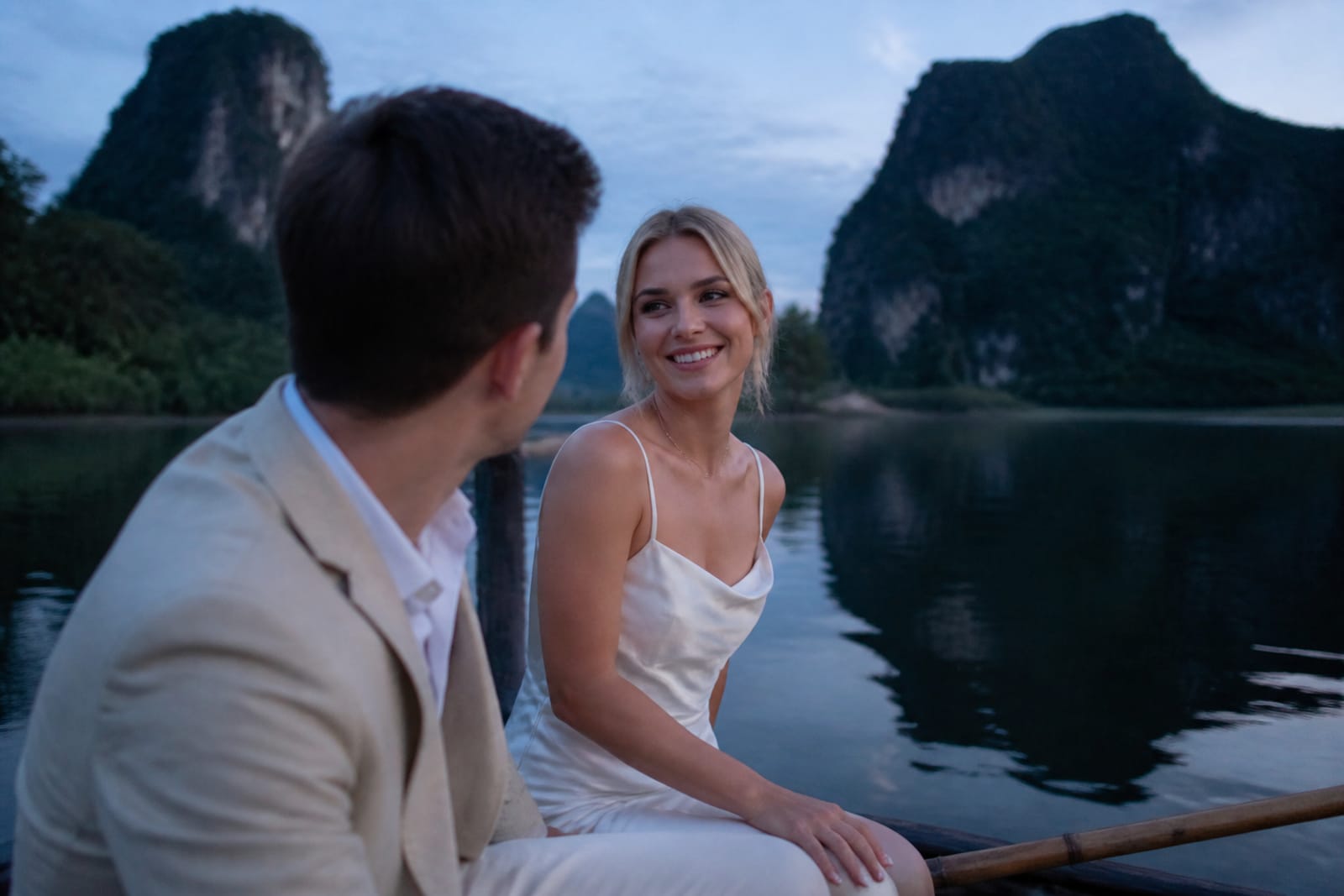
Linen, cotton blends, and silk look fluid in motion and hide minor sweat better than synthetic materials. Heavy denim and stiff cotton wrinkle visibly after sitting or climbing; fitted jersey knits (with stretch) hug the body cleanly and dry fast. Avoid oversized cuts—they bunch at the waist and armpits in close frames, making posture hard to control. Sheer or semi-sheer layers need an undershirt or slip to avoid transparency; layering also lets you shed a piece before descent if you overheat. Moisture-wicking fabric (polyester blends, nylon) works for active couples but can reflect light oddly in direct sun—test yours in advance. Matte finishes photograph more forgiving than glossy; if your outfit has sheen, the photographer will adjust angles to avoid flare. Bring a small towel or microfiber cloth to blot your neck and wrists before tight shots.
Should You Wear Separate Outfits or Change at the Top?
Most couples change outfits once at the summit—typically into a second outfit after 45 minutes of climbing, when adrenaline and sweat have peaked. This avoids carrying heavy fabric up 500 steps and lets you feel fresh for the second look. Pack a lightweight crossbody bag (not a backpack; it shows on your back) with a spare top and accessories; ask your photographer to keep it while you change behind a temple structure or restroom (most summit areas have basic facilities). If you want three outfits, one couple wore a casual piece for the climb (changed at base camp, a small pavilion area 100 steps up), a formal second outfit at the summit, and a third for descent—this extends the shoot to 4+ hours and requires a very fit couple comfortable with multiple ascents. Changing at the summit is standard and works well; climbing in your finest outfit risks sweat stains and fabric tears on rough stone.
How Do Shoes and Footwear Affect Your Photos and Safety?
Stone steps at Hang Mua are slippery when wet—leather soles, heels, and smooth-bottomed sandals slip dangerously. Rock-climbing shoes or waterproof hiking sandals with aggressive tread grip reliably; change into your photo shoes (ballet flats, loafers, dressy sandals) at the summit for shots, then swap back for descent. Avoid flip-flops and thin soles; your feet will ache and you'll look unstable. If you're barefoot in photos (uncommon but romantic), only pose on the final, driest platform away from steep edges—the photographer will frame low to hide rough stone. Brides in heels should bring flat backup shoes or be carried part of the climb (test this beforehand with your partner; it's more effort than it sounds). Wet socks are uncomfortable for hours; pack extras. Many couples wear neutral-colored sneakers up and change to photo-appropriate shoes at the top—a pragmatic, common choice the photographer will frame to hide feet if needed.
Hanoi vs. Local Ninh Binh Photographers: What's the Real Difference?
A Hanoi studio like Cáo Studio – Makeup & Photoshoot travels to Ninh Binh for pre-wedding shoots and brings studio-trained posing direction, lighting knowledge, and post-processing experience. Local Ninh Binh photographers know the terrain intimately—which steps get shade, where crowds peak, safe changing spots—but may have less formal portrait training. Each has merit; here's a comparison:
| Aspect | Hanoi Studio (Cáo) | Local Ninh Binh Photographer |
|---|---|---|
| Posing & composition | Trained in studio & outdoor framing; consistent style across couples. | Variable; depends on individual's background; may excel at candid work. |
| Terrain knowledge | Must scout Hang Mua specifically; may be less familiar with seasonal changes. | Intimate; knows safe routes, weather patterns, crowd times, best light angles. |
| Turnaround & editing | 7–14 days typically; consistent color grading & retouching standards. | Varies widely; can range 3 days to several weeks; editing style less predictable. |
| Travel & logistics | Coordinated transport, makeup/hair available; booking on WhatsApp. | You coordinate transport; photographer meets you on-site; simpler logistics. |
| Cost factors | Travel time from Hanoi (1.5–2 hours), studio overhead; higher than local. | No travel cost; lower overhead; cost depends on local rates & negotiation. |
| Portfolio proof | Website, lookbook, past couple shoots visible online. | May have limited online presence; ask for local couple references directly. |
Recommendation: If you want a predictable, styled aesthetic with professional retouching, book a Hanoi studio and confirm they've shot Hang Mua before. If budget is tight or you prefer authentic local expertise, hire a vetted local photographer—ask your hotel, guides, or Facebook Ninh Binh expat groups for recommendations with portfolio links.
What's the Best Time of Day and Season to Shoot at Hang Mua?
Light and time: Early morning (6:30–8:30 a.m.) offers cool conditions, soft sidelighting, and thin crowds—ideal for couple work. Midday (10:00 a.m.–3:00 p.m.) brings harsh shadows and heat; only shoot if skies are overcast, which happens often Dec–Feb. Late afternoon (4:30–6:00 p.m.) is warm and golden but crowds are heaviest and you may not reach the summit comfortably before sunset.
Season: Mar–May and Sep–Nov are most comfortable (cool, dry, clear light). Jun–Aug is hot (29–35°C), humid, and prone to afternoon storms—steep stone becomes treacherous and light is flat. Dec–Feb is cool (15–20°C) and often grey with misty mornings; still shootable but soft light requires careful color choice. Tet (late Jan–mid Feb) closes temples and attracts huge crowds; avoid. Rice fields are golden late May–early June and again Sep–Oct—if that backdrop appeals, plan your date around it.
Booking steps: Contact your chosen photographer 2–3 weeks ahead with your preferred date, start time, and outfit count. Confirm they know Hang Mua's permit rules (no commercial permit required, but guides may ask; your photographer should know this). Ask about their backup date policy if weather turns dangerous. Request a detailed shot list—couples often want images at specific locations (the high platform, temple stairs, valley overlook) to ensure you hit them before fatigue sets in.
What to Check Before You Book
- Photographer's Hang Mua portfolio: Ask to see at least 3–5 couple shoots from that specific location. Light, posing, and editing should match your taste.
- Fitness and age suitability: Be honest about your fitness level. 500 steps is demanding; if either partner has knee, heart, or mobility concerns, discuss modified routes with the photographer beforehand—some pros shoot lower platforms or use timing tricks to reduce physical strain.
- Weather contingency: Confirm the photographer's policy if storms hit. Do they reschedule free, with a fee, or keep the deposit? Heavy rain makes stone dangerous; a good photographer will pause or stop if conditions worsen.
- Outfit changes and changing space: If using more than one outfit, confirm where you'll change and whether the photographer brings an assistant to hold items. Carrying bags up 500 steps is miserable; negotiate this detail.
- Delivery timeline and editing style: Ask when edited images arrive and see samples of their retouching. Do they enhance color, skin tones, and sharpness to your preference? Request a few test edits if options exist.
- Transport and meeting point: If hiring locally, clarify who arranges pickup or if you meet at the entrance. If booking from Hanoi, ask if the studio includes transport or coordinates it separately—it affects overall cost and schedule.
---
FAQ
Can I wear an ao dai for couple photos at Hang Mua?
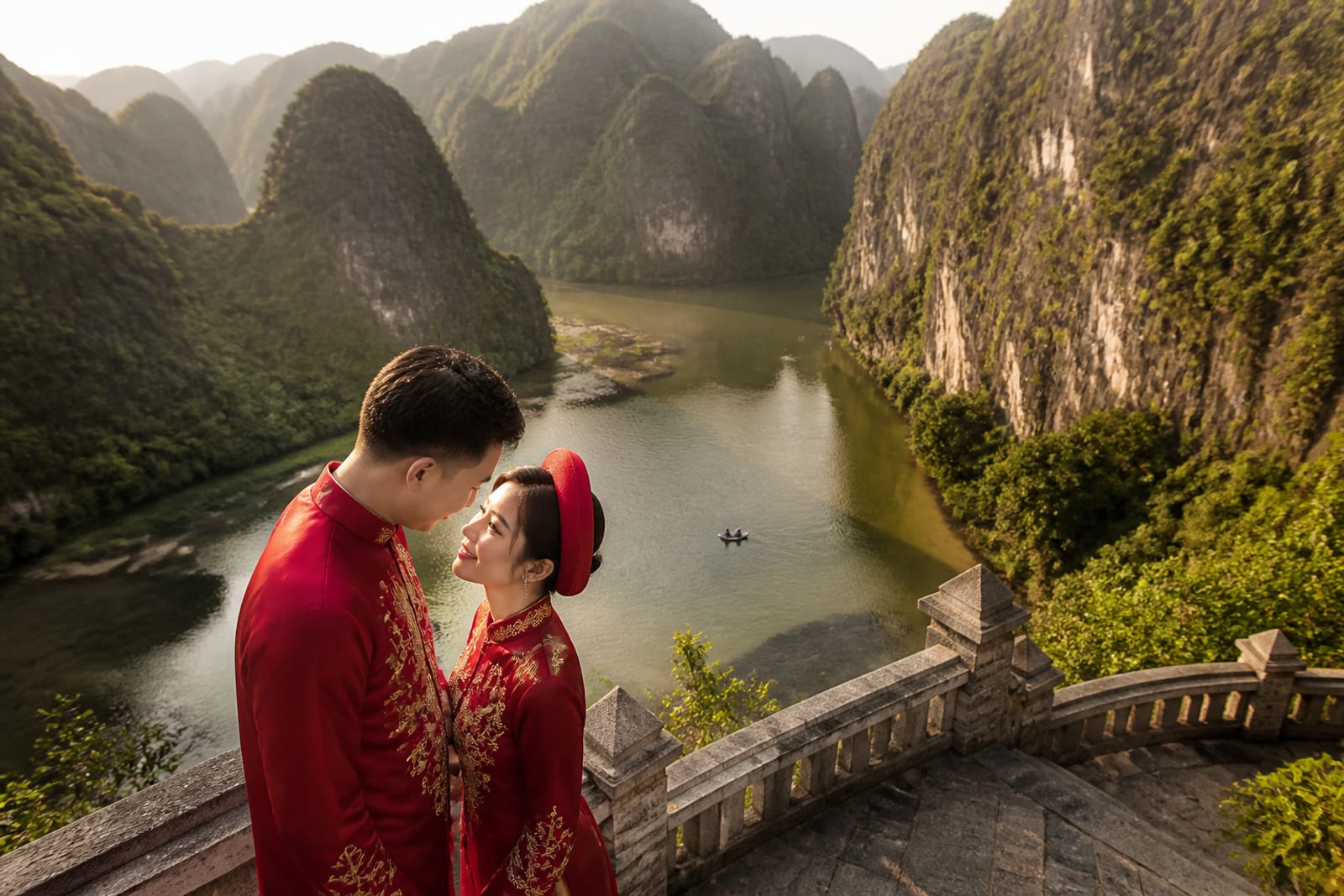
Yes. A fitted or tailored ao dai photographs beautifully against limestone and works for cultural couples. However, the full-length skirt makes climbing difficult and risks tearing on rough stone; most couples choose it as a second outfit at the summit only, wearing casual clothes for the ascent.
How much sweat will show in my photos after climbing 500 steps?
A skilled photographer will shoot close-ups of your face and frame wide shots to include scenery, minimizing visible sweat stains. Wear breathable, dark-colored fabrics, and bring a small towel; the photographer will allow 10–15 minutes to cool and dry before tight portraits.
Should I book a Hanoi studio or find a local Ninh Binh photographer?
Both work. Hanoi studios like Cáo bring trained posing, consistent editing, and often makeup/hair coordination; they cost more due to travel. Local photographers know the terrain, are cheaper, and offer authentic local insight—vet their couple portfolio carefully on social media or through hotel references.
What if the weather is grey or rainy on my shoot date?
Grey light softens harsh shadows and suits muted outfit colors well; reschedule only if storms make stone actively dangerous. Ask your photographer's backup-date policy before booking. Heavy mist at dawn can clear by mid-morning; early starts help you wait it out at the summit.
Do I need a permit or guide to shoot at Hang Mua?
No permit is required for personal or couple photography. Some local guides patrol the steps and may ask about commercial use; your photographer should know this and clarify if asked. Hiring an official guide (optional) costs extra but helps with route navigation and safety.
How long does a typical couple session at Hang Mua take?
2–3 hours total, including climb, setup, posing, and outfit changes. The actual on-camera time is 45 minutes to 1.5 hours; the rest is logistics, breaks, and descent. Confirm the exact timeline with your photographer when booking.
FAQ
Can I wear an ao dai for couple photos at Hang Mua?
Yes. A fitted or tailored ao dai photographs beautifully against limestone and works for cultural couples. However, the full-length skirt makes climbing difficult and risks tearing on rough stone; most couples choose it as a second outfit at the summit only, wearing casual clothes for the ascent.
How much sweat will show in my photos after climbing 500 steps?
A skilled photographer will shoot close-ups of your face and frame wide shots to include scenery, minimizing visible sweat stains. Wear breathable, dark-colored fabrics, and bring a small towel; the photographer will allow 10–15 minutes to cool and dry before tight portraits.
Should I book a Hanoi studio or find a local Ninh Binh photographer?
Both work. Hanoi studios like Cáo bring trained posing, consistent editing, and often makeup/hair coordination; they cost more due to travel. Local photographers know the terrain, are cheaper, and offer authentic local insight—vet their couple portfolio carefully on social media or through hotel references.
What if the weather is grey or rainy on my shoot date?
Grey light softens harsh shadows and suits muted outfit colors well; reschedule only if storms make stone actively dangerous. Ask your photographer's backup-date policy before booking. Heavy mist at dawn can clear by mid-morning; early starts help you wait it out at the summit.
Do I need a permit or guide to shoot at Hang Mua?
No permit is required for personal or couple photography. Some local guides patrol the steps and may ask about commercial use; your photographer should know this and clarify if asked. Hiring an official guide (optional) costs extra but helps with route navigation and safety.
How long does a typical couple session at Hang Mua take?
2–3 hours total, including climb, setup, posing, and outfit changes. The actual on-camera time is 45 minutes to 1.5 hours; the rest is logistics, breaks, and descent. Confirm the exact timeline with your photographer when booking.
Ao dai, makeup, hair and a local photographer in Hanoi or Saigon — one WhatsApp message.