/pre-wedding-photoshoot
What to Wear for Couple Photos at Hoi An Rice Paddies
Couple photos in Hoi An rice paddies are romantic because light and landscape conspire. But romance requires planning: wrong outfit choices leave you overheated, tangled in mud, or washed out by glare. This guide walks you through real decisions—seasons, fabrics, colours, timing—so your shoot feels effortless.
Why does fabric choice matter more in rice paddies than studios?
Rice fields are working landscapes. You'll walk uneven earth, step through shallow water, and navigate narrow bunds (ridge paths). Heavy or restrictive fabrics—denim, stiff brocade, structured tulle—tire you faster and limit poses. Lightweight cottons, silks, and breathable blends let you move naturally; they also dry faster if you wade intentionally for shots.
Synthetic fabrics hold heat in tropical humidity; natural fibres breathe. A linen shirt or cotton dress that grazes the calf moves with the wind and camera, creating flow without looking staged. Avoid anything that clings to sweat or trails through mud—muddy hems photograph sharply and stain permanently.
What colours work best against green fields and water?
Greens and blues dominate rice paddies, so outfit colour either harmonises (blending you into landscape) or contrasts (making you stand out). There is no universal right answer; the choice depends on your story.
Comparison: outfit colour strategy in rice paddies
| Colour approach | Best for | Why it works | Season/light notes |
|---|---|---|---|
| Warm neutrals (beige, tan, cream) | couples wanting soft, timeless mood | harmonises with earth tones; flatters skin without distraction | all dry-season months; avoid white in harsh midday sun (flare, glare) |
| Jewel tones (emerald, sapphire, burgundy) | couples wanting to pop from landscape | creates visual contrast; rich hues photograph well in golden hour | Feb–Apr (mild light); May–Aug needs early morning or late afternoon to avoid oversaturation |
| Pastel or blush | couples wanting ethereal, romantic feel | softens in diffuse morning light; can fade in brightness | best Feb–Apr; avoid May–Aug (heat makes pastels look washed out) |
| Black or dark denim | couples wanting modern edge or formal feel | creates silhouette; reads sharply against water | Feb–Apr only (too hot and absorbs heat May–Aug); sunset shots most flattering |
Avoid neon or fluorescent colours—they look artificial in natural light and can dominate the frame. White works only in soft morning light; after 9 a.m. it flares and strains the camera's sensor, making you appear overexposed.
Should you wear an áo dài, and if so, when?
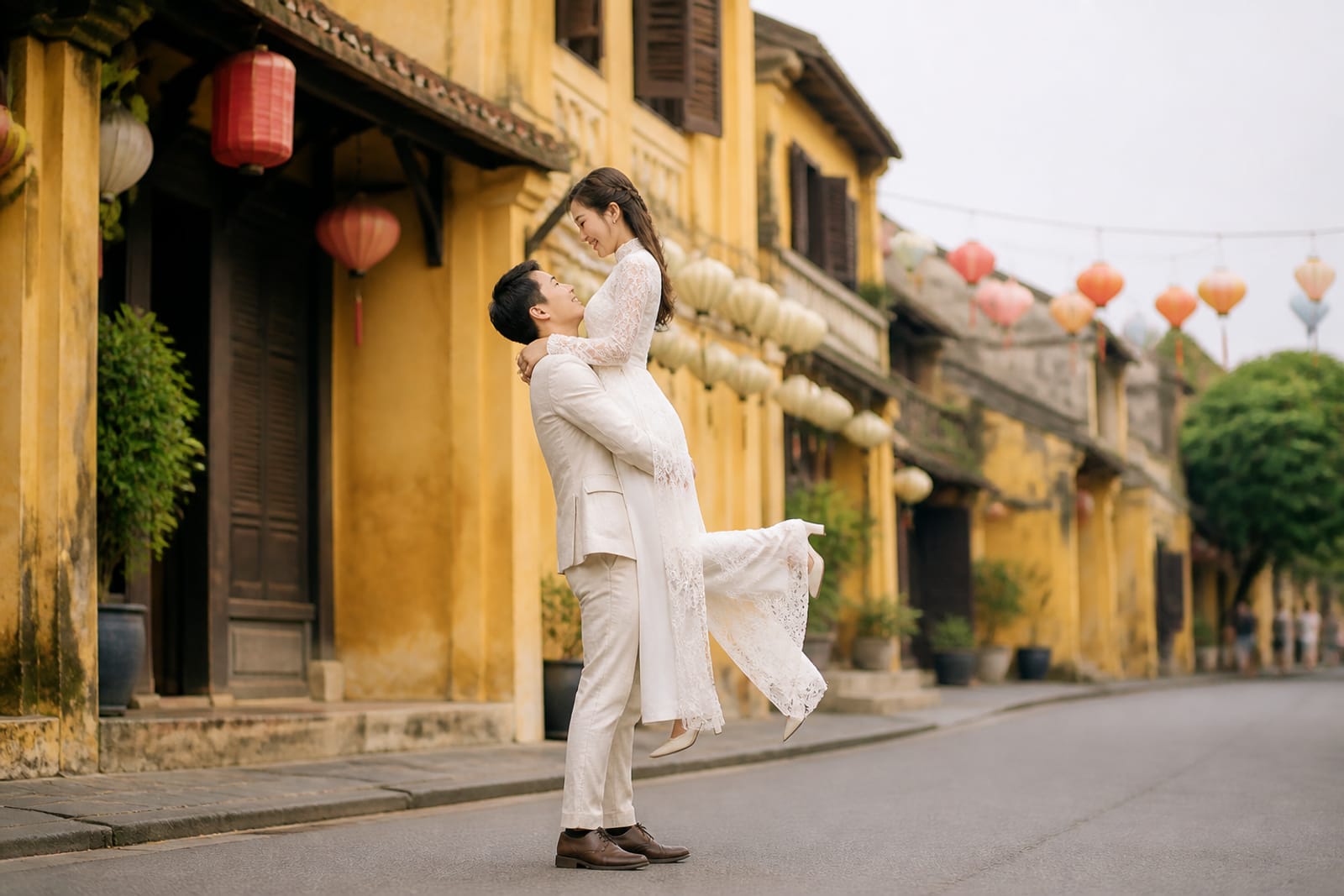
The áo dài is Hoi An's signature garment. If you're drawn to it—whether you're Vietnamese or not—it deepens the location's story. But timing and fit matter.
An áo dài is a silk tunic worn over fitted trousers. The silk catches light beautifully in golden hour (sunrise and sunset); in harsh midday light it can appear flat or too formal. If you wear one, choose an early-morning or late-afternoon slot so the fabric glows. Rent one locally or bring your own; a fitted áo dài moves elegantly, while an ill-fitting one restricts poses.
Wear a regular outfit for your arrival and wardrobe change—the áo dài is your "beauty shot" piece, not your all-day comfort wear. Cáo Studio can arrange áo dài rental; discuss outfit and transition strategy on WhatsApp when booking.
Couples who aren't áo dài fans—or who prefer comfort—photograph beautifully in linen shirts, lightweight tunics, and tailored casual wear. The paddies don't require traditional dress to look authentic.
How does weather and season reshape outfit decisions?
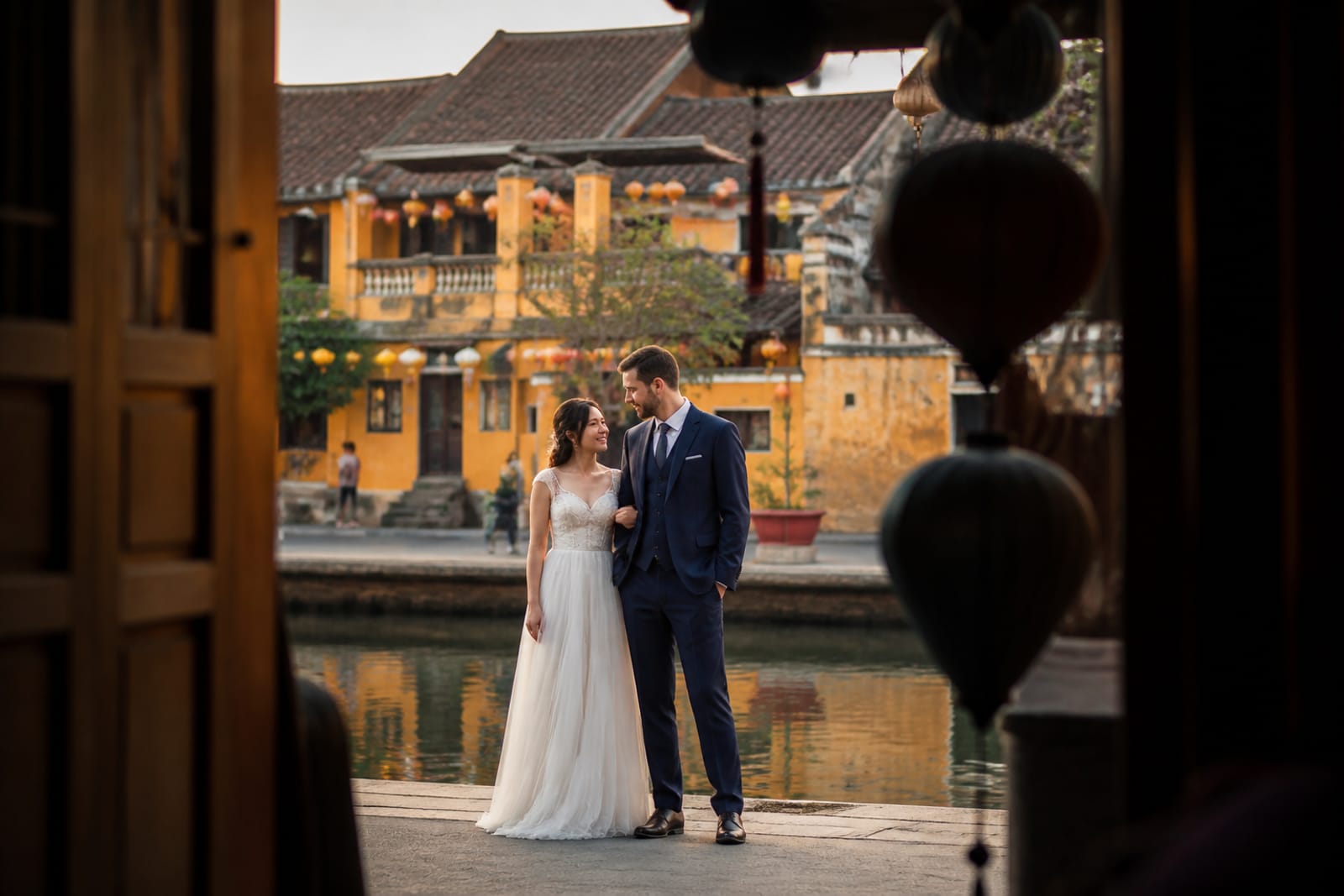
Hoi An's dry season (February to August) is ideal for rice paddies. But within that window, temperature and light shift.
February–April (cool, mild, green fields): 18–28°C. Wear layers you can remove—a light cardigan, linen shirt unbuttoned, or a loose overshirt. Fields are lushest after winter rains; light is even and soft. This is the "goldilocks" window: you won't overheat, the landscape is vivid, and sunset happens earlier (around 6:00 p.m.), creating a longer golden hour.
May–August (hot, dry, fields often preparing for harvest): 30–35°C+. Plan sunrise or late-afternoon shoots only. Wear minimal layers—sleeveless dresses, loose short-sleeve shirts, breathable trousers. A silk scarf or shawl adds elegance without weight and can drape over your head for sun protection. Bring a parasol if bright light bothers you; it photographs beautifully and shields skin.
September–December (rainy season, typhoons, flooding): Avoid. October–November especially: paddies flood, paths become impassable, and typhoons arrive unpredictably. The Ancient Town itself floods during this window.
Weather variability within a season means checking the forecast 3–5 days before. Ask Cáo Studio's team on WhatsApp for real-time location updates and last-minute outfit tweaks.
What does a real rice-paddy shoot day look like, and how do you prepare?
A typical session starts before sunrise (team meets 5:00–5:30 a.m.) or late afternoon (3:30–4:00 p.m.). You'll drive or be driven to a field near Hoi An—usually 15–30 minutes from town. The team scouts light, finds paths, and positions you so backlight or sidelight flatters.
Wear comfortable walking shoes to arrival; change into shoot footwear on-site (bare feet, sandals, or dressy shoes depending on outfit). Bring: a light robe or cover-up, water, sunscreen, a small towel, and extra bobby pins (wind is constant). Muddy water is cool; if you wade intentionally, wear footwear you don't mind soiling or go barefoot (paddies are not sharp; check with your photographer).
Makeup and hair at the site depend on humidity and wind. A makeup artist can travel with Cáo Studio if you book makeup & hair; otherwise, waterproof makeup and secured updos work best. Ask your team whether hair and makeup are included when you book on WhatsApp.
Sessions typically run 60–90 minutes in golden hour; the team shoots 300–500 images depending on your package. You'll move between 2–4 field positions, and may return to town for final shots in the Ancient Town or by water if time allows.
What to check before you book your rice-paddy couple shoot
Outfit logistics: Confirm whether the studio includes outfit changes, rentals (áo dài), or styling advice. Ask if makeup and hair travel with the team or are arranged separately.
Accessibility: Are paths flat and muddy, or steep and slippery? Do you have mobility concerns? Discuss this on WhatsApp so the team can choose an easier field or adjust timing.
Light and season: Verify that your chosen month and time of day align with your outfit choice. If you love pastels, book February–April and a sunrise slot. If you prefer bold jewel tones, May–August afternoons work.
Backup plan: Hoi An's weather can shift. Confirm what happens if rain arrives unexpectedly—do you reschedule, pivot to covered locations (temples, town), or proceed?
Edited timeline: Ask when edited photos arrive. Cáo Studio sends final images on a schedule confirmed at booking; confirm this before committing.
Travel and parking: How do you get to the field? Is parking provided? Do you need to hire transport, or does the team arrange it?
---
📸 Book on WhatsApp — pre-wedding photoshoot | 💄 Makeup & hair at your hotel | 🌸 See the lookbook
---
For couples new to Hoi An, the rice paddies are only one option. You can also shoot in the Ancient Town at sunrise (fewer crowds, softer light), at temples with áo dài for cultural depth, or combine paddies with a sunset session by the riverside. Cáo Studio scouts each location and builds a full-day itinerary if you book a pre-wedding shoot.
If you're based in Hanoi or Ho Chi Minh City, the team works from Hanoi branches and a Saigon studio; Hoi An shoots are by appointment. Travel costs vary by your outfit, timing, and session length—discuss scope on WhatsApp for a tailored quote.
FAQ
Can we shoot in Hoi An rice paddies if we're not staying overnight?
Yes. Book an afternoon session (3:30–5:30 p.m.) and arrive from Da Nang or town with the Cáo Studio team, or arrange transport independently. Sunrise shoots require staying nearby or arriving very early; ask on WhatsApp about logistics.
Will our outfit get muddy, and can it be cleaned?
Yes, especially if you wade or walk narrow bunds after rain. Muddy water is cool and not sharp, but silt clings to fabric. Bring a change of clothes or rent an outfit the studio can clean later. Discuss laundering with the team when booking.
What if it rains on shoot day?
Hoi An's dry season is usually reliable, but rain happens. Confirm your rescheduling and weather-pivot policy (covered locations like temples or town) on WhatsApp before booking.
Can we do an áo dài shoot and a casual outfit shoot on the same day?
Yes, if your package includes multiple outfits or outfit rentals. Discuss outfit transitions and timing on WhatsApp; the team plans accordingly.
Is early morning or late afternoon better for light and comfort?
Early morning (5:30–7:00 a.m.) is cooler and has softer, diffuse light ideal for romance. Late afternoon (4:00–5:30 p.m.) is warmer but has directional golden light. Choose based on your comfort and outfit—pastels and jewel tones both suit golden hour; casual wear suits soft morning light. Ask the team which slot matches your vision.
FAQ
Can we shoot in Hoi An rice paddies if we're not staying overnight?
Yes. Book an afternoon session (3:30–5:30 p.m.) and arrive from Da Nang or town with the Cáo Studio team, or arrange transport independently. Sunrise shoots require staying nearby or arriving very early; ask on WhatsApp about logistics.
Will our outfit get muddy, and can it be cleaned?
Yes, especially if you wade or walk narrow bunds after rain. Muddy water is cool and not sharp, but silt clings to fabric. Bring a change of clothes or rent an outfit the studio can clean later. Discuss laundering with the team when booking.
What if it rains on shoot day?
Hoi An's dry season is usually reliable, but rain happens. Confirm your rescheduling and weather-pivot policy (covered locations like temples or town) on WhatsApp before booking.
Can we do an áo dài shoot and a casual outfit shoot on the same day?
Yes, if your package includes multiple outfits or outfit rentals. Discuss outfit transitions and timing on WhatsApp; the team plans accordingly.
Is early morning or late afternoon better for light and comfort?
Early morning (5:30–7:00 a.m.) is cooler and has softer, diffuse light ideal for romance. Late afternoon (4:00–5:30 p.m.) is warmer but has directional golden light. Choose based on your comfort and outfit—pastels and jewel tones both suit golden hour; casual wear suits soft morning light. Ask the team which slot matches your vision.
Ao dai, makeup, hair and a local photographer in Hanoi or Saigon — one WhatsApp message.