/pre-wedding-photoshoot
What to wear for couple photos at Hon Tre island
Hon Tre island couple photoshoots work best in neutral, wind-resistant fabrics that survive sea spray and tropical humidity. Traditional ao dai photographs beautifully against white limestone and blue water, but requires careful tailoring to prevent salt water damage; casual linen, structured dresses, or minimal prints work equally well and move freely on uneven rock. Light peaks between 6:00–7:00 am (soft, directional, no harsh shadows across cliffs) and 4:30–5:30 pm (golden, warm, wind often calmer). Cáo Studio brings all styling—outfit, hair, makeup—in one booking, so you and your partner confirm your choice on WhatsApp, arrive ready, and walk for natural frames rather than pose. Plan two to three outfit changes across 2–3 hours on island; pack a zip-lock bag for phones and watch the tide schedule before booking, since some rock platforms flood at high tide. ---
Why does fabric choice matter more on Hon Tre than on land?
Hon Tre's limestone cliffs sit 15 minutes by speedboat from Nha Trang mainland. Sea spray reaches higher than most travelers expect—salt water stains silk, dulls velvet, and ruins delicate embroidery. Structured linen, organic cotton, and technical blends (polyester mixes) survive spray, wind, and humidity better than natural silks or heavily beaded ao dai. If you choose a heirloom or beaded ao dai, budget extra drying time and risk acceptance; a rental ao dai in sturdy silk or cotton blend avoids that stress. Wind on the island runs 10–15 knots most mornings, so loose layers (scarves, long sleeves, skirts) photograph dramatically but catch spray and tangle. The closer you stand to the cliff edge, the stronger the salt mist—a practical reason to shoot wide on the rocks, then move inland for detail frames.
📸 Book on WhatsApp — couple photoshoot | 👗 Explore ao dai rental
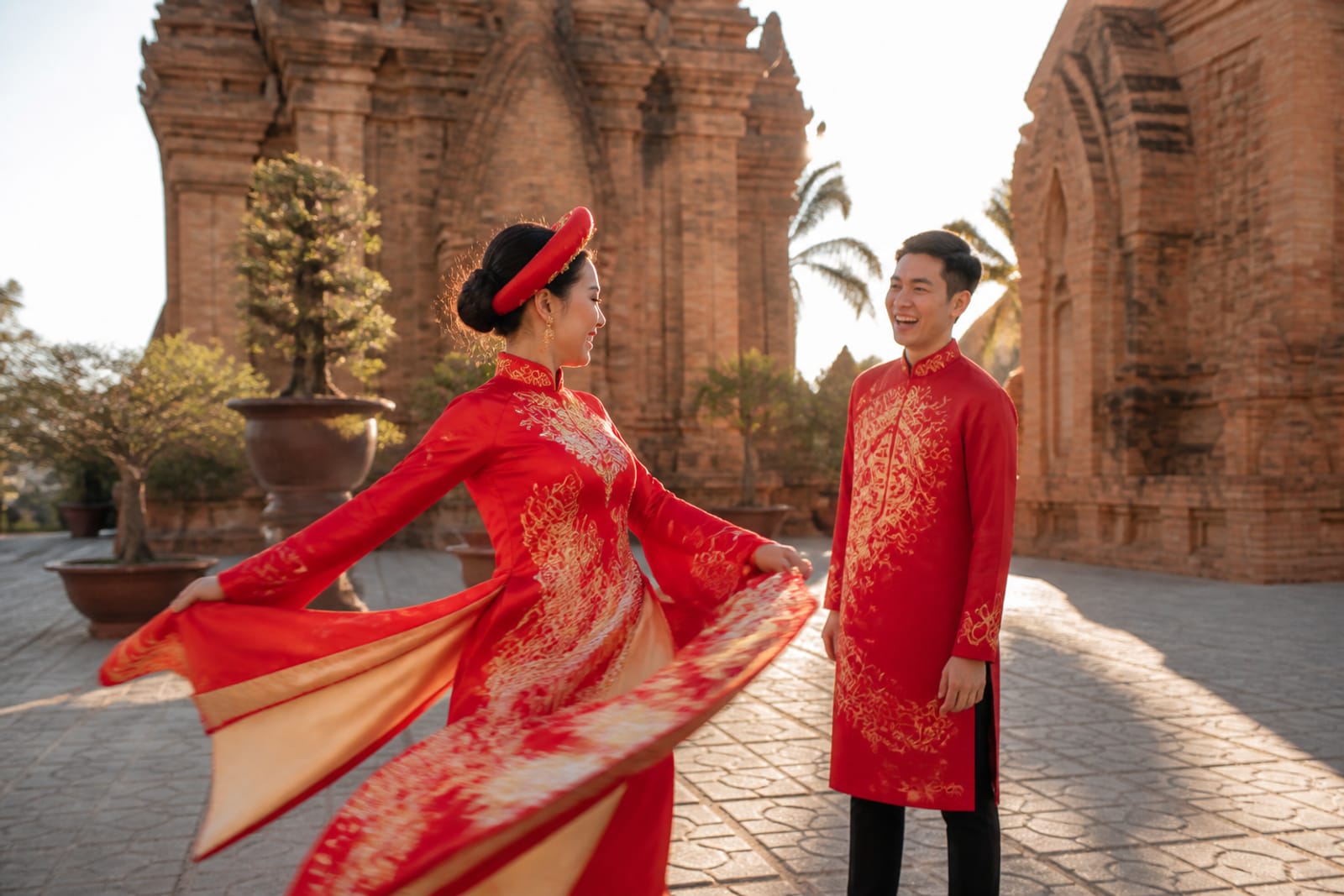
How do ao dai and casual outfits photograph differently on Hon Tre?
| Outfit type | Best for | Light strength | Movement | Why it works |
|---|---|---|---|---|
| Ao dai (rental, sturdy blend) | Traditional couples, cultural emphasis | Golden hour (4:30–5:30 pm); softer shadows | Flows around rocks naturally | Reads as intentional, editorial; silhouette pops against sky |
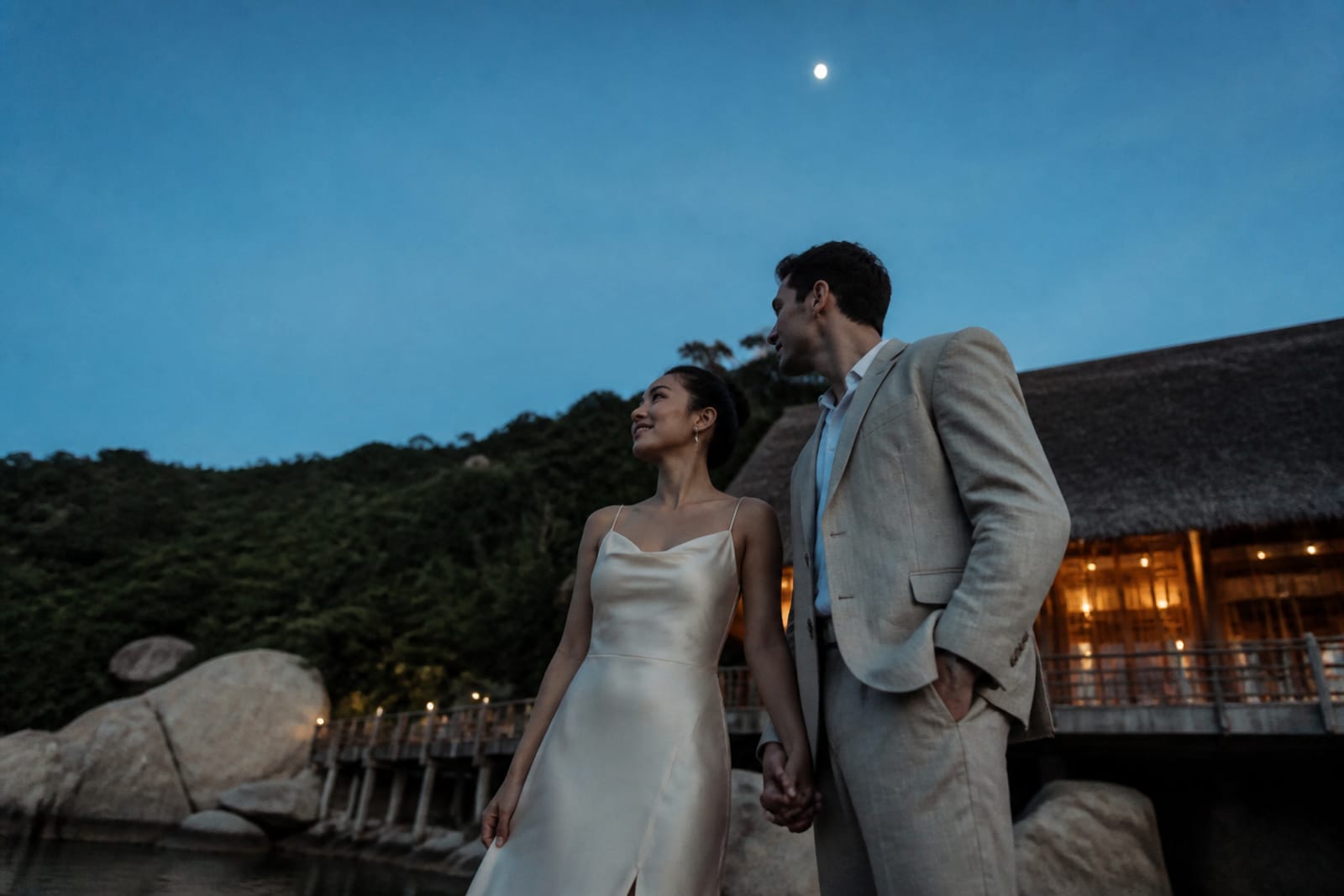
| Structured linen dress + neutral shirt | Western couples, modern aesthetic | Early morning (6:00–7:00 am); directional | Moves freely, dries faster | Timeless, survives spray, feels effortless in wide shots |
| Mixed (one ao dai, one casual shirt) | Blended style, half-traditional | Either; less backlight needed | One partner mobile, one grounded | Tells cultural story without matching formality |
| Minimalist (white, cream, navy) | Couples who hike regularly | Any; less color distraction | Agile on uneven rock | Frames the couple's connection, not outfit detail |
Ao dai photographs like slow motion—the silk catches wind and light in ways structured cotton cannot. But on Hon Tre, that elegance requires rental (easier to abandon if salt-stained), a hair wrap to prevent tangling, and acceptance that hemlines will be damp. Casual outfits read as editorial adventure; they move faster through frame and suit couples who want movement over formality. Mixed outfits split the difference—one partner in ao dai grounds the frame, the other in linen stays mobile for walking shots.
💄 Makeup & hair at your hotel | 👗 See our lookbook
What time of day produces the clearest photos at Hon Tre?
Sunrise (6:00–7:00 am) delivers side-lit, directional light that carves limestone texture and avoids the flat, hot look noon produces. The sea is glassier at dawn, wind gentler, and crowds absent. By 7:30 am, tour boats from Nha Trang begin arriving, filling the island. Golden hour (4:30–5:30 pm) warms white limestone to cream, softens harsh shadows, and produces that editorial glow couples prefer for soft-focus detail frames (close-ups, hands, profiles). Wind often picks up at 5:00 pm, creating movement in hair and fabric. Mid-morning (9:00–11:00 am) and midday (12:00–2:00 pm) produce harsh shadows between rock formations—unflattering for faces and less dramatic for landscape frames. Afternoon (2:00–4:00 pm) sits between midday harshness and golden-hour warmth; usable if clouds arrive, difficult if clear.
Cáo Studio books sessions for 6:00–8:00 am or 4:30–6:30 pm specifically to capture the island's best light. This requires an early speedboat, but frames cannot be remade—the light window is real and narrow. Traveling with one team (stylist, hair, makeup, photographer) means you arrive styled and ready, not scrambling on the island.
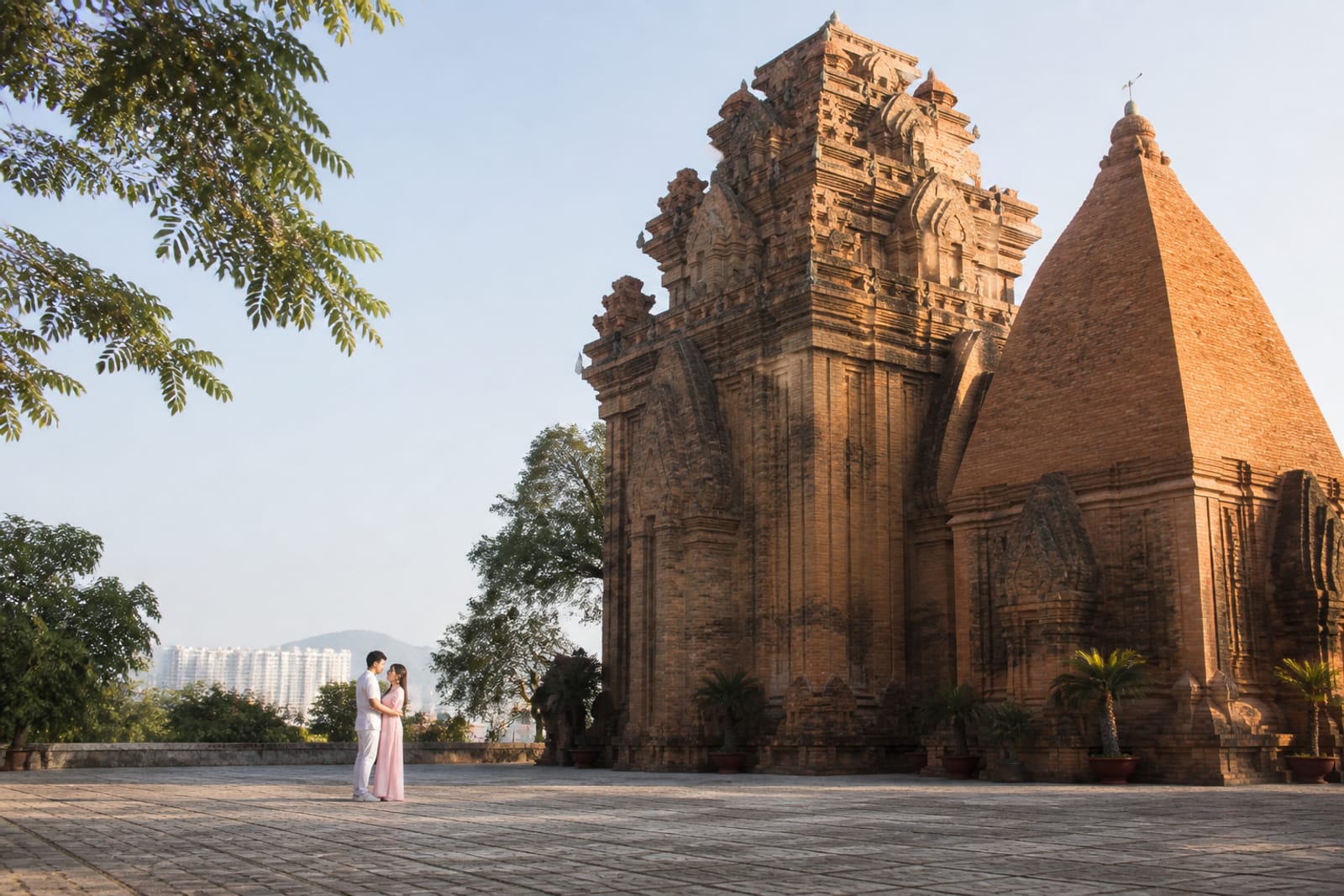
Does season affect what you wear to Hon Tre photoshoots?
Nha Trang's dry season (January–August) brings calmer seas, lower humidity, and less afternoon rain. Salt spray still travels, but outfit drying is faster and wind more predictable. Wet season (September–December, worst October–November) brings afternoon downpours, rougher seas, and equipment risk—photoshoots are still possible but require contingency plans (indoor backup, shorter island time). Between seasons (late August, early December), expect sudden weather shifts mid-session.
Humidity peaks May–September, which affects how ao dai hangs (heavier, clings more) and how makeup holds. Lighter fabrics and water-resistant makeup become practical, not optional. Cooler months (November–February) allow heavier silks and more layering without overheating. If you're set on a specific outfit type, check the forecasted season before booking: January–April suits heavy ao dai; June–August suits minimal, quick-dry fabrics.
The island's limestone reflects heat year-round—sunscreen, hydration, and hat-free styling (to prevent tan lines on faces) matter in every season. Cáo Studio confirms your outfit choice before booking, so weather context can be discussed and adjusted on WhatsApp.
What preparation prevents outfit disaster during the shoot?
Before booking: Confirm your outfit choice (rental ao dai, owned casual wear, mixed styles) on WhatsApp with Cáo Studio at least one week before. Share photos of pieces you plan to wear if they're owned; rental pieces are finalized together. Discuss your comfort with salt spray, wind, and uneven rock walking—this shapes outfit and shot list.
One week before: If renting ao dai, confirm fit and hemming timeline. Break in any shoes (or plan to shoot barefoot on rocks). Check the tide schedule for your shoot date; if high tide floods lower rock platforms, the shot list adjusts upward.
Day before: Lay out all pieces; pack a waterproof bag for phones, watches, and jewelry. Avoid anything with loose threads, loose stones, or delicate straps that wave in wind or catch rocks. If you're wearing white, apply a stain-release stick to your bag (salt spray stains are immediate).
Morning of shoot: Arrive with clean, damp hair (easier to style), minimal under-eye makeup (Cáo Studio's artist refreshes it on-site), and a light breakfast. Bring a light cover-up or shawl to throw on between shots if spray becomes heavy—salt cools skin quickly.
On the island: Listen when Cáo Studio guides you to walk toward light, look at each other, or pause on specific rocks. This takes 30 seconds per frame and produces natural, editorial motion. Don't brace against wind or clutch fabric—let it move.
After shoot: Rinse outfit in fresh water that evening (salt spray sets hard and damages fabric over days). Air-dry before packing to prevent mildew in humidity.
---
What to check before you book
- Outfit confirmed in writing. WhatsApp Cáo Studio your chosen style (ao dai rental, casual, mixed) and any owned pieces. Finalize rental details at least one week out.
- Tide schedule reviewed. High tide floods lower platforms; ask Cáo Studio to confirm which rocks are accessible at your shoot time.
- Season and weather tracked. Check the forecast for rain, wind speed, and humidity. Wet season carries higher contingency risk.
- Footwear and comfort tested. Uneven limestone requires good balance; practice walking in your chosen shoes or plan to go barefoot.
- Delivery and edits. Ask on WhatsApp exactly when edited photos and any video are delivered—Cáo Studio typically completes within 48 hours.
---
🌸 See the lookbook | 📸 Book on WhatsApp — pre-wedding photoshoot
---
FAQ
Can I wear my wedding dress to Hon Tre for a pre-wedding photoshoot?
Yes, but strategically. Wedding gowns photograph spectacularly against limestone and sea, but salt spray, rocks, and hemlines soaked in seawater create damage and cleaning cost. Rent a durable gown for Hon Tre, or wear your owned dress for 15–20 minutes of early-morning frames, then change to casual wear. Discuss with Cáo Studio on WhatsApp—they manage the outfit timeline.
What happens if wind ruins my hair during the shoot?
Wind on Hon Tre is normal and photographs beautifully—moving hair reads as energy and genuine moment. Cáo Studio's hair artist applies setting spray and pins strategic sections to prevent tangling, but windswept frames are part of the aesthetic. If you prefer stillness, book for 6:00–6:30 am (wind lightest) or request indoor backup shots at a Nha Trang resort.
Do I need a separate outfit for makeup and hair touchup between shots?
No. Cáo Studio brings makeup and hair tools on-site, so touchups happen in under three minutes while you wait between locations. You stay in your outfit; the artist refreshes eyes and lips, re-pins hair if needed, and you move to the next frame.
How many outfit changes can we fit into a Hon Tre session?
Two to three changes work comfortably across a 2.5–3 hour session (including travel time to and from the island). First outfit is shot on rocks and in water, second is usually a change to casual wear or a lighter ao dai for contrast, third is optional. Cáo Studio plans this with you on WhatsApp based on your preferences.
What's the difference between booking Cáo Studio for Hon Tre versus hiring a solo photographer?
Cáo Studio brings one team—photographer, hair artist, makeup artist, stylist. You arrive styled, ready, and confident in your outfit choice. Solo photographers often refer you to external hair and makeup, meaning coordination happens across three vendors, edits take longer, and outfit feedback is limited. One message, one team, one aesthetic—that's Cáo Studio's model.
Can we do a couples' ao dai photoshoot at Hon Tre if we're not Vietnamese?
Yes. Ao dai is a traditional garment, not a cultural gatekeep. Cáo Studio styles international couples in ao dai regularly for pre-wedding photoshoot and couple photoshoot sessions. Rental ao dai are tailored to your measurements; the photographer and stylist guide you on how to move and present yourself authentically, not as costume. Ask on WhatsApp to see examples in the lookbook.
FAQ
Can I wear my wedding dress to Hon Tre for a pre-wedding photoshoot?
Yes, but strategically. Wedding gowns photograph spectacularly against limestone and sea, but salt spray, rocks, and hemlines soaked in seawater create damage and cleaning cost. Rent a durable gown for Hon Tre, or wear your owned dress for 15–20 minutes of early-morning frames, then change to casual wear. Discuss with Cáo Studio on WhatsApp—they manage the outfit timeline.
What happens if wind ruins my hair during the shoot?
Wind on Hon Tre is normal and photographs beautifully—moving hair reads as energy and genuine moment. Cáo Studio's hair artist applies setting spray and pins strategic sections to prevent tangling, but windswept frames are part of the aesthetic. If you prefer stillness, book for 6:00–6:30 am (wind lightest) or request indoor backup shots at a Nha Trang resort.
Do I need a separate outfit for makeup and hair touchup between shots?
No. Cáo Studio brings makeup and hair tools on-site, so touchups happen in under three minutes while you wait between locations. You stay in your outfit; the artist refreshes eyes and lips, re-pins hair if needed, and you move to the next frame.
How many outfit changes can we fit into a Hon Tre session?
Two to three changes work comfortably across a 2.5–3 hour session (including travel time to and from the island). First outfit is shot on rocks and in water, second is usually a change to casual wear or a lighter ao dai for contrast, third is optional. Cáo Studio plans this with you on WhatsApp based on your preferences.
What's the difference between booking Cáo Studio for Hon Tre versus hiring a solo photographer?
Cáo Studio brings one team—photographer, hair artist, makeup artist, stylist. You arrive styled, ready, and confident in your outfit choice. Solo photographers often refer you to external hair and makeup, meaning coordination happens across three vendors, edits take longer, and outfit feedback is limited. One message, one team, one aesthetic—that's Cáo Studio's model.
Can we do a couples' ao dai photoshoot at Hon Tre if we're not Vietnamese?
Yes. Ao dai is a traditional garment, not a cultural gatekeep. Cáo Studio styles international couples in ao dai regularly for [pre-wedding photoshoot](/pre-wedding-photoshoot) and [couple photoshoot](/couple-photoshoot) sessions. Rental ao dai are tailored to your measurements; the photographer and stylist guide you on how to move and present yourself authentically, not as costume. Ask on WhatsApp to see examples in the [lookbook](/lookbook).
Ao dai, makeup, hair and a local photographer in Hanoi or Saigon — one WhatsApp message.