/pre-wedding-photoshoot
What to Wear for Couple Photos at Hue Imperial City
Choosing what to wear for couple photos at Hue Imperial City hinges on three factors: the mood you want (romantic, formal, casual heritage), the month you shoot (Feb–Apr is dry and cool; May–Aug is intense heat; Sep–Dec brings rain and flooding), and respect for the site's sacred status—no bare shoulders or knees at temples. An ao dai (traditional Vietnamese silk robe) works year-round and photographs beautifully against ancient walls, but you'll need lightweight silk in summer and a trained stylist to ensure it sits right during movement. Western tailored wear (linen suits, dresses) suits cooler months and lets you walk freely. Many couples mix both: ao dai for temples, casual wear for courtyards. Cáo Studio – Makeup & Photoshoot does not operate in Hue, but can advise you on outfit choices before your trip and coordinate makeup and hair at your hotel if you base yourself in Hanoi or Ho Chi Minh City beforehand. Always book a local Hue photographer who knows the Imperial City's lighting, access hours, and permit rules—this is not a walk-in casual shoot. 📸 Book on WhatsApp — ao dai photoshoot | 💄 Makeup & hair at your hotel | 🌸 See the lookbook ---
Why Hue Imperial City Demands Outfit Strategy
Hue's Imperial City is not a neutral backdrop. The site—a walled royal compound with temples, tombs, and gardens built between 1804 and 1945—dictates how you dress. Unlike open parks or beaches, every step happens within sacred or ceremonial space. Bare skin, overly casual wear, or outfits that restrict movement look out of place in photos and risk offense to locals and temple guardians. The stone pathways, narrow doorways, and steep stairs in royal tombs mean your outfit must let you climb, sit, and turn without tearing, slipping, or exposing more than intended. Professional couple shoots at the Imperial City are appointment-only; the site charges entry fees and enforces rules on tripod use and group size. Plan your wardrobe three weeks ahead so tailors can adjust any piece you rent or buy.
The best outfits at Hue Imperial City respect the site and flatter you both in still and moving shots.
---
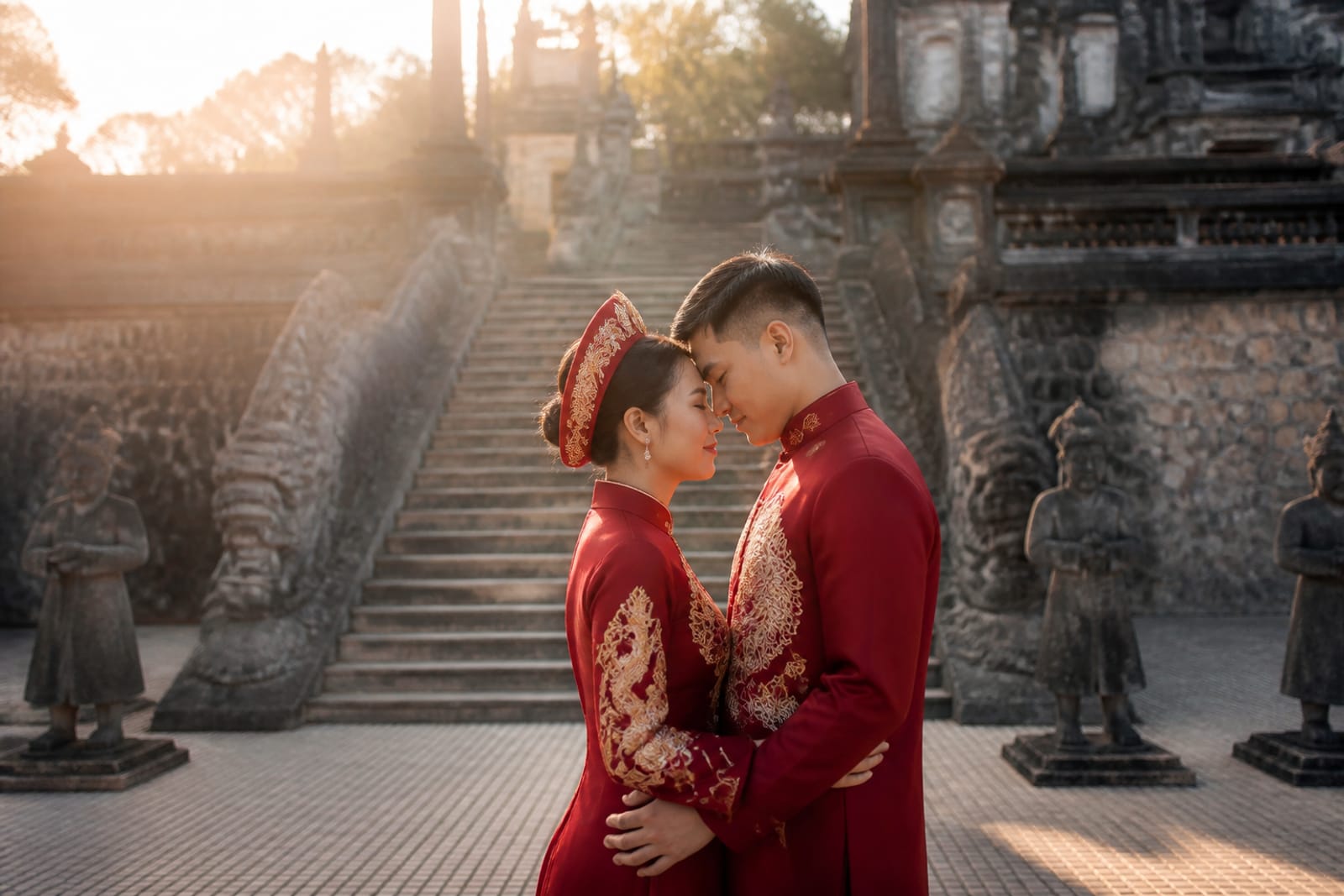
Ao Dai: Why It Works, When It Works, How to Avoid Disaster
The ao dai—a split silk tunic worn over loose trousers—is the signature choice for couple photos in Hue. It photographs beautifully, honors Vietnam's heritage, and photographs beautifully against aged brick and stone. In Feb–Apr (cool, dry), a standard silk or cotton-silk ao dai feels ideal: you move freely, photos glow without overexposure, and the fabric drapes without clinging or wrinkling. In May–Aug (35°C+ heat and 70%+ humidity), lightweight silk still works but requires frequent touch-ups; sweat marks show on camera, and the garment clings to your legs, restricting your stride. In Sep–Dec (rain risk), you risk muddy hems and wet fabric that tears easily if you trip climbing temple steps.
The core mistake: renting an ill-fitting ao dai or one not tailored for your body type. If the tunic is too loose, photos show bulges; too tight, you can't sit cross-legged for temple shots or bend to walk downstairs. The sleeves must hit mid-forearm, the collar must not gape, and the trousers must graze your ankle. Most Hue tailors can adjust a rental in 3–5 days; book tailoring the moment you arrive.
Undergarments matter. A seamless slip (like a silk underdress) prevents the ao dai from clinging to your body; a light camisole under the tunic keeps you covered if the neckline shifts. In summer, moisture-wicking underwear stops sweat stains. At temples, your legs and shoulders must be covered by the ao dai itself—if the tunic is short or the neckline is low, temple staff will ask you to leave or cover up with a scarf, which kills the photo moment.
Ao dai works best Feb–Apr or Oct–Nov, when heat is moderate and rain is unlikely.
---
Western Tailored Wear: When Heritage Takes a Backseat
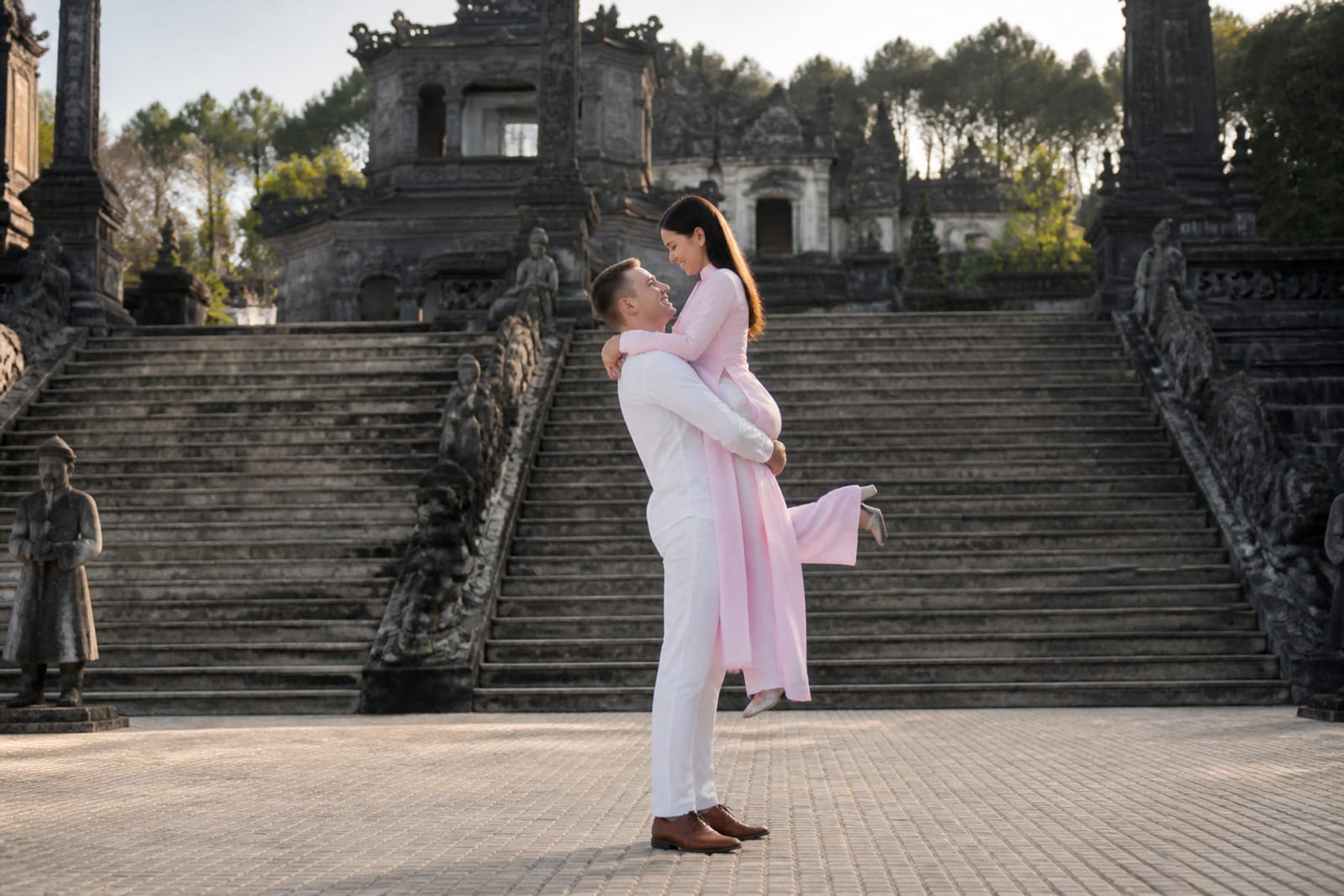
Tailored Western outfits—linen suits, shift dresses, blazers—suit couples who prefer to move freely and want a timeless, non-cultural-costume look. Linen breathes, doesn't wrinkle as visibly in humidity as cotton, and photographs crisp in soft light. A well-cut suit (jacket and trousers or skirt) reads formal and romantic without cultural appropriation. In Feb–Apr, cream, white, or soft grey linen work best; the cool light makes pale tones glow. In May–Aug, avoid dark colors: they absorb heat and photograph flat under harsh midday sun. White and pastel linen show sweat marks unless you wear a moisture-wicking slip underneath.
The fit challenge: tailored wear exposes every flaw. If the shoulders are tight, you look hunched climbing stairs; if the waist pulls, sitting for temple interior shots bunches the fabric. Get both pieces fitted at least a week before your shoot. Linen creases with movement—bring a small handheld steamer or accept that sitting for 20 minutes will wrinkle your dress, which you'll need to smooth before each photo. Shoes are critical: leather soles slip on wet stone after rain; bring soft-soled loafers or dress flats with grip.
At temples, a sleeveless dress or low-cut blouse violates etiquette. Pair a dress with a sheer silk scarf or lightweight jacket that you can remove in courtyards but drape for interiors. This layer adds visual interest to photos and solves the coverage issue without the formality of a full cover-up.
Western tailored wear suits Feb–Apr and Oct–Nov, when you value freedom of movement over cultural resonance.
---
Mixed Strategy: Ao Dai for Temples, Casual for Courtyards
Many couples shoot two outfits at the Imperial City—one for the sacred temple interiors, one for the open courtyards and gardens. This approach lets you blend heritage and comfort. Start in an ao dai for photos inside the royal temples (where the narrow doorways, dim light, and sacred atmosphere suit the formality of traditional dress). Change into lightweight linen or cotton pants and a silk blouse for garden and courtyard shots (where you can sit on grass, lean against ancient walls, and pose without the movement restrictions of an ao dai). The costume change takes 15–20 minutes and gives you two distinct narratives in your gallery.
Logistical note: a professional Hue photographer will scout a discreet location (often a small pavilion or staff area) where you can change without rushing or exposing yourself. Bring both outfits in a garment bag; your photographer or a local guide will carry it. Have a compact mirror and lip gloss in your pocket so touch-ups between shots stay quick.
This mixed approach suits all seasons and lets you tell a deeper story across your gallery.
---
Season-by-Season Fit: When to Wear What
| Season | Best Outfit Choice | Light & Walking Conditions | Why It Works |
|---|---|---|---|
| Feb–Apr (cool, dry) | Ao dai or tailored linen | Soft golden light 6–9 a.m., 4–6 p.m.; pathways dry, shadows defined | Moderate temperature; fabric drapes perfectly; no sweat or mud; light is photographer-friendly |
| May–Aug (hot, humid) | Lightweight silk ao dai or white linen | Harsh midday sun 10 a.m.–3 p.m.; stone reflects heat; shadows harsh | Lightweight fabrics breathe; white minimizes heat; shoot early morning or late afternoon only |
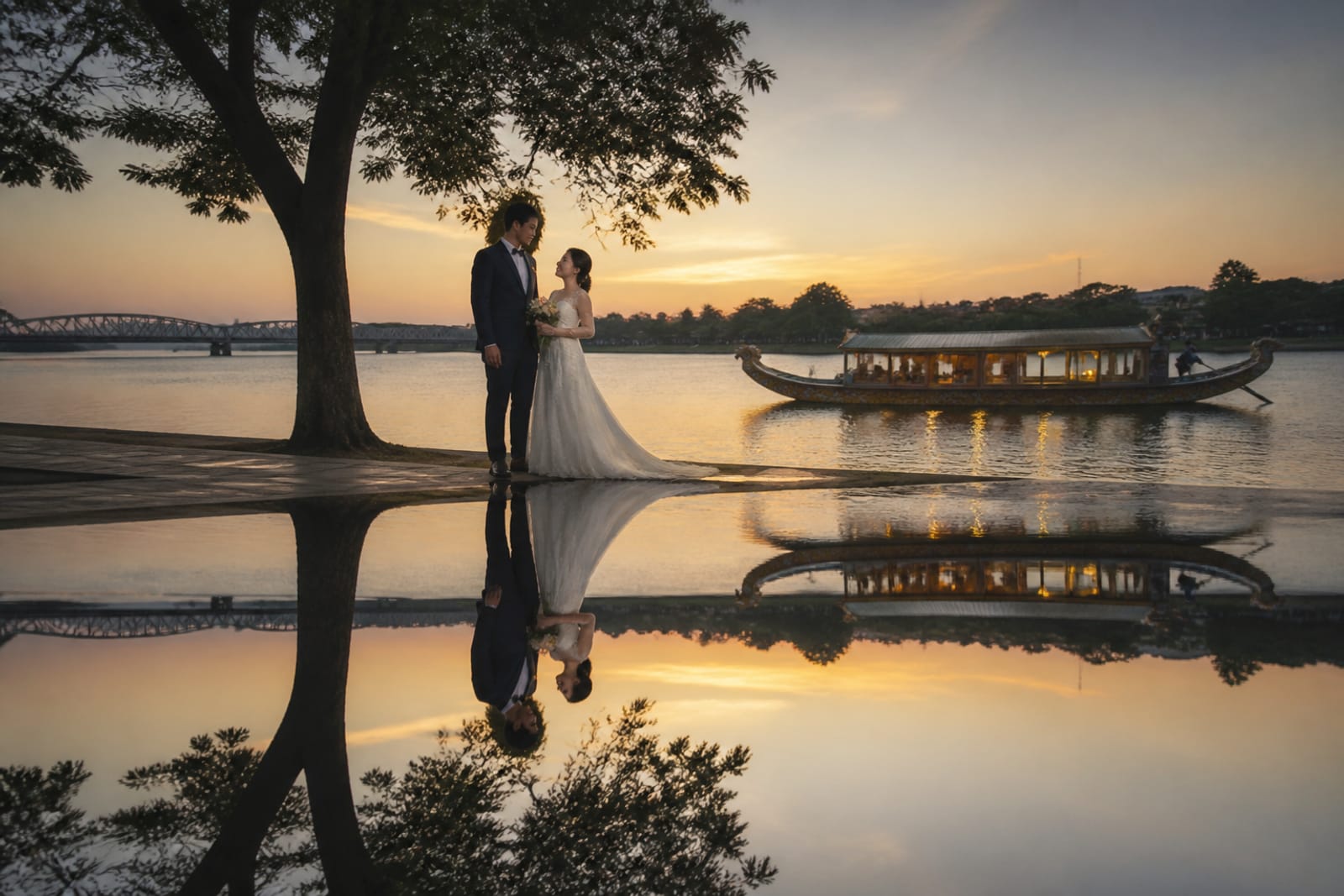
| Sep–Dec (rainy, flood risk) | Quick-dry fabrics; tailored wear over ao dai | Overcast, soft light but sudden downpours; pathways muddy; flooding possible in low areas | No harsh shadows; puddles reflect sky (beautiful if you embrace them); mud clings to ao dai hems; tailored wear stays cleaner |
Key insight: Feb–Apr and Oct–Nov are peak seasons for a reason—light is kind, temperature is tolerable, and you can wear nearly any outfit without sweat or rain anxiety. May–Aug and Sep–Dec demand outfit choices that prioritize practicality over ideal conditions. If you must shoot in May–Aug, start at dawn; if in Sep–Dec, check flood forecasts with your photographer and have a backup indoor location (like a covered pavilion or museum interior) in mind.
---
Etiquette at Hue's Imperial City: What Happens If You Get It Wrong
The Imperial City is an active heritage site and functioning temple ground. Temple staff and local guides enforce dress codes. If you arrive with bare shoulders, visible knees, or low necklines, you'll be asked to cover up before entering sacred interiors—this means stopping your shoot to wrap a scarf, which breaks momentum and looks awkward in photos. Some temple areas prohibit photography entirely; professional tripods require a permit (check current rules with the site office before booking). If your ao dai is too short or your linen dress is too sheer, you risk being refused entry to royal tombs, which are the most photogenic interiors at the site.
Avoid: reversible skirts or dresses (they flip when you climb stairs); heavy velvet or polyester (they trap heat and wrinkle badly); sequins or heavy embroidery (they catch light unevenly and photograph as distracting shine); bare feet or flip-flops (they look casual and are impractical on uneven stone). Do wear: soft-soled shoes with grip, a light scarf or shawl in your bag, and layers you can add or remove quietly. Bring a handkerchief or small towel to blot perspiration between shots—visible sweat on silk photographs poorly.
Hue's Imperial City rewards respect: dress appropriately, and the site photographs like nowhere else in Vietnam.
---
How to Book a Local Hue Photographer (Since Cáo Studio Isn't There)
Cáo Studio – Makeup & Photoshoot operates in Hanoi, Ho Chi Minh City, and Hoi An, but not in Hue. To book a professional couple shoot at Hue Imperial City, you'll need a local photographer who understands the site's rules, lighting patterns, and permit process. Start by asking your hotel concierge for referrals; hotels with a wedding department often know vetted photographers. Check Instagram hashtags like #huephotographer or #huecouplephotoshoot and review samples of work shot inside the Imperial City—not just cityscapes. Message 3–4 photographers and ask: Do you have a permit to shoot with a tripod? Which interior temple locations do you scout? How do you handle permit fees and entry tickets? How long is the session, and how many edited images do you deliver? Are hair and makeup included, or do you recommend local stylists?
Red flag: photographers who promise unlimited hours or dozens of outfits—the Imperial City's schedule and layout don't permit this. A typical couple session runs 2–3 hours, covers 2–4 locations, and suits 1–2 outfit changes.
Before you book: confirm the photographer's insurance, ask to see a full gallery from at least two Imperial City shoots (not just highlights), and request client references you can email or call. Agree in writing on outfit count, location list, delivery timeline, and revision policy. Cáo Studio can advise on outfit choices via WhatsApp if you're unsure; contact us to discuss your vision.
📸 Book on WhatsApp — pre-wedding shoot | 🌸 See the lookbook
---
What to Check Before You Book Your Hue Shoot
- Season: Confirm your shoot date against the climate. Feb–Apr and Oct–Nov are safest; May–Aug and Sep–Dec require outfit trade-offs and early-morning starts.
- Outfit count: Ask your photographer how many outfit changes fit your time slot. Most Hue shoots allow 1–2 outfit changes; changing in the field takes 15–20 minutes.
- Tailoring timeline: If you're renting an ao dai locally, allow at least 3–5 days for tailoring. Order rentals online before you travel if possible.
- Hair & makeup: Confirm whether your photographer includes a stylist or if you need to hire one separately. Hue has talented makeup artists, but book at least a week ahead. Cáo Studio can arrange makeup and hair at your hotel if you do a pre-shoot session in Hanoi or Ho Chi Minh City before traveling to Hue.
- Permit and entry fees: Confirm the photographer will handle Imperial City permits and that entry tickets are included in the quote or listed as a separate cost factor.
- Backup plan: Ask the photographer about indoor locations (pavilions, museum interiors) in case of sudden rain or flooding.
- Delivery timeline: Agree in writing when edited photos will be ready—often 2–4 weeks for a professional shoot.
- Revision policy: Ask how many revision rounds are included before you pay final fees.
---
Outfit Ideas by Couple Dynamic
If you're unsure where to start, consider your dynamic:
Romantic & heritage-focused: both in ao dai, soft coordinated colors (dusty rose and cream, or matching jewel tones). This reads timeless and photographs beautifully in soft light.
Modern & playful: mix—one in ao dai, one in tailored linen, or both in high-quality casual wear (linen shirt, tailored trousers). This signals you're comfortable blending old and new.
Formal & timeless: both in tailored wear—cream or soft grey linen suits, or a linen dress paired with a matching or complementary suit. This photographs like an editorial couple session and suits magazine-style galleries.
Bold & cultural: both in ao dai, but in contrasting or complementary colors. Cream and charcoal, or white and jewel tones, create visual interest while honoring the site.
Whatever you choose, get it tailored, test it at home (climb stairs, sit, turn), and bring a backup layer for temples. The Imperial City will reward the effort in photos that feel authentic and timeless.
---
Looking Beyond Hue: Couple Photoshoots in Vietnam
If you're considering couple shoots in other Vietnamese cities, Cáo Studio operates in Hanoi, Ho Chi Minh City, and Hoi An. Hanoi offers colonial architecture and serene lakes; Ho Chi Minh City provides modern skylines and riverside romance; and Hoi An delivers golden-hour canal and lantern magic. Each location suits different outfit strategies and seasonal windows. Explore the pre-wedding photoshoot options or check the lookbook for inspiration. For makeup and hair in Hanoi or Saigon before your Hue trip, book at your hotel.
💄 Makeup & hair at your hotel | 🌸 See the lookbook
---
FAQ
Can I wear a Western wedding dress at Hue Imperial City?
Yes, but not inside temples. White or cream dresses work in courtyards and gardens; wear a silk scarf or shawl to cover shoulders for temple interiors. Avoid heavy beading or trains—they catch on uneven stone and muddy easily. Plan to change into an ao dai or tailored wear for sacred spaces to respect the site's etiquette.
What's the best time of year for ao dai photos at Hue Imperial City?
Feb–Apr and Oct–Nov. Feb–Apr is cool, dry, and has soft golden light; the ao dai drapes perfectly without clinging from sweat. Oct–Nov also works, though rain is possible. May–Aug is too hot for silk to photograph well, and Sep–Dec brings heavy rain and flood risk.
Do I need to hire a stylist for makeup and hair in Hue?
Yes, unless you're comfortable doing your own makeup. A professional stylist ensures your look holds during movement and heat, and knows how to style long hair securely for temple stairs. Hue has talented makeup artists; book one at least a week ahead. Cáo Studio can advise on styling choices if you contact us beforehand.
What shoes should I wear for a couple photoshoot at Hue Imperial City?
Soft-soled flats or dressy loafers with grip. Leather soles slip on wet or worn stone. Avoid heels—they're impractical on uneven pathways and stairs. In Feb–Apr, you can wear strappy sandals if you're careful; in rainy seasons, closed-toe is safer. Make sure shoes match your outfit's formality.
How long does a typical couple photoshoot at Hue Imperial City take?
2–3 hours is standard. This covers 2–4 interior and exterior locations, allows for 1–2 outfit changes, and includes touch-ups and travel time between spots. Early morning (6–9 a.m.) or late afternoon (4–6 p.m.) sessions give the best light and avoid crowds. Confirm exact duration with your photographer when booking.
Can Cáo Studio shoot my couple photoshoot in Hue?
Cáo Studio operates in Hanoi, Ho Chi Minh City, and Hoi An only. For Hue, book a local photographer who knows the Imperial City's rules, light, and permit process. We can advise on outfit choices via WhatsApp and arrange makeup and hair at your hotel if you travel through Hanoi or Saigon before Hue.
What's the difference between shooting in Feb–Apr versus Oct–Nov at Hue Imperial City?
Both are good, but Feb–Apr is cooler and drier—ao dai and linen both photograph beautifully, sweat is minimal, and rain is rare. Oct–Nov is slightly warmer and carries some rain risk, but light is still soft and crowds are fewer. Choose based on your outfit comfort: Feb–Apr if you prefer cool silk; Oct–Nov if you accept occasional puddles for fewer tourists.
FAQ
Can I wear a Western wedding dress at Hue Imperial City?
Yes, but not inside temples. White or cream dresses work in courtyards and gardens; wear a silk scarf or shawl to cover shoulders for temple interiors. Avoid heavy beading or trains—they catch on uneven stone and muddy easily. Plan to change into an ao dai or tailored wear for sacred spaces to respect the site's etiquette.
What's the best time of year for ao dai photos at Hue Imperial City?
Feb–Apr and Oct–Nov. Feb–Apr is cool, dry, and has soft golden light; the ao dai drapes perfectly without clinging from sweat. Oct–Nov also works, though rain is possible. May–Aug is too hot for silk to photograph well, and Sep–Dec brings heavy rain and flood risk.
Do I need to hire a stylist for makeup and hair in Hue?
Yes, unless you're comfortable doing your own makeup. A professional stylist ensures your look holds during movement and heat, and knows how to style long hair securely for temple stairs. Hue has talented makeup artists; book one at least a week ahead. Cáo Studio can advise on styling choices if you contact us beforehand.
What shoes should I wear for a couple photoshoot at Hue Imperial City?
Soft-soled flats or dressy loafers with grip. Leather soles slip on wet or worn stone. Avoid heels—they're impractical on uneven pathways and stairs. In Feb–Apr, you can wear strappy sandals if you're careful; in rainy seasons, closed-toe is safer. Make sure shoes match your outfit's formality.
How long does a typical couple photoshoot at Hue Imperial City take?
2–3 hours is standard. This covers 2–4 interior and exterior locations, allows for 1–2 outfit changes, and includes touch-ups and travel time between spots. Early morning (6–9 a.m.) or late afternoon (4–6 p.m.) sessions give the best light and avoid crowds. Confirm exact duration with your photographer when booking.
Can Cáo Studio shoot my couple photoshoot in Hue?
Cáo Studio operates in Hanoi, Ho Chi Minh City, and Hoi An only. For Hue, book a local photographer who knows the Imperial City's rules, light, and permit process. We can advise on outfit choices via WhatsApp and arrange makeup and hair at your hotel if you travel through Hanoi or Saigon before Hue.
What's the difference between shooting in Feb–Apr versus Oct–Nov at Hue Imperial City?
Both are good, but Feb–Apr is cooler and drier—ao dai and linen both photograph beautifully, sweat is minimal, and rain is rare. Oct–Nov is slightly warmer and carries some rain risk, but light is still soft and crowds are fewer. Choose based on your outfit comfort: Feb–Apr if you prefer cool silk; Oct–Nov if you accept occasional puddles for fewer tourists.
Ao dai, makeup, hair and a local photographer in Hanoi or Saigon — one WhatsApp message.