/pre-wedding-photoshoot
What to Wear for Couple Photos at Ke Ga Lighthouse
Ke Ga works best in light, breathable layers: linen shirts, soft trousers or midi skirts, flat shoes with grip (rocks are wet and slippery). Avoid heavy fabric, long trailing trains, or loose accessories that catch wind. Season matters: Dec–Apr is dry, calm and best for couples; May–Nov brings afternoon rain and strong swells that cut access off. A professional photoshoot there requires a team that travels with you—outfit change, makeup touch-ups, and a camera all in one booking—because salt spray damages gear and daylight windows are narrow (best 5–7 am or 4:30–6 pm). Cáo Studio coordinates these logistics from Saigon; expect to factor in travel time and tidal schedules when booking. 📸 Book on WhatsApp — couple photoshoot
Can you shoot at Ke Ga in a heavy gown or ao dai?
Trailing fabric, beading and silk catch salt spray and tear on rocks; wind tangles skirts and makes posing unsafe. A traditional ao dai (silk, long sleeves, structured) is photogenic but risky on wet stone—you'll spend 20 minutes arranging fabric instead of moving naturally. Light layers (linen tunic, soft trousers) photograph as clearly in post-processing and let you walk, hold hands and frame yourselves without stage-managing every step. If an ao dai is essential to your story, reserve it for a second outfit change on the sandy beach below, not the lighthouse rocks.
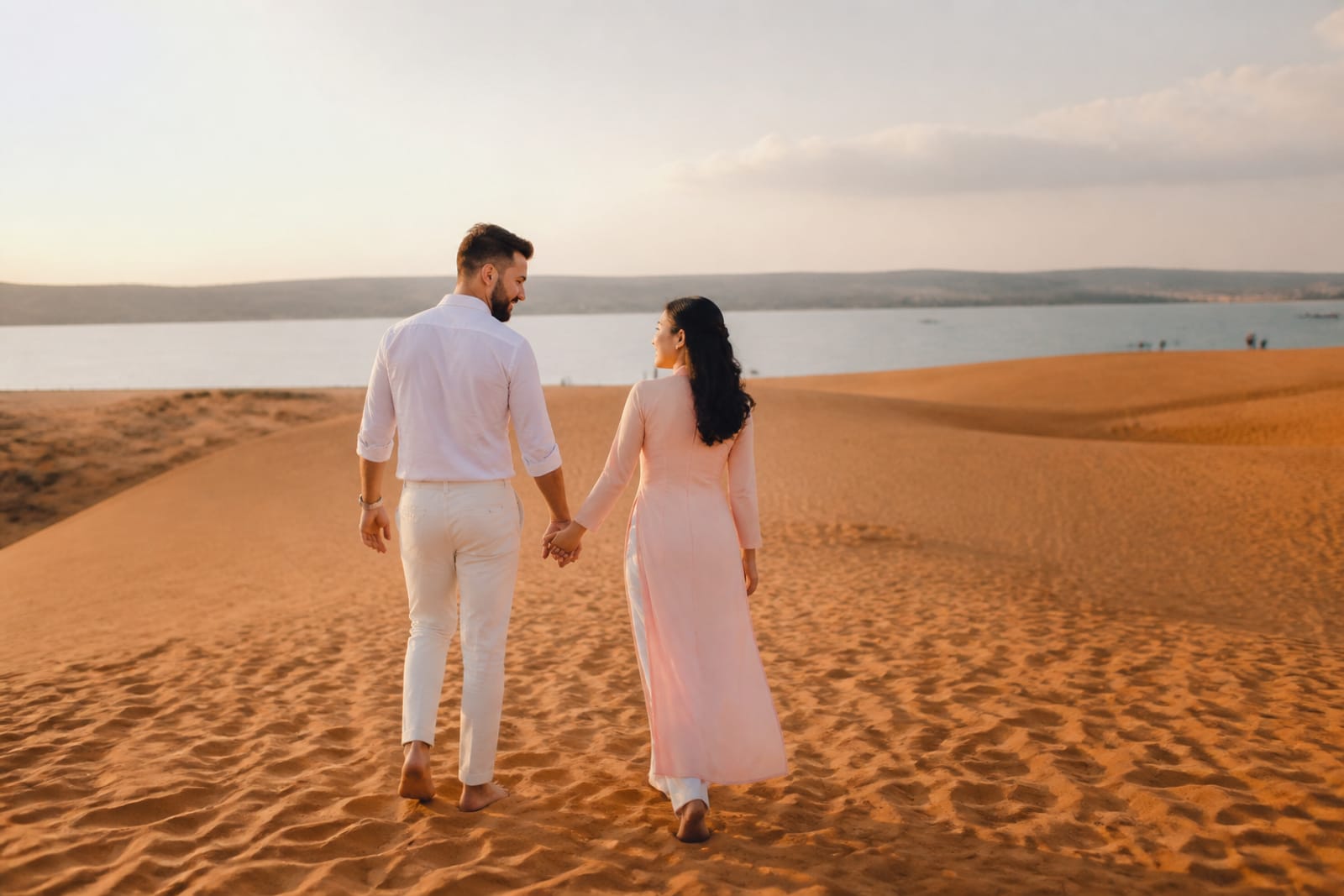
Why does time of day matter more at Ke Ga than other locations?
The lighthouse sits on an east-facing rocky cape; side light from 5–6:30 am wraps soft gold across the rocks without harsh shadows, and the water is calmer before afternoon wind rises. By 8 am, sun climbs above the cape, flattens the drama and begins to overheat stone. Sunset (4:30–6 pm) faces the open sea—backlight is strong but the crowd builds then and tidal access tightens. A photographer who knows the location arrives early; Cáo Studio plans Ke Ga shoots at 5:15 am start, which means a hotel pickup at 4 am from the city.
How does weather and season change what you pack?
| Season | Light | Wind | Spray | Outfit Fit | Walking Ease |
|---|---|---|---|---|---|
| Dec–Feb (dry) | Soft, side-lit at dawn | Moderate | Low | Light linen, layers | Rocks stable, shoes grip dry stone |
| Mar–Apr (hot, dry) | Golden at 5 am, bright by 7 am | Light to moderate | Low | Breathable cotton, no sleeves | Rocks warm, morning coolness brief |
| May–Aug (humid, occasional showers) | Soft but steamy haze at dawn | Variable | Moderate | Lightweight, quick-dry | Algae slick after rain; plan shorter window |
| Sep–Nov (rainy, typhoon risk) | Dim, overcast, limited contrast | Strong | High | Synthetic layers, water-resistant shoes | Tidal surge, rocks treacherous; access often closed |
Wet season (May–Nov) closes lighthouse access 2–3 days per week after heavy rain; ask locally the night before. Dry season (Dec–Apr) is 90% reliable; book then if timing is flexible.
Should you hire a photographer who shoots only, or a team that includes hair and makeup?
Photographer only works if: you're doing minimal changes (one outfit, no hair reset between angles), you arrive camera-ready, and you can handle wind-tangled hair in 3-hour windows. Costs are lower; you coordinate separately with a makeup artist and stylist. Full team (photographer + makeup artist + hair) works if: you want outfit changes in tight windows, salt spray requires touch-ups between frames, or you're traveling and want one booking to handle everything. The team can reset your look while the photographer scouts the next angle. At Ke Ga, salt spray dulls makeup fast and wind unpicks hair; a makeup artist on-site catches this and adjusts without stopping the shoot. Cáo Studio books as a full team from Saigon, meaning one booking includes photographer, makeup and hair; this is why the session runs faster and tighter light windows feel less rushed.
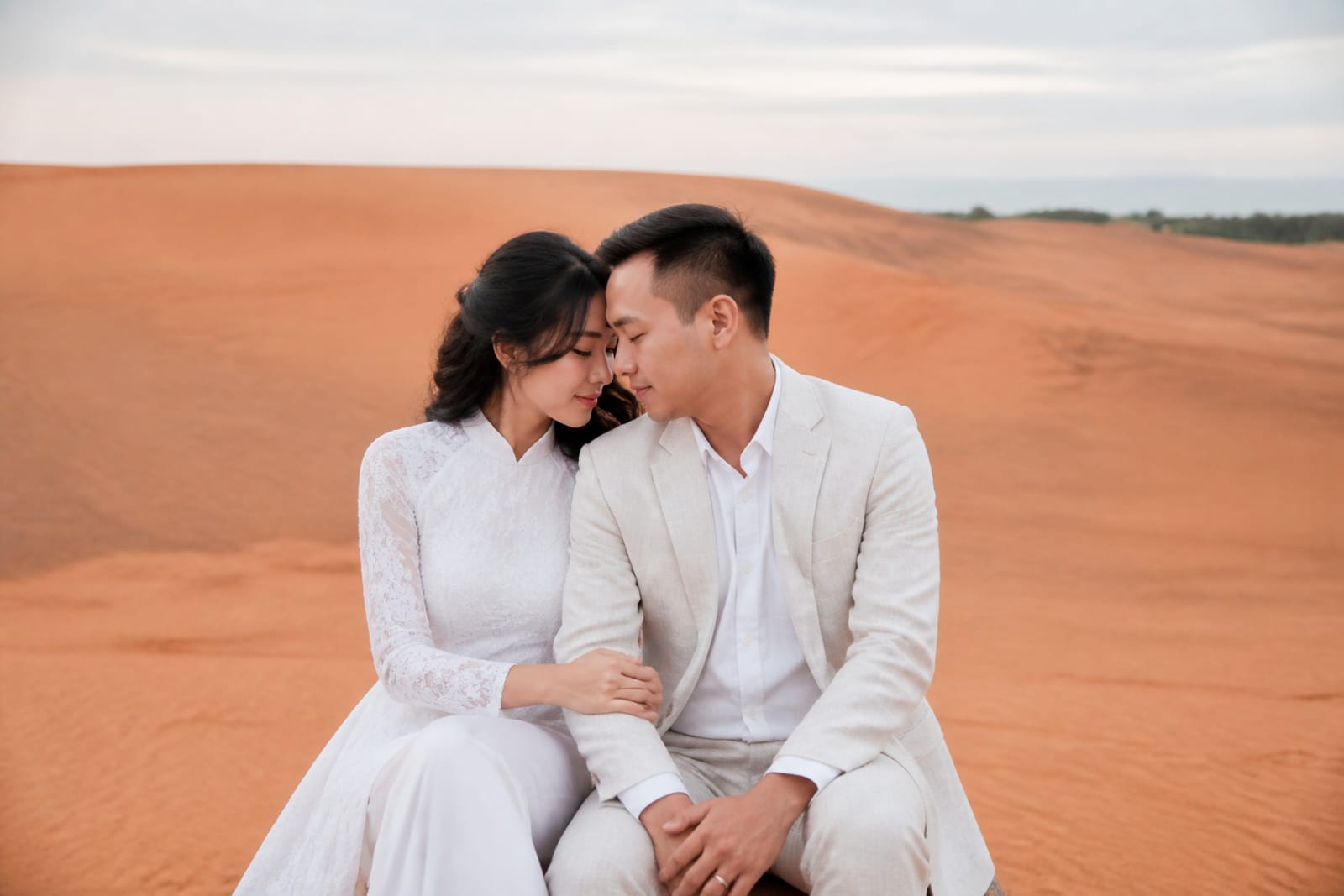
What should you check before booking a Ke Ga photoshoot?
- Tidal access: ask the photographer if they check the tide chart for your date—high tide can block the rocks entirely. Low tide is best (check locally the week before).
- Travel time: Ke Ga is 100 km from the city; factor in 90–120 minutes each way and a 4 am start for good light. Early bookings test your commitment.
- Rain forecast: if rain is predicted (May–Nov), ask the photographer's rescheduling policy—will they move the shoot or refund?
- Footwear: bring spare shoes (flat, water-resistant, rough-soled). Rocks are slippery even in dry season.
- Outfit practicality: confirm with your photographer what changes are realistic in the window you have. Two full outfits = tight. One outfit with small swaps (swap a shirt, add a scarf) = doable.
- Team logistics: if hiring separately, ask: does the makeup artist know salt-spray touch-up? Will the photographer wait for hair resets, or will you stop shooting between changes?
How does a Ke Ga shoot compare to other couple photoshoot locations in Ho Chi Minh City?
| Location | Light Quality | Wind/Spray | Outfit Flexibility | Crowd | Best Season | Walking Effort |
|---|---|---|---|---|---|---|
| Ke Ga Lighthouse | Golden, side-lit dawn; dramatic rocks | High (salt spray) | Light layers only | Low (early start, remote) | Dec–Apr | Moderate (wet stone) |
| Binh Quoi Village, Thu Duc | Soft, dappled (gardens, water) | None | Any (ao dai, formal dress) | Moderate–high | Year-round | Low (paved paths) |
| Tao Đàn Park, District 1 | Filtered morning light (trees) | None | Any | High (popular) | Dec–Mar | Low (gardens, benches) |
| Cu Chi Tunnels grounds | Open field light, flat | Moderate | Light, practical wear | Low (museum setting) | Dec–Mar | High (tunnel walks, uneven) |
| Saigon River at dawn, District 1 | Flat backlit water; overcast haze | Low (sheltered banks) | Semi-formal (water access) | Very low (private spots) | Dec–Mar | Low (riverside paths) |
Ke Ga suits couples who want drama and isolation and can commit to an early start and tidal timing. If you prefer flexibility, comfort and ao dai, Binh Quoi or gardens are safer bets. Ke Ga is a decision, not a default.
What does a realistic Ke Ga session timeline look like?
4:00 am – Hotel pickup (Saigon). Team includes photographer, makeup artist, hair stylist. 5:15 am – Arrive at lighthouse; check rocks, tides, light. Makeup and hair final touch-ups in the vehicle. 5:30–6:45 am – First outfit, shooting wide angles (you walking, silhouettes, water in frame), then medium (faces, hands, gestures), then detail (hands, ring, fabric). 6:45–7:00 am – Sun climbs above cape; light flattens. If you have a second outfit, team changes and resets makeup. If one outfit only, wrap. 7:15–8:00 am – Travel back to the city. Makeup artist and stylist pack up on-site. By 8:30 am – Back at hotel. Breakfast. You're done; photographer edits at the studio. 48 hours later – Photos and a short vertical film delivered.
This is tight and real. If you book a photographer without a dedicated makeup artist, expect to lose 15–20 minutes to on-site adjustments or skip changes altogether. The team model saves time in these small windows.
Before you book—what to confirm on WhatsApp
- Your date and weather backup: Is rescheduling free if rain closes access?
- Exactly who comes: photographer, makeup artist and hair? Or photographer only?
- What's included: edited photos, video, outfit changes, how many final files. (These details vary; ask for a quote specific to your session.)
- Outfit count and changes: how many full outfit swaps can fit in your window? Confirm realistic limits.
- Tidal and travel time: will the team check the tide chart and factor in Saigon traffic? Ask for a proposed start time.
- Your budget factors: travel distance from the city, season (Dec–Apr is peak, May–Nov is less predictable), team size, and outfit changes shape what to expect. Compare quotes from teams that include hair/makeup vs. photographers alone—factor in the cost difference and what you're trading (speed, flexibility, peace of mind).
Ke Ga works because it's raw and specific. Commit to the logistics—early light, tidal windows, a team that moves fast—and the frames tell a story of two people in a real place, not posed in front of a monument.
📸 Book on WhatsApp — pre-wedding photoshoot
---
FAQ
Is Ke Ga safe to shoot in the wet season (May–Nov)?
Access closes 2–3 days weekly after heavy rain (algae-slick rocks, high swells). If you must book then, confirm the photographer checks the weather forecast 48 hours prior and has a free rescheduling policy. Dry season (Dec–Apr) is 90% reliable.
Can we do an ao dai shoot at Ke Ga and then change to casual clothes?
Yes. Plan the ao dai for sandy beach (below rocks, more stable), then change to light layers for the lighthouse rocks. Confirm with your photographer that two outfit changes fit in your time window—one session in sand, reset, one on rocks. This is tight but doable.
Do we need to hire hair and makeup, or can we do it ourselves?
Salt spray dulls makeup and tangles hair fast; professional touch-ups mid-session catch wind damage and refocus your look between angles. Self-done makeup risks looking tired by 6:30 am. If you're traveling light, hire makeup and hair as a separate service (/makeup-and-hair); if booking a full team, it's bundled.
How far is Ke Ga from Ho Chi Minh City?
Ke Ga is in Ba Ria-Vung Tau, 100 km south of the city center. Travel time from central Saigon hotels is 90–120 minutes each way, depending on traffic. Expect a 4 am pickup for a 5:15 am lighthouse arrival.
What should we wear under an ao dai if we change into one for the beach part?
Wear nude or white slip shorts and a thin camisole. The ao dai is worn loose over these; avoid thick fabric under the áo gown—it bulks the silhouette. Check your specific ao dai rental for guidance; Cáo Studio's rental service can advise.
FAQ
Is Ke Ga safe to shoot in the wet season (May–Nov)?
Access closes 2–3 days weekly after heavy rain (algae-slick rocks, high swells). If you must book then, confirm the photographer checks the weather forecast 48 hours prior and has a free rescheduling policy. Dry season (Dec–Apr) is 90% reliable.
Can we do an ao dai shoot at Ke Ga and then change to casual clothes?
Yes. Plan the ao dai for sandy beach (below rocks, more stable), then change to light layers for the lighthouse rocks. Confirm with your photographer that two outfit changes fit in your time window—one session in sand, reset, one on rocks. This is tight but doable.
Do we need to hire hair and makeup, or can we do it ourselves?
Salt spray dulls makeup and tangles hair fast; professional touch-ups mid-session catch wind damage and refocus your look between angles. Self-done makeup risks looking tired by 6:30 am. If you're traveling light, hire makeup and hair as a separate service ([/makeup-and-hair](/makeup-and-hair)); if booking a full team, it's bundled.
How far is Ke Ga from Ho Chi Minh City?
Ke Ga is in Ba Ria-Vung Tau, 100 km south of the city center. Travel time from central Saigon hotels is 90–120 minutes each way, depending on traffic. Expect a 4 am pickup for a 5:15 am lighthouse arrival.
What should we wear under an ao dai if we change into one for the beach part?
Wear nude or white slip shorts and a thin camisole. The ao dai is worn loose over these; avoid thick fabric under the áo gown—it bulks the silhouette. Check your specific ao dai rental for guidance; [Cáo Studio's rental service can advise](/ao-dai-rental).
Ao dai, makeup, hair and a local photographer in Hanoi or Saigon — one WhatsApp message.