/pre-wedding-photoshoot
What to Wear for Couple Photos at Kim Bong Carpentry Village
Kim Bong Carpentry Village, 15 minutes from Hoi An Ancient Town, is a working woodcraft settlement where families have carved doors, altar tables and furniture for generations. Warm timber tones, carved wooden doors, and open-air workshops create naturally textured backdrops. Couples shoot there typically in afternoon light (4–5 p.m. is golden hour); bring two outfit changes to contrast with the wood. An ao dai photographs beautifully against carved screens and weathered facades—rent one locally or bring your own. Western wear works best in neutral tones (cream, grey, navy) that don't clash with the reddish-brown timber. Ask Cáo Studio – Makeup & Photoshoot on WhatsApp about their Hoi An shoot day and Kim Bong village timings; they travel to Hoi An by appointment and can advise outfit rental and makeup on location. 📸 Book on WhatsApp — couple photoshoot ---
Where Is Kim Bong and How Long Does a Photoshoot Take?
Kim Bong sits on the river's east bank, accessible by motorbike or car from Hoi An. The village is still a functioning woodcarving community—not a tourist theme park—so shooting happens among real craftspeople. Most couple sessions run 90–120 minutes: 30–40 minutes for outfit changes, makeup touch-ups, and walking the narrow lanes; 50–80 minutes of actual shooting across 3–4 locations (workshop frontage, wooden doorways, river-facing lane, artisan workspace). Morning light (6:30–9 a.m.) is soft but cool-toned and less dramatic; afternoon (3–5 p.m.) yields warmer, directional light that sculpts the timber. Crowding is minimal outside Tet holidays; the village has few tour groups.
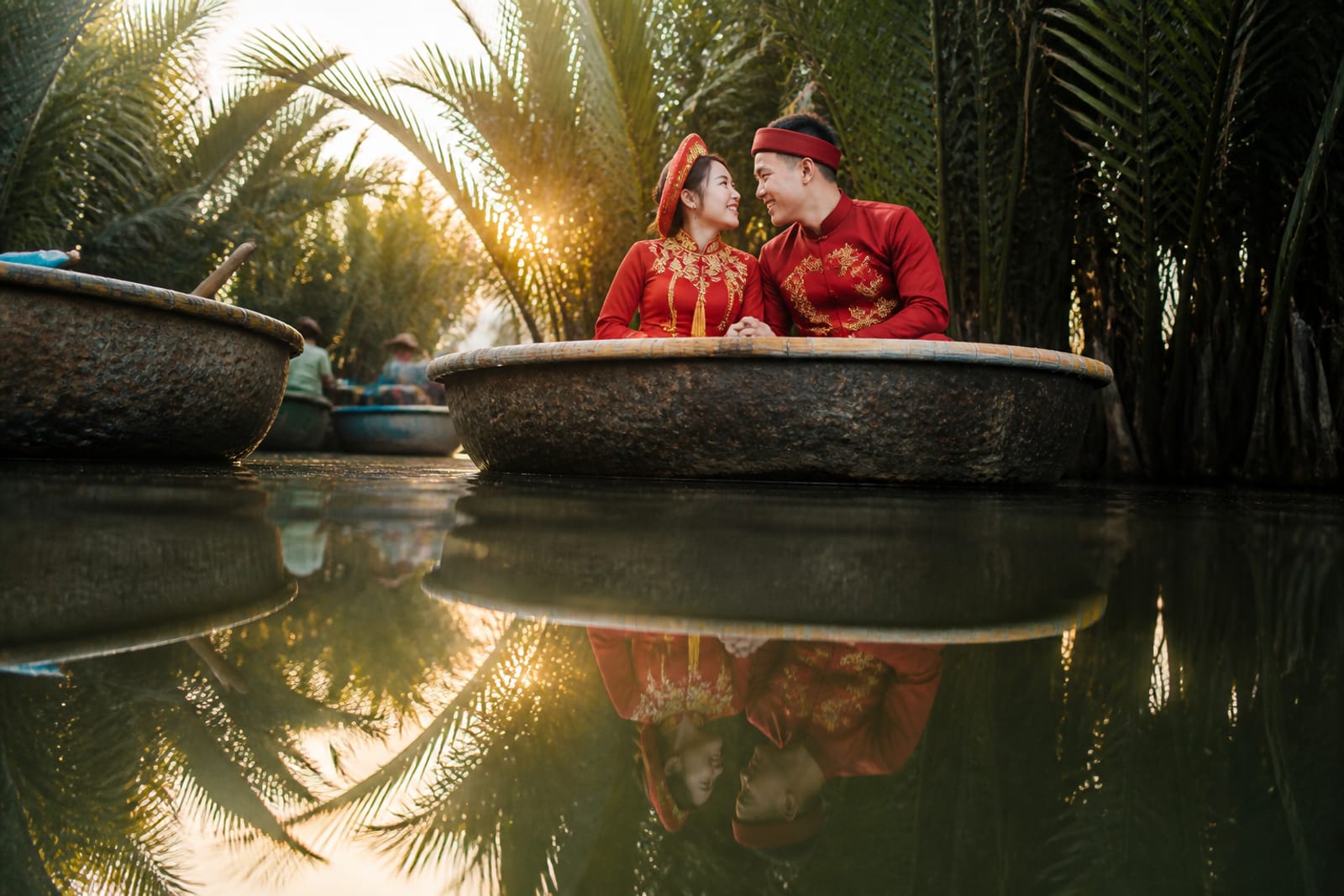
Ao Dai vs. Western Wear: Which Fits the Timber Setting?
| Outfit Style | Best For | Light & Season | Why It Works |
|---|---|---|---|
| Ao dai (rented or owned) | Romantic, cultural fusion | Afternoon golden hour (Feb–Apr, dry season) | Silk drapes softly against carved wood; the neckline frames worn timber doors |
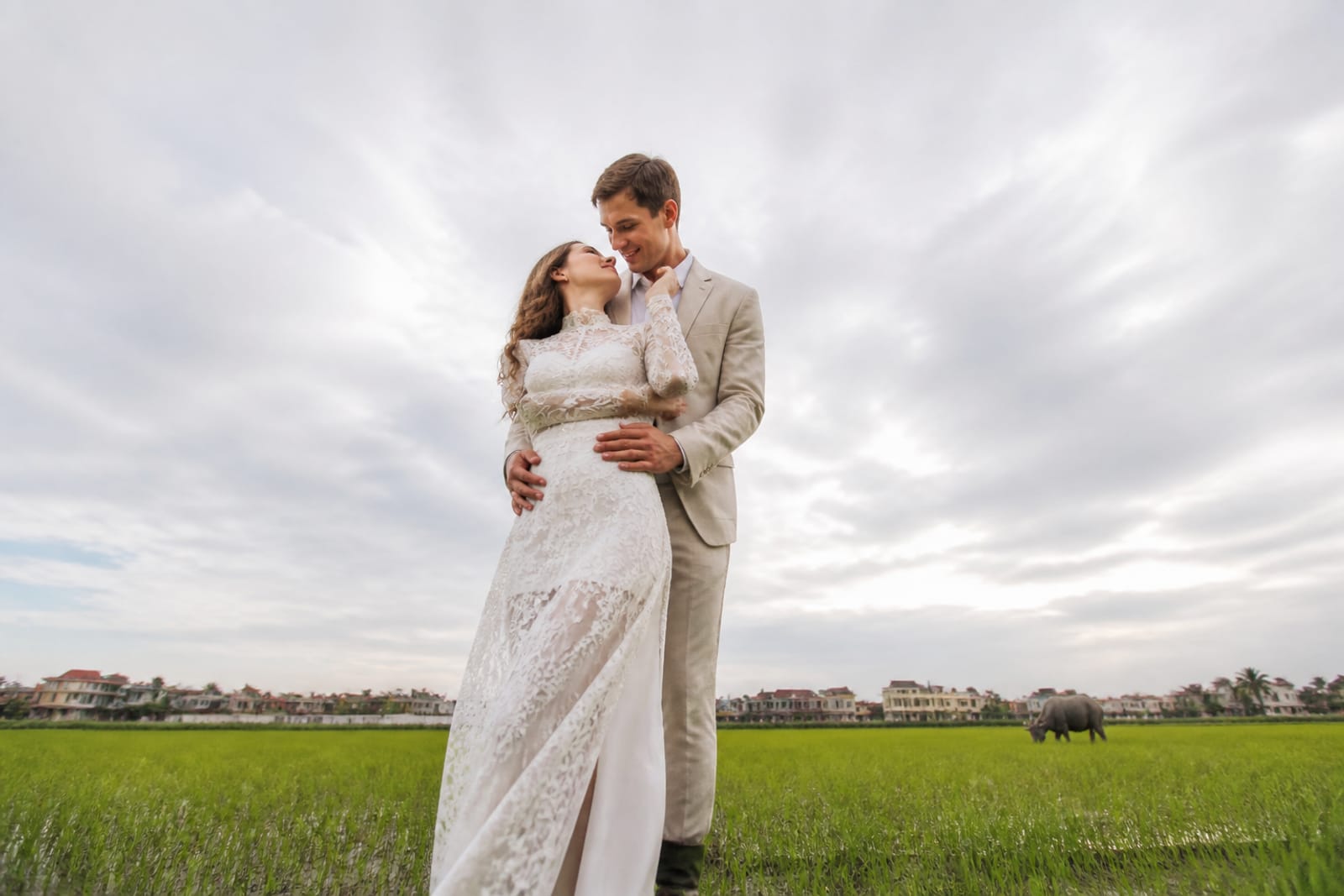
| Neutral Western wear (linen, cotton button-up) | Modern, minimal aesthetic | Morning soft light or overcast Feb–Apr | Clean lines contrast with ornate carving; easier to move in narrow lanes |
| Casual layers (cardigan, scarf over simple dress) | Relaxed, flexible | Morning or late afternoon | Adapts to temperature swings; muted tones blend with workshop dust and shadows |
An ao dai rental in Hoi An costs a specific factor (season, vendor, length of hire); ask on WhatsApp for studio recommendations. Western couples often pair a tailored shirt with simple trousers or a midi skirt in cream, grey, or soft blue—colors that photograph cleanly against deep wood tones. Avoid white (shows dust) and bright patterns (compete with the carpentry detail). Bring a shawl or light jacket: mornings can be cool, especially December–January.
How Does the Village Light Change Through the Day?
Sunrise (5:30–6:30 a.m., Feb–Aug) arrives with pale, even light; shadows are minimal and the air is cool. Midday (10 a.m.–2 p.m.) is harsh and overhead—difficult for flattering couple portraits. Golden hour (4–5 p.m.) is the professional choice: sunlight rakes across carved door frames, creating depth and warmth on timber facades. Sunset (5:30–6 p.m., winter) happens fast; late afternoon sessions must start by 3:30 p.m. to secure 90 minutes before dusk. Overcast days (common Sep–Dec) flatten light but are forgiving for ao dai and skin tones—no harsh shadows.
What to Check Before Booking a Kim Bong Session
- Photographer's Hoi An schedule. Cáo Studio shoots Hoi An by appointment; the team travels from Hanoi or Saigon. Ask on WhatsApp for available dates and travel lead time (typically 1–2 weeks notice).
- Outfit rental logistics. If you plan to rent an ao dai in Hoi An, confirm rental hours and same-day turnaround with the photographer's local contacts. Bring ID and a deposit.
- Sunrise vs. afternoon shoot. Morning light suits overcast days and skin tones; afternoon golden hour suits ao dai and architectural drama. Choose based on your look and the season forecast.
- Entry and workshop access. Kim Bong has no entrance fee, but some workshops may ask permission to shoot inside. Your photographer will handle this; inform them in advance if you want artisan-in-action shots.
- Footwear. Wear flat shoes or sandals you can walk in; village lanes are uneven and narrow. Avoid heels unless you bring a second pair for photos only.
How to Style an Ao Dai for Maximum Impact in Timber Surroundings
An ao dai's long silhouette and flowing fabric complement wooden architecture more than Western wear. Deep jewel tones (emerald, sapphire, burgundy) photograph richly against reddish-brown carpentry; pastels (blush, cream, pale yellow) work in soft morning light. Silk ao dai drapes gracefully and catches light; cotton blends are cooler and less formal. Pair it with simple jewelry—avoid heavy chains that distract from the fabric's movement. Bring a second ao dai in a contrasting color (one jewel tone, one pastel) to show variation across the shoot.
For a contemporary feel, style the ao dai with modern sandals and minimal makeup; for formal shots, add traditional hair ornaments (a side comb or vintage pin). If you rent locally, collect early (by 1 p.m. for a 3 p.m. start) and confirm alterations ahead. The studio can connect you with trusted rental vendors; ask on WhatsApp.
What Weather and Season Factors Affect Your Outfit Choice?
February–April (dry, mild): The best window. Daytime temps are 25–28°C; light is clear and warm. Wear a single layer (ao dai or cotton shirt) with a shawl for early mornings. This season draws more tourists, so book weeks ahead.
May–August (dry, hot): Peak heat (32–35°C+); afternoon light is intense. Lightweight fabrics are essential; cotton ao dai or linen Western wear. Shoot at sunrise (5:30–6:30 a.m.) to avoid midday heat and harsh shadows. Book in this window if you prefer solitude; fewer couples shoot summer sessions in Hoi An.
September–December (rainy, typhoon risk): October–November are flood season—heavy rain and muddy lanes. December–January are cool (18–22°C) and often drizzly; the timber looks dark and moody. Overcast light suits ao dai beautifully. Avoid October and November for outdoor village shooting unless you're willing to reschedule.
Pre-Wedding Shoots at Kim Bong: How Does It Compare to Other Hoi An Spots?
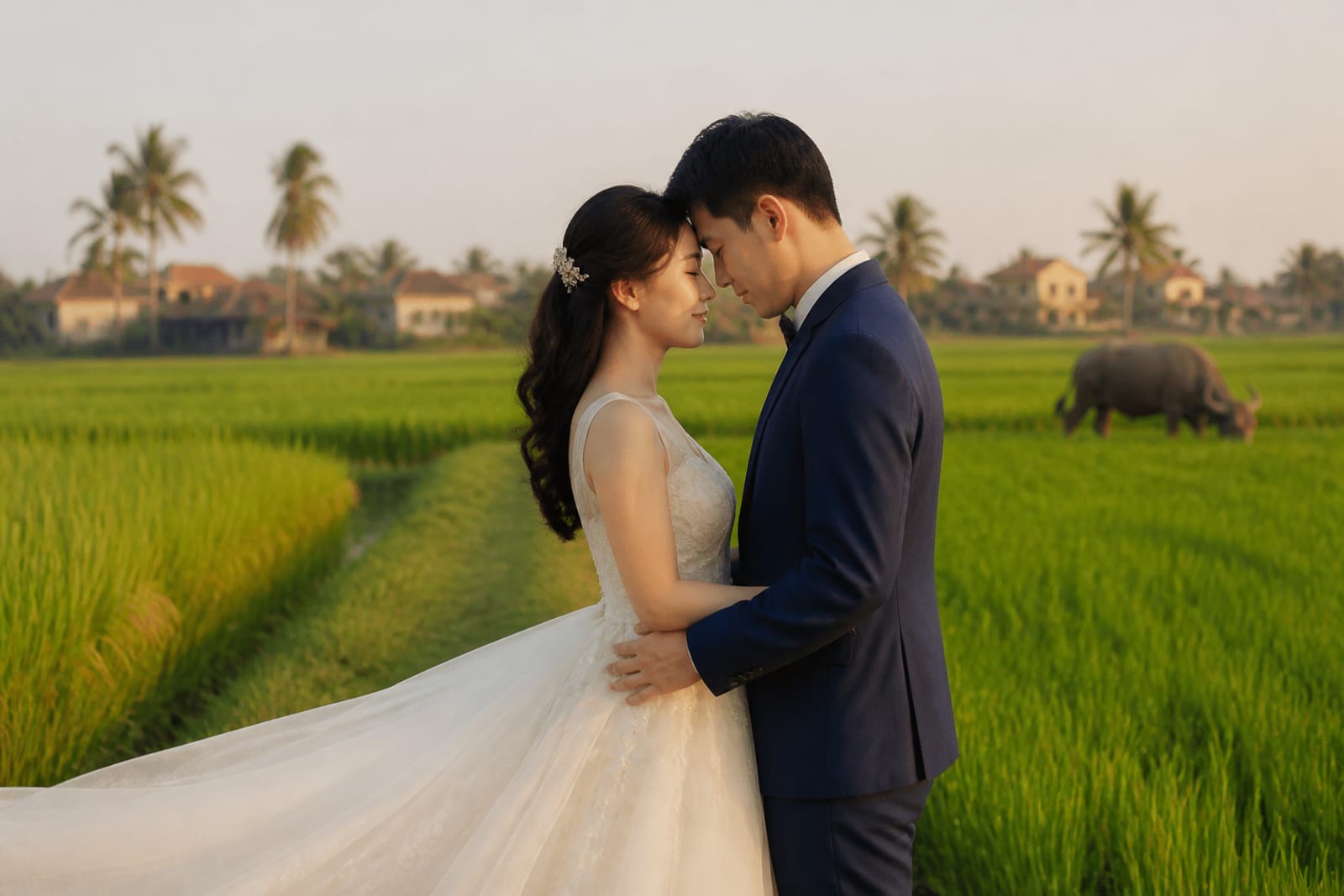
Kim Bong's raw timber textures differ sharply from the lantern-lit Ancient Town or rice-field backdrops. Choose Kim Bong if you want artisan, heritage-focused images; choose the Ancient Town if you prefer iconic architecture and vibrant street atmosphere; choose rice paddies or river scenes for pastoral romance. Many couples book two Hoi An sessions (one urban, one rural) to cover their style range. Cáo Studio's pre-wedding photoshoot can be booked for multiple locations; ask on WhatsApp about combining Kim Bong with other Hoi An venues and whether back-to-back sessions are possible.
---
What to Check Before You Buy
- Does the package include makeup and hair? Confirm on WhatsApp whether your shoot includes in-village touch-ups or a pre-shoot makeup service at your hotel.
- How many outfit changes are realistic? Two changes (ao dai and Western wear, or two ao dai) fit comfortably into 90–120 minutes. A third outfit compresses shooting time.
- What's the photographer's Hoi An availability? Cáo Studio travels to Hoi An; lead time and date options vary by season and team schedules.
- Is Kim Bong your only venue, or one of two? Half-day sessions often stay in one location; full-day pre-wedding packages typically split between Kim Bong and the Ancient Town.
- Do you need to rent an ao dai? If yes, factor in rental hours and deposit. The studio can recommend vendors.
- What's the delivery timeline for edited images? Ask on WhatsApp for the gallery turnaround time and format (digital files, prints, album).
---
📸 Book on WhatsApp — pre-wedding photoshoot
Explore more couple and family sessions in Hanoi (Cáo Studio Hanoi), Ho Chi Minh City (Cáo Studio Saigon), and Hoi An photoshoots. Check the lookbook for real Kim Bong sessions and outfit ideas, or browse ao dai rental and Western suit rental options.
---
FAQ
Can we wear Western wear to Kim Bong or do we have to wear ao dai?
Western wear works beautifully in Kim Bong's timber setting—neutral tones (cream, grey, navy) photograph cleanly against wood. Ao dai is not required. Many couples choose one outfit per person and change partway through the session to show variety.
What's the best time of day to shoot at Kim Bong?
Afternoon golden hour (4–5 p.m.) is ideal for warm, directional light on wooden facades. Sunrise (5:30–6:30 a.m.) is softer and quieter if you prefer minimal crowds and cool temperatures. Avoid midday (10 a.m.–2 p.m.) due to harsh overhead light.
How much does ao dai rental cost in Hoi An?
Rental costs vary by vendor, season, and garment detail. Ask the studio on WhatsApp for current rental recommendations and pricing; they work with local contacts and can advise on same-day turnaround.
Is there an entrance fee to Kim Bong?
No entrance fee, but some active workshops may request permission to photograph inside. Your photographer will handle this and can arrange artisan-focused shots if you wish.
How do I know if a February–April shoot is better than a summer shoot for my style?
February–April offers cooler weather, clearer light, and lush surroundings—ideal for ao dai and romantic images. Summer (May–August) is hotter and requires sunrise starts but suits minimal, modern aesthetics and solitude. Choose based on your outfit type and heat tolerance; ask the studio for a seasonal comparison.
Can Cáo Studio book a multi-location Hoi An session (Kim Bong + Ancient Town)?
Yes, ask on WhatsApp about pre-wedding packages that combine venues. The studio travels to Hoi An by appointment; lead time and pricing factors (number of locations, outfit changes, session length) are discussed via WhatsApp.
FAQ
Can we wear Western wear to Kim Bong or do we have to wear ao dai?
Western wear works beautifully in Kim Bong's timber setting—neutral tones (cream, grey, navy) photograph cleanly against wood. Ao dai is not required. Many couples choose one outfit per person and change partway through the session to show variety.
What's the best time of day to shoot at Kim Bong?
Afternoon golden hour (4–5 p.m.) is ideal for warm, directional light on wooden facades. Sunrise (5:30–6:30 a.m.) is softer and quieter if you prefer minimal crowds and cool temperatures. Avoid midday (10 a.m.–2 p.m.) due to harsh overhead light.
How much does ao dai rental cost in Hoi An?
Rental costs vary by vendor, season, and garment detail. Ask the studio on WhatsApp for current rental recommendations and pricing; they work with local contacts and can advise on same-day turnaround.
Is there an entrance fee to Kim Bong?
No entrance fee, but some active workshops may request permission to photograph inside. Your photographer will handle this and can arrange artisan-focused shots if you wish.
How do I know if a February–April shoot is better than a summer shoot for my style?
February–April offers cooler weather, clearer light, and lush surroundings—ideal for ao dai and romantic images. Summer (May–August) is hotter and requires sunrise starts but suits minimal, modern aesthetics and solitude. Choose based on your outfit type and heat tolerance; ask the studio for a seasonal comparison.
Can Cáo Studio book a multi-location Hoi An session (Kim Bong + Ancient Town)?
Yes, ask on WhatsApp about [pre-wedding packages](/pre-wedding-photoshoot) that combine venues. The studio travels to Hoi An by appointment; lead time and pricing factors (number of locations, outfit changes, session length) are discussed via WhatsApp.
Ao dai, makeup, hair and a local photographer in Hanoi or Saigon — one WhatsApp message.