/pre-wedding-photoshoot
What to wear for couple photos at Lung Cu flag tower
Lung Cu flag tower lies on Vietnam's northernmost peak at 1,534 metres, reached by winding mountain road and a steep final hike. Couple photoshoots here work best October to early November (buckwheat flowers yellow the fields below) or December to February (clear light, cold air, mist in valleys). Wear layered, fitted clothing—a structured ao dai over warm base layers, or tailored trousers and a light jacket cinched at the waist—because wind at the summit is constant and fabric must move without billowing. Avoid loose fabrics, heavy jewellery and shoes that slip on wet stone. The shoot runs 4–5 hours door-to-door (2 hours drive each way, 1–1.5 hours on location). Cáo Studio does not shoot Ha Giang directly; if you're based in Hanoi and want pre-wedding frames at Lung Cu, book a local photographer via verified reviews, or contact us to discuss travel options. 📸 See pre-wedding options in Hanoi | 💄 Hair & makeup before your trip ---
Where is Lung Cu and why shoot couple photos there?
Lung Cu flag tower stands on the Vietnam–China border ridge, roughly 140 kilometres north-east of Ha Giang town. It is the northernmost point of Vietnam—a national monument with a simple flag pole, stone platform and 360° views over the Dong Van karst plateau. Couples choose it because the scale is dramatic (you are above the clouds), the light is pure (no urban haze), and the emotional payload is clear: standing together at the edge of the country. The walk up is steep but achievable for anyone fit enough to hike 30–40 minutes; the platform is small, so crews must be lean (one photographer, one stylist, or none). Lung Cu is a destination shoot, not a side trip—plan a 2–3 day Ha Giang loop.
What months have the best light and weather for Lung Cu couple shoots?
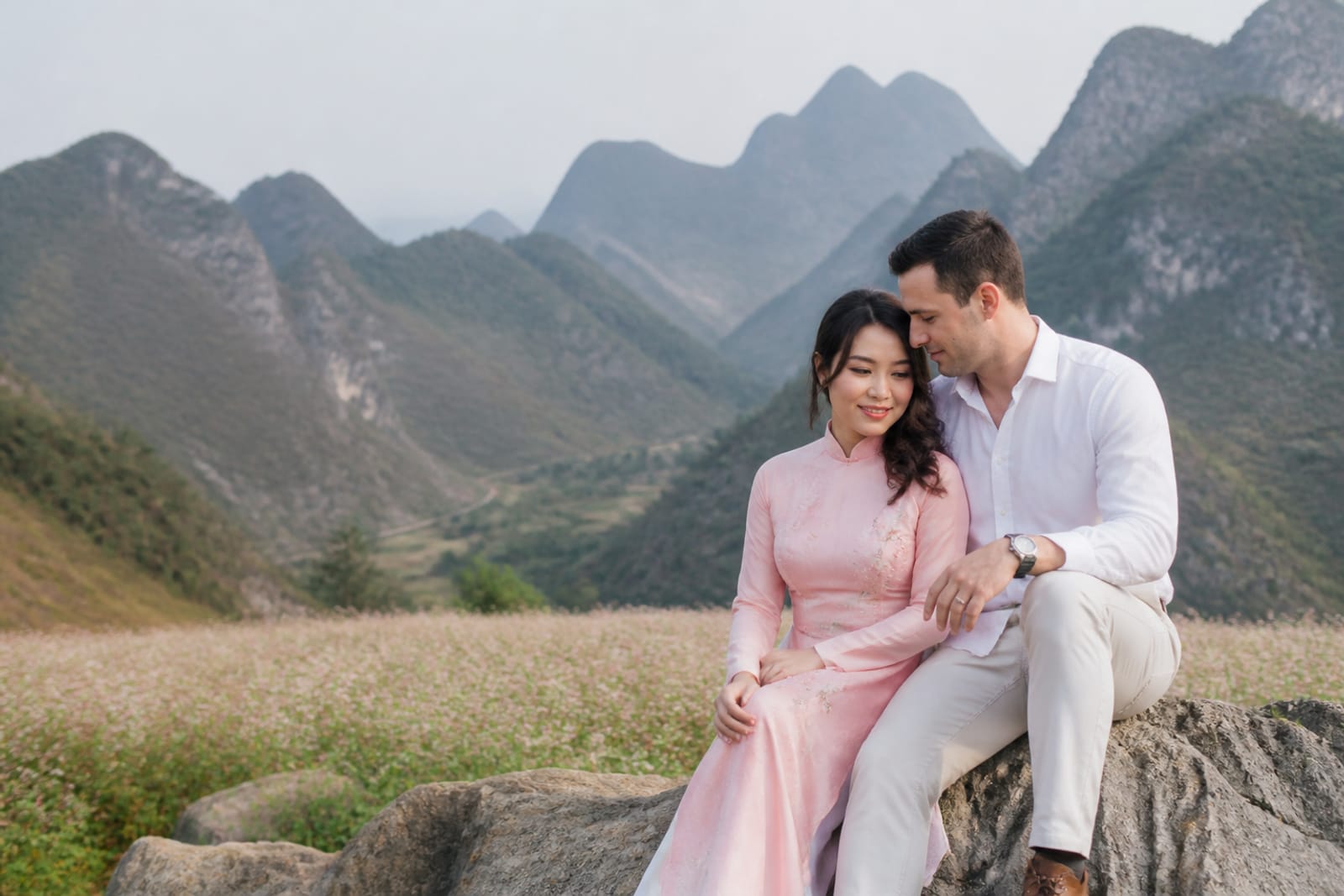
October–November is peak season for mountain photography across northern Vietnam. Buckwheat flowers (white and pale pink) blanket the fields below the flag tower roughly mid-October to late November, creating a soft, romantic foreground if you shoot from the access road or lower slopes. The air is crisp, visibility is clear to 30+ kilometres, and morning light is golden and shadowless by 8 am. December–February is colder (nights below 5°C, mornings near freezing) but equally clear; mist sits in the valleys at dawn, which photographs as ethereal texture. Avoid May–September (summer heat, afternoon cloud, loose afternoon rain) and early March–April (unstable weather, typhoon season build-up). Tet (late January–mid February) brings crowds to some Ha Giang spots but Lung Cu itself stays quiet. Book your shoot for early morning (6–8 am) to catch side light raking across the plateau before clouds roll in by late morning.
| Season | Best for | Light quality | Temperature | Crowds & practicality |
|---|---|---|---|---|
| Oct–Nov (buckwheat) | Romantic, layered landscape | Golden side light, clear air | 10–18°C | Fewer visitors; short window (3 weeks); access roads busy weekends |
| Dec–Feb (winter clarity) | Bold, minimal frames; mist texture | Direct morning light, stark shadows | 2–8°C | Coldest, clearest; risk of black ice on upper road; pre-dawn starts are hard |
| Mar–Apr | Spring flowers (wild iris, rhododendron) | Soft overcast, occasional storms | 12–22°C | Unpredictable rain; cloud by midday; typhoon season approaching |
| May–Sep | Not advised | Haze, cloud, afternoon downpours | 18–28°C | High humidity; mist obscures views; landslide risk on roads after rain |
The trade-off: October–November is the "perfect" window but short and busier; December–February is equally clear but demands early starts and warm layers.
What should a couple actually wear to look natural and move well at altitude?
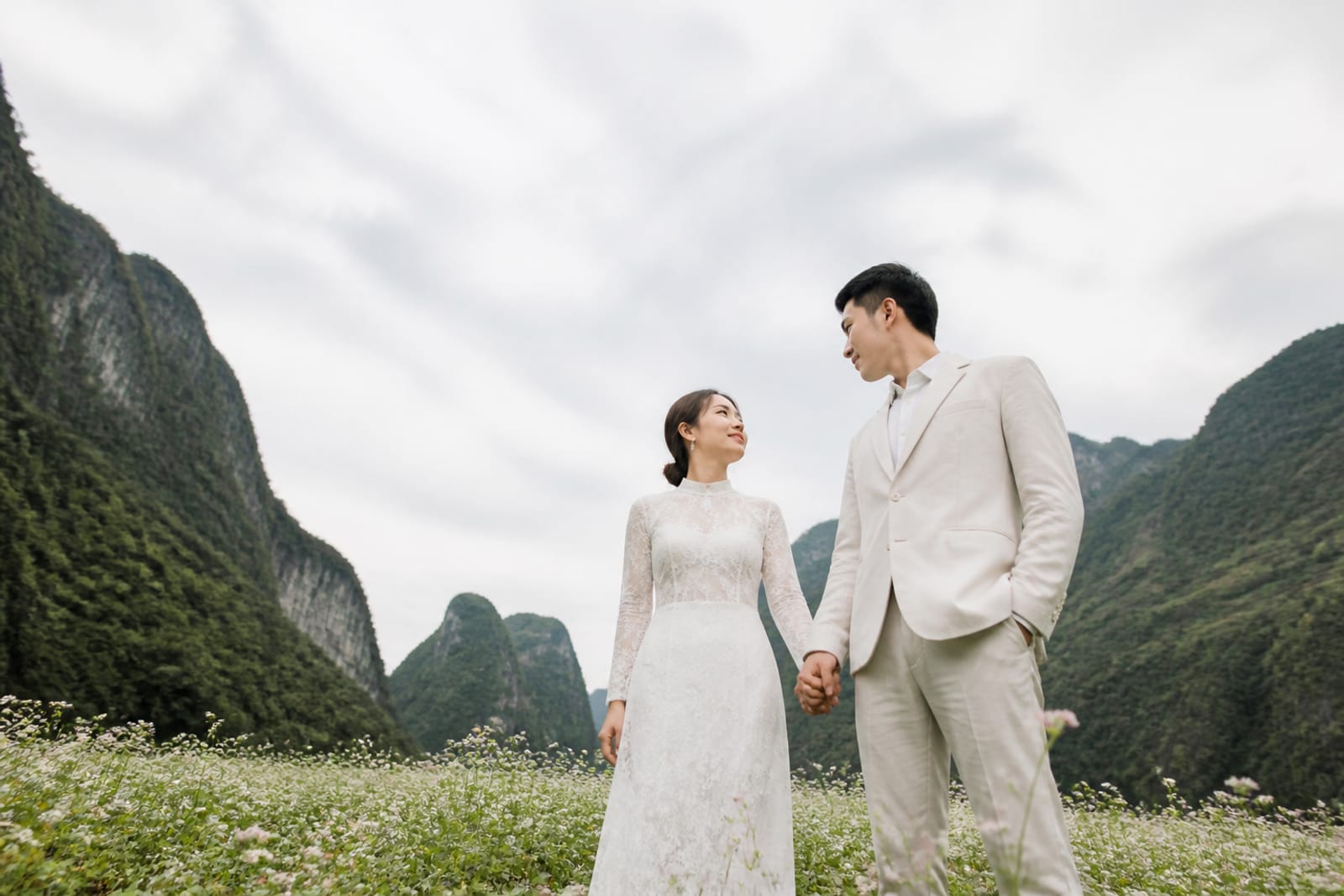
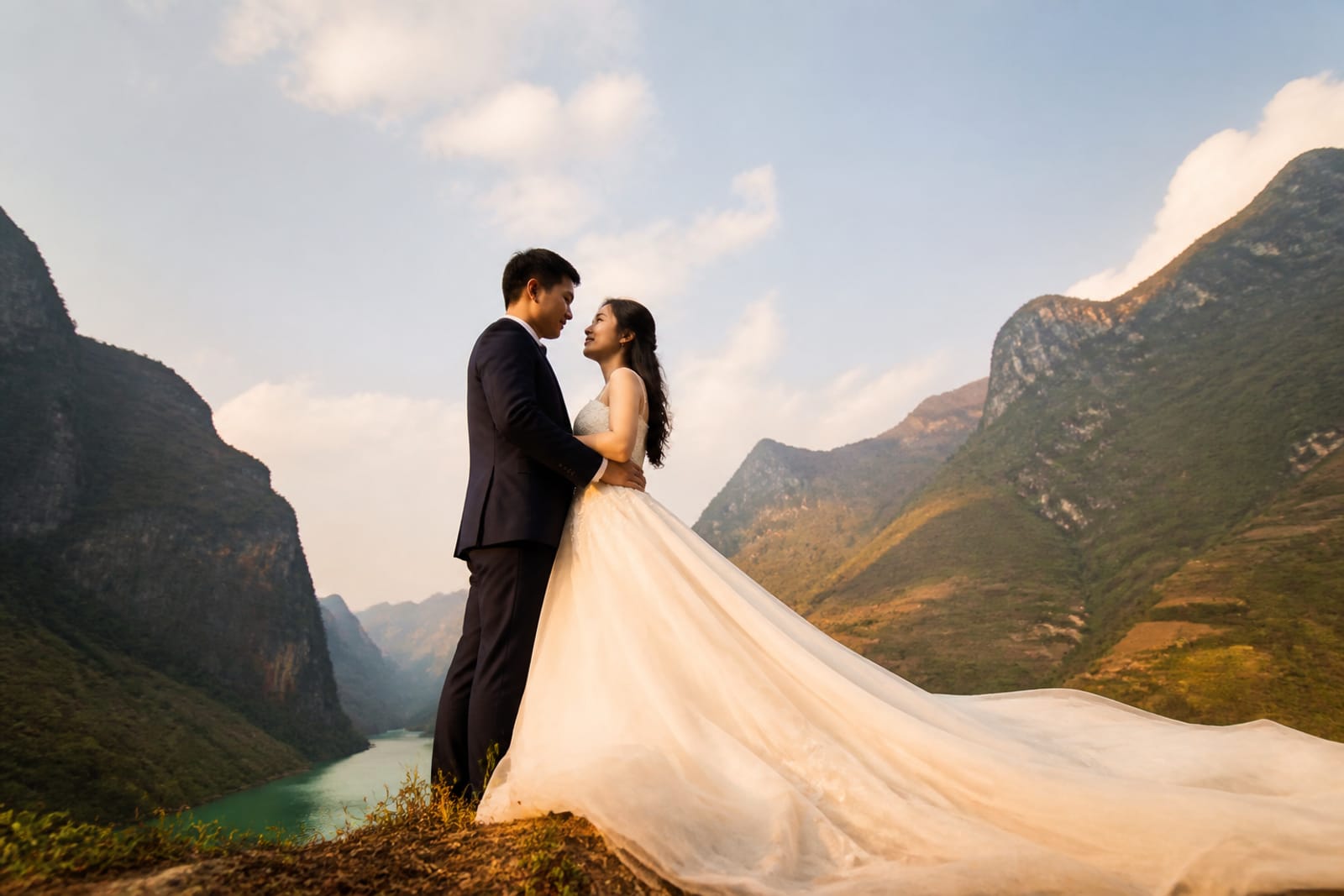
Wind and steep terrain rule out flowing fabrics and heavy jewellery. Choose structured pieces that move with your body, not against it. An ao dai works beautifully if it is fitted at the waist (not oversized) and layered over thermal leggings in black or skin tone—the inner layer stays hidden, the outer silhouette is clean, and you stay warm enough to relax in front of the camera. Avoid white ao dai (too bright, reads as washed-out at altitude); jewel tones (deep burgundy, forest green, navy) and earth tones photograph richer in thin, clear mountain light. If you choose Western wedding dress, pick a tailored, knee-length or midi style (not a ball gown) and wear a structured jacket or shrug in a complementary colour over it; full skirts tangle in wind and catch on rocks. For the groom, tailored trousers (charcoal, navy, or earth-toned linen), a fitted shirt, and a lightweight wool cardigan or overshirt create shape without bulk. Avoid logos, busy prints, and white (it clips in bright light). Wear closed-toe hiking shoes that grip wet stone—tested on before the shoot day. No loose bracelets, dangling earrings or scarves that will flap and distract from your faces.
📸 Book pre-wedding in Hanoi | 💄 Makeup & hair before your trip
How long does a Lung Cu couple photoshoot actually take, and what does the day look like?
A typical Lung Cu shoot is a 4–5 hour outing: 2 hours driving from Ha Giang town (or 3+ from Hanoi), 45 minutes to 1 hour 15 minutes on the flag-tower platform and surrounding ridge, then a 2-hour drive back. You will wake early (4:30–5 am to leave town by 6 am), arrive at the parking area around 7 am, and hike up in soft dawn light while the air is still and the mist is lifting. The photographer shoots wide first—you walking together, faces toward the light, the plateau spreading behind you—then medium frames (waist-up, eye contact), then details (hands, the flag, the stone beneath your feet). Movement and stillness alternate; you are never asked to "stand here and look at the camera." The wind picks up by 9 am, and clouds begin to form; the shoot wraps by 9:30–10 am. You descend, change into warm layers in the car, and drive back with the light at your back. Fatigue is real—the altitude (1,534 m) and emotional intensity of the location are both tiring—so expect to be quiet on the drive home and rest that afternoon. Budget time for a local lunch in Ha Giang town on the return (typically 12–1 pm); this is a journey, not a quick urban session.
Should we hire a local photographer or book from Hanoi?
Lung Cu requires logistical knowledge and an early start that only photographers living in or regularly working Ha Giang will have perfected. They know the road conditions, the parking rules, the best micro-timing for light, and have backup routes if weather closes the peak road. Cáo Studio is based in Hanoi and does not operate regular shoots in Ha Giang; if you want a pre-wedding session at Lung Cu, your best route is to find a vetted local photographer who specialises in Ha Giang couples work. Check their portfolio for mountain shoots in October–November (the season matters—light and outfit choices differ sharply). Ask for references from at least two previous couples, and confirm they have handled wind and altitude in real shoots, not just posed portraits. Ask them to show you frames from early morning (6–8 am) shoots so you can assess how they use that golden light. If you are staying in Hanoi for the bulk of your trip and want pre-wedding frames closer to the city—at Huc Bridge, the Red River, or Tran Quoc Temple—Cáo Studio can deliver directed, one-team shoots in 48 hours. If Lung Cu is non-negotiable, book local; if you're open to iconic Hanoi locations, reach out to us.
📸 Book a pre-wedding shoot in Hanoi | 💄 Makeup & hair | 🌸 See the lookbook
What should you check before booking a Lung Cu couple shoot?
- Photographer's Ha Giang portfolio: ask to see 3–5 shoots from October–November in previous years, not just summer or studio work. Light and conditions matter.
- Road access and weather contingency: confirm they have a rain-date policy and know alternate routes if the upper mountain road closes due to weather or landslides.
- Early start commitment: a 4:30 am wake-up is non-negotiable for good light. Check that the photographer genuinely does this; ask for a past couple's contact to confirm.
- Altitude and fitness: ask the photographer if they or any crew member has mobility limits or altitude concerns. At 1,534 m, some people feel dizzy; know your own fitness and be honest.
- Outfit advice: the photographer should give you specific guidance—ao dai length and weight, jacket fit, shoe tread—based on the season and forecast. Generic "wear what you're comfortable in" is a red flag.
- Edited timeline: mountain shoots often take 5–10 days to edit (difficult light, weather, and shadow blend). Confirm when you'll see proofs and finals.
- Cost factors: Ha Giang shoots are pricier than urban sessions because of road time and logistical risk. Budget for a full-day rate, travel, and fuel; a local photographer will quote based on season and outfit count.
---
FAQ
Can we do a Lung Cu shoot in December if we're not acclimatised to cold?
Yes, but plan carefully. December light is clearest, but temperatures drop to 2–8°C at the summit; layer aggressively, start with a 30-minute acclimatisation walk before the shoot, and have warm drinks ready. The photographer should know cold-weather framing—how to keep you engaged and still when you're shivering.
Will an ao dai photograph well at Lung Cu, or should we choose Western dress?
An ao dai is stunning—the fitted silhouette cuts through wind, the colour reads rich in thin mountain light, and it honours the location culturally. Choose jewel tones (burgundy, forest green) and layer it over warm base layers. A tailored Western dress works equally well if it is structured and knee-length; avoid flowing skirts.
How do we find a reputable local photographer in Ha Giang?
Ask for recommendations from Hanoi-based travel guides or hotels in Ha Giang; cross-check portfolios on Instagram or the photographer's website for October–November shoots and reviews from couples. Call and ask them to walk you through their Ha Giang process and safety measures.
What if we're staying in Hanoi and want Lung Cu—do we need to travel the day before?
Yes. The drive from Hanoi is 4+ hours each way, and you need an early morning start (5–6 am) from Ha Giang town. Stay overnight in Ha Giang, rest and eat a good dinner, then wake at 4:30 am for the shoot. Rushing from Hanoi will exhaust you.
Can we do a Lung Cu shoot if we're not as fit?
The hike is steep but short (30–40 minutes at a slow pace). If you have joint pain, breathing trouble, or altitude concerns, walk with the photographer at a very slow pace, take breaks, and ask them to shoot movement frames (walking toward each other) rather than static poses, which feel harder at altitude.
Will our photos be ready in time for our wedding invitations?
Ask the photographer for their editing timeline upfront—typically 5–10 days for mountain shoots because of light blending and shadow work. If you need proofs in 48 hours, say so at booking; they may charge extra or suggest a faster turnaround in limited edits.
FAQ
Can we do a Lung Cu shoot in December if we're not acclimatised to cold?
Yes, but plan carefully. December light is clearest, but temperatures drop to 2–8°C at the summit; layer aggressively, start with a 30-minute acclimatisation walk before the shoot, and have warm drinks ready. The photographer should know cold-weather framing—how to keep you engaged and still when you're shivering.
Will an ao dai photograph well at Lung Cu, or should we choose Western dress?
An ao dai is stunning—the fitted silhouette cuts through wind, the colour reads rich in thin mountain light, and it honours the location culturally. Choose jewel tones (burgundy, forest green) and layer it over warm base layers. A tailored Western dress works equally well if it is structured and knee-length; avoid flowing skirts.
How do we find a reputable local photographer in Ha Giang?
Ask for recommendations from Hanoi-based travel guides or hotels in Ha Giang; cross-check portfolios on Instagram or the photographer's website for October–November shoots and reviews from couples. Call and ask them to walk you through their Ha Giang process and safety measures.
What if we're staying in Hanoi and want Lung Cu—do we need to travel the day before?
Yes. The drive from Hanoi is 4+ hours each way, and you need an early morning start (5–6 am) from Ha Giang town. Stay overnight in Ha Giang, rest and eat a good dinner, then wake at 4:30 am for the shoot. Rushing from Hanoi will exhaust you.
Can we do a Lung Cu shoot if we're not as fit?
The hike is steep but short (30–40 minutes at a slow pace). If you have joint pain, breathing trouble, or altitude concerns, walk with the photographer at a very slow pace, take breaks, and ask them to shoot movement frames (walking toward each other) rather than static poses, which feel harder at altitude.
Will our photos be ready in time for our wedding invitations?
Ask the photographer for their editing timeline upfront—typically 5–10 days for mountain shoots because of light blending and shadow work. If you need proofs in 48 hours, say so at booking; they may charge extra or suggest a faster turnaround in limited edits.
Ao dai, makeup, hair and a local photographer in Hanoi or Saigon — one WhatsApp message.