/pre-wedding-photoshoot
What to Wear for Couple Photos at Ma Pi Leng Pass
Ma Pi Leng Pass sits at 1,400m in Ha Giang's mountain region; the drive alone is 8–10 hours from Hanoi, so shoots here are part of a multi-day trip, not a quick session. Wear fitted, dark or jewel-tone layers (temperatures drop 8–12°C above sea level) that won't billow in canyon wind—think close-cut trousers, structured shirts, not flowy skirts. Avoid white and pastels; hard mountain light at midday bleaches them and flattens skin. Visit October–November (cool, clear, no rain) or December–February (cold mornings but crisp). Book a local Ha Giang photographer or ask Cáo Studio on WhatsApp for referrals; the studio shoots in Hanoi and can coordinate logistics for a multi-day adventure with the right gear and timing.
Ma Pi Leng Pass is not a walk-in photoshoot destination. The road is long, winding, and landslide-prone in wet season. The light is intense—full sun bounces off grey limestone and the river below, creating hard shadows and blown highlights by noon. Your outfit choices here are not aesthetic alone; they're practical. Fitted layers, color that reads against rock, footwear for uneven paths, and backup pieces matter. This guide walks through every decision so you and your photographer are ready.
Why does mountain light at Ma Pi Leng demand different clothing than lowland shoots?
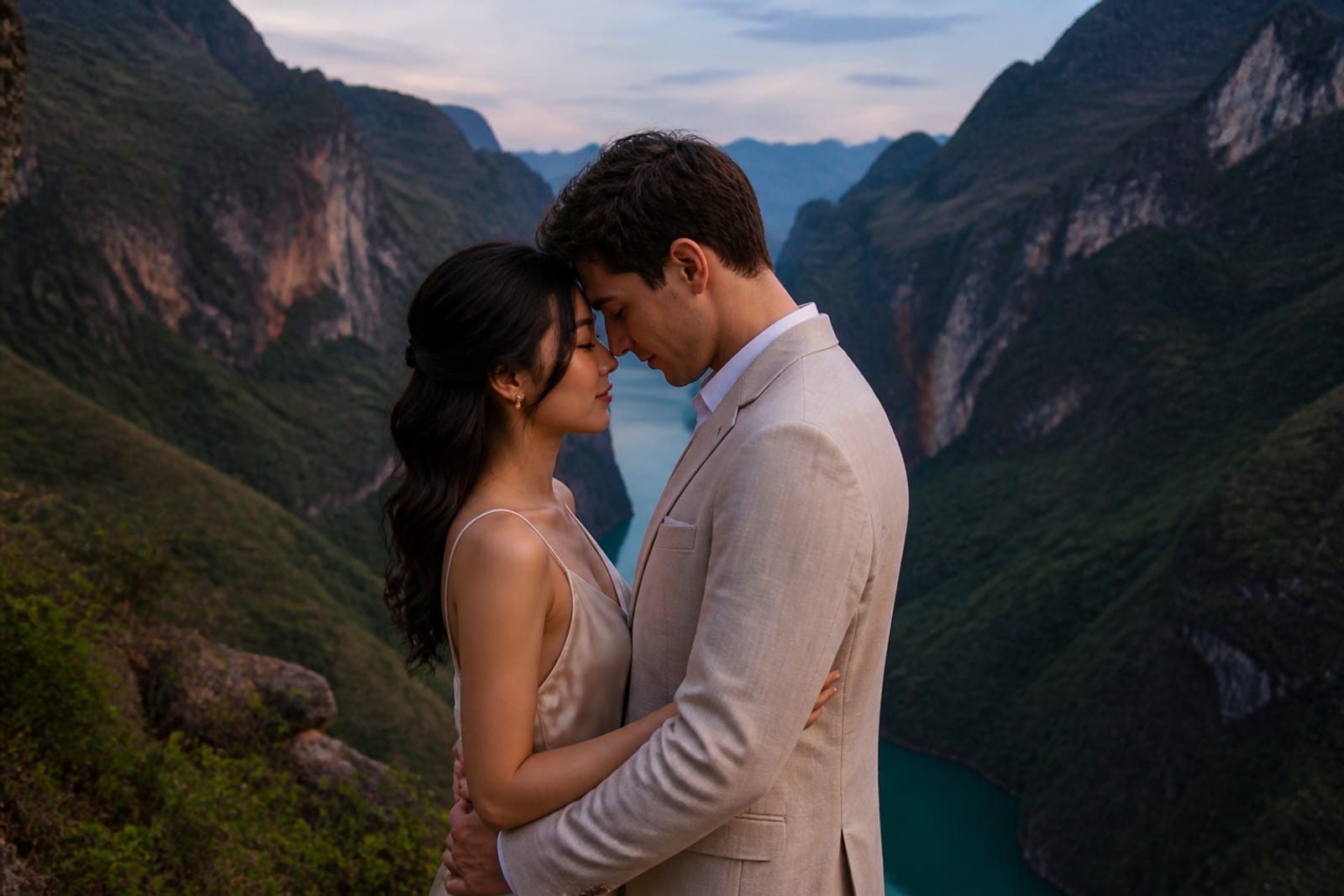
At 1,400m elevation, UV intensity increases roughly 10% per 1,000m gained. Sunlight reflects off pale limestone and water, creating double-exposure conditions: the canyon walls act as a natural reflector board. Bright colors (white, cream, pastel pink) bleach out and lose detail; skin appears washed or overly bright in shadows. Dark jewel tones—deep emerald, teal, burgundy, navy—hold shape and warmth against grey rock and blue sky. Fitted cuts (not loose fabrics that catch wind or billow and lose line) photograph cleaner in wide landscape shots where the Pass dominates half the frame. Book shoots for early morning (6:00–8:30 am, before harsh overhead sun) or late afternoon (4:30 pm onward, when light turns golden and rakes across canyon walls sideways).
What temperature and wind conditions shape your outfit layers?
Ha Giang's high passes are 8–12°C cooler than Hanoi. October–November mornings hover around 12–18°C; December–February can drop to 5–10°C with wind chill. Wind is constant and strong—gusts of 20–30 km/h are normal, especially on exposed viewpoints. Loose fabrics (ao dai, chiffon scarves, flowing skirts) catch updrafts, tangle around legs, and obscure body lines in motion shots. Choose: fitted merino or cotton-blend tops, tailored trousers or leggings, structured jackets (denim or wool), and a windproof layer (lightweight puffer or technical shell). Long sleeves protect skin from UV and wind. Avoid silk and rayon; they snag on rock and fade fast. Wear closed-toe hiking boots or sturdy trainers—paths are rocky, and slipping costs a frame.
📸 Book on WhatsApp — couple photoshoot
Which season at Ma Pi Leng gives the clearest light and safest travel?
| Season | Light Quality | Road Condition | Temperature | Why It Works |
|---|---|---|---|---|
| Oct–Nov (cool, dry) | Clear, golden late afternoon; low haze | Passable, no active rain | 12–20°C, mornings cool | Buckwheat flowers (bonus); crisp air, stable weather, best for wide landscape shots with clarity |
| Dec–Feb (winter) | Bright, sharp midday; morning mist on river | Snow/ice risk on passes; monitor forecast | 5–10°C, wind chill | Fewest tourists; river mist adds mood at sunrise; cold but predictable if you pack layers |
| Mar–May (spring) | Hazy, soft (not ideal for contrast) | Good | 18–25°C, warming | Wildflowers; but light less dramatic; afternoon haze reduces canyon definition |
| Jun–Sep (wet, hot) | Heavy clouds, afternoon rain/storms | Landslide risk; roads close without warning | 20–28°C, humid | Avoid. Mountain roads flood; passes close for days; light flat and grey; risk of cancellation |
October–November is the safest and most photogenic window. December–February is viable if you monitor weather 72 hours before departure and have flexibility to reschedule. Book a multi-day trip with a local guide who monitors road conditions; Hanoi-based photographers know the Ha Giang network.
What color and fit strategy prevents your outfit from fading into the landscape?
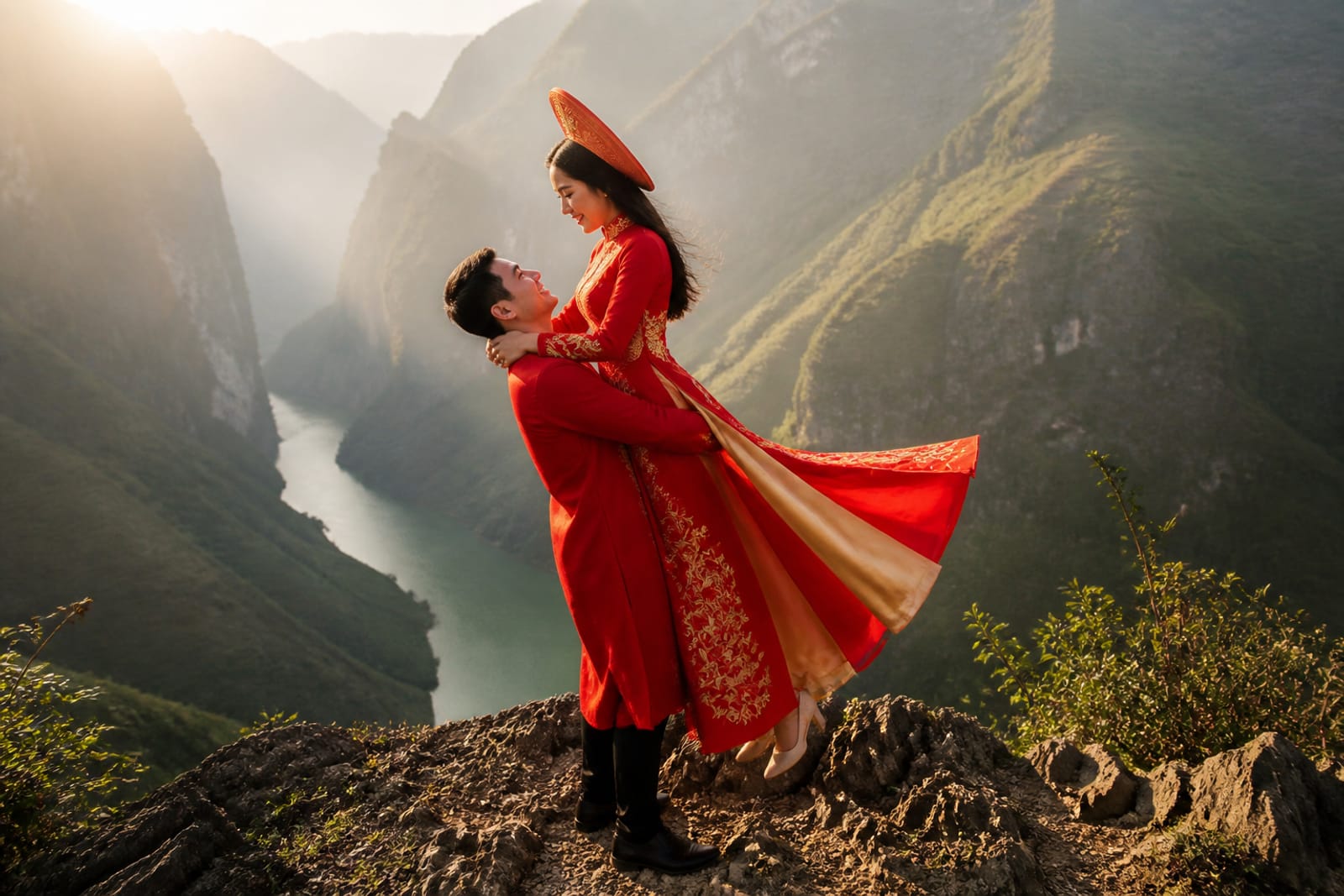
The canyon is grey, brown, and blue-green. Wearing grey or brown camouflages you into the background; neutrals disappear in wide shots. Choose a single strong color and repeat it in layers to create visual weight: if you wear deep teal, pair it with a navy jacket and black trousers so the color reads from a distance. Test fits in direct sunlight before the shoot—what looks right indoors may blow out or go flat in harsh light. Jewel tones (emerald, sapphire, burgundy, gold) hold saturation even in high UV. If you want traditional Vietnamese dress, an ao dai in deep indigo or silk works if the fit is close; loose ao dai trap wind and obscure movement. Consider a structured cotton ao dai (easier to move in) or a tailored jumpsuit in rich color—both read clearly and allow walking, crouching, and turning without tangles.
Avoid white entirely—it blows highlights and reads as a blank space in the frame. Pair one outfit color with a contrasting accent (burgundy dress + cream scarf works; cream dress + burgundy scarf does not). Hair should be secured (braids, clips, tie) to prevent wind from covering your face in every frame. Minimal jewelry (wind-noise on a boom mic if you're filming too) but a statement piece (gold cuff, stone pendant) adds depth to medium and close shots.
How do you coordinate a multi-day Ma Pi Leng shoot from abroad?
Ma Pi Leng is a destination shoot, not a city-based drop-in session. Cáo Studio operates from Hanoi and Ho Chi Mihn City; the studio does not have a Ha Giang office. For a couple shoot at the Pass, follow this path:
- Plan 3–4 days in Ha Giang (one travel day, one acclimatization/scout, one shoot, one return). Book accommodation near Ha Giang town or Yen Minh village.
- Vet a local photographer: ask your hotel or a Ha Giang tour guide for referrals to photographers who know the Pass light and have done couple shoots. Check their portfolio for image quality, not volume; one clear, well-lit frame beats 500 dull ones.
- Coordinate styling and timing: a local photographer may not coordinate hair/makeup. Ask Cáo Studio on WhatsApp for recommendations on makeup artists in Ha Giang or options to hire a Hanoi-based artist to join your trip. Makeup that lasts 8+ hours in sun and wind requires waterproof products and a professional hand—not DIY.
- Share your outfit plan: send photos of your pieces to your photographer (by WhatsApp or email) 2–3 weeks before. Ask: does this read against the canyon? Will the color blow out? Should I bring a backup? A photographer who's seen the light will steer you right.
- Shoot at dawn or late afternoon: coordinate a 5:30 am departure from your accommodation for sunrise at the Pass (30–45 min from most villages). The river mist clears by 7:00 am; light is soft and directional, not harsh. Or plan a 4:00 pm arrival for golden-hour light (5:00–6:30 pm in Oct–Nov).
If you want the added security of Cáo Studio's full team—one photographer, one styling coordinator, one makeup artist—shooting together—ask on WhatsApp whether the studio can coordinate a multi-day Ha Giang package or refer you to a trusted partner photographer. The studio's main strength is pre-wedding and couple shoots that integrate all services; mountain logistics fall outside the usual Hanoi/Ho Chi Minh City/Hoi An footprint, but referrals and planning support are available.
What to check before you book a Ma Pi Leng couple shoot
- Photographer's Ha Giang portfolio: ask to see 3–5 recent couple or group shoots from the Pass itself, not generic landscape photos. Check that faces read clearly, colors don't blow out, and motion shots are sharp (not blurred by wind or movement).
- Road access: contact your photographer or hotel 72 hours before departure to confirm the pass is open (no landslides, snow, or temporary closures). Ha Giang DMO or local tour companies post updates.
- Backup outfit: bring one additional top or layer in case wind damages or dirties your main outfit, or light conditions shift and you need a color change mid-day.
- Makeup and hair plan: confirm your artist (local or traveling from Hanoi) has done shoots in high altitude or wind. Waterproof mascara, long-wear lip, and hair pins/ties are non-negotiable.
- Physical readiness: the Pass involves walking on uneven, sometimes steep terrain. Wear hiking boots, not sandals or flats. Communicate any mobility concerns to your photographer beforehand.
- Insurance and cancellation: get clarity on the photographer's policy if weather or road closures force postponement. A deposit arrangement and a clear reschedule window matter in a destination shoot.
FAQ
Can we wear our ao dai at Ma Pi Leng?
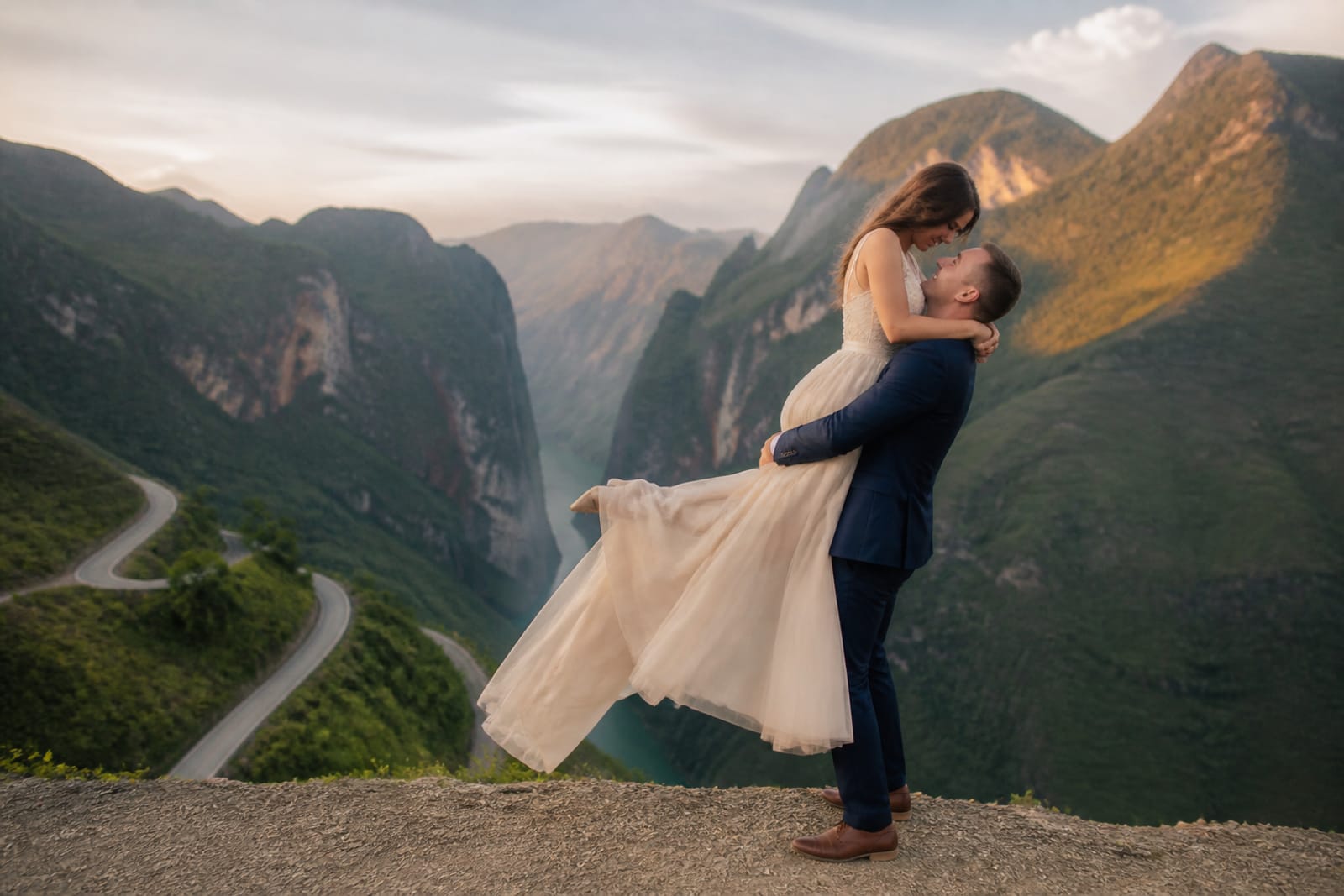
A fitted, close-cut ao dai in deep color (indigo, burgundy, black) works if the fabric is structured cotton, not silk or chiffon. Loose silk ao dai catch wind, tangle in motion, and are cold at 1,400m. Consider a tailored jumpsuit instead—same elegance, easier to move in on rocky paths.
What if we book a Hanoi photographer who hasn't shot at Ma Pi Leng before?
Ask them to study light behavior at limestone passes (strong reflectors, hard midday sun, magical golden hour). Share photos of the Pass, discuss your outfit colors, and request a detailed shot plan (where to position you, what time to shoot, where the sun will be). A photographer willing to brief and adapt beats one overconfident on unfamiliar terrain.
Is October–November the only good time?
October–November is safest (clear, cool, roads stable). December–February works if you monitor weather and have flexible dates—mornings are misty and moody, but cold and windier. Avoid June–September (rain, landslide risk, afternoon storms, flat light). April–May is warm but hazy; light lacks contrast.
How much does a Ma Pi Leng couple shoot cost?
Cost depends on the photographer's location (Hanoi-based travel fee or local Ha Giang rate), number of shoot days, and whether you add a makeup/hair artist. Ask your photographer on WhatsApp for a quote; include travel, location, and session length in your message.
Can Cáo Studio shoot our couple session at Ma Pi Leng?
Cáo Studio is based in Hanoi, Ho Chi Minh City, and Hoi An. Ma Pi Leng is a multi-day mountain destination beyond the usual service area. Message +84 338 762 340 on WhatsApp—the team can advise you on coordinating styling and makeup for a multi-day trip and refer you to trusted local photographers who know the Pass.
What's the best backup plan if weather closes the Pass?
Choose a reschedule date 5–10 days later (within your Vietnam trip window). Confirm with your photographer that your deposit holds for the new date and ask whether you can move to a secondary location in Ha Giang (rice terraces, waterfalls, villages) if the Pass remains closed.
FAQ
Can we wear our ao dai at Ma Pi Leng?
A fitted, close-cut ao dai in deep color (indigo, burgundy, black) works if the fabric is structured cotton, not silk or chiffon. Loose silk ao dai catch wind, tangle in motion, and are cold at 1,400m. Consider a tailored jumpsuit instead—same elegance, easier to move in on rocky paths.
What if we book a Hanoi photographer who hasn't shot at Ma Pi Leng before?
Ask them to study light behavior at limestone passes (strong reflectors, hard midday sun, magical golden hour). Share photos of the Pass, discuss your outfit colors, and request a detailed shot plan (where to position you, what time to shoot, where the sun will be). A photographer willing to brief and adapt beats one overconfident on unfamiliar terrain.
Is October–November the only good time?
October–November is safest (clear, cool, roads stable). December–February works if you monitor weather and have flexible dates—mornings are misty and moody, but cold and windier. Avoid June–September (rain, landslide risk, afternoon storms, flat light). April–May is warm but hazy; light lacks contrast.
How much does a Ma Pi Leng couple shoot cost?
Cost depends on the photographer's location (Hanoi-based travel fee or local Ha Giang rate), number of shoot days, and whether you add a makeup/hair artist. Ask your photographer on WhatsApp for a quote; include travel, location, and session length in your message.
Can Cáo Studio shoot our couple session at Ma Pi Leng?
Cáo Studio is based in Hanoi, Ho Chi Minh City, and Hoi An. Ma Pi Leng is a multi-day mountain destination beyond the usual service area. Message +84 338 762 340 on WhatsApp—the team can advise you on coordinating styling and makeup for a multi-day trip and refer you to trusted local photographers who know the Pass.
What's the best backup plan if weather closes the Pass?
Choose a reschedule date 5–10 days later (within your Vietnam trip window). Confirm with your photographer that your deposit holds for the new date and ask whether you can move to a secondary location in Ha Giang (rice terraces, waterfalls, villages) if the Pass remains closed.
Ao dai, makeup, hair and a local photographer in Hanoi or Saigon — one WhatsApp message.