/pre-wedding-photoshoot
What to Wear for Couple Photos at Mu Cang Chai Rice Terraces
Mu Cang Chai couple photos work best when outfit choice aligns with water season, terrain, and how your photographer moves. Terraces are water-filled around May–June and golden mid-September to early October; cool tones and breathable layers suit the drive (3+ hours from Hanoi) and muddy paths. Avoid heavy silks and white—dirt, spray, and reflected light work against them. Cáo Studio coordinates shoots in Hanoi, Ho Chi Minh City and Hoi An; for Mu Cang Chai, ask on WhatsApp for referrals to vetted local photographers who know the terrain and light windows. The key: choose a team that has shot the terraces before, travels with makeup and hair, and knows which hour and path avoid crowds and shadows. 📸 Book on WhatsApp — couple photoshoot | 🌸 See the lookbook ---
Which season shapes your outfit choice?
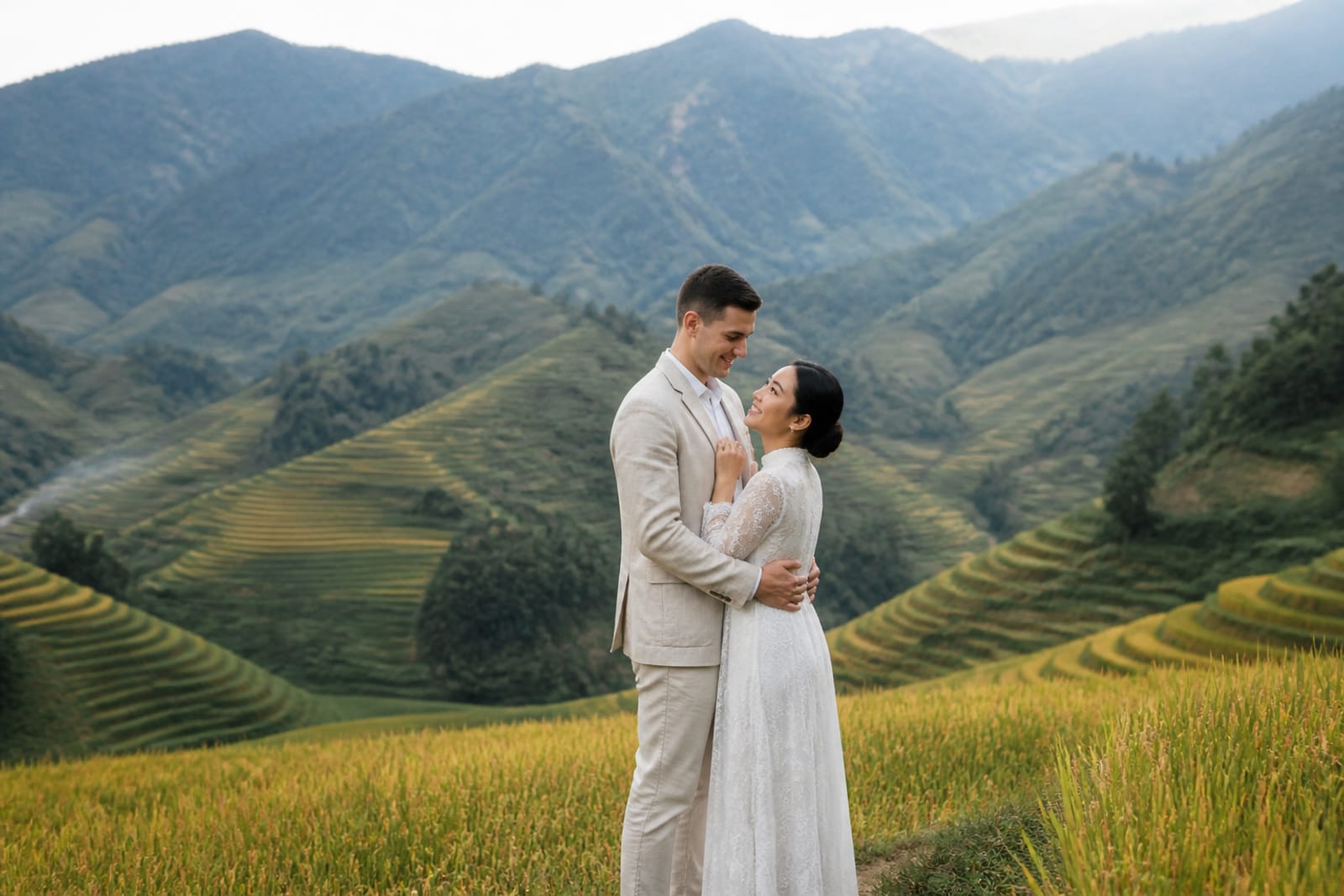
Water season (May–June) and harvest season (mid-September to early October) are the two outfit anchors at Mu Cang Chai. Water-filled terraces reflect sky and catch soft morning light—wear jewel tones, pastels, or muted earth shades that won't wash out in the glare. Harvest season's golden grass suits warm neutrals, burnt orange, rust, or deep green; the light is harsher, so lighter colors can work without overexposure if you shoot before 7 a.m. or after 4 p.m. Winter (December–February) brings grey skies and a drier, browner landscape; textured fabrics and deeper colors read better. The terrain is always muddy: avoid light bottoms, long hems that drag, or fabrics that stain easily (silk, linen, pastels below the knee). Waterproof footwear or sandals you can ditch for the shoot matter more than outfit name.
What fabrics survive the climb and mud?
Cotton, linen blends, and technical fabrics work where silk and raw denim fail. The walk to prime shooting spots is steep, uneven, and often wet—your outfit must flex. Heavy maxi dresses, long wedding gowns, and stiff traditional ao dais are hard to move in and mud-prone; lightweight layers, cropped trousers, or knee-length skirts are practical. If wearing an ao dai, choose a shorter cut (knee-length) or plan for a second outfit change at a lower vantage point. Men's outfits benefit from rolled sleeves, open collars, and breathable linen or cotton—the humidity and climb make layers cumbersome. Bring a change of shoes (dirtier footwear for the walk, cleaner for close-up shots) and a lightweight shawl or overshirt for wind and the cool early morning. A good photographer will scout a flatter, well-lit terrace level for your key shots so you're not balancing on a slope the whole time.
| Outfit Type | Best For | Water Season | Harvest Season | Why It Works |
|---|---|---|---|---|
| Lightweight linen or cotton trousers + simple top | Mobility, all seasons | Jewel-tone top | Cream or warm neutral | Dries fast, moves freely, layers easily |
| Knee-length skirt or dress | All body types, mixed couples | Muted blue, sage, mauve | Rust, gold, olive | Shows terrain, catches light without glare, no drag |
| Short ao dai (knee-length) | Vietnamese couples, cultural tie | Pastels, jewel tones | Warm golds, earth tones | Lighter to move in, reads well in frames, fits the landscape |
| Rolled-sleeve linen shirt + fitted pants | Men, all seasons | Soft greys, creams | Warm neutrals, earth tones | Practical, flatters in morning light, no overheating |
| Fitted cropped trousers + simple blouse | Active couples, slope comfort | Contrasting jewel-tone top | Warm earth tones | No dragging, easy to rewear, shows proportion |
How does light timing change your color strategy?
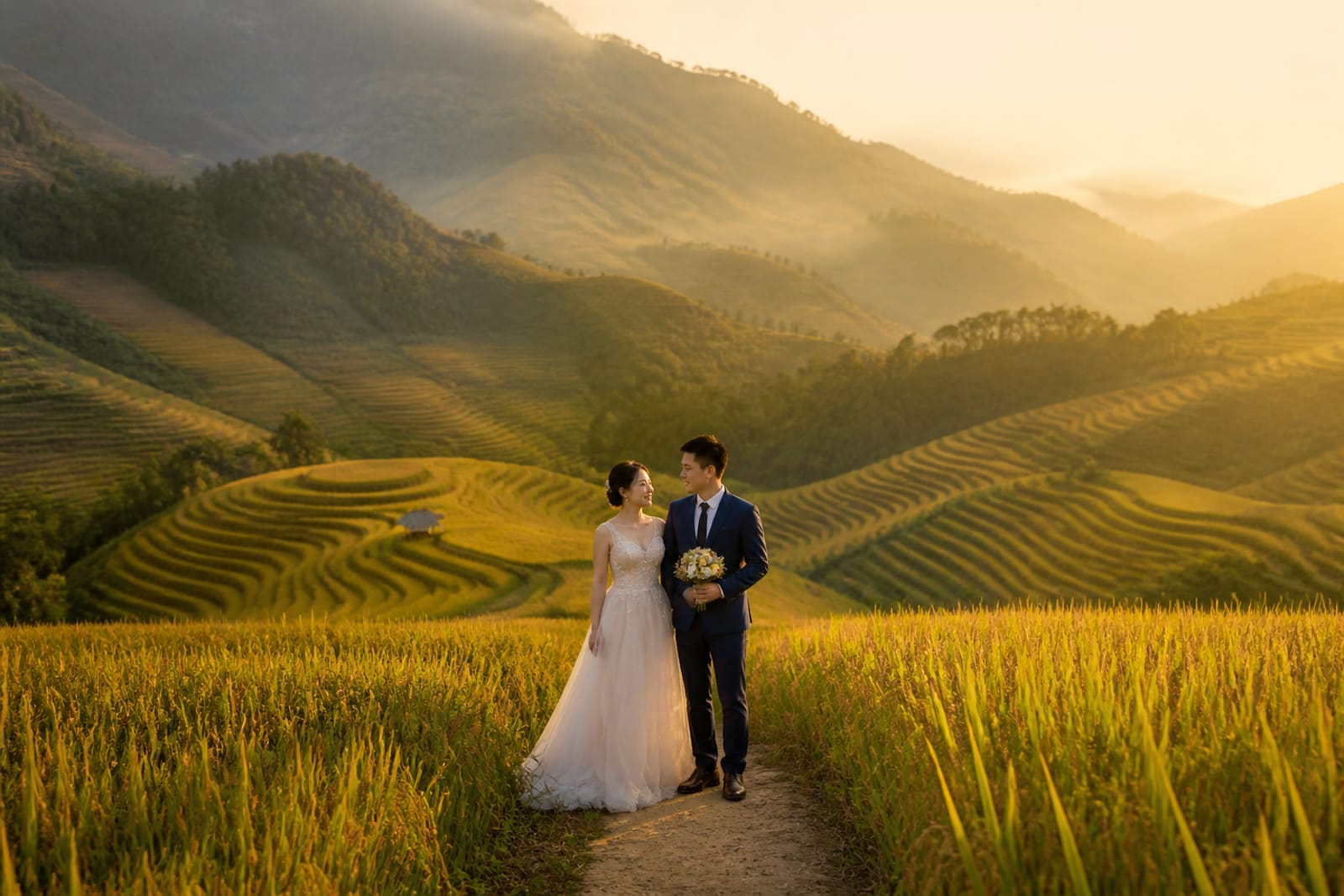
Early morning (5:30–7 a.m.) at Mu Cang Chai produces soft side light, pale skies, and cool tones—wear warm colors (cream, peach, rust, gold) to contrast and stand out. Mid-morning (7:30–10 a.m.) light is harder; muted or jewel tones hold detail better than pastels. Afternoon (2–4:30 p.m.) brings backlight if you're on a west-facing slope—silhouettes work; darker outfits read as shape. A photographer who knows the terraces will shoot your first outfit in the hour that flatters its color, then move to a different level or angle for a second look. This isn't improvisation—it's scouting. Ask your photographer: "Which hour and path do you use for this outfit's color?" If they say "anywhere is fine," they haven't shot Mu Cang Chai before. The reflected water and pale sky act as a fill light that can flatten pastels and whites; jewel tones and warm neutrals photograph stronger.
Should you book Cáo Studio or a local Mu Cang Chai team?
Cáo Studio's pre-wedding photoshoot team is based in Hanoi, Ho Chi Minh City, and Hoi An—Mu Cang Chai sits 3+ hours north of Hanoi, requiring a full-day drive and overnight logistics. A local photographer who lives in Mu Cang Chai or nearby (Yen Bai province) knows the terrain, terrain changes, local access, and light windows by habit. Cáo Studio can recommend vetted photographers for Mu Cang Chai via WhatsApp and ensure your Hanoi hair and makeup are ready before you travel; a local team handles the shoot itself. The trade-off: coordinate hair and makeup separately (at your hotel in Hanoi or Yen Bai) or book a mobile artist to travel with you—this adds cost and coordination but keeps aesthetic consistency. Compare via WhatsApp: ask Cáo Studio about local referrals, or search for photographers in Yen Bai province with portfolios showing water-season or harvest-season terraces. Look for portfolios with couples in movement (walking, looking at each other, not posing), soft morning light, and mud-aware framing (the photographer shoots from angles that hide the mess).
💄 Makeup & hair at your hotel | 📸 Pre-wedding photoshoot guide
What's the honest pre-booking checklist?
Before you commit to a Mu Cang Chai shoot—with any photographer—check these:
- Terrain fitness: Walk 30–45 minutes uphill on muddy paths carrying camera gear. Can you and your partner do this comfortably? (A good photographer will choose a flatter terrace, but some climb is unavoidable.)
- Weather backup: Rain is common; ask your photographer's policy if you need to reschedule.
- Shoe plan: Bring waterproof hiking sandals or old trainers you can walk in and leave behind. Heels, new white trainers, and formal shoes don't survive the terrain.
- Outfit count & changes: Will you change outfits? Plan at least 2 looks (one for water light, one for landscape), and your photographer must know the color strategy for each hour.
- Hair and makeup timeline: If you're traveling from Hanoi, book makeup and hair before you leave or arrange a mobile artist to meet you in Yen Bai. Hair and makeup degrade in the drive and humidity; start the day polished.
- Light scout report: Ask your photographer: "Which terraces do you use at 6 a.m., 8 a.m., and 3 p.m.?" Their answer reveals whether they've scouted.
- Delivery timeline: Expect edited photos within 48 hours to a few days; check the photographer's turnaround before booking.
- Exit plan: After the shoot, where do you freshen up? Ask whether your accommodation has a shower or powder room.
---
What to check before you book
- Photographer portfolio: Look for Mu Cang Chai shoots, not generic couple photos. Terraces require specific light knowledge.
- Cost factors: Travel time from Hanoi, overnight stay (if needed), local guide, mobile makeup artist, outfit rentals (ao dai, suits)—each adds coordination. Never compare Hanoi day-shoots to Mu Cang Chai multi-day trips by price alone.
- Team experience: One team (photographer + hair + makeup) coordinates better than three vendors. Ask whether your photographer has a preferred hair and makeup artist for mountain shoots.
- Season and water: Confirm the exact shoot date aligns with water-filled or harvest timing—your outfit choice depends on it.
- Outfit strategy: Do you bring clothes or rent? Cáo Studio offers ao dai rental and suit rental for clients in Hanoi; for Mu Cang Chai, ask whether a local rental shop near Yen Bai offers styles suited to the terrain.
---
FAQ
Can we wear a traditional ao dai at Mu Cang Chai?
Yes, if it's a shorter cut (knee-length or above). Long ao dais drag in mud and restrict movement on slopes. Pair it with practical footwear and plan a second outfit change lower on the terraces. Ask your photographer which terrace level suits the ao dai's color and season.
What if it rains the day of the shoot?
Rain is common in mountain areas. Ask your photographer's weather policy before booking—most offer a reschedule date or partial refund if rain makes shooting impossible. Bring waterproof jackets and waterproof shoes as backups.
Should we hire a local guide, or does the photographer know the way?
A photographer familiar with Mu Cang Chai often knows the terrain. If they're unfamiliar or you're traveling solo, hire a local guide from Yen Bai province—they know safe paths, water levels, and access. Cost depends on distance; ask your photographer for a referral.
How do we book hair and makeup for a Mu Cang Chai shoot from Hanoi?
Book hair and makeup in Hanoi before you travel, or arrange a mobile artist to meet you in Yen Bai. Cáo Studio's makeup and hair service operates in Hanoi; for mountain shoots, ask via WhatsApp about mobile artist referrals in the Yen Bai area.
What's the best time of year for Mu Cang Chai couple photos?
Mid-September to early October (harvest, golden light) and May–June (water-filled terraces) are peak. Winter (December–February) is drier but grey; summer (July–August) is rainy and cloudy. Book 6–8 weeks ahead for your preferred season.
How long does a typical Mu Cang Chai shoot take?
Expect 2–3 hours on-site (including outfit changes and light-driven movement between terraces), plus 3+ hours travel from Hanoi each way. Plan a full day and consider an overnight stay near Yen Bai to catch early light without rushing.
FAQ
Can we wear a traditional ao dai at Mu Cang Chai?
Yes, if it's a shorter cut (knee-length or above). Long ao dais drag in mud and restrict movement on slopes. Pair it with practical footwear and plan a second outfit change lower on the terraces. Ask your photographer which terrace level suits the ao dai's color and season.
What if it rains the day of the shoot?
Rain is common in mountain areas. Ask your photographer's weather policy before booking—most offer a reschedule date or partial refund if rain makes shooting impossible. Bring waterproof jackets and waterproof shoes as backups.
Should we hire a local guide, or does the photographer know the way?
A photographer familiar with Mu Cang Chai often knows the terrain. If they're unfamiliar or you're traveling solo, hire a local guide from Yen Bai province—they know safe paths, water levels, and access. Cost depends on distance; ask your photographer for a referral.
How do we book hair and makeup for a Mu Cang Chai shoot from Hanoi?
Book hair and makeup in Hanoi before you travel, or arrange a mobile artist to meet you in Yen Bai. Cáo Studio's [makeup and hair service](/makeup-and-hair) operates in Hanoi; for mountain shoots, ask via WhatsApp about mobile artist referrals in the Yen Bai area.
What's the best time of year for Mu Cang Chai couple photos?
Mid-September to early October (harvest, golden light) and May–June (water-filled terraces) are peak. Winter (December–February) is drier but grey; summer (July–August) is rainy and cloudy. Book 6–8 weeks ahead for your preferred season.
How long does a typical Mu Cang Chai shoot take?
Expect 2–3 hours on-site (including outfit changes and light-driven movement between terraces), plus 3+ hours travel from Hanoi each way. Plan a full day and consider an overnight stay near Yen Bai to catch early light without rushing.
Ao dai, makeup, hair and a local photographer in Hanoi or Saigon — one WhatsApp message.