/pre-wedding-photoshoot
What to Wear for Couple Photos at Mui Ne Red Sand Dunes
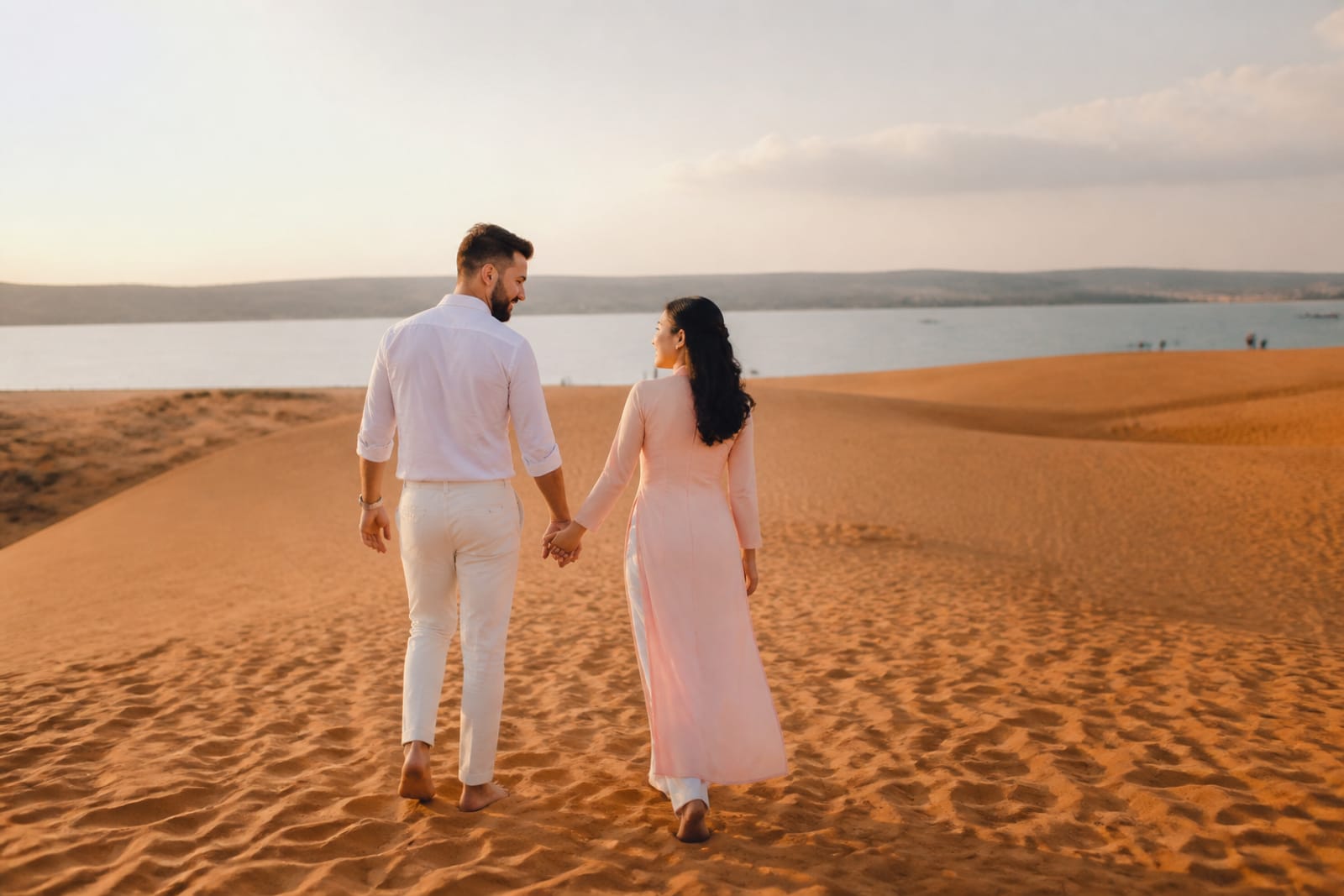
The red dunes of Mui Ne require outfits in jewel tones, whites, creams, or deep earth hues that stand out against rust-colored sand. Wind is constant (Nov–Mar especially), so choose fitted silhouettes or lightweight fabrics that move intentionally rather than flap—avoid loose florals or chiffon that catches. Shoot at sunrise (before 7 a.m.) when light is soft and sand hasn't heated; afternoon wind picks up sand and hardens shadows. Mui Ne has no permanent studio presence, so you'll work with a local photographer experienced in dune light and sand management. Cáo Studio operates in Hanoi, Ho Chi Minh City, and Hoi An; if you're based in the south and want a team that handles hair, makeup, and photography together, ask on WhatsApp about travel availability, or plan a pre-wedding shoot in Saigon before heading to the dunes with a vetted local.
The red dunes at Mui Ne are one of Vietnam's most cinematic couple-photo locations—but they demand a different dressing strategy than urban or coastal shoots. Sand is abrasive, wind is relentless, and the rust-colored earth throws off color harmony. Outfits that work elsewhere will fade against the dunes; poorly chosen fabrics will tangle and distract from every frame. This guide walks you through outfit selection, timing, and how to partner with a photographer who knows this landscape.
Why Red Dunes Demand Specific Color Choices
What colors actually stand out on red sand, and why do pastels fail?
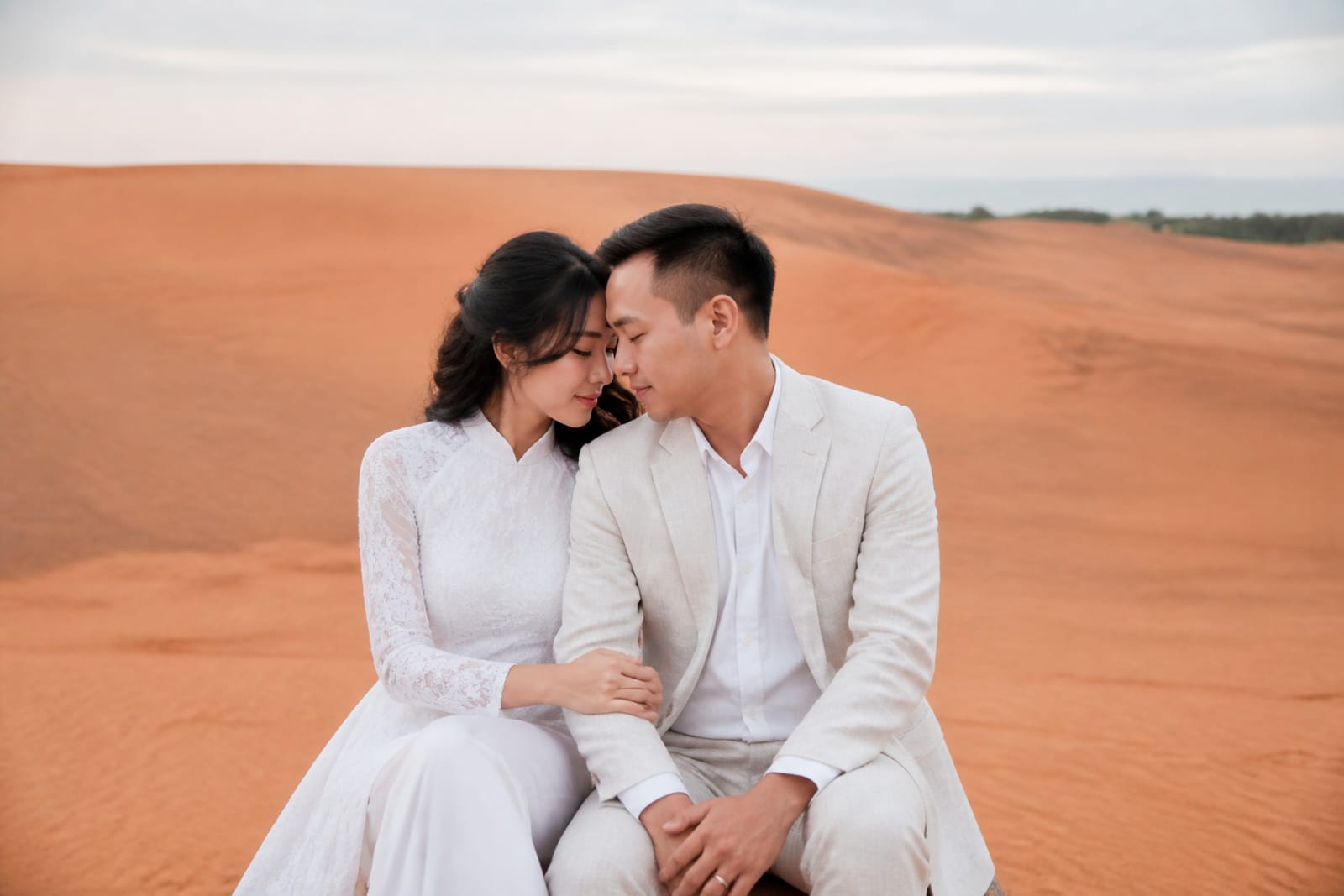
Mui Ne's dunes are a deep rust-orange, almost terracotta—the same hue as many beige and tan wedding outfits. Soft pinks, blush, peach, and muted greens vanish into the landscape. Instead, choose jewel tones (emerald, sapphire, deep purple), crisp whites, cream, charcoal, or rich warm tones like rust-brown and mustard that read as intentional rather than camouflaged. Black and navy work if paired with textured or metallic fabrics that catch light. Test your outfit against the dune photos on your photographer's past-work gallery—if you can see yourself clearly, the color works. If you blur into the earth, rethink it.
📸 Book on WhatsApp — couple photoshoot
How Wind and Sand Change What Fabrics Survive
Which materials stay sharp in 20+ mph gusts, and which ruin continuity across takes?
Mui Ne's dry season (Nov–Mar) brings strong, constant wind that picks up sand—both become design constraints. Stiff fabrics (cotton blends, structured silks, linen) hold shape and read as intentional movement in wind, while chiffon, organza, and unlined voiles tangle, whip erratically, and catch sand that scuffs and dulls faces in post. Fitted cuts (slim gowns, tailored suits, wrap dresses) stay readable; loose, flowy dresses blow chaotically and demand constant restyling between takes. Avoid hems that drag sand and collect grit; knee-length or midi reads cleaner and faster to reset. Closed-toe shoes prevent sand in socks and foot discomfort during a 2–3 hour shoot; leather or suede grips better on slopes than smooth soles.
| Fabric Type | Best For | Wind Behavior | Why It Works |
|---|---|---|---|
| Structured cotton/linen blends | Full dresses, shirts | Moves intentionally, reads sharp | Holds shape; sand doesn't cling as easily |
| Fitted silk or silk-blend | Gowns, fitted separates | Drapes in wind, catches light clearly | Elegant movement; doesn't tangle |
| Chiffon, voile, organza | Avoid | Tangles, flaps unpredictably | Requires constant restyling; sand clings |
| Wool suiting | Suits, groom jackets | Stable, structured | Professional line; wind doesn't disrupt |
| Jersey knit | Casual or fitted dresses | Moves with body, readable | Stretches over sand texture; no snag |
What Time of Day Saves the Most Takes
Why sunrise beats afternoon, and what happens if you schedule late.
Sunrise at Mui Ne (before 7 a.m., darkest Nov–Feb) delivers soft, side-lit golden light that flatters skin and makes sand glow rather than glare. By 8 a.m., the dunes reflect intense overhead light that flattens features and burns highlights. Afternoon (3 p.m. onward) brings harsher shadows and sand heated enough to blow into eyes and mouths—wind also peaks 11 a.m.–3 p.m., so sand storms are more likely. Sunrise requires patience: you'll need transport by 5:30 a.m. and a photographer ready to shoot the first hour efficiently, capturing wide landscape frames, then medium two-shots, then close details (lips, rings, hands) before light shifts warm. Most Mui Ne operators book sunrise because it yields the fewest unusable frames and the sharpest skin tone.
Choosing a Local Photographer: What to Verify Before Booking
How do you vet a Mui Ne photographer, and what should their past work show?
Mui Ne has no permanent luxury photo studio—you'll work with a freelancer or local operator. Check that their portfolio includes at least three dune shoots in similar season and light (sunrise vs. sunset; compare skin tone clarity and sand color fidelity). Ask how they handle wind and sand (Do they shield equipment? How often do they pause to reset fabric?). Confirm they've shot your intended dune location and know entry logistics (some dunes require guides; some have restricted hours). Ask for the full timeline: arrival time, gear setup, shoot duration, and delivery schedule. A solid local photographer quotes a clear rate, includes edited images, and can deliver a short video or slideshow within 1–2 weeks. If they're vague on timing or deliverables, move on.
If you're based in Ho Chi Minh City and want a team approach—hair, makeup, and photography coordinated from one brief—consider booking a couple photoshoot with Cáo Studio in Saigon before your Mui Ne trip, or ask on WhatsApp whether the team travels to Mui Ne for elopement or pre-wedding sessions. Otherwise, a local Mui Ne photographer remains your best option for dune-specific light knowledge.
Outfit Logistics: What Fits in a Dune Shoot and What Doesn't
Should you bring two outfits, and how do wardrobe changes work on sand?
Most Mui Ne couple shoots run 2–3 hours sunrise, with one main outfit and an optional change. Changing on dunes means sand inside everything—shoes, seams, hair—so if you bring two looks, plan the change for halfway through, with a tent or vehicle for privacy and sand-free dressing. A single, well-chosen outfit avoids downtime and sand damage to a second dress. If you're wearing an ao dai or traditional gown for the second look, confirm your photographer has styled traditional shoots before (draping, stance, and light differ). Most photographers recommend bringing a light wrap or jacket, not for warmth (sunrise is cool, but not cold Dec–Feb), but for layering shots that look intentional rather than underdressed against the landscape.
What to Check Before You Book a Dune Photoshoot
Season and Wind Forecast Book Nov–Apr for dry, predictable light. Check wind forecasts 3–5 days before; 15+ mph gusts mean sand storms are likely. Ask your photographer if they reschedule for safety.
Photographer's Dune Experience Request three dune-shot examples from the same season. Look for sharp focus, balanced skin tone (not blown-out by sand reflection), and natural movement in wind.
Outfit Fit and Fabric Test Wear your outfit for a 30-minute walk in windy conditions before the shoot. If it tangles, flaps, or fills with sand, change it.
Timing Confirmation Confirm start time (sunrise 5:30–6:30 a.m.), dune location, parking, and guide requirements. Ask if the photographer includes transportation.
Edited Timeline and Deliverables Confirm how many edited images you'll receive, when, and in what format. Ask about video or slideshow inclusion.
Contact and Cancellation Get the photographer's WhatsApp or phone contact. Confirm the cancellation and weather-reschedule policy in writing.
---
For shoots in Hanoi, Ho Chi Minh City, or Hoi An, explore Cáo Studio's couple and [pre-wedding photoshoot options—the team handles outfit coordination, makeup, and photography as one service, and can advise on Mui Ne outfit planning if you're combining a Saigon session with a dune trip.
FAQ
Can I wear a white dress on red dunes without it looking washed out?
Yes, if the white is crisp (not ivory) and paired with a colored wrap, jacket, or jewelry that ties you to the landscape. Off-white and cream vanish more easily—stick to bright white or add a jewel-tone belt.
Should I wear heels or flat shoes on Mui Ne dunes?
Flat, closed-toe shoes with grip (leather flats, loafers, or hiking boots) prevent sand in socks and ankles from rolling. Heels sink, tire your feet, and distract from movement; if you want formality, choose a flat dressy sandal or loafer.
What if the wind is strong on the day of my shoot?
Confirm with your photographer beforehand whether strong wind (15+ mph) is a reschedule trigger. Wind alone isn't bad—intentional movement reads beautifully—but sand storms reduce visibility and damage gear, so a safety threshold exists.
Can my photographer deliver photos the same day?
Most Mui Ne photographers deliver edited images within 1–2 weeks. Ask specifically before booking; same-day delivery is rare and usually means minimal or no editing. Check Cáo Studio's turnaround on WhatsApp if you're planning a Saigon session first.
Do I need a separate makeup artist for dune shoots?
Makeup for dunes should be tested in wind and sand beforehand—matte finishes hold better than glossy. If you book makeup and hair at your hotel in Mui Ne town beforehand, ask the artist about dune-specific formulas (long-wear, sand-resistant). A local photographer can often recommend trusted makeup contacts.
What if I want both casual clothes and a formal dress for the same shoot?
Bring both if you have time and a private change space (vehicle or tent), but plan for a 15–20 minute break mid-shoot. Most photographers recommend one main outfit to avoid sand damage and maximize coherent light capture across the session.
FAQ
Can I wear a white dress on red dunes without it looking washed out?
Yes, if the white is crisp (not ivory) and paired with a colored wrap, jacket, or jewelry that ties you to the landscape. Off-white and cream vanish more easily—stick to bright white or add a jewel-tone belt.
Should I wear heels or flat shoes on Mui Ne dunes?
Flat, closed-toe shoes with grip (leather flats, loafers, or hiking boots) prevent sand in socks and ankles from rolling. Heels sink, tire your feet, and distract from movement; if you want formality, choose a flat dressy sandal or loafer.
What if the wind is strong on the day of my shoot?
Confirm with your photographer beforehand whether strong wind (15+ mph) is a reschedule trigger. Wind alone isn't bad—intentional movement reads beautifully—but sand storms reduce visibility and damage gear, so a safety threshold exists.
Can my photographer deliver photos the same day?
Most Mui Ne photographers deliver edited images within 1–2 weeks. Ask specifically before booking; same-day delivery is rare and usually means minimal or no editing. [Check Cáo Studio's turnaround on WhatsApp](/faq) if you're planning a Saigon session first.
Do I need a separate makeup artist for dune shoots?
Makeup for dunes should be tested in wind and sand beforehand—matte finishes hold better than glossy. If you book [makeup and hair at your hotel](/makeup-and-hair) in Mui Ne town beforehand, ask the artist about dune-specific formulas (long-wear, sand-resistant). A local photographer can often recommend trusted makeup contacts.
What if I want both casual clothes and a formal dress for the same shoot?
Bring both if you have time and a private change space (vehicle or tent), but plan for a 15–20 minute break mid-shoot. Most photographers recommend one main outfit to avoid sand damage and maximize coherent light capture across the session.
Ao dai, makeup, hair and a local photographer in Hanoi or Saigon — one WhatsApp message.