/pre-wedding-photoshoot
What to Wear for Couple Photos at Muong Hoa Valley
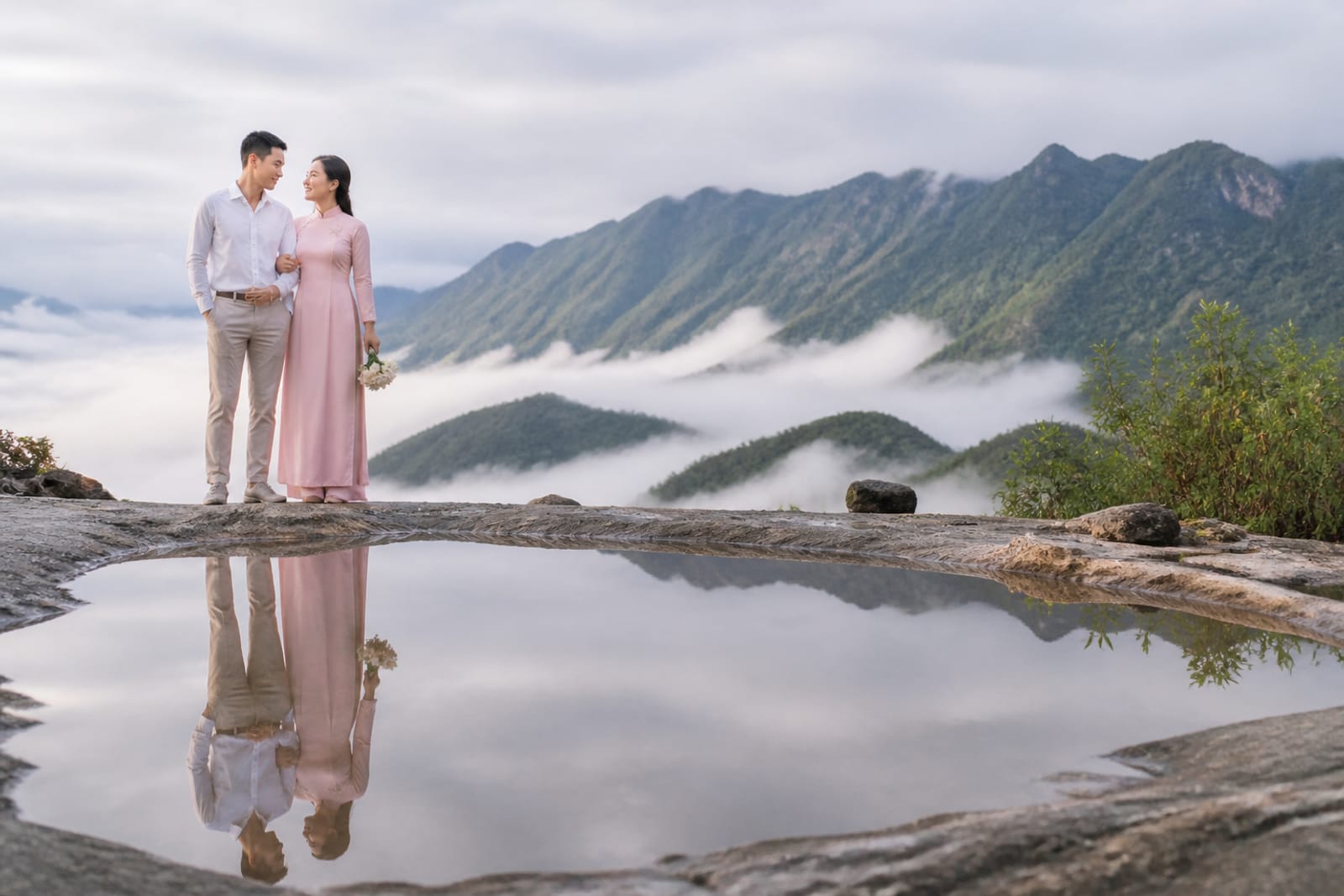
Muong Hoa Valley stretches across Sapa's northwest face—a working landscape of cascading rice paddies where light shifts hourly and weather changes fast. Wear an ao dai or tailored tunics in cream, white, or soft earth tones that read well at distance; layer with a light jacket or cardigan because altitude cools mid-morning, and bring a scarf for windy ridges. Avoid bright neons and busy patterns that flatten in wide-angle frames. Season matters: March–May and September–November offer clear skies and mild temperatures; December–February brings fog and cold (near 0°C at dawn), requiring thermal layers underneath. Cáo Studio does not operate in Sapa—you'll need a local Hanoi-based guide with photography experience and a porter who knows the muddy switchbacks. Plan 4–6 hours for the full descent and ascent, leaving at 5:30 am to catch soft side light on the terraces before haze builds. Respect planting and harvest schedules; ask your guide which valleys are working and which are resting. ---
Where Is Muong Hoa Valley and Why Does It Matter for Photos?
Muong Hoa Valley lies at the base of Fansipan, Sapa's highest peak, accessible only on foot via steep switchbacks that descend 600 metres. Unlike the crowded town of Sapa itself, the valley is a genuine working landscape—farmers tend the terraces year-round, water channels catch light, and mist clings to ridges before sunrise. Your outfit must suit a hike, not a photoshoot location with parking. Wear clothes that allow full movement, dry quickly if wet, and photograph well in soft morning light from a distance.
📸 Book on WhatsApp — ao dai photoshoot
How Does Season Change What You Should Wear?
| Season | Best Months | Terrain & Light | Outfit Strategy | Why It Matters |
|---|---|---|---|---|
| Spring | Mar–May | Clear dawn, warming by mid-morning; terraces mostly water-filled or just planted; trails muddy in places | Lightweight layers: thin ao dai over thermal; neutral tones; waterproof shoes | Water reflects soft light; green growth framing; fewer tourists; fog clears by 6:30 am |
| Summer | Jun–Aug | Afternoon rain likely; rice is tall and green; trails slick; early morning may be misty | Long sleeves for sun and branches; quick-dry fabric; avoid white (muddy) | Terraces are lush but light is harsh midday; most shoots happen before 8 am; rain gear essential |
| Autumn | Sep–Nov | Golden rice (mid-Sep to early Oct); clear skies; cool mornings, mild afternoons; trails dry | Cream, soft gold, or warm earth tones; layer with a cardigan or lightweight jacket; scarf for wind | Harvest light is warm; terraces glow at sunrise; still crowded but not packed; best overall window |
| Winter | Dec–Feb | Fog until 9–10 am; frost at dawn; temperature near 0°C; terraces may be dormant or flooded; trails icy in shaded spots | Thermal base layer, warm jacket, scarf, gloves; ao dai over layers; earth tones | Cold = crisp air, mist creates mood, fewer crowds, but needs early start and weather gamble; sunrise hides in fog |
Spring and autumn are the most forgiving seasons: temperature, light, and crowd pressure are all balanced. Summer requires discipline (shoot only at dawn). Winter is moody but risky—fog can hide the view until 10 am, and cold makes long exposure painful.
What Colours and Fabrics Read Best in Natural Light?
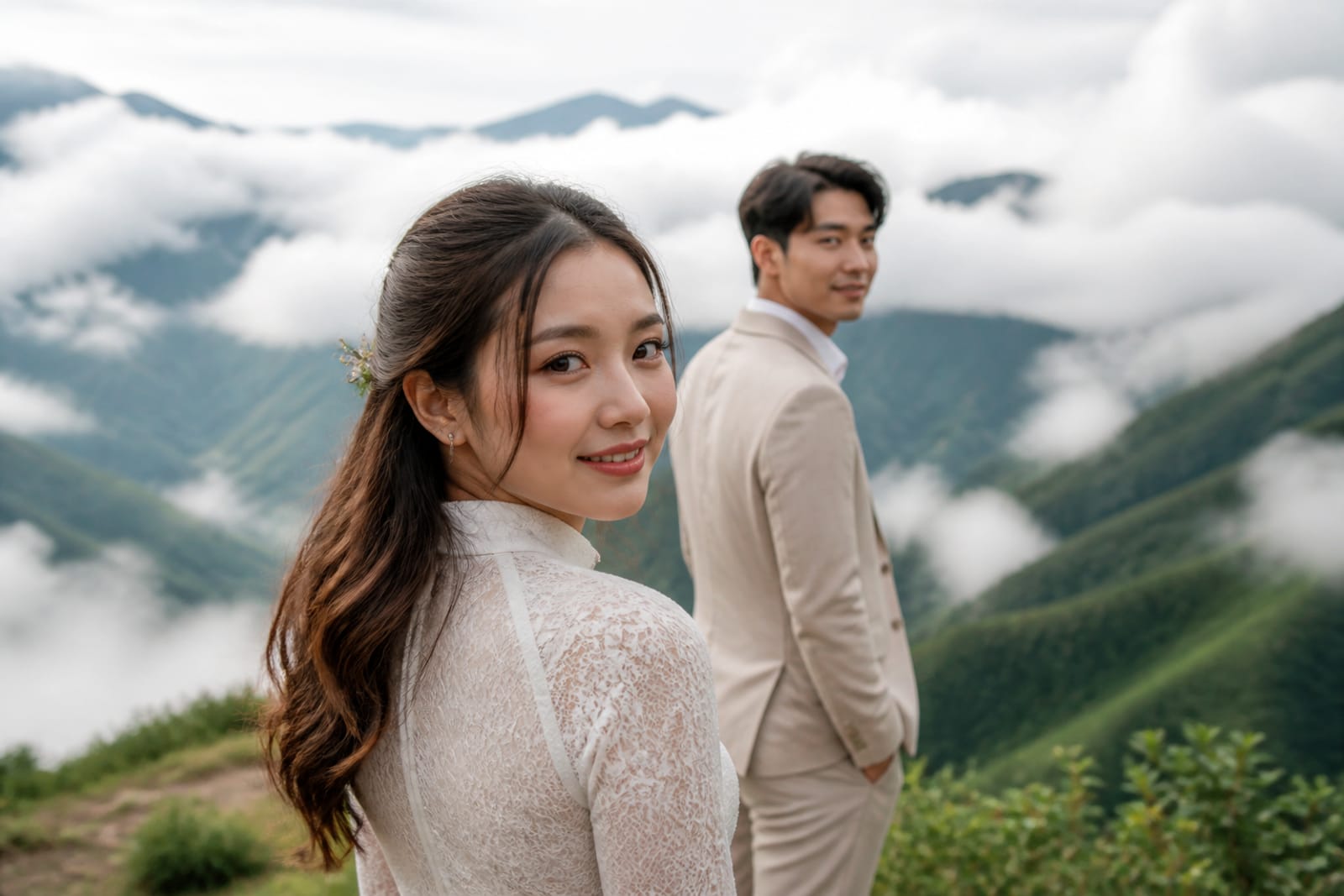
Muong Hoa Valley is an open landscape photographed mostly wide and medium shots—the terrace shape and the valley scale matter more than fine detail. Colours that work: cream, off-white, soft grey, warm beige, muted sage, rust, or warm gold. Black and navy read as shadows at distance; bright primary colours (red, electric blue, yellow) flatten and distract. Avoid large logos, high contrast stripes, or reflective prints.
Fabric matters for function and light. Choose natural fibres (cotton, linen, silk blends) that move freely and don't cling when damp; they also glow softer than synthetics in early light. An ao dai's loose tunic is ideal—it reads well from far away, moves with wind, and respects local dress culture (a gesture that matters in a working valley). If wearing Western clothes, choose tunics, oversized linen shirts, or soft cardigans layered over neutral base layers. Avoid tight jeans or athletic wear—they date the frame and limit walking comfort on steep, rooty paths.
How Should You Prepare for the Weather and Logistics?
Sapa's altitude (1,600 metres) and exposure mean weather is unpredictable. A clear dawn can turn misty by 8 am; cool mornings warm fast once you're moving. Bring layers you can remove and tie around your waist—a thin sweater, a cardigan, and a lightweight rain jacket. Wear good walking shoes (trail runners or waterproof hiking boots), not trainers or sandals; mud clings to smooth soles and loose straps snag roots.
Skin and lips dry at altitude and in wind. Bring a lip balm (matte finish photographs better than gloss) and facial moisturiser; the sun at 1,600 metres is intense despite cool air. Avoid heavy makeup at dawn—your face will shine under direct light, and the hike will cause it to run. A light tinted moisturiser, powder, and defined brows photograph well; keep lip colour warm and matte.
The hike itself takes 3–4 hours down and 4–6 hours back up, depending on fitness and the guide's pace. You'll stop for photos on the switchbacks and in the terraces themselves, but you're moving for most of the day. Wear an outfit you can spend six hours in without chafing, overheating, or catching on branches—a sundress over thermal leggings, or loose trousers and a tunic, work better than tight skirts or heavy denim.
Why Should You Hire a Local Guide Instead of Going Solo?
Cáo Studio operates in Hanoi, Ho Chi Minh City, and Hoi An only. Muong Hoa Valley requires a guide licensed to lead hikers, familiar with the trails, and ideally experienced working with photographers. The switchbacks are steep, not clearly marked, and dangerous in fog or after rain; farmers own the terraces and paths, and a local guide navigates both logistics and cultural permission.
A good guide will know which valleys are actively farmed (and should not be walked across in boots), which are resting, and where light hits first. They'll time your descent to catch soft side light on the terraces, spot the best foreground frames, and move you efficiently between shots without wearing you out. They'll also warn you of weather shifts and know whether to turn back if mist rolls in.
To find a guide: contact Sapa tourism offices, ask your hotel in town, or search for "Sapa trekking guide photographer" online and check reviews for someone who has worked with couples and understands the time needed for photography. Ask about their experience, the route they use, how many photo stops they build in, and whether they've guided photographer clients before. A guide costs time and money, but they're the difference between random snaps and frames that show the valley's actual light and scale.
What to Check Before You Book a Photoshoot in Sapa
Before committing, confirm these details with your guide or photographer:
- Route and fitness level. Muong Hoa descent is moderate to steep; ask if there's a less demanding valley option if your fitness is limited.
- Photography experience. Do they understand framing, light, and how to pose couples naturally? Ask to see a portfolio of valley shoots.
- Season and weather plan. If December–February, confirm they'll start at 4:30 am to beat the fog; if May–August, confirm they shoot dawn only. What's the rain backup plan?
- Outfit guidance. A good guide will mention colours, layers, and shoes before you book—not during.
- Photo delivery. Will they edit and deliver files? By when? On what format?
- Group size. Solo couple, or will there be other trekkers slowing you down?
- Porter or support. Are water, snacks, and a pack-carry service included, or do you hire separately?
Avoid booking through a generic travel company that treats the valley as a sightseeing box to tick; look for a guide or small team that specialises in photography treks.
---
For couple shoots in more accessible locations, explore Cáo Studio's pre-wedding photoshoot services in Hanoi, Saigon, and Hoi An, where we handle outfit styling, makeup, and direction all in one team. We don't operate in Sapa, but we can advise on outfit choices if you're planning a valley shoot with a local guide.
---
FAQ
Can I wear jeans or athletic wear to Muong Hoa Valley?
Athletic wear shows as casual and limits movement on steep, rooty trails. Jeans are heavy when wet and don't photograph as well as natural fabrics. Choose linen trousers, soft cotton tunics, or an ao dai with thermal base layers—you'll move better and look more intentional in frames.
What if it rains or gets foggy on the day?
Mist in the valley creates atmospheric frames but can hide terraces entirely if it rolls in before 9 am. Winter (Dec–Feb) is the foggiest season. Start at 4:30 am if booked then, and ask your guide about a rain-date or backup valley. Avoid mid-summer (July–August) if you're weather-sensitive—afternoon downpours are frequent.
Do I need to wear an ao dai, or can I wear Western clothes?
An ao dai reads beautifully at distance and respects local culture, but well-fitted Western clothes work too. Choose neutral, natural-fibre pieces (linen, cotton) in cream, beige, or warm earth tones. Avoid logos, neons, and tight silhouettes. A tunic-style shirt or loose cardigan over neutral base layers is ideal.
How early should I wake up to catch good light?
Leave Sapa town by 5:30 am to start the descent by 5:45–6:00 am. You'll reach the terraces by 6:30–7:00 am, when side light is softest and mist is still lifting. Mid-morning light (9 am onward) is harsh and shadows flatten the terrace texture. Winter requires an even earlier start (4:30 am) to beat the fog.
How do I find a trustworthy photographer or guide in Sapa?
Ask your hotel or Sapa tourism office for recommendations. Check portfolios for couple shoots (not just landscape or solo tourist snaps). Read reviews mentioning photography experience and communication. Confirm they've worked with photographers before, understand framing, and allow enough time for good light. Ask for references from past couple clients if possible.
What should I bring besides clothes?
Waterproof shoes (trail runners or boots), lip balm, sunscreen, a light rain jacket, and a scarf. Bring a small backpack or crossbody bag; your guide or a porter can carry water and snacks. Avoid heavy jewellery and bags that swing during hiking. A simple bracelet or earring works; large necklaces and dangling accessories distract in frames and snag on branches.
Can Cáo Studio shoot my Muong Hoa Valley session?
No—Cáo Studio operates in Hanoi, Ho Chi Minh City, and Hoi An only. For Sapa or Muong Hoa, hire a local guide with photography experience. If you'd like to do a pre-wedding photoshoot in Hanoi before or after your Sapa trip, we can outfit, style, and direct you in one session.
FAQ
Can I wear jeans or athletic wear to Muong Hoa Valley?
Athletic wear shows as casual and limits movement on steep, rooty trails. Jeans are heavy when wet and don't photograph as well as natural fabrics. Choose linen trousers, soft cotton tunics, or an ao dai with thermal base layers—you'll move better and look more intentional in frames.
What if it rains or gets foggy on the day?
Mist in the valley creates atmospheric frames but can hide terraces entirely if it rolls in before 9 am. Winter (Dec–Feb) is the foggiest season. Start at 4:30 am if booked then, and ask your guide about a rain-date or backup valley. Avoid mid-summer (July–August) if you're weather-sensitive—afternoon downpours are frequent.
Do I need to wear an ao dai, or can I wear Western clothes?
An ao dai reads beautifully at distance and respects local culture, but well-fitted Western clothes work too. Choose neutral, natural-fibre pieces (linen, cotton) in cream, beige, or warm earth tones. Avoid logos, neons, and tight silhouettes. A tunic-style shirt or loose cardigan over neutral base layers is ideal.
How early should I wake up to catch good light?
Leave Sapa town by 5:30 am to start the descent by 5:45–6:00 am. You'll reach the terraces by 6:30–7:00 am, when side light is softest and mist is still lifting. Mid-morning light (9 am onward) is harsh and shadows flatten the terrace texture. Winter requires an even earlier start (4:30 am) to beat the fog.
How do I find a trustworthy photographer or guide in Sapa?
Ask your hotel or Sapa tourism office for recommendations. Check portfolios for couple shoots (not just landscape or solo tourist snaps). Read reviews mentioning photography experience and communication. Confirm they've worked with photographers before, understand framing, and allow enough time for good light. Ask for references from past couple clients if possible.
What should I bring besides clothes?
Waterproof shoes (trail runners or boots), lip balm, sunscreen, a light rain jacket, and a scarf. Bring a small backpack or crossbody bag; your guide or a porter can carry water and snacks. Avoid heavy jewellery and bags that swing during hiking. A simple bracelet or earring works; large necklaces and dangling accessories distract in frames and snag on branches.
Can Cáo Studio shoot my Muong Hoa Valley session?
No—Cáo Studio operates in Hanoi, Ho Chi Minh City, and Hoi An only. For Sapa or Muong Hoa, hire a local guide with photography experience. If you'd like to do a [pre-wedding photoshoot](/pre-wedding-photoshoot) in Hanoi before or after your Sapa trip, we can outfit, style, and direct you in one session.
Ao dai, makeup, hair and a local photographer in Hanoi or Saigon — one WhatsApp message.