/pre-wedding-photoshoot
What to Wear for Couple Photos at O Quy Ho Pass
O Quy Ho pass (roughly 1,500m altitude) presents three outfit layers: a fitted base (thermal leggings, long-sleeve fitted tee), a textured mid-layer (wool cardigan, linen overshirt, denim jacket) that reads in photos, and a statement outer layer (long coat, oversized sweater, vintage blazer) that moves well in wind. Avoid baggy fabrics—they fold unpredictably against your body in gusts. The best window is 6:00–7:30 am for soft gold side light before clouds roll in, or late afternoon (4:00–5:30 pm) when mist creates depth. A couple photoshoot team handles hair (secured low or in a braid to stay put), makeup (matte to resist moisture), and directs you to walk, look at each other, and pause near the edge—never static poses. Book with a photographer who's shot at altitude; wind unpredictability and fast light require constant frame adjustment, not a preset shot list. ---
How does high altitude change what to wear for photos?
At 1,500m, wind speed doubles from valley levels, and temperature drops roughly 6°C per 1,000m gain. Fitted clothing reads as intentional; loose layers billow and obscure your silhouette. Layering works because you shed or add during setup—shoot in the outer layer, then add a blanket or beanie for breaks without ruining the shot.
Avoid synthetics that wrinkle instantly; linen, wool, cotton and denim hold shape through a morning session. Vertical seams and structured cuts photograph better than horizontal patterns in wind—the eye follows line, not motion.
---
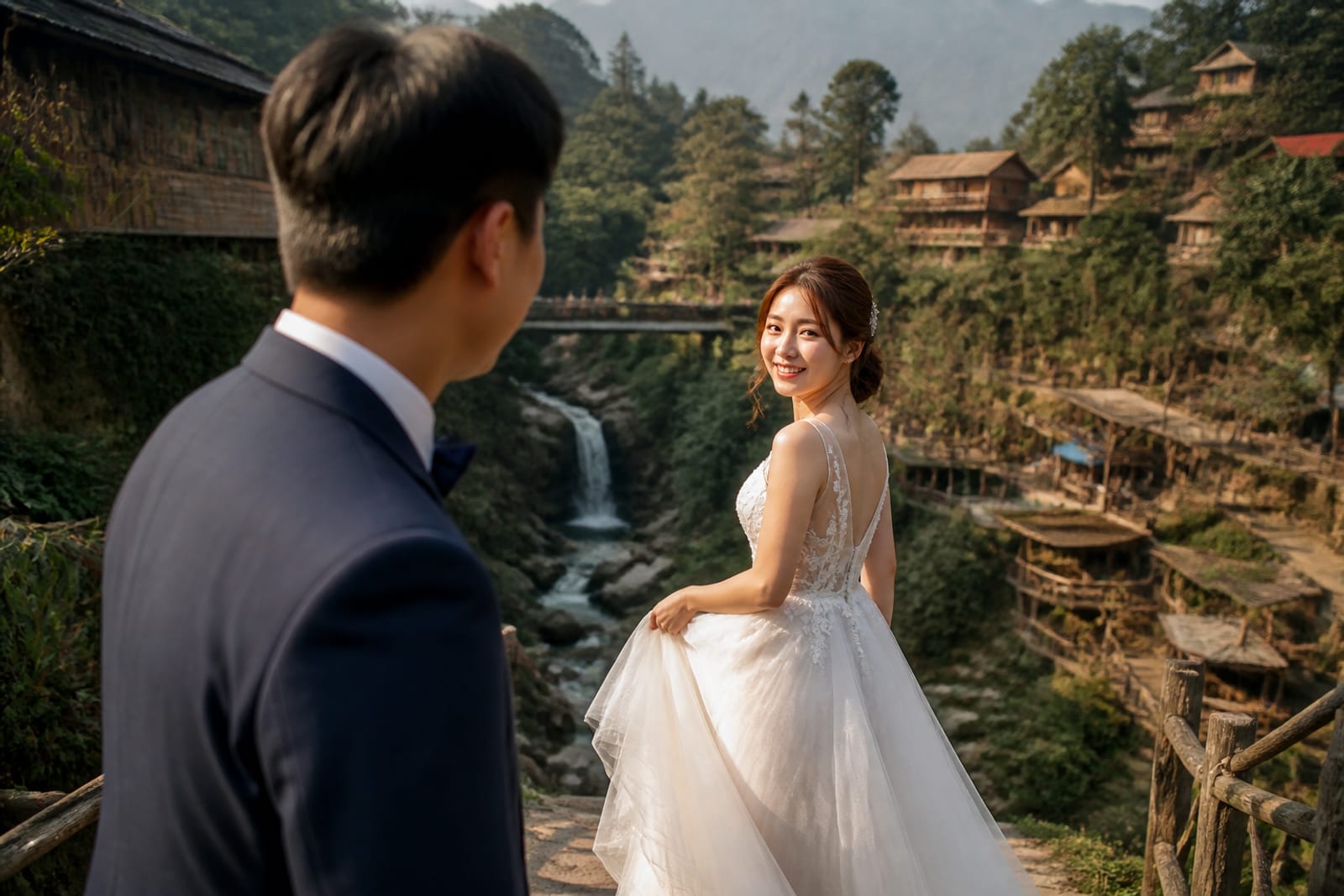
What time of day gives the best light at O Quy Ho?
O Quy Ho sits on a ridge facing northeast. Dawn (6:00–7:30 am) delivers soft, directional light from your left if you stand facing the valley—perfect for couple frames where one partner is lit and the other sits in shadow (separation, depth). Afternoon light (4:00–5:30 pm) rakes across low angles and often mirrors in mist.
Midday (10:00 am–3:00 pm) is overcast or harshly bright; avoid it. Cloud cover changes minute to minute—book a photographer who watches the sky and pivots the shot list, not one who sticks to a schedule. A makeup & hair session done at your Sapa hotel beforehand means you're ready to move fast when light peaks.
📸 Book on WhatsApp — couple photoshoot
---
Should you wear traditional ao dai at mountain altitude?
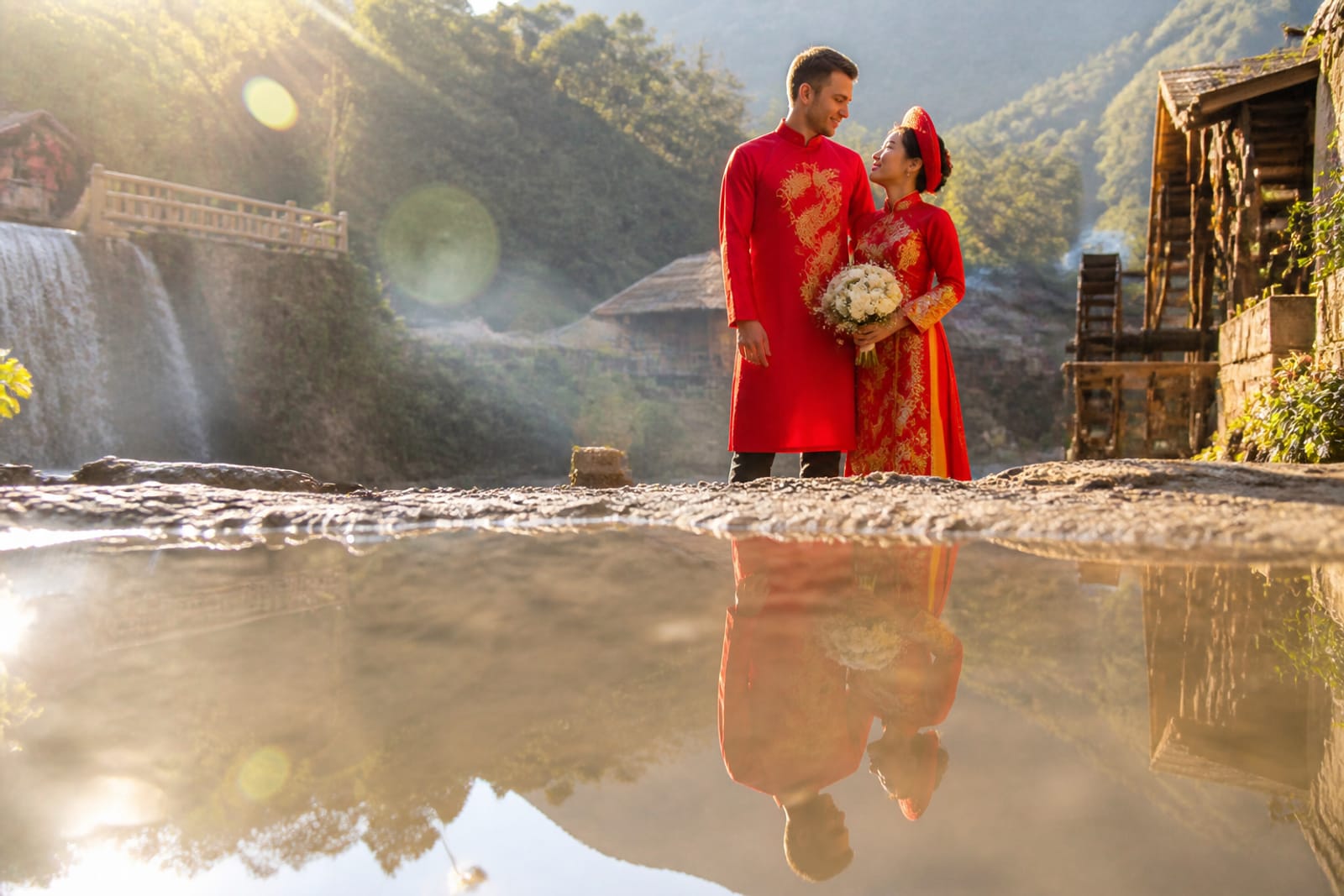
An ao dai works at O Quy Ho if you layer under it. The silk or linen splits at the side seam, so fitted leggings underneath stay hidden. A long coat over the ao dai reads as one silhouette and protects the fabric from wind damage.
Ao dai advantage: structured, instantly recognizable. Disadvantage: the fabric catches wind and requires constant adjustment between shots. If you choose an ao dai, rent one locally or bring a silk scarf—both age better on-camera than synthetic fabrics. Book a photographer and stylist as one team; they'll help you move without constantly tucking.
| Outfit Type | Best For | Light/Season | Why It Works |
|---|---|---|---|
| Layered sweater + denim | Modern, understated | Overcast or early dawn | Fabric stays put; reads intimate |
| Ao dai + long coat | Formal, cultural | Golden hour (dawn/dusk) | Regal silhouette; coat adds movement |
| Oversized blazer + linen | Androgynous, editorial | Soft morning light | Structured; wind adds drama |
| Vintage long coat + fitted base | Romantic, narrative | Mist/cloud cover | Coat tells a story; base anchors pose |
---
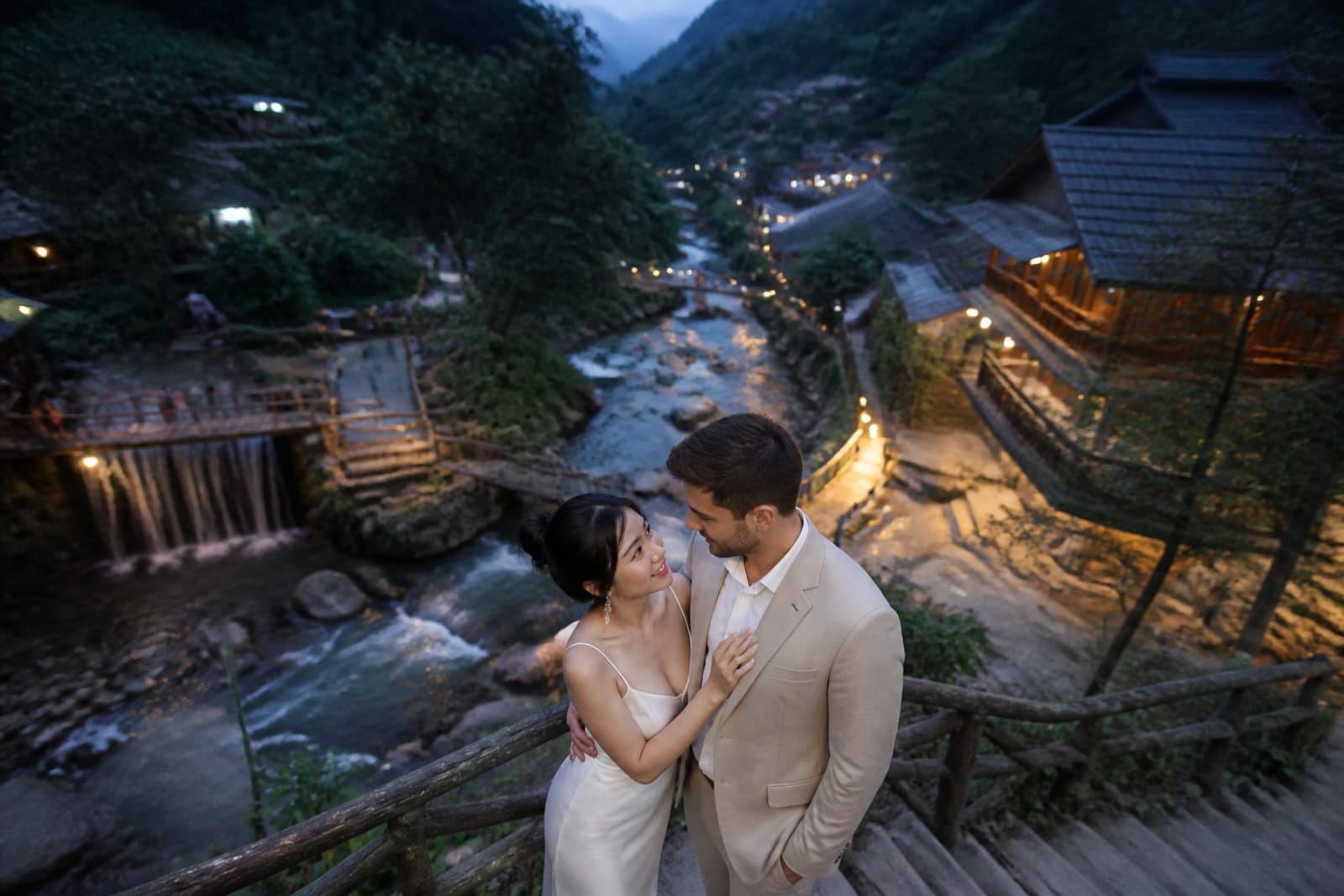
How do you prevent wind from ruining couple photos?
Wind does two things: it moves fabric (unpredictable, uneven), and it disturbs hair and makeup. Mitigation:
- Hair: braid low, clip with bobby pins, or wear a beanie or hat that frames the face without hiding it.
- Makeup: matte foundation and powder; avoid glossy lipstick (it catches wind-blown hair).
- Fabric choice: mid-weight cotton, wool blends, denim. Linen wrinkles but holds shape. Silk billows—reserve it for calm dawn windows or indoor studios.
- Photographer strategy: shoot movement (walking toward camera, turning to each other) instead of static poses. Wind becomes an asset—fabric flows, hair catches light.
- Timing: pick the calmest window—usually 6:00–7:00 am before thermal winds build, or 5:00–5:30 pm as evening settles.
A pre-wedding photoshoot team that's shot at O Quy Ho before knows which micro-locations shelter from gusts and which angles hide wind damage in post.
---
What outfit mistakes do most couples make at mountain passes?
Common errors:
- Matching outfits—reads as costume, not story. Wear complementary tones (earth + cream, navy + camel) so you're distinct within one frame.
- Horizontal stripes or busy patterns—they vibrate on video and distract from faces.
- New shoes—you'll be walking uphill and over uneven ground. Wear broken-in hiking boots or flat sandals, never heels.
- White on white—loses separation between body and sky. A white top on a blue bottom, or vice versa, anchors the eye.
- Forgetting a backup layer—if one outfit rips or gets wet, a change of shirt saves the session.
- Oversized everything—it moves independently of your body and reads as chaos in photos.
Book with Cáo Studio or a local photographer who sends an outfit guide 1–2 weeks before. They'll ask climate, time, mood, and send specific recommendations—not a generic "wear neutral tones" list.
---
What to check before booking a couple shoot at O Quy Ho
Photographer experience at altitude: ask if they've shot above 1,000m before. Light and weather move fast; amateurs default to wide, static shots and miss the close-up moments.
Hair and makeup included or separate?: if the photographer works solo, you'll style yourselves or hire a separate artist. One team (photographer, stylist, makeup) books better than three vendors. Ask on WhatsApp whether the package includes on-location hair and makeup.
Outfit rental or bring your own?: O Quy Ho trips often bundle with Sapa visits. If you're renting an ao dai or suit, confirm sizing 2 weeks ahead; mountain passes don't have tailors.
Backup day if weather closes the pass: Sapa roads close in heavy fog or rare snow. Ask the photographer what the policy is—reschedule fee, full refund, or pivot to a lower-altitude backup spot?
Edited delivery time: confirm when you'll receive edited photos and a short film. Cáo Studio delivers in 48 hours; ask others the same.
Local permits or early-morning access: O Quy Ho has no gates, but some tour operators require bookings. Confirm with your photographer—they'll handle logistics or tell you what to arrange.
---
FAQ
Do we need special fitness for an O Quy Ho couple shoot?
The pass sits at 1,500m; altitude sickness is rare but possible if you've just arrived. Spend a day in Sapa first. The shoot involves 30–40 minutes of light walking (uphill, uneven ground) and standing for posing. Wear broken-in boots, not heels.
Can we do an O Quy Ho shoot in winter (December–February)?
Yes, but expect fog, occasional frost, and cold (near 0°C mornings). Layering is essential. Light is muted; you'll see soft, diffused frames rather than golden-hour drama. Pack thermal leggings, wool sweaters, and a windproof coat. Dawn is still your best window, but visibility may be low.
Should we book a professional couple shoot or try self-portraits?
Self-portraits require a tripod, which catches wind at altitude and limits framing options. A couple photoshoot team directs movement, adjusts for light, and captures candid moments—you can relax and connect instead of checking settings. The cost difference is modest compared to the difference in frames.
How many outfits should we bring to O Quy Ho?
One or two. A 3–4 hour session typically covers one primary outfit and one change if you want variety. More than two means time spent changing instead of shooting. Coordinating outfit changes at 1,500m in a parking area is awkward; stick to one solid choice or a layer swap (same base, different outer jacket).
What if we're not sure about colors—do we get a style consultation?
Yes. Contact Cáo Studio or your photographer 2 weeks before; they'll discuss your vision, send an outfit guide with specific recommendations (fabrics, colors, silhouettes), and answer questions. This prevents buying or renting the wrong thing and ensures the shoot feels intentional, not improvised.
FAQ
Do we need special fitness for an O Quy Ho couple shoot?
The pass sits at 1,500m; altitude sickness is rare but possible if you've just arrived. Spend a day in Sapa first. The shoot involves 30–40 minutes of light walking (uphill, uneven ground) and standing for posing. Wear broken-in boots, not heels.
Can we do an O Quy Ho shoot in winter (December–February)?
Yes, but expect fog, occasional frost, and cold (near 0°C mornings). Layering is essential. Light is muted; you'll see soft, diffused frames rather than golden-hour drama. Pack thermal leggings, wool sweaters, and a windproof coat. Dawn is still your best window, but visibility may be low.
Should we book a professional couple shoot or try self-portraits?
Self-portraits require a tripod, which catches wind at altitude and limits framing options. A [couple photoshoot](/couple-photoshoot) team directs movement, adjusts for light, and captures candid moments—you can relax and connect instead of checking settings. The cost difference is modest compared to the difference in frames.
How many outfits should we bring to O Quy Ho?
One or two. A 3–4 hour session typically covers one primary outfit and one change if you want variety. More than two means time spent changing instead of shooting. Coordinating outfit changes at 1,500m in a parking area is awkward; stick to one solid choice or a layer swap (same base, different outer jacket).
What if we're not sure about colors—do we get a style consultation?
Yes. Contact Cáo Studio or your photographer 2 weeks before; they'll discuss your vision, send an outfit guide with specific recommendations (fabrics, colors, silhouettes), and answer questions. This prevents buying or renting the wrong thing and ensures the shoot feels intentional, not improvised.
Ao dai, makeup, hair and a local photographer in Hanoi or Saigon — one WhatsApp message.