/pre-wedding-photoshoot
What to Wear for Couple Photos at Pu Luong Rice Terraces
Pu Luong rice terraces photograph best in low light (dawn or late afternoon) when terraces glow golden. Wear muted, natural tones — cream, olive, soft grey, sage, terracotta — that recede into the landscape rather than pull attention away from the light. Avoid bright white, neon or bold patterns that flatten in harsh midday sun or dominate the frame. Layers matter: mornings are cool and misty (bring a linen overshirt or light jacket you can remove), and the walk to elevated shooting spots crosses uneven stone and mud. Comfortable, closed walking shoes are non-negotiable. If you're booking a directed photoshoot, confirm whether your team sources outfits locally or expects you to arrive with them ready — this changes packing strategy and budget planning significantly. 📸 Book on WhatsApp — pre-wedding photoshoot | 🌸 See the lookbook ---
Can You Wear an Áo Dài at Pu Luong, or Does Landscape Demand Something Else?
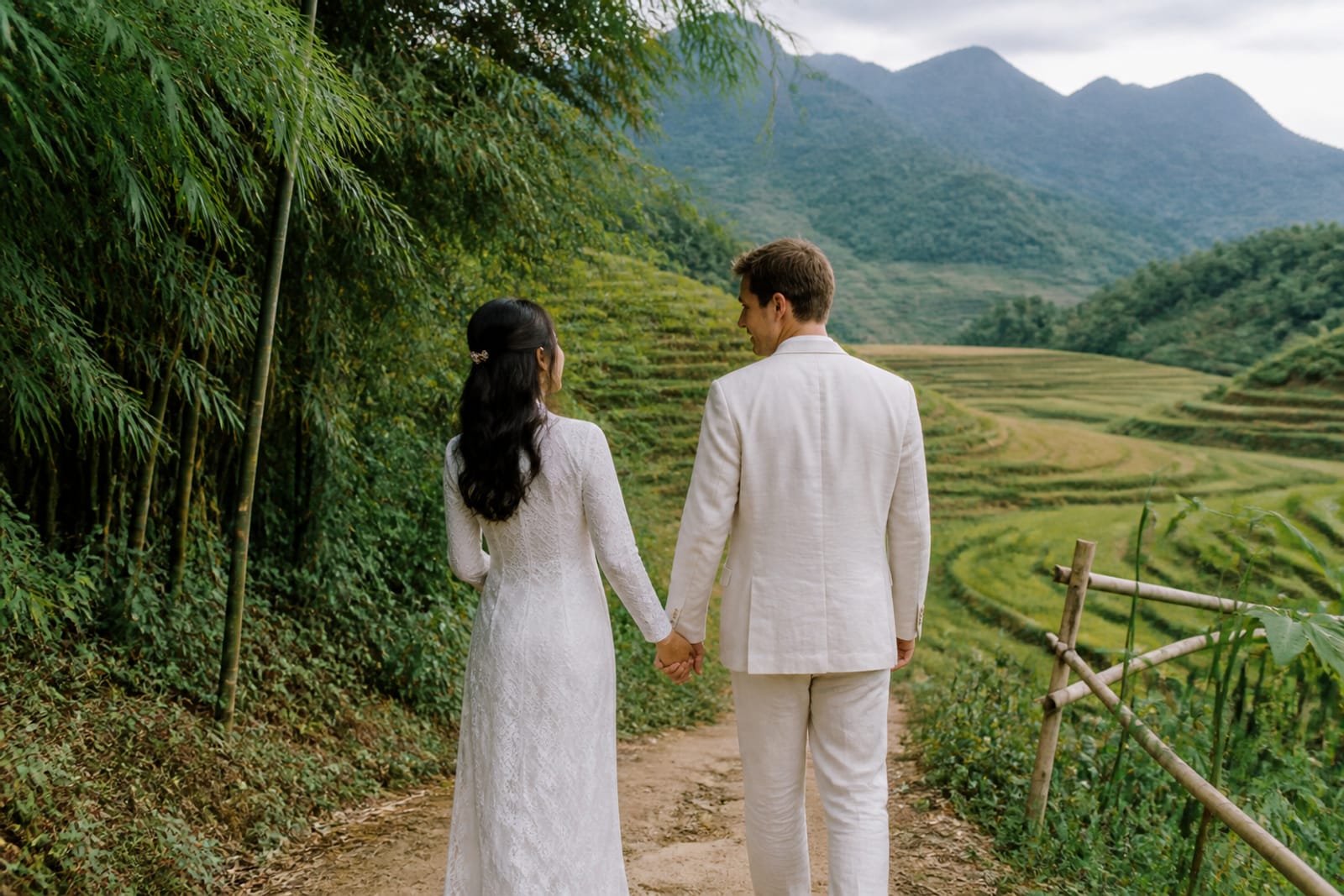
An áo dài is possible, but Pu Luong favors subtlety over traditional silk. The terraces and water reflections already command the frame; a high-contrast áo dài in jewel tones or bold embroidery will compete visually rather than harmonize. A soft, undyed silk áo dài or a linen version in cream or pale blue can work if the photoshoot is specifically about the garment — and light matters more than outfit drama here. Most couple photoshoots at Pu Luong skip formal wear in favor of layered, earthy civilian clothes that let the landscape breathe. If tradition is important, ask your photographer whether morning golden hour or an elevated plateau shot (where the áo dài reads against sky, not rice) would suit the garment better. This decision shapes where you walk and when you shoot.
What's the Light Like at Pu Luong, and How Should You Dress for It?
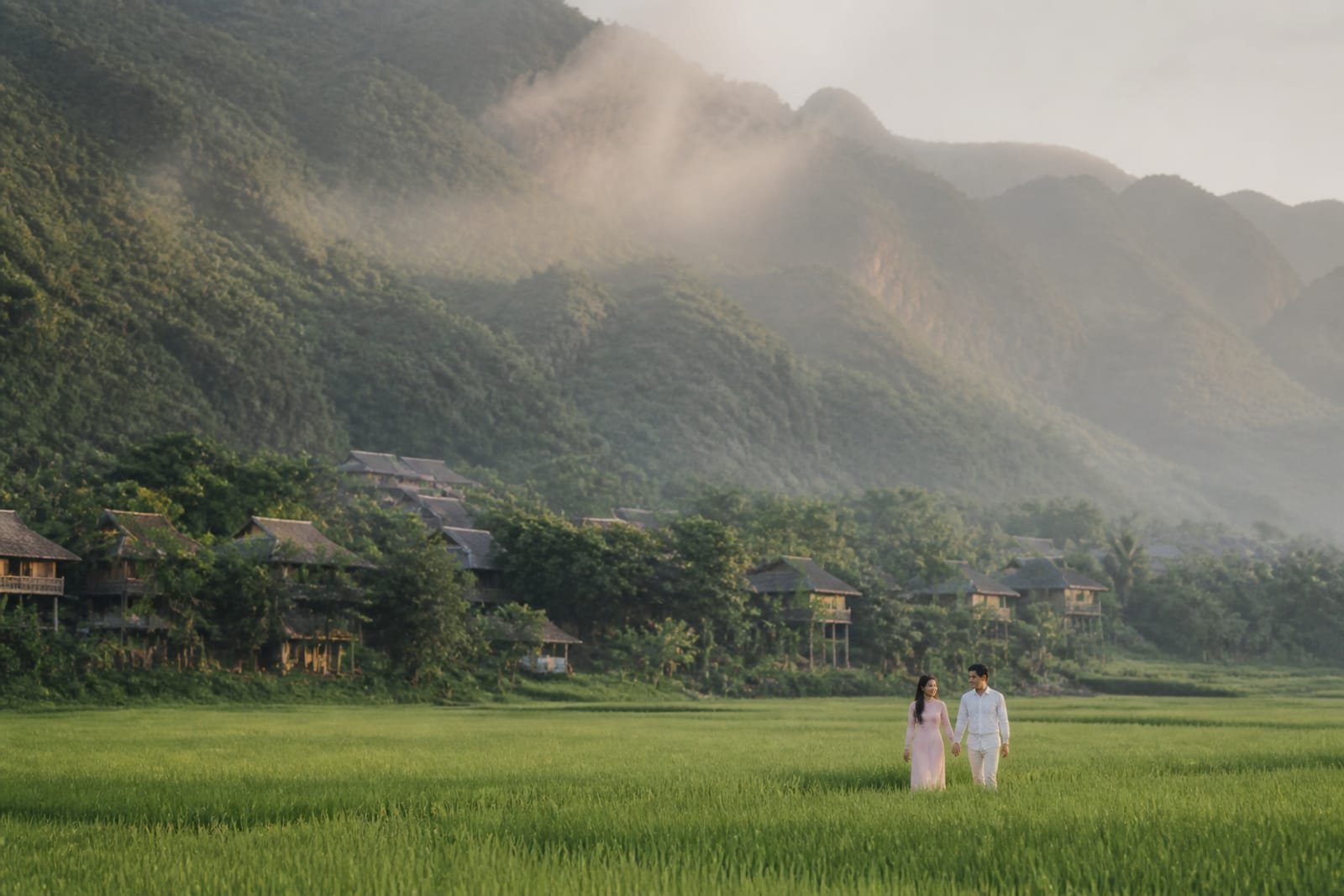
Pu Luong light changes dramatically between 6:00 am and 4:00 pm. Early morning (5:30–7:00 am) is soft, diffuse and cool; mist sits in the valleys and creates natural separation. Midday (10:00 am–2:00 pm) is harsh, flat and often washes out skin tone and fabric detail. Late afternoon (3:30–5:30 pm) returns golden warmth but fades quickly. Dress for the hour you're shooting, not the car ride there. Cool mornings mean a long-sleeve linen shirt, relaxed fit trousers in cream or sage, and a pullover layer you can shed once light warms. Late afternoon allows lighter fabric but needs colors that glow — warm neutrals, soft orange-tones — because golden hour is unforgiving of muddy greys or cool purples. Avoid anything shiny, metallic or reflective; terraces are mirrors and will bounce light back into the lens. Walking shoes should be neutral (brown, black, cream, grey) so they read as part of the landscape, not a fashion accent.
How Do Season and Terrain Shape What You Should Pack?
Pu Luong's rice turns golden roughly late May–June and again September–October; these windows attract most photographers. Late May–June is hot (26–30°C), humid after noon downpours, and the water is high. September–October is cooler (20–24°C), drier, and paths are more stable. Winter (December–February) brings mist and mood but requires warmth and waterproof layers. Terrain is non-negotiable: you will walk on uneven stone, wet dirt, and narrow ledges bordering 2–3 metre drops. Trainers or hiking sandals with ankle support and grip are essential, not optional. Lightweight, quick-dry fabric matters because mist clings to cotton. Avoid denim (heavy, slow to dry) and choose linen, cotton blends, or merino if budget allows. Bring a thin waterproof layer even in "dry" season; morning mist wets everything. Neutral earth tones (burnt sienna, sage, terracotta, khaki, cream) photograph better across all seasons than pastels, which fade in overcast light.
| Season | Best for | Light & terrain | What to wear |
|---|---|---|---|
| Late May–June | Golden water, lush green | Hot, humid, high water; sharp shadows mid-morning | Linen trousers, breathable shirt, sandals with grip; light overshirt to remove |
| Sept–Oct | Golden rice, stable paths | Cool, drier, even light; shorter shooting window | Layered neutrals, closed hiking shoes, quick-dry fabric |
| Dec–Feb | Misty moods, solitude | Cool (15–20°C), wet, overcast; soft diffuse light all day | Merino or quick-dry long sleeves, waterproof outer layer, warm neutral tones |
This table shows why choosing a season shapes your outfit strategy: summer demands heat-management, autumn needs durability, winter requires warmth and weather-proofing.
Should You Book a Local Photographer or Work with Cáo Studio?
Pu Luong is a 2–3 hour drive south of Hanoi, outside Cáo Studio's regular service area. The studio does not operate shoots there. For a Pu Luong session, you have two paths. Path 1: hire a local Pu Luong–based photographer who knows the light, terrain, guides and villages. Interview three; ask for portfolios showing light management and couple direction (not poses), and confirm they handle outfit guidance and weather contingency. Ask about their experience with international couples and English communication. Path 2: book a pre-wedding shoot with Cáo Studio in Hanoi (where the team directs, sources outfits, and handles hair and makeup in one session), then hire a separate local guide for a Pu Luong afternoon independently. This splits cost and creative control but gives you directed artistry in Hanoi and authentic landscape in Pu Luong. Some couples do both: a directed couple photoshoot in Hanoi's Old Quarter or Ha Long first, then a self-directed or locally-guided Pu Luong walk as a bonus. Check with the studio on WhatsApp if you want to coordinate pre-Pu Luong styling or outfit rental.
📸 Book on WhatsApp — couple photoshoot
What Should You Check Before Booking a Pu Luong Photoshoot?
Before committing, confirm these five points with any photographer or travel operator offering Pu Luong sessions.
1. Outfit sourcing. Does the team expect you to arrive with clothes, or do they source/rent locally? This changes packing weight and your outfit freedom.
2. Timing and light strategy. How many hours? What time of day? Will they chase light (moving as sun shifts) or stay in one spot? Golden hour windows are 30–45 minutes; confirm they're planning around it, not against it.
3. Terrain difficulty. How much walking, how steep, how muddy? Are there rest points? Do they know which paths are safe in your chosen season? (Wet stone near water is treacherous; some areas flood September–November.)
4. Weather backup. What happens if dawn mist doesn't clear or afternoon rain hits? Is there a reschedule clause, or will they shoot in poor light anyway?
5. Editing timeline and format. How long until you get photos? Are they raw, JPEGs, videos, or an edited set? Do you get the digital files or prints? (This matters for couples who want to share images quickly or print for wedding albums.)
For Cáo Studio couples, the studio's normal process is confirmed on WhatsApp: the team handles direction, outfit coordination, and a 48-hour turnaround in Hanoi, Saigon or Hoi An, not Pu Luong. Ask the team if they can advise on local photographer vetting if you're planning a multi-location pre-wedding journey.
---
What to Check Before You Book
- Season and light window. Confirm the exact shooting dates and times. Early morning or late afternoon only; midday light ruins texture and skin tone.
- Outfit expectations. Will you bring clothes, or does the photographer source them? Muted earth tones, layers, sturdy closed shoes — confirm the photographer advises this.
- Terrain and fitness. Ask how many kilometres and what the steepness is. Some couples struggle with wet paths; others enjoy the challenge.
- Weather contingency. Rain, mist and mud are normal; confirm the photographer has a reschedule or backup plan, not a "shoot anyway" attitude.
- Delivery format. How many photos, how soon, in what format (raw, JPEGs, edited selection, video)? This shapes your wedding album plans.
- Communication in English. If you don't speak Vietnamese, confirm your photographer is fluent in written and spoken English, not just Google Translate.
---
FAQ
Can I wear white or cream at Pu Luong without looking washed out?
Cream works in golden hour (late afternoon); white flattens in all light except overcast morning. Golden hour (4:00–5:30 pm) warms cream beautifully and reads against green rice. Overcast dawn favors warm neutrals (sage, terracotta, olive) over pale tones. Test fabric in natural light before booking.
Should I hire a professional stylist for a Pu Luong photoshoot?
Not essential if you follow the terrain and light rules above. A local guide who knows the landscape is more valuable than a stylist; they prevent you walking into harsh shadow or treacherous wet paths. If you're unsure about outfit cohesion, Cáo Studio's makeup and hair service is available in Hanoi only, not Pu Luong — book that separately before or after.
What if I've booked a date and the weather forecast is bad?
Confirm the photographer's rescheduling policy before paying. Mist and soft overcast light are actually good for couples (no squinting, even skin tone); heavy rain or typhoon winds are the only real cancellations. September–November carries typhoon risk; December–February is safer for consistent cool mist.
Can I do a pre-wedding shoot in Hanoi and then a Pu Luong session in one trip?
Yes. Many couples book a directed pre-wedding shoot with Cáo Studio in Hanoi (48-hour turnaround, styled outfits included), then hire a local photographer for Pu Luong independently. This gives you artistry and convenience in the city, then landscape authenticity in the hills. Coordinate travel time; Hanoi to Pu Luong is 2–3 hours by car.
What footwear actually works on Pu Luong paths?
Trainers with ankle support and grip (hiking brands or trail-rated sneakers), or walking sandals with closed toes and sturdy soles. Avoid flip-flops, canvas shoes (no grip), leather-soled shoes (slip on wet stone), and high heels (dangerous near water, terrible for traction). Your photographer will walk the same paths; ask what they recommend for your chosen season.
Should I book Pu Luong through a travel operator or find a photographer directly?
Direct photographers give you more control and authenticity; travel operators offer convenience and backup support. Interview both. Ask direct photographers for three recent couple portfolios and written references from international clients. Ask operators how many photographers they partner with and whether you can request the same team if rescheduling.
FAQ
Can I wear white or cream at Pu Luong without looking washed out?
Cream works in golden hour (late afternoon); white flattens in all light except overcast morning. Golden hour (4:00–5:30 pm) warms cream beautifully and reads against green rice. Overcast dawn favors warm neutrals (sage, terracotta, olive) over pale tones. Test fabric in natural light before booking.
Should I hire a professional stylist for a Pu Luong photoshoot?
Not essential if you follow the terrain and light rules above. A local guide who knows the landscape is more valuable than a stylist; they prevent you walking into harsh shadow or treacherous wet paths. If you're unsure about outfit cohesion, [Cáo Studio's makeup and hair service](/makeup-and-hair) is available in Hanoi only, not Pu Luong — book that separately before or after.
What if I've booked a date and the weather forecast is bad?
Confirm the photographer's rescheduling policy before paying. Mist and soft overcast light are actually good for couples (no squinting, even skin tone); heavy rain or typhoon winds are the only real cancellations. September–November carries typhoon risk; December–February is safer for consistent cool mist.
Can I do a pre-wedding shoot in Hanoi and then a Pu Luong session in one trip?
Yes. Many couples book a [directed pre-wedding shoot with Cáo Studio](/pre-wedding-photoshoot) in [Hanoi](/hanoi) (48-hour turnaround, styled outfits included), then hire a local photographer for Pu Luong independently. This gives you artistry and convenience in the city, then landscape authenticity in the hills. Coordinate travel time; Hanoi to Pu Luong is 2–3 hours by car.
What footwear actually works on Pu Luong paths?
Trainers with ankle support and grip (hiking brands or trail-rated sneakers), or walking sandals with closed toes and sturdy soles. Avoid flip-flops, canvas shoes (no grip), leather-soled shoes (slip on wet stone), and high heels (dangerous near water, terrible for traction). Your photographer will walk the same paths; ask what they recommend for your chosen season.
Should I book Pu Luong through a travel operator or find a photographer directly?
Direct photographers give you more control and authenticity; travel operators offer convenience and backup support. Interview both. Ask direct photographers for three recent couple portfolios and written references from international clients. Ask operators how many photographers they partner with and whether you can request the same team if rescheduling.
Ao dai, makeup, hair and a local photographer in Hanoi or Saigon — one WhatsApp message.