/pre-wedding-photoshoot
What to Wear for Couple Photos at Thanh Ha Pottery Village
Thanh Ha pottery village, near Hoi An, offers raw industrial textures—clay wheels, kiln flames, stacked vessels—that transform couple photos into moody, tactile narratives. The village works best February to April (dry season, softer light) and early mornings before 9 a.m. (fewer visitors, cooler air). Wear breathable linen, cotton, or ramie in neutral tones—cream, sand, rust, charcoal—that echo the clay palette without competing for attention. Avoid bright whites and synthetic fabrics that cling in humidity and show dust visibly. Plan 2–3 hours on-site; bring a change of shoes (potter's wheels splash clay water). Cáo Studio – Makeup & Photoshoot can arrange styling and makeup touch-ups for Thanh Ha sessions via our Hoi An appointment service—ask on WhatsApp about dates and logistics.
Thanh Ha pottery village attracts couples seeking authentic, textured backdrops where handmade vessels and working artisans replace manicured gardens. The challenge: clothing must balance romance with practicality in a dusty, humid environment where clay sticks to synthetics and bright fabrics jar against earthy tones. This guide compares outfit archetypes, breaks down fabric performance, and walks you through logistics unique to pottery photography.
Which outfit style suits a Thanh Ha pottery shoot?
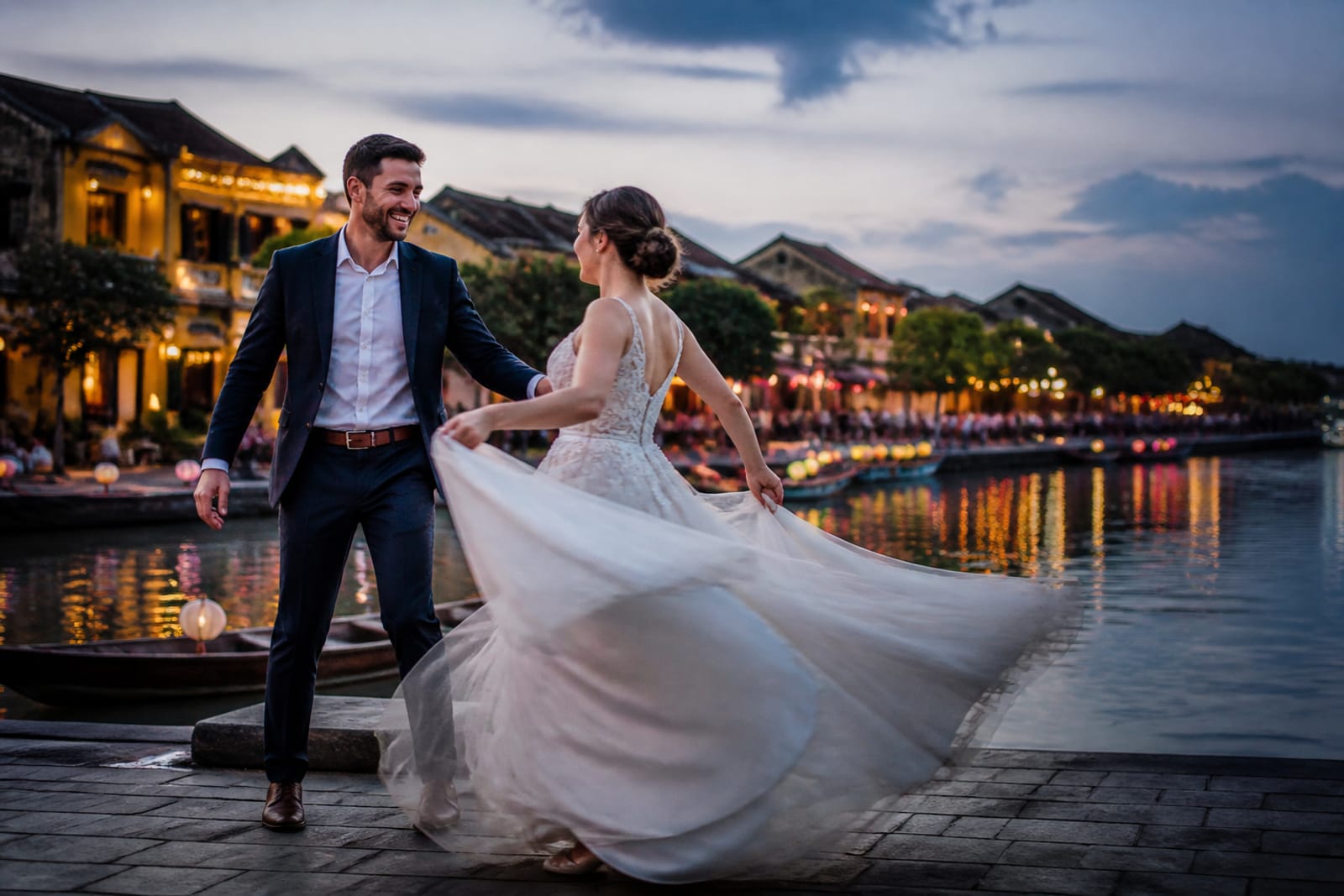
Pottery villages reward relaxed elegance over formal precision. Choose between three directions: bohemian layered (linen shirt, drawstring trousers, neutral scarves), minimalist monochrome (matching cream or charcoal sets), or heritage-inspired (subtle ao dai elements—loose tunics, soft drape—without full traditional dress). Avoid tailored blazers, stiff denim, and glossy finishes; they photograph as costume rather than authentic presence. A pottery workshop is a working space, not a studio—your outfit should feel like you could sit at a wheel or lean against a kiln without anxiety. The best shots happen when you forget your clothes and focus on each other.
What fabrics perform best in Thanh Ha's heat and dust?
| Fabric | Dust visibility | Humidity comfort | Wrinkles | Best for |
|---|---|---|---|---|
| Linen | Low (shows only wet clay) | Excellent (breathes, stays cool) | Visible but intentional | Casual, bohemian, sunrise shoots |
| Cotton (lightweight) | Low | Good (slight cling in >85% humidity) | Minimal if pressed | Structured minimalist looks |
| Ramie blend | Very low | Excellent | Resists creasing | All-day sessions, multiple locations |
| Silk or satin | High (dust clings visibly) | Poor (clammy in humidity) | Drapes but shows wear | Avoid for pottery settings |
| Synthetic blends | High (dust adheres, static) | Poor (trap sweat, show water marks) | Minimal | Not recommended |
Linen is the village photographer's fabric: it breathes in 30°C+ heat, sheds dust easily during outfit changes, and photographs with natural texture that complements clay. Cotton works for structured minimalist looks if pre-pressed. Avoid synthetics—they amplify dust and humidity, and look plastic in close-ups against rough kiln walls.
Should you wear an áo dài to a pottery shoot, and when?
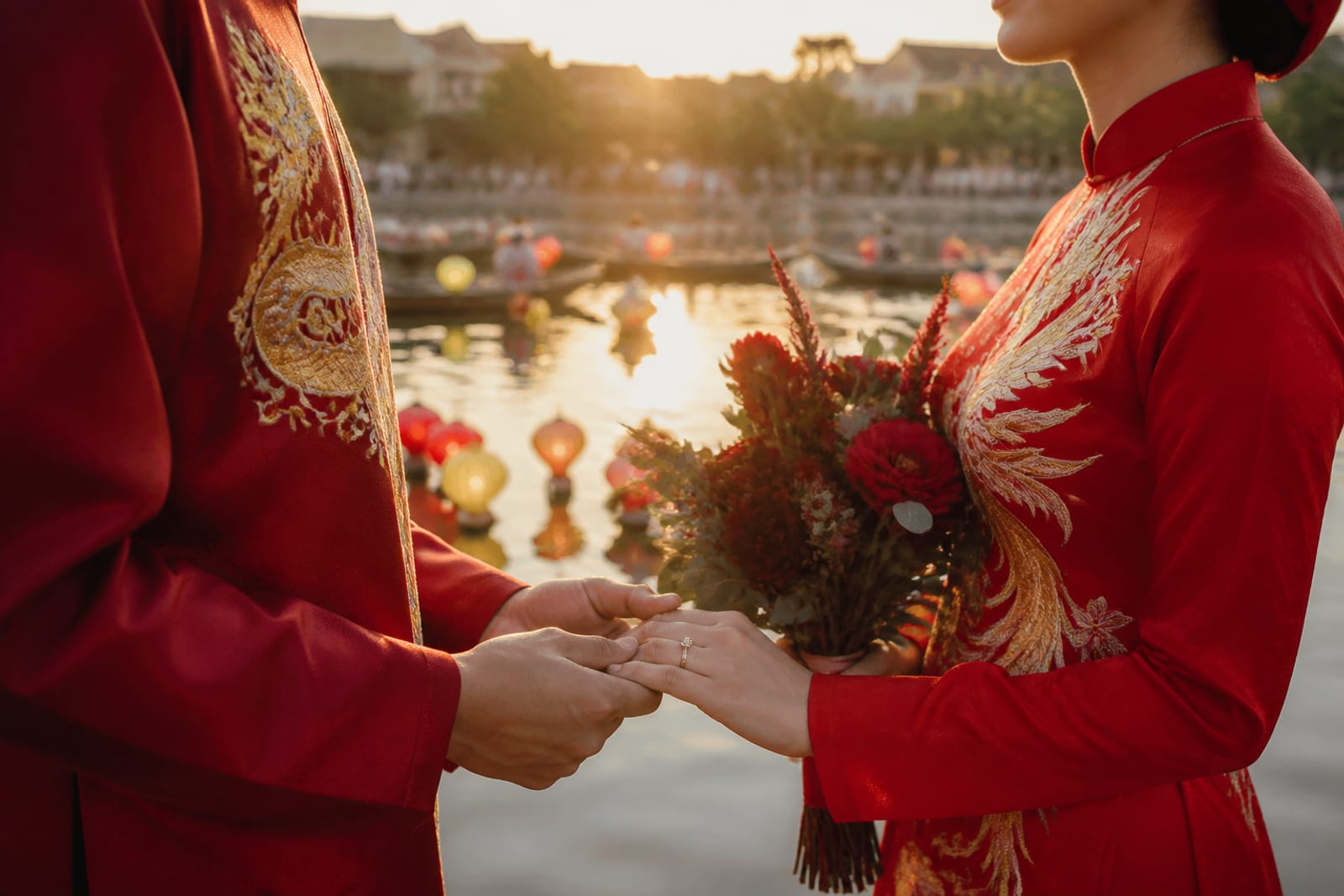
An áo dài is not a default choice for Thanh Ha; the garment's silken formality and pale silhouettes clash with clay dust and muddy workshop floors. Reserve full traditional dress for Hoi An Ancient Town shoots (dry season, clean streets, lantern-lit evening shoots) or dedicated ao dai photoshoot sessions at studio or garden locations. If you love the aesthetic, consider a linen áo dài (rare, custom-made) or a loose linen tunic that nods to áo dài proportions without the silk. Pottery demands grounded, workable silhouettes—boyfriend-cut shirts, high-waisted linen trousers, unstructured layers—over the refined verticality of traditional dress.
📸 Book on WhatsApp — ao dai photoshoot
How do color and tone shape mood in a pottery-dust environment?
Thanh Ha's palette is terracotta, rust, charcoal, and ash—warm earth tones under golden morning light. Wear colors that sit within this spectrum, not against it. Cream, sand, warm grey, rust, burnt orange, and soft brown photograph as extensions of the landscape. Navy or deep forest green work as grounding accents (worn by one partner) against lighter tones worn by the other; they read as sophisticated, not jarring. Avoid: bright white (overexposes and looks sterile), electric colors (compete for attention), and black (absorbs heat, reads as formal). A practical test: imagine your outfit printed on terracotta—if it clashes, reconsider. Layering neutral tones (cream shirt over rust tank, charcoal linen overshirt) adds visual depth without introducing competing hues.
What logistics and outfit changes make Thanh Ha shoots successful?
Plan for 2–3 hours on-site and bring at least two outfit options (one per location within the village: kiln area, wheel workshop, outdoor clay yards). Pack a small tote with touch-up makeup, a lint roller, and a damp cloth to wipe clay splashes from shoes and hems. Wear slip-on shoes or bring a second pair—many potters allow indoor wheel photography, and clay-wet floors demand easy footwear removal. Sunrise (around 5:45–6:30 a.m. in February–April) yields the softest light and emptiest workshops; plan to arrive before 6 a.m. Humidity peaks by 11 a.m., so earlier shoots mean less sweat and fresher makeup. If shooting with a couple photoshoot or pre-wedding shoot package, coordinate with your photographer on pottery access (some areas require permission or small artisan tips). Ask about local guide availability—a guide speeds logistics and ensures respectful interaction with working potters.
Best months and time-of-day strategy for Thanh Ha portraits
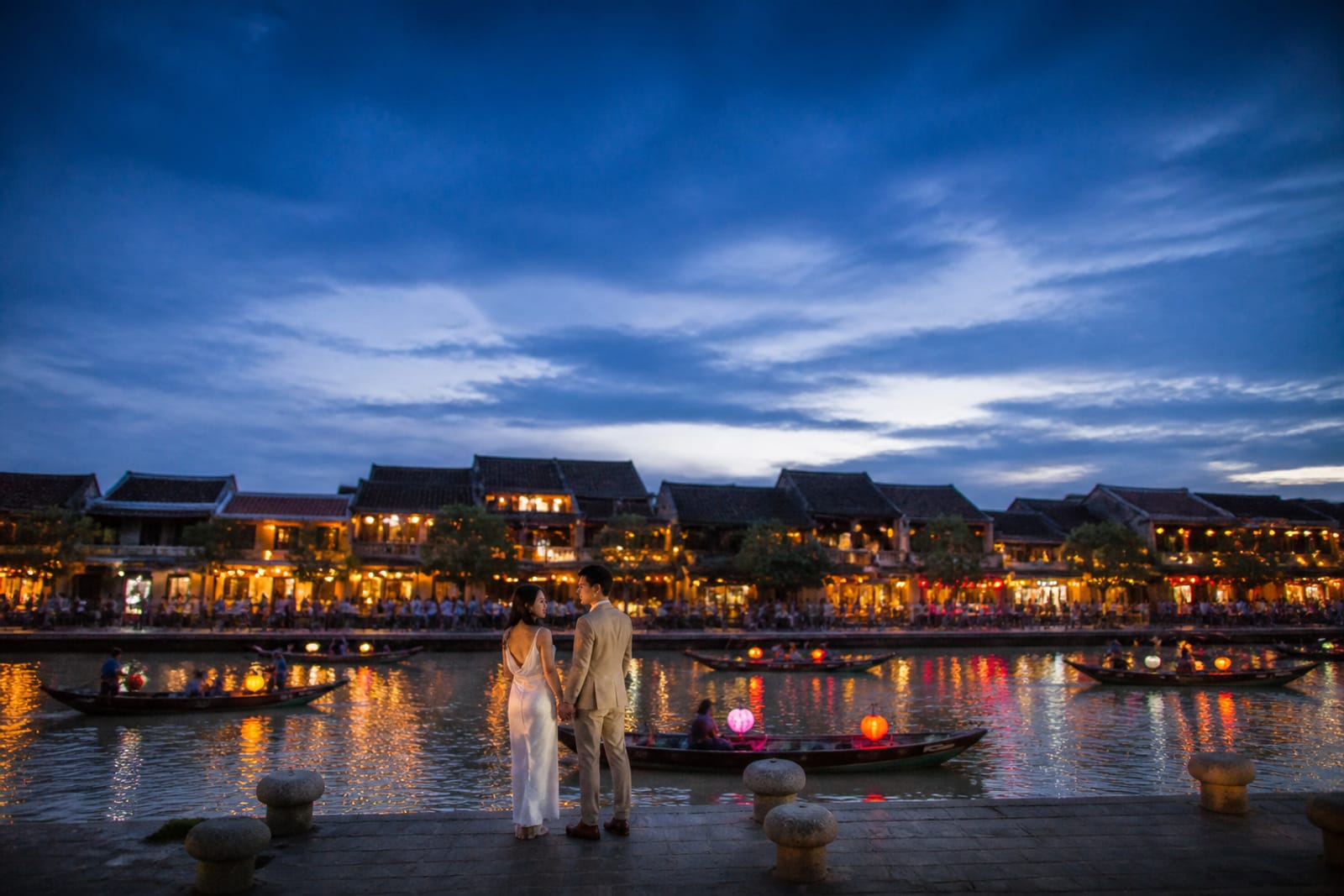
Hoi An and Thanh Ha enjoy the clearest light February through April: dry skies, mild 20–28°C mornings, and lush green rice fields visible beyond the village. May–August is dry but blazingly hot (35°C+), pushing you to shoot only at sunrise and risk overheated, rushed sessions. September–December is rainy and typhoon-prone; October–November sees flooding in Hoi An Ancient Town (Thanh Ha is slightly elevated but muddy and gray). Sunrise shoots (5:45–7:30 a.m.) deliver golden, raking light that texturizes clay vessels and kiln brick, creating dramatic shadows. By 10 a.m., sun angles flatten textures; by noon, heat and crowds (tourist vans) peak. Morning shoots also mean fresher makeup and cooler, more comfortable clothing for you both.
What to check before booking a Thanh Ha pottery couple shoot
- Photographer's experience with dust and tight workshop spaces: ask for samples showing pottery-village work (not studio portraits). Tight spaces demand wide-angle composure and quick setup.
- Pottery access and permissions: confirm your photographer has arranged clearance with workshop owners; some require advance notice or small contributions.
- Outfit logistics: confirm whether your photographer can guide you through changes on-site (some spots are indoor, muddy, or cramped). If using a styling service like Cáo Studio for makeup and clothing consultation, ask in advance.
- Backup plan for weather: Hoi An's dry season is reliable, but occasional rain or unexpected cooler weather can shift light and mood. Confirm rescheduling policy.
- Post-production dust removal: clay dust often appears in hair and clothing details. Ask whether edited images include retouching (dust, clay streaks) or if that costs extra.
Thanh Ha pottery village rewards couples willing to embrace texture, dust, and working-space imperfection. Your outfit should echo that honesty—breathable, neutral, practical, and beautiful precisely because it belongs in clay dust, not despite it. Coordinate with your photographer on access and timing, choose linen or cotton, keep tones earthy, and arrive at dawn. The result: couple portraits that feel rooted in a real place, not a styled backdrop.
---
FAQ
Can I wear an áo dài for a Thanh Ha pottery photoshoot?
Full silk áo dài risks dust staining and looks formally mismatched against working potters. Consider a linen tunic instead, or reserve traditional dress for Hoi An Ancient Town or dedicated studio áo dài sessions.
What color looks best in pottery-dust settings?
Cream, sand, warm grey, rust, and burnt orange photograph as natural extensions of clay tones. Avoid bright white and electric colors, which compete for attention or overexpose against earthy backdrops.
How early should we arrive for the best light?
Aim for 5:45–6:30 a.m. (sunrise in February–April) to catch soft golden light, empty workshops, and cooler air. Avoid 11 a.m. onward when heat and tourist crowds peak.
Should we expect clay dust to damage our outfits?
Linen and cotton shed dust easily and wash well. Pack a lint roller and damp cloth for touch-ups between shots. Avoid synthetics—dust clings visibly to them. Wear slip-on shoes or bring a second pair for workshop interiors.
What's included if we book a couple photoshoot at Thanh Ha with Cáo Studio?
Exact inclusions—session length, outfit changes, edited files, makeup services—are confirmed on WhatsApp. Ask about Hoi An appointment dates and pottery-village logistics when you inquire.
Is October–November a good time to shoot in Thanh Ha?
No. Hoi An's rainy season (Sep–Dec, worst Oct–Nov) brings grey skies, humidity, and potential flooding in nearby areas. February–April offers dry, clear light and mild temperatures—ideal for pottery shoots.
FAQ
Can I wear an áo dài for a Thanh Ha pottery photoshoot?
Full silk áo dài risks dust staining and looks formally mismatched against working potters. Consider a linen tunic instead, or reserve traditional dress for Hoi An Ancient Town or dedicated studio áo dài sessions.
What color looks best in pottery-dust settings?
Cream, sand, warm grey, rust, and burnt orange photograph as natural extensions of clay tones. Avoid bright white and electric colors, which compete for attention or overexpose against earthy backdrops.
How early should we arrive for the best light?
Aim for 5:45–6:30 a.m. (sunrise in February–April) to catch soft golden light, empty workshops, and cooler air. Avoid 11 a.m. onward when heat and tourist crowds peak.
Should we expect clay dust to damage our outfits?
Linen and cotton shed dust easily and wash well. Pack a lint roller and damp cloth for touch-ups between shots. Avoid synthetics—dust clings visibly to them. Wear slip-on shoes or bring a second pair for workshop interiors.
What's included if we book a couple photoshoot at Thanh Ha with Cáo Studio?
Exact inclusions—session length, outfit changes, edited files, makeup services—are confirmed on WhatsApp. Ask about Hoi An appointment dates and pottery-village logistics when you inquire.
Is October–November a good time to shoot in Thanh Ha?
No. Hoi An's rainy season (Sep–Dec, worst Oct–Nov) brings grey skies, humidity, and potential flooding in nearby areas. February–April offers dry, clear light and mild temperatures—ideal for pottery shoots.
Ao dai, makeup, hair and a local photographer in Hanoi or Saigon — one WhatsApp message.