/pre-wedding-photoshoot
What to wear for couple photos at Thap Doi Cham towers
Thap Doi Cham towers demand outfits that work with hard stone and bright open sky. Ao dai (traditional Vietnamese long tunic) is the safest choice: silk or embroidered versions photograph deep against grey granite, flow naturally as you walk between rocks, and respect the spiritual site's quiet. Western formal wear—tailored suits, structured dresses—reads sharp but heats up quickly; the towers have no shade and sit exposed to afternoon sun. Casual layered looks (linen, earth tones, minimal patterns) work if you avoid whites and blacks that blow out or disappear into shadow. Book your shoot between 6–7 am or after 4 pm to catch side light; midday creates flat, harsh shadows across faces. Cáo Studio directs couple sessions here, bringing makeup and styling to the location so you arrive photo-ready and don't waste light on hair fixes. The key: one outfit choice, one time slot, one small team—no outfit changes mid-session in 35°C heat.
Why outfit choice matters more at Thap Doi Cham than city streets
Thap Doi Cham is not a temple or monument—it's a natural granite boulder field with two eroded sandstone towers at the center, both heavily weathered. You're shooting against stone, not framed by architecture. That means your clothing must have color weight and texture; pale neutrals disappear into the rocks, loud patterns compete with the landscape. Dark jewel tones (emerald, sapphire, burgundy), deep golds, and rich earth tones hold depth. Patterns with clear geometry (small checks, subtle stripes) read better than florals or tie-dye, which flatten against granite. Matte fabrics absorb light and look grounded; shiny synthetic materials bounce glare and cheapen the frame. The site slopes, with loose rock underfoot, so heavy dragging hems catch dirt and tear.
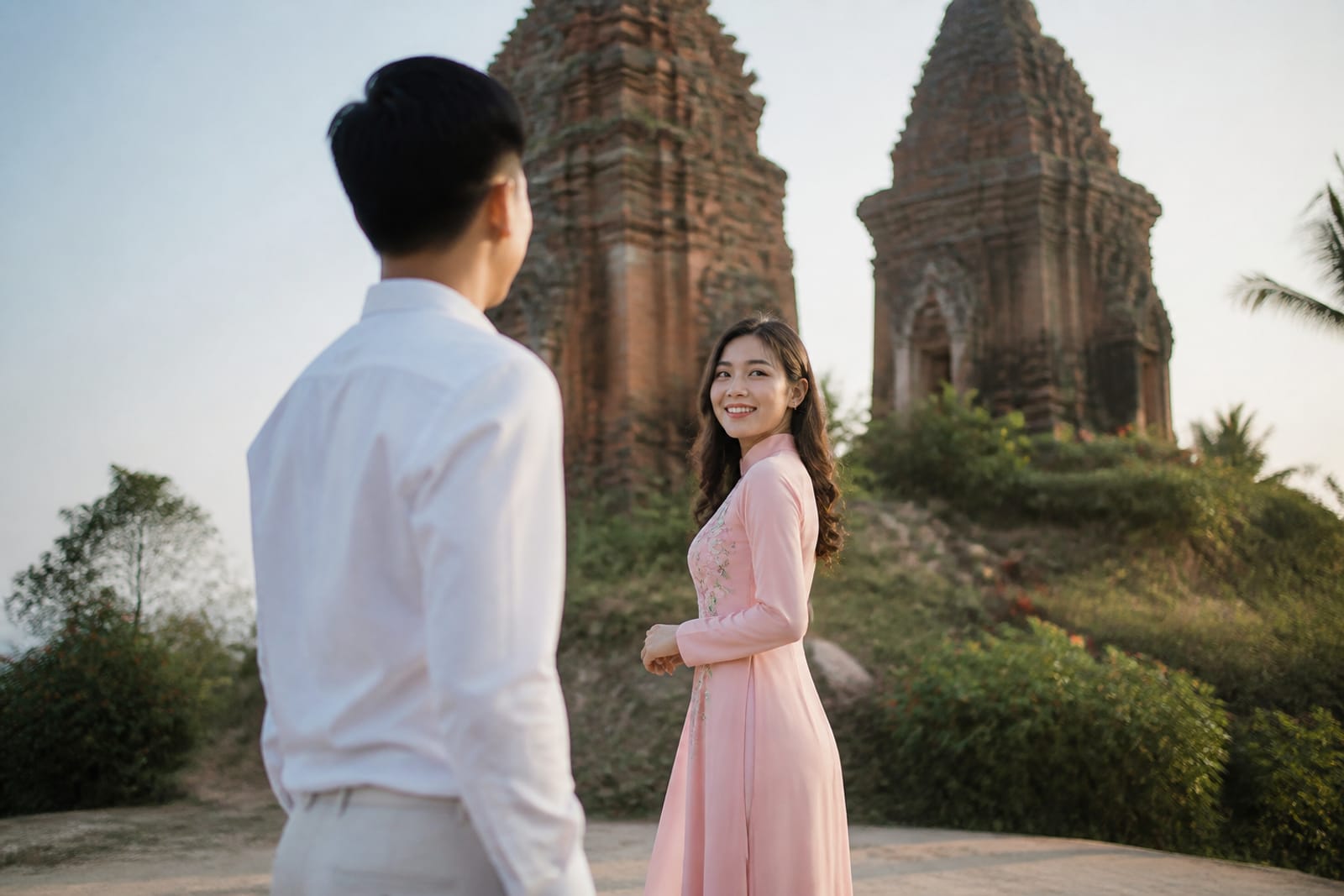
Ao dai: the strongest choice for Thap Doi Cham light and movement
An ao dai—Vietnamese silk tunic split at the hips, worn over wide-leg pants—works better here than anywhere else in Ho Chi Minh City. The split creates negative space and movement as you walk; the long line reads elegant against rough texture. Embroidered versions (florals, metallic threading) stand out without clashing with stone. Plain silk in deep color (navy, charcoal, forest green) photographs cool and timeless. The tunic's weight keeps it from clinging in heat; the pants don't catch on rocks or require constant hiking. Ao dai also signals respect for the landscape, which sits near rural communities and active Buddhist sites. Book a session with ao dai rental included—Cáo Studio brings styled pieces to the location so you're not carrying luggage between rocks. Hair and makeup are pre-done at your hotel or nearby, so you arrive composed and don't sweat off cosmetics during the shoot.
| Outfit type | Best for | Light window | Why it works |
|---|---|---|---|
| Embroidered ao dai | Couples wanting tradition + movement | 6–7 am, after 4 pm | Flow catches early light; deep color holds shadow; tunic reads elegant against granite |
| Plain silk ao dai | Minimalist aesthetic, neutral palettes | Dawn or late afternoon | Matte surface avoids glare; split creates depth; long line dignified on uneven ground |
| Tailored Western formal | Modern, structured look | 7–8 am only (heat limits window) | Sharp silhouettes read crisp; but no shade means discomfort + sweat in makeup by 9 am |
| Layered casual linen | Relaxed, candid feel | 6–7 am, after 5 pm | Breathable fabric; earth tones work; avoid white (blowout) and black (shadow merge) |
| Bridal gown (if pre-wedding) | Symbolic, one-time frame | 6–7 am sharp, max 90 min | Requires trained coordination; train catches stone; needs hair secured + veil stability; book a video operator too |
🌸 See the lookbook — browse real couples in similar light at natural sites.
Why timing locks your outfit choice and camera angle
Morning light at Thap Doi Cham (6–7 am) hits the towers from the east, casting long shadows that sculpt the granite and warm the stone to honey-grey. Your outfit reads as a silhouette first, then detail—so color depth matters more than texture. Formal fabrics shine; casual linen glows. By 9 am, sun climbs directly overhead; shadows shrink, light flattens, and anything dark absorbs heat like an oven. Formal wear becomes impractical. Midday (10 am–3 pm) is unusable: harsh white light, zero shade, faces squint, makeup melts, and the photographer can't place you without you standing in harsh glare. After 4 pm, sun drops west, side-lighting returns, but shadows now fall north—a different story from morning. Your outfit must suit the direction: morning side-light reads flowing fabrics and rich color better; late afternoon side-light favors structured tailored pieces. Book a specific time slot when you book your session, and choose an outfit that thrives in that light window.
Casual vs. formal: when each reads well and when it fails
Formal wear (suits, structured evening dresses, blazers) works beautifully in morning light—sharp lines and tailored edges photograph crisp against rough stone. But formal requires stillness and good posture; Thap Doi Cham has no flat ground. You're walking between boulders, stepping up rocks, positioning yourself asymmetrically. A rigid dress or tight suit fights the landscape and shows tension in your shoulders. Formal is also hot. No trees, no buildings, no shade anywhere. By 8:30 am in a silk gown or three-piece suit, you're already uncomfortable, and discomfort reads in frames. Formal works best for ceremonies or high-concept editorial shoots—not casual couple sessions.
Casual layered wear (linen shirts, cotton dresses, relaxed trousers) invites movement and looks natural among rocks. You can bend, walk, sit on stone edges without fear of tearing. Linen wrinkles and reads authentically; cotton breathes. The trap: avoid oversized, formless layers that swallow your silhouette. The landscape is bold; a weak silhouette disappears. Choose fitted linen, earth-tone cotton with clear lines, and accessorize sparingly—a belt, a simple necklace—so the frame reads "you and stone," not "clutter." Never wear white (it blows out and ghosts the composition) or pure black (it merges into shadow and flattens the frame). If you love neutrals, use warm greige, soft taupe, or charcoal instead.
📸 Book on WhatsApp — couple photoshoot — tell us your outfit plan, and we'll brief you on light and timing.
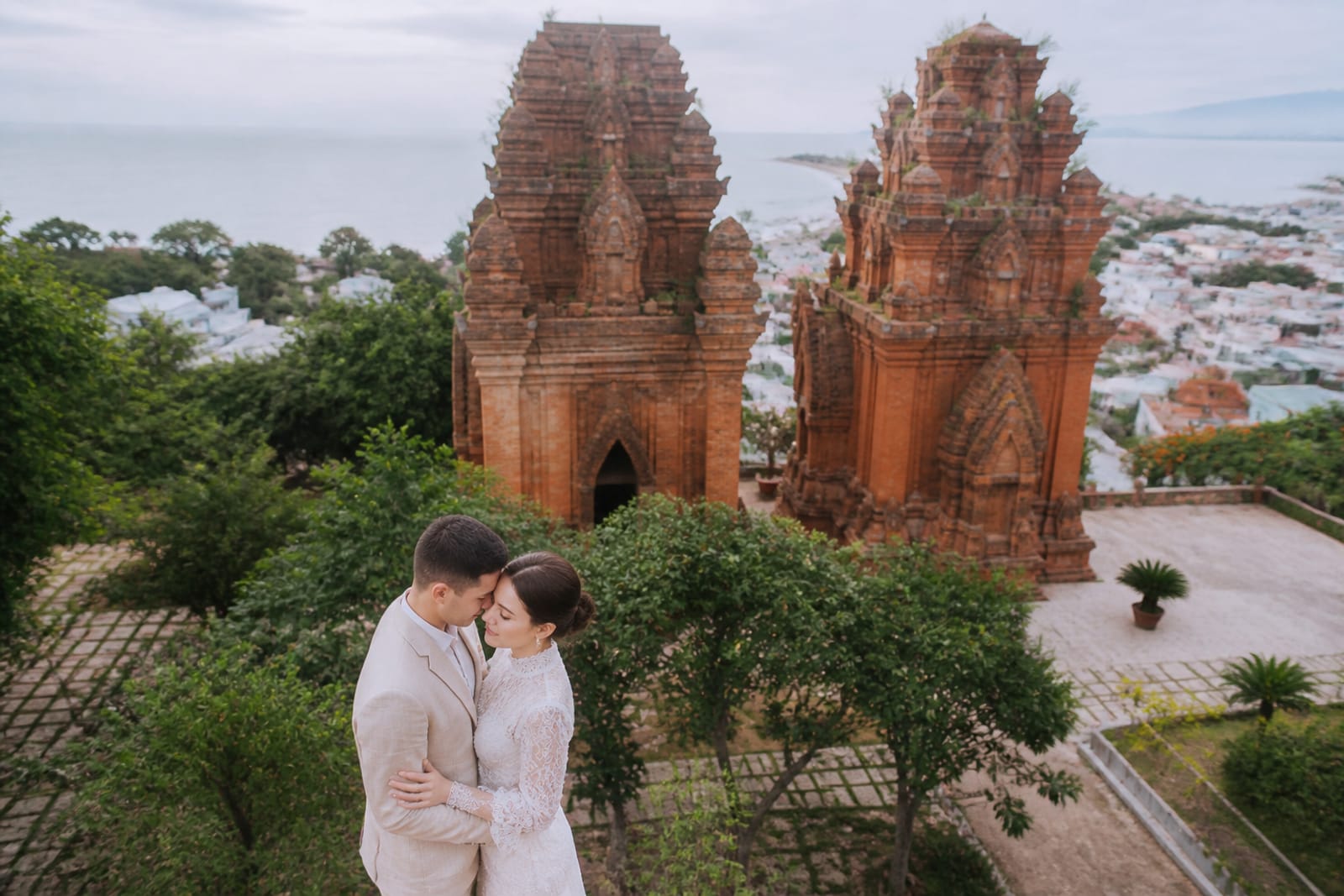
Layers, fabric, and what to pack for a Thap Doi Cham session
Thap Doi Cham sits in District 12, about 30–40 minutes from central Ho Chi Minh City, and the microclimate is hotter and more exposed than downtown. No breeze reaches between rocks; no vendors or water stands. Pack layers even if you're wearing one outfit: a light scarf or overshirt you can remove and not carry, a small water bottle, and closed-toe shoes with grip (sandals slip on loose rock and show unphotogenic tired feet). Wear a slip or smooth underdress under an ao dai; raw silk against skin causes chafing during a 60–90 minute session. If wearing formal wear, bring a moisture-wicking under-layer so sweat doesn't show and makeup stays set. Avoid dangling jewelry—it catches on rocks and distracts from your face. Small stud earrings and one bracelet photograph better than long chains. Hair should be secured so it doesn't blow across your face every frame; if you're doing hair and makeup pre-session at your hotel with Cáo Studio's makeup artist, mention wind and heat, and request a style that stays set.
What to check before you book a Thap Doi Cham couple session
Before you book, confirm with your photographer:
- Time slot. Ask for 6–7 am (best light) or after 4 pm (backup). Midday sessions are not recommended and waste your money on unusable frames.
- Outfit logistics. If wearing ao dai, confirm whether rental is included or if you're bringing your own. If you're bringing a gown or formal wear, ask if the photographer has experience shooting formal at natural sites (not all do).
- Makeup durability. Specify that the makeup artist uses long-wear, heat-resistant products. Request a setting spray and powder refresh mid-session.
- Movement and positioning. Ask for a brief on-site walkthrough—where you'll walk, where shadows fall, how the photographer will frame you. Don't expect poses; expect direction ("walk toward the tower, don't look at the camera, let her catch your hand").
- Edited delivery. Confirm turnaround time and format (digital files, prints, album). Some studios take two weeks; Cáo Studio delivers edited frames within 48 hours.
- Rain backup. Thap Doi Cham has no shelter. If the forecast shows rain, ask about rescheduling options. A 15-minute downpour leaves the rocks slick and unsafe.
💄 Makeup & hair at your hotel — arrive camera-ready and skip the heat-and-sweat prep.
Cáo Studio runs couple and family photoshoots in Ho Chi Minh City, coordinating outfit selection, hair, makeup, and direction in one booking. If you're planning a pre-wedding session, Thap Doi Cham works as a secondary location after a temple or urban shoot—ask on WhatsApp about multi-location day rates.
Where Thap Doi Cham sits and how to get photo-ready before you arrive
Thap Doi Cham towers are in Thu Duc District (formerly District 12), about 25 km east of downtown Ho Chi Minh City. If you're staying in District 1 or District 3, budget 45–60 minutes by taxi (no meters; use Grab app to book and agree on fare first). The site has a small parking area; no public transport goes directly there. Most photographers recommend starting a session at dawn to catch the best light, which means leaving your hotel by 5:15 am. Cáo Studio can arrange hotel pickup and drop makeup and hair there the night before or early morning, so you're not rushing or traveling in full outfit. Many couples book a hotel makeup and hair session with the studio the morning-of, then travel to Thap Doi Cham fresh and composed. That workflow prevents sweat damage to cosmetics and removes the stress of finding a stylist on-site.
FAQ
Is an ao dai necessary, or can I wear a Western wedding dress?
A wedding dress works if the shoot is dawn (6–7 am only) and the train is trained up or removed. Western formal shows beautifully in side-light but overheats fast and requires a backup outfit. Most couples pair ao dai for the monument, Western dress for a second location (temple, hotel). Ask about a two-location session when you book.
What colors photograph best against grey granite?
Deep jewel tones (emerald, navy, burgundy), warm golds, and soft earth tones (taupe, warm grey, olive) hold depth. Avoid pure white (blowout), pure black (shadow merge), and neon brights (they compete with the landscape). Rich color reads timeless and dignified.
Can I bring two outfits for a single morning session?
Outfit changes in 35°C heat waste time and risk makeup melt. One outfit per time slot is standard. If you want two looks, book two sessions (dawn and late afternoon) or book a multi-location day (temple + towers) where outfits change between sites.
How long do couple sessions run at Thap Doi Cham?
Confirm exact duration on WhatsApp—it varies by studio and package. Cáo Studio sessions typically run 60–90 minutes depending on outfit count and travel time from your hotel.
Do I need a permit to photograph at Thap Doi Cham?
The site is open to the public, but check current local regulations with your photographer or ask Cáo Studio on WhatsApp. Some photographers are familiar with local rangers; confirm this when you book.
What happens if it rains on shoot day?
Thap Doi Cham has no shelter and rocks become slick and unsafe. Ask about rescheduling options or backup indoor locations (nearby temples, Ho Chi Minh City couple photoshoots in urban settings) when you book. Rainy season is May–November; dry season is December–April.
FAQ
Is an ao dai necessary, or can I wear a Western wedding dress?
A wedding dress works if the shoot is dawn (6–7 am only) and the train is trained up or removed. Western formal shows beautifully in side-light but overheats fast and requires a backup outfit. Most couples pair ao dai for the monument, Western dress for a second location (temple, hotel). Ask about a two-location session when you book.
What colors photograph best against grey granite?
Deep jewel tones (emerald, navy, burgundy), warm golds, and soft earth tones (taupe, warm grey, olive) hold depth. Avoid pure white (blowout), pure black (shadow merge), and neon brights (they compete with the landscape). Rich color reads timeless and dignified.
Can I bring two outfits for a single morning session?
Outfit changes in 35°C heat waste time and risk makeup melt. One outfit per time slot is standard. If you want two looks, book two sessions (dawn and late afternoon) or book a multi-location day (temple + towers) where outfits change between sites.
How long do couple sessions run at Thap Doi Cham?
Confirm exact duration on WhatsApp—it varies by studio and package. Cáo Studio sessions typically run 60–90 minutes depending on outfit count and travel time from your hotel.
Do I need a permit to photograph at Thap Doi Cham?
The site is open to the public, but check current local regulations with your photographer or ask Cáo Studio on WhatsApp. Some photographers are familiar with local rangers; confirm this when you book.
What happens if it rains on shoot day?
Thap Doi Cham has no shelter and rocks become slick and unsafe. Ask about rescheduling options or backup indoor locations (nearby temples, Ho Chi Minh City [couple photoshoots](/couple-photoshoot) in urban settings) when you book. Rainy season is May–November; dry season is December–April.
Ao dai, makeup, hair and a local photographer in Hanoi or Saigon — one WhatsApp message.