/pre-wedding-photoshoot
What to wear for couple photos at Tra Que vegetable village
Tra Que vegetable village is an active farming area 6 km northwest of Hanoi where couples shoot between crop rows, water channels and bamboo structures. Sessions run early morning (5:30–7:30 a.m., quietest and best-lit) or late afternoon (4:30–6:00 p.m.). Wear breathable cotton or linen; avoid heavy fabrics that show sweat or soil splash. Neutrals (cream, khaki, soft grey, pale blue) and deep jewel tones work best against earth and green; solid colors read stronger than busy patterns. Traditional áo dài suits the setting but requires careful footwork on wet paths—ask Cáo Studio – Makeup & Photoshoot on WhatsApp whether the team carries backup shoes and how makeup is protected from humidity. Budget 2–3 hours on-site; bring a change of clothes and check the forecast the day before. ---
Where is Tra Que and why does it photograph well?
Tra Que lies 6 km north of Hanoi center, a 20–30 minute drive depending on traffic. The village is a patchwork of low, flooded vegetable beds where farmers grow water spinach, morning glory and lettuce year-round. For couples, the landscape offers natural layering: narrow earth paths, still water surfaces reflecting sky, dense green crops, and informal bamboo trellises. The flatness means no distracting backgrounds; soft morning or evening light grazes the water and creates separation between subjects and fields. Avoid midday (10 a.m.–3 p.m.) when sun is harsh and vertical, shadows flatten faces, and heat builds. Early morning is quietest; afternoon is busier but still workable if you start early enough to catch golden hour before dusk.
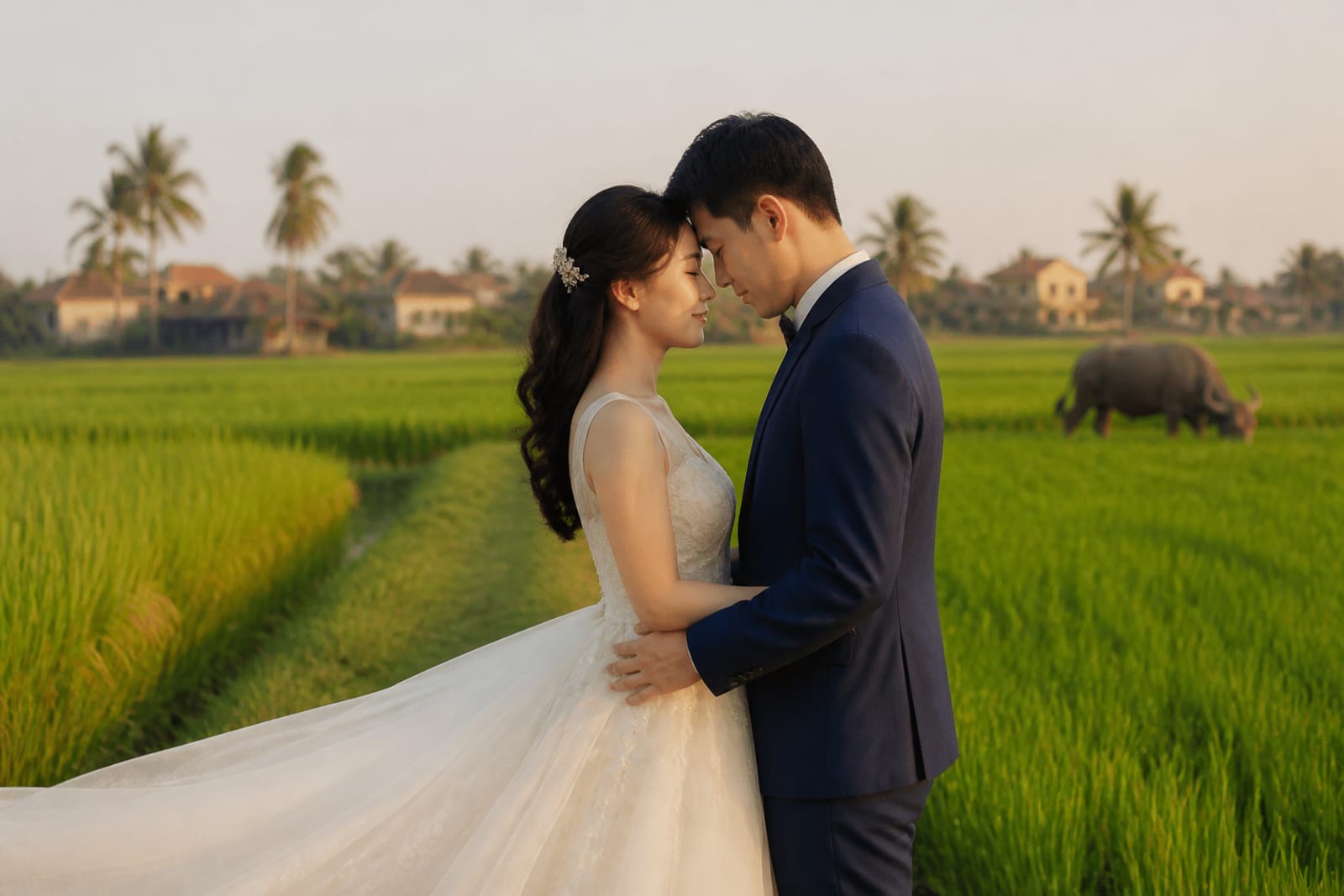
What outfit colors and fabrics work best at Tra Que?
| Outfit type | Best for | Why it works | When to skip |
|---|---|---|---|
| Cream, ivory, pale linen | Romantic, soft-focus couples | Reflects light, reads clean against green and mud, flatters warm skin | Heavy rain (shows mud splash); very pale skin in harsh sun |
| Khaki, soft taupe, natural linen | Earthy, adventurous vibe | Blends gently, echoes soil tones, feels intentional not accidental | High noon (matches light, flattens contrast) |
| Deep jewel tones (emerald, navy, burgundy) | Bold, high-contrast look | Pops against green crops, reads dramatic in golden hour | Direct midday sun (looks harsh); busy patterns muddy the read |
| Light blue or grey cotton | Fresh, cool aesthetic | Separates from green without jarring; cool tones suit spring/autumn | Shows water stains easily on wet paths |
| Áo dài (traditional silk) | Cultural, formal statement | Iconic Vietnamese dress, photographs timeless; works best in early light | Wet mud paths (hem drags, silk stains, slippers skid); noon heat (silk wilts, makeup runs) |
Fabric choice matters more than color. Natural fibers (cotton, linen, silk) breathe in Hanoi humidity and photograph softer than synthetics. Avoid heavy denim, polyester blends or velvet—they trap sweat, look stiff and show dirt. Wear undergarments that won't show through; white or nude slip-shorts under áo dài prevent chafing on wet paths.
📸 Book on WhatsApp — couple & family photoshoot
What time of day and season gives the best light?
Early morning (5:30–7:00 a.m., March–October; 6:00–7:30 a.m., November–February) delivers soft, low-angled light that skims water and creates a glow around faces. Shadows are long and directional; the air is cool and still. Farmers are already at work, adding authentic movement. You'll need to wake early and coordinate with the Cáo Studio team the evening before. Late afternoon (4:30–6:00 p.m.) works year-round, especially April–September when dusk lingers until 7:00 p.m. Light warms to gold; crowds thin after 5:00 p.m. Avoid May–September midday (sun is merciless, heat peaks, sweat runs, makeup fails). November–January is cool but often grey and drizzly—light is flat, but outfits feel more comfortable. By season: February–April (dry, mild, green crops, golden-hour magic); May–September (dry but scorching; shoot early or very late); October–December (cool, shorter days, moody light).
Do you need traditional áo dài or modern couple clothes?
Áo dài (the silk tunic and fitted pants) is iconic and photographs beautifully in soft light. The flowing áo reads well at golden hour and against natural backgrounds. Downsides: wet mud will stain the hem and lower panels; sitting becomes awkward; slippers or thin soles slip on wet paths; you need a dedicated makeup touch-up plan. If you choose áo dài, book a makeup & hair service the morning of the shoot; ask the team to apply waterproof products and confirm they carry blotting supplies and a small mirror. Many couples rent áo dài locally; Cáo Studio can advise on fitters, but book rental before your photoshoot date.
Modern casual or semi-formal couple clothes (matching linen shirts, coordinated sweaters, tailored trousers, midi skirts) are easier to move in and equally photogenic. Solid colors in neutrals or jewel tones read strongest. Patterns blur when wet; avoid logos and busy prints. This option suits couples who want comfort and mobility for walking, posing on paths, and interacting naturally. Light layers work well—a linen overshirt or cardigan adds visual interest and works as a quick change.
Hybrid approach: wear áo dài for a few shots, then change into modern clothes for the remainder of the session. This requires a logistics discussion with the Cáo Studio team—check on-site facilities and timing.
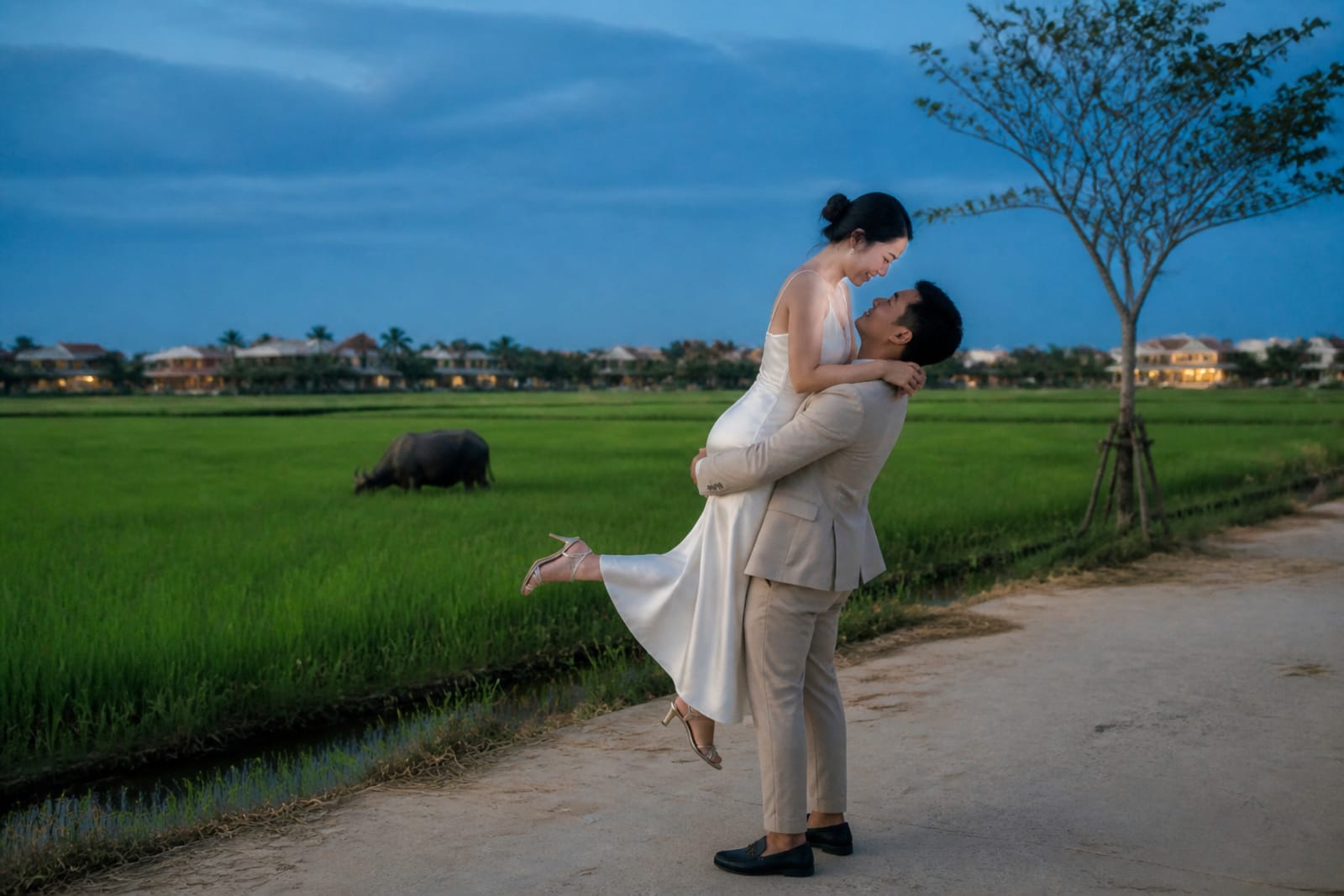
How do season and weather affect your outfit choice?
Hanoi's climate shifts outfit decisions dramatically. December–February brings cool, grey mornings (12–16°C); layers and long sleeves are comfortable, colors read true in soft light, and sweat is not a concern. Humidity is low; makeup lasts longer. Bring a light jacket for the drive. March–April is mild and dry (18–28°C), dew clings to fields at dawn, and golden hour is at its most dramatic. Light fabrics work; no jacket needed. May–September is hot and humid (28–35°C+); shoot at 5:30–6:30 a.m. when it's 25–28°C and light is still soft. Wear breathable cotton or linen; avoid silk áo dài unless you commit to early morning only. Sweat and humidity will affect makeup—waterproof products are essential. October–November is cooler (20–28°C) but brings intermittent rain and typhoon risk; light grey or drizzle is common. Colors look muted; golden hour is rare. Plan for overcast light; bring a compact umbrella.
Check the 3-day forecast before you book. If rain is predicted, ask Cáo Studio on WhatsApp whether the team reschedules or shoots in wet conditions (some couples love the moody aesthetic; others prefer dry light).
What logistical details should you confirm before booking?
Before you commit, discuss these points on WhatsApp:
- Makeup plan: Will the team apply makeup on-site or at your hotel first? How long does it take? Is waterproof makeup included? Who carries touch-up supplies?
- Outfit changes: How many outfit changes can you do? Is there a private space to change? Do you need to bring a helper or can the team assist?
- Footwear: Can you wear slippers to the muddy areas and bring dedicated shoes? Does the team carry backup footwear?
- Duration: How long is the session? Is it timed to catch early light or golden hour, or both?
- Transport: Who arranges transport to Tra Que? Is it included? What if you're staying in District 1 (Saigon) vs. central Hanoi?
- Post-production: When do you get edited images? Are they color-graded to suit field light and muddy tones?
Ask the team to send a pre-shoot checklist via WhatsApp; this saves confusion on the morning. Confirm the date and time 24 hours before.
---
What to check before you book
- Light timing: Confirm whether the session is early morning (quietest, best light) or afternoon (busier, still good after 4:30 p.m.). Early morning requires you to wake at 4:30–5:00 a.m.
- Outfit fit: Bring 2–3 outfits in neutral or jewel-tone solids. Avoid heavy fabrics and loud patterns. If wearing áo dài, discuss footwear and mud protection with the team.
- Weather buffer: Check the forecast 3 days before. If heavy rain is expected, ask whether the team reschedules or shoots anyway (wet mood photography is valid; confirm expectations).
- Makeup durability: Request waterproof products; confirm touch-up supplies are on-site. Humidity in Hanoi is high year-round, especially May–September.
- Team logistics: Ask whether the photographer, makeup artist and assistant all travel to Tra Que. Clarify transport, parking, and how long you'll actually be on-site.
- Editing timeline: Confirm when you'll receive image previews and final edits. Tra Que's muddy tones and green light may need careful color grading.
- Backup plan: If the weather is impossible, ask about rescheduling terms.
📸 See pre-wedding photoshoot options to compare Tra Que with other Hanoi couple locations (Hoan Kiem Lake, Old Quarter, pagodas, gardens).
---
More couple photoshoot locations and services
Tra Que is one of several Hanoi couple-shoot settings Cáo Studio covers. The couple & family photoshoot page compares rural (fields, villages), urban (Old Quarter, French Quarter) and water-view options (Hoan Kiem Lake, Tay Ho waterfront). Each has different outfit, timing and season logic. If you're also considering a pre-wedding or proposal shoot, the Hoi An and Saigon pages detail regional light, cultural sites and rental logistics. Hanoi and Saigon branch pages show which studio handles your booking; if you're in Hoi An, ask on WhatsApp for availability. The lookbook shows real couples at Tra Que and other locations—review the images before deciding on your own outfit palette.
---
FAQ
Can we wear áo dài if we're not Vietnamese?
Yes. Áo dài is worn by Vietnamese of all backgrounds and is deeply rooted in history and culture. Wearing one respectfully—clean, well-fitted, styled with care—honors Vietnamese tradition. International couples often choose áo dài for pre-wedding shoots to celebrate the country and create timeless images. Rent from a reputable fitter; the Cáo Studio team can recommend trusted tailors in Hanoi or Saigon.
What's the best time of year to shoot at Tra Que?
February–April: mild weather (18–28°C), low humidity, golden-hour light is dramatic, and crops are lush. May–September works if you shoot at dawn (5:30–6:30 a.m.) to avoid peak heat; afternoon golden hour is still good after 5:00 p.m. November–January is cool but often grey and drizzly; light is flat but outfits feel comfortable. Avoid October–November if possible—typhoon risk and flooding can close access.
Will mud ruin our clothes?
Splash is possible on narrow paths, especially if recent rain fell. Wear breathable neutrals or jewel tones that don't show stains as easily as white. Avoid dragging fabric on wet ground. If wearing áo dài, the hem is at risk; discuss hem protection with the Cáo Studio team (they may suggest a wrap or change of clothes partway through). Bring a damp cloth or change of socks. Modern couple clothes (trousers, shirts) are easier to protect and clean afterward than silk áo dài.
How early do we need to arrive?
Early-morning sessions start at 5:30–6:00 a.m., so plan to wake at 4:30–5:00 a.m. Makeup may be applied at your hotel beforehand or on-site (confirm with the team). You'll be at Tra Que by 5:30 a.m., shoot for 1–2 hours in soft light, and wrap by 7:00–7:30 a.m. Afternoon sessions typically start at 4:30–5:00 p.m. and run until dusk (6:30–7:30 p.m., depending on season). Arrive 15 minutes early so the team can scout light and frame shots.
Is Tra Que safe for couples and photographers?
Yes. Tra Que is a working agricultural community; farmers are out early. The area is open to visitors, and Cáo Studio has worked there many times. Stick to marked paths, watch for water channels and soft earth, and stay near the team. Early morning is quietest and safest. If you're uncomfortable with muddy terrain or physical exertion, choose an urban couple photoshoot location (Old Quarter, lake, gardens) instead.
FAQ
Can we wear áo dài if we're not Vietnamese?
Yes. Áo dài is worn by Vietnamese of all backgrounds and is deeply rooted in history and culture. Wearing one respectfully—clean, well-fitted, styled with care—honors Vietnamese tradition. International couples often choose áo dài for pre-wedding shoots to celebrate the country and create timeless images. Rent from a reputable fitter; the Cáo Studio team can recommend trusted tailors in Hanoi or Saigon.
What's the best time of year to shoot at Tra Que?
February–April: mild weather (18–28°C), low humidity, golden-hour light is dramatic, and crops are lush. May–September works if you shoot at dawn (5:30–6:30 a.m.) to avoid peak heat; afternoon golden hour is still good after 5:00 p.m. November–January is cool but often grey and drizzly; light is flat but outfits feel comfortable. Avoid October–November if possible—typhoon risk and flooding can close access.
Will mud ruin our clothes?
Splash is possible on narrow paths, especially if recent rain fell. Wear breathable neutrals or jewel tones that don't show stains as easily as white. Avoid dragging fabric on wet ground. If wearing áo dài, the hem is at risk; discuss hem protection with the Cáo Studio team (they may suggest a wrap or change of clothes partway through). Bring a damp cloth or change of socks. Modern couple clothes (trousers, shirts) are easier to protect and clean afterward than silk áo dài.
How early do we need to arrive?
Early-morning sessions start at 5:30–6:00 a.m., so plan to wake at 4:30–5:00 a.m. Makeup may be applied at your hotel beforehand or on-site (confirm with the team). You'll be at Tra Que by 5:30 a.m., shoot for 1–2 hours in soft light, and wrap by 7:00–7:30 a.m. Afternoon sessions typically start at 4:30–5:00 p.m. and run until dusk (6:30–7:30 p.m., depending on season). Arrive 15 minutes early so the team can scout light and frame shots.
Is Tra Que safe for couples and photographers?
Yes. Tra Que is a working agricultural community; farmers are out early. The area is open to visitors, and Cáo Studio has worked there many times. Stick to marked paths, watch for water channels and soft earth, and stay near the team. Early morning is quietest and safest. If you're uncomfortable with muddy terrain or physical exertion, choose an urban [couple photoshoot location](/couple-photoshoot) (Old Quarter, lake, gardens) instead.
Ao dai, makeup, hair and a local photographer in Hanoi or Saigon — one WhatsApp message.