/pre-wedding-photoshoot
What to wear for couple photos at Tra Su cajuput forest
Tra Su cajuput forest (southern An Phu district, flooded forest with boardwalks and boat routes) suits couple photoshoots because water mirrors light and tall cajuput trees diffuse it softly. Wear either an ao dai for cultural storytelling or casual linen and layers for movement through shallow water and wooden paths. Cáo Studio does not operate in Chau Doc—you'll need a local photographer—but this guide covers outfit decisions, seasonal timing (dry Dec–Apr is best; May–Nov floods rise), and what works in-frame. Sessions run 2–3 hours on water or paths; bring waterproof shoes and a second outfit. Choose based on whether you want narrative (ao dai = tradition, romance) or freedom to walk and interact (casual = natural, unposed). ---
Should you wear an ao dai or casual clothes at Tra Su?
An ao dai reads beautifully in still water and among tall trees—the fabric floats, the silhouette elongates, and it carries story. Casual wear (linen shirt, wide-leg trousers, breathable layers) lets you wade, sit on boardwalks, and move without worrying about wet silk. Ao dai suits couples prioritising one striking, formal frame; casual suits those who want variety and comfort across 2+ hours of walking and posing. Neither is wrong—it depends on whether you want to be photographed or to move through the landscape.
📸 Book on WhatsApp — couple photoshoot
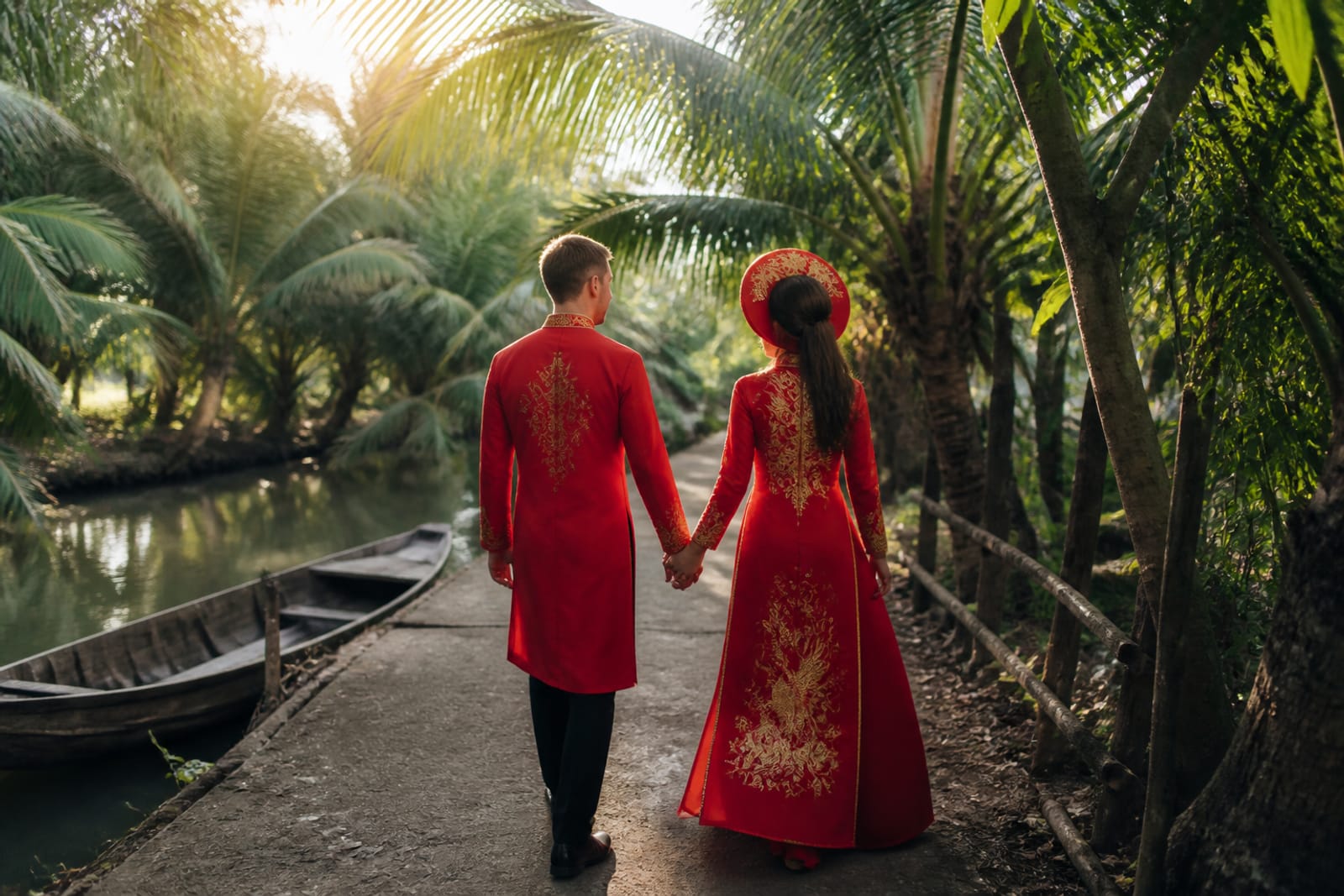
What happens to fabric and color in Tra Su's reflected light?
Water doubles the light hitting you—bright sky, bright reflection—so pale fabrics (cream, white, soft pink) can blow out (overexposed, no detail). Dark jewel tones (emerald, sapphire, burgundy) hold depth. An ao dai in deep silk reads better than pale cotton. If you wear white or cream, the photographer must expose for your face and let the fabric fall slightly bright—technically harder. Casual linen in navy, olive or rust photographs truer because the fabric has texture; plain white t-shirts flatten. Test color choices with the photographer beforehand; ask how they'll expose.
Which season gives the best light and boardwalk access?
December to April (dry season) means lower water—boardwalks are clearer, no flood risk, and light is predictable. May to November floods rise; the forest becomes half-submerged and more dramatic but paths narrow and outfit logistics (wet fabric, muddy shoes) complicate sessions. Morning (6–8 am) and late afternoon (4–6 pm) give diffuse, warm light. Midday light between tall trees is often flat and green-tinted. Book dry season for comfort; flood season for visual drama if the photographer has experience navigating it.
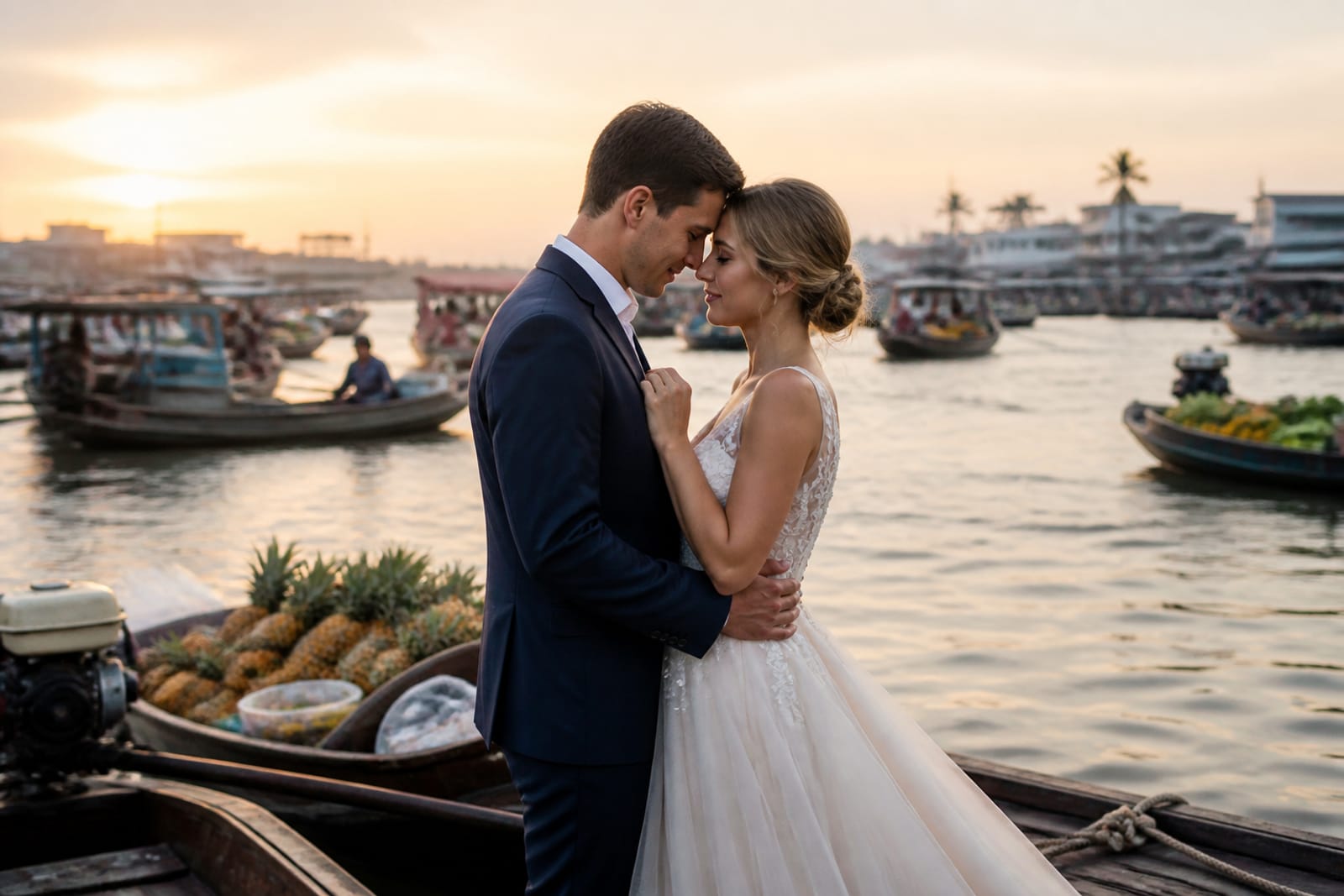
How do you compare outfit fit and movement across three scenarios?
| Scenario | Best for | Light/Season | Why it works |
|---|---|---|---|
| Ao dai + áo tím (silk jacket) | One formal, timeless frame; cultural narrative | Clear water, dry season (Dec–Apr), 5–7 pm | Fabric floats, reflection doubles impact; limited walking range |
| Linen/cotton casual (oversized shirt, wide trousers) | Multiple frames, movement, natural poses | Any season (avoid peak rain Sep–Oct); 7–9 am or 4–6 pm | Breathes, dries fast, reads in motion; photographer can capture candid walks |
| Hybrid (ao dai top, casual bottom; jacket over casual) | Compromise: story + comfort; two outfit changes | Dry season, morning or late afternoon | Ao dai narratives in still frames; casual comfort for walking shots |
The ao dai requires still poses and steady footing—best on stable boardwalks in dry season. Casual allows wading and sitting; works year-round if the photographer knows water safety. Hybrid lets you have both; adds prep time (10–15 min outfit change) but doubles frame variety.
What goes wrong with outfit choices at Tra Su, and how do you avoid it?
Common mistakes: wearing white without telling the photographer (they underexpose to save fabric; your face goes dark), packing a single outfit (boredom in the edit), bringing stiff jeans (they don't move in water, won't dry), and ignoring the boardwalk's real dimensions (an ao dai's train gets caught on railings). Before booking, ask the photographer: "Do you have experience with ao dai in water? How do you expose pale fabric? Can we change outfits mid-session?" Bring a waterproof bag with a second outfit (same color family or contrasting), flat water shoes (not heels), and a lightweight scarf to tie around your waist if the ao dai bottom gets wet. Agree on a backup indoor or shaded spot (hotel, local cafe) in case rain or midday heat forces a break.
---
What to check before you book a couple photoshoot at Tra Su
- Photographer experience: ask for frames shot at Tra Su or similar flooded forests; water and reflection need technical skill.
- Outfit pre-approval: confirm the photographer can work with an ao dai (seams, wet silk, movement) or will guide casual choices.
- Seasonal timing: dry season (Dec–Apr) means lower water, fewer cancellations, and faster turnaround—factor this into your budget and date flexibility.
- Outfit changes and timing: clarify how many outfits you can change into and how much break time is included; Tra Su heat mid-day makes comfort crucial.
- Delivery timeline: local photographers usually deliver edited files in 5–14 days; confirm before booking.
See Cáo Studio's pre-wedding & elopement approach for comparison if you're also considering Hanoi or Ho Chi Minh City sessions.
---
Note: Cáo Studio operates in Hanoi, Ho Chi Minh City, and Hoi An only. For Tra Su (Chau Doc, An Phu district, Mekong region), you'll need to book a local photographer experienced in flooded-forest shoots. This guide helps you choose outfits and brief them well—but Cáo Studio cannot coordinate the shoot itself. If you're planning a pre-wedding photoshoot elsewhere in Vietnam, message us on WhatsApp to discuss Hanoi, Saigon or Hoi An options.
---
FAQ
Can I wear an ao dai to Tra Su if I've never worn one before?
Yes, but bring a stylist or ask the photographer to help you move in it. Water adds weight; the hem catches on boardwalk railings. Practice sitting and standing beforehand. If comfort matters more, casual wear is easier for a first session.
What color ao dai looks best in water and reflected light?
Deep jewel tones (emerald, sapphire, burgundy, navy) hold detail in bright reflection. Pale silk (white, cream, soft pink) needs careful exposure or will look overexposed in the edit. Ask your photographer which colors they recommend based on their metering style.
Should I wear shoes in Tra Su's water, or go barefoot?
Wear waterproof, flat shoes (water sandals, slip-on sneakers). Barefoot risks sharp boardwalk splinters and hidden debris. Avoid heels—they sink and can't dry fast. Bring a second pair in case the first gets muddy.
How many outfits should I pack for a 3-hour Tra Su session?
Two outfits is standard: one ao dai or formal wear for stationary frames, one casual for movement and variety. A third (scarf, jacket, accessory swap) works if you have quick-change spots and the photographer budgets time for it.
Can Tra Su be shot in the rainy season (May–November)?
Yes, but May–June rains are scattered; September–November is heavy and risks flooding paths. Water levels rise unpredictably, making some boardwalks unsafe. Dry season (Dec–Apr) is safer and gives clearer light; if you shoot in rain season, confirm the photographer has local knowledge and backup indoor location.
FAQ
Can I wear an ao dai to Tra Su if I've never worn one before?
Yes, but bring a stylist or ask the photographer to help you move in it. Water adds weight; the hem catches on boardwalk railings. Practice sitting and standing beforehand. If comfort matters more, casual wear is easier for a first session.
What color ao dai looks best in water and reflected light?
Deep jewel tones (emerald, sapphire, burgundy, navy) hold detail in bright reflection. Pale silk (white, cream, soft pink) needs careful exposure or will look overexposed in the edit. Ask your photographer which colors they recommend based on their metering style.
Should I wear shoes in Tra Su's water, or go barefoot?
Wear waterproof, flat shoes (water sandals, slip-on sneakers). Barefoot risks sharp boardwalk splinters and hidden debris. Avoid heels—they sink and can't dry fast. Bring a second pair in case the first gets muddy.
How many outfits should I pack for a 3-hour Tra Su session?
Two outfits is standard: one ao dai or formal wear for stationary frames, one casual for movement and variety. A third (scarf, jacket, accessory swap) works if you have quick-change spots and the photographer budgets time for it.
Can Tra Su be shot in the rainy season (May–November)?
Yes, but May–June rains are scattered; September–November is heavy and risks flooding paths. Water levels rise unpredictably, making some boardwalks unsafe. Dry season (Dec–Apr) is safer and gives clearer light; if you shoot in rain season, confirm the photographer has local knowledge and backup indoor location.
Ao dai, makeup, hair and a local photographer in Hanoi or Saigon — one WhatsApp message.