blog
What to Wear in Hanoi in February: Weather & Outfit Guide
February in Hanoi sits in the sweet spot of the year. The harsh winter has broken, humidity won't climb until April, and the light at dawn and dusk glows like nowhere else. But the month isn't warm—mornings dip to 13–15°C, and layering matters. This guide tells you exactly what to pack and wear so you stay comfortable, respect local dress codes, and look your best for photos.
What's the weather really like in Hanoi in February?
February averages 13–20°C (55–68°F) with very low humidity—typically 60–70%, compared to 85%+ in summer. Rain is rare (only 10–15 mm total). The sun is strong during midday, but mornings and evenings require a layer. There's almost no wind.
This is ideal for outdoors: temples, cyclo rides, walking tours, and photoshoots. The cooler air means you won't sweat through clothes or makeup. Natural light is crisp and even—photographers love February.
Which fabrics and materials work best?
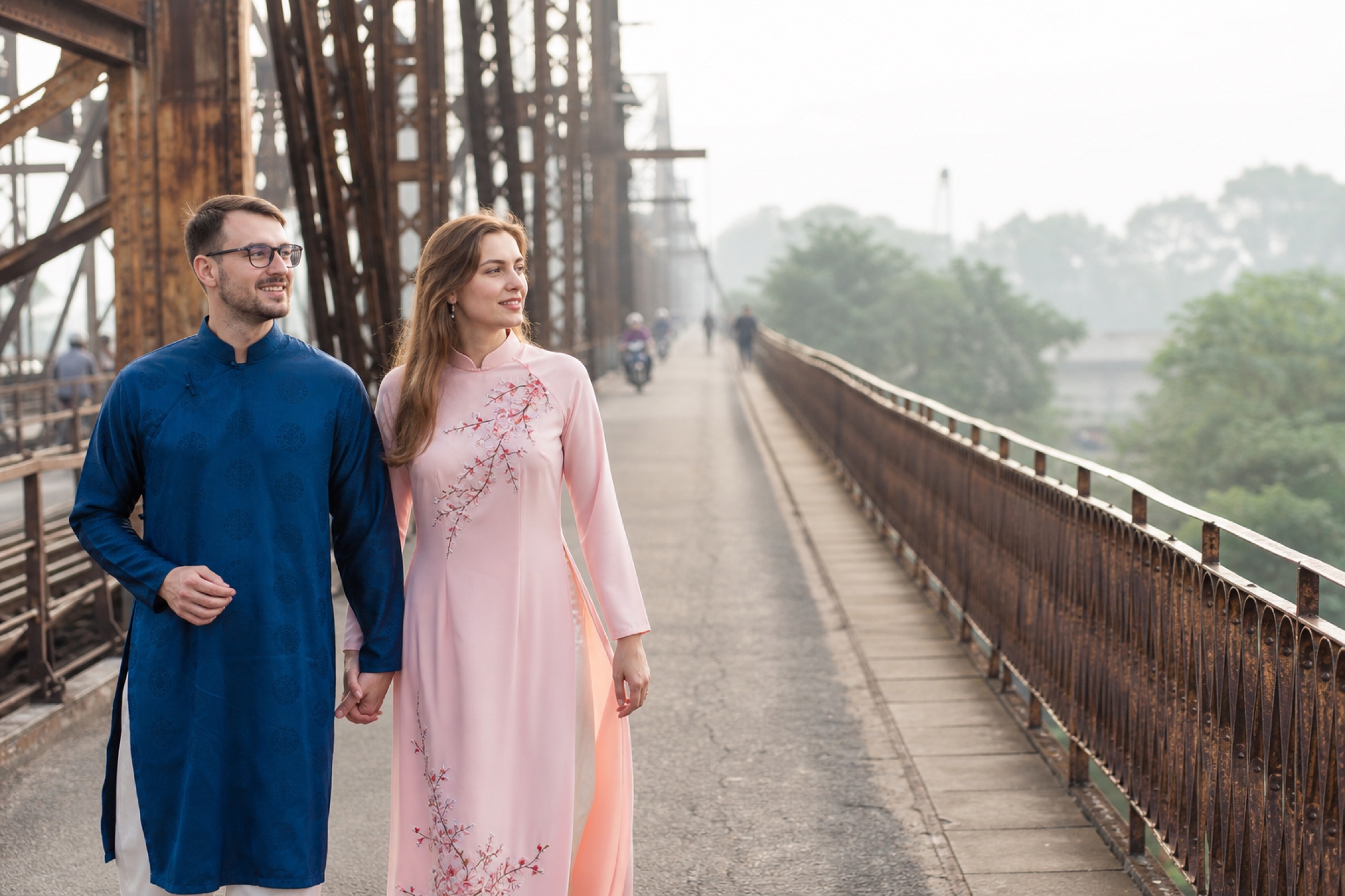
Cotton and linen are your foundation. Both breathe, feel soft against skin, and dry quickly if you accidentally splash water. Avoid heavy synthetics that trap heat and feel plastic-y against the body.
For layering, choose lightweight cardigans or button-up shirts in cotton blends. Silk scarves add elegance and adapt to temperature shifts. A thin merino wool sweater (if sensitive to cold) works for early morning or air-conditioned spaces—but cotton usually suffices. Denim is fine for casual outings; it's breathable enough at these temperatures.
Avoid thick fabrics, velvet, and structured synthetics. They make you look heavy and feel uncomfortable once you move indoors to heated spaces (offices, restaurants, hotels).
| Fabric Type | February Performance | Best For | Avoid If |
|---|---|---|---|
| Cotton | Breathes, dries fast | Daily wear, layers | Wrinkles easily (steam before outings) |
| Linen | Lightweight, airy | Daytime, casual | Creases visibly; best post-wash |
| Silk blend | Elegant, temperature-neutral | Scarves, blouses | Slippery; needs careful washing |
| Merino wool (thin) | Warm without bulk | Mornings only | You dislike natural fiber feel |
| Polyester (heavy) | Traps heat, looks stiff | Not recommended | February humidity is low enough to avoid it |
What layers should I actually pack and wear?
Start with a base: a long-sleeve cotton shirt or thin sweater. Add a cardigan or structured jacket for mornings (7–9 am) and evenings (5–8 pm). Between 10 am and 4 pm, you'll likely remove the outer layer—so keep it light enough to tie around your waist or carry.
For women: a scarf (silk or cotton) adds warmth and works as a cultural respect piece if you enter temples unexpectedly. Lightweight trousers or midi skirts layer better than shorts. Avoid sleeveless tops alone; pair them with a shawl or shirt.
For men: a button-up overshirt in linen or cotton blend works as both formal wear and casual layer. Roll sleeves if warm; button fully if cold. A lightweight sweater or hoodie (yes, they exist in travel gear) is compact to pack.
Keep a small packable rain jacket, though rain is uncommon—mostly as backup.
📸 Book on WhatsApp — ao dai photoshoot
Why is February ideal for an ao dai photoshoot?
An ao dai—the traditional Vietnamese tunic worn over trousers—drapes beautifully in cool air. No sweat marks, no wilting makeup, no heat exhaustion between shots. The low humidity means your hair holds style for 2–3 hours without frizz or dampness.
Natural light in February is studio-quality. Early mornings (6–8 am) and late afternoons (4–6 pm) cast soft, golden light that flatters skin and fabric texture. Midday light is bright but not harsh.
At Cáo Studio's Hanoi locations, photographers use February's conditions to capture ao dai fabric movement, skin tone contrast, and facial expression without the glare or sweat issues of summer. If you're visiting for a couple photoshoot or pre-wedding session, February booking rates are high for this reason.
What should I wear under an ao dai in February?
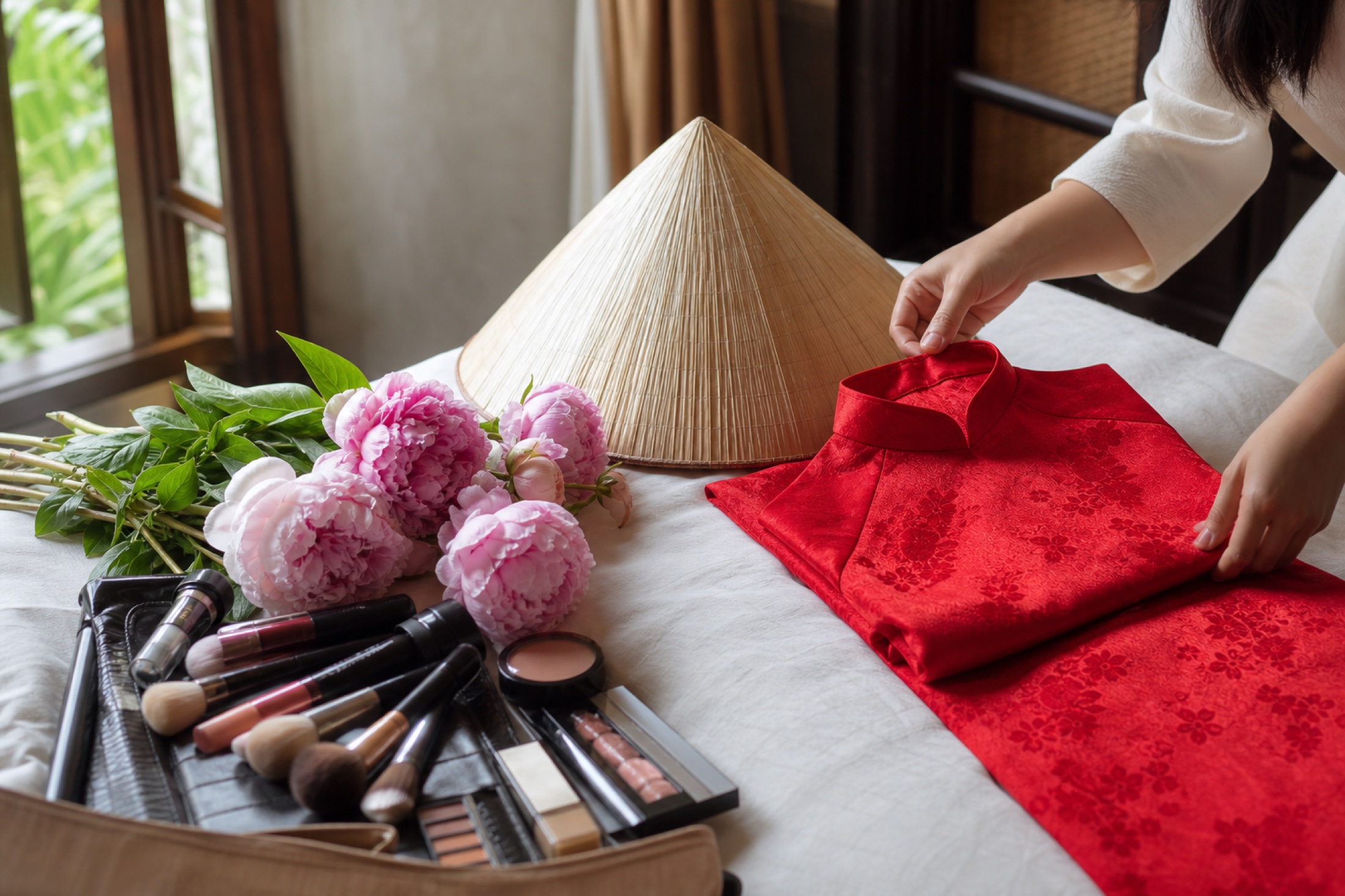
An ao dai sits over cotton slip trousers (provided at studios, or wear your own black/white cotton leggings). The tunic itself is sleeveless or cap-sleeved, so you need a base layer underneath—either the slip trousers alone (most common) or a thin long-sleeve shirt under the trousers.
Wear seamless undergarments; bra lines and seams show under the silk ao dai fabric. Cotton underwear is best; synthetic materials feel uncomfortable under silk during a 2–3 hour photoshoot.
For footwear in shots, studios provide sandals or hire traditional Vietnamese shoes. Wear clean socks or go barefoot. Toenails should be clean; consider a neutral polish (bright colors clash with ao dai fabric tones).
If you're not doing a photoshoot and wearing an ao dai to an event, pair it with flat sandals, ballet flats, or heeled sandals (no sneakers unless explicitly casual). Minimal jewelry works best—one statement piece like a necklace or bracelet, no loud rings.
What's the dress code for temples and cultural sites?
Hanoi temples require covered shoulders, knees, and a respectful demeanor. Long sleeves and trousers are safest, though women can wear knee-length skirts with a cardigan or scarf for shoulders. Men should wear long trousers and closed shoes.
Avoid tight or sheer clothing. Leggings alone don't meet the requirement—pair them with a long tunic or dress. Hats and sunglasses are fine outdoors; remove them inside.
This is why February layering helps: you can dress light for heat management yet stay covered for temple etiquette without overheating.
Should I buy clothes in Hanoi, or pack everything?
Hanoi's Old Quarter (Hàng Gai Street) has silk ao dai tailors and ready-made ao dai shops. Quality cotton and linen clothing is also affordable at night markets and malls (Vincom, Trang Tien Plaza). Tailoring takes 3–5 days, so only viable if you're staying long-term.
For a short trip (1–2 weeks), pack the core layers above. You can buy lightweight scarves, socks, or incidental items cheaply in Hanoi if needed—but don't count on finding your exact size or color preference quickly.
Bring comfortable walking shoes (broken in) and one pair of closed-toe shoes for temples or formal dinners. Sandals are worn around hotels and casual spots, but Hanoi's streets are wet in places, so footwear matters.
What to check before you book a photoshoot in February
—Confirm your studio provides ao dai (most do; Cáo Studio includes a selection). —Ask if hair and makeup are included or add-on services—February makeup & hair at your hotel is available if you prefer getting ready at your accommodation. —Check the session length (typically 2–3 hours) so you know how many outfit changes fit. —Clarify location and transport; February weather is walkable, but confirm temple entry hours in advance. —Ask what happens if weather changes (rare, but backup dates or covered locations matter). —See the lookbook and FAQ to review past sessions and common questions.
For couple photoshoots, proposals, or pre-wedding sessions, February is peak season—book 4–6 weeks ahead.
---
FAQ
Is 13–15°C too cold for outdoor photos without a jacket?
Not if you layer underneath. A long-sleeve fitted shirt and thin cardigan keep you warm while maintaining clean lines in photos. Remove the cardigan for shots; cold makes skin glow and eyes bright. Most visitors feel comfortable in this range after 10 minutes of activity.
Do I need to bring a rain jacket to Hanoi in February?
Rainfall is rare (10–15 mm all month), but a compact packable rain jacket (100g) fits any luggage. February rain, when it happens, is light drizzle. Umbrellas are sold everywhere cheaply if needed mid-trip.
Can I wear jeans to a temple in Hanoi?
Yes, if they're full-length and you pair them with a long-sleeve or cardigan top for shoulder coverage. Avoid ripped or overly tight jeans; temples expect modest, respectful appearance. Dark denim is safest and most flattering for temple photos.
What's the best time of day to explore outdoors in February?
9 am–3 pm is warmest and brightest. Early mornings (6–8 am) and late afternoons (4–6 pm) require a layer but offer softer light—ideal for photography. Evenings (after 5 pm) drop to 15–17°C, so bring a cardigan.
Should I buy an ao dai in Hanoi or bring one from home?
If you already own one, bring it—ensures perfect fit and avoids last-minute tailoring stress. If buying in Hanoi, plan 3–5 days for tailoring. Most photoshoot studios (including Cáo Studio) provide ao dai in multiple sizes, so you don't have to purchase one for a session.
How does February compare to other months for photoshoots in Hanoi?
February beats summer (sweat, humidity, harsh light) and winter (13–15°C early mornings). Spring (March–April) is warmer but more humid and rainy. Autumn (September–October) rivals February but is busier. February is ideal: cool, dry, uncrowded, professional light.
FAQ
Is 13–15°C too cold for outdoor photos without a jacket?
Not if you layer underneath. A long-sleeve fitted shirt and thin cardigan keep you warm while maintaining clean lines in photos. Remove the cardigan for shots; cold makes skin glow and eyes bright. Most visitors feel comfortable in this range after 10 minutes of activity.
Do I need to bring a rain jacket to Hanoi in February?
Rainfall is rare (10–15 mm all month), but a compact packable rain jacket (100g) fits any luggage. February rain, when it happens, is light drizzle. Umbrellas are sold everywhere cheaply if needed mid-trip.
Can I wear jeans to a temple in Hanoi?
Yes, if they're full-length and you pair them with a long-sleeve or cardigan top for shoulder coverage. Avoid ripped or overly tight jeans; temples expect modest, respectful appearance. Dark denim is safest and most flattering for temple photos.
What's the best time of day to explore outdoors in February?
9 am–3 pm is warmest and brightest. Early mornings (6–8 am) and late afternoons (4–6 pm) require a layer but offer softer light—ideal for photography. Evenings (after 5 pm) drop to 15–17°C, so bring a cardigan.
Should I buy an ao dai in Hanoi or bring one from home?
If you already own one, bring it—ensures perfect fit and avoids last-minute tailoring stress. If buying in Hanoi, plan 3–5 days for tailoring. Most photoshoot studios (including [Cáo Studio](/hanoi)) provide ao dai in multiple sizes, so you don't have to purchase one for a session.
How does February compare to other months for photoshoots in Hanoi?
February beats summer (sweat, humidity, harsh light) and winter (13–15°C early mornings). Spring (March–April) is warmer but more humid and rainy. Autumn (September–October) rivals February but is busier. February is ideal: cool, dry, uncrowded, professional light.
Ao dai, makeup, hair and a local photographer in Hanoi or Saigon — one WhatsApp message.