blog
What to Wear in Hanoi in March: A Local's Weather Guide
March in Hanoi sits at a crossroads: the cool season is ending, and serious heat is arriving. Temperatures climb from 25°C in early March to 29–30°C by month's end. Humidity averages 70–80%, making cotton feel heavier than it is. Rain comes in short bursts—usually afternoon showers that pass within an hour. This is peak travel season: the weather is warm but not yet unbearable, and the city is lush and green. If you're planning a photoshoot with us, understanding March's climate helps you choose what to wear and when to schedule outdoor sessions.
What Fabric Weight Actually Works in Hanoi's March Heat?
Cotton, linen, and bamboo-blend fabrics work. Avoid polyester, heavy knits, and anything synthetic that traps moisture against your skin. Linen wrinkles easily but breathes best; cotton is practical and forgiving. A 140–160 gsm cotton weight (thin t-shirt thickness) is your baseline. For ao dai sessions, silk and cotton blends are ideal—they drape beautifully and feel cooler than solid cotton.
Should You Pack Layers or Just Go Minimal?
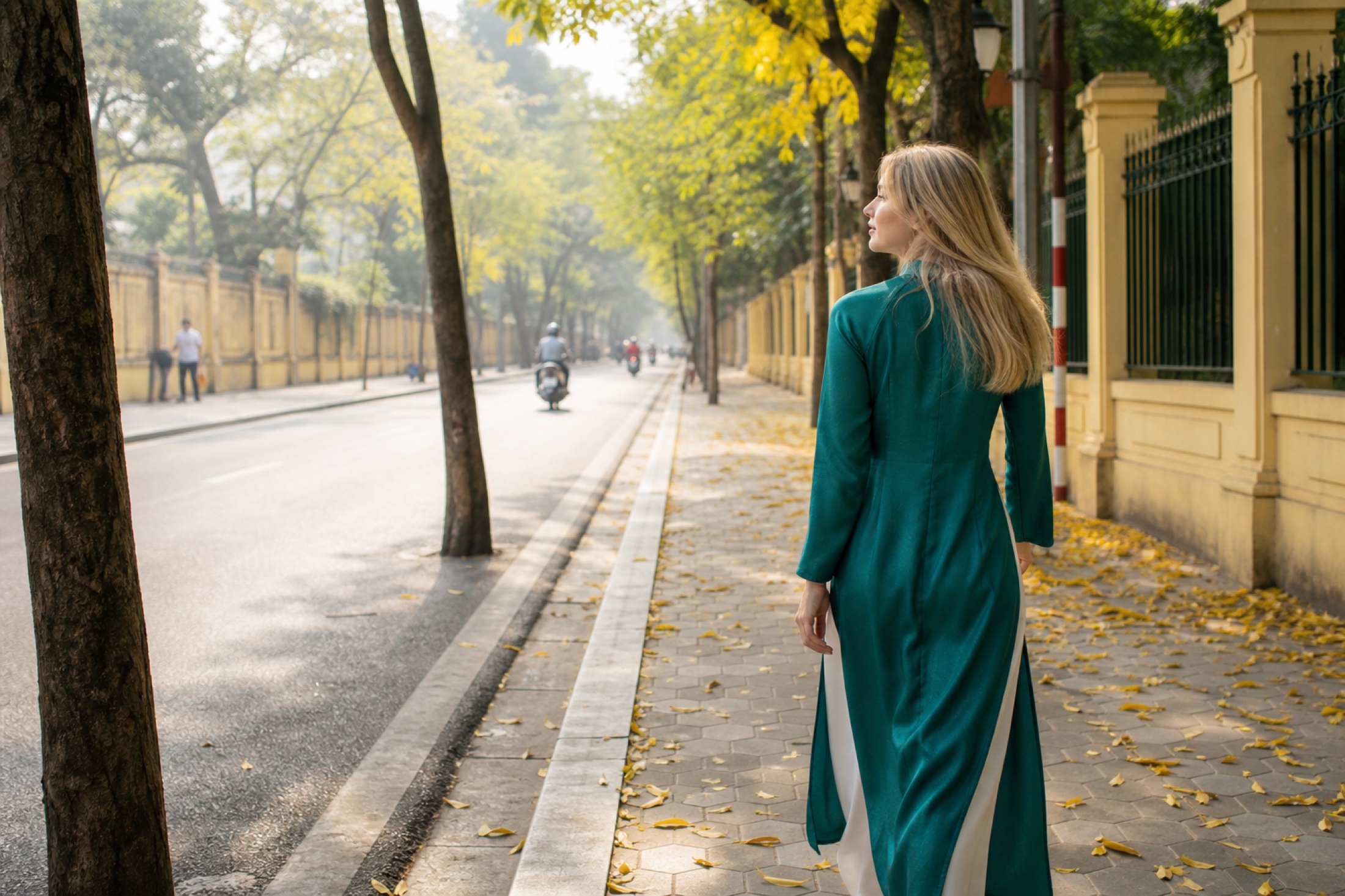
March temperatures stay warm from dawn to dusk, so layering isn't about warmth—it's about flexibility. Indoors, air-conditioning can be aggressive (restaurants, malls, hotels run units cold). Outdoors, you'll overheat with an extra layer. Carry a lightweight cardigan, shawl, or unstructured linen shirt that weighs almost nothing. This solves the AC problem and looks natural in photos. For couple and family sessions, a draped linen layer adds dimension without bulk.
How Do You Stay Dry Without Looking Damp?
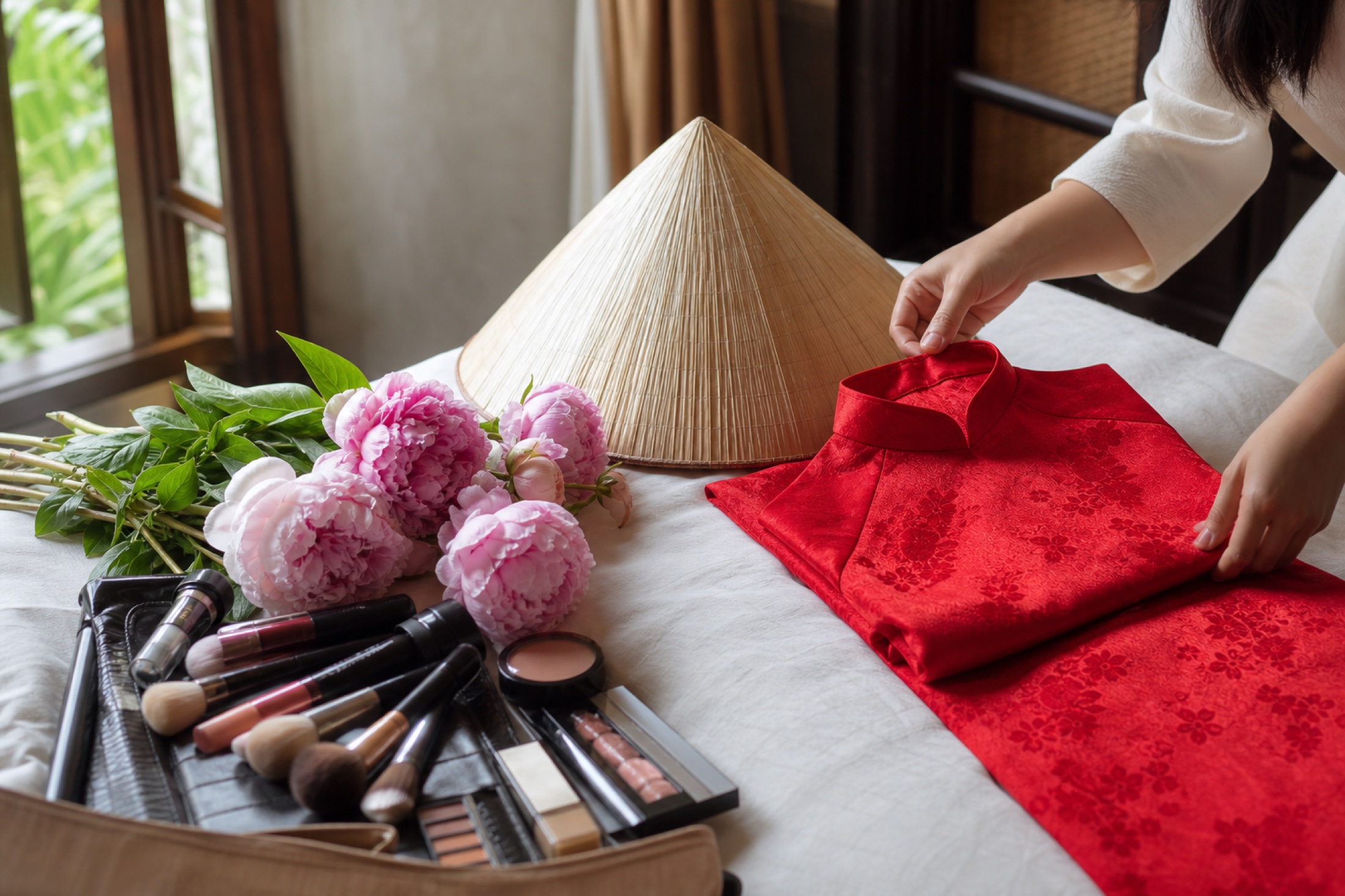
Humidity in March is relentless. Sweat shows on dark fabrics within minutes. Choose pale colors: whites, creams, soft pastels, and light grays. Moisture-wicking base layers exist but aren't culturally standard in Hanoi—instead, wear breathable inner layers (thin camisole or tank under a loose shirt). Change clothes or freshen up before photo sessions if you've been walking. Anti-chafe products and microfiber undergarments help, but breathable outer fabric matters most. Bring blotting papers and a small handheld fan.
What Footwear Won't Destroy Your Feet in March?
Your shoes must breathe and handle wet surfaces. Canvas sneakers, leather sandals with arch support, and breathable athletic shoes work. Avoid closed-toe heels unless your session is indoors; wet stone and uneven sidewalks in Hanoi are treacherous in heels. Flip-flops offer zero support and don't photograph well. If you're walking to temples or historic sites for family photos, wear closed-toe shoes with grip (rain makes temple floors slick). Pack moisture-wicking socks; cotton socks hold sweat. Leather or suede shoes take days to dry after rain—opt for nylon or synthetic uppers instead.
Rain in March: Real Frequency and How to Prepare
March rain is afternoon-based, unpredictable, and brief. You might get three days of rain in a row or none at all. Showers last 20–40 minutes on average. A compact, lightweight umbrella is essential—not for protection from sun (that's UV-sensitive) but for actual rain. Waterproof bags for phones and cameras matter more than a large umbrella. Quick-dry fabrics (nylon, technical blends) pack small and handle sudden showers better than cotton. If you're scheduling a pre-wedding or couple shoot, March's afternoon rain means morning sessions are safer bets; our team will coordinate around weather patterns.
What to Wear Under an Ao Dai for March Sessions
| Layer | Why It Matters | What Works | What Doesn't |
|---|---|---|---|
| Base layer | Prevents transparency in heat/humidity | Thin camisole, light slip | Thick cotton bra (shows under silk) |
| Pants (inner) | Sits under outer áo dài fabric | White or neutral capris, fitted trousers | Dark colors (visible through fabric) |
| Undergarments | Comfort over 2–3 hours | Microfiber, seamless options | Visible panty lines, tight elastic |
| Footwear | Completes the look on ground | Flat sandals, embroidered slippers | Heavy boots, athletic shoes |
---
How Temperature Shifts Affect Your Session Timing
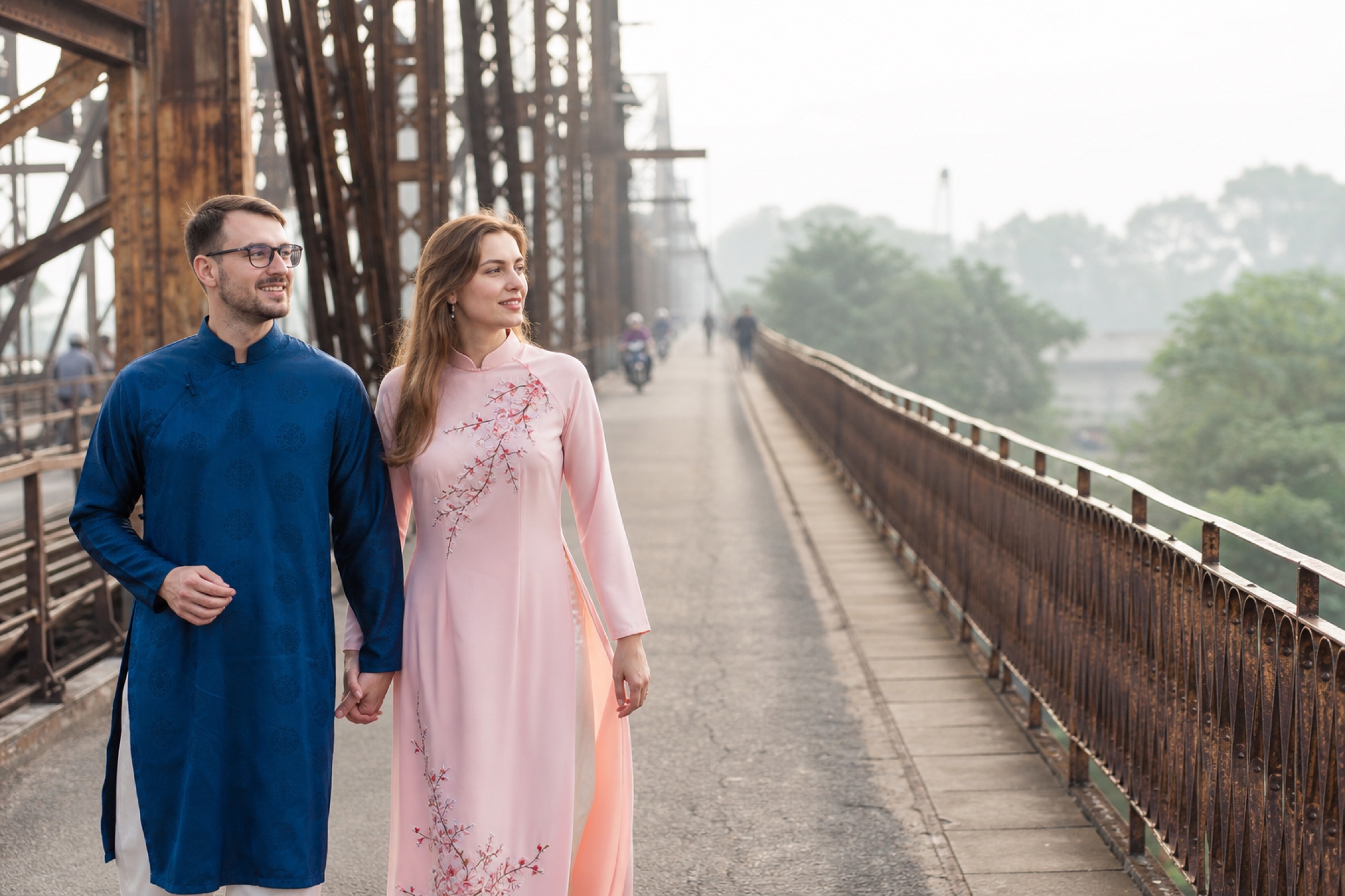
Early morning (6–8 a.m.) averages 22–24°C with low humidity. Light jackets work; colors pop without washed-out light. By 10 a.m., it's 26–28°C and you're ready for t-shirt weight. Noon to 3 p.m. peaks at 29–30°C with harsh overhead sun; photos need shade or diffusion. Late afternoon (4–6 p.m.) cools slightly to 27–28°C as clouds build. Dusk is when rain often breaks. For ao dai photoshoots, book early sessions if you're sensitive to heat; you'll stay comfortable and light won't flatten colors. Our team at Cáo Studio Hanoi schedules shoots around peak heat hours.
📸 Book on WhatsApp — ao dai photoshoot
What to Pack: A Realistic Checklist for March in Hanoi
- Lightweight tops: 3–4 cotton or linen shirts, t-shirts, one loose button-up
- Bottoms: 2 pairs lightweight pants, shorts if you wear them, one pair for photo sessions
- Undergarments: Moisture-wicking socks, breathable underwear, seamless options
- Layers: One thin cardigan, one linen wrap, one lightweight scarf (styling prop and sun guard)
- Footwear: Comfortable walking shoes, one dressier pair for shoots, sandals
- Rain prep: Compact umbrella, plastic bags for electronics, quick-dry towel
- Sun/skin: Sunscreen (SPF 30+), sunglasses, lip balm with SPF, small handheld fan
- Styling: Hair clips, bobby pins (humidity makes hair slip), neutral accessories
---
Real Challenges You'll Face—and How to Solve Them
Humidity frizz: Hanoi's March air swells hair within an hour. Pack a straightener or have makeup and hair services done at your hotel on shoot days. Humidity-resistant products (serums, lightweight oils) work better than heavy creams.
Sweat marks and pit stains: Wear loose shapes, pale colors, and natural fabrics. If you're booked for a proposal or couple session, we recommend changing into your final outfit 30 minutes before the shoot; this avoids visible perspiration.
Sunburn risk: March sun is strong despite clouds. One afternoon without sunscreen leaves you visibly burned. Reapply every two hours, especially if you're near water (lakes, rivers reflect UV). Consider UV-blocking sleeves or a lightweight long shirt for midday walking.
Slippery surfaces after rain: Streets and steps get treacherous. Wear shoes with grip. If you're photographing at temples (our lookbook includes temple locations), bring slip-on shoes—many require barefoot entry, and wet feet on stone are a fall risk.
Dehydration: Heat plus humidity tricks your body into thinking it's hotter than 30°C feels. Drink water constantly. Avoid caffeine and alcohol before shoots. Electrolyte drinks (coconut water, sports drinks) help more than water alone.
---
What to Check Before You Travel to Hanoi in March
- Humidity forecast: Check 10-day humidity levels, not just temperature. 75%+ changes what fabrics feel tolerable.
- Rainfall timing: Rain is brief but frequent in late March. Check 3-day forecasts closer to your dates.
- Air quality: March sits between cool-season haze and summer pollution. AQI is usually moderate but check before outdoor shoots.
- Hotel AC strength: Tell us your accommodation's cooling setup when booking. Dress-code planning depends on your base climate.
- Shoot locations: Temple sessions require modest dress (covered shoulders, knees). We'll brief you fully, but knowing this helps you pack.
- UV protection: March's sun intensity surprises many visitors. Plan for stronger SPF than you'd use at home.
---
Plan Your March Session with Confidence
March weather in Hanoi is warm, humid, and unpredictable—but it's also lush, visually stunning for photography, and manageable with the right wardrobe choices. Light fabrics, pale colors, breathable shoes, and a compact umbrella solve 90% of discomfort. If you're considering a pre-wedding shoot or family session, March light is soft yet vibrant before the intense heat of April. Our Hanoi and Saigon studios help you schedule around weather patterns and advise on what to wear for your specific shoot type. Check our FAQ for session-specific questions, and explore our lookbook to see how others have dressed for March shoots.
---
FAQ
Is March too hot for outdoor photoshoots in Hanoi?
No. Early morning (before 10 a.m.) and late afternoon (after 4 p.m.) are comfortable for shooting. Midday (noon–3 p.m.) is hot but manageable if you stay hydrated and use shade. Our team schedules shoots strategically around peak heat.
Do I need to pack a winter layer for March in Hanoi?
No winter layer is necessary. Indoor air-conditioning is the only reason to carry a lightweight cardigan. Outdoors, you'll be warm from dawn to dusk. A thin linen shawl serves both purposes.
How often does it rain in March in Hanoi?
Rain occurs 3–5 days per week on average, usually as brief afternoon showers lasting 20–40 minutes. It's not continuous; it's unpredictable. Always carry a compact umbrella.
What color clothing photographs best in March's humidity and light?
Pale, neutral tones (whites, creams, soft pastels, light grays) photograph beautifully in March and don't show sweat stains. They also reflect heat, keeping you cooler than dark colors.
Can I wear an áo dài for outdoor activities in March, or will it soak through?
Áo dài in quality silk or cotton-silk blends feel light and breathable, even in March heat. Avoid heavy silk. For daytime wear, wear it for 1–2 hours (e.g., a photo session), then change. Our studio guides you on comfort and styling for your session length.
Is sunscreen necessary in March if there are clouds?
Yes, absolutely. Hanoi's March clouds don't block UV rays effectively. SPF 30+ applied every two hours prevents visible sunburn, especially important if you're photographed outdoors.
FAQ
Is March too hot for outdoor photoshoots in Hanoi?
No. Early morning (before 10 a.m.) and late afternoon (after 4 p.m.) are comfortable for shooting. Midday (noon–3 p.m.) is hot but manageable if you stay hydrated and use shade. Our team schedules shoots strategically around peak heat.
Do I need to pack a winter layer for March in Hanoi?
No winter layer is necessary. Indoor air-conditioning is the only reason to carry a lightweight cardigan. Outdoors, you'll be warm from dawn to dusk. A thin linen shawl serves both purposes.
How often does it rain in March in Hanoi?
Rain occurs 3–5 days per week on average, usually as brief afternoon showers lasting 20–40 minutes. It's not continuous; it's unpredictable. Always carry a compact umbrella.
What color clothing photographs best in March's humidity and light?
Pale, neutral tones (whites, creams, soft pastels, light grays) photograph beautifully in March and don't show sweat stains. They also reflect heat, keeping you cooler than dark colors.
Can I wear an áo dài for outdoor activities in March, or will it soak through?
Áo dài in quality silk or cotton-silk blends feel light and breathable, even in March heat. Avoid heavy silk. For daytime wear, wear it for 1–2 hours (e.g., a photo session), then change. Our studio guides you on comfort and styling for your session length.
Is sunscreen necessary in March if there are clouds?
Yes, absolutely. Hanoi's March clouds don't block UV rays effectively. SPF 30+ applied every two hours prevents visible sunburn, especially important if you're photographed outdoors.
Ao dai, makeup, hair and a local photographer in Hanoi or Saigon — one WhatsApp message.