blog
What to Wear in Hanoi Vietnam: Dress Codes by Season & Activity
What Do People Actually Wear Day-to-Day in Hanoi?
Hanoians blend practicality with fashion. Locals wear lightweight cotton or linen shirts, cropped trousers, and slip-on shoes to navigate traffic and heat. Tourists often overpack: bulky jeans fail in 85%+ humidity. Bring four to five lightweight tops, two pairs of breathable trousers, one casual dress, and one outfit for formal venues. Slip-on shoes matter—temple steps are steep, and you'll remove them often.
Which Months Are Coldest and What Should You Pack?
November to February sees temperatures drop to 10–16°C at night. Days hover around 18–22°C. Pack a lightweight cardigan, a thin scarf, and closed-toe shoes. Humidity remains 60–80%, so avoid heavy wool—cotton blends breathe better. Locals layer a long-sleeve shirt under short-sleeve tops. Mornings on motorbikes feel chilly; bring a windbreaker.
How Does Summer Heat Change What You Can Comfortably Wear?
May to September means 28–35°C daily heat and 80–90% humidity. Cotton clings; linen absorbs sweat better. Sleeveless tops with a light overshirt work best. Avoid synthetic fabrics entirely—they trap moisture. White and pale colors reflect heat. Wear breathable sandals with good grip; temple floors get slippery. Pack an extra undershirt in case you sweat through your top before evening events.
| Season | Ideal Base | Overshirt | Footwear | Why It Works |
|---|---|---|---|---|
| Summer (May–Sep) | Cotton vest, linen shirt | Light kimono or open shirt | Grip-sole sandals | Maximum airflow, quick-dry |
| Spring/Fall (Mar–Apr, Oct) | Lightweight cotton tee | Thin cardigan or denim shirt | Closed sneaker or loafer | Layers adapt to 10°C swings |
| Winter (Nov–Feb) | Long-sleeve cotton blend | Wool-blend cardigan | Closed shoe, socks | Stays warm but breathable indoors |
| Pre-Wedding Shoot | Undergarment per shoot style | Robe for makeup area | Clean, polished shoes | Supports áo dài drape, studio comfort |
What's the Rule for Temple and Religious Site Dress Codes?
Vietnamese temples require covered shoulders, elbows, and knees—no exceptions. Wear a long-sleeve shirt or cardigan over sleeveless tops. Opt for full-length trousers or maxi skirts. Remove shoes before entering prayer halls. Avoid red at funerals; avoid black at celebrations (color symbolism matters). Avoid transparent fabrics. Hats and sunglasses off indoors. Photography inside some halls is forbidden—ask monks quietly.
📸 Book on WhatsApp — ao dai photoshoot
What Should You Wear Under an Áo Dài During a Photoshoot?
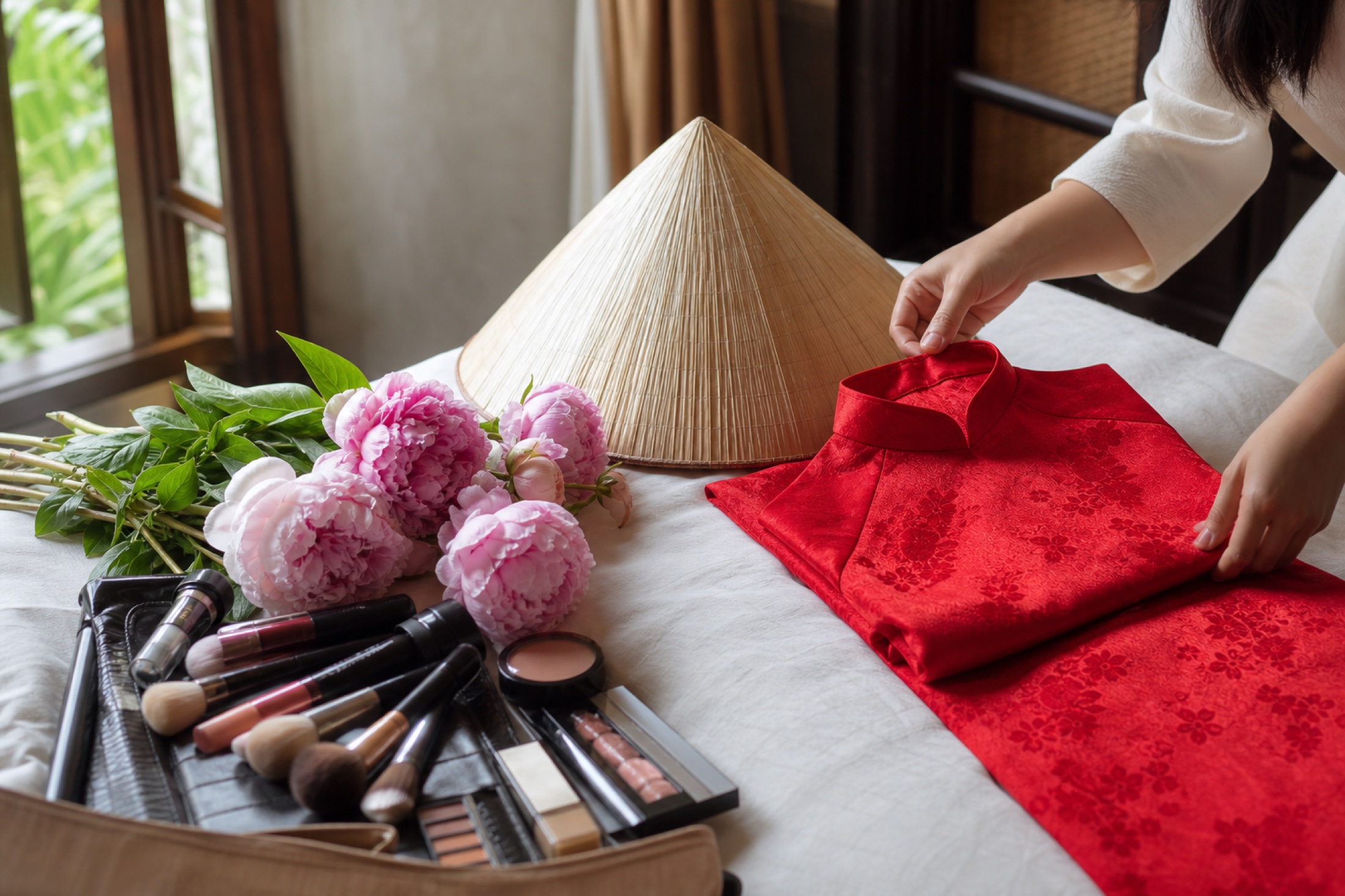
An áo dài—the traditional high-slit tunic—requires careful undergarment choice. Wear fitted slip shorts or dance tights under the front slit; they're invisible in photos but prevent wardrobe shifts during movement. Neutral beige or black works best. Avoid thick bra straps; a strapless bra or adhesive tape works if the áo dài has thin straps. The áo dài sits high on the waist, so choose seamless undergarments that won't show lines. If you're unsure, Cáo Studio's makeup and styling team walks you through fitting before your shoot begins.
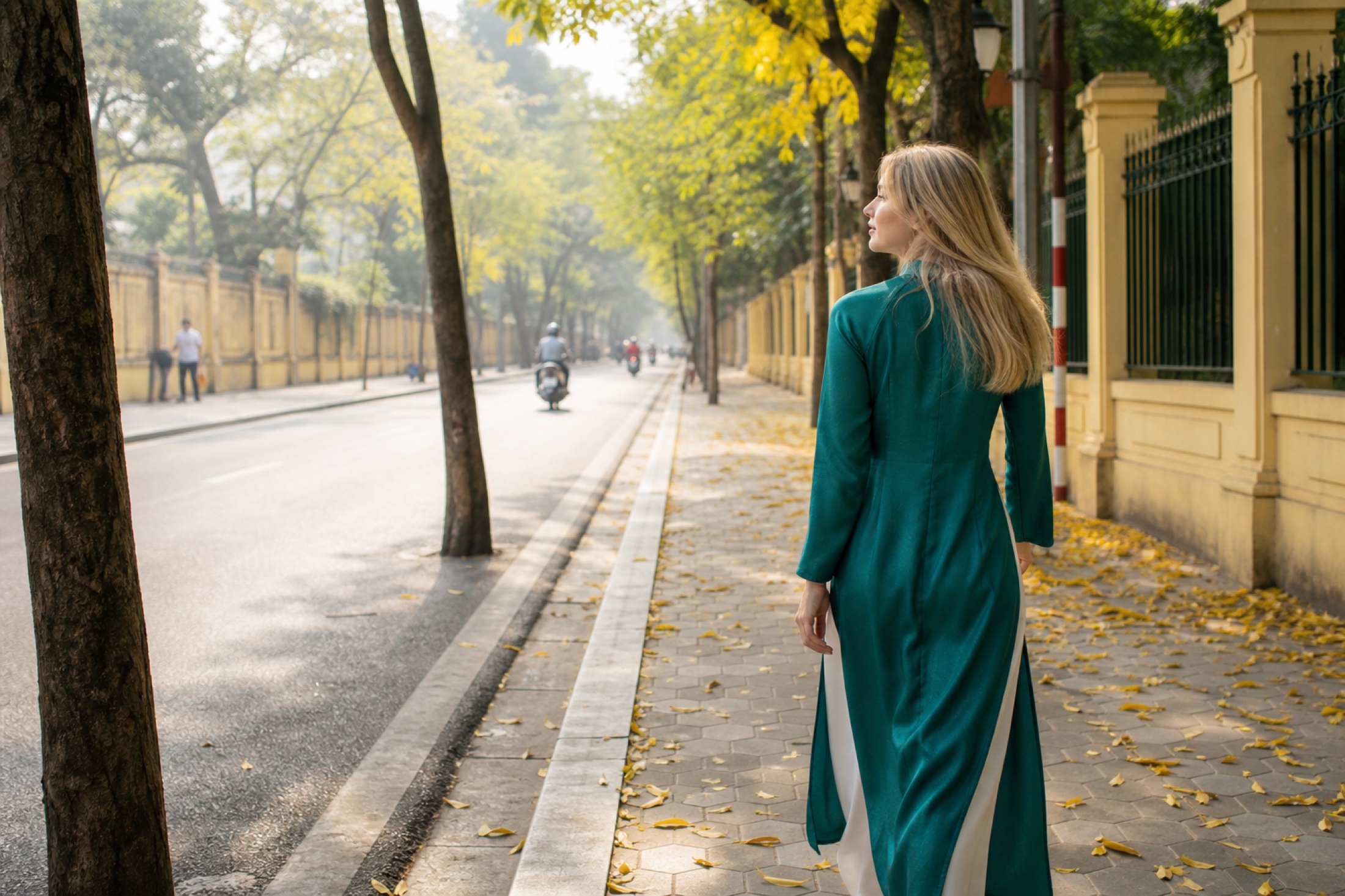
During áo dài photoshoots, many travelers ask about layering. The tunic is lightweight silk or cotton—perfect for Hanoi's humidity—but requires confidence. Wear nude or neutral layers; they make you feel secure on camera while staying invisible. See our lookbook for how áo dài looks styled across seasons.
How Does Hanoi's Monsoon Rain Affect What You Should Pack?
May to September brings sudden downpours (often 15–30 min bursts). A compact umbrella is non-negotiable—locals carry them always. Wear water-resistant shoes or quick-dry sneakers. Cotton dries faster than linen in humidity. Avoid suede or heavy leather. If you're booking a couple or family photoshoot, inform us of rainy forecasts—we adjust locations and bring backup indoor setups. A light rain jacket (not plastic) packs flat and handles heat better than ponchos.
What's the Etiquette for Dress at Hanoi's Upscale Restaurants and Hotels?
Fine dining venues expect smart casual minimum: collared shirts, dark trousers or neat dresses, closed shoes. Hotels often have dress codes in their lobby areas and spa facilities. Gym wear belongs in your room. For evening events, a lightweight blazer or shawl elevates any outfit without adding bulk. Hanoians dress modestly even in trendy cafés—visible tattoos or very short shorts draw attention.
If you're having makeup and hair done at your hotel for a formal event, we coordinate timing so you dress after the styling—no sweat stains or product transfer onto fabric.
What Should Your Everyday Bag and Footwear Strategy Be?
A lightweight crossbody bag or small backpack beats heavy luggage for navigating Old Quarter streets. Wear walking shoes with arch support—Hanoi's sidewalks are uneven. Slip-on styles speed up temple visits. Avoid heels except for evening outings; motorbike taxi drivers often help you climb into the sidecar, and heels snag or slip. Keep a pair of clean socks in your bag; some temples request them indoors.
Bring a second pair of everyday shoes. In humidity, damp shoes breed fungus overnight—rotating two pairs lets each dry completely.
How Do You Dress for Different Types of Hanoi Photoshoots?
Casual street exploration or couple walk: Lightweight linen shirt, cropped trousers, slip-on sneakers. Avoid logos.
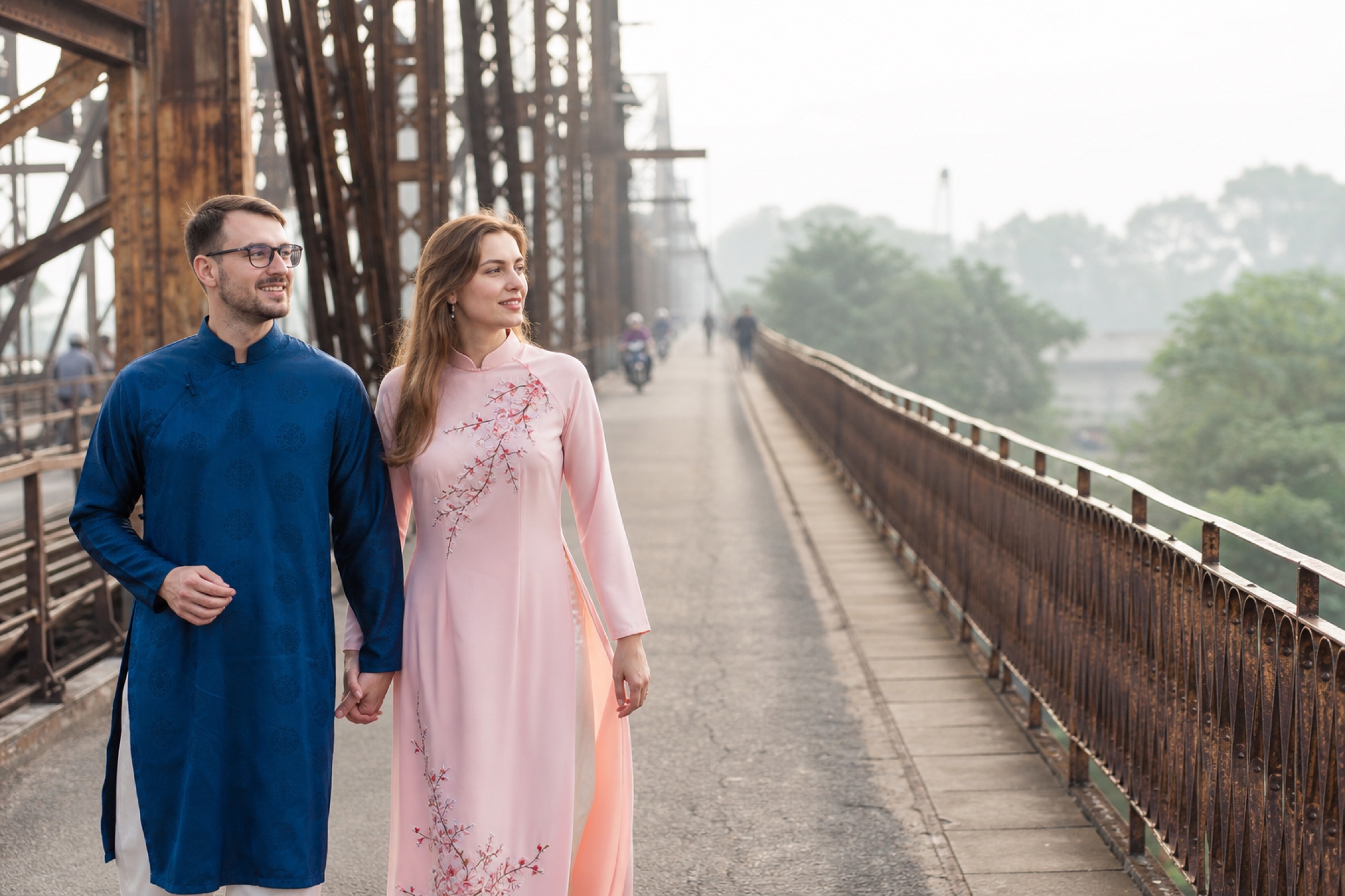
Áo dài session: Traditional silk tunic (Cáo Studio provides, or bring your own). Neutral undergarments, minimal jewelry, traditional conical hat optional.
Pre-wedding or proposal shoot: Smart casual or formal wear matching your vision. Discuss comfort and movement with the studio beforehand; see pre-wedding and elopement packages for style inspiration.
Proposal or anniversary celebration: Outfit reflecting your personality—dressy date outfit, not costume. Makeup and styling available on-site.
Revisit our FAQ section for shoot-specific prep and packing lists.
What Fabrics and Colors Work Best Year-Round?
| Fabric | Best Use | Humidity Response | Lifespan in Hanoi |
|---|---|---|---|
| Cotton (100%) | Daily wear, undershirts | Absorbs sweat, dries in 3–4 hours | 2+ weeks, breathes |
| Linen blend | Trousers, outer shirts | Dries faster than pure linen, softer | Wrinkles more, needs care |
| Silk (áo dài) | Formal or photoshoots | Drapes beautifully, prone to sweat marks | Dry-clean between wears |
| Synthetic (polyester) | AVOID | Traps moisture, clings | Feels sticky, breeds odor |
| Cotton-linen blend | Travel shirts | Balance of breathe and durability | Best for unpacked luggage |
Colors to prioritize: whites, creams, soft pastels (reflect heat), navy, khaki. Jewel tones (emerald, sapphire) photograph beautifully and hide stains. Avoid bright neons (too casual for temples) and mud tones in humid weather (show sweat).
---
What to Check Before You Pack or Buy Clothes for Hanoi
✅ Fit test in humidity: Try clothing on and move around. Tight fits restrict airflow and chafe when damp.
✅ Fabric label check: 100% cotton or cotton-majority blends only (aim 60%+ cotton minimum).
✅ Shoe grip: Walk on a wet surface indoors. Temple floors and rainy streets demand anti-slip soles.
✅ Temple coverage: Measure from shoulder to elbow and knee to ankle. A cardigan over a tank top works if it covers shoulders fully.
✅ Undergarment visibility: Wear target outfit with layers and bend, squat, sit. Check for lines or strap visibility on camera (phone selfie test).
✅ Quick-dry speed: Soak a fabric swatch, wring it, time how long it takes to feel dry. Linen/cotton blends dry in 4–6 hours; synthetics trap moisture.
✅ Luggage weight: Lightweight fabric lets you pack versatile pieces without overloading. Leave room for purchases or souvenirs.
---
Ready to Look Your Best in Hanoi? Book a Styled Shoot
Whether you're visiting for two days or planning a pre-wedding celebration, Hanoi's climate and culture demand thoughtful dressing. Cáo Studio – Makeup & Photoshoot handles the styling details: we provide áo dài, coordinate timing around weather, and apply makeup that withstands humidity.
📸 Book on WhatsApp — ao dai photoshoot | 💄 Makeup & hair at your hotel | 🌸 See the lookbook
Explore our couple and family photoshoot options, check pricing and availability, or browse lookbook inspiration to see how different outfits work across Hanoi's seasons. Visit Cáo Studio in Hanoi or Saigon to meet the team in person before your session.
---
FAQ
Can I wear jeans in Hanoi?
Jeans work for evening outings but fail in daytime heat and humidity—they're heavy, slow to dry, and restrictive. Lightweight cotton trousers or linen blends stay cooler and dry overnight. Save jeans for air-conditioned venues or winter visits.
What should I wear to a Hanoi night market?
Lightweight shirt, cropped trousers or a midi skirt, closed-toe shoes for crowded sidewalks. Bring a small crossbody bag and avoid dangling jewelry (it catches in motorbike traffic). A thin cardigan handles evening temperature drops.
Is it okay to wear shorts in Hanoi?
Shorts above the knee are acceptable at cafés and shops but disrespectful at temples and formal dinners. Opt for knee-length or longer shorts, or pack lightweight trousers as a backup. Local women rarely wear very short shorts; it stands out.
What fabric should I choose if I'm sensitive to sweat marks?
Dark colors (navy, charcoal, black) hide sweat best. Patterns and textured fabrics (linen blends, waffle weaves) also mask moisture. Avoid light gray and white for all-day outings. Silk and synthetic fabrics show sweat fastest; pure cotton or cotton-heavy blends are safest.
Should I buy clothes in Hanoi or pack everything?
Pack one week's worth of basics; Hanoi's Old Quarter and modern malls have affordable cotton and linen. Buying locally lets you swap items that don't work in real humidity. Tailor shops on Hang Gai Street adjust fit quickly (24–48 hours). This saves luggage space and lets you test fabrics before committing.
What happens if I dress inappropriately at a temple?
Monks or staff may ask you to leave or cover up. Some temples have scarves or wraps at the entrance. Respect the request quietly—it's not confrontational, just custom. Always call ahead to confirm dress codes for lesser-known temples.
How do I pack an áo dài without wrinkling it for a photoshoot?
Roll it loosely in a garment bag or wrap it in tissue paper between two flat surfaces in your luggage. Hang it in your hotel room overnight before the shoot. Cáo Studio has a steamer on-site and can press it before your session begins if needed.
Can I wear makeup and nail polish to a temple?
Yes. Makeup and nail polish don't violate temple etiquette. Focus on covered shoulders, knees, and respectful behavior. Avoid very bright nail colors if you want to blend in; locals often favor neutral or soft tones.
FAQ
Can I wear jeans in Hanoi?
Jeans work for evening outings but fail in daytime heat and humidity—they're heavy, slow to dry, and restrictive. Lightweight cotton trousers or linen blends stay cooler and dry overnight. Save jeans for air-conditioned venues or winter visits.
What should I wear to a Hanoi night market?
Lightweight shirt, cropped trousers or a midi skirt, closed-toe shoes for crowded sidewalks. Bring a small crossbody bag and avoid dangling jewelry (it catches in motorbike traffic). A thin cardigan handles evening temperature drops.
Is it okay to wear shorts in Hanoi?
Shorts above the knee are acceptable at cafés and shops but disrespectful at temples and formal dinners. Opt for knee-length or longer shorts, or pack lightweight trousers as a backup. Local women rarely wear very short shorts; it stands out.
What fabric should I choose if I'm sensitive to sweat marks?
Dark colors (navy, charcoal, black) hide sweat best. Patterns and textured fabrics (linen blends, waffle weaves) also mask moisture. Avoid light gray and white for all-day outings. Silk and synthetic fabrics show sweat fastest; pure cotton or cotton-heavy blends are safest.
Should I buy clothes in Hanoi or pack everything?
Pack one week's worth of basics; Hanoi's Old Quarter and modern malls have affordable cotton and linen. Buying locally lets you swap items that don't work in real humidity. Tailor shops on Hang Gai Street adjust fit quickly (24–48 hours). This saves luggage space and lets you test fabrics before committing.
What happens if I dress inappropriately at a temple?
Monks or staff may ask you to leave or cover up. Some temples have scarves or wraps at the entrance. Respect the request quietly—it's not confrontational, just custom. Always call ahead to confirm dress codes for lesser-known temples.
How do I pack an áo dài without wrinkling it for a photoshoot?
Roll it loosely in a garment bag or wrap it in tissue paper between two flat surfaces in your luggage. Hang it in your hotel room overnight before the shoot. Cáo Studio has a steamer on-site and can press it before your session begins if needed.
Can I wear makeup and nail polish to a temple?
Yes. Makeup and nail polish don't violate temple etiquette. Focus on covered shoulders, knees, and respectful behavior. Avoid very bright nail colors if you want to blend in; locals often favor neutral or soft tones.
Ao dai, makeup, hair and a local photographer in Hanoi or Saigon — one WhatsApp message.