Cáo Studio · Mga gabay sa photoshoot sa Vietnam · Phan Dinh Phung Street Photoshoot: Light, Season & Team
Hanoi Rooftop Cafes Photoshoot: Where to Shoot, When, and How to Book
Cáo Studio team · Hanoi · 2026-10-03
A rooftop cafe photoshoot in Hanoi means shooting on elevated terraces in Old Quarter, French Quarter, or newer areas like Tay Ho, where soft light hits the cityscape behind you—best at dawn (5:30–7:00 am) or late afternoon (4:30–6:00 pm). October–November is ideal: dry, cool, with golden hour lasting longer. Early morning avoids crowds and cafe staff; you'll need about 1.5–2 hours for outfit changes and walking shots. Cáo Studio directs rooftop sessions as part of couple or ao dai photoshoots, framing you against light and architecture instead of posing you stiffly. Many solo travelers or couples choose rooftop cafes because they're accessible, visually distinct, and less guarded than temples—but booking ahead with the cafe manager is essential; some restrict photography during peak hours or charge a small sitting fee.
Which Hanoi rooftop cafes actually work for photoshoots?
The best rooftop cafes for photography sit in the Old Quarter (narrow streets, dramatic shadows, distant Red River views) or French Quarter (colonial architecture, tree-lined sightlines). Rooftops in Tay Ho district offer lake views and softer crowds. Old Quarter rooftops—accessed via narrow staircases, often shared with noodle shops below—give raw, textured frames; French Quarter cafes are quieter and more polished. Check the rooftop's foot traffic before booking: a popular weekend spot will have tourists in your background, while a cafe near Bach Ma Temple or on quieter Hang Ngang Street keeps frames cleaner. Visit in person the day before, ask the cafe owner about morning access, and confirm whether they allow professional photographers or charge a sitting fee. Many rooftop cafes open early (7:00 am) for locals; arriving before 6:30 am often means you have the space alone. Avoid rooftops facing north or east in winter (Dec–Feb)—you'll lose direct light and frames turn grey and flat.
What light and season make rooftop shots work in Hanoi?
October–November is the rooftop-photoshoot season: dry air, cool temps (18–25°C), and low sun angles that wrap around you softly for 2–3 hours before and after noon. December–February is cooler (10–20°C) but overcast—frames often turn flat and grey, and you'll need 20+ minutes of patience between clouds. March–April brings haze and humidity; frames lose clarity. May–September is hot (often 35°C+) with sudden downpours; morning light is harsh and brief, and humidity makes makeup run. East-facing rooftops catch clean sunrise light (5:30–7:00 am) in Oct–Nov, ideal for soft side-light on your face and warm tones on the cityscape. West-facing rooftops are better late afternoon (4:30–6:00 pm) in the same seasons. Avoid midday (10:00 am–3:00 pm) year-round—sun is overhead, shadows are dark and unflattering, and heat exhaustion is real. A directed shoot accounts for these timings automatically; if you're shooting alone, set your phone's timer for 5:45–6:45 am or 5:00–5:45 pm and be ready to move rooftops if light doesn't cooperate.
Should you DIY or book a directed rooftop photoshoot?
| Option | Best for | Light control | Outfit changes | Why it matters |
|---|---|---|---|---|
| DIY (phone/friend) | Solo travelers, tight budgets, casual memory-making | None—sun position is fixed | 1–2 quick changes | Fast, flexible, but frames often stiff or backlit; cafe staff may interrupt |
| Local freelancer | Couples wanting a photographer, budget-conscious | Limited—freelancer learns your face mid-shoot | 1–2 outfits | Cheaper than directed, but photographer alone can't guide hair, makeup, pose; frames often over-posed |
| Cáo Studio directed shoot | Couples, ao dai sessions, travelers wanting directed frames | Full—director picks time, rooftop, light angle; hair/makeup aligned | 2–3 outfits or outfit + ao dai | One team (director, makeup artist, stylist, photographer) shoots real moments; edited frames + short film in 48 hours; no posing |
A DIY shoot works if you're happy with casual, phone-quality frames and don't mind awkward moments with cafe staff. A local freelancer is faster and cheaper than a directed team but often results in you feeling "posed"—the photographer takes frames, you freeze, repeat. Cáo Studio's directed rooftop shoots suit travelers who want frames that look cinematic and feel unforced: the director guides you to walk, look at light, sit naturally while the photographer captures real moments. The hair and makeup artist travels with you, so your look stays fresh across the session. Frames are edited and sent within 48 hours, plus a short vertical film. Cost factors: whether you rent an ao dai, the number of rooftop locations visited, and timing (sunrise shoots require earlier pickup).
📸 Book a directed couple photoshoot on WhatsApp | 🌸 Browse rooftop + couple session ideas
How do you plan a rooftop photoshoot session step-by-step?
- Choose your season. October–November is best for light and comfort; avoid May–September (heat and rain) and Dec–Feb (grey, overcast). Check the lunar calendar for Tet (late Jan–mid Feb)—many cafes close and light is unpredictable.
- Scout the rooftop in person. Visit 1–2 days before. Note sunrise/sunset direction, cafe staff routines, any roof-edge railings that frame nicely. Ask the owner about early-morning access and whether they allow photography (some cafes don't want professional shoots during meal hours). Take a photo of the rooftop to share with your photographer or team.
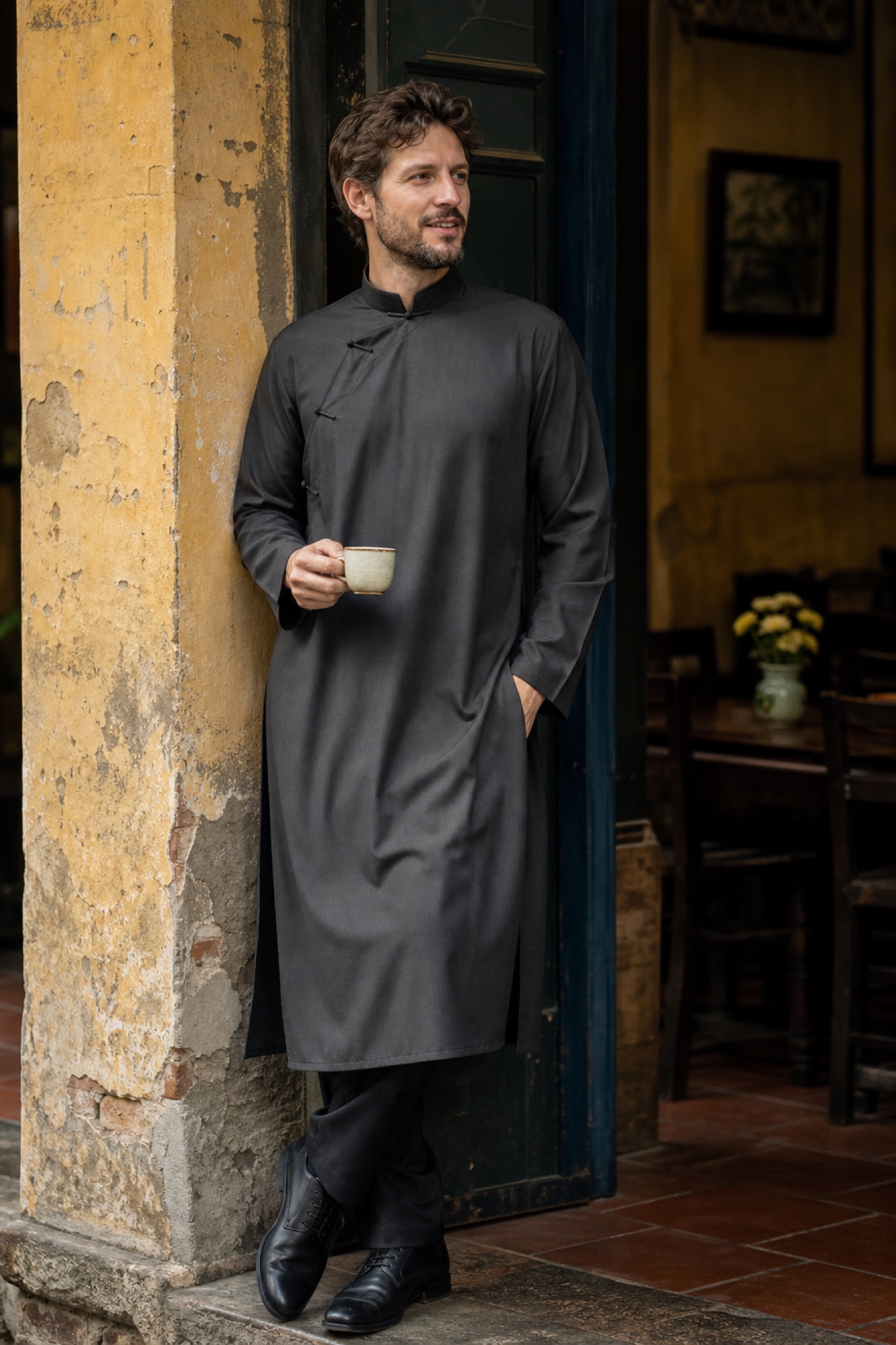
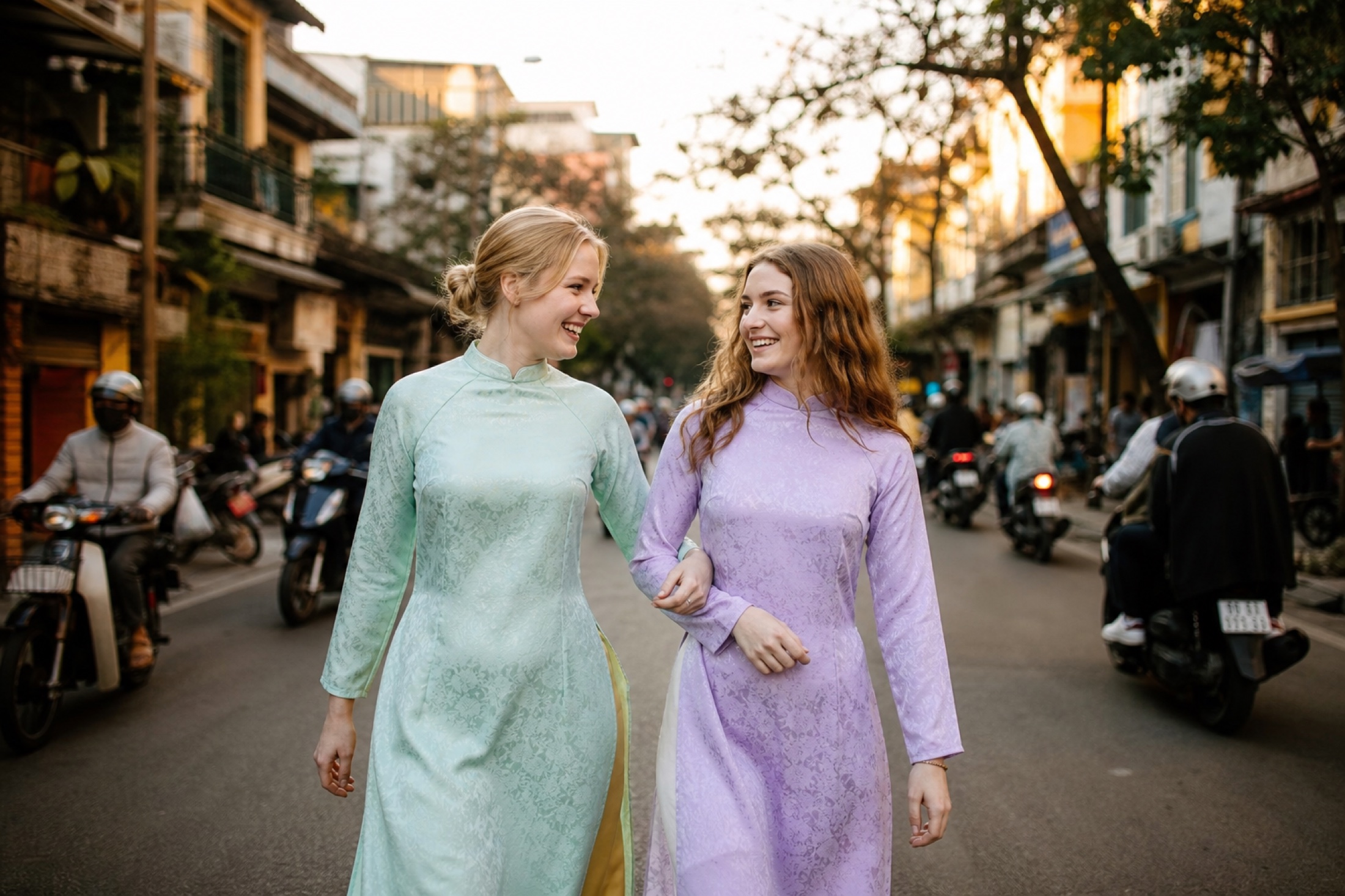
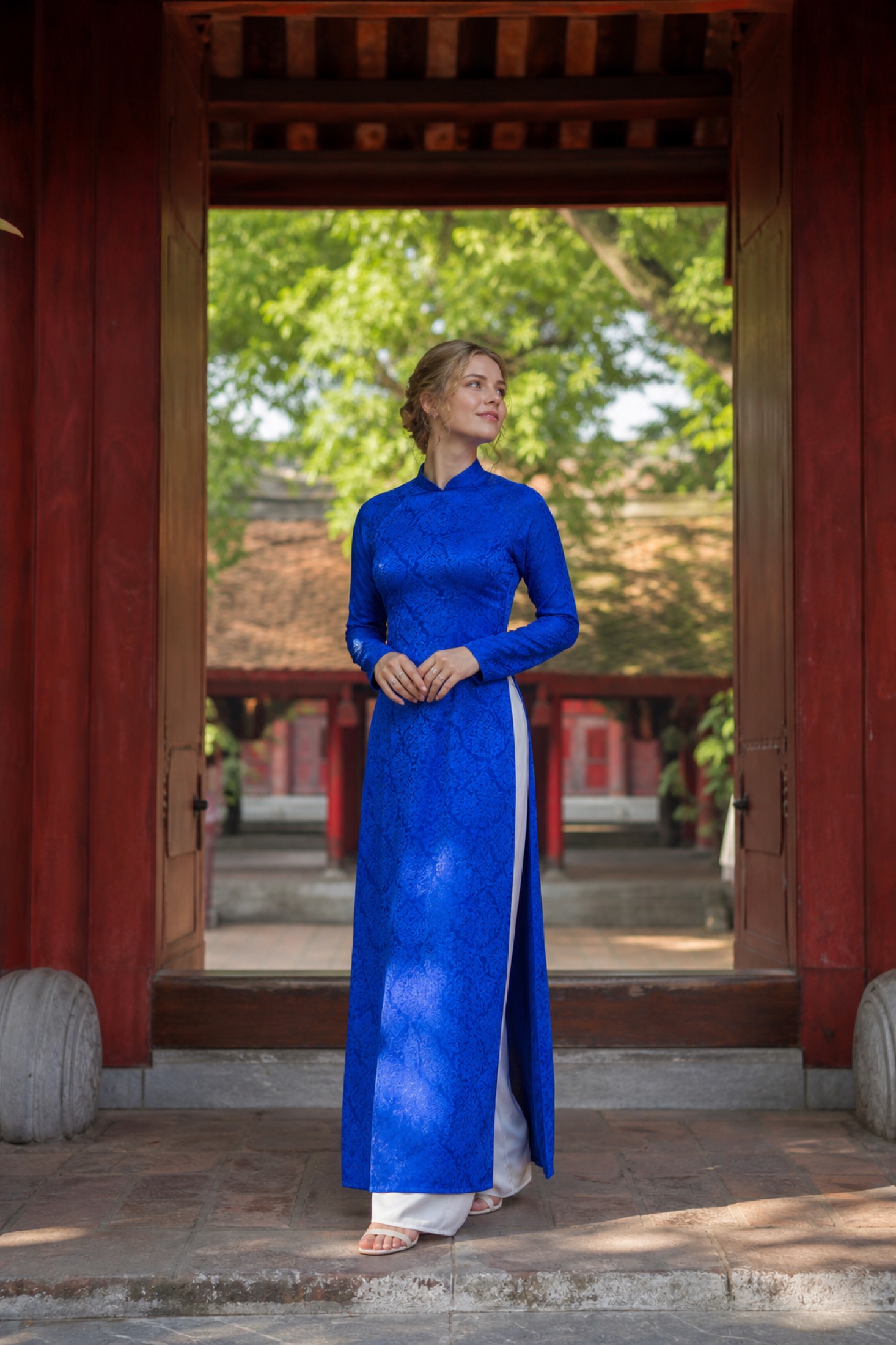
- Plan your outfit. For a rooftop with city views, neutral or jewel-tone outfits (dark green, terracotta, white linen) frame better than black. If wearing an ao dai, choose one that contrasts the skyline—pale silk pops against grey roofs; dark ao dai works if your face catches soft light. Avoid all-white in overcast light (washes you out) and all-black in dim morning light (merges with shadows).
- Confirm timing. Sunrise shoots mean 5:30 am pickup; sunset shoots, 4:15 pm. Bring a phone charger and water. A rooftop session usually takes 45–75 minutes depending on outfit changes and walking routes across the cafe. If you're doing DIY, set phone timers for 5-minute intervals during golden hour so you capture multiple frames as light shifts.
- Backup plan. If the rooftop is too crowded (weekend mornings), have a second rooftop cafe address ready. If weather is grey, consider rescheduling or shifting to late afternoon when light often breaks under clouds. Never force frames in bad light—wait for the next golden hour window.
- After the shoot, ask for frames by noon the same day (if DIY) or confirm delivery with your photographer. If booking Cáo Studio, edited photos and film are ready within 48 hours; ask on WhatsApp for final delivery.
💄 Add makeup & hair at your hotel | 🌸 Ideas & lookbook
How is a rooftop shoot different from other Hanoi photoshoot locations?
Rooftop cafes offer isolation and height—you're above the street noise and visual clutter, so frames feel private and cityscape-focused. Temple shoots (ao dai photoshoots at Tran Quoc or One Pillar) give spiritual framing but strict etiquette (no shoes inside, no posing disrespectfully); rooftops have no rules. Hoan Kiem Lake is crowded and generic; rooftops feel curated. Train Street (if accessible) is novelty-focused; rooftop frames age better. Old Quarter street walks mix authentic texture with chaos—great for lifestyle frames, but hard to control light. A rooftop cafe combines intimacy, visual clarity, and natural light in one spot. For couple photoshoots, a rooftop works better than busy markets because you're framed alone, and the director can guide you to walk, sit, or look at each other without tourists photobombing. For solo travelers or vacation photoshoots, a rooftop gives you the city as a backdrop without needing other people in the frame. Drawback: rooftops are simple—no water, no monuments—so frames rely entirely on light and your presence. This is why directed shoots (where hair, makeup, and pose are coordinated) work better on rooftops than DIY.
What should you check before booking a rooftop photoshoot?
- Cafe's photography policy. Call or visit 1 day ahead. Some cafes allow photography only if you buy drinks; others restrict professional shoots during breakfast/lunch hours. A few charge a "location fee" if you're shooting with a professional team.
- Rooftop access and safety. Confirm the stairs are stable and handrails exist. In Hanoi's older buildings, rooftop railings are sometimes low or missing—ask about edge safety, especially if you're doing outfit changes or movement shots.
- Light direction and timing. Know which way the rooftop faces (north, south, east, west). An east-facing rooftop is best for sunrise (5:30–7:00 am); west-facing is best for sunset (4:30–6:00 pm). In Oct–Nov, both work; in Dec–Feb, east-facing is safer (longer morning light).
- Outfit and weather fit. If it rained the night before, the rooftop may be damp or slippery. Wear shoes with grip, not heels. Check the temperature—if it's 35°C, makeup will run; if it's 12°C, thin outfits won't work.
- Crowd patterns. Weekday mornings (Mon–Fri before 8:00 am) are quietest. Weekends (especially Sat–Sun 9:00 am–12:00 pm) fill fast with tourists and brunch groups.
- Backup location. Have a second rooftop cafe address if your first choice is booked or overcrowded. Tay Ho district rooftops are less touristy than Old Quarter.
If you're booking Cáo Studio for a couple photoshoot, the director handles rooftop scouting, timing, and weather backup; confirm the exact rooftop and arrival time on WhatsApp 1 day before the session.
📸 Book on WhatsApp—Hanoi photoshoots
---
FAQ
Can we do a rooftop photoshoot in December or February (winter)?
Yes, but expect grey, flat light most days. Dec–Feb is cool (10–20°C, comfortable for shooting) but often overcast and drizzly. Morning light is dim; you'll need 20+ minutes between clouds to get soft, clear frames. October–November is safer. If you're set on winter, book a rooftop facing east and shoot 5:30–7:00 am, when light sometimes breaks the cloud cover.
How much does it cost to book a rooftop cafe for a photoshoot?
Cafe sitting fees (if any) and location charges vary by rooftop and whether you're hiring a professional photographer. Ask the cafe directly when you scout—many waive fees if you buy drinks. For a directed Cáo Studio shoot, request a quote on WhatsApp; cost depends on team travel time, the number of outfits, and whether you're adding makeup & hair service.
What if the cafe is busy or won't let us photograph?
Arrive before 6:30 am—most rooftops are empty and staff are setting up. If the cafe refuses photography, move to a second rooftop (Tay Ho and French Quarter spots are usually flexible). Avoid peak brunch hours (10:00 am–12:00 pm, weekends). If booking with Cáo Studio, the director confirms cafe access 1 day ahead and has backup rooftops planned.
Do we need permits to shoot on a rooftop in Hanoi?
No permits for casual photography on private cafe rooftops. Professional photo teams should ask the cafe owner's permission (many allow it for a small fee or drinks purchase). Government buildings, military sites, and some temples have restrictions—avoid those. When in doubt, ask locally or contact Cáo Studio on WhatsApp.
Can we do an ao dai rooftop photoshoot?
Yes. Ao dai photoshoots on Hanoi rooftops work beautifully in October–November when light is soft and silks drape well. Choose a rooftop with clear sky views—dark ao dai shows better against grey roofs; pale silk pops. Makeup and hair are included with Cáo Studio ao dai sessions; the artist travels with you to touch up between rooftops.
How long does a rooftop photoshoot take?
A DIY shoot (you + friend/phone) takes 30–45 minutes. A directed Cáo Studio shoot takes 1.5–2 hours (includes travel to rooftop, outfit changes, walking across multiple angles, and breaks for light shifts). Session length also depends on how many outfits you want and whether you're visiting 1 rooftop or 2–3 locations.
Mga karaniwang tanong
Can we do a rooftop photoshoot in December or February (winter)?
Yes, but expect grey, flat light most days. Dec–Feb is cool (10–20°C, comfortable for shooting) but often overcast and drizzly. Morning light is dim; you'll need 20+ minutes between clouds to get soft, clear frames. October–November is safer. If you're set on winter, book a rooftop facing east and shoot 5:30–7:00 am, when light sometimes breaks the cloud cover.
How much does it cost to book a rooftop cafe for a photoshoot?
Cafe sitting fees (if any) and location charges vary by rooftop and whether you're hiring a professional photographer. Ask the cafe directly when you scout—many waive fees if you buy drinks. For a directed Cáo Studio shoot, request a quote on WhatsApp; cost depends on team travel time, the number of outfits, and whether you're adding [makeup & hair service](/fil/makeup-and-hair).
What if the cafe is busy or won't let us photograph?
Arrive before 6:30 am—most rooftops are empty and staff are setting up. If the cafe refuses photography, move to a second rooftop (Tay Ho and French Quarter spots are usually flexible). Avoid peak brunch hours (10:00 am–12:00 pm, weekends). If booking with Cáo Studio, the director confirms cafe access 1 day ahead and has backup rooftops planned.
Do we need permits to shoot on a rooftop in Hanoi?
No permits for casual photography on private cafe rooftops. Professional photo teams should ask the cafe owner's permission (many allow it for a small fee or drinks purchase). Government buildings, military sites, and some temples have restrictions—avoid those. When in doubt, ask locally or contact Cáo Studio on WhatsApp.
Can we do an ao dai rooftop photoshoot?
Yes. [Ao dai photoshoots](/fil/ao-dai-photoshoot) on Hanoi rooftops work beautifully in October–November when light is soft and silks drape well. Choose a rooftop with clear sky views—dark ao dai shows better against grey roofs; pale silk pops. Makeup and hair are included with Cáo Studio ao dai sessions; the artist travels with you to touch up between rooftops.
How long does a rooftop photoshoot take?
A DIY shoot (you + friend/phone) takes 30–45 minutes. A directed Cáo Studio shoot takes 1.5–2 hours (includes travel to rooftop, outfit changes, walking across multiple angles, and breaks for light shifts). Session length also depends on how many outfits you want and whether you're visiting 1 rooftop or 2–3 locations.