Cáo Studio · Mga gabay sa photoshoot sa Vietnam · Photoshoot sa Hoi An: Gabay para sa Magagandang Larawan at Kung Paano
Hoi An Entrance Ticket at Photography Rules 2026
Cáo Studio team · Hanoi
Hoi An Ancient Town (Phố Cổ Hội An) requires a single entrance ticket valid for one full day; buy at the main gate (Hoi An Ticket Office, near Le Loi Street) or reserve ahead. The ticket grants access to all 22 heritage zones and five signature buildings (Assembly Halls, Japanese Bridge, Phung Hung House, Cantonese Assembly Hall, Tan Ky House). Photography is permitted everywhere except inside active temples during prayer hours and certain interiors marked "no camera." Drones are prohibited; tripods and large reflectors need advance permission from Hoi An Heritage Office. For ao dai photoshoots, Cáo Studio – Makeup & Photoshoot books pre-dawn or late-afternoon sessions (best light: 5:30–7 a.m. or 4:30–6 p.m.) when crowds thin and golden hour flatters the fabric. Budget roughly 60–90 minutes for a session. Confirm ticket type and photography rules in advance via WhatsApp to avoid delays on shoot day. 📸 Book on WhatsApp — ao dai photoshoot ---
Anong mga uri ng tiket para sa Hoi An at magkano?
Hoi An offers one primary entrance ticket (valid one day) that covers all heritage buildings and zones. Additional specialty passes exist—e.g., photography permits for commercial use, extended multi-day passes—but most travelers use the standard single-entry. Exact pricing changes seasonally; check the official Hoi An Heritage Office website or ask at the gate. Tickets are non-refundable. For international visitors booking ao dai or couple photoshoots via Cáo Studio, one standard ticket per person is required.
Saan bumili ng tiket at paano mag-reserve nang maaga?
Buy tickets onsite at the Hoi An Ticket Office (Quang Trung St., near Le Loi intersection, opens 7 a.m.) or reserve online through the official Hoi An Heritage website 24–48 hours ahead. Walk-ins are accepted but lines build 8–10 a.m. and 2–4 p.m. For photoshoots, coordinate ticket purchase with your photographer; Cáo Studio's team will advise if pre-booking saves time on your session date.
Aling oras ng araw ang pinakamahusay para sa photography sa Hoi An?
Early morning (5:30–7 a.m.) and late afternoon (4:30–6 p.m.) deliver the softest, warmest light and fewest crowds—ideal for ao dai fabrics and detail shots. Midday (11 a.m.–3 p.m.) produces harsh shadows and packed streets; avoid unless shade (like the Japanese Bridge or Assembly Hall interiors) is your backdrop. Overcast days are excellent for even skin tone and fabric texture. During monsoon (September–October), shoot after rain when streets gleam and humidity softens light.
| Oras | Liwanag | Crowds | Kalagayan | Para sa Mahusay na Kulay |
|---|---|---|---|---|
| 5:30–7 a.m. | Golden, soft | Minimal | Malamig, medyo basang-basa | Ao dai, detail shots ✓ |
| 9–11 a.m. | Terang, init | Lumalaki | Maayos | Grupo, landmark shots |
| 12–3 p.m. | Matapang, mataas | Puno | Mainit, pagod | Iiwanan; gumamit ng shade |
| 4:30–6 p.m. | Golden, mainit | Bumababa | Komportable | Ao dai, romantic couples ✓ |
| 6–7:30 p.m. | Lila/orange, mabilis | Onti | Malamig | Moody, artistic—mabilis lumubog |
---
Bakit may limitasyon sa photography sa mga templo at heritage buildings?
Active temples—Phung Hung House, the Assembly Halls—remain living spiritual spaces; flash and loud equipment disturb worshippers and violate local custom. Interior heritage buildings restrict cameras to preserve artifact condition and control foot traffic. Hoi An Heritage Office enforces these rules to balance tourism with respect and preservation. Always ask permission before shooting indoors. Exterior streets and the Japanese Bridge have no restrictions outside prayer hours (typically 5–7 a.m., 5–7 p.m.). Cáo Studio's local experience means our team knows which spots are photo-friendly and which need patience or alternative angles.
Anong equipment ang kailangan para sa ao dai shoot sa Hoi An?
For Cáo Studio's ao dai sessions, we provide professional lighting and styling. Bring: comfortable walking shoes (to change later for photos), a light shawl (evening shoots), sunscreen, and a small water bottle. No drone or tripod is allowed without pre-approval from the Heritage Office (tell us if you want commercial/extended-use permits—we'll apply). Your photographer will scout light and crowds before the session, minimizing reshoots and keeping you comfortable for 60–90 minutes.
---
Paano maiiwasan ang mga pagkakamali sa ticket at shoot day?
Before you book:
- Verify the ticket office hours and any seasonal closures (Tet, typhoon warnings).
- Confirm your shoot date doesn't coincide with heritage maintenance work (rare, but check the Heritage Office calendar).
- Ask Cáo Studio if your date requires advance photography permits; we'll handle the application.
- Check weather for the month; bring backup indoor shots (Assembly Hall, Tan Ky House interiors).
On shoot day:
- Arrive 15 minutes early; let your photographer collect tickets or guide you.
- Keep your ticket stub for re-entry if you leave for lunch or a break.
- Silence your phone; avoid flash inside buildings.
- Wear the ao dai loosely so it drapes naturally for movement and wind (crucial for fabric flow in photos).
---
Mayroon bang special passes para sa iba't ibang uri ng photographer?
Commercial photography permits and extended multi-day passes exist through the Hoi An Heritage Office, but are rarely needed for standard ao dai or couple sessions. If you're booking a professional pre-wedding or elopement package with Cáo Studio's pre-wedding team, let us know—we'll apply for any permits your concept requires (e.g., extended hours, off-path locations, drone footage for a montage). Standard tourist tickets cover all you'll shoot in a 1–2 hour session.
---
Ano ang expected na presyo ng tiket at bakit?
Ticket prices fluctuate based on currency and seasonal demand; the Hoi An Heritage Office updates rates quarterly. As of 2026, expect one full-day ticket to cost roughly equivalent to a mid-range lunch for two in Hoi An. Online reservations are encouraged—they reduce queuing and sometimes offer small discounts. For the most current price, check the official Hoi An heritage website or ask your photographer (Cáo Studio will confirm the cost before your session if you book with us).
---
Paano nag-coordinate ang Cáo Studio sa Hoi An shoots?
Cáo Studio's team travels to Hoi An by appointment; we don't have a permanent branch there. Here's how it works:
- Message us on WhatsApp with your preferred dates and shoot type (ao dai, couple, family, or pre-wedding).
- We confirm availability and advise on light, crowds, and heritage rules for your date.
- You secure your ticket (we'll say "buy onsite" or "reserve online" based on timing) or we guide you.
- We arrive early, scout locations, and run your session during optimal light.
- You get gallery access within one week.
Ask on WhatsApp for Hoi An dates and availability.
---
Ideal na kasuutan at preparation para sa Hoi An ao dai shoot
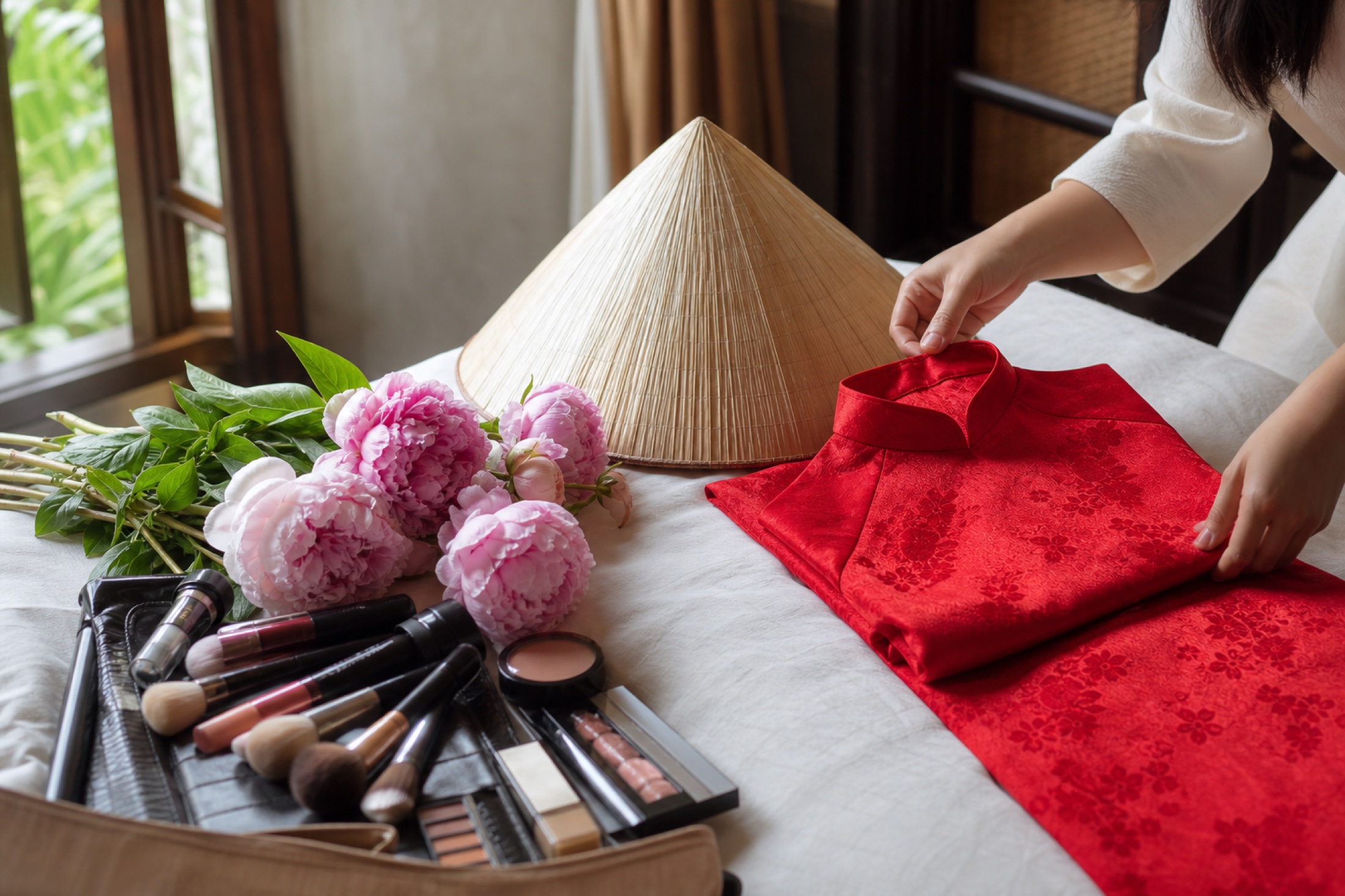
An ao dai is our specialty—it's designed for movement and light, so less is more underneath. Wear:
- Undergarments: a slim, skin-tone slip or leggings (no white, no contrast). The ao dai fabric should drape straight; avoid thick bra lines or panty lines.
- Footwear: soft ballet flats, slippers, or bare feet for shots (streets are swept but uneven). Bring a small bag for your everyday shoes.
- Accessories: minimal jewelry (let the ao dai shine); a silk scarf is optional for movement shots.
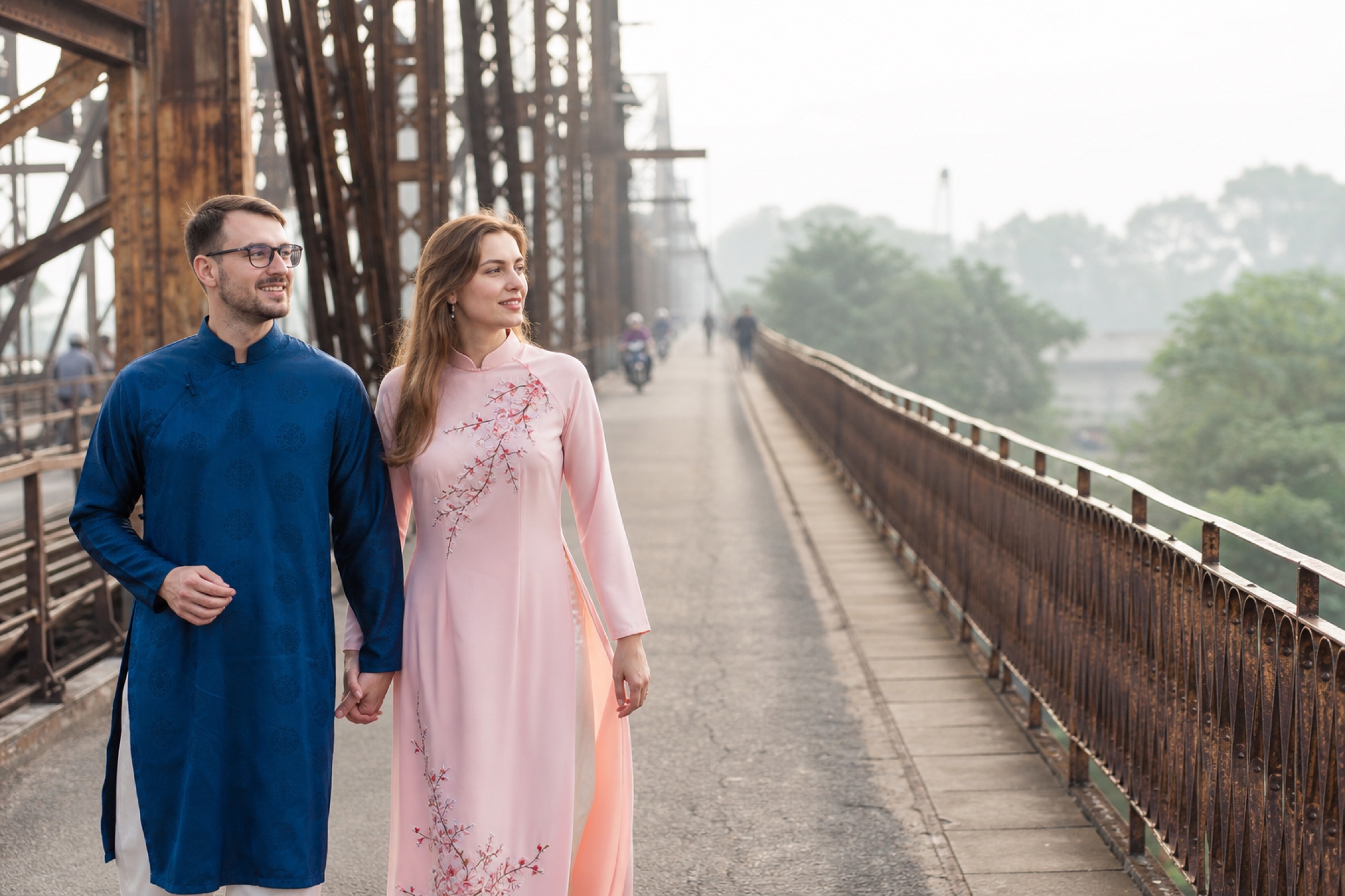
Hair is styled on-request; our makeup & hair service includes professional styling if you book at your hotel beforehand. If you're a couple or family, we'll coordinate outfits to complement the ao dai—matching ao dais, áo bà ba (traditional pants), or subtle earth tones.
---
Bakit dapat mag-book ng ao dai session sa Hoi An?
Hoi An is unmatched: lanterns reflect in ancient waterways, French colonial shutters frame ao dai folds, and stone paths add texture underfoot. The light is mercurial—golden at dawn, chalky at noon, liquid at dusk. Local guides (Cáo Studio's experience here spans dozens of shoots) know which buildings are photo-ready, which require asking permission, and where the best golden-hour pockets hide. A professional ao dai shoot elevates your heritage experience from "tourist moment" to heirloom image. Whether you're celebrating an elopement, anniversary, or proposal, or simply honoring your heritage, Hoi An deserves more than a phone snapshot.
📸 Book on WhatsApp — ao dai photoshoot
---
What to Check Before You Buy
| Criteria | What to Verify | Why It Matters |
|---|---|---|
| Ticket type | Single-day vs. multi-day; check official price on Heritage Office site | Avoids overpaying or buying wrong pass |
| Your photo concept | Ao dai solo, couple, family, pre-wedding? Tell Cáo Studio upfront | Determines shoot length, locations, permits needed |
| Weather & monsoon | Check forecast 3–5 days before; Sept–Oct is wet | Heavy rain cancels dawn shoots; reschedule with 24-hr notice |
| Heritage rules | Drones banned; tripods need permit; temples require silence | Violating rules delays your shoot & risks fines |
| Cáo Studio availability | Confirm travel dates to Hoi An; book 2–4 weeks ahead | Hoi An is by appointment—last-minute requests may not fit |
| Backup indoor spots | Tan Ky House, Assembly Halls, Japanese Bridge interiors | If weather fails, you still get stunning ao dai shots |
---
Related Photoshoot Services
Planning a trip to Vietnam with your partner or family? Cáo Studio also offers:
- Ao Dai Photoshoots — heritage sessions in traditional dress.
- Couple & Family Sessions — romantic and candid moments.
- Pre-Wedding & Elopement Shoots — comprehensive packages across Hanoi, Saigon, and Hoi An.
- Hotel Makeup & Hair — professional styling before your session.
- Proposal & Anniversary Packages — intimate, surprise-friendly shoots.
All sessions are booked via WhatsApp in Filipino (Tagalog) or English.
---
Explore Vietnam Through Photography
Not sure where to start? Visit our main pillar guide to Hoi An for spot recommendations, weather by month, and etiquette tips. Cáo Studio also operates studios in Hanoi and Saigon—if your trip spans multiple cities, we'll plan a cohesive visual story. Browse our lookbook for inspiration on styling, locations, and seasonal themes.
FAQ
Kailangan ba ng special permission para sa drone footage sa Hoi An?
Drones are prohibited in Hoi An Ancient Town—no exceptions for tourists or professionals. Violators face fines. If you want aerial imagery, scout alternative locations outside the heritage zone or ask Cáo Studio about nearby open-sky spots.
Pwede bang mag-shoot sa loob ng mga templo habang may simbang-siyam?
No. Active prayer times are early morning (5–7 a.m.) and evening (5–7 p.m.). Avoid flash and loud equipment. Ask the caretaker before entering; some areas are off-limits to cameras entirely.
Bakit biglang mabigat ang sikat ng araw sa hating-oras?
Hoi An's tropical latitude means near-vertical midday sun (11 a.m.–3 p.m.), creating harsh shadows on faces and fabric. Golden hour (before 7 a.m. and after 4:30 p.m.) angles light parallel to skin and ao dai folds, flattering both.
Paano kung pumasok na ako sa Hoi An ticket office pero hindi pa ready ang photographer?
Keep your ticket stub for re-entry. Leave, grab coffee, return within the same day. Cáo Studio always coordinates timing with you 24 hours before—this won't happen if you book with us.
May rainy season ba sa Hoi An at epekto sa photoshoot?
September–October sees heavy downpours (60–100 mm per month, per Vietnam Meteorology data). Wet streets shine beautifully, but dawn light is blocked. We reschedule free if weather cancels; sunset shoots work even in drizzle if you're comfortable.
Mas maganda ba ang kulay ng ao dai sa umaga o gabi?
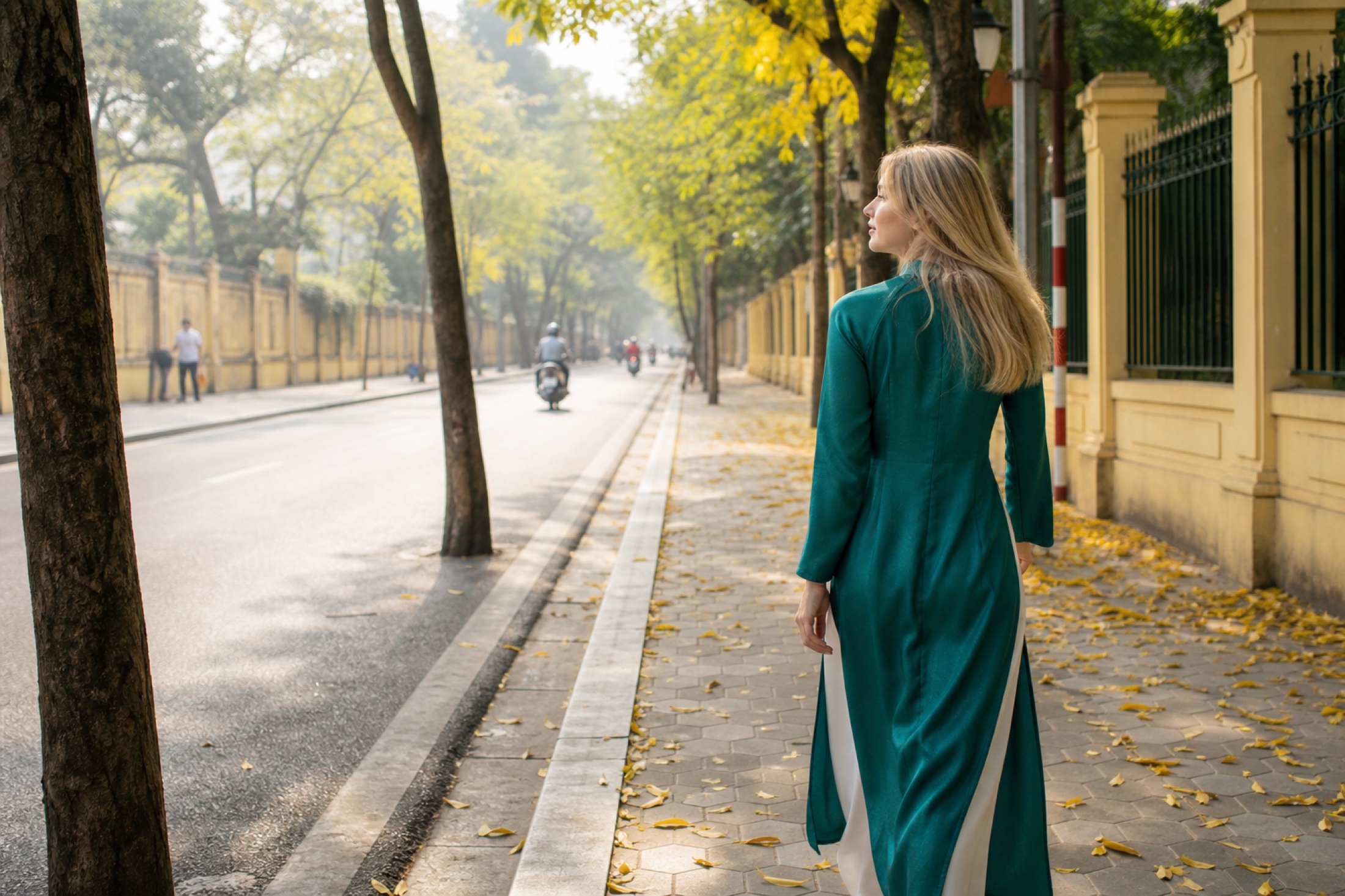
Early morning (5:30–7 a.m.) is best: soft gold saturates warm colors (reds, pinks, golds). Late afternoon (4:30–6 p.m.) is second-best, slightly warmer. Noon desaturates all colors. Choose your ao dai shade to complement the time—ask Cáo Studio's styling guide when you book.
Mga karaniwang tanong
Kailangan ba ng special permission para sa drone footage sa Hoi An?
Drones are prohibited in Hoi An Ancient Town—no exceptions for tourists or professionals. Violators face fines. If you want aerial imagery, scout alternative locations outside the heritage zone or ask Cáo Studio about nearby open-sky spots.
Pwede bang mag-shoot sa loob ng mga templo habang may simbang-siyam?
No. Active prayer times are early morning (5–7 a.m.) and evening (5–7 p.m.). Avoid flash and loud equipment. Ask the caretaker before entering; some areas are off-limits to cameras entirely.
Bakit biglang mabigat ang sikat ng araw sa hating-oras?
Hoi An's tropical latitude means near-vertical midday sun (11 a.m.–3 p.m.), creating harsh shadows on faces and fabric. Golden hour (before 7 a.m. and after 4:30 p.m.) angles light parallel to skin and ao dai folds, flattering both.
Paano kung pumasok na ako sa Hoi An ticket office pero hindi pa ready ang photographer?
Keep your ticket stub for re-entry. Leave, grab coffee, return within the same day. Cáo Studio always coordinates timing with you 24 hours before—this won't happen if you book with us.
May rainy season ba sa Hoi An at epekto sa photoshoot?
September–October sees heavy downpours (60–100 mm per month, per Vietnam Meteorology data). Wet streets shine beautifully, but dawn light is blocked. We reschedule free if weather cancels; sunset shoots work even in drizzle if you're comfortable.
Mas maganda ba ang kulay ng ao dai sa umaga o gabi?
Early morning (5:30–7 a.m.) is best: soft gold saturates warm colors (reds, pinks, golds). Late afternoon (4:30–6 p.m.) is second-best, slightly warmer. Noon desaturates all colors. Choose your ao dai shade to complement the time—ask Cáo Studio's styling guide when you book.