Cáo Studio · Mga gabay sa photoshoot sa Vietnam · Pre-Wedding Photoshoot Vietnam: Hanoi, Saigon & Hoi An Guide
Mga pinakamahusay na lugar para sa pre-wedding photoshoot sa Ha Long B
Cáo Studio team · Hanoi · 2026-10-03
Ha Long Bay's UNESCO limestone karsts, sheltered bays, and monsoon-free dry season (March–May, September–November) create cinematic backdrops for pre-wedding shoots. Sessions run 3–5 hours, split between limestone viewpoints and water-based framing (kayak or boat) — light is strongest 6–10 am and 4–6 pm, when shadows sculpt the cliffs. The main decision: shoot from land (easier logistics, better for ao dai, less seasickness) or from water (unique angles, requires calm seas and a boat operator's permission). Cáo Studio does not operate in Ha Long Bay; instead, read below to choose spots, scout a local photographer, and understand what conditions actually allow, then book your Hanoi or Saigon shoot separately. Season and sea state rule out entire days—check forecasts and book flexibility.
Bakit ang Ha Long Bay ay naging sikat para sa pre-wedding shoots?
Ha Long Bay's 1,600 limestone karsts rise 100–300 meters from emerald waters, framing couples against geology that looks too perfect to be real. The bay mirrors sunlight during golden hour, softening skin without harsh shadows. Unlike crowded city landmarks (Hoan Kiem Lake, Trang Tien Bridge), these islands absorb crowds and reward early arrivals with empty frames. The trade-off: you're 2 hours from Hanoi, dependent on boat operators and weather, and often shooting in direct sun unless you time it exactly right.
Most couples choose Ha Long for one reason: the frames look nothing like their home country. A limestone arch, a kayak between two islands, a junco-style boat in the distance—these create narrative, not just backdrop. The bay also accommodates outfit changes (limestone caves stay cool; boats offer shelter) better than open fields. But every advantage carries a cost: longer logistics, higher crew fatigue, and zero margin for mistiming the tide or sea state.
| Lokasyon | Pinakamahusay para sa | Liwanag / Panahon | Bakit ito gumagana |
|---|---|---|---|
| Surprise Island (western islands) | Couples na gusto ng limestone arch at kayak framing | 6:30–9 am (side light sa arch); calm seas Feb–Apr, Sep–Nov | Mature forest backdrop, shallow water para sa wading, tourist boats nag-anchor 11 am pataas |
| Tuan Chau Island boat dock | Junco / traditional boat framing + limestone | 5:30–7 am (boats backlit); calm water required | Authentic Halong boats, fewer tourists before 8 am, easy outfit change on boat |
| Halong City viewpoint (Bai Chay area) | Wide establishing shots ng bay + couple silhouette | 4:30–6:30 pm (golden hour side light) | High vantage point, crowds thin at sunset, limestone glows orange |
| Ti Top Island (main peak hike) | Elevated limestone + bay panorama | 6–8:30 am (cool, softer light); dry season only | 400-step stone staircase (outfit logistics, ao dai hemming); empty before 9 am; views scale upward with altitude |
| Limestone caves (Sung Sot, Thien Cung) | Intimate cave framing + limestone silhouette | 8–10 am (skylighting through cave mouth); year-round access | Cool microclimate (no sweat; makeup holds longer), unique geology, boat access only (permissions required) |
📸 Mag-book sa WhatsApp — pre-wedding photoshoot | 💄 Makeup & hair sa inyong hotel | 🌸 Mga ideya & lookbook
Anong taon at buwan ang best para sa Ha Long Bay pre-wedding shoot?
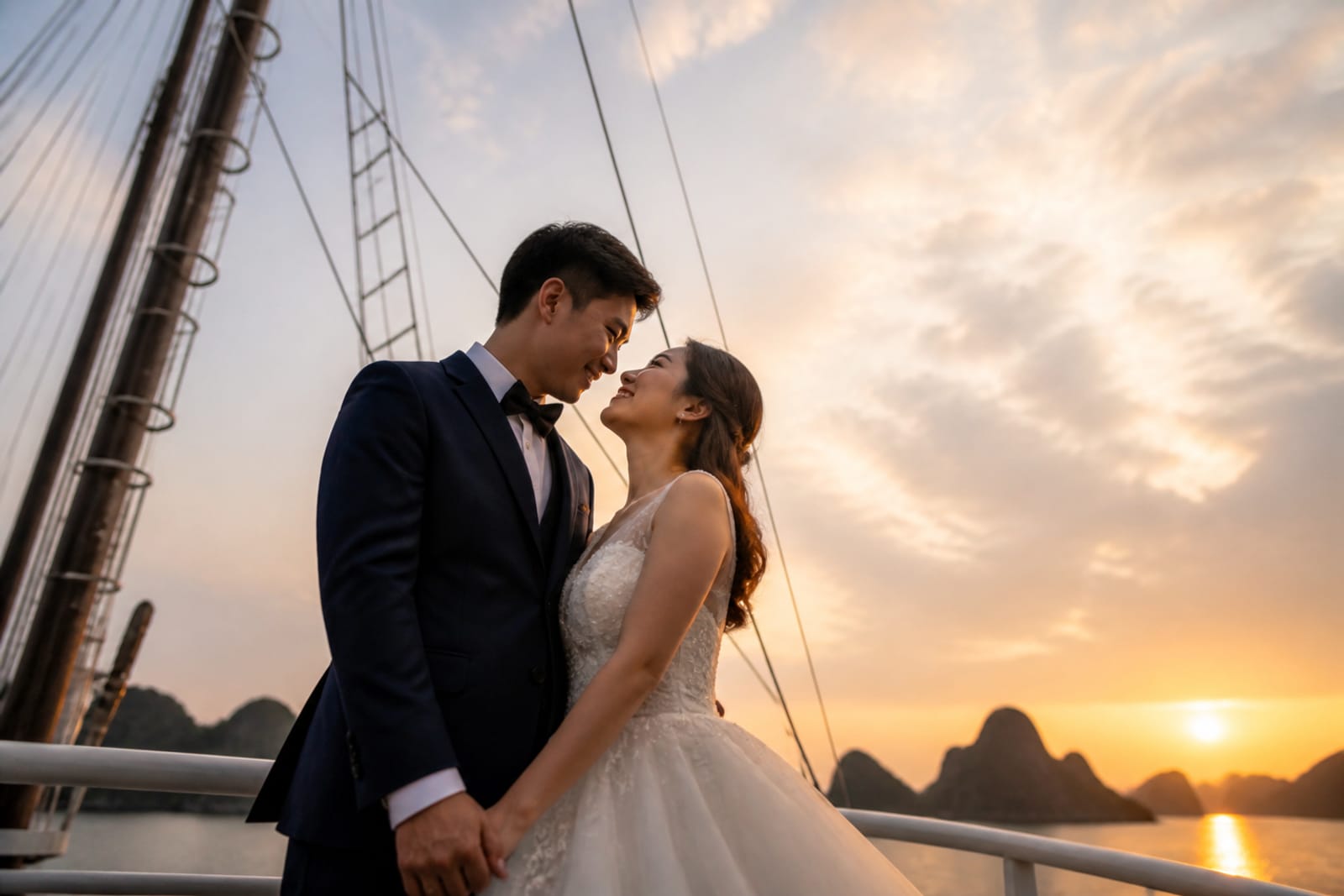
Ha Long Bay's dry season (March–May, September–November) offers flat seas and clear skies—the only window when boat operators permit water-based shoots. March–May averages calm mornings (wind picks up by 2 pm) and soft, cool light; expect 18–24°C mornings and crowds building post-Easter. September–November brings cooler temperatures (19–22°C) and fewer Vietnamese tour groups, though early October carries typhoon risk (port closures, rough seas). Avoid December–February (cold, frequent mist, seas choppy) and June–August (heat 28–32°C, afternoon thunderstorms, swollen rivers cloudier the bay).
Tet holidays (late January–mid-February) close many services and pack boat docks for 10 days. Book 4–6 weeks ahead to secure calm-sea dates and a crew that can fly in (if you're using Hanoi or Saigon photographers). Weather changes fast: ask the local boat operator for 48-hour forecasts before finalizing your shoot day.
Paano pipiliin ang perfect light at framing sa bawat location?
Light is your first filter. Sunrise shoots (5:30–7:30 am) offer soft side light that sculpts limestone without glare, ideal for skin tones and ao dai texture. This requires waking at 4:30 am, traveling in the dark, and relying on boat operators opening early—most don't; negotiate in advance. Mid-morning (8–10 am) light is neutral and forgiving, suiting wider group shots and outfit changes; crowds arrive 10:30 am onward. Golden hour (4:30–6:30 pm) lights the bay's west face, turning limestone gold-orange, but seas often roughen by late afternoon and you're racing sunset (6–6:30 pm in shoulder months).
Framing strategy shifts by location. Land-based spots (Halong City overlook, Ti Top Island) favor wide establisher shots first (couple dwarfed by karsts), then medium (couple walking the path), then detail (hands, ao dai hem). Water-based shoots (kayak, boat) require a second photographer or a swimming crew member; most local operators don't support this, so check. Caves demand strobed or bounce-fill lighting (caves are dark; daylight fills the mouth only 20 feet in). Never shoot mid-day (10 am–3 pm) in open sun; limestone reflects harsh glare and skin looks burned.
Local photographers vs. travel ng crew: ano ang trade-offs?
If you hire a Hanoi or Saigon photographer to fly to Ha Long, expect crew fatigue after 6 hours of driving + 3–5 hours of shooting, plus hotel costs for overnights (most do). They bring their own gear and crew (makeup artist, outfit assistant, videographer)—one team, one message, as Cáo Studio's pre-wedding shoots operate. Turnaround is usually 48 hours for edited stills + a short film.
Local Ha Long photographers (based in tourism companies or freelance) understand tides, boat operators, and quick location pivots, but coordination is fragmented: one person shoots, you hire separate makeup, outfit logistics are DIY. You'll also struggle vetting quality—most portfolios online are junco/sunset clichés. Meetings happen last-minute, language barriers emerge, and edits take 1–2 weeks if they happen at all.
Best hybrid: book a Hanoi-based couple photoshoot crew that has shot Ha Long before (ask for it), negotiate an overnight rate, and confirm they'll handle makeup and outfit changes. This costs more upfront but eliminates coordination friction and gives you professional edits by day 3.
Paano mag-prepare ng outfit at ao dai para sa Ha Long Bay shoot?
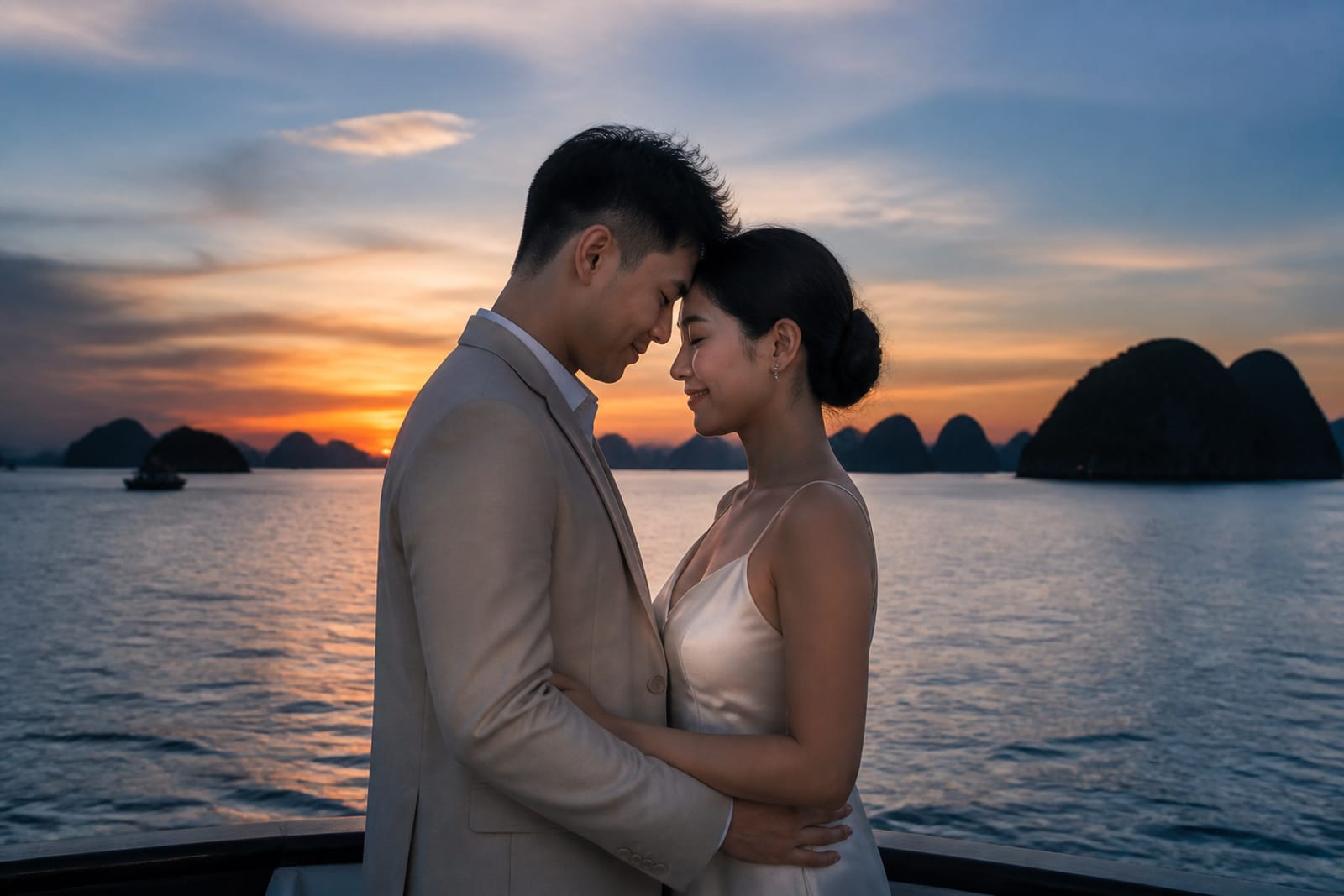
Ao dai shines in Ha Long Bay—the fabric floats on boat decks, drapes over limestone paths, and photographs like liquid silk in soft light. But logistics matter: carry a change bag on the boat (moisture + boat spray ruin makeup; outfit backup saves the day). Ao dai hems absorb spray and salt; ask your designer to finish them sealed or plan for dry cleaning after. Modern ao dai (stretchy cotton blends) move easier on stone stairs than traditional silk, which snags and tears.
Layer with a cardigan or overshirt for early morning (5–7 am is 15–18°C on water). Shoes: flat ballet flats or rubber-soled sandals for limestone (slippery when wet). Skip jewelry that glints harshly in morning light. Western-style wedding dresses work on boats and island paths, but long trains catch limestone debris and boat railings—floor-length is safer than train. Grooms in suits sweat and overheat by 9 am; linen or cotton blends hold better than wool.
Plan 30 minutes for outfit changes on land (bathroom or closed boat cabin), 45 minutes on water (motion, spray, balance). Bring a full wardrobe backup: if rain or sea spray soaks your first outfit, you're stranded otherwise. Hair and makeup touch-ups happen every 90 minutes in humidity above 70%—budget for a makeup artist who travels (not a local salon 2 hours away).
Ano ang dapat i-check bago mag-book ng Ha Long Bay pre-wedding shoot?
Before committing, verify these three things:
Sea conditions & boat operator permissions: ask the captain or local tourism board (Halong Bay Management Authority) if water-based shoots are allowed that season—some operators refuse drones, swimming, or climbing; others require permits. Check 48-hour wind and sea-state forecasts; rough seas (above 1.5 m waves) cancel water shoots instantly.
Crew logistics & fatigue management: if flying Hanoi/Saigon photographers, confirm hotel arrangements, meal allowances, and rest time between location moves. A tired photographer at hour 5 delivers soft focus and missed details. Negotiate a day rate (not hourly) to avoid 12-hour marathon bookings.
Backup plans & flexibility: book a shoot date with 2–3 backup dates built in. Bad weather on Day 1 shifts to Day 2; if no weather window opens, you need either a refund clause or a rescheduled shoot in Hanoi. Honest studios (like Cáo Studio) state this upfront; others ghost.
Cáo Studio does not operate in Ha Long Bay. To book a full pre-wedding session—styling, makeup, photographer, videographer—in Hanoi (4 hours from Ha Long), use the Cáo Studio Hanoi booking. For shoots in Saigon, visit Cáo Studio Saigon. If you want to shoot in Ha Long itself, scout a local freelancer (ask the boat operator for referrals), clarify all permissions and backup dates in writing, and ask for a portfolio of bay-based work (not generic tourism shots).
📸 Mag-book sa WhatsApp — pre-wedding photoshoot | 💄 Makeup & hair sa inyong hotel | 🌸 Mga ideya & lookbook
Ano ang realistic editing timeline at deliverables para sa Ha Long Bay shoots?
Most local Ha Long photographers deliver unedited RAW files within 2–3 weeks—or they disappear. Professional studios (Hanoi-based teams) edit within 48 hours: color-corrected stills (usually 60–100 images), sorted by location, plus one 90–120 second vertical film. This speed is possible because they shoot tethered, ingest on-location, and edit that evening after returning to their studio. Expect 3–5 edited ao dai images, 10–15 couple dynamics, 8–10 detail shots (hands, feet, fabric), and 5–8 environmental wide shots per location.
Revisions are included (1–2 rounds); excessive requests (retouching faces, adding objects, re-cropping every image) add time or cost. Ask upfront: do you get RAW files, or only the edited JPGs? RAW files let you edit later; JPGs lock you into the studio's color grade.
Video is where many local setups fall short. A 2–4 minute film requires cinematic sound design, color grading, and cut timing—skills most boat-dock photographers lack. If video matters to you, hire a dedicated videographer or a studio that includes wedding video as standard.
FAQ
Makakakuha ba kami ng close-up shots ng ao dai texture sa limestone background?
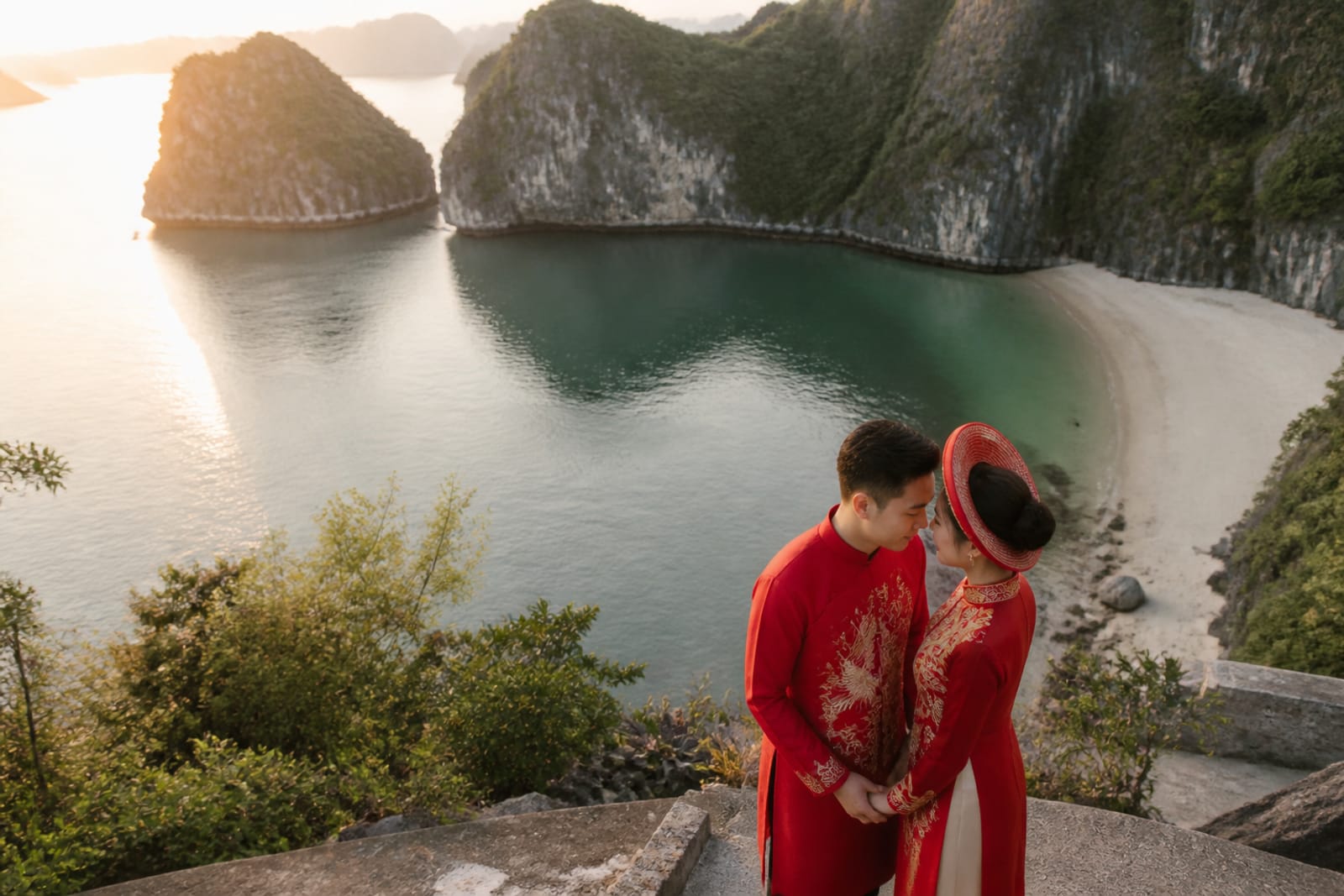
Yes. Frame wide first (couple + cliff), then move closer for detail (ao dai silk, lace, buttons against stone). Early morning side light (6:30–8:30 am) sculpts texture without glare. Afternoon direct sun washes out fabric color. Schedule 20 minutes per outfit for close-up sequences.
Bakit nag-cancel ang boat operators ng shoots pag umuulan ng maliit?
Light rain is safe; rough seas (waves 1–1.5 m, wind 20+ knots) capsize kayaks and make balance unsafe in ao dai on boat railings. Operators cancel if forecast shows afternoon storms or pre-typhoon swells—they're liable if anyone goes overboard. Check the sea-state forecast 24 hours prior; if "high" appears, shift your date.
Kailangan ba ng special permit para sa drone footage sa Ha Long Bay?
Yes. Commercial drones (including for weddings) require Civil Aviation Authority (Cục Hàng không Dân dụng) approval weeks in advance. Most boat operators and tourism authorities prohibit drones without it. Hire a local licensed drone pilot or skip drones and use cinematic boat-based video instead.
Gaano katagal ang typical Ha Long pre-wedding shoot, kasama ang travel from Hanoi?
10 hours door-to-door: 2 hours driving Hanoi–Halong (one way), 3–4 hours shooting on/around boat, 1 hour outfit/makeup changes, 1 hour return travel, plus 1–2 hours buffer. Book a full-day rate; rushing condenses it to 5 hours but cuts outfit changes and backup locations.
Pwede ba kaming mag-shoot sa cave (Sung Sot o Thien Cung) kasama ang boat operator na hindi photography-trained?
Caves require special permissions (most are protected sites), and operators may refuse if they're not insured for photography liability. Contact the Halong Bay Management Authority or book through a tourism company that specializes in shoots. Expect additional permits and a guide fee.
Ano ang average cost factor para sa crew travel to Ha Long (Hanoi-based photographer)?
Crew travel costs depend on overnight hotel rate, fuel, and whether the photographer brings 1 or 3 assistants—factors, not fixed amounts. Ask Cáo Studio or your Hanoi-based studio for a quote; most charge a day rate that absorbs travel, making it cheaper than daily hourly bookings.
Mga karaniwang tanong
Makakakuha ba kami ng close-up shots ng ao dai texture sa limestone background?
Yes. Frame wide first (couple + cliff), then move closer for detail (ao dai silk, lace, buttons against stone). Early morning side light (6:30–8:30 am) sculpts texture without glare. Afternoon direct sun washes out fabric color. Schedule 20 minutes per outfit for close-up sequences.
Bakit nag-cancel ang boat operators ng shoots pag umuulan ng maliit?
Light rain is safe; rough seas (waves 1–1.5 m, wind 20+ knots) capsize kayaks and make balance unsafe in ao dai on boat railings. Operators cancel if forecast shows afternoon storms or pre-typhoon swells—they're liable if anyone goes overboard. Check the sea-state forecast 24 hours prior; if "high" appears, shift your date.
Kailangan ba ng special permit para sa drone footage sa Ha Long Bay?
Yes. Commercial drones (including for weddings) require Civil Aviation Authority (Cục Hàng không Dân dụng) approval weeks in advance. Most boat operators and tourism authorities prohibit drones without it. Hire a local licensed drone pilot or skip drones and use cinematic boat-based video instead.
Gaano katagal ang typical Ha Long pre-wedding shoot, kasama ang travel from Hanoi?
10 hours door-to-door: 2 hours driving Hanoi–Halong (one way), 3–4 hours shooting on/around boat, 1 hour outfit/makeup changes, 1 hour return travel, plus 1–2 hours buffer. Book a full-day rate; rushing condenses it to 5 hours but cuts outfit changes and backup locations.
Pwede ba kaming mag-shoot sa cave (Sung Sot o Thien Cung) kasama ang boat operator na hindi photography-trained?
Caves require special permissions (most are protected sites), and operators may refuse if they're not insured for photography liability. Contact the Halong Bay Management Authority or book through a tourism company that specializes in shoots. Expect additional permits and a guide fee.
Ano ang average cost factor para sa crew travel to Ha Long (Hanoi-based photographer)?
Crew travel costs depend on overnight hotel rate, fuel, and whether the photographer brings 1 or 3 assistants—factors, not fixed amounts. Ask Cáo Studio or your Hanoi-based studio for a quote; most charge a day rate that absorbs travel, making it cheaper than daily hourly bookings.