Cáo Studio · Mga gabay sa photoshoot sa Vietnam · Proposal & Anniversary Photoshoot Vietnam: Hanoi, Saigon, Hoi An
Proposal at Da Lat Pine Forests: Light, Season & Photographer Guide
Cáo Studio team · Hanoi · 2026-10-03
A proposal at Da Lat pine forests works best in the dry season (December to April), when mornings bring mist and soft light through canopies—avoid rainy season (May to November) when afternoon showers and fog block the sun unpredictably. You'll shoot before 9 a.m. to capture the low, directional light that defines pine shoots; the walk takes 2–3 hours total (prep, vows, movement between spots). Since Cáo Studio operates in Hanoi, Ho Chi Minh City, and Hoi An by appointment, not in Da Lat, you'll need a local photographer who understands highland light, forest access permits (required at some reserves), and can direct your outfit choice—check their portfolio for actual pine-forest shoots in that season, not beach or temple work. Avoid peak Tet (late January to mid-February) when sites close and crowds pile in; book 2–3 months ahead and scout the exact grove with your photographer before the day. ---
Bakit ang early morning ang best time para sa proposal sa pine forests?
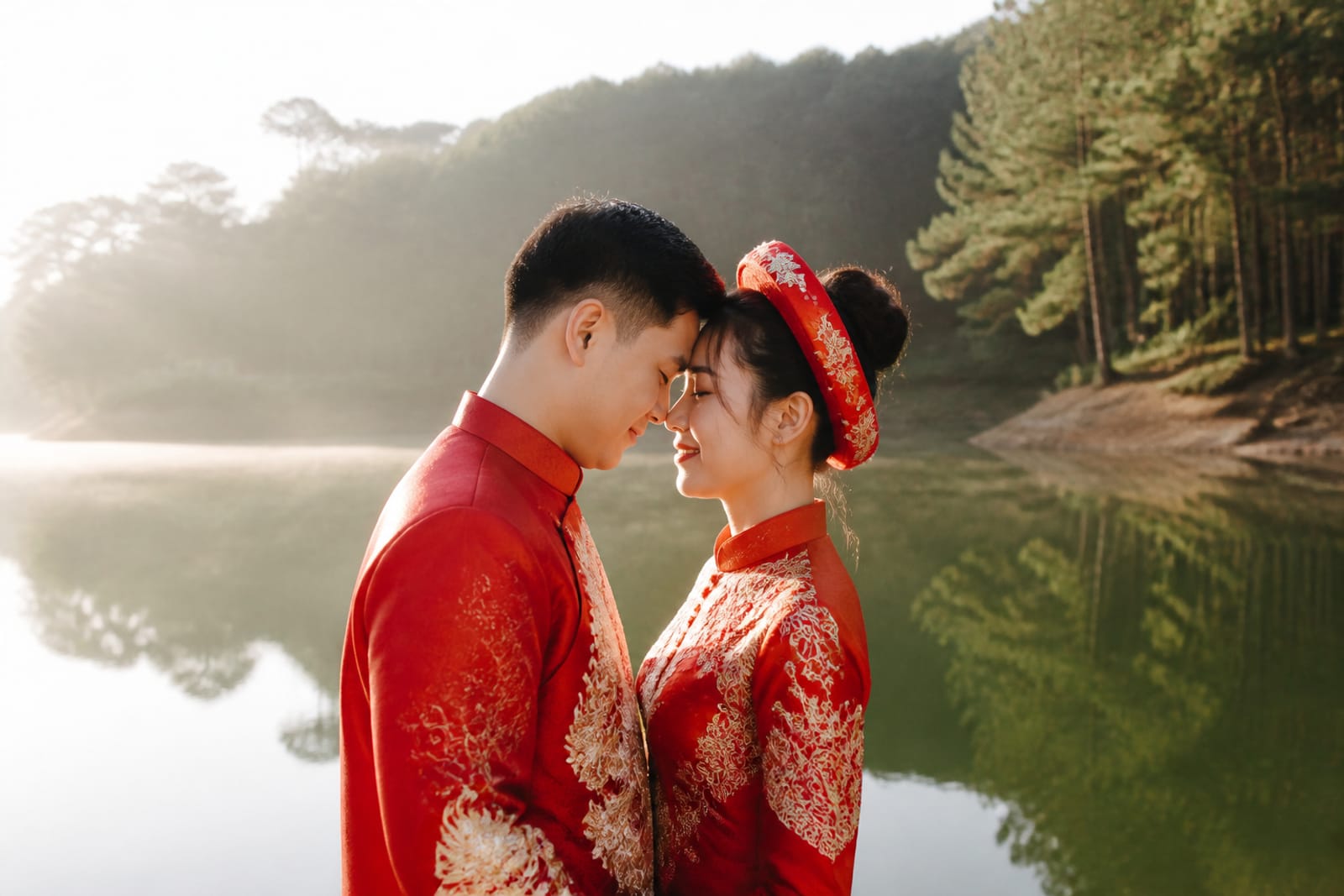
Pine forests scatter soft, directional light at sunrise and through mid-morning. By 10 a.m., the sun sits high and shadows flatten—your photos lose dimension and your partner squints. A 5:30 or 6 a.m. start means walking in half-light, which feels cinematic and gives the photographer time to shoot wide (you both in the landscape), then medium (just the two of you), then detail (ring, hands, emotion). The mist that clings to the trees in early morning burns off by noon, and once it's gone, the light becomes ordinary. Plan to be on location by 5:45 a.m.; allow 20 minutes for setup and vow exchange, then 90 minutes of guided movement through 3–4 spots.
Why it matters: Light is the only element you cannot rent or reschedule on the day. Book your local photographer specifically because they know which clearings catch first light and which stay shaded too long.
---
Which month gives you the clearest pine-forest light in Da Lat?
December through February offers the most reliable light and the least rain. December is crisp and dry, with mild temperatures around 15–20°C; January brings morning mist (bonus visual); February stays dry but crowds and Tet closures spike after mid-month. March to April remains dry but warms toward 22–25°C, losing some of the cool, moody aesthetic. Avoid May through November entirely—the rainy season brings unpredictable afternoon downpours and heavy mist that blocks backlight. Cherry blossoms bloom briefly in January and early February (an extra visual texture if you time it right), but they vary year to year; confirm with your photographer or local guides before booking. Late November and early December (post-rainy season) can work if mornings stay clear, but check recent weather reports from hikers who've been there recently, not tourism sites.
The decision: Book December or January if you want guaranteed dry mornings and mood; accept March–April if you're flexible on the cooler aesthetic.
---
What do you wear under an áo dài for a proposal shoot in a cold forest?
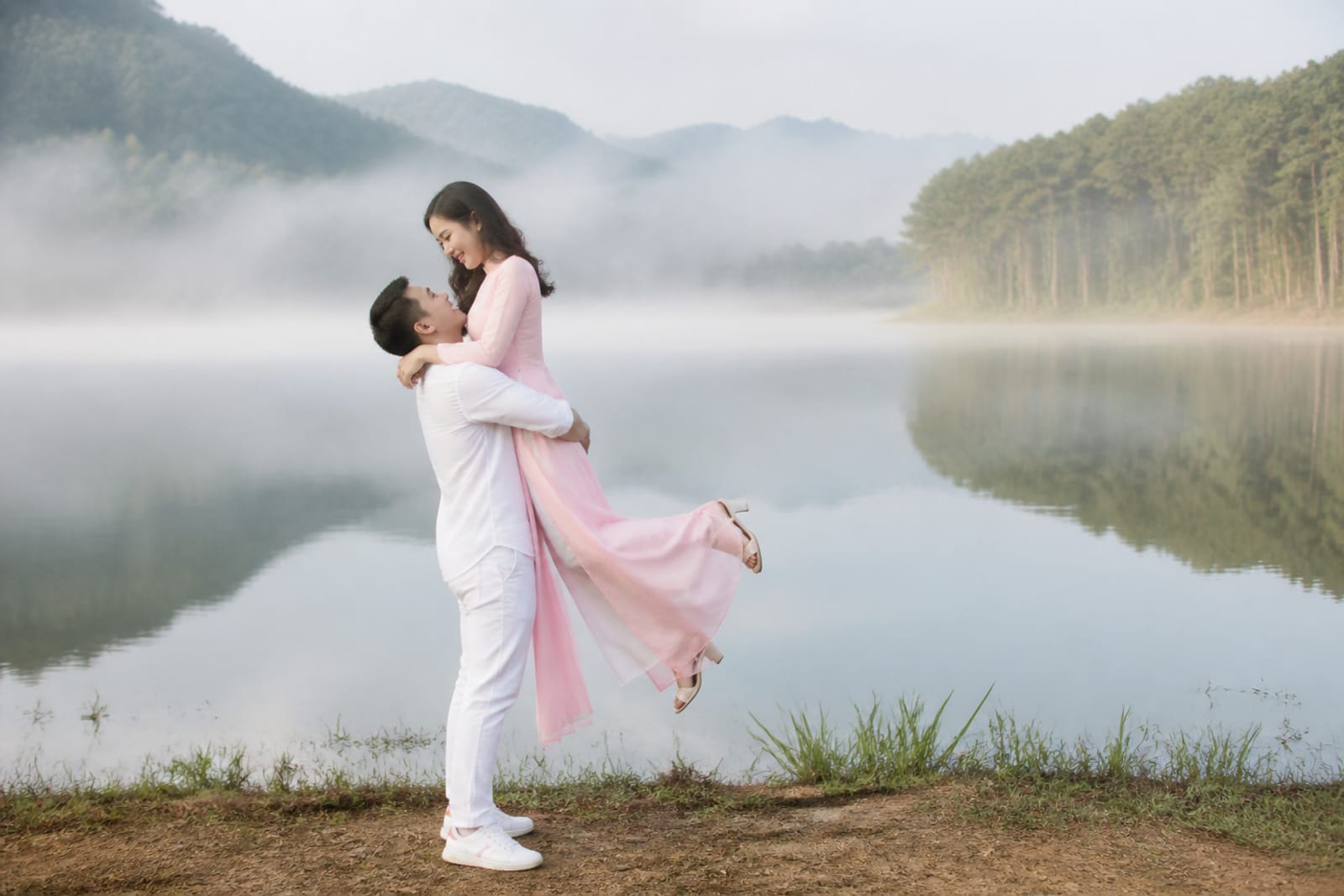
An áo dài photograph only works if the silk hangs smoothly—underwear that sits too thick or shows panty lines ruins the line. Wear a thin, seamless slip dress or silk camisole (no bra underwire—it creates bumps) in ivory or nude to match your áo dài color. A lightweight, long-sleeved thermal base layer works under the áo dài itself if you need warmth; Da Lat at dawn reaches 12–15°C and pine clearings have no sun protection. For your partner, a tailored suit or formal trousers with a crisp shirt works—avoid heavy coats (they bulk out the frame); instead wear a fitted blazer and layer a fine merino or silk long-sleeve underneath. Shoes matter: you'll walk uneven forest floor for 90 minutes. Wear comfortable ankle boots or forest-grip flats to rehearsal and change into heels (if you want them) just before the wide shot; bring backup flats in your photographer's kit bag. Avoid white sneakers or chunky athletic shoes—they read as casual in the final frames.
Check with your photographer: Ask whether they've styled other proposals at that grove. Local photographers often know the exact path and can advise on heel viability.
---
How do you find a local photographer in Da Lat who actually shoots proposal forests well?
Start by asking your accommodation or tour operator for referrals to photographers who specialize in "pine forest proposals" or "forest elopements"—not generic wedding photographers. Search Instagram hashtags like #DaLatProposal, #DaLatForest, #DaLatPhotographer and scroll back 6–12 months; real proposal work shows repetition in the same groves during consistent seasons (that's a sign they know the light). Check their portfolio for at least five proposal or elopement shoots in actual pine forests during dry season—beach work, temple photos, and studio portraits don't translate to forest light and terrain. Message three photographers with these questions: (1) "Have you shot proposals in [specific grove name or region] in December/January?" (2) "What time do you start and how long is the forest walk?" (3) "Do you handle permits or should we arrange them?" (4) "Do you shoot wide, medium, and detail frames, or mostly posed couples?" Avoid anyone who can't clearly answer or who offers flat, posed images. Ask for a call or video chat—trustworthy photographers are happy to discuss light, access, and your vision directly. Budget considerations include travel time from Da Lat town (add an hour each direction), forest access fees (verify current prices locally), and permit costs if shooting in a protected area—ask your photographer to itemize these factors upfront.
Red flag: If a photographer sends the same generic couple poses to multiple clients, they're not scouting your specific grove.
---
When should you arrive in Da Lat before your proposal shoot, and what should you scout?
Arrive at least two days before your shoot date. On day one, visit your exact grove during daylight (9 a.m.–2 p.m.) with your photographer or a guide; walk the path at normal pace, note any tree roots or muddy patches, and identify which direction the sun rises relative to your planned spots (this determines backlight direction and where your photographer will stand). Take photos on your phone to show the layout to your partner and check if you need hiking boots or if flat shoes are fine. Confirm whether permits are required (some Da Lat pine reserves enforce visitor rules; your photographer should know) and whether early-morning entry is allowed—some trails open at 6 a.m., others at 7 a.m. On day two, try on your outfit at your hotel (áo dài, suit, shoes) and practice walking short distances so you're comfortable moving naturally on the day. Have your photographer share a shot list: how many outfit changes (usually one), where you'll exchange vows (on a specific log or clearing), whether you want the ring on camera (yes or no), and what "post-vow moments" they'll direct (you walking away together, you looking at each other, you kneeling/surprising—not stiff poses). Eat a proper breakfast the morning of, hydrate, and plan to feel tired after 9 a.m.; the combination of early wake-up, emotion, and forest walking is real. Don't schedule another activity after 11 a.m. unless you want rushed photos.
First-hand note: Mist often clears faster than expected in dry season. Your photographer might suggest moving earlier (4:45 a.m. start) to catch more mist—trust that instinct.
---
Cáo Studio & Da Lat: How does remote direction work, and when is a local photographer the only option?
Cáo Studio does not operate in Da Lat; the studio's team is based in Hanoi, Ho Chi Minh City, and Hoi An (by appointment). However, if you're booking a proposal & anniversary package with Cáo Studio and want Da Lat photos as part of a larger trip, you can book the creative direction and editing through Cáo Studio's process: hire a local Da Lat photographer based on the vetting steps above, share your outfit and mood inspiration with Cáo Studio's director via WhatsApp, and Cáo Studio will remote-direct your photographer on shot sequence and framing (wide, medium, detail; light priorities; movement cues) and handle post-production. This works only if the local photographer agrees to take direction and shares RAW or full-res JPEGs for editing—not ideal, but possible if you want Cáo Studio's directorial voice. For a seamless experience, book a local photographer with a proven forest-proposal portfolio and work directly; they know the permit, the light window, and the terrain in a way remote direction cannot replace. If you're comfortable with that trade, it saves cost and simplifies logistics. If you want one cohesive team handling outfit, hair, makeup, and photography (Cáo Studio's core strength), plan your proposal in Hanoi, Ho Chi Minh City, or Hoi An instead, where the full team can direct you.
Honest comparison:
| Scenario | Best for | Reality | Trade-off |
|---|---|---|---|
| Local Da Lat photographer + Cáo Studio remote direction | You want Cáo Studio's editing + local terrain knowledge | Photographer must be open to direction; editing turnaround is slower | Coordination across two parties; possible friction |
| Local Da Lat photographer (solo) | You want simplicity + expert local knowledge | Photographer owns the shoot entirely; direct communication; faster delivery | No Cáo Studio editing; photographer's style determines the look |
| Cáo Studio proposal in Hanoi/Saigon/Hoi An + Da Lat shoot elsewhere | You want mixed trip (both Cáo Studio team days + independent Da Lat shoot) | One cohesive team for your Hanoi/Hoi An moments; separate local crew for Da Lat | Two different visual styles in your full trip |
---
What practical details should you confirm with your photographer before booking?
Create a checklist before you commit payment:
- Exact grove location & access: "Can we enter at 5:30 a.m.? Is a permit required? Who pays?" (Don't assume; permits vary by reserve.)
- Shot list: "How many outfit changes, how long do you give for vows, do you direct movement or do we pose?"
- Delivery & format: "How many edited photos, when do I get them, what format (digital, prints, album)?"
- Weather backup plan: "If it rains or mist doesn't clear, do we reschedule free, or is there a fee?"
- What's included in their fee: Some photographers include travel time and permits; others bill separately. Clarify.
- Outfit & styling: "Do you offer suggestions for what to wear, or is that our responsibility?"
- Reference photos: "Can I see five recent pine-forest proposal shoots you've done?"
- Communication language: Confirm they speak enough English (or your language) to direct you on the day without confusion.
- Cancel/reschedule policy: Understand the timeline—do you lose your deposit if you change dates beyond a certain window?
Share your engagement story and mood board (Pinterest, photos, mood words like "intimate," "adventurous," "romantic") so your photographer understands your vision. The more detail you give, the better the shoot runs.
Before you book: A good photographer asks you these questions back—they're interested, not just transactional.
---
Styling an áo dài proposal: Color, fit, and hair that work in pine-forest light.
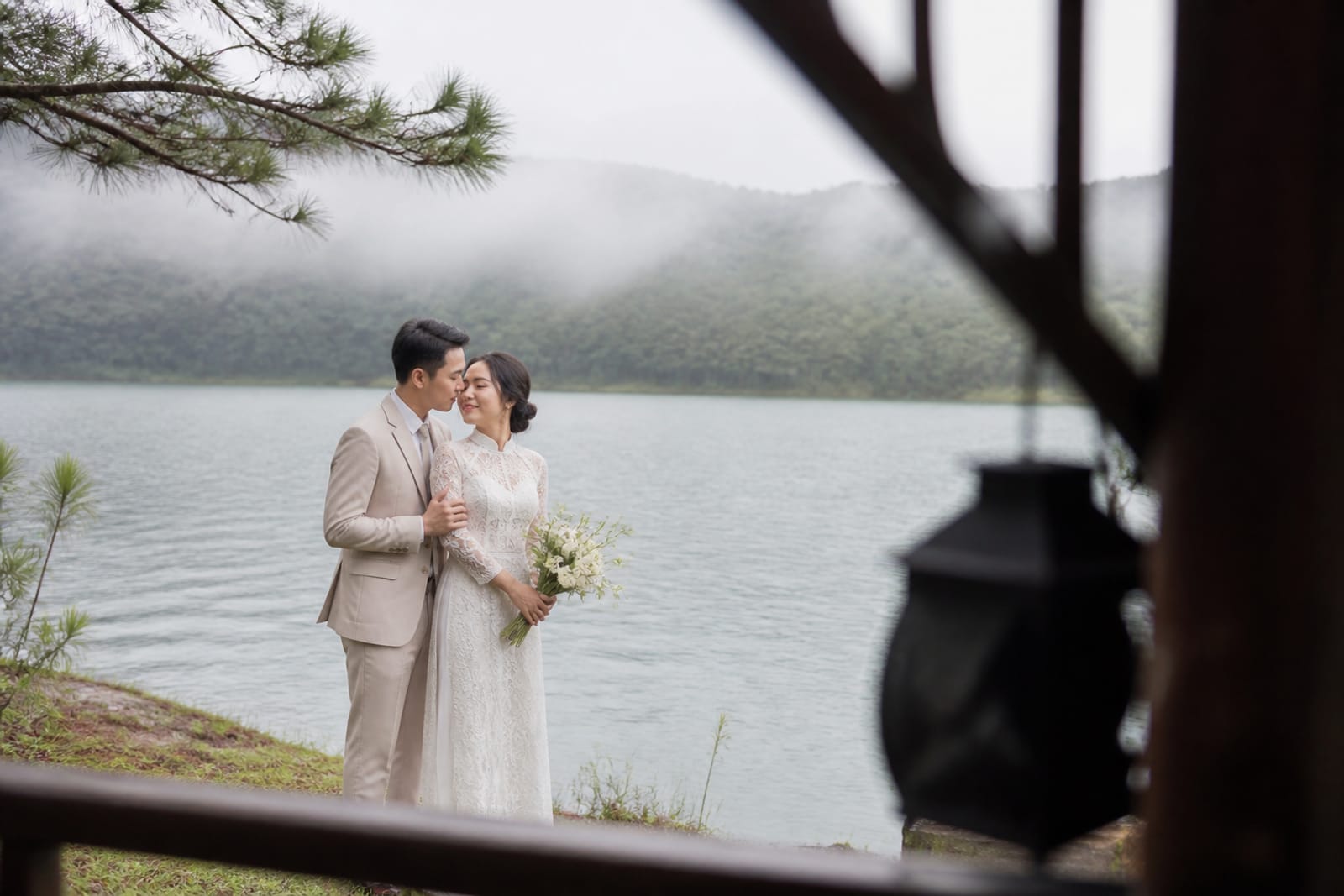
A proposal áo dài should be elegant but not so ornate that it competes with the forest. Jewel tones (deep emerald, sapphire, burgundy, forest green) photograph better than pastels in dappled shade; white and cream work but can blow out in backlight unless your photographer exposes for the subject. Ensure your áo dài fits snugly through the chest and waist—a too-loose fit looks unflattering in motion. Have it tailored by a reputable seamstress in Hanoi or Ho Chi Minh City 2–3 weeks before your shoot (not Da Lat, where options are limited). Hair should be secure enough to move naturally—a half-up style, a low bun, or loose waves pinned at the back work well. Avoid heavy hairpieces or crowns (they look staged in forest photos). Do a trial run at your hotel a few days before and walk around; if your hair falls in your face or your áo dài rides up when you move, adjust it now. Your partner's outfit should echo the formality without overshadowing you: a tailored suit jacket, crisp white or pale-blue shirt, and trousers (no tie unless it matches your vision—ties can feel stiff). If you're both wearing áo dài (increasingly common for LGBTQ+ or cultural-centered proposals), ensure both colors complement the forest and each other. Ask your photographer whether they style clients—many experienced proposal photographers offer quick hair and makeup touch-ups or recommendations before you head to the grove.
Check the light: Jewel tones hold color in shade; pastels and whites need careful metering or they'll look washed out on camera.
---
Cost factors: What influences the price of a Da Lat forest proposal photographer?
Cost depends on several factors, not all visible upfront. A photographer's experience level (has the photographer shot 50+ proposals or 5?) affects their rate. Distance from Da Lat town to your grove (near town vs. 45 minutes uphill) determines their travel time and can add cost. Season (dry season vs. shoulder season) may reflect demand; dry-season photographers book fast and may charge more. Number of outfit changes and location moves (staying in one clearing vs. scouting three spots) extends the session length. Permit and access fees (if your photographer handles them) come separate from the photography fee. Editing turnaround (next-day vs. 2–3 weeks) affects the price. Whether the photographer includes a second person (assistant, videographer, or makeup artist) changes the total. Some photographers bundle a short video or a printed album; others deliver digital files only. Request an itemized quote that separates photography fee, travel costs, permits, and editing. Compare three photographers in the same season to understand the range without being quoted exact figures. Ask each photographer what factors change their fee (more locations, longer session, rush editing, prints, video, album) so you can negotiate transparently.
What to ask: "Break down your fee: photography, travel, permits, editing, and any add-ons. What could change this price?"
---
How to prepare your partner and manage proposal-day emotion.
Proposals are high-emotion moments, and that's beautiful—but it affects your photos. If you're surprising your partner, brief them the night before (if possible) on logistics only: "We're waking up early, bring water and a sweater"; don't reveal the forest or the proposal moment. Let surprise live. If your partner knows a proposal is coming but not when, the same applies. Ensure your partner gets good sleep the night before (no late dinners); tired faces show in photos. Eat breakfast together on proposal morning—low blood sugar makes you shaky and emotional, and while emotion is good, shaking hands in the vows shot is not. Your photographer will guide the moment (when to kneel, when to stand, when to walk), so trust their direction and don't overthink poses. Bring tissues, water, and a small emergency kit (blotting papers, lip balm, safety pins) in a kit bag. Plan to feel vulnerable; that's the shoot working. After you exchange vows and your photographer captures the first emotional shots, take 5–10 minutes to breathe, hug, and cry if you need to—the camera can wait. Then your photographer will guide you into movement shots (walking together, looking at each other, holding hands while moving). These are less emotional and easier to execute. By the end, you'll likely feel tired and a little drained; that's normal. Plan a warm breakfast or hot drink at a café afterward; it's a grounding ritual and marks the shift from the sacred moment to celebration.
Real talk: The emotion is genuine; your photographer is there to capture it, not stage it. Trust the process.
---
📸 Hanumaan ay WhatsApp — couple photoshoot | 🌲 Proposal & anniversary ideas | 💄 Makeup & hair at your hotel
FAQ
Kailangan ba ng permit upang mag-shoot sa Da Lat pine forests?
Some Da Lat reserves require entry permits or photography permits; others don't. Your local photographer should know. Confirm when you vet them, and ask whether the permit fee is included in their quote or billed separately. Don't assume it's free.
Paano kung umuulan sa proposal day sa Da Lat?
Mist and light rain can be atmospheric, but heavy downpours ruin backlight and force you indoors. Agree on a backup plan with your photographer before booking—either a free reschedule within 30 days, or a covered location (temple, café, indoor grove shelter). Dry season (Dec–Apr) minimizes this risk; rainy season (May–Nov) is unreliable.
Pwede bang mag-áo dài proposal sa Da Lat, o mas ok ang formal Western dress?
Both work. Áo dài reads beautifully in forest light—jewel tones photograph gorgeously in shade. Western formal (suit, white dress) also works if tailored and styled well. Choose what resonates with your story, then ensure your photographer has styled that garment before; experience matters.
Ilang oras ang typical forest proposal session sa Da Lat?
Plan 3 hours total: 5:30 a.m. arrival, 20 minutes for setup and vow exchange, 90 minutes for guided movement through 3–4 spots, 20 minutes to breathe and walk back. You'll finish by 8:30–9 a.m., well before the day heats up.
Pwede ba akong mag-book ng Cáo Studio para sa Da Lat proposal?
Cáo Studio operates in Hanoi, Ho Chi Minh City, and Hoi An—not in Da Lat. Hire a local Da Lat photographer using the vetting steps in this guide. If you want Cáo Studio's editing style applied to your Da Lat shoot, discuss remote direction via WhatsApp after you've hired your local photographer, but know that adds complexity.
Magkano ang typical proposal photographer sa Da Lat?
Prices vary by photographer experience, season, and what's included—ask each one for an itemized quote. Avoid anyone who won't break down their fee. Compare three photographers in the same season to understand the range. --- 🌸 Lookbook & inspiration ideas | 📞 Message us on WhatsApp +84 338 762 340
Mga karaniwang tanong
Kailangan ba ng permit upang mag-shoot sa Da Lat pine forests?
Some Da Lat reserves require entry permits or photography permits; others don't. Your local photographer should know. Confirm when you vet them, and ask whether the permit fee is included in their quote or billed separately. Don't assume it's free.
Paano kung umuulan sa proposal day sa Da Lat?
Mist and light rain can be atmospheric, but heavy downpours ruin backlight and force you indoors. Agree on a backup plan with your photographer before booking—either a free reschedule within 30 days, or a covered location (temple, café, indoor grove shelter). Dry season (Dec–Apr) minimizes this risk; rainy season (May–Nov) is unreliable.
Pwede bang mag-áo dài proposal sa Da Lat, o mas ok ang formal Western dress?
Both work. Áo dài reads beautifully in forest light—jewel tones photograph gorgeously in shade. Western formal (suit, white dress) also works if tailored and styled well. Choose what resonates with your story, then ensure your photographer has styled that garment before; experience matters.
Ilang oras ang typical forest proposal session sa Da Lat?
Plan 3 hours total: 5:30 a.m. arrival, 20 minutes for setup and vow exchange, 90 minutes for guided movement through 3–4 spots, 20 minutes to breathe and walk back. You'll finish by 8:30–9 a.m., well before the day heats up.
Pwede ba akong mag-book ng Cáo Studio para sa Da Lat proposal?
Cáo Studio operates in Hanoi, Ho Chi Minh City, and Hoi An—not in Da Lat. Hire a local Da Lat photographer using the vetting steps in this guide. If you want Cáo Studio's editing style applied to your Da Lat shoot, discuss remote direction via WhatsApp after you've hired your local photographer, but know that adds complexity.
Magkano ang typical proposal photographer sa Da Lat?
Prices vary by photographer experience, season, and what's included—ask each one for an itemized quote. Avoid anyone who won't break down their fee. Compare three photographers in the same season to understand the range. --- [🌸 Lookbook & inspiration ideas](/fil/lookbook) | [📞 Message us on WhatsApp +84 338 762 340](https://wa.me/84338762340)