Cáo Studio · Panduan sesi foto di Vietnam · Ao Dai Photoshoot Vietnam: Panduan Memilih Studio & Paket 2026
Ao dai wedding photos in Phu Quoc: light, season & booking guide
Tim Cáo Studio · Hanoi · 2026-10-03
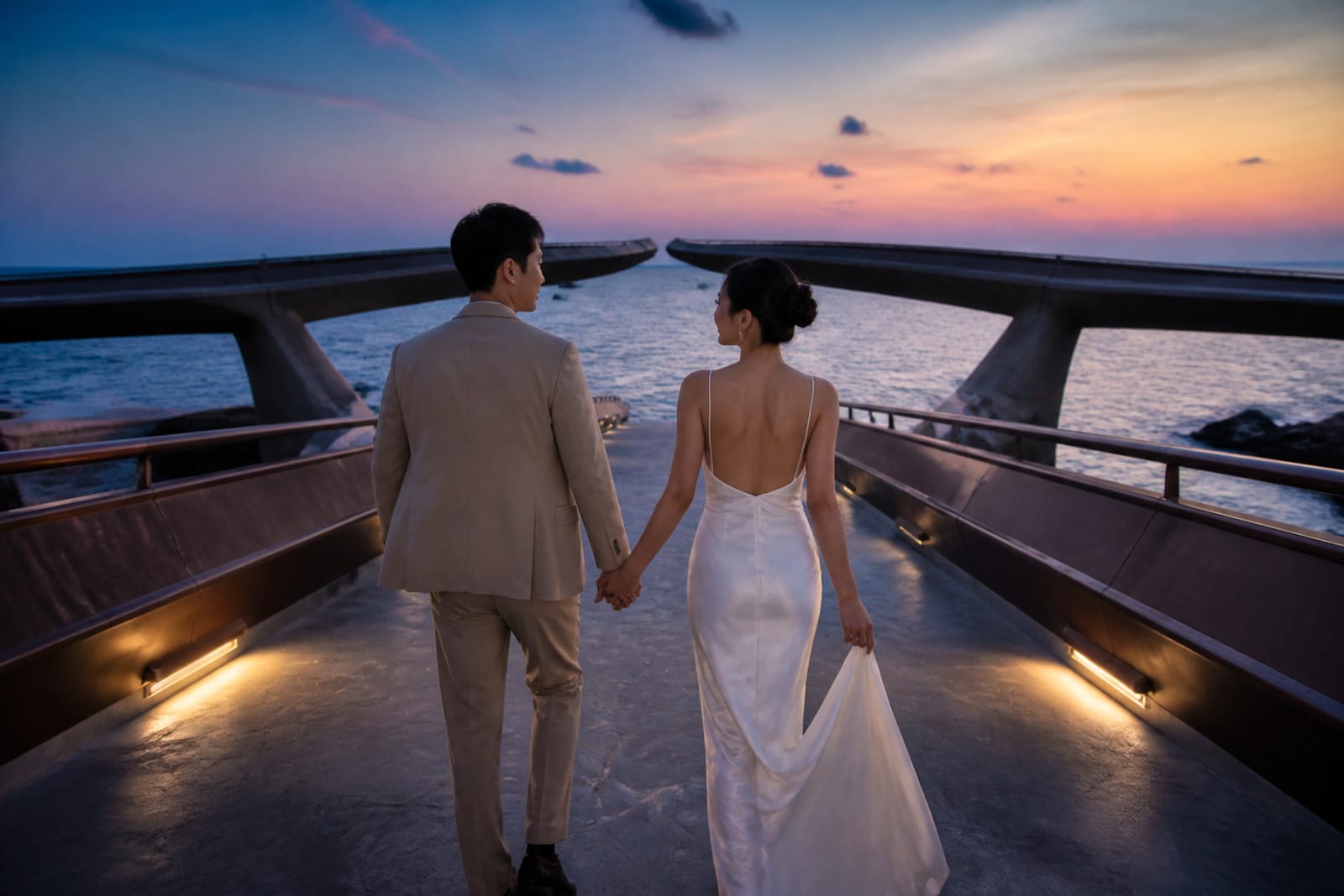
Ao dai wedding photos in Phu Quoc work best during the dry season (November to April), when the sea is calm and sunset light is clean and warm on the west coast. A typical session runs 2–3 hours and covers 1–2 locations: often Sunset Town or the Kiss Bridge at golden hour, then a temple or garden. The ao dai itself is the statement; preparation means choosing the right undergarments (a smooth slip or bodysuit under the áo dài prevents bunching), briefing your photographer on the story you want (walking together, looking at each other, real movement—not stiff poses), and confirming what you'll receive (edited photos plus a short film, usually within 48 hours from a one-team studio like Cáo Studio). Avoid mid-morning harsh light and the rainy season (May–October), when rough seas and grey skies flatten the mood. Book in advance during peak months. 📸 Book on WhatsApp — ao dai photoshoot | 🌸 Ideas & lookbook ---
Phu Quoc dry season: why November to April beats the rest
The best light for ao dai in Phu Quoc falls between November and April, when the Monsoon pulls back and the sea turns glass-calm. Golden hour (the hour before sunset) paints the Kiss Bridge and Sunset Town in warm amber; mornings offer soft, diffused side light if you start early. The rainy season (May–October) brings short afternoon downpours, rougher westward swells that churn the sand, and overcast skies that flatten colour—strong ao dai fabric still photographs, but the backdrop loses drama. November to February is coolest and driest; March and April warm up but remain dry. Tet (late January to mid-February) crowds the main beaches and closes some services for days, so plan either side if you want calm access and fewer tourists in the frame.
Conclusion: Book your session November–April, aiming for sunset at Sunset Town or sunrise at quieter eastern beaches to control light and crowds.
---
What goes under an ao dai: the unseen layer that changes everything
An ao dai's fitted bodice shows every wrinkle and seam if you wear regular underwear or nothing at all. Professional photoshoots require a smooth, non-binding slip—either a tailored silk or satin slip in your skin tone, or a seamless bodysuit. A slip lets the ao dai drape without bunching at the waist; a bodysuit adds support and prevents any visible panty line or bra strap shadow under the fabric. Choose skin-tone or white (if your ao dai is light); avoid dark colours that show through pale or white áo dài. Many studios (including Cáo Studio's makeup & hair at your hotel team) can advise or provide one—ask when you book. If you're renting an ao dai from a local vendor, ask if they supply a slip; if not, buy a cheap one in Hanoi or Ho Chi Minh City before arrival and pack it. Wearing the wrong undergarment is a common mistake that shows in every frame and requires time-consuming edits later.
Conclusion: Invest in a proper slip or bodysuit; confirm with your photographer before the shoot day.
---
Light and location: a comparison of Phu Quoc's top photoshoot spots
| Location | Best for | Light window | Why it works |
|---|---|---|---|
| Sunset Town (west coast) | couples, ao dai drama | 5:00–6:30 pm (golden hour) | Warm, directional light hits the boardwalk; fewer crowds than central beach; painted signage frames the ao dai |
| Kiss Bridge (west coast) | romantic framing, silhouettes | 5:30–6:15 pm (final glow) | Iconic arch and railing create geometry; soft backlighting if sun is low; calm water below reflects light |
| Phu Quoc Museum grounds (central) | heritage, garden setting | 6:00–7:00 am or 4:00–5:30 pm | Gardens offer layered depth; morning light is cool and diffused; late afternoon shows warm side light through trees; fewer than beach sites |
| Dinh Cau Temple (north, rocky point) | spiritual, natural drama | 6:15–7:00 am (eastern light) | Golden light from the east hits the temple and rocks; sea is calm in morning; rocks and shrines add texture; sunrise glow suits ao dai colour |
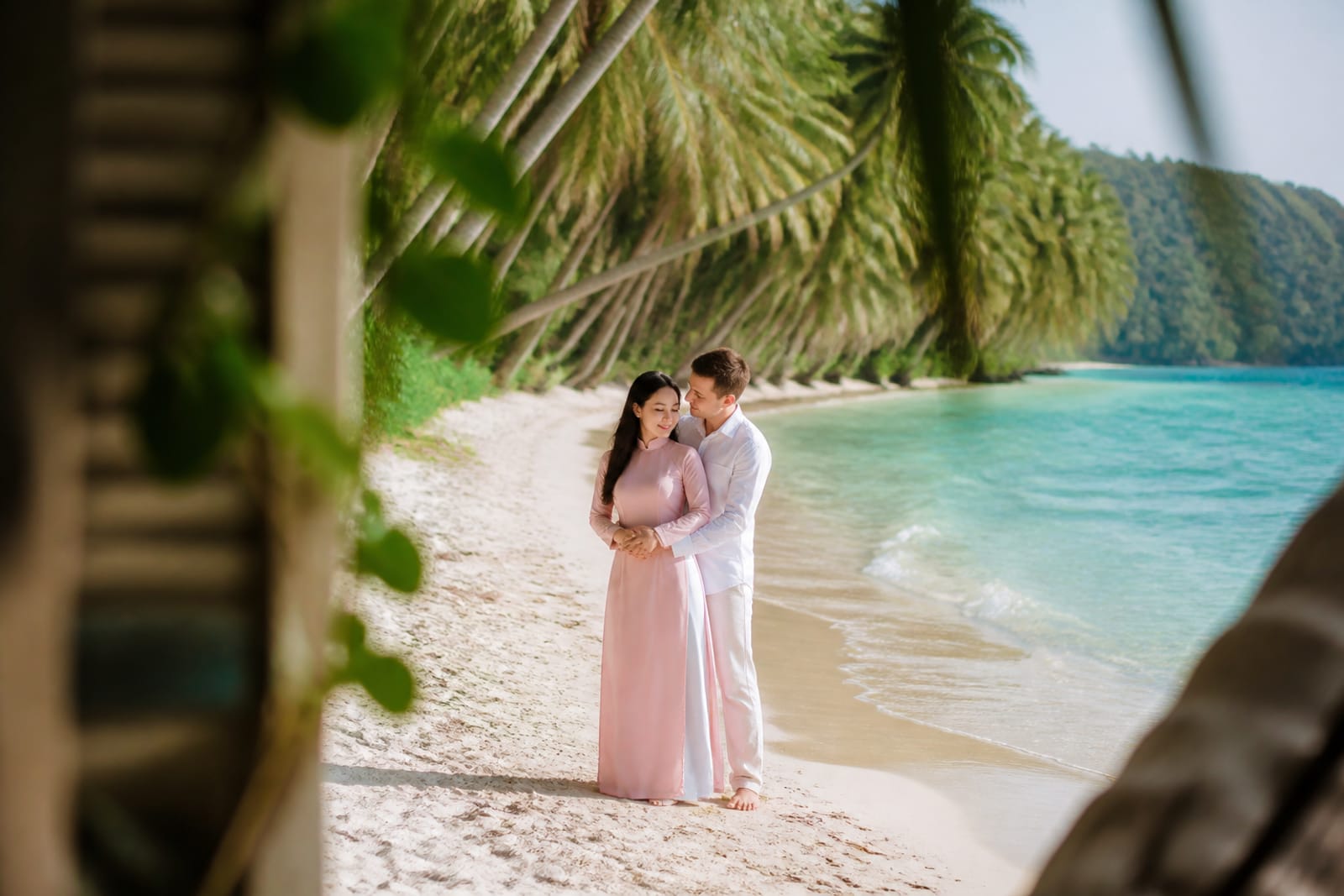
| Bamboo Island (boat excursion) | seclusion, wide sky | 7:00–9:00 am (soft directional light) | Empty white sand, turquoise water; no crowds; requires boat booking and timing; works for adventure-focused couples |
Sunset Town and Kiss Bridge are easiest to access and most popular; Dinh Cau and the Museum offer quieter alternatives with good morning light. Bamboo Island suits couples who want isolation and don't mind planning a boat in advance.
Conclusion: Choose Sunset Town or Kiss Bridge for classic ao dai drama; Dinh Cau for morning light; Bamboo Island if you want fewer people and don't mind logistics.
---
Solo photoshoot, couple session or family group: which format suits your visit
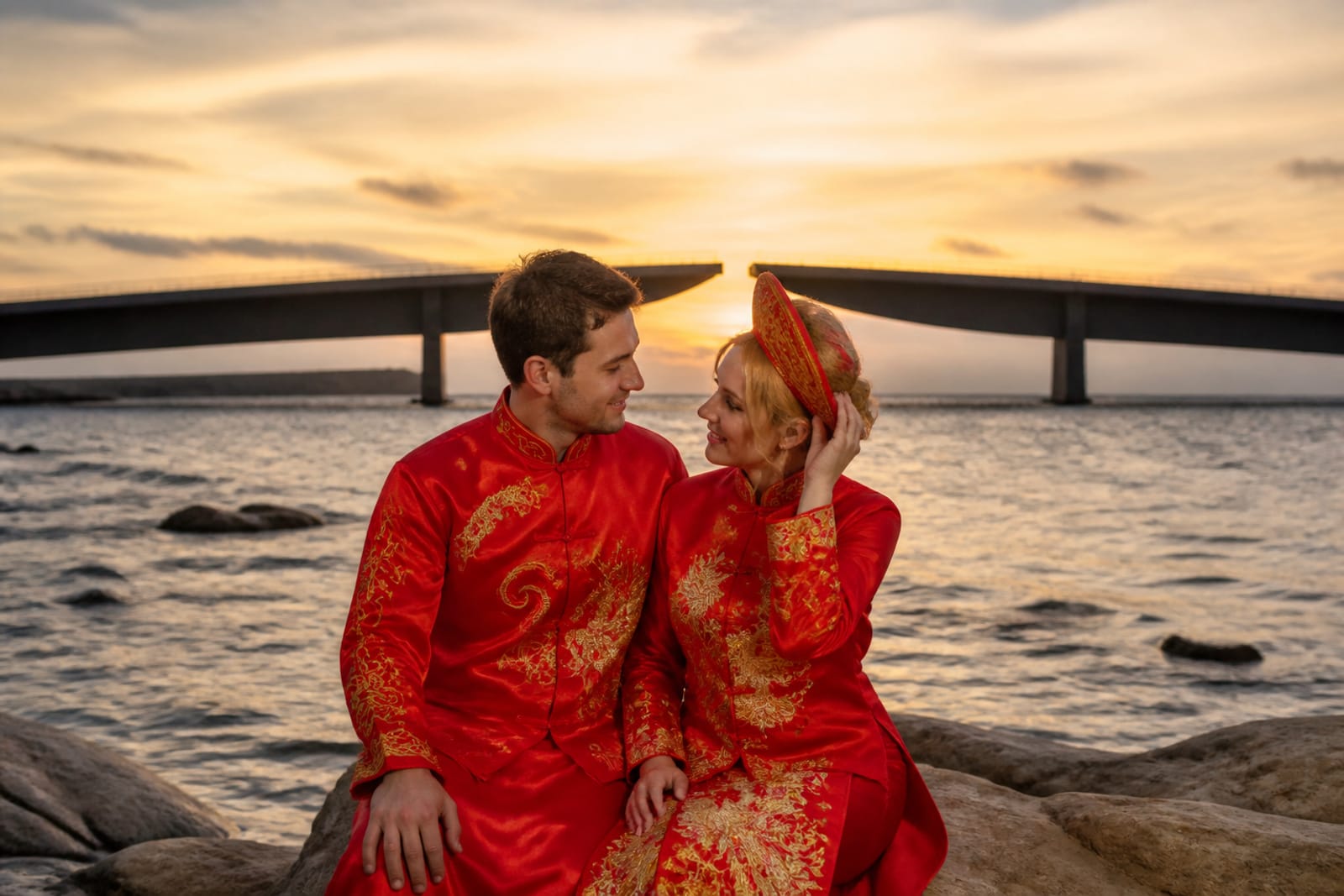
If you're a solo traveller in a single ao dai, a vacation photoshoot session with a one-person photographer covers you in 1–1.5 hours: one location, golden hour, a few outfit changes or poses, and you walk away with a short set. Ideal for a long weekend and a keepsake. A couple photoshoot runs longer (2–3 hours) because the story involves two people: walking toward or away from each other, looking at each other against the sea, sitting by the Kiss Bridge. A family photoshoot or group session (3+ people in ao dai) needs more time, more positions, and coordination—suits multi-generational trips or destination weddings where siblings or parents also wear áo dài. Pre-wedding sessions are half-day or full-day and cover 3–4 locations, multiple outfit changes, and often a short film plus a photo album—best if you're celebrating an engagement or marriage in Phu Quoc or planning a future wedding. If you want makeup and hair styling done at your hotel before heading to the beach, that adds 1–1.5 hours and means your photographer waits or meets you on location. A one-team studio (photographer, stylist, makeup artist all together) ensures continuity—you're not waiting for three separate vendors or re-doing hair between locations.
Conclusion: Book a solo session for a quick keepsake; couples or families for narrative depth; pre-wedding if you're celebrating or planning a larger event.
💄 Makeup & hair at your hotel | 🌸 Ideas & lookbook
---
Where to find and vet a photographer in Phu Quoc: what to check before booking
Phu Quoc has no shortage of freelance photographers, hotel coordinators, and small studios. Here's how to evaluate them: (1) Ask for a portfolio filtered by ao dai or wedding sessions—not landscapes or tourist groups. Look for full-day narrative (morning preparation, ceremony light, detail shots) and consistency in editing style. (2) Check if they work solo or as a team. A one-person photographer is cheaper but may rush between shooting and editing or leave you unattended while they adjust light. A team (photographer + stylist + makeup artist in one booking) ensures you're styled correctly before the shoot and maintains quality across locations. (3) Ask for a timeline and deliverables. Reputable studios confirm how many edited photos, when you'll receive them, whether a film or album is included, and what format (digital, prints, USB). Avoid vague promises like "you'll get lots of beautiful photos." (4) Verify editing samples from the same season—Phu Quoc's dry-season light looks different from Hanoi's winter grey or Ho Chi Minh City's tropical heat. (5) Confirm what's included: Do they provide makeup and hair, or do you hire separately? Do they suggest locations and outfits, or do you decide everything? Can they work in English if you're a Western traveller? Cáo Studio operates in Hanoi and Ho Chi Minh City with local experience; if you're booking in Phu Quoc directly, ask these same questions of any local studio.
Conclusion: Demand a filtered portfolio, confirm team size and deliverables in writing, and compare the editing style before committing.
📸 Book on WhatsApp — ao dai photoshoot
---
What to prepare before your Phu Quoc ao dai session: a practical checklist
1. Ao dai fit & comfort
- Rent or bring one; if renting, collect it 1–2 days early to check for loose seams or colour fading.
- Wear the slip underneath at home for a few hours to confirm comfort (no pinching at shoulders or waist).
- Bring a small kit: safety pins, a needle and thread, a stain stick (salt spray and sand can mark fabric).
2. Timing & weather
- Check the 5-day forecast for cloud cover, wind, and sea state; plan sunset sessions for calm mornings if rain threatens.
- Arrive at your location 15 minutes early so the photographer can assess light and adjust framing.
- In dry season, sunrise sessions (6:00–7:30 am) offer softer light and zero crowds—worth the early start.
3. Styling & undergarments
- Confirm your slip or bodysuit fits under the ao dai at least a week before the session.
- Bring minimal jewellery—the ao dai is the statement; a single bracelet, earrings, or a simple ring works.
- Hair: long hair flowing works in calm air; if wind is forecast, discuss an updo or half-up style with your stylist.
4. Footwear
- Wear flat sandals or go barefoot on sand (most ao dai photoshoots do); avoid heels unless your session is on pavement.
- Bring a small bag (or ask the photographer to hold your belongings) so you're not carrying a phone or keys while walking.
5. Logistics & safety
- Confirm your photographer's contact and meet-up location the day before; exchange WhatsApp numbers.
- If you're booking a boat excursion (e.g., Bamboo Island), arrange this with the photographer 3–5 days in advance.
- Bring sunscreen and reapply every hour—ao dai sleeves cover arms, but your face and neck are exposed.
6. Post-session
- Rinse the ao dai in fresh water immediately to remove salt spray and sand; hang it dry in shade.
- Ask your photographer when you'll receive the first edited photos and final album; typical turnaround is 48 hours.
Conclusion: Prepare a week in advance, confirm logistics by WhatsApp the day before, and rinse the ao dai immediately after the shoot.
---
FAQ
Is Phu Quoc dry season the only time to shoot ao dai wedding photos?
Technically no, but practically yes. The rainy season (May–October) brings rough seas, overcast skies, and frequent afternoon downpours that force rescheduling. Dry-season light (November–April) is clean, warm, and predictable—essential for a paid photoshoot where you need strong frames on the first day.
Can I wear the same ao dai for a full-day pre-wedding session, or do I need two?
One ao dai works, but two outfits (different colours or styles) give the photographer more narrative—morning in light blue by the temple, afternoon in deep burgundy by the sea. Many couples rent a second one locally; ask your rental vendor about package rates.
Do I need to hire a stylist separately, or does the photographer handle hair and makeup?
Depends on your photographer. Solo freelancers usually don't offer styling; they expect you to arrive camera-ready. Full-service studios (like Cáo Studio) include a makeup artist and stylist in one team, so you're styled on-location. Confirm before booking.
What time of day gives the best light for ao dai photos in Phu Quoc?
Golden hour (the hour before sunset, roughly 5:00–6:30 pm in dry season) is most dramatic—warm, directional light that flatters ao dai fabric and skin. Sunrise (6:00–7:30 am) offers softer, cooler light and zero crowds. Midday (11:00 am–3:00 pm) is harsh and flat—avoid it.
How long does a typical Phu Quoc ao dai photoshoot take?
A solo or couple session runs 2–3 hours (one main location, sunset light, 1–2 outfit changes). A pre-wedding or family session is half-day (3–4 hours, 2–3 locations) or full-day (6+ hours, multiple locations and outfit changes). Confirm duration and locations when you book.
Can a photographer shoot ao dai in a monsoon or typhoon season without rescheduling?
Not reliably. Monsoon seas are rough (unsuitable for seaside poses), light is flat (overcast), and rain forces indoor shelter—ao dai fabric stains easily and dries slowly. Most studios (and insurance) require rescheduling if conditions prevent safe or quality shooting; book a date with a 2-week buffer in case of weather delays.
Should I book a photographer in Phu Quoc or arrange one from Hanoi or Ho Chi Minh City?
If you're a Western traveller and want English-speaking coordination, a studio based in Hanoi or Ho Chi Minh City (like Cáo Studio) can manage your Phu Quoc session by phone or WhatsApp, even if they're not on-island—they contract local teams or travel to the island. Ask if they do Phu Quoc work; if not, vet local Phu Quoc photographers using the checklist in the article above.
What should I wear under an ao dai to avoid visible lines or bunching?
A skin-tone or white slip (knee-length, tailored satin or silk) or a seamless bodysuit. Avoid regular bras, briefs, or nothing—all show wrinkles or seams under the fitted bodice. Confirm your choice with your photographer a week before; if you're renting the ao dai, ask if a slip is included.
Is it worth renting an ao dai in Phu Quoc, or should I bring one from Hanoi?
Renting is easier and lighter. Phu Quoc has rental vendors, though selection is smaller than Hanoi or Ho Chi Minh City. Bring one only if you have a sentimental or custom ao dai you want in the photos. Confirm rental rates and the condition of the garment before you commit.
How do I know if my photographer will deliver high-quality edits?
Ask to see 5–10 photos from a recent ao dai or wedding session, all from the same shoot and edited in their final style. If they only show landscapes or tourist snapshots, they lack wedding experience. If their ao dai photos look oversaturated, over-sharpened, or heavily filtered, that's a red flag—compare to Cáo Studio's lookbook or other professional portfolios for reference.
Pertanyaan umum
Is Phu Quoc dry season the only time to shoot ao dai wedding photos?
Technically no, but practically yes. The rainy season (May–October) brings rough seas, overcast skies, and frequent afternoon downpours that force rescheduling. Dry-season light (November–April) is clean, warm, and predictable—essential for a paid photoshoot where you need strong frames on the first day.
Can I wear the same ao dai for a full-day pre-wedding session, or do I need two?
One ao dai works, but two outfits (different colours or styles) give the photographer more narrative—morning in light blue by the temple, afternoon in deep burgundy by the sea. Many couples rent a second one locally; ask your rental vendor about package rates.
Do I need to hire a stylist separately, or does the photographer handle hair and makeup?
Depends on your photographer. Solo freelancers usually don't offer styling; they expect you to arrive camera-ready. Full-service studios (like [Cáo Studio](/id/ao-dai-photoshoot)) include a makeup artist and stylist in one team, so you're styled on-location. Confirm before booking.
What time of day gives the best light for ao dai photos in Phu Quoc?
Golden hour (the hour before sunset, roughly 5:00–6:30 pm in dry season) is most dramatic—warm, directional light that flatters ao dai fabric and skin. Sunrise (6:00–7:30 am) offers softer, cooler light and zero crowds. Midday (11:00 am–3:00 pm) is harsh and flat—avoid it.
How long does a typical Phu Quoc ao dai photoshoot take?
A solo or couple session runs 2–3 hours (one main location, sunset light, 1–2 outfit changes). A pre-wedding or family session is half-day (3–4 hours, 2–3 locations) or full-day (6+ hours, multiple locations and outfit changes). Confirm duration and locations when you book.
Can a photographer shoot ao dai in a monsoon or typhoon season without rescheduling?
Not reliably. Monsoon seas are rough (unsuitable for seaside poses), light is flat (overcast), and rain forces indoor shelter—ao dai fabric stains easily and dries slowly. Most studios (and insurance) require rescheduling if conditions prevent safe or quality shooting; book a date with a 2-week buffer in case of weather delays.
Should I book a photographer in Phu Quoc or arrange one from Hanoi or Ho Chi Minh City?
If you're a Western traveller and want English-speaking coordination, a studio based in Hanoi or Ho Chi Minh City (like [Cáo Studio](/id/saigon)) can manage your Phu Quoc session by phone or WhatsApp, even if they're not on-island—they contract local teams or travel to the island. Ask if they do Phu Quoc work; if not, vet local Phu Quoc photographers using the checklist in the article above.
What should I wear under an ao dai to avoid visible lines or bunching?
A skin-tone or white slip (knee-length, tailored satin or silk) or a seamless bodysuit. Avoid regular bras, briefs, or nothing—all show wrinkles or seams under the fitted bodice. Confirm your choice with your photographer a week before; if you're renting the ao dai, ask if a slip is included.
Is it worth renting an ao dai in Phu Quoc, or should I bring one from Hanoi?
Renting is easier and lighter. Phu Quoc has rental vendors, though selection is smaller than Hanoi or Ho Chi Minh City. Bring one only if you have a sentimental or custom ao dai you want in the photos. Confirm rental rates and the condition of the garment before you commit.
How do I know if my photographer will deliver high-quality edits?
Ask to see 5–10 photos from a recent ao dai or wedding session, all from the same shoot and edited in their final style. If they only show landscapes or tourist snapshots, they lack wedding experience. If their ao dai photos look oversaturated, over-sharpened, or heavily filtered, that's a red flag—compare to [Cáo Studio's lookbook](/id/lookbook) or other professional portfolios for reference.