Cáo Studio · Panduan sesi foto di Vietnam · Concept Photoshoot Vietnam: Pilih Gaya, Lokasi & Paket yang Tepat
Film Camera Photoshoot Hoi An: Vintage Film Booking Guide
Tim Cáo Studio · Hanoi
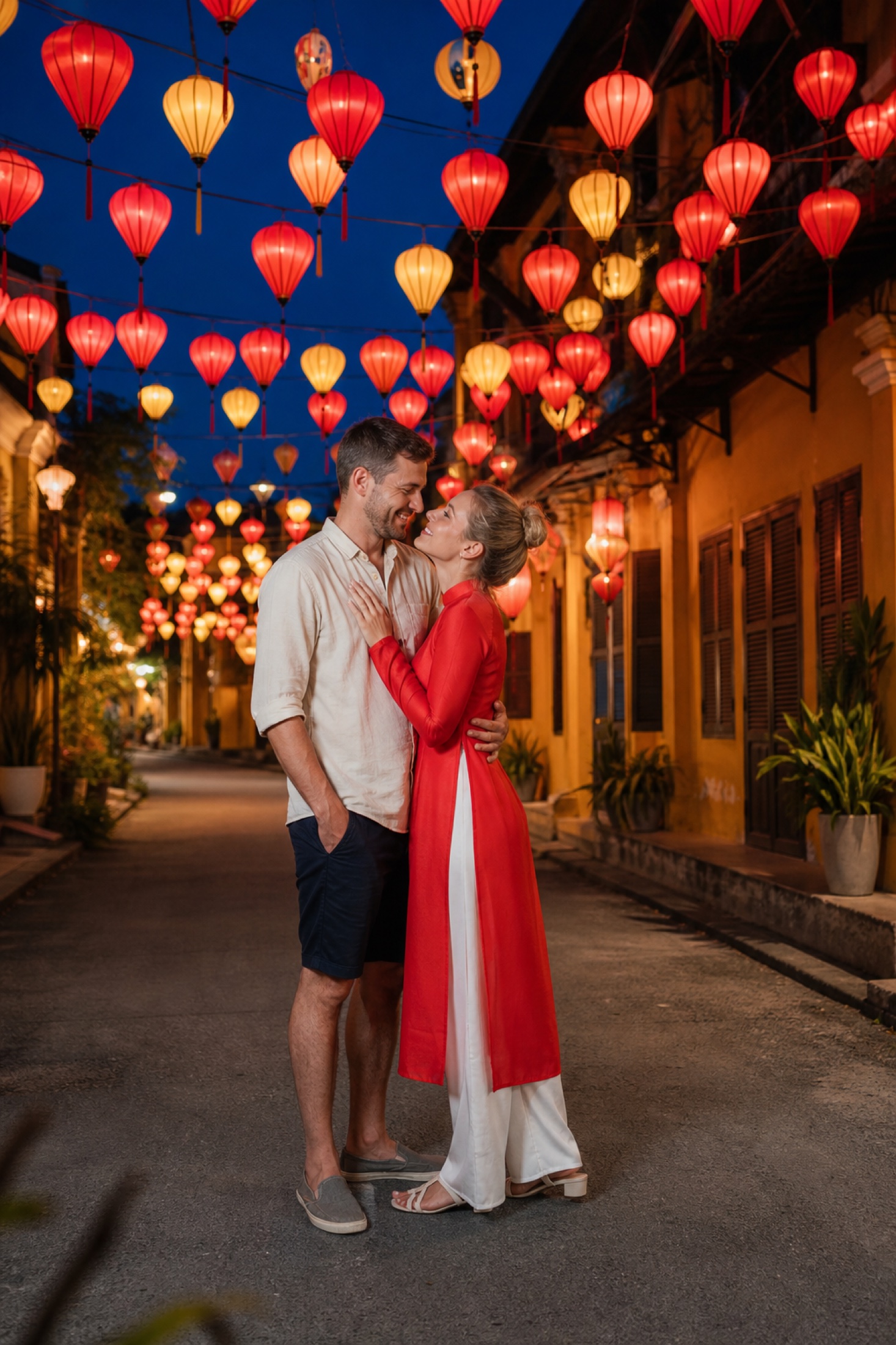
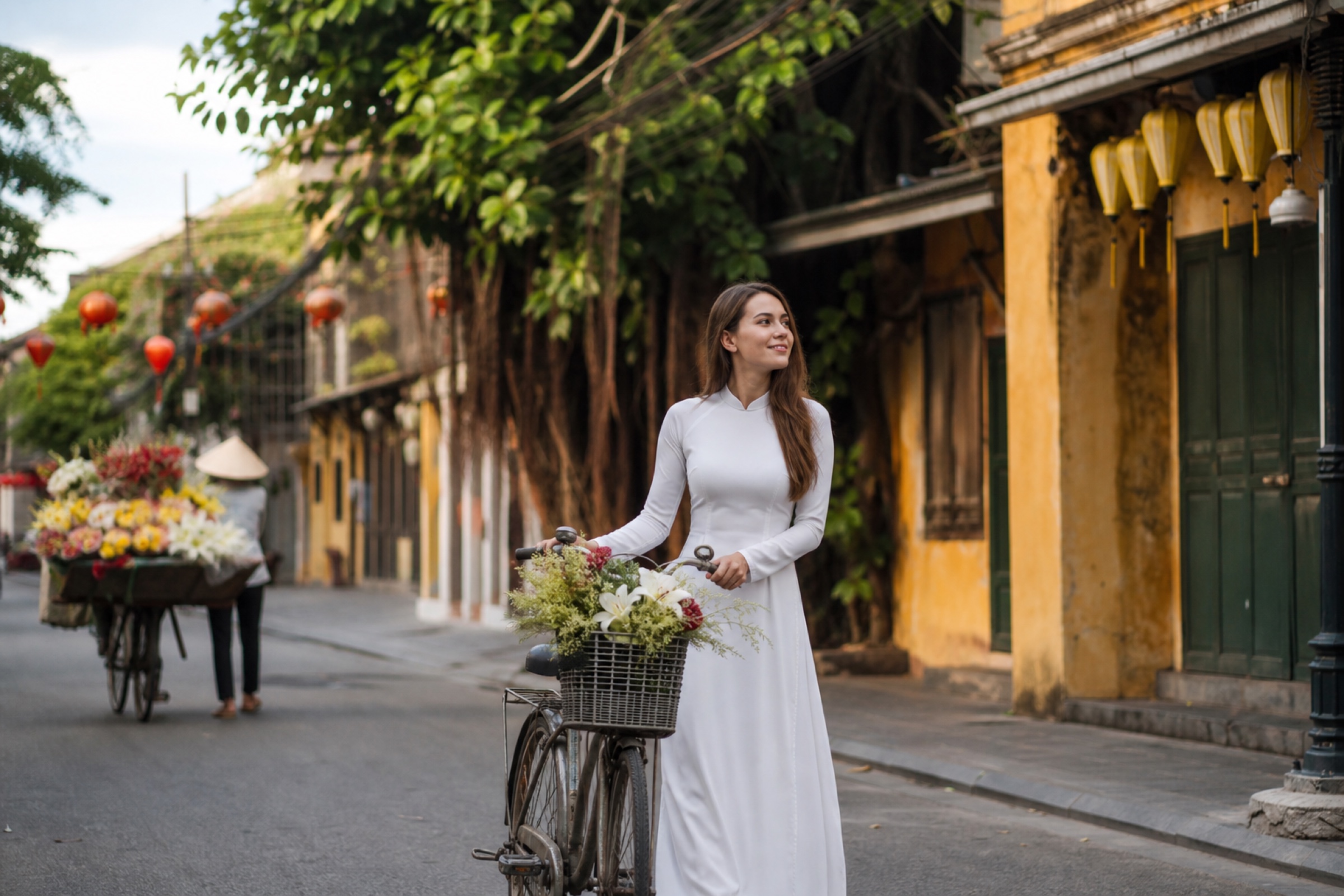
A film camera photoshoot in Hoi An is a 2–4 hour session where a Cáo Studio photographer uses 35mm or medium-format film stock to document you in traditional áo dài or casual wear against Hoi An's lantern-lit riverfront, French colonial shopfronts, and morning market light. The photographer shoots one roll (24–36 exposures) or multiple rolls depending on your package; film is developed at a lab partner in Hanoi or Saigon, then you receive contact sheets, digital scans of selected frames, or both. Costs vary by film type (color Kodak Portra runs warmer; black & white Tri-X is contrastier; slide film is rarer and pricier). Sessions include hair and makeup by Cáo Studio's team. Hoi An appointments require 2–3 weeks' notice because the team travels from Hanoi or Saigon; ask on WhatsApp for available dates and film stock options.
---
Why does film look different from digital in Hoi An?
Film captures light through chemical reaction, not a digital sensor, so it renders skin tones warmer, compresses highlights more gently, and adds grain that many travelers find flattering and nostalgic. In Hoi An's golden-hour lantern glow (17:00–19:00), color film like Kodak Portra 400 reproduces the amber and rust tones authentically without digital's tendency to oversaturate. Black & white film (Tri-X, HP5) emphasizes texture—the weathered stucco of 200-year-old shopfronts, the wooden shutters, your áo dài's silk drape—over color, which suits Hoi An's architectural character. Digital allows instant review and correction; film demands trust in the photographer's eye and technical skill. If you want a warm, grainy, romantic aesthetic that feels less "polished," film is the right choice.
📸 Book on WhatsApp — ao dai photoshoot

Which film stock should you choose for Hoi An light?
| Film Stock | Color Temp | Grain | Best For | Cost Basis |
|---|---|---|---|---|
| Kodak Portra 400 (color) | Warm (golden) | Fine | Skin tones, warm light | Standard session |
| Fujifilm Superia 200 (color) | Cool (blue) | Very fine | Landscapes, detail | Standard session |
| Ilford HP5 (B&W) | N/A | Medium | Texture, architecture | Standard session |
| Ilford XP2 (B&W) | N/A | Fine | Portraits, smoothness | Standard session |
| Kodak Ektachrome E100 (slide) | Saturated | Fine | Vivid color, archival | Premium (rarer) |
Portra 400 is the most forgiving in mixed light (shop interiors, sunset) and renders Asian skin tones with flattering warmth. Superia 200 works better in bright midday sun, common in Hoi An's dry season (November–April). Black & white eliminates color bias and lets you focus on composition and texture—ideal if you're unsure about Hoi An's actual light on the day. Slide film (Ektachrome) is expensive to process and develop, demands metering precision, but produces slides that scan beautifully and last 50+ years. Ask Cáo Studio on WhatsApp which stocks they have in hand and which suit your shoot date.
What time of day gives the best film light in Hoi An?
Morning light (06:30–09:00) is soft, directional, and renders pastels and neutrals subtly; the Ancient Town has fewer crowds, so compositions are cleaner. Midday (10:00–14:00) is harsh and flat on film, creating blown highlights and muddy shadows—avoid it unless you want dramatic, contrasty black & white shots. Golden hour (17:00–19:00) is Hoi An's signature: lanterns ignite, riverfront glows amber, film's gentle highlight roll-off prevents overexposure, and Portra's warm bias matches the light perfectly. Twilight (19:30–21:00) requires faster film (800 ISO) or longer exposures, risking blur but creating moody, atmospheric images. Cáo Studio will time your session based on your film stock and what look you want; morning is most forgiving for beginners, golden hour most romantic for áo dài.
How do you get your film negatives after the shoot?
After Cáo Studio develops your film at a partner lab in Hanoi or Saigon (3–5 business days), you receive: (1) contact sheets (small prints of all frames), (2) digital scans of selected negatives at high resolution (300 DPI, suitable for prints up to 8×10 inches), and (3) the original negatives in protective sleeves. You can keep the negatives indefinitely and reprint them later, or request additional prints from the lab. Digital scans arrive via WhatsApp or email; negatives and contact sheets are mailed to your Hanoi address or handed to you in person if you return to Hanoi before departure. If you want enlargements (11×14 or larger), the lab quotes separately; most travelers print 4×6 or 5×7 and frame the digital scan at home, keeping film's grain crisp on screen.
What's the difference between film and our digital ao dai sessions?
Film sessions cost more because lab development, scanning, and paper prints add material expense; you also wait 1–2 weeks to see results, with no on-set digital review or retakes. Digital sessions deliver images same-day via cloud link, allowing instant reshoot if focus or pose isn't right, and cost less upfront because there's no consumable film or lab fee. Film suits travelers who value the aesthetic (warm, grain, romantic look), don't mind waiting, and want a true archival product (negatives last 75+ years if stored cool and dry); digital suits those who want immediate proof, numerous edits, and instant prints or digital-only keepsakes. Cáo Studio shoots both; your choice depends on budget, timeline, and whether you love film's look or prefer digital's control.
What should you check before booking a film photoshoot in Hoi An?
Booking clarity:
- Confirm film stock availability 3 weeks ahead; rare stocks like Ektachrome or Portra 800 may need ordering.
- Agree on session length (2, 3, or 4 hours) and number of rolls; more rolls = more exposures but higher development cost.
- Check lab turnaround: standard development is 3–5 business days; rush (2 days) may cost extra.
Logistics:
- Hoi An is 30 km south of Da Nang airport and 3 hours north of Ho Chi Minh City; plan 1–2 days in Hoi An for light, hair/makeup, and wardrobe fittings.
- Bring áo dài in your chosen color or rent from Cáo Studio's partner vendors in Hoi An (confirm on WhatsApp).
- The team travels from Hanoi or Saigon, so schedule during their Hoi An availability; walk-ups are not possible.
Film handling:
- Film is light-sensitive; keep unexposed rolls in a cool bag during transport and don't X-ray at airports (request hand-check of film at security).
- Processed negatives are yours to keep; ask for archival-quality sleeves and storage advice if you plan to print decades later.
Cost estimate (no fixed prices published):
- Film cost depends on stock and rolls shot; ask for a quote including development and scanning.
- Prints, enlargements, and archival boxes are add-ons quoted separately.
---
Back to special-concept services | Compare couple & family photoshoots | Explore pre-wedding film options
---
FAQ
Can Cáo Studio shoot my film photoshoot in other cities like Hanoi or Saigon?
Yes. Hoi An requires advance notice because the team travels. Hanoi (3 branches) and Saigon (1 branch) have in-studio and location film sessions available year-round. Ask on WhatsApp for your city's availability and film stock.
What happens if my film roll has light leaks or development errors?
The lab checks film before processing. If damage occurs (rare), the lab reshoots 50% of the session at no extra cost, or offers a refund minus lab costs. Discuss coverage on WhatsApp before booking.
Can I use my own film stock, or must I buy from Cáo Studio?
You can bring film if it matches the photographer's camera and metering; however, Cáo Studio recommends using their pre-tested stocks to avoid incompatibility. Discuss before booking.
How much does a film photoshoot cost compared to digital?
Costs are quoted per package (session length, rolls, prints). Film is typically 20–30% higher than digital due to lab and scanning fees. Request a quote on WhatsApp with your preferences.
Can I get my negatives back on the same day as my shoot?
No. Development takes 3–5 business days. Negatives and digital scans are mailed or handed to you after lab completion. Rush processing (2 days) may be available; ask on WhatsApp.
What if I want only digital scans, not prints or negatives?
You can request digital scans only at a reduced rate, though negatives are still developed and can be kept for later printing. Discuss in your WhatsApp quote to lower costs.
Is black & white film cheaper than color film?
Price per roll is similar, but black & white development is cheaper because it uses simpler chemistry. Total cost depends on your roll count, not film type.
What's the difference between slide film and negative film?
Slide film produces a positive image (ready to project or scan and print) and costs more to develop; negative film is cheaper and more forgiving of exposure errors. Slide is for perfectionists; negative for most travelers.
Pertanyaan umum
Can Cáo Studio shoot my film photoshoot in other cities like Hanoi or Saigon?
Yes. Hoi An requires advance notice because the team travels. Hanoi (3 branches) and Saigon (1 branch) have in-studio and location film sessions available year-round. Ask on WhatsApp for your city's availability and film stock.
What happens if my film roll has light leaks or development errors?
The lab checks film before processing. If damage occurs (rare), the lab reshoots 50% of the session at no extra cost, or offers a refund minus lab costs. Discuss coverage on WhatsApp before booking.
Can I use my own film stock, or must I buy from Cáo Studio?
You can bring film if it matches the photographer's camera and metering; however, Cáo Studio recommends using their pre-tested stocks to avoid incompatibility. Discuss before booking.
How much does a film photoshoot cost compared to digital?
Costs are quoted per package (session length, rolls, prints). Film is typically 20–30% higher than digital due to lab and scanning fees. Request a quote on WhatsApp with your preferences.
Can I get my negatives back on the same day as my shoot?
No. Development takes 3–5 business days. Negatives and digital scans are mailed or handed to you after lab completion. Rush processing (2 days) may be available; ask on WhatsApp.
What if I want only digital scans, not prints or negatives?
You can request digital scans only at a reduced rate, though negatives are still developed and can be kept for later printing. Discuss in your WhatsApp quote to lower costs.
Is black & white film cheaper than color film?
Price per roll is similar, but black & white development is cheaper because it uses simpler chemistry. Total cost depends on your roll count, not film type.
What's the difference between slide film and negative film?
Slide film produces a positive image (ready to project or scan and print) and costs more to develop; negative film is cheaper and more forgiving of exposure errors. Slide is for perfectionists; negative for most travelers.