Cáo Studio · Panduan sesi foto di Vietnam · Sesi Fotografi Áo Dài Vietnam 2026: Panduan Pilih Studio & Paket
Ao Dai Etiquette for Foreigners – Cáo Studio Guide
Pasukan Cáo Studio · Hanoi · 2026-10-03
Ao dai etiquette for foreigners centers on three rules: wear it for cultural occasions (temples, family events, formal dinners), never as costume or party wear; ensure proper fit through tailoring or rental (shoulders, waist, length—one team fitting matters); and understand that a photoshoot in ao dai is not trivial—it's a statement about how you see Vietnam. Cáo Studio handles fit, styling, and direction so you honor the garment while capturing authentic frames. Respect means choosing the right session type for your intent: a cultural ao dai photoshoot is different from a casual travel snapshot. Ask on WhatsApp whether your trip date, location, and outfit vision align with temple access, light, and tailoring timelines.
Ao dai photoshoots have become a rite of passage for travelers in Vietnam. Yet many foreigners approach it as a Instagram checkbox—show up, pose in front of a landmark, leave with a selfie. Real ao dai etiquette demands more: understanding when wearing it is appropriate, how to fit into it properly, and what kind of photoshoot honors the garment rather than trivializes it.
This guide walks you through the decision framework, common mistakes, and how to book a session that respects both ao dai and your time in Vietnam.
Kiapa ao dai bukan sekadar pakaian kostum—ia adalah simbol budaya?
Ao dai is Vietnam's official national dress. It appears at government ceremonies, weddings, graduations, and formal state dinners. When a foreigner wears it, they are claiming a connection to Vietnamese culture. This is not inherently disrespectful—but it demands intention. Wearing ao dai to a casual dinner, a bar, or a theme party risks trivializing it. Wearing it for a temple photoshoot, a couple's session, or a pre-wedding shoot signals respect. The rule: ao dai photoshoots work when the context and framing elevate the garment, not diminish it. Cáo Studio's role is to direct you in light and movement so the ao dai is seen as it should be—formal, graceful, rooted in place.
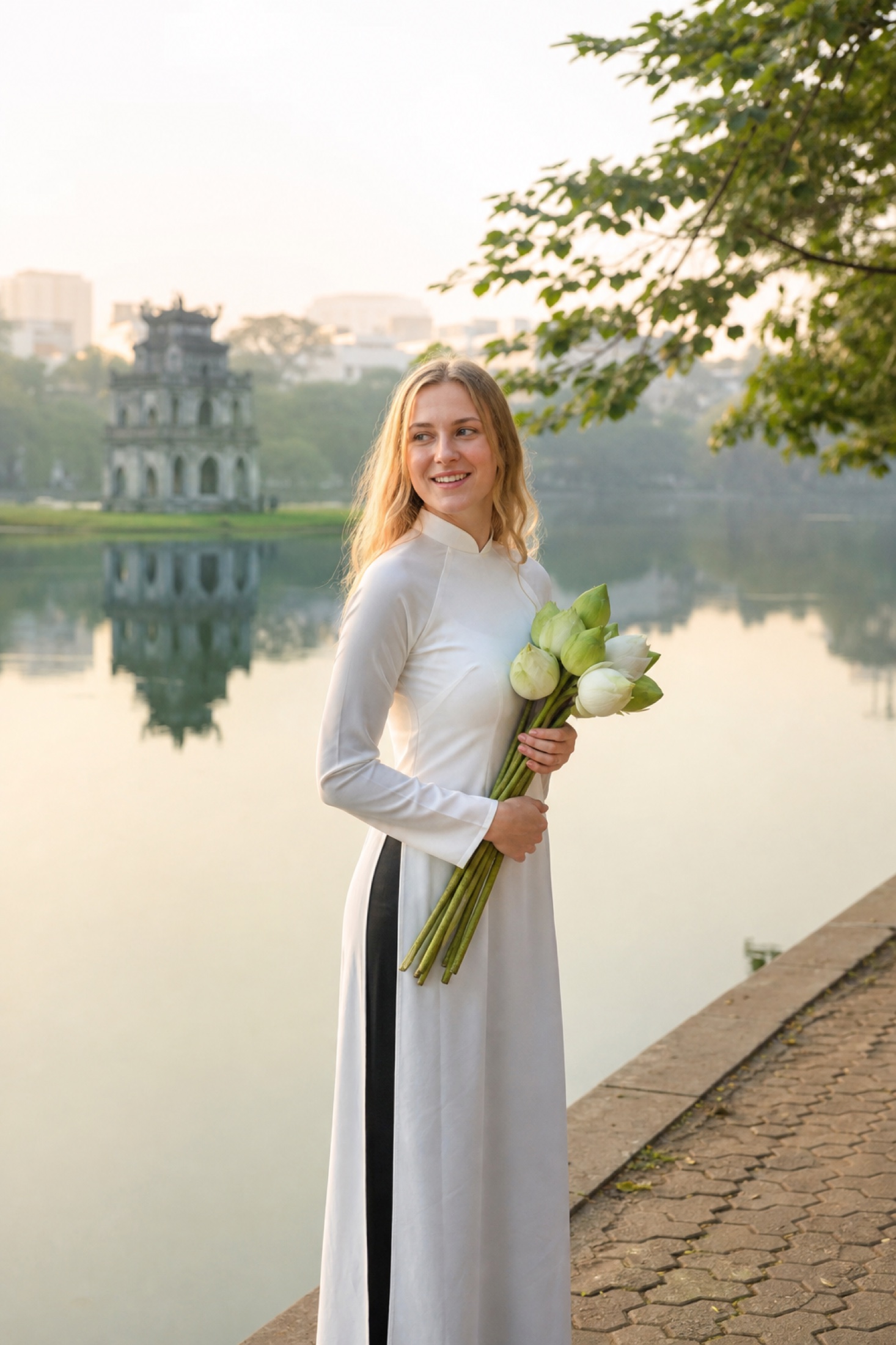
Bagaimana cara memastikan ao dai pas di badan Anda?
Fit is non-negotiable. An ill-fitting ao dai reads as disrespect and photographs poorly. A proper ao dai has: shoulders that sit square (not pulled, not loose); a waist that sits at your natural waist (not high, not low); a side slit that reaches mid-thigh (no higher, no lower); and a length that ends 5–7 cm above the ankle. Off-the-rack rentals often fail on these points. Tailoring takes 3–5 days minimum. Booking a photoshoot with makeup & hair at your hotel or a full ao dai photoshoot through Cáo Studio includes a fit consultation—the team checks you in person before the shoot, not by phone. This single step prevents the common trap: a beautiful location, poor light direction, and a dress that fights your body instead of moving with it. Before you book anywhere, ask: "Will someone physically check my fit three days before?"
Kapa semestinya saya membeli, menyewa, atau mempercayai satu tim?
| Pilihan | Terbaik untuk | Keputusan | Risiko |
|---|---|---|---|
| Beli ao dai baru | Traveler dengan waktu >2 minggu, rencana sesi berulang | Tailoring 5–7 hari, cocok untuk badan Anda sendiri | Biaya tinggi, pengiriman lambat, tidak perlu sekali seumur hidup |
| Sewa stand-alone | Traveler dengan budget terbatas, seseorang di Hanoi saja | Pilihan ukuran terbatas, fit sering jelek, foto terlihat "kostum" | Tidak ada konsultasi gaya, mungkin tidak dapat rambut/makeup/fotografer yang cocok |
| Satu tim (Cáo Studio) | Siapa pun yang ingin hasil cinematic, ao dai diperlakukan sebagai yang formal | Ao dai + styling + fotografer = satu pesan visual, cahaya diarahkan, meja ulang dalam 48 jam | Perlu komitmen pada 1–2 lokasi, lead time untuk fit |
The third option exists because three vendors stitched together often fail: the rental place picks a dress without knowing your hair and makeup plan, the makeup artist doesn't know the light you'll shoot in, the photographer arrives without having seen the ao dai beforehand. One team sees the whole picture. Ask yourself: "Do I want a pretty snapshot, or frames I'll keep for life?" If the latter, book a session where one person directs everything.
Apakah boleh memakai ao dai di kuil dan lokasi budaya?
Yes—with clear rules. Temples in Vietnam allow ao dai for photography IF you are respectful: keep your voice quiet, do not touch sacred objects, do not pose on altars or sit on prayer mats. Wear the ao dai over a thin long-sleeve shirt (not bare shoulders). A photoshoot at a temple is not a ceremony, but it is a spiritual space; the frames should reflect that—walking, looking at architecture, standing in natural light—not staged poses. Never remove the ao dai in a sacred space, and never use it as a prop (lying down, climbing on statuary, sitting on monks' belongings). Hue's royal tombs, Hanoi's One Pillar Pagoda, and Hoi An's Assembly Halls allow ao dai photography if you book in advance and mention it to the site director. Cáo Studio has relationships with these sites; booking a session in Hanoi or Hoi An includes guidance on access times and etiquette—no surprises on the day. If you rent from an anonymous stand on a street corner, no one will brief you on these rules.
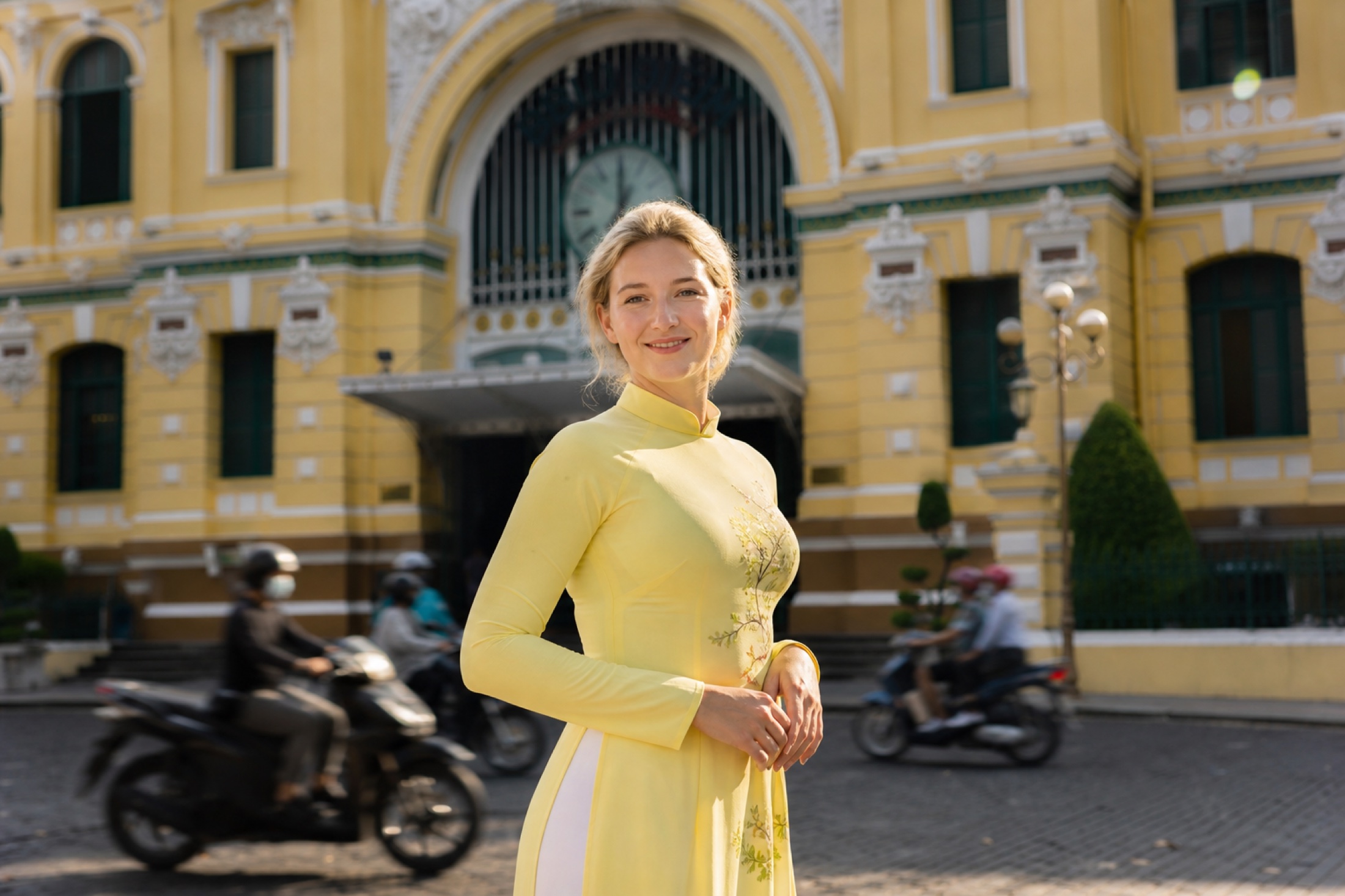
Apa perbedaan antara sesi ao dai solo dan sesi pasangan atau keluarga?
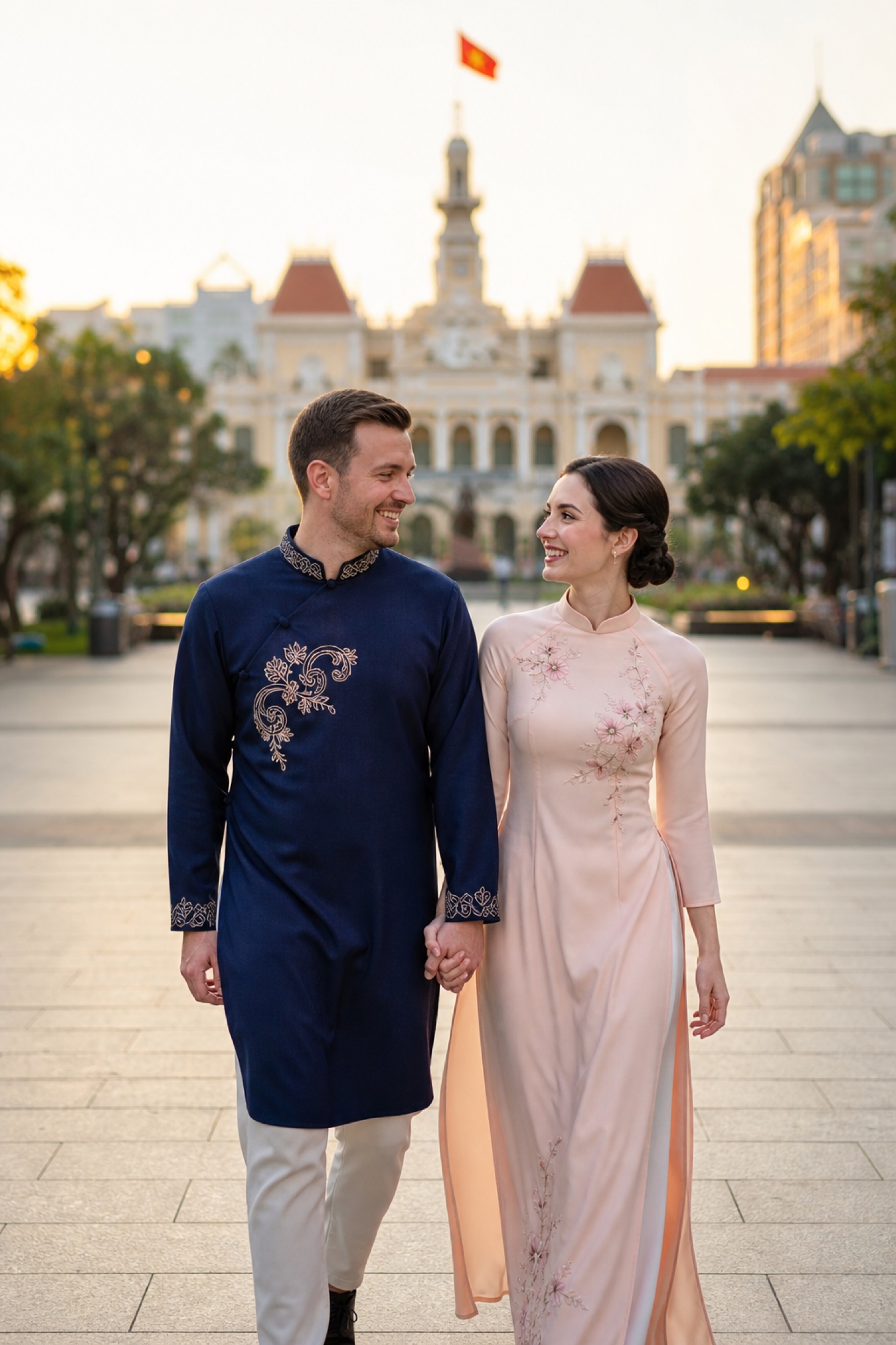
A solo ao dai photoshoot (you alone) is about form, light, and stillness—how the fabric moves, how the slit catches the breeze, how your walk reads on camera. A couple photoshoot in ao dai adds narrative: two people walking, one gazing back, conversation in a lantern-lit alley. A family photoshoot uses multiple ao dais (or ao dai + suit) to frame relationships—generations, tradition, togetherness. All three are valid, but the direction is different. Solo shots are wide and meditative. Couples move and interact. Families are framed as a group, then detail shots of hands, faces, smaller moments. Before you decide, ask: "Am I celebrating my connection to Vietnam, or my connection to someone here?" The answer changes which session type—and which location and time of day—makes sense. Cáo Studio's consultation (via WhatsApp) helps you land on the right type before booking.
Barangapa masalah umum yang terjadi dalam sesi ao dai, dan bagaimana menghindarinya?
Mistake 1: Wrong time of day. Morning light in Hanoi's Old Quarter is soft but hidden by buildings; 6–7 am on a bridge or by the river is better. Afternoon light is harsh and behind landmarks. 5–6 pm in Hoi An is golden and low—ideal. Sunset is tempting but lasts 15 minutes; light disappears fast. Asking the photographer "What time?" without knowing their answer is how people end up with backlit, flat, or blown-out frames. Cáo Studio specifies the hour and location in advance—e.g., "Huc Bridge at 6:10 am, soft side light, we'll shoot wide first."
Mistake 2: Overstuffed outfit plan. Three dresses, three locations, two hair changes, full makeup reset. Sounds good on paper; in practice, you're rushed, the light moves while you're changing, and the photographer hasn't time to find good angles. One ao dai, one location, one light window = better frames. If you want two looks, pick two neighborhoods in the same city, shoot at different hours.
Mistake 3: Ignoring weather and season. December–February in Hanoi is cool and grey; ao dai photographs beautifully but you'll be cold. May–September is hot and humid; humidity makes makeup run and fabric cling. February–August is dry on the central coast (Hoi An, Da Nang); September–December is typhoon season and floods happen—temples close. Check the weather and season guide for your region before you lock in a date.
Mistake 4: No makeup plan. Ao dai is formal; casual makeup reads as underdone. Heavy makeup (full glam, dark lipstick) can photograph garish in natural light, especially if the photographer doesn't adjust white balance. Cáo Studio's makeup & hair service at your hotel is designed specifically for ao dai in natural light—the artist knows what reads on camera at 6 am versus 5 pm.
Mistake 5: Renting a day before. Rental shops are packed; staff are tired; you get whatever fits, not what suits you. Booking makeup, hair, and ao dai rental three days in advance (through Cáo Studio or directly with a reputable rental house) means fit checks, adjustments, and time for the ao dai to settle on your body. Ask any vendor: "Can I come in for a fit check two days before the photoshoot?" If they say no, book elsewhere.
Ano ang dapat suriin bago kayo mag-book?
Before you commit to any ao dai photoshoot, verify these:
- Fit check included? Does the vendor meet you in person before the shoot? Or do they hand you a dress 30 minutes before and hope?
- Time of day locked in? Ask for the specific hour and location. "6:10 am at Huc Bridge" is better than "morning in the Old Quarter."
- Makeup artist experienced with ao dai? Ask: "Have you done ao dai in natural light before?" and request to see sample frames.
- One or three vendors? If the rental place, makeup artist, and photographer are separate, who coordinates if something goes wrong? One team is accountable.
- Delivery timeline clear? When do you get edited photos? Days? Weeks? Cáo Studio's turnaround is 48 hours; ask others for specifics.
- Cancellation policy? If the weather is terrible or you're unwell, can you reschedule?
- Permit or site access? If you want to shoot at a temple or royal site, does the vendor have a relationship there, or do you book on your own?
📸 Book on WhatsApp — ao dai photoshoot
---
Kung saan sa Vietnam ang pinakamaganda para sa ao dai photoshoot?
Hanoi: Old Quarter alleys (narrow, textured, early light), Huc Bridge (golden hour, river backdrop), West Lake (calm, formal, sunset). Cool season (Dec–Feb) gives clarity; summer (May–Sep) is humid and light is harsh. Hanoi sessions work best from late October to early March.
Ho Chi Minh City (Saigon): Bitexco rooftop, Ben Thanh market exterior, District 1 colonial villas, Saigon River parks. Central streets are busy; early morning (5:30–7 am) is quieter. Saigon shoots suit cooler months (Dec–Feb) but work year-round if you start early.
Hoi An: Assembly Halls, Hoai River at dusk, lantern-lit streets, silk vendor alley. This is THE ao dai photoshoot destination—the town feels like the garment belongs there. Dry season (Feb–Aug) is best; ask on WhatsApp about Hoi An appointments, as the team travels.
All three cities require different preparation: Hanoi demands early mornings and fit checks; Saigon needs heat-resistant makeup; Hoi An needs advance booking and temple permits. One-team studios (like Cáo Studio) handle these logistics; solo vendors do not.
💄 Makeup & hair at your hotel | 🌸 Ideas & lookbook
---
The bottom line: ao dai etiquette is not about rules that punish you—it's about understanding that this dress carries history, and wearing it well means respecting that weight. A good photoshoot honors that respect by pairing the garment with proper light, fit, and direction. Book with a studio that treats ao dai as formal wear, not costume. Ask one question: "Will this team meet me before the shoot and know my light?" If yes, you're in good hands.
FAQ
Can I wear ao dai if I'm not Vietnamese?
Yes, if your intent is respectful—cultural occasions, formal photoshoots, family events. Not as party wear or casual snapshots. Wearing it for a properly directed photoshoot signals you see Vietnam seriously.
How long does it take to tailor an ao dai?
Tailoring takes 3–7 days depending on alterations needed and tailor workload. Renting is faster (24–48 hours) but fit is often poor. Book a fit consultation at least three days before your shoot.
Can I shoot ao dai at Buddhist temples?
Yes, with respect. Keep voice quiet, do not touch altars, wear a long-sleeve shirt under the ao dai, and avoid posing on sacred objects. Cáo Studio's Hanoi and Hoi An teams have temple access—ask on WhatsApp about which sites allow photography.
What makeup works best with ao dai in natural light?
Soft, warm makeup that reads on camera without looking heavy. Avoid full glam or very dark lipstick outdoors. Cáo Studio's makeup artists specialize in ao dai at dawn and dusk light.
Should I buy or rent an ao dai?
Rent if you're visiting once and on a budget. Buy if you plan multiple sessions, have time for tailoring, or want a dress fit perfectly to your body. Renting through a studio package (with photographer and makeup) is better than renting alone—the team checks fit.
What season is best for ao dai photoshoots?
December–February (cool, clear light) in Hanoi and Saigon; February–August (dry, dry) on the central coast (Hoi An, Da Nang). Avoid May–September in the north (heat, humidity) and September–November everywhere (typhoons, floods).
How long does an ao dai photoshoot take?
Ask the vendor directly—session length varies. Confirm exact inclusions on WhatsApp: duration, number of locations, outfit changes, edited files, and delivery time before you book.
Soalan lazim
Can I wear ao dai if I'm not Vietnamese?
Yes, if your intent is respectful—cultural occasions, formal photoshoots, family events. Not as party wear or casual snapshots. Wearing it for a properly directed photoshoot signals you see Vietnam seriously.
How long does it take to tailor an ao dai?
Tailoring takes 3–7 days depending on alterations needed and tailor workload. Renting is faster (24–48 hours) but fit is often poor. Book a [fit consultation](/ms/makeup-and-hair) at least three days before your shoot.
Can I shoot ao dai at Buddhist temples?
Yes, with respect. Keep voice quiet, do not touch altars, wear a long-sleeve shirt under the ao dai, and avoid posing on sacred objects. Cáo Studio's [Hanoi](/ms/hanoi) and [Hoi An](/ms/hoi-an) teams have temple access—ask on WhatsApp about which sites allow photography.
What makeup works best with ao dai in natural light?
Soft, warm makeup that reads on camera without looking heavy. Avoid full glam or very dark lipstick outdoors. Cáo Studio's [makeup artists](/ms/makeup-and-hair) specialize in ao dai at dawn and dusk light.
Should I buy or rent an ao dai?
Rent if you're visiting once and on a budget. Buy if you plan multiple sessions, have time for tailoring, or want a dress fit perfectly to your body. Renting through a studio package (with photographer and makeup) is better than renting alone—the team checks fit.
What season is best for ao dai photoshoots?
December–February (cool, clear light) in Hanoi and Saigon; February–August (dry, dry) on the central coast (Hoi An, Da Nang). Avoid May–September in the north (heat, humidity) and September–November everywhere (typhoons, floods).
How long does an ao dai photoshoot take?
Ask the vendor directly—session length varies. Confirm exact inclusions on WhatsApp: duration, number of locations, outfit changes, edited files, and delivery time before you book.