Cáo Studio · Panduan sesi foto di Vietnam · Sesi Fotografi Áo Dài Vietnam 2026: Panduan Pilih Studio & Paket
Ao dai wedding photos in Da Lat: highland light, elopement guide
Pasukan Cáo Studio · Hanoi · 2026-10-03
Ao dai wedding photos in Da Lat work best in the dry season (December–April) when morning mist clings to pine hills and creates soft, diffused light perfect for silk. Shoot between 6:00–7:30 am or 4:30–5:30 pm to catch low-angle sun through trees; midday is flat and harsh. Da Lat's 15–25°C year-round means you can layer thermal wear under your ao dai without bulk, and the cool air keeps makeup stable. Sessions typically run 2–3 hours and need a photographer skilled in highland mist and forest detail—not just monument backdrops. Cáo Studio does not operate in Da Lat; book a local photographer who knows the lakes (Xuan Huong, Tuyến Lâm) and can read how mist shifts with altitude. Check if they own lighting gear (reflectors or fill flash) for shadow rescue when mist turns dense.
Da Lat sits 1,500 metres above sea level, making it Vietnam's coolest city year-round. That coolness reshapes how ao dai photoshoots work: you're not fighting sweat, fabric doesn't cling to wet skin, and the light behaves like the subtropics, not the tropics. If you're choosing between a Da Lat elopement and the lowland cities—Hanoi, Ho Chi Minh City, Hoi An—the highlands offer mood over heat and softness over intensity. This guide shows you how light works in Da Lat, which months to book, and what to look for in a photographer.
Điều nào làm cho Da Lat khác biệt với các thành phố bên dưới cho ảnh ao dai?
Da Lat's altitude pulls the sun lower on the horizon, even at noon. Mist pools in valleys at dawn and doesn't burn off until 9:00 am, creating a natural diffusion—like shooting through silk all morning. The air is 10–15°C cooler than Ho Chi Minh City or Hanoi, so your ao dai stays crisp; foundation doesn't separate, and silk doesn't stick. Shadows are softer because the mist scatters light in every direction. This softness suits ao dai—the fabric reads detail better under diffused light than under harsh direct sun. The tradeoff: you need to start early and move fast, because clouds thicken again after 10:00 am and the afternoon often brings drizzle. A photographer who knows Da Lat shoots the first 90 minutes after sunrise, not the noon or late-afternoon golden hour that works in lowland cities.
Mùa nào là tốt nhất cho chụp ảnh ao dai ở Da Lat?
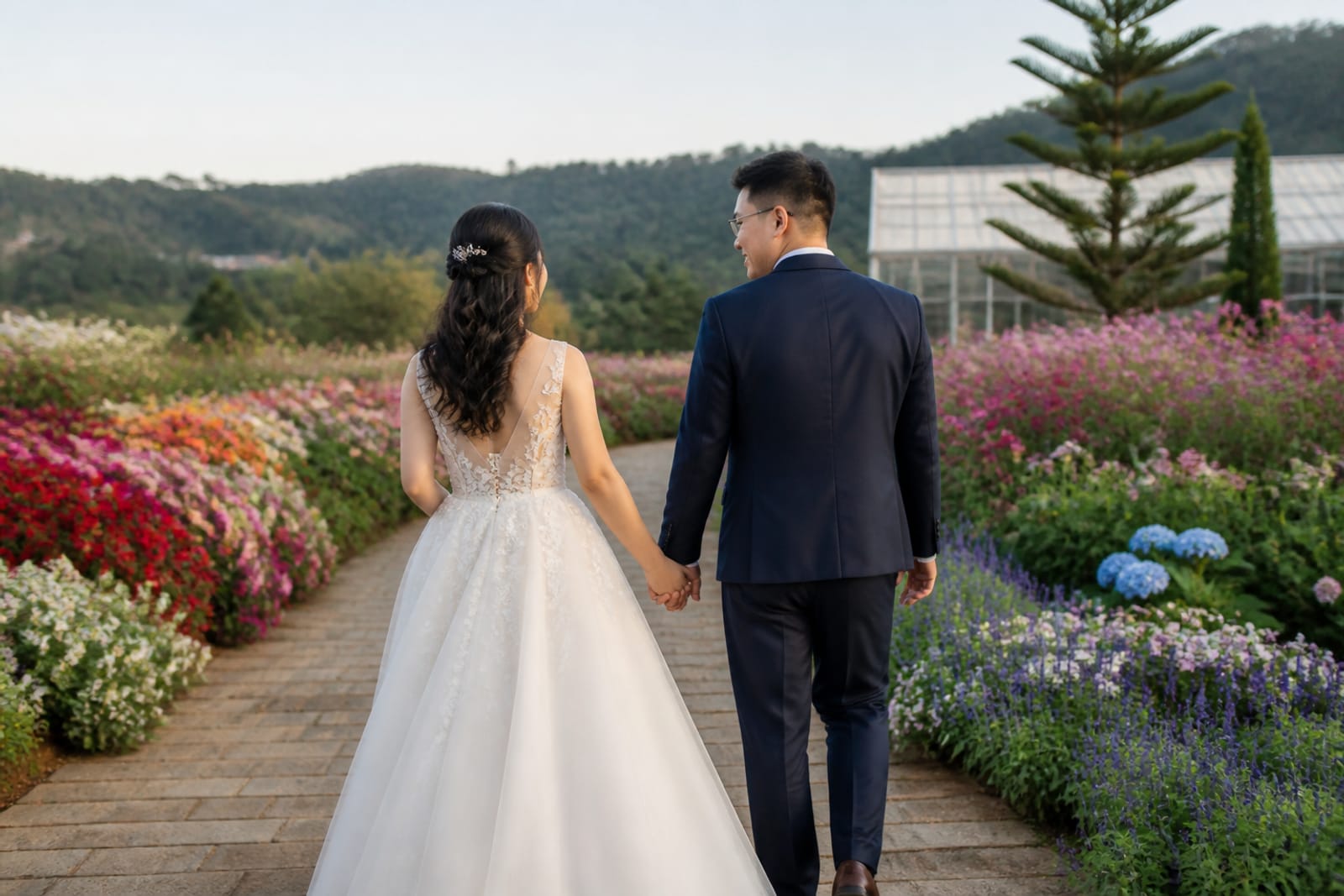
Dry season (December–April) is the only reliable window. January–February offers the clearest mornings—mist is soft but not dense—and cherry blossoms scatter pink near the city centre. March–April brings warmer air (still only 20–23°C) and occasional sunflowers on slopes. May–November is wetter and cloudier; morning drizzle cancels shoots, and mist becomes too thick for detail. November is the worst month for outdoor work—fog hovers all day and temperature drops below 15°C. July–August can surprise with clear, cold mornings, but afternoon thunderstorms roll in by 2:00 pm. Book your session for February–March if you want the clearest light and coolest, most stable conditions. Allow a backup date—Da Lat weather changes hour by hour, and a good photographer will reschedule if mist doesn't lift by 8:00 am.
| Tùy chọn | Tốt nhất cho | Ánh sáng & mùa | Tại sao nó hoạt động |
|---|---|---|---|
| Tháng 1–2 (Tết gần) | Cặp muốn mist mềm + hoa anh đào | Mist đến 8:00 am, rồi mở ra; 15–18°C | Đèn sớm chiều dài, khí quản mềm nhất, tuyết cả đêm không đủ đặc để cản lại chi tiết |
| Tháng 3–4 (Mùa khô muộn) | Những người ưa ấm hơn, hoa dã quỳ trên sườn | Sương mù nhẹ đến 7:30 am, sau đó thoáng sáng; 20–25°C | Mặt trời ở độ cao tốt từ 6:15 am; không quá ẩm ướt; rủi ro mưa chiều thấp |
| Tháng 5–9 (Mưa) | Không nên chụp ảnh ngoài trời thường xuyên | Mây dày, mưa chiều, mất sáng; dưới 20°C | Đèn yếu và không dự đoán được; độ ẩm làm cho ao dai nặng nề |
| Tháng 10–11 (Sương mù dậy) | Không nên chụp ảnh | Mây dầy cả ngày, mưa thường xuyên; 12–15°C | Không có ánh sáng ngoài người; ao dai khó khô; quá ẩm ướt cho makeup |
Bạn phải mặc gì dưới ao dai trong khí hậu lạnh của Da Lat?
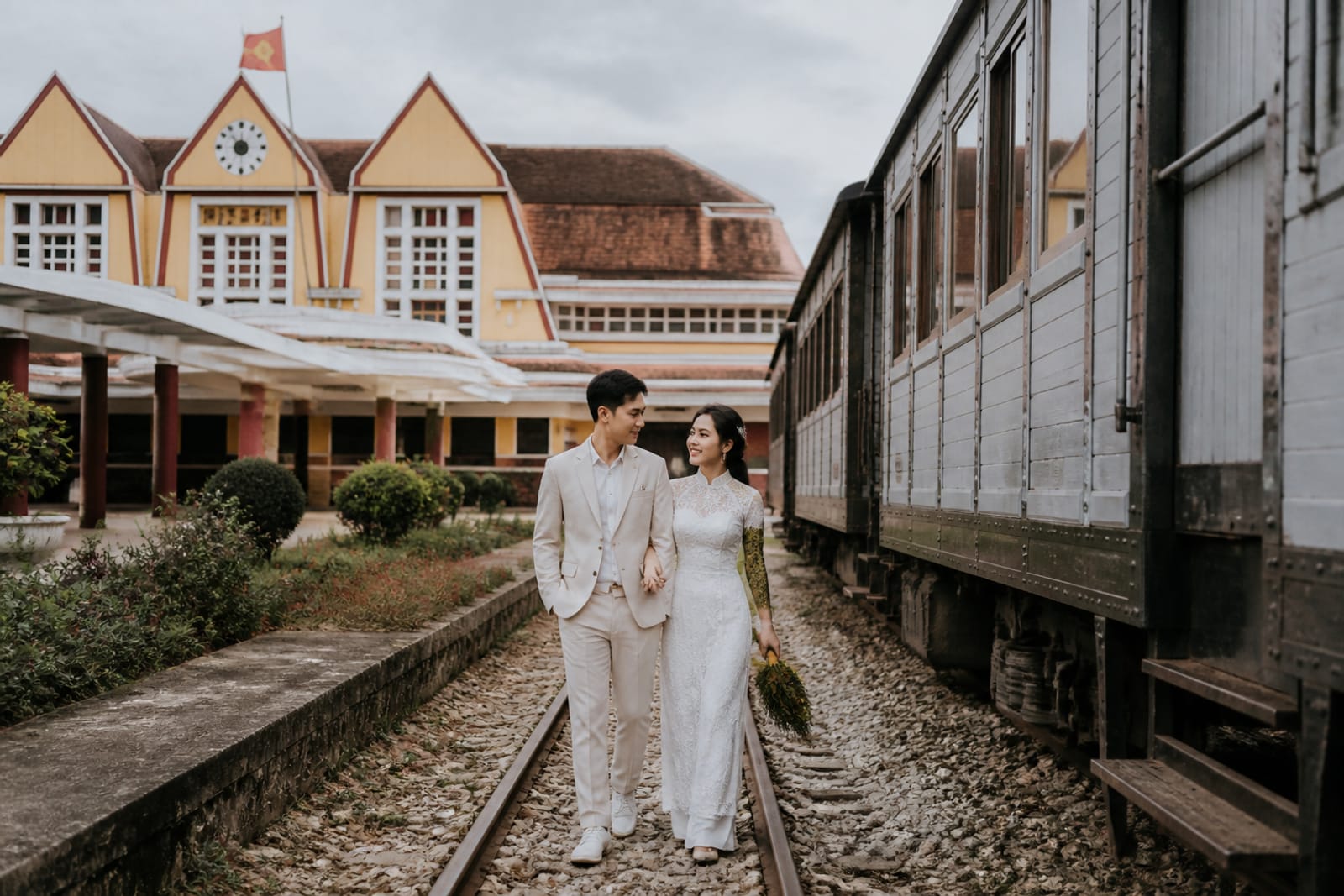
Ao dai silk feels light, but at 15–18°C your bare skin will show—and shivering ruins photos. Wear thermal long underwear (merino wool or silk-blend) under your ao dai; it's invisible under fabric and wicks away sweat if you move around. Add thin wool socks (the mist makes ground damp) and closed-toe flats or embroidered slippers so your feet don't show cold in detail shots. If you're shooting near water (Xuan Huong Lake, Tuyến Lâm Lake), the breeze off the lake drops temperature another 3–5°C—wear a lightweight cardigan or wrap during setup, then remove it for frames. A good photographer will shoot fast to keep you moving and warm; standing still in 15°C for 30 minutes is uncomfortable. Hair and makeup hold up better in cool air—no sweat-through, no frizz from humidity—but the mist makes foundation look chalky if applied thick. Bring blotting powder and a light setting spray, and ask your makeup artist to use cream products over powder in the creases of your face.
Những điểm ảnh nào hoạt động tốt nhất với ánh sáng buổi sáng sớm ở Da Lat?
Xuan Huong Lake (Hồ Xuân Hương) is the obvious choice—the water reflects mist and low morning sun, and you can walk paths between pine and lotus. Shoot from 6:15–7:45 am; after 8:00 am the lake glares and tourists cluster near the pavilion. Tuyến Lâm Lake (Hồ Tuyến Lâm), further east, feels quieter and has pine forest leading down to water—ideal for walking shots where mist parts as you move. Datanla Falls (Thác Đatanla) is 10 km out of town; the cascade catches low light without direct glare, and the forest canopy diffuses sun. You'll need 45 minutes of drive time, so book a 4-hour session. Bamboo forest road to Cau Dat tea plantation (along the northern ridge) offers repetitive, clean lines of bamboo against mist—good for fashion-forward frames, but crowds build after 8:30 am. Avoid midday shoots at any landmark; the Da Lat hills flatten under overhead sun, and tourists clog the paths. A local photographer knows which spots are clear before 7:00 am and where mist lingers longest—that knowledge is worth the fee.
Paano makahanap at mag-verify ng Da Lat photographer na may karanasan sa ao dai?
Start by checking their Instagram or portfolio for ao dai work shot in highland mist (not lowland heat). Ask directly: "Have you shot ao dai in Da Lat in the dry season? Show me winter/spring frames." Good signs include soft backlit morning shots, detail of fabric in mist, and frames where people are walking or looking at each other—not posing stiffly. Ask about their gear: do they carry reflectors or fill flash to rescue shadows when mist is thick? Do they know the timing—can they explain why 6:30 am is better than 9:00 am at Xuan Huong Lake? Red flags: "We shoot whenever you want" (Da Lat weather demands early starts), "We'll edit it to look good" (poor light can't be fixed in post), or "Bring lots of outfit changes" (cool air and mist mean fewer locations and faster fatigue). Agree on a backup date before booking. Da Lat weather is moody—if mist doesn't clear by 8:30 am, the photographer should reschedule without penalty. Get a signed outline of start time, locations, and editing timeline (2 weeks is standard). If Cáo Studio expands to Da Lat in future, we'll announce it on our site—until then, this process is how you vet a local artist.
📸 Book on WhatsApp — ao dai photoshoot
Khoảng thời gian & bộ đồ: Bạn nên lập kế hoạch bao lâu cho một phiên Da Lat?
A single-location Da Lat shoot runs 2.5–3 hours: 30 minutes for setup and location scouting (the photographer shows you the best angles in the light), 90–120 minutes of actual shooting, 30 minutes to break down and check frames. If you're moving between two spots—say Xuan Huong Lake and Tuyến Lâm—budget 4–5 hours including travel. Don't stretch beyond one outfit in Da Lat: the morning light window is tight (6:00–8:30 am is the sweet zone), and by the time you change clothes and drive, you've lost the soft mist. Shoot one ao dai in one location and you'll have 200–400 edited frames. Two outfits means rushing the second one into harsher light. A second location works only if it's within 15 minutes' drive and you shoot back-to-back with no outfit change. If you want multiple ao dai looks, book two separate mornings—yes, it costs more, but you'll have better light both times. Night shoots in Da Lat are rare; the city dims after 6:00 pm and the cool air makes long exposure harder.
For couple photoshoots or elopement sessions, Da Lat's mood suits intimate, unhurried pacing. If you're booking a makeup and hair artist separately, brief them on the cool highland air and ask for cream foundations and waterproof eyeshadow. Link your photographer, makeup artist, and any ao dai rental shop (ask if they know Da Lat's altitude and how fabric behaves in mist) so everyone's on the same timeline.
Da Lat won't deliver the intense, sun-soaked frames you see in Hanoi or Ho Chi Minh City photos. It will give you something rarer: soft, moody, atmospheric images where the landscape breathes with you, not around you. The tradeoff is discipline—early mornings, one outfit, and trusting a photographer who reads mist like a poem. If that mood matches your vision for an ao dai wedding photo, Da Lat is worth the trip.
FAQ
Cáo Studio có chụp ảnh ao dai ở Da Lat không?
Không. Cáo Studio hiện hoạt động ở Hanoi, Ho Chi Minh City và Hoi An. Để chụp ảnh ở Da Lat, bạn cần tìm một nhiếp ảnh gia địa phương có kinh nghiệm với ánh sáng cao nguyên và sương mù. Hãy hỏi WhatsApp nếu bạn muốn lời khuyên về việc tìm một người địa phương.
Tháng nào là tốt nhất để chụp ảnh ao dai ở Da Lat?
Tháng 1–4 (mùa khô) là tốt nhất, đặc biệt là tháng 2–3. Sương mù nhẹ cho đến 8:00 sáng, rồi ánh sáng trở nên rõ ràng. Tháng 5–11 quá mưa và mây dày. Nhiệt độ luôn từ 15–25°C quanh năm.
Tôi có cần mặc gì dưới ao dai trong khí lạnh?
Có. Mặc lót nhiệt (merino wool hoặc dệt lụa) dưới ao dai để tránh lạnh lẩm. Thêm vớ mỏng và giày đóng để chân không lộ. Cardigan nhẹ cho đến khi quay phim bắt đầu.
Mất bao lâu để chụp một phiên ảnh ao dai ở Da Lat?
2,5–3 giờ cho một vị trí và một trang phục. Bao gồm 30 phút thiết lập, 90–120 phút chụp ảnh, 30 phút kiểm tra khung. Không nên thay đổi nhiều trang phục vì cửa sổ ánh sáng buổi sáng hẹp.
Điểm ảnh nào tôi nên sử dụng ở Da Lat vào buổi sáng sớm?
Hồ Xuân Hương (6:15–7:45 sáng), Hồ Tuyến Lâm (yên tĩnh hơn), Thác Đatanla (cách 10 km, rừng), hoặc con đường rừng tre tới trồng trà Cau Dat. Tránh giữa trưa khi ánh sáng phẳng và có nhiều khách du lịch.
Làm sao biết nếu một nhiếp ảnh gia Da Lat tốt?
Xem danh mục của họ để tìm ao dai mặc sương mù buổi sáng. Hỏi nếu họ có kinh nghiệm mùa khô, có đèn flash để cứu bóng tối, và liệu họ có thể sắp xếp lại nếu sương mù không đi được. Những người tốt sẽ giải thích tại sao 6:30 sáng tốt hơn 9:00 sáng. ===
Soalan lazim
Cáo Studio có chụp ảnh ao dai ở Da Lat không?
Không. Cáo Studio hiện hoạt động ở Hanoi, Ho Chi Minh City và Hoi An. Để chụp ảnh ở Da Lat, bạn cần tìm một nhiếp ảnh gia địa phương có kinh nghiệm với ánh sáng cao nguyên và sương mù. Hãy hỏi WhatsApp nếu bạn muốn lời khuyên về việc tìm một người địa phương.
Tháng nào là tốt nhất để chụp ảnh ao dai ở Da Lat?
Tháng 1–4 (mùa khô) là tốt nhất, đặc biệt là tháng 2–3. Sương mù nhẹ cho đến 8:00 sáng, rồi ánh sáng trở nên rõ ràng. Tháng 5–11 quá mưa và mây dày. Nhiệt độ luôn từ 15–25°C quanh năm.
Tôi có cần mặc gì dưới ao dai trong khí lạnh?
Có. Mặc lót nhiệt (merino wool hoặc dệt lụa) dưới ao dai để tránh lạnh lẩm. Thêm vớ mỏng và giày đóng để chân không lộ. Cardigan nhẹ cho đến khi quay phim bắt đầu.
Mất bao lâu để chụp một phiên ảnh ao dai ở Da Lat?
2,5–3 giờ cho một vị trí và một trang phục. Bao gồm 30 phút thiết lập, 90–120 phút chụp ảnh, 30 phút kiểm tra khung. Không nên thay đổi nhiều trang phục vì cửa sổ ánh sáng buổi sáng hẹp.
Điểm ảnh nào tôi nên sử dụng ở Da Lat vào buổi sáng sớm?
Hồ Xuân Hương (6:15–7:45 sáng), Hồ Tuyến Lâm (yên tĩnh hơn), Thác Đatanla (cách 10 km, rừng), hoặc con đường rừng tre tới trồng trà Cau Dat. Tránh giữa trưa khi ánh sáng phẳng và có nhiều khách du lịch.
Làm sao biết nếu một nhiếp ảnh gia Da Lat tốt?
Xem danh mục của họ để tìm ao dai mặc sương mù buổi sáng. Hỏi nếu họ có kinh nghiệm mùa khô, có đèn flash để cứu bóng tối, và liệu họ có thể sắp xếp lại nếu sương mù không đi được. Những người tốt sẽ giải thích tại sao 6:30 sáng tốt hơn 9:00 sáng. ===