Cáo Studio · Panduan sesi foto di Vietnam · Sesi Fotografi Pra-Perkahwinan Vietnam: Panduan Lengkap 2026
Hanoi Old Quarter Photoshoot: Outfit, Season & Shoot Planning
Pasukan Cáo Studio · Hanoi · 2026-10-03
Pre-wedding photos in Hanoi Old Quarter work best in autumn (October–November) when light is soft and streets less crowded. Wear an ao dai for cultural authenticity and movement through tight alleyways, or a Western wedding dress if you prefer a different aesthetic — both photograph well, but ao dai suits the architecture and requires no logistics (a groom in a suit walks easily beside you, whereas a full Western gown needs support and careful positioning on uneven cobbles). Book a photographer who directs you to walk, look at each other and move through real light rather than posing stiffly in front of landmarks. A half-day session at Cáo Studio includes outfit-ready makeup and hair, directed framing across wide, medium and detail shots, and edited photos plus a short film within 48 hours. Check weather, street access (some areas close for events), and confirm the photographer's approach before booking — one team (photographer, makeup artist, stylist) shoots better than three vendors stitched together. ---
Ao Dai vs Western Dress — Which Suits the Old Quarter?
Ao dai (traditional Vietnamese tunic) is the practical choice for Old Quarter shoots. The tunic flows, moves naturally through crowded lanes, and photographs dramatically against stone buildings and green shutters without needing extensive posing. You won't stumble on cobbles, and the groom can stand beside you without managing fabric. Western bridal gowns photograph beautifully in the right light, but require a groom in formal jacket (hotter in warm months), an assistant to manage the train and veil, and careful positioning on uneven ground — logistics that slow a director down.
A hybrid approach works too: ao dai for the Old Quarter's streets and alleyways, then change into a Western dress for a second location (Hoan Kiem Lake or a hotel lobby) if you want variety. Cáo Studio can arrange makeup and hair at your hotel before you shoot, so outfit changes stay seamless.
The decision hinges on comfort and how much you move. If you want to walk naturally, hold hands and move through light, ao dai wins. If the dress itself is the statement, Western gown works, but choose a photographer experienced in managing larger fabric on tight streets.
---
Best Time of Year — Season, Light and Crowds
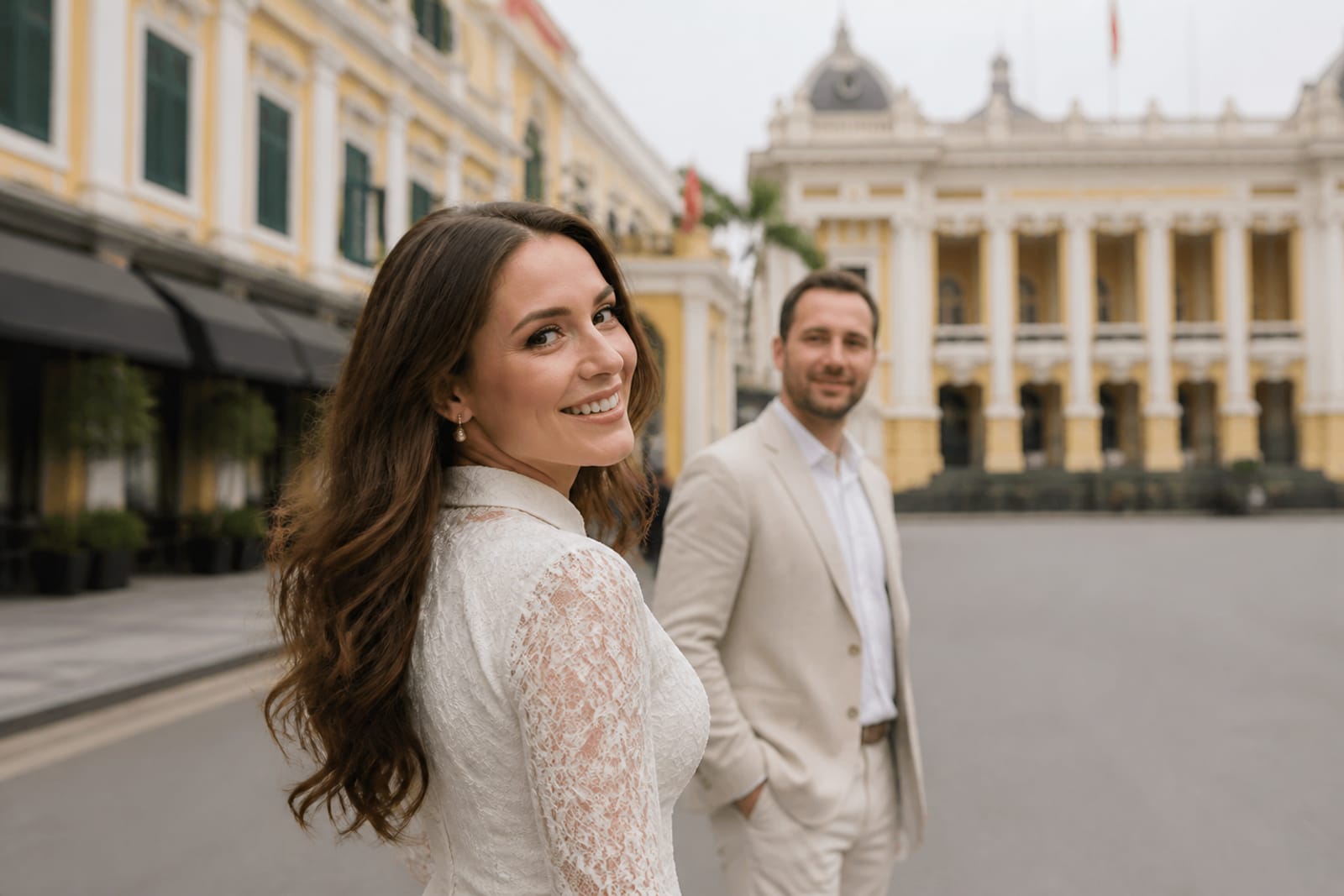
Autumn (October–November) is the single best window for Old Quarter shoots. Light is soft and directional, humidity drops to comfortable levels, and morning mist gives the stone a cinematic tone. Streets are still lively but not packed. Temperature hovers around 20–25°C, so ao dai breathes easily and you won't overheat under makeup.
December–February is cool (10–20°C) and often overcast or drizzly — romantic if you like grey tones, but less forgiving for colour and detail. Tet (Lunar New Year, late January–mid February) closes many cafes and temples for several days and crowds landmarks just before; avoid this window for a shoot.
Spring (March–April) is mild but humid with frequent haze and drizzle — skin looks blotchy, fabrics cling, and soft light turns flat. Summer (May–September) is hot (often 35°C+), very humid, and prone to heavy downpours that flood streets and force reschedules. A typhoon remnant in late summer can bring unpredictable rain.
| Season | Light Quality | Temperature | Street Crowds | What to Expect |
|---|---|---|---|---|
| Oct–Nov (Autumn) | Soft, directional, morning mist | 20–25°C | Moderate | Best. Golden hour early. Ao dai moves freely. |
| Dec–Feb (Winter) | Flat, overcast, sometimes drizzle | 10–20°C | Variable | Grey tones work; avoid Tet. Layers needed under ao dai. |
| Mar–Apr (Spring) | Humid haze, frequent drizzle | 20–28°C | Busy | Flat light, skin challenges. Drizzle interrupts shoots. |
| May–Sep (Summer) | Bright, harsh mid-day | 28–35°C+ | Very busy | Too hot for comfort. Afternoon downpours common. High reschedule risk. |
Book your session for October or November if possible. If you're visiting outside that window, plan for an early morning shoot (before 7 am) to catch softer light and fewer crowds, and build in a rain buffer (two potential dates, not one).
---
Outfit Layering and What to Wear Under an Ao Dai
An ao dai requires nothing underneath except undergarments and a slip. The tunic is designed to drape cleanly over the body; extra layers bunch under the fabric and break the silhouette. Wear a smooth, high-waisted slip or leggings in a neutral tone (black, nude) that extends to the ankles so you're covered if wind lifts the side slits. A supportive bra (strapless or racerback, depending on the ao dai's neckline) keeps you steady through movement and climbing stairs.
If you're shooting in winter (December–February), wear thin thermal or merino leggings under the slip for warmth without bulk — ao dai's loose fit accommodates a single layer easily. Avoid cotton; it shows sweat and clings in humidity.
For a Western wedding dress, wear what you'd wear to the ceremony: structured undergarments, a slip if needed, and comfortable flat or low-heel shoes. Old Quarter cobbles are uneven; high heels catch and slow movement. Many directors (including Cáo Studio) prefer you in shoes you can actually walk in, because your posture and stride matter more than footwear in the frame.
Bring a small bag with touch-up items. Humidity, street dust and sweat happen; a powder compact, lip product and blotting papers keep you camera-ready between takes. If your makeup artist applied makeup at your hotel before the shoot, they've already accounted for Old Quarter heat — trust their product choices over adding layers on-site.
---
Directing vs. Posing — Why One Team Shoots Better
The Old Quarter rewards directors who know how to use its light and architecture. Many couples book a photographer and separately hire a makeup artist and stylist, each with a different vision — the photographer wants you posed in front of a shutter, the makeup artist wants you still so powder doesn't move, the stylist wants the dress arranged a certain way. You stand frozen while three people negotiate.
Cáo Studio runs one team approach: a director (the photographer), makeup artist and stylist all brief together before the shoot on a single message — outfit, hair, makeup, light and movement — so every decision flows the same way. The director positions you in real light and says "walk toward that window," or "look at each other as you turn this corner." You move naturally, and the camera captures you in light, not posed in front of it.
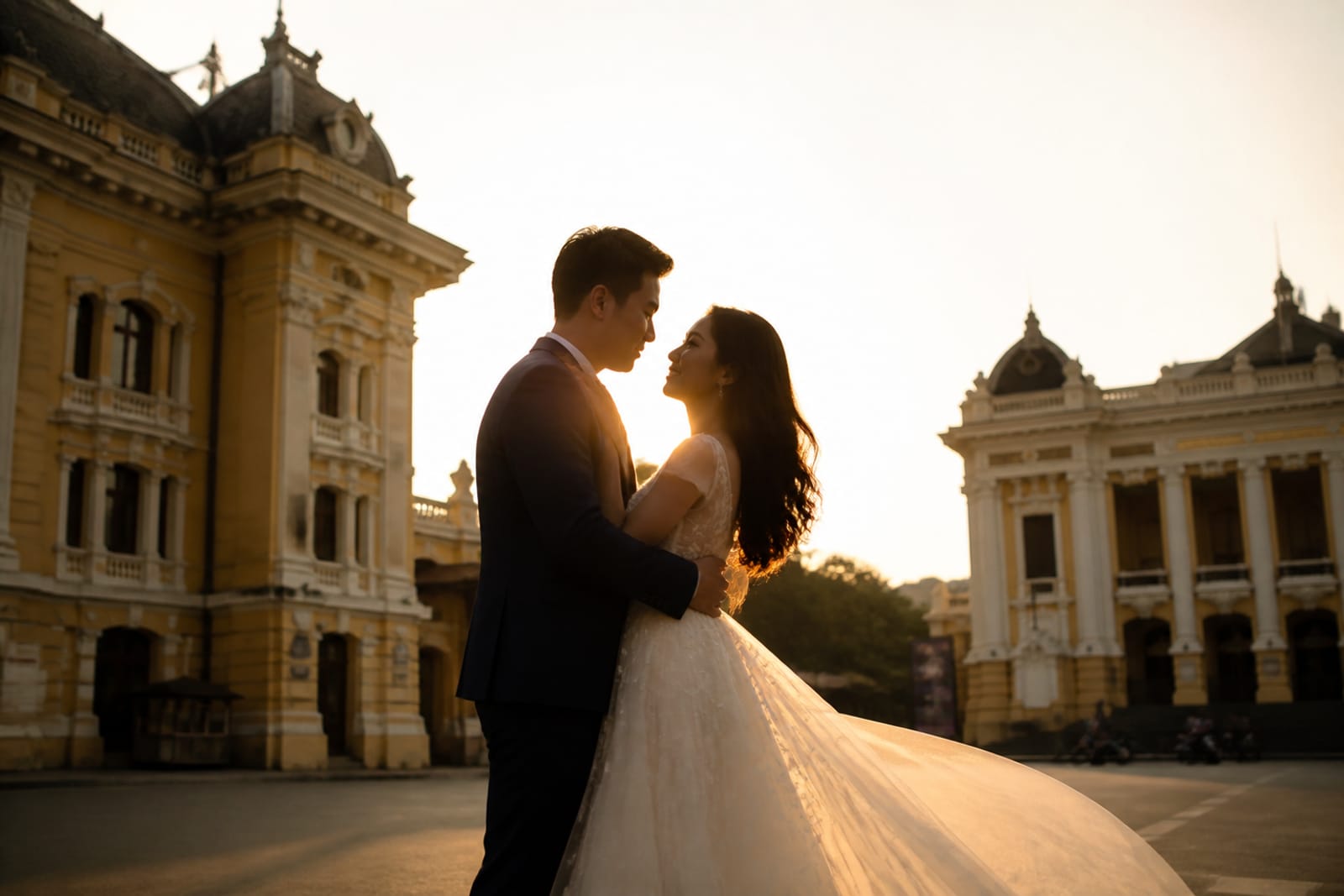
This matters in the Old Quarter specifically. The streets are narrow and crowded; standing still blocks foot traffic and invites bystanders into your frame. Walking, turning and moving feels more authentic and photographs more cinematic — the light hits you differently in motion, and the architecture becomes a stage you move through, not a backdrop.
Before you book any photographer, ask: "Will I be posed, or will you direct me to move and interact?" If they can't answer that clearly, they haven't thought about how their location works.
---
Street Access, Temple Etiquette and What to Check Before Booking
Some Old Quarter streets close for events or construction; confirm access before your session date. Train Street (Cau Giay) access is restricted by local authorities and changes monthly — if that's on your shot list, ask the photographer to verify permits the week before. Hoan Kiem Lake's walking paths are pedestrian-only on weekend evenings, which is ideal for shoots, but weekday mornings can have sudden closures for events.
Temple photography requires permission and respect. If you want to shoot inside Ngoc Son Temple or Bach Ma Temple, ask the photographer to obtain permission beforehand (some temples allow it for a donation, others don't allow tripods or loud activity). Never pose in front of an altar or treat sacred spaces as a studio backdrop. A good director knows these rules and avoids awkward moments on-site.
Check the photographer's insurance and weather policy. What happens if it rains? Do they reschedule, or edit around water damage? What if a street is suddenly blocked? Cáo Studio confirms shoot details and weather protocols on WhatsApp before the booking to avoid surprises.
Ask to see their previous Old Quarter work. A portfolio tells you if they understand the light, crowd management and movement-based directing. Generic poses in front of landmarks suggest they're working from a checklist, not from the location itself.
---
How a Pre-Wedding Shoot at Cáo Studio Works
Book on WhatsApp to confirm your date, outfit, location preferences and any special requests (temple access, a groom's custom suit, a video keepsake). The team meets you at your hotel or a central meeting point to do makeup and hair, then moves into the Old Quarter with one camera, one sound operator (for video) and one creative direction. You'll spend the session moving through real light — first wide shots to establish you in the architecture, then medium shots as you interact, then detail shots of fabric, light and emotion.
A half-day session captures you across multiple corners and alleyways, climbing stairs, pausing at windows, walking hand-in-hand. By day two, you receive edited photos and a short vertical film. The turnaround is fast because one team doesn't need to negotiate between three vendors' schedules.
Expect to walk 2–3 km through the Old Quarter. Wear comfortable shoes and be ready to move; this isn't a stationary portrait session.
---
What to Check Before You Book
1. Season and light timing. When are you visiting? October–November is optimal; outside that, book a sunrise shoot (before 7 am) for softer light.
2. Outfit and makeup logistics. Can the photographer arrange makeup at your hotel, or are you finding a makeup artist separately? One team (Cáo Studio) includes both; many freelance photographers don't.
3. Movement and directing style. Ask the photographer how they work: do they pose you, or direct you to walk and interact? Ask for examples.
4. Outfit changes and timing. Do you want ao dai only, or ao dai plus a Western dress at a second location? This changes the shoot length and logistics.
5. Weather plan and rescheduling. What happens if it rains? Is your date flexible, or do they have a backup plan?
6. Groom outfit and styling. If your partner is in the shoot, confirm the photographer or stylist can source or rent a groom's outfit (suit, shirt, accessories) that complements your dress.
7. Video and delivered files. Confirm what you receive: how many edited photos, will there be a video, in what format, and when.
---
📸 Book Pre-Wedding Photos on WhatsApp | 💄 Makeup & Hair at Your Hotel | 🌸 Ao Dai Photoshoot Ideas
---
Hanoi Location Context: Why Old Quarter, and Where Else to Consider
The Old Quarter (36 Pho) is famous for narrow lanes, painted shutters and street vendors — photogenic, yes, but also crowded and logistically tight. Light bounces off close buildings, which softens harsh shadows but can also flatten midday shots. Morning shoots (6–8 am) give the best light and fewest people; by 10 am, tourists fill the lanes.
If you want similar vibes with more space, consider Hoan Kiem Lake (wider streets, more breathing room), French Quarter (colourful villas, calmer), or a combination: Old Quarter at dawn, then a second location by mid-morning. Cáo Studio based in Hanoi can advise on multi-location sessions and help you plan the route.
If you're open to stepping outside Hanoi, Hoi An Ancient Town (a 3-hour drive south) offers similar lantern-lit aesthetics but with a different energy — less crowded, more photogenic in evening light, and easier to move in with a gown. Ask about Hoi An sessions on WhatsApp; the team travels by appointment.
---
💬 Ask About Your Dates on WhatsApp | 👗 Explore Pre-Wedding & Elopement | 🎬 Wedding Video & Photo Films
---
FAQ
What month has the best light for Old Quarter pre-wedding shoots?
October–November (autumn) offers soft, directional light, mild temperature (20–25°C), and manageable crowds. Winter (Dec–Feb) is cooler but often grey and drizzly. Summer is too hot and prone to afternoon downpours. Book autumn if you can.
Can I wear a Western wedding dress in the Old Quarter, or must I wear ao dai?
Either works, but ao dai suits the narrow streets and architecture better — it moves freely, doesn't tangle on cobbles, and photographs naturally as you walk. A Western gown requires more positioning and an assistant to manage fabric, which slows the director down on tight streets.
Do I need a makeup artist and stylist, or can the photographer handle everything?
A single team (photographer + makeup artist + stylist) shoots more cohesively than three separate vendors because they brief on one message and don't argue about posing. Cáo Studio includes makeup and hair; many freelance photographers don't, so confirm before booking.
What happens if it rains during my shoot?
Ask the photographer in advance: will they reschedule, shoot anyway, or offer a partial refund? Cáo Studio discusses weather protocols on WhatsApp before you book so there are no surprises.
How much time should I allow for an Old Quarter pre-wedding shoot?
A half-day session (typically 4–5 hours including makeup, shooting and location changes) captures you across multiple streets and alleyways. You'll walk 2–3 km, so wear comfortable shoes and plan for breaks.
Do I need permission to shoot inside Old Quarter temples?
Yes. Some temples allow photography for a donation; others don't allow tripods or loud activity. Ask your photographer to confirm permission beforehand — Cáo Studio handles this.
Can I change outfits during the shoot (ao dai to Western dress)?
Yes, but it adds time and logistics. A half-day session can accommodate one outfit change if you plan for it; confirm with the photographer that they have a clean space or time to change on-site.
What shoes should I wear for an Old Quarter photoshoot?
Comfortable, low-heeled or flat shoes. Cobbles are uneven; high heels catch and slow your natural movement. The photographer cares more about your stride and posture than footwear, so wear what you can actually walk in.
Soalan lazim
What month has the best light for Old Quarter pre-wedding shoots?
October–November (autumn) offers soft, directional light, mild temperature (20–25°C), and manageable crowds. Winter (Dec–Feb) is cooler but often grey and drizzly. Summer is too hot and prone to afternoon downpours. Book autumn if you can.
Can I wear a Western wedding dress in the Old Quarter, or must I wear ao dai?
Either works, but ao dai suits the narrow streets and architecture better — it moves freely, doesn't tangle on cobbles, and photographs naturally as you walk. A Western gown requires more positioning and an assistant to manage fabric, which slows the director down on tight streets.
Do I need a makeup artist and stylist, or can the photographer handle everything?
A single team (photographer + makeup artist + stylist) shoots more cohesively than three separate vendors because they brief on one message and don't argue about posing. Cáo Studio includes makeup and hair; many freelance photographers don't, so confirm before booking.
What happens if it rains during my shoot?
Ask the photographer in advance: will they reschedule, shoot anyway, or offer a partial refund? Cáo Studio discusses weather protocols on WhatsApp before you book so there are no surprises.
How much time should I allow for an Old Quarter pre-wedding shoot?
A half-day session (typically 4–5 hours including makeup, shooting and location changes) captures you across multiple streets and alleyways. You'll walk 2–3 km, so wear comfortable shoes and plan for breaks.
Do I need permission to shoot inside Old Quarter temples?
Yes. Some temples allow photography for a donation; others don't allow tripods or loud activity. Ask your photographer to confirm permission beforehand — Cáo Studio handles this.
Can I change outfits during the shoot (ao dai to Western dress)?
Yes, but it adds time and logistics. A half-day session can accommodate one outfit change if you plan for it; confirm with the photographer that they have a clean space or time to change on-site.
What shoes should I wear for an Old Quarter photoshoot?
Comfortable, low-heeled or flat shoes. Cobbles are uneven; high heels catch and slow your natural movement. The photographer cares more about your stride and posture than footwear, so wear what you can actually walk in.