Cáo Studio · Przewodniki po sesjach zdjęciowych w Wietnamie · Sesja zdjeciowa w ao dai w Wietnamie – poradnik i rezerwacja
Ao dai wedding photos in Ha Long Bay — how to choose
Zespół Cáo Studio · Hanoi · 2026-10-03
Ha Long Bay ao dai photoshoots happen in two ways: onboard a cruise during early morning or late afternoon light (best Mar–May, Sep–Nov), or from the shore near Cat Ba Island or Bai Tu Long Bay. Cáo Studio shoots primarily in Hanoi and Ho Chi Minh City; for Ha Long, we coordinate with vetted local photographers who know the tides, boat schedules, and which karsts catch side light at 6:30 am. A typical session runs 2–3 hours, starts before breakfast crowds, and includes outfit changes on deck or at a beach stop. Avoid Jun–Sep (typhoon risk, cancelled cruises) and Tet (overcrowded, grey light). The main trade-off: cruise shoots capture the bay's scale but demand calm seas and tight timing; shore shoots offer more flexibility and fewer boat logistcs, but less iconic backdrop drama. Ask on WhatsApp which local photographer we recommend for your dates.
Why Ha Long Bay draws ao dai wedding shoots (and what the light actually looks like)
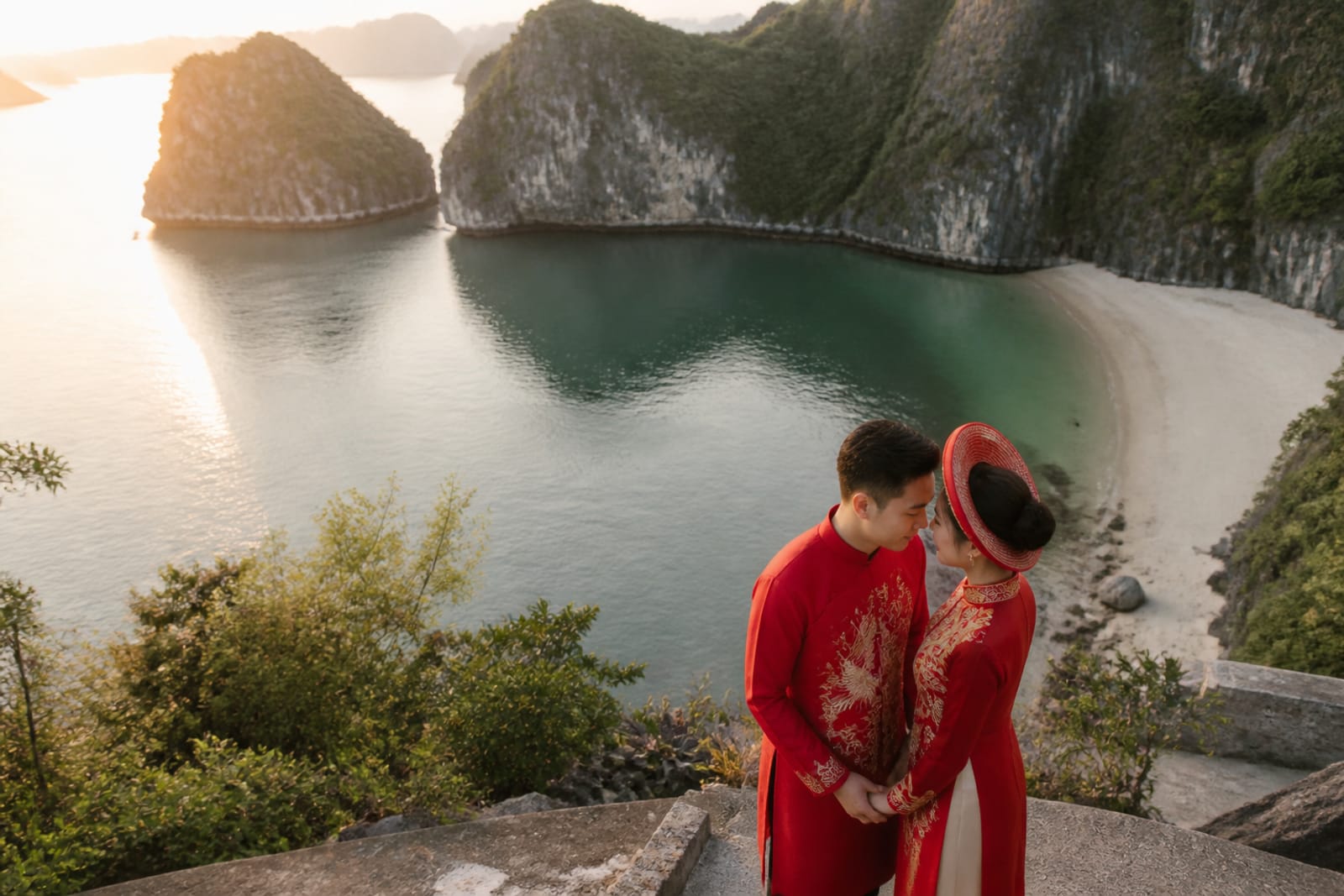
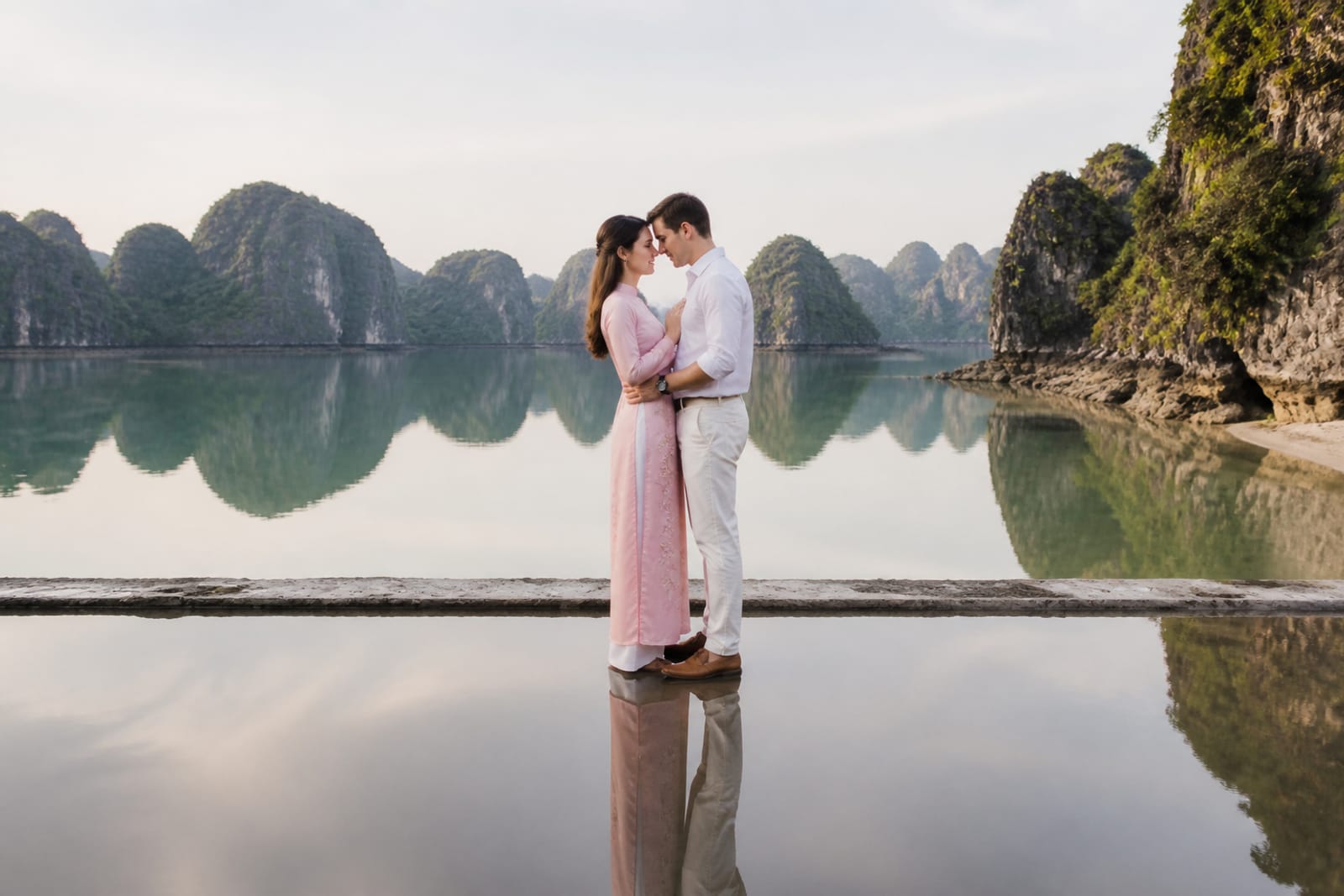
Ha Long Bay's UNESCO limestone landscape and protected waters create a rare canvas: scale without urban clutter, soft early light that flatters skin tone, and water reflections that lift the entire frame. The issue is that most visitors see Ha Long as a cruise backdrop, not a directed photoshoot location. A cruise at 6:30 am offers water that's glassy, karsts backlit in pearl-grey, and few other boats. By 10 am, other tours have joined, light flattens, and the ao dai's silk becomes washed-out. Land-based shoots from Cat Ba or Bai Tu Long avoid boat congestion but need tide timing (low tide exposes smoother sand and rock pools that frame shots differently). The real advantage of Ha Long for ao dai: the bay's grey-blue neutrality doesn't compete with the ao dai's colour. Reds, golds, and whites pop without clashing jungle-green backgrounds. The water reflection lifts the entire lower frame, so even a simple standing pose reads as cinematic.
📸 Book on WhatsApp — ao dai photoshoot
Cruise shoots vs. shore shoots — which fits your day
| Option | Best for | Light window | Pros | Cons |
|---|---|---|---|---|
| Onboard cruise | Epic bay scale, couple intimacy on quiet deck, multiple karst angles | 5:30–7:30 am or 5–7 pm | Glassy water, few crowds, built-in outfit changes (cabin), backup indoor light | Boat motion (waves, swell), tight timing, crew & other guests in frame, seasickness risk, captain/company permission required |
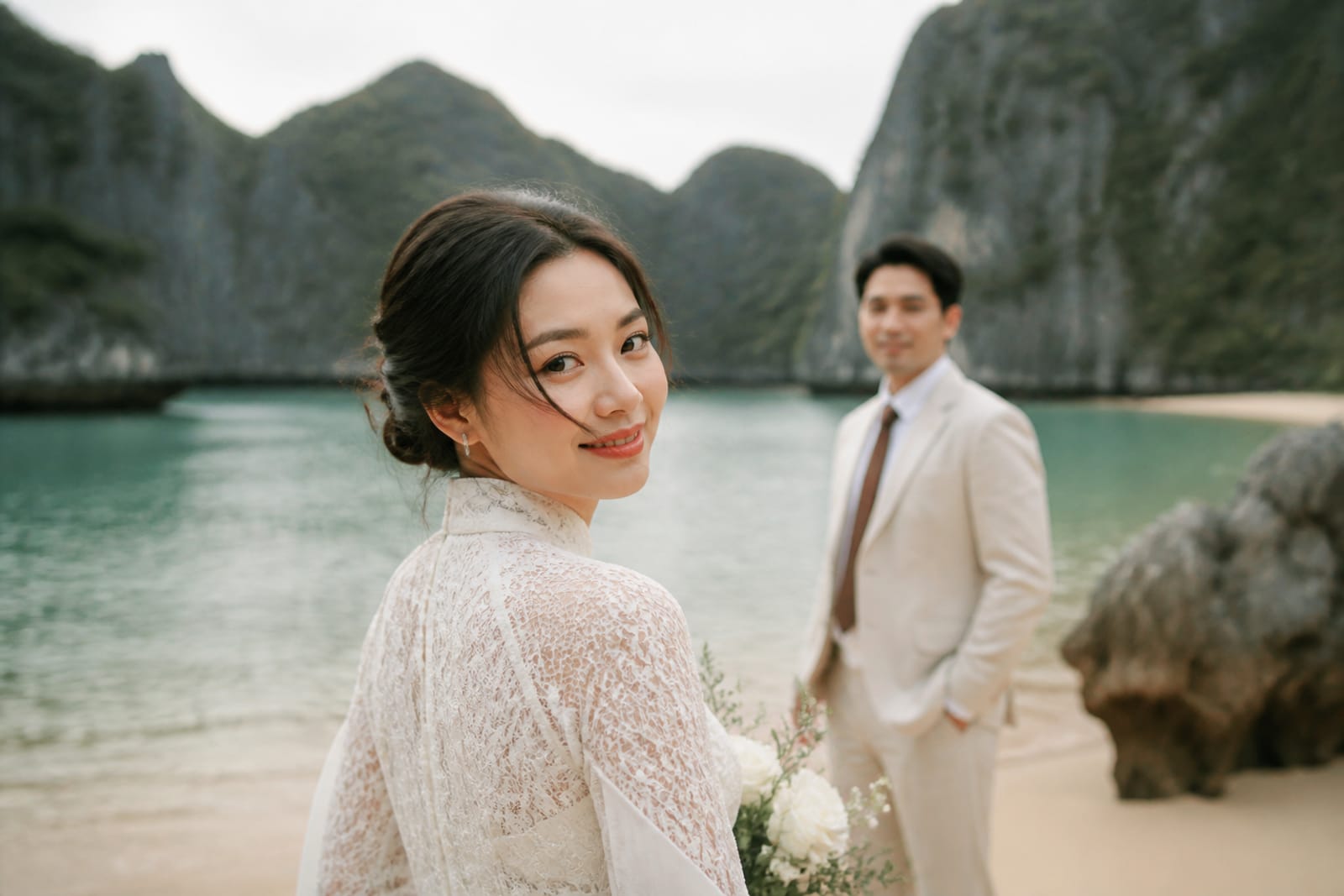
| Shore (Cat Ba town beach) | Faster setup, reliable timing, natural sand/rock detail, intimate groups | 6–8 am or 4:30–6:30 pm | No sea sickness, full control of location, easier outfit storage, relaxed pacing | Less iconic backdrop, smaller water mirror, sunrise/sunset timing more critical, sand texture varies daily |
| Bai Tu Long Bay (Lan Ha) | Fewer tourists, similar karst drama to Ha Long, softer crowds | 6–8 am or 4–6 pm | Quieter than Ha Long, similar landscape, local character, often cheaper logistics | Longer transfer from Hanoi, fewer cruise operators, needs local boat contact, less infrastructure |
The choice hinges on whether you prioritize the scale (cruise) or the control (shore). Cruise shoots demand a calm sea (check 3-day marine forecasts before booking) and a boat operator willing to hire an external photographer — most international couples rent a private sunrise cruise for 2–3 hours, which adds cost but removes crew interruptions. Shore shoots in Cat Ba town work year-round but rely on tide timing: low tide exposes rock pools that reflect light beautifully, while high tide offers smoother water but less detail. Bai Tu Long suits couples who want the karst drama with half the boat traffic.
Seasons, weather, and why Jun–Sep doesn't work (despite claims)
Ha Long Bay sits in north-central Vietnam's subtropical climate. The dry, coolest window is Oct–Feb, but water clarity peaks Mar–May (morning mist burns by 7:30 am, light spreads evenly across karsts). Jun–Sep brings afternoon downpours and typhoon risk; cruises are cancelled by the port authority without refund, and even "calm days" have an undercut swell that rocks boats and blurs handheld shots. Tet (late Jan–mid Feb) closes many services for 5–7 days and crowds the bay just before, so light gets muddied by other boats' wakes.
Your best bet: Mar–May (warmest clear mornings, 20–25 °C at dawn, silk ao dai drapes perfectly) or Sep–Nov (crisp light returning, fewer tourists than summer, but Sep–mid-Oct still carries typhoon threat — ask your photographer's call-go threshold). Oct–Nov is the sweet spot: cool enough for comfort, light is clean, and most crews are operating normally. Nov–Feb works but mornings are greyer and water clarity dips due to cooler upwelling; you'll get moody results, not bright. Early December is ideal: cool, clear, the bay is recovering from monsoon, and you miss the Tet rush.
How to book a local photographer if Cáo Studio isn't on-site
Cáo Studio shoots in Hanoi, Ho Chi Minh City, and Hoi An with our team. For Ha Long, we vet and recommend local photographers we've worked with; ask on WhatsApp +84 338 762 340 in Polish or English, and we'll connect you. If you're booking independently, here's what to check:
- Portfolio: scroll for 15+ ao dai shoots in Ha Long Bay specifically. If all images look studio-lit or overexposed, they likely haven't shot morning cruises. Ask how many dawn sessions they've done.
- Boat permission: call the cruise operator yourself (not through the photographer). Confirm the photographer can board, has insurance, and won't interfere with crew. Some operators forbid external photographers; others charge a fee.
- Backup plan: ask in writing what happens if the sea is too rough and the shoot is cancelled. Reputable local photographers offer a reshoot within 30 days or partial refund; if they're vague, move on.
- Sample timings: request a recent example of an actual session (dates, light conditions, number of shots delivered, edit turnaround). Vague promises ("We deliver beautiful photos") signal unprepared teams.
- Communication in Polish or English: if the photographer's WhatsApp replies are poor or routed through a third party, that's how communication will be during your session. Choose someone who replies within 2 hours.
An established Hanoi studio like Cáo Studio can recommend vetted local crews; a solo photographer in Ha Long might be cheaper but requires more vetting. The risk: a solo shooter with no backup crew can't handle outfit changes or troubleshoot if a boat is delayed. A small team (photographer + makeup artist, or photographer + assistant) is safer.
What to wear under the ao dai, shoes, and logistical essentials
The ao dai is a long, fitted silk tunic split to the hip and worn over white or coloured silk pants. On a boat, you'll feel every movement, so the undergarment matters:
- Under-layer: wear a thin cotton camisole to prevent silk cling and chafing. Avoid bras with thick straps or metal (they show through and shift in boat motion).
- Pants underneath: the ao dai's pants should be fitted but not tight — you're sitting on a boat, crouching for rock-pool shots, climbing in and out of the cabin. Bring an extra pair in case of water splash.
- Footwear: bring two options. Flat sandals (leather or suede, not plastic) for in-cabin changes and safe footing on wet decks. A second pair of embellished flats or heeled sandals for posed shots (easier to walk naturally in slight heels than barefoot on rough stone). Avoid flip-flops on boats — they slip and come off when the boat rocks.
- Hair and makeup: done onshore before boarding (hair holds better in sea air when it's set with styling cream, not spray alone). Waterproof mascara and lip stain survive spray and humidity. Bring a powder compact and blotting papers for touch-ups between location changes.
- Lightweight shawl or scarf: for transitions between open deck (windy, salt spray) and cabin shots. Silk scarves dry faster and look editorial in frames.
- Small duffel bag, NOT a large suitcase: leave luggage at the hotel or in the boat's storage. Carry only the second ao dai, shoes, and touch-up kit in a soft bag that fits under a cabin bench. Hard cases are a safety hazard on a rocking boat.
Most couples rent or borrow the ao dai; if you're flying with your own, confirm with the cruise operator that you can store it safely onboard. Wrinkled ao dai can be steamed in many Hanoi hotel rooms; ask your hotel concierge the night before your shoot.
Real costs and what to ask before you book
Pricing for Ha Long Bay ao dai photoshoots varies by cruise type, photographer team size, and season. A private sunrise cruise (2–3 hours, just you and the crew) costs more than a shared group cruise; hiring an external photographer on top of cruise fare is an additional expense. Makeup & hair at your hotel can run separately from the photoshoot, or bundled depending on the crew's location. Outfit rentals (ao dai, groom suit, accessories) are separate again.
Instead of hunting fixed prices, ask the photographer on WhatsApp:
- What does the shoot fee include? Is it the photographer only, or photographer + assistant? How many final edited images? Is a short video clip (15–30 seconds, vertical format) included?
- What's not included? Cruise fare (check the operator's site), boat permissions/fees, outfit rental, makeup, transportation to the pier, meals.
- Season factor: do they charge differently for peak months (Oct–Nov, Mar–Apr) vs. shoulder months (Feb, Dec)? This tells you whether they're flexible or market-rate.
- Cancellation due to weather: if typhoon risk closes the bay, when can you reschedule, and is any fee refunded?
- Timeline: how long from shoot day to delivery of edited images? (Cáo Studio delivers in 48 hours; local crews may take 5–7 days.)
What goes wrong on Ha Long shoots — and how to avoid it
Seasickness on the boat. Solution: take a ginger supplement or acupressure wristband the night before and morning of the shoot. Avoid a heavy breakfast. Eat light, stay hydrated. If the sea state is choppy, tell the captain or photographer early — a shorter, calmer route saves your comfort and the quality of candid frames.
Crew or other tourists in your photos. Early morning (5:30–6:30 am) shoots mostly avoid this. If you book a shared cruise, confirm with the operator that your photographer can isolate a deck or cabin area for 30 minutes at a time. Private cruises cost more but guarantee clean backgrounds.
Outfit changes in confined cabins, wind tangling hair. Bring a small standing mirror and hang a lightweight wrap around the cabin porthole to reduce wind when you step outside. Change one item at a time (trousers first, then tunic) to avoid creasing. If hair gets whipped, your photographer should have styling cream and clips to reset it between takes; ask if they carry these.
Water spray on the ao dai. If you're posing near the bow or at a spray-prone area, the silk will pick up salt water and dry stiff. Wet fabric also photographs dark and loses drape. Shoot these angles in the morning (sea calmest), then move to protected areas. Bring a microfibre towel to gently pat (don't rub) the fabric if it gets damp.
Unclear editing expectations. Before the shoot, ask to see 2–3 final edited images from the photographer's recent Ha Long sessions. Are they bright and colourful, or moody and desaturated? Do they clone out small tourist boats in the background, or leave them? This is not criticism — it's alignment. Some couples want editorial cinema; others want a cheerful documentary feel. Ask your photographer which they do naturally, and whether they'll adjust to your preference.
When to book and how far in advance
A Ha Long shoot requires coordination with three parties: the cruise operator, the photographer, and yourself (outfit rental, travel dates, makeup if separate). Book the photographer 4–6 weeks in advance to lock in your preferred dates and ensure they're not on another booking. If you're renting an ao dai, add another 1–2 weeks to confirm sizing and delivery. If your photographer is recommending a specific cruise operator (best, since they've worked with them), that company's peak-season cruises fill 3–4 weeks ahead.
The exception: if you're flexible on dates and can shoot during Oct–Jan, last-minute bookings (10–14 days ahead) are often possible. Many photographers and cruise operators have slots that don't fill until 2 weeks out in low season.
Comparing Cáo Studio and local Ha Long photographers
Cáo Studio's approach is directing (outfit, hair, makeup, camera as one team, one message). For Ha Long shoots, we work with local photographers because our crew is Hanoi and Saigon based. Choosing Cáo Studio's recommendation means you get our vetting and a backup contact if something shifts. A local independent photographer might cost less but requires more due diligence on your part (crew size, backup plan, communication clarity).
For couple photoshoots that include pre-wedding narrative or multi-day travel (Hanoi to Ha Long, or Saigon to Mekong), pre-wedding and elopement shoots based in our home cities, Cáo Studio travels with you. Ask on WhatsApp whether we're coordinating a Ha Long session as part of a larger travel narrative — we can brief your local photographer to match our creative direction.
FAQ
What is the best month to shoot ao dai photos in Ha Long Bay?
October–November: cool, clear light, fewer tourists than summer, post-monsoon water clarity, and no typhoon threat. Mar–May is also excellent but warmer. Avoid Jun–Sep (typhoon/cancellation risk) and Tet (grey, overcrowded).
Do I need a separate makeup artist or can the boat crew help?
Book makeup before boarding (onshore, in your hotel, or at the pier). Most boats have no makeup facilities and salt spray will undo onboard touch-ups. Makeup & hair at your hotel teams in Hanoi can prep you the morning of travel. Bring powder and lip stain for minor touch-ups during the shoot.
Can Cáo Studio shoot my Ha Long Bay ao dai session?
Cáo Studio is based in Hanoi and Ho Chi Minh City. For Ha Long, we vet and recommend local photographers you can book directly, or coordinate with them on your behalf. Ask on WhatsApp +84 338 762 340 for our current Ha Long referrals.
What happens if the sea is too rough and my cruise is cancelled?
Reputable operators refund the cruise fare and issue a rebooking credit. Confirm your photographer's rescheduling policy separately (offer within 30 days, or partial refund). Always book with an operator that communicates cancellation 24 hours in advance.
How much does a Ha Long Bay ao dai photoshoot cost?
Pricing depends on cruise type (private vs. shared), photographer team size, and season. Cruise fare, photographer fee, outfit rental, and makeup are separate line items. Ask on WhatsApp for a quote based on your dates and preferences.
Can I wear my own ao dai on the boat or must I rent?
You can wear your own if you can store it safely in the cabin. Confirm with the cruise operator first — some boats lack proper hanging space. If flying internationally, consider renting locally to avoid checked-bag wrinkles.
How long is a typical Ha Long ao dai shoot, and how many photos do I get?
Local photographers' packages vary (2–3 hours onboard typical, with 80–120 edited images delivered within 5–7 days). Ask your photographer directly what's included in their quote — specifics are not standardized.
Should I book a private cruise or join a group tour?
Private cruises (higher cost, no other tourists) give clean photo backgrounds and full boat control. Group tours are cheaper but require your photographer to isolate you from other guests. Both work; private suits couples prioritizing photo isolation.
Najczęstsze pytania
What is the best month to shoot ao dai photos in Ha Long Bay?
October–November: cool, clear light, fewer tourists than summer, post-monsoon water clarity, and no typhoon threat. Mar–May is also excellent but warmer. Avoid Jun–Sep (typhoon/cancellation risk) and Tet (grey, overcrowded).
Do I need a separate makeup artist or can the boat crew help?
Book makeup before boarding (onshore, in your hotel, or at the pier). Most boats have no makeup facilities and salt spray will undo onboard touch-ups. [Makeup & hair at your hotel](/pl/makeup-and-hair) teams in Hanoi can prep you the morning of travel. Bring powder and lip stain for minor touch-ups during the shoot.
Can Cáo Studio shoot my Ha Long Bay ao dai session?
Cáo Studio is based in Hanoi and Ho Chi Minh City. For Ha Long, we vet and recommend local photographers you can book directly, or coordinate with them on your behalf. Ask on WhatsApp +84 338 762 340 for our current Ha Long referrals.
What happens if the sea is too rough and my cruise is cancelled?
Reputable operators refund the cruise fare and issue a rebooking credit. Confirm your photographer's rescheduling policy separately (offer within 30 days, or partial refund). Always book with an operator that communicates cancellation 24 hours in advance.
How much does a Ha Long Bay ao dai photoshoot cost?
Pricing depends on cruise type (private vs. shared), photographer team size, and season. Cruise fare, photographer fee, outfit rental, and makeup are separate line items. Ask on WhatsApp for a quote based on your dates and preferences.
Can I wear my own ao dai on the boat or must I rent?
You can wear your own if you can store it safely in the cabin. Confirm with the cruise operator first — some boats lack proper hanging space. If flying internationally, consider renting locally to avoid checked-bag wrinkles.
How long is a typical Ha Long ao dai shoot, and how many photos do I get?
Local photographers' packages vary (2–3 hours onboard typical, with 80–120 edited images delivered within 5–7 days). Ask your photographer directly what's included in their quote — specifics are not standardized.
Should I book a private cruise or join a group tour?
Private cruises (higher cost, no other tourists) give clean photo backgrounds and full boat control. Group tours are cheaper but require your photographer to isolate you from other guests. Both work; private suits couples prioritizing photo isolation.