Cáo Studio · คู่มือถ่ายรูปที่เวียดนาม · Pre-wedding Photoshoot Vietnam: Hanoi, Saigon & Hoi An Guide 2026
Beach vs Old Town Wedding Photos in Ninh Binh: Which Location Fits You
ทีม Cáo Studio · ฮานอย · 2026-10-03
Ninh Binh's pre-wedding landscape splits between two character types: the Hang Mua and Trang An river valleys (old town zone), with soaring rock formations, misty mornings and crowded daylight hours; and the quieter coastal villages and beaches south toward the coast, where flat light dominates but solitude and sand allow looser styling. Old town suits couples who want drama and scale; beaches suit those who want calm water reflections and fewer onlookers. Both work year-round, but old-town limestone is most striking Mar–May and Sep–Nov (warm, dry, soft light), while beach light is flattest Dec–Feb (cool, clear). Walk planning matters: Hang Mua's 500 steps demand flat shoes and a dress that moves; beach walks need lightweight fabrics and footwear that handles sand. Cáo Studio does not operate in Ninh Binh—we shoot in Hanoi, Ho Chi Minh City and Hoi An—but below is a planner to vet a local photographer and build your session.
Hang Mua and Old Town: Why Drama Costs You Steps and Early Starts
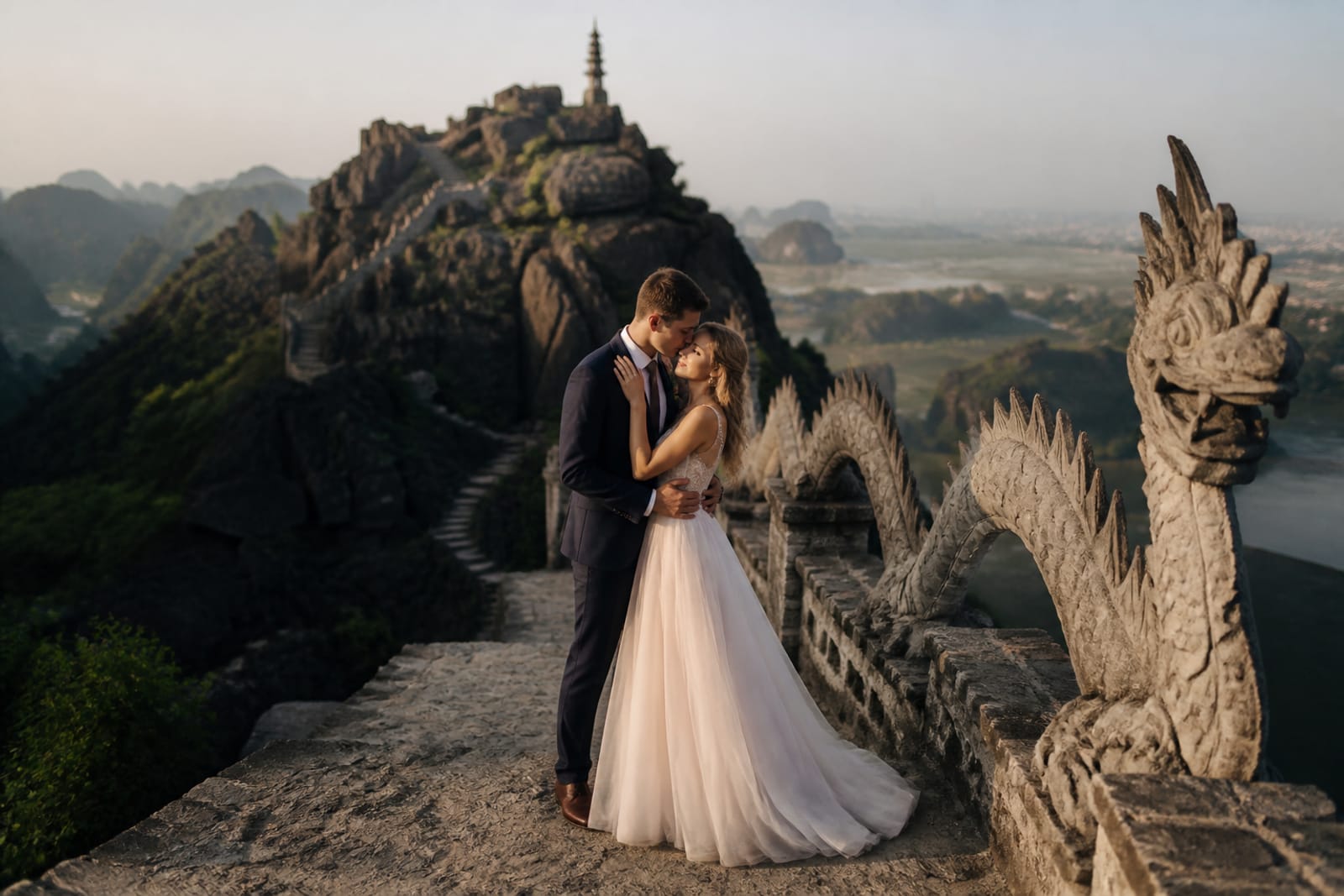
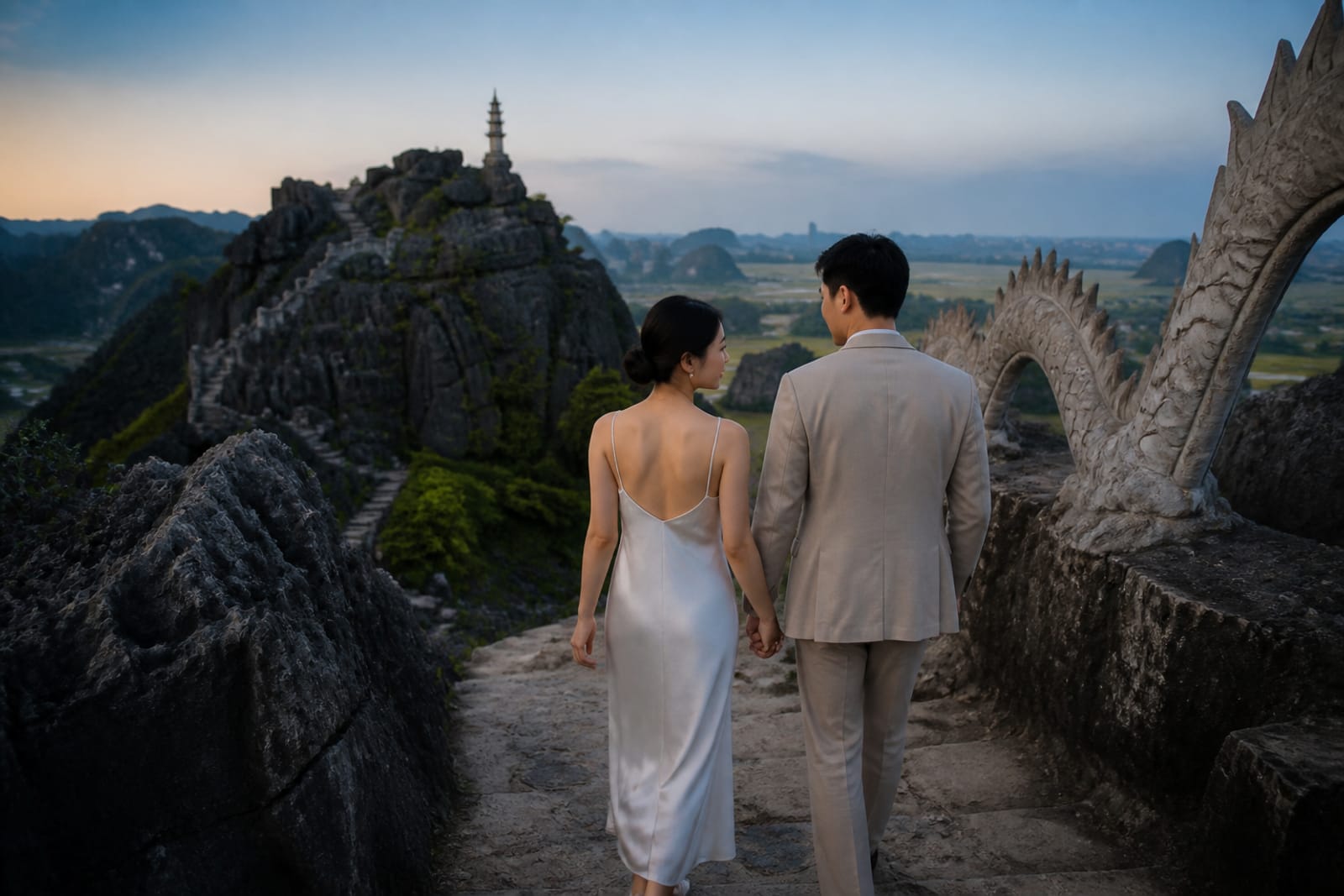
The limestone cliffs around Hang Mua and the Trang An boat routes create the frames most couples dream of—steep rock faces, winding rivers, mist in the valleys. But these locations come with hidden costs: Hang Mua has approximately 500 stone steps to the viewpoint, uneven terrain that punishes delicate wedding heels, and mid-morning crowds that thicken by 9 am. The light is softest 6–7 am, before tour groups arrive. Your photographer must know the route and time arrivals precisely; missed dawn means harsh overhead sun by 10 am, which flattens color and creates dark shadows under eyes. Outfit choice is critical—an ao dai is possible but requires a slip that doesn't cling to legs while climbing, flat embroidered sandals or hiking boots, and a second outfit for easier riverside frames lower down. Plan 2–3 hours on-site, including outfit changes and movement between viewpoints.
| Location | Best For | Light & Season | Walk Difficulty | Outfit Fit |
|---|---|---|---|---|
| Hang Mua viewpoint | Drama, scale, rock frames | 6–7 am Mar–May, Sep–Nov (soft, directional) | Steep, 500 steps, uneven stone | Ao dai + flat sandals, or shorts/shirt + hiking boots |
| Trang An river (boat + walk) | Water reflections, mist, fewer steps | 7–8 am Feb–May (calm water, golden light) | Flat boardwalks, boat embark/disembark | Lightweight dress, slip sandals, minimal jewelry |
| Old town streets (Ninh Binh town) | Architecture, local life, evening light | 5–6 pm Oct–Nov, Feb–Apr (golden, longer shadow) | Level, walkable, crowded tourist paths | Any dress, comfortable shoes, layers |
| Nearby beaches (Yen Nhan, Nhat Le) | Calm, isolation, sand texture | 6–7 am Dec–Feb, 5–6 pm Sep–Nov (clear, cool) | Soft sand, long stretches, tiring | Lightweight, no heavy train, sandals or bare feet |
Which Backdrop Matches Your Story—Drama or Stillness?
Old-town shoots demand a couple who enjoys hiking and verticality; the frames are cinema-scale, but you're climbing together, breathing hard, adjusting fabric between shots. If you want your frames to feel like a film's opening sequence—wide on the karst, then close on hands touching—old-town light and scale deliver that. Beach shoots are quieter; the story is walking beside water, sitting, turning to look at each other. Fewer props, fewer distractions, slower pacing. Neither is easier; they're differently demanding. Ask yourself: do you want the landscape to dwarf you both (old town), or to frame you at human scale (beach)? Do you prefer moving constantly, or lingering in one or two spots? Couples who've done both often shoot old-town for the portfolio album cover, and beach for the soft, intimate frame they print large.
Light Windows and Season: When Each Location Shines
Hang Mua's pale limestone reflects light harshly mid-day; the magic window is 6–7 am Mar–May (warm, dry, east light soft on rock faces) and 6–7 am Sep–Oct (same, plus fewer bugs). By 10 am the sun is high and the rock goes flat. Overcast mornings (Dec–Feb) are technically softer but grey; the rock loses its color. Trang An river shoots work best 7–8 am Feb–May when water is calm and reflects golden light; post-monsoon (Sep–Oct) the water is murkier. Beaches near Ninh Binh are flattest Dec–Feb (winter light, cool, clear horizons), but if you want a warmer tone, Sep–Oct offers lower sun angles and fewer tourists post-summer. All locations close or crowd during Tet (late Jan–mid Feb); book 4–6 weeks ahead and confirm access with your local photographer. Rain is rare Feb–May on the old-town route, but Jun–Aug and Oct–Nov can bring afternoon downpours; schedule morning shoots and have a backup date plan.
Outfit Prep and Footwear: What Actually Works on Each Route
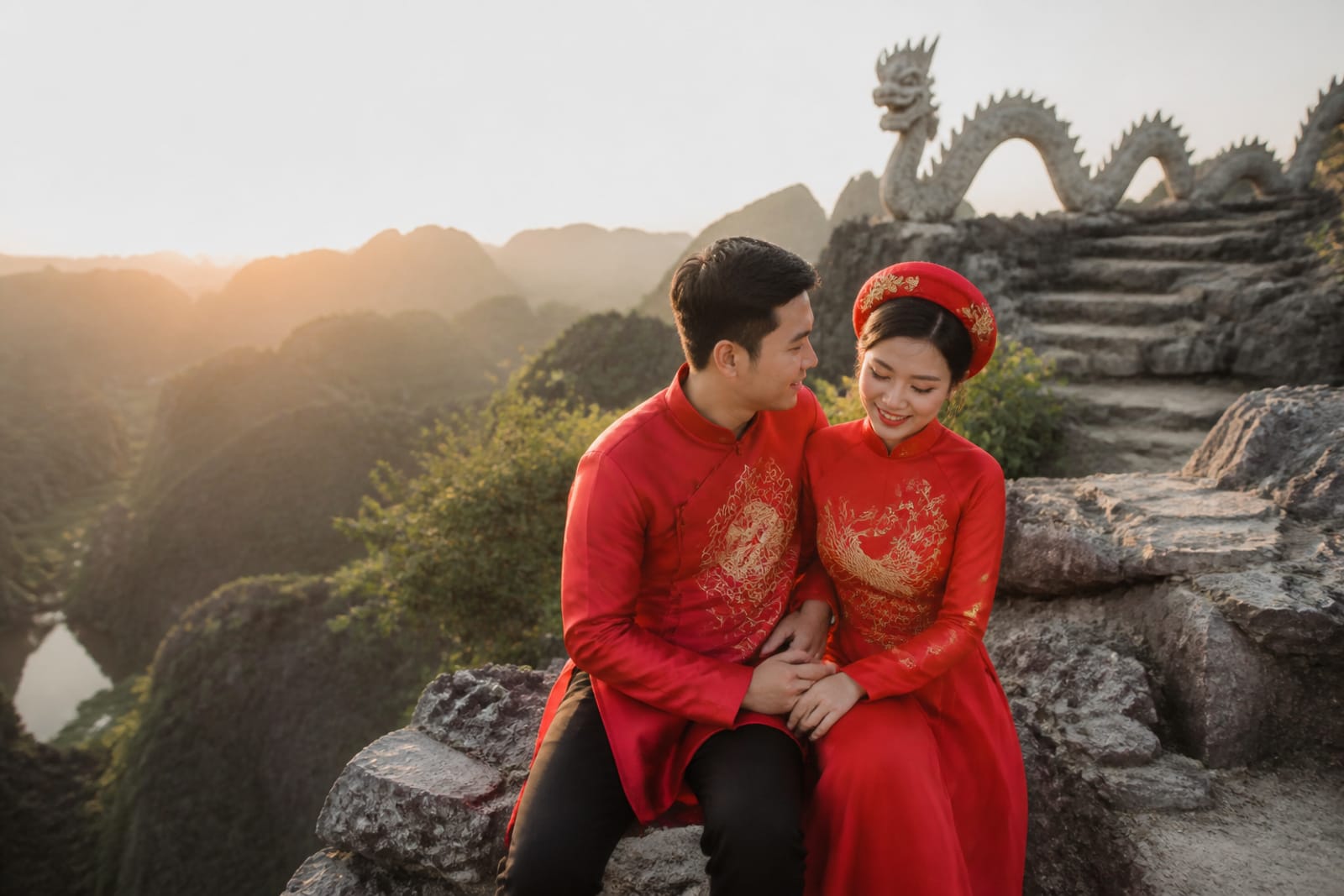
An ao dai at Hang Mua is romantic but risky. The silk slip clings to legs; stairs become treacherous. If your heart is set on ao dai, wear a light underslip (no compression), pair it with flat embroidered sandals or removable hiking boots, and plan the viewpoint shots last—after a warm-up walk in easier terrain where your legs are loose. Many couples wear a lightweight dress or linen pants for climbing, then change into ao dai at a lower pavilion for final frames. Trang An boat shoots are more forgiving; a midi dress or ao dai works if you can move easily from boat to boardwalk. Beaches demand breathable fabrics (cotton blends, linen, silk); heavy beaded gowns absorb sand and salt water. Footwear on sand should be minimal—flat sandals, bare feet, or soft canvas slip-ons that you can discard for frames. Jewelry and hair: metal gets cold in morning mist; avoid dangling earrings that catch wind. Long hair works everywhere, but ask your local photographer if they'll pin it for walking and loose it for frames. Makeup should be waterproof (river mist and sea spray) and SPF-heavy (reflection off water and sand intensifies sun).
📸 Book on WhatsApp — ao dai photoshoot | 💄 Makeup & hair at your hotel | 🌸 Ideas & lookbook
Finding and Vetting a Local Ninh Binh Photographer
Cáo Studio operates in Hanoi, Ho Chi Minh City and Hoi An—not Ninh Binh—but if you're booking a local, here's what to check. First, ask for a portfolio broken by location (old-town vs. beach shoots); one photographer may excel at rock formations and struggle with water reflections. Request a reference couple from within the last 12 months, not a generic lookbook. Confirm the photographer has hiked Hang Mua before and knows where tour groups cluster (they should suggest 6–6:30 am arrival, not 8 am). Ask what they do if light is flat or weather changes—do they offer a reshoot date, or is it final? Clarify what editing style they deliver: warm and saturated (flattens limestone), or cool and contrasty (emphasizes rock texture)? A strong Ninh Binh pre-wedding photographer will have a shot list tied to light hour ("6:15 am, wide on the viewpoint as mist lifts; 7 am, close on your faces with rock behind soft; 7:45 am, walk down the stairs together"). If they pitch "as many shots as you want" without time structure, they're not thinking like a director. Meet them via video call; ask about their process. If they've shot pre-wedding and elopement sessions at multiple Hanoi or Hoi An sites, they understand how light and location timing work—even if they're based in Ninh Binh. Request a booking contract (a simple email agreement on dates, location, outfit changes, delivery timeline, and cancellation terms) and ask about travel—if you want them to arrive 2 hours early to scout, that's a separate cost factor.
📸 Book on WhatsApp — ao dai photoshoot | 💄 Makeup & hair at your hotel | 🌸 Ideas & lookbook
What to Check Before You Commit to a Location
Before booking, visit the site during your chosen light window if possible. Walk Hang Mua at 6 am and notice where the steps are steepest and where handholds exist; wear the shoes you plan to shoot in. Sit by the Trang An boats and watch how light hits the water at 7:30 am. Walk the beach at your preferred time and feel the sand underfoot—is it wet and firm, or dry and deep? Ask your photographer how they handle crowds: do they shoot wide first to include landscape, then wait for tour groups to move, then shoot close-ups? Or do they relocate? Do they have a second backup route if your first-choice viewpoint is overwhelmed? Confirm the final edit count and turnaround time in writing—do you get 200 frames edited in 2 weeks, or 80 frames in 48 hours? If you're an international traveler, ask how they deliver (cloud link, USB drive, printed album shipped after the trip). Clarify outfit changes: can they coordinate with a local hair and makeup artist, or do you hire separately? If you hire separately, are there dedicated time slots between location moves, or does the photographer wait while your artist resets? A well-run shoot has buffer time built in; rushed transitions show in rushed frames.
Old Town and Beach Shoots Need Different Pacing—Plan Accordingly
A Hang Mua shoot is typically 3–4 hours on-site, not because of camera time but because of outfit changes and position shifts. You climb, rest, change, walk again. A photographer who tries to compress this into 2 hours will miss the soft 7–8 am light and rush you through positions. Budget time. River and beach shoots can run 2–3 hours if you're doing one outfit and one or two walking routes; add another hour for each outfit change. If you want both old-town and beach frames in one trip, split them across two days—fatigue and sun exposure from a full-day hike make afternoon beach shoots look tired. Many couples do old-town early morning (6–7 am to 9 am), then return to their hotel, rest, shower, and shoot beach or town streets at 4–5 pm the same day. Your local photographer should build that into a proposal. If you're flying in for a weekend, prioritize old-town (light-dependent, crowd-dependent, more forgiving only at dawn) and use beach as a rain-date or relaxed evening backup. Ninh Binh weather is stable Feb–May and Sep–Nov, so a two-date plan is rarely needed; but confirm with your photographer and block travel time between locations—nothing between Hang Mua and the coast is instant.
📸 Book on WhatsApp — ao dai photoshoot | 💄 Makeup & hair at your hotel | 🌸 Ideas & lookbook
Looking for a pre-wedding shoot in northern Vietnam? Cáo Studio operates across Hanoi, Ho Chi Minh City, and Hoi An, and we handle hair, makeup, outfit and photography as one directed team. If Ninh Binh is part of a larger trip, ask us on WhatsApp about combining a Hanoi couple photoshoot or ao dai session with your Ninh Binh local shoot. Turnaround is 48 hours for edits plus a vertical short film from any of our sessions.
FAQ
Is old-town Ninh Binh better than beach for pre-wedding frames?
Neither is objectively better. Old-town (Hang Mua, Trang An) offers dramatic scale and limestone color; beach offers calm water and solitude. Choose based on your frame story: do you want landscape to dominate, or your togetherness? Season and light dictate which looks best on the day.
What's the hardest part of shooting Hang Mua—steps, crowds, or outfits?
Timing. Soft light lasts 6–7 am; after 8:30 am, tour groups triple and sun is overhead. A photographer who books an 8 am arrival will miss the light. Confirm your photographer has shot here before and proposes a 6 am start. Outfits and steps are manageable with flat shoes and lightweight fabrics.
Can I wear an ao dai at Hang Mua, or should I change into something easier?
You can wear ao dai, but it's not ideal for climbing. If it matters to your story, wear it for the viewpoint frames (after you've warmed up), then change into a lightweight dress for the descent and riverside shots. A light slip underneath (no compression) and flat embroidered sandals help—or removable hiking boots that you discard for final frames.
How do I know if a local Ninh Binh photographer is right for pre-wedding work?
Check their portfolio for time-based shot lists (not just "beautiful sunset frames"). Ask for a reference couple from the last year and confirm they've shot old-town shoots at dawn—not just daytime tourism photos. A strong photographer will propose arriving 1–2 hours early and have backup routes if crowds surge.
Should I do old-town and beach shoots on the same day, or split them?
Split them if possible. A full-day Hang Mua hike (6 am–9 am) leaves you fatigued and sun-exposed; beach frames at 5 pm the same day will look tired. If you're on a tight schedule, old-town morning (dawn light, fewer crowds) plus beach evening (golden hour, still soft) works—but confirm your photographer can handle the pace and outfit resets.
What season is best for Ninh Binh pre-wedding shoots?
Feb–May and Sep–Oct (warm, dry, soft morning light, fewer tourists than summer). Dec–Jan is cool and clear but grey at dawn; Jun–Aug is hot with afternoon rain. Tet (late Jan–mid Feb) closes many services. Book 4–6 weeks ahead and confirm your photographer's availability and weather backup plan.
คำถามที่พบบ่อย
Is old-town Ninh Binh better than beach for pre-wedding frames?
Neither is objectively better. Old-town (Hang Mua, Trang An) offers dramatic scale and limestone color; beach offers calm water and solitude. Choose based on your frame story: do you want landscape to dominate, or your togetherness? Season and light dictate which looks best on the day.
What's the hardest part of shooting Hang Mua—steps, crowds, or outfits?
Timing. Soft light lasts 6–7 am; after 8:30 am, tour groups triple and sun is overhead. A photographer who books an 8 am arrival will miss the light. Confirm your photographer has shot here before and proposes a 6 am start. Outfits and steps are manageable with flat shoes and lightweight fabrics.
Can I wear an ao dai at Hang Mua, or should I change into something easier?
You can wear ao dai, but it's not ideal for climbing. If it matters to your story, wear it for the viewpoint frames (after you've warmed up), then change into a lightweight dress for the descent and riverside shots. A light slip underneath (no compression) and flat embroidered sandals help—or removable hiking boots that you discard for final frames.
How do I know if a local Ninh Binh photographer is right for pre-wedding work?
Check their portfolio for time-based shot lists (not just "beautiful sunset frames"). Ask for a reference couple from the last year and confirm they've shot old-town shoots at dawn—not just daytime tourism photos. A strong photographer will propose arriving 1–2 hours early and have backup routes if crowds surge.
Should I do old-town and beach shoots on the same day, or split them?
Split them if possible. A full-day Hang Mua hike (6 am–9 am) leaves you fatigued and sun-exposed; beach frames at 5 pm the same day will look tired. If you're on a tight schedule, old-town morning (dawn light, fewer crowds) plus beach evening (golden hour, still soft) works—but confirm your photographer can handle the pace and outfit resets.
What season is best for Ninh Binh pre-wedding shoots?
Feb–May and Sep–Oct (warm, dry, soft morning light, fewer tourists than summer). Dec–Jan is cool and clear but grey at dawn; Jun–Aug is hot with afternoon rain. Tet (late Jan–mid Feb) closes many services. Book 4–6 weeks ahead and confirm your photographer's availability and weather backup plan.