Cáo Studio · คู่มือถ่ายรูปที่เวียดนาม · Pre-wedding Photoshoot Vietnam: Hanoi, Saigon & Hoi An Guide 2026
Best time of day for couple photos at Xuan Huong Lake
ทีม Cáo Studio · ฮานอย · 2026-10-03
Sunrise (5:30–6:30 am) at Xuan Huong Lake gives cool mist over water, soft sidelighting, and zero crowds — ideal for ao dai, couples and mood-driven frames. Golden hour (4:00–5:30 pm) warms the pine hills and reflections; expect other travelers but still manageable light. Midday (10:00 am–2:00 pm) renders sharp detail, saturated greens and hard shadows — work only if you want a specific vibe or cannot shift your schedule. Da Lat sits at highland elevation (roughly 1,500 m), so light behaves differently than Hanoi or Ho Chi Minh City: mornings are cooler, mist clears slower, and afternoon clouds roll in fast. When you book a couple photoshoot at Cáo Studio, we direct your outfits and movements to the exact hour that suits your style; if you're shooting solo or with a local photographer, arrive 15 minutes early to scout light and decide frame angle before you pose.
Why does sunrise light at Xuan Huong Lake feel different from other times?
Sunrise mist hugs the water until roughly 6:45 am, diffusing direct sun into soft directional glow. The air is cool (roughly 15–18°C), so breath is visible if you're close—use it or avoid it intentionally. Lake reflections are mirror-still because wind hasn't picked up. No other visitors arrive before 6:30 am; the pier, flower gardens and walking paths feel private. The trade-off: you need to move fast (light shifts every 3 minutes), wear layers (temperature swing from cool dawn to warm 7:00 am), and arrange hotel pickup or early transport. If your outfit is ao dai or delicate fabric, sunrise rewards the effort because mist softens hard edges and fabric catches sidelight in ways midday cannot.
Conclusion: Sunrise suits directors who want mood, solitude and one-take precision.
When is golden hour actually shootable at Da Lat, and is it crowded?
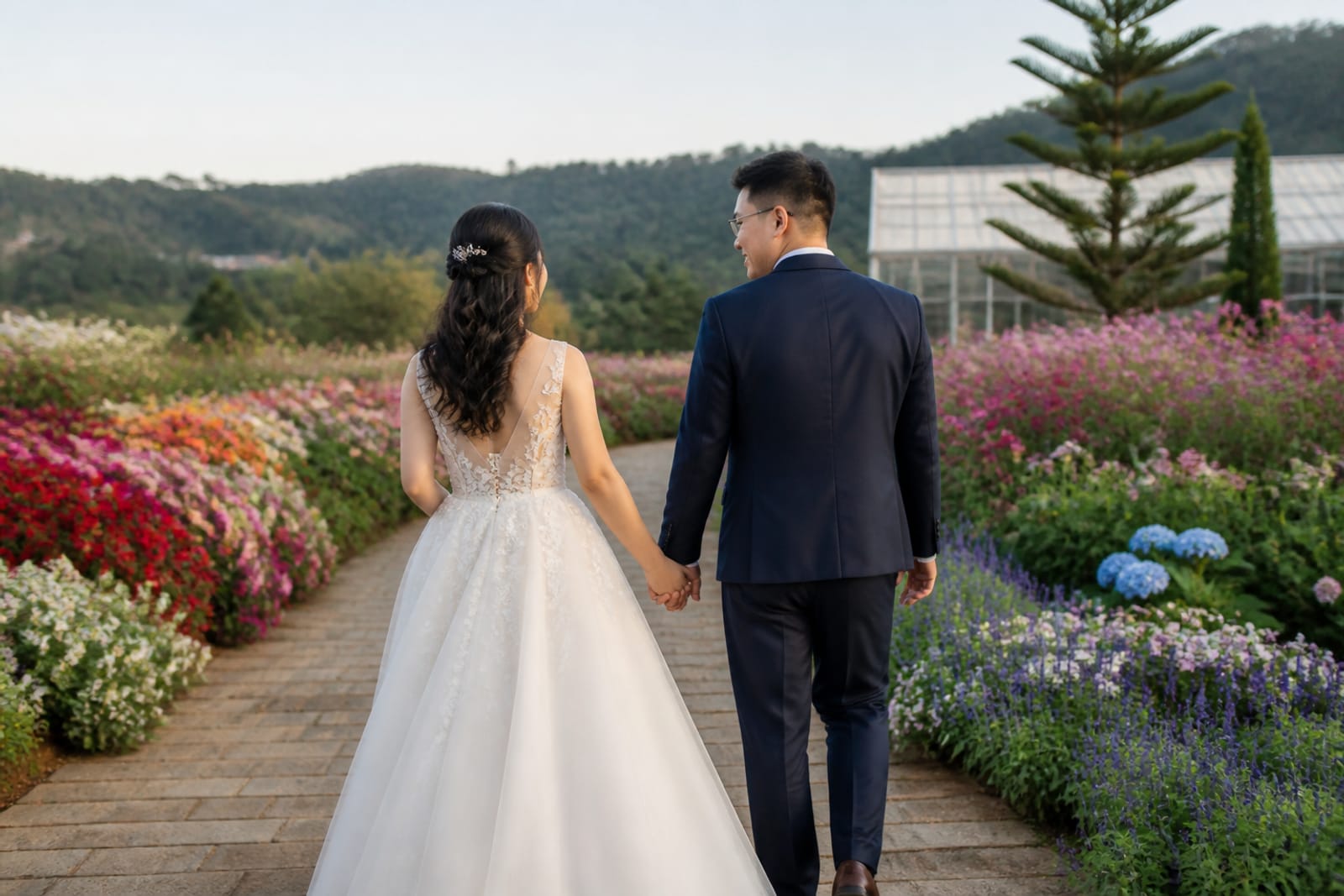
Golden hour at Xuan Huong Lake runs roughly 4:00–5:30 pm (Nov–Feb; it shifts earlier in summer). The sun sits low over the western hills, warming the lake surface and pine trees. Shadows lengthen and sidelighting sculpts your face. The lake still reflects light well, and the flower gardens are lit from behind (rim light on petals). Expect 10–20 other visitors—mostly local couples, joggers and photographers, not dense tour groups. Parking fills 30 minutes before sunset, so arrive by 3:45 pm to secure a spot and walk the best angles. Wind picks up around 4:30 pm, so hair and fabric move naturally (or blow too much—have a plan). Light lasts until 5:50 pm, but intensity drops sharply after 5:20 pm; you're racing the clock, but the race feels intentional, not frantic.
Conclusion: Golden hour is the crowd-light trade-off: manageable traffic and strong sidelighting.
What is the real advantage of midday shoots, and who should consider them?
Midday (10:00 am–2:00 pm) produces razor-sharp detail, vibrant greens and saturated sky—the opposite of soft. Shadows are hard and short; skin appears high-contrast (not flattering unless you want drama). The lake reflects full daylight, bright and almost white in photos. No mist, no mystery. Crowds are heaviest (local school groups, domestic tourists, travelers between 11:00 am–1:00 pm). You're competing for clear sightlines. However: if your ao dai is a bold color (crimson, bright gold, electric blue), midday saturation works. If you want a "daytime stroll" feeling rather than moody cinema, midday is honest. If your schedule is locked (flight out at 3:00 pm, only free window is 11:00 am–12:30 pm), midday is real. The wind is usually calmer midday than dusk. Reflections are bright but readable. You can shoot and be done in 45 minutes.
Conclusion: Midday suits bold colors, tight schedules and daytime-stroll aesthetics.
How do season and weather change what time works best?
Da Lat's dry season (Dec–Apr) means clear mornings and predictable afternoon clouds. Sunrise is crisp and mist clears by 7:00 am. Golden hour (4:00–5:20 pm) is reliable. Wet season (May–Nov) brings afternoon showers after 3:00 pm, so sunrise is your safest bet; by 3:30 pm, clouds thicken and rain often follows. Winter months (Dec–Feb) see mist every dawn (bonus: romantic frames) but cooler temperatures (bring a wrap). Cherry blossoms bloom late Jan–Feb around the lake edges. Autumn (Oct–Nov) brings afternoon clouds and occasional drizzle but is moody and quiet. Spring (Mar–Apr) offers clear skies and warm mornings. Wind is strongest Mar–Apr (dust season in the north, but Da Lat catches breezes from the coast). Check weather 24 hours before your session; if rain is forecast for 3:00 pm onwards, lock sunrise. If clear all day, golden hour is safer than midday because you'll have already shot at dawn and can pivot.
Conclusion: Dry season (Dec–Apr) gives the widest window; wet season (May–Nov) favors early shoots.
Should you book a director or shoot solo, and how does timing change that choice?
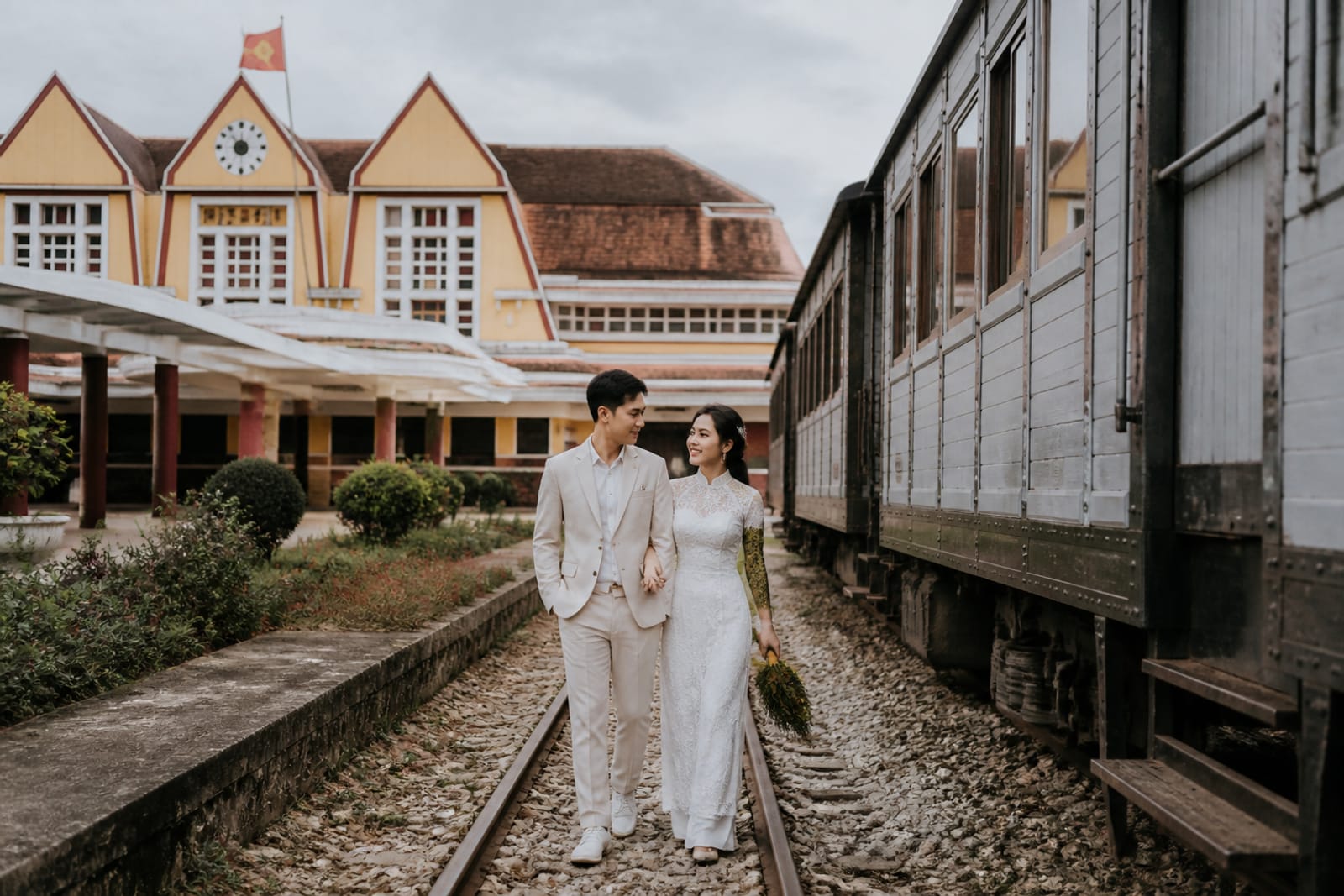
Shooting solo means you scout light, frame yourself, adjust outfit and timing alone—freeing but risky (wrong angle, missed light window, technical fumbles). A photographer (local or traveling in) helps but often defaults to "stand here, look there," missing the directional light and story-building that a director adds. When you book Cáo Studio for a couple shoot, the director arrives with the photographer, makeup artist and outfit options already prepped. The team reads light in real time, tells you "walk toward the mist" or "sit and look at each other," and adjusts frame by frame. This matters most at sunrise (light moves in 3-minute increments; you need live direction) and golden hour (shadows shift fast). Midday is more forgiving—light is stable—so solo or local photographer is likelier to work. Cost factors: director-led shoots require a team in Da Lat (travel, hotel, coordination); solo or local booking is simpler and often faster to arrange. If you're a couple doing a pre-wedding photoshoot and want editorial-quality frames, a director is the difference between "nice vacation photo" and "we look like a film."
Conclusion: Director teams shine at sunrise and golden hour; solo/local fits midday or if your budget is tight.
| Time | Best for | Light & mood | Crowds | Why it works |
|---|---|---|---|---|
| Sunrise (5:30–6:30 am) | Ao dai, couples, mood | Soft mist, sidelight, cool tones | None | Solitude, directional glow, still water |
| Mid-morning (8:00–10:00 am) | Detail, color pop | Clear, warm, direct | Light | Mist cleared, sun high enough, few tourists |
| Midday (10:00 am–2:00 pm) | Bold colors, drama | Sharp, saturated, hard shadows | Heavy | Vibrant greens, quick turnaround, stable light |
| Golden hour (4:00–5:30 pm) | Couples, sidelighting | Warm, sculpting, reflective | Moderate | Rim light, long shadows, cinematic feel |
| Blue hour (5:30–6:15 pm) | Moody, silhouettes | Cool, low contrast, twilight | Light | Smooth gradation, lake glows, drama |
What should you check before you book a shoot at Xuan Huong Lake?
Outfit & weather: Ao dai works best at sunrise and golden hour (mist + sidelighting). Casual outfits suit midday or golden hour. Check the weather forecast 48 hours out; if rain is forecast, propose sunrise instead. Bring a light wrap or shawl (temperature drops 5–8°C at dawn).
Transport & timing: Book hotel pickup the night before if sunrise (hotels are 10–15 minutes from the lake). Parking fills fast at golden hour; aim for 3:45 pm arrival. If midday, you have flexibility but expect crowds.
Photographer & direction: Confirm your photographer or director has shot at Xuan Huong Lake before (light, crowds, access points differ from Hanoi or Saigon). Ask if they scout the morning of or arrive 15 minutes early. A director is most useful at sunrise (light moves fast) and golden hour (shadows shift); less essential at midday.
Permits & etiquette: The lake is public; no permit is required. Avoid crowded flower gardens during tour-group hours (10:00 am–12:00 pm). Walk slowly, don't block joggers or anglers. Dress respectfully (shoulders, knees covered, unless you're in swimming attire, which is not typical for photo shoots).
Technical check: Confirm your photographer or phone camera is set to manual exposure (to hold light on faces, not let the bright lake blow out the image). If using a pro camera, ND filters help golden hour (reduces harsh reflections). Tripod works at sunrise (stable, self-timer or remote) but draws attention at golden hour or midday.
📸 Book on WhatsApp — couple photoshoot | 💄 Makeup & hair at your hotel | 🌸 Ideas & lookbook
Which time fits your session type and style?
If you're doing a couple photoshoot with Cáo Studio, the director will advise based on your outfit (ao dai needs sidelighting; casual suits any time). If you're planning a pre-wedding photoshoot with multiple outfit changes, sunrise and golden hour split nicely: one hour at dawn (mist + soft light), break for makeup touch-up, then golden hour (warm + sidelighting). If you're solo or on a tight budget and booking a local photographer, midday is simpler (light is stable, you don't need a full team, turnaround is fast). If you're combining Xuan Huong Lake with a makeup & hair service at your hotel, confirm timing with the artist; sunrise means 5:00 am start, golden hour means 2:30 pm prep.
For travelers doing a vacation photoshoot in Da Lat without a full pre-wedding plan, sunrise or golden hour gives the best memory (mist, light, mood). Both require early logistics but reward you with frames you'll return to for years. Midday is the backup—it's not moody, but it's honest and quick.
📸 Book on WhatsApp — couple photoshoot
How to book the right time if you're traveling to Da Lat from Hanoi or Ho Chi Minh City
Da Lat is a 5–6 hour drive from Ho Chi Minh City or a flight (1 hour). If you arrive in the morning, you can shoot golden hour the same day (if you're staying overnight) or at sunrise the next morning. If you arrive evening, sunrise the next day is standard. Cáo Studio does not operate a Da Lat studio, but we can connect you with local photographers we've worked with during shoots in the region. You arrange the booking directly with the local team; we can advise on timing, outfit and light from our experience shooting similar highland lakes. For a full pre-wedding photoshoot with direction, makeup and multiple outfits, ask on WhatsApp if Cáo Studio is coordinating a Da Lat trip during your travel dates.
Alternatively, if you're in Hanoi or Ho Chi Minh City and want a directed couple or ao dai shoot, book with Cáo Studio in those cities and return to Xuan Huong Lake as a standalone solo trip—no crew logistics, just you, your outfit and a rental camera or phone (frame it yourself) using the light timing you've learned here.
📸 Book on WhatsApp — pre-wedding photoshoot | 📍 Cáo Studio Hanoi | 📍 Cáo Studio Saigon
FAQ
Does Xuan Huong Lake have a permit or entry fee for photographers?
The lake is public; no permit or fee. Walking paths and flower gardens are free. Park at the main lot near the pier (check current parking policy locally). Avoid commercial tripods in heavy-tourist zones during 10:00 am–12:00 pm.
What's the difference between sunrise mist and fog, and does one photograph better?
Mist (lighter, partial) is water vapor from the cool lake surface; fog is denser. Mist at Xuan Huong (5:30–6:45 am) is usually light and directional—it softens backlight and adds depth. Fog is rare but can obscure detail. Both photograph moody; mist is more flattering for faces.
Can I shoot ao dai at midday, or will it look washed out?
Bold colors (crimson, gold, jewel tones) stay vibrant at midday; pastels look faded. Muted colors suit sunrise and golden hour. If your ao dai is bright silk, midday can work. Scout the light 15 minutes before you pose; ask your photographer to test a frame with you in the outfit and check the screen.
If I'm only in Da Lat for a few hours, which time should I prioritize?
Golden hour (4:00–5:30 pm) gives the best reward for quick timing. Sunrise requires an overnight stay. If you have 2–3 hours and arrive midday, do a quick walk at 3:00 pm, then shoot golden hour. If you arrive morning, skip midday heat and rest; shoot sunrise the next day or evening of arrival.
Should I use a phone camera or hire a photographer?
Phone cameras handle Xuan Huong Lake's light well—wide lenses capture the lake, and computational photography handles mist. A photographer (local or with Cáo Studio on a coordinated Da Lat trip) is worth it if you want posing direction, outfit adjustments, and frames you won't second-guess. A director (through Cáo Studio if we're coordinating) adds editorial quality and light reading in real time—best for couples and ao dai. Phone works if you're solo and want memories, not portfolio frames.
What if the weather forecast shows rain on my shoot day?
Afternoon rain is common May–Nov. Shift to sunrise (mornings usually clear). Carry a compact umbrella as a prop (can work in frames). Confirm with your photographer 24 hours before; rain doesn't cancel, but light changes (softer, cooler). A director (through Cáo Studio if coordinating) can pivot to indoor or sheltered spots if needed. Wet pavement can reflect light beautifully if you're intentional about it.
คำถามที่พบบ่อย
Does Xuan Huong Lake have a permit or entry fee for photographers?
The lake is public; no permit or fee. Walking paths and flower gardens are free. Park at the main lot near the pier (check current parking policy locally). Avoid commercial tripods in heavy-tourist zones during 10:00 am–12:00 pm.
What's the difference between sunrise mist and fog, and does one photograph better?
Mist (lighter, partial) is water vapor from the cool lake surface; fog is denser. Mist at Xuan Huong (5:30–6:45 am) is usually light and directional—it softens backlight and adds depth. Fog is rare but can obscure detail. Both photograph moody; mist is more flattering for faces.
Can I shoot ao dai at midday, or will it look washed out?
Bold colors (crimson, gold, jewel tones) stay vibrant at midday; pastels look faded. Muted colors suit sunrise and golden hour. If your ao dai is bright silk, midday can work. Scout the light 15 minutes before you pose; ask your photographer to test a frame with you in the outfit and check the screen.
If I'm only in Da Lat for a few hours, which time should I prioritize?
Golden hour (4:00–5:30 pm) gives the best reward for quick timing. Sunrise requires an overnight stay. If you have 2–3 hours and arrive midday, do a quick walk at 3:00 pm, then shoot golden hour. If you arrive morning, skip midday heat and rest; shoot sunrise the next day or evening of arrival.
Should I use a phone camera or hire a photographer?
Phone cameras handle Xuan Huong Lake's light well—wide lenses capture the lake, and computational photography handles mist. A photographer (local or with Cáo Studio on a coordinated Da Lat trip) is worth it if you want posing direction, outfit adjustments, and frames you won't second-guess. A director (through Cáo Studio if we're coordinating) adds editorial quality and light reading in real time—best for couples and ao dai. Phone works if you're solo and want memories, not portfolio frames.
What if the weather forecast shows rain on my shoot day?
Afternoon rain is common May–Nov. Shift to sunrise (mornings usually clear). Carry a compact umbrella as a prop (can work in frames). Confirm with your photographer 24 hours before; rain doesn't cancel, but light changes (softer, cooler). A director (through Cáo Studio if coordinating) can pivot to indoor or sheltered spots if needed. Wet pavement can reflect light beautifully if you're intentional about it.