Cáo Studio · 越南写真攻略 · 越南婚前写真怎么选?Cáo Studio 与本地摄影师对比指南
Da Lat Railway Station Pre-Wedding Photoshoot — What to Wear & When
Cáo Studio 团队 · 河内 · 2026-10-03
Da Lat Railway Station (Ga Da Lat) is a working 1930s colonial station on the town's southern edge—a 10-minute walk from the town center. Morning light (6:30–8:00 am) casts soft side light across the platform and stone facade; afternoon (3:00–5:00 pm) brings harder shadows but fewer crowds. Dry season (December–April) offers clear skies and cool air; rainy season (May–November) brings morning mist over the pine hills—atmospheric but unpredictable. Dress in layers: ao dai fits the romantic tone but requires a quiet location away from train schedules; Western wedding dresses work well in the architectural frames but demand good footing on ballast and stairs. Sessions run 1.5–2.5 hours on-site; most photographers edit within 3–7 days. Cáo Studio does not shoot at Da Lat (the team is based in Hanoi and Ho Chi Minh City); instead, this guide helps you choose a local Da Lat photographer and outfit strategy that works with the light, season, and train schedule.
Da Lat Railway Station — Why It Matters for Pre-Wedding Shoots
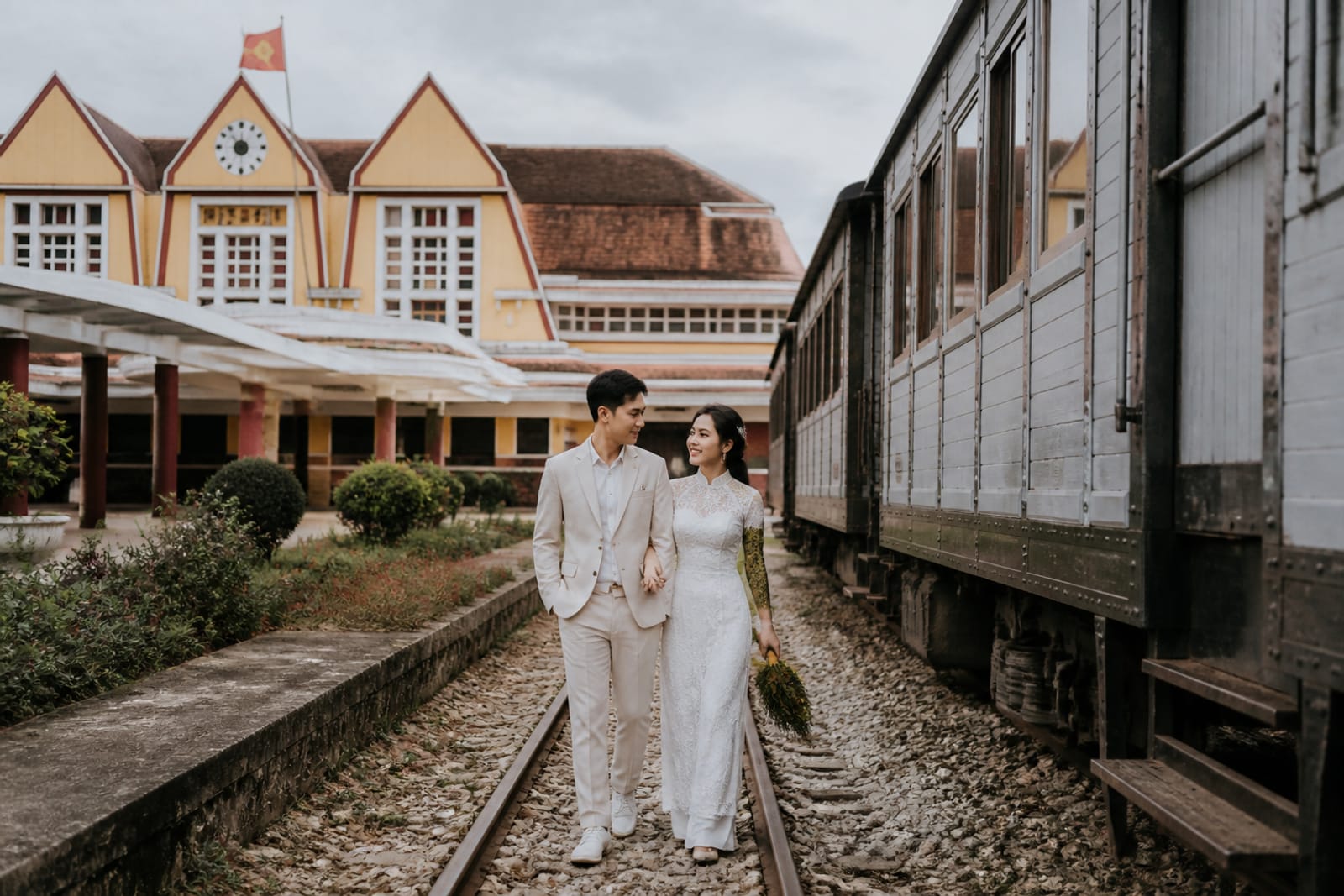
Da Lat Railway Station draws couples because it reads as timeless. The mustard-yellow platform canopy, the colonial arches, the scale—they frame you without shouting. Most pre-wedding shoots here happen in the early morning (6:30–8:00 am), before trains run frequent schedules and tour groups arrive. The platform is technically active; trains pass 1–2 times daily. Confirm the schedule with the station master the day before—a passing train can either ruin focus or add narrative depth, depending on your director's vision. The afternoon window (3:00–5:00 pm) works if you prefer smaller crowds, but light becomes directional and harder on faces unless you're positioned on the west side, catching golden hour. Most couples pair one outfit—ao dai or a wedding dress—with a walk through the town center afterward, keeping the station to a 45-minute window. The site has no dedicated dressing room; plan to change at a nearby hotel or café. Entry to the platform requires permission from the station office (a brief conversation, no formal permit); ask your photographer to confirm access the day you shoot.
---
What Season Gives You the Best Light and Comfort?
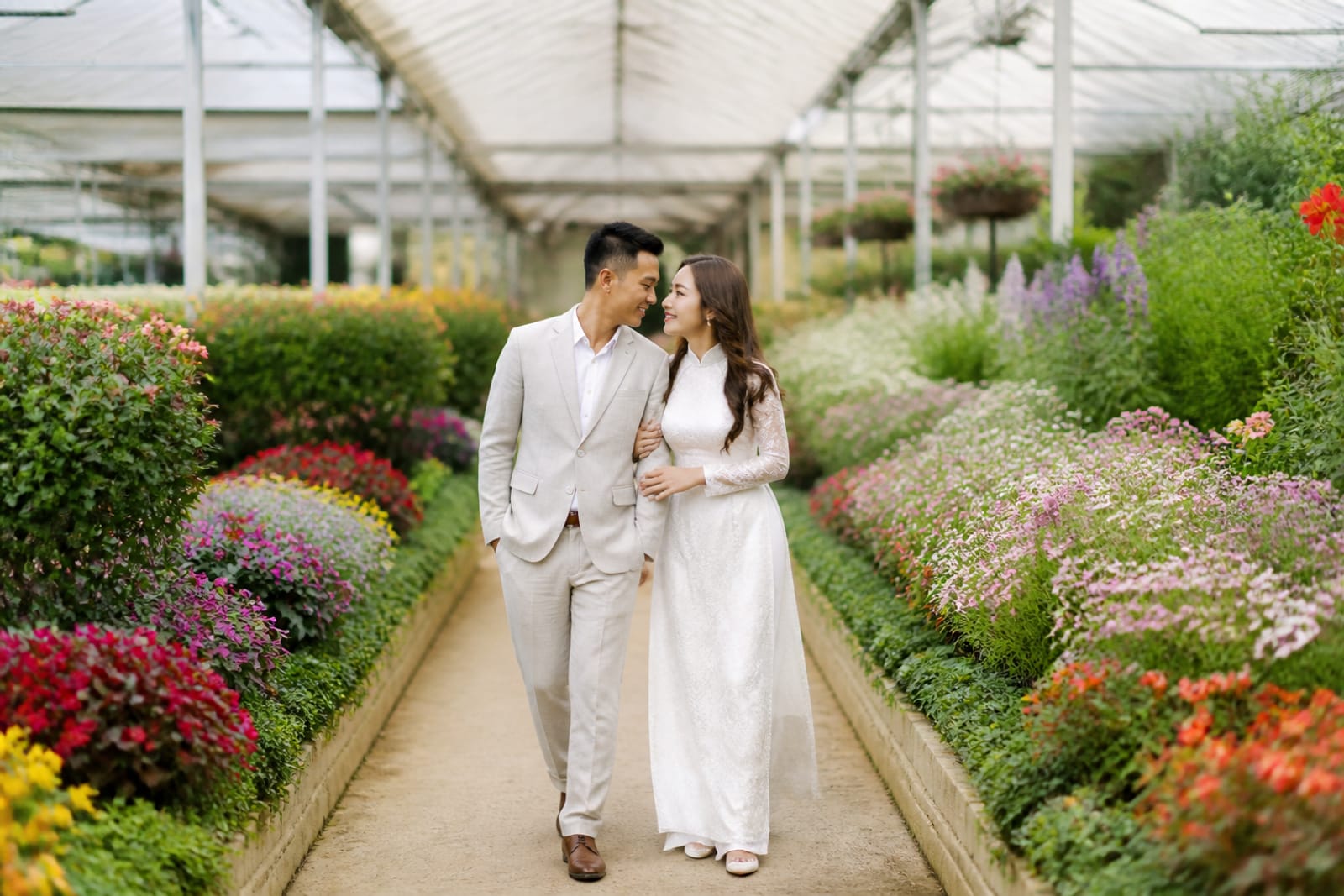
December–February (cool, clear, dry): Temperatures range 12–18°C. Mornings are crisp and mist-free; the light is even and cool-toned, suiting both ao dai and Western dresses. You'll need a light jacket or shawl for standing still between shots. Crowds are moderate (local holidays peak late January–early February around Tet); book your shoot early in the month if possible.
March–May (warm, dry, occasional haze): Temperatures climb to 20–25°C. Mornings stay clear but sunrise is earlier (around 5:45 am) and light feels warm and golden. Humidity begins to rise in May; your hair and makeup will hold better in March–April. By May, afternoon shoots become uncomfortable—heat and sweat affect appearance over 2+ hours.
June–November (rainy, misty, typhoon risk): Afternoon showers are common; mornings often start clear but clouds roll in by 10:00 am. Mist over the pine hills around sunrise is visually striking—moody, romantic, filmic—but unpredictable and can obscure faces in wide shots. Humidity is high; plan shorter sessions (1–1.5 hours). October–November carry typhoon risk; avoid if you're traveling from abroad and cannot reschedule.
| Season | Light quality | Best time of day | Outfit fit | Comfort | Crowds |
|---|---|---|---|---|---|
| Dec–Feb | Even, cool, no haze | 6:30–8:00 am | Ao dai (shawl needed); dresses breathe easily | Cool; layers advised | Moderate; peak Tet week |
| Mar–May | Warm, golden, clear | 5:45–7:30 am | Ao dai; dresses feel less constrained | Warm; humidity rises May | Light |
| Jun–Nov | Hazy, misty, variable | 6:00–7:30 am (before clouds) | Ao dai best (layers hide humidity); dresses cling | Hot, humid; rain risk | Lightest (deterrent) |
---
Ao Dai vs. Wedding Dress — Which Fits the Station?
Ao dai (traditional Vietnamese tunic dress):
- Why it works: The flowing silhouette complements the station's vertical lines and arches. Movement reads beautifully in slow walking shots. Layering with a shawl or long cardigan adds visual interest and adapts to cool mornings.
- Light and framing: Photographers can shoot close (tunic detail, lace, embroidery) and wide (you walking the platform, fabric trailing). The dress's neutral white or pastels don't compete with the mustard and grey station palette.
- Practical fit: The tunic is breathable; you can stand still longer without overheating. Trousers underneath mean no sitting concerns. The long sleeves protect your arms if you rest against the platform edge (ballast is rough).
- Rental and timing: Ao dai rental in Da Lat is limited; plan to rent from Hanoi or Ho Chi Minh City and transport it, or ask your photographer for local referrals. Budget travel time and backup if the rental is delayed.
Western wedding dress (white, off-white, cream, or blush):
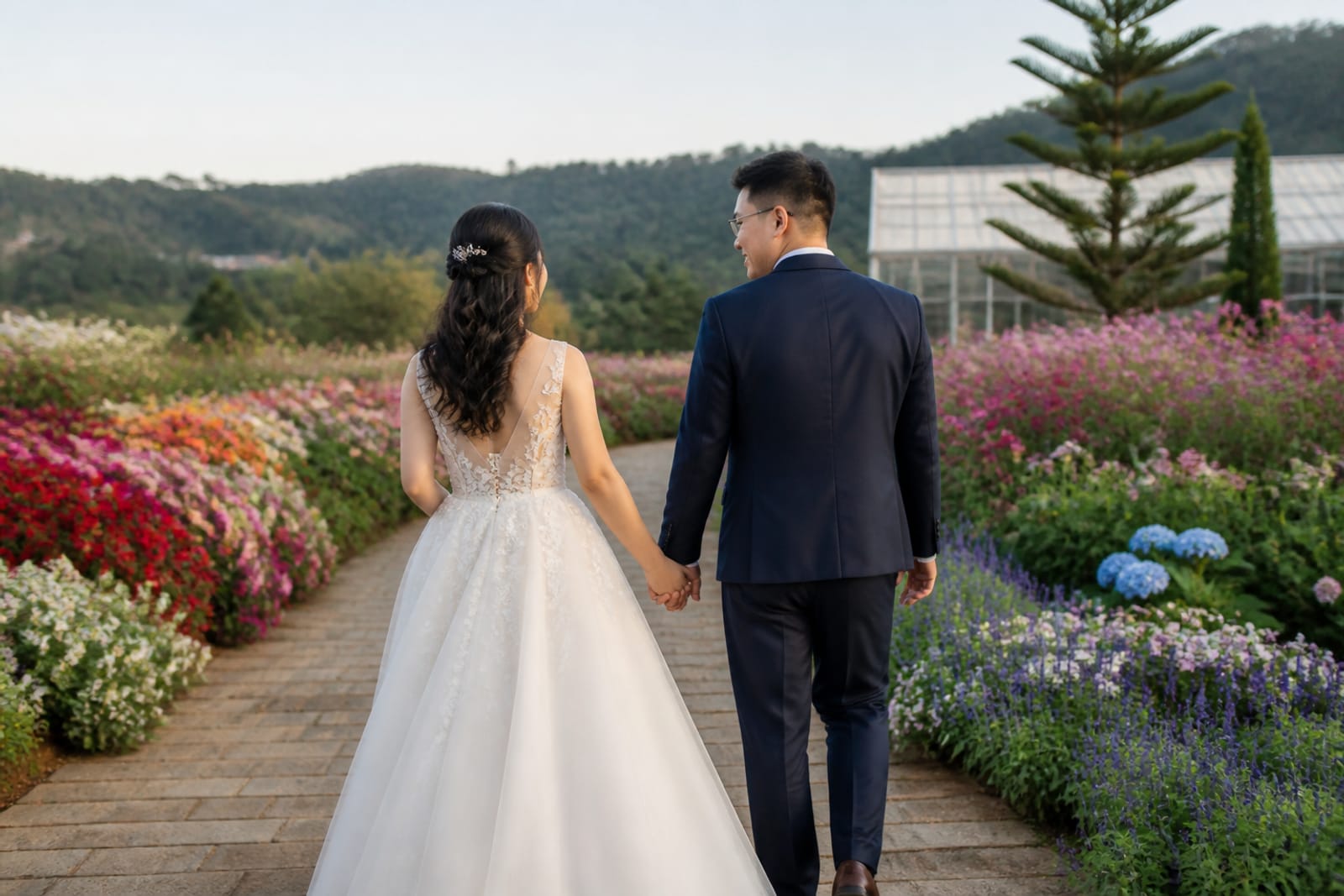
- Why it works: The station's architectural grandeur reads formal and timeless around you. A fitted bodice and A-line or ballgown skirt photograph well against the platform's horizontal and vertical lines. Lace or beading catch the soft morning light distinctly.
- Light and framing: Morning side light sculpts the dress's texture and silhouette. You photograph well in architectural frames (walking toward the arches, standing at the platform edge).
- Practical fit: Long skirts drag on ballast and stairs; wear clean, flat shoes (not heels) for footing. The tulle and layers hold moisture in humidity; plan to carry a fan or tissue. Strapless and sleeveless options work in warm months (Mar–May) but feel cold in early morning (Dec–Feb). A shawl or silk wrap is essential.
- Rental and timing: Wedding dress rental in Da Lat is not reliable; rent from Ho Chi Minh City or bring your own. Shipping and dry-cleaning add cost factors (cleaning time, transport fragility). If you're traveling from abroad, a destination rental company or a rented dress from your home city is safer.
Hybrid option: A two-piece session (ao dai for the station, a Western dress for a second location) maximizes the light and your visual variety. This requires 3–4 hours on-site and 2+ locations; ask your photographer whether they can manage two outfit changes and continuity of narrative.
---
How to Choose and Vet a Local Da Lat Photographer
Cáo Studio operates from Hanoi and Ho Chi Minh City, not Da Lat. If you're shooting at the railway station, hire a local Da Lat photographer who knows the site, light, and train schedule. Here's how:
Check their portfolio for:
- At least 3–5 shots from Da Lat Railway Station (not generic colonial architecture—this specific site, this light, this framing).
- Evidence of pre-wedding shoots: couple interaction (walking, looking at each other, natural pause), not stiff poses.
- Consistent editing (color tone, contrast, sharpness) across multiple sessions.
- Wide, medium, and detail shots in one story (not all close-ups or all environment).
Ask directly:
- What time do you usually shoot here? (Look for 6:00–8:00 am responses; late morning and afternoon are less ideal.)
- Do you confirm the train schedule with the station office before the shoot? (Yes is the right answer.)
- What happens if the weather changes? (Can they pivot to a backup location? Do they offer a reshoot?)
- How many edited photos do you deliver, and in how many days? (Ask for specifics, not vague ranges.)
- Do you include outfit or makeup coordination, or is that separate? (Cáo Studio's model is one team, one booking; many Da Lat photographers are solo operators coordinating with external vendors—ask if that suits your comfort level.)
Red flags:
- Portfolio has no Da Lat Railway Station work, or the work is heavily filtered/heavily edited to the point you can't assess the actual light and framing.
- Photographer suggests late-morning or afternoon as "better for light" (it's not at this site in Da Lat; they may not know the location well).
- No clear answer on train schedules or contingency plans.
- Vague delivery timelines ("about a week") or no sample of actual turnaround time.
Cost factors (never exact amounts):
- Local Da Lat photographers typically charge less than Saigon or Hanoi operators; session time, number of outfits, and travel to secondary locations all push the quote higher.
- Makeup and hair are usually booked separately; clarify whether the photographer has preferred vendors or if you source your own.
- Ao dai or dress rental is separate; plan to add time and logistics for fittings.
---
Timing, Light, and Logistics — The Day-of Checklist
Before the shoot (1 week prior):
- Confirm the train schedule with the station office (call or visit; the schedule may shift seasonally).
- Coordinate with your photographer: meeting time (arrive 15–20 minutes early to scout light), backup location if weather fails, and the exact platform area you'll use (avoid the main ticketing area—it's active during business hours).
- Arrange outfit delivery and fitting: ao dai or dress should arrive and be tried on 2–3 days before the shoot. Have a steamer or iron on hand.
- Book hair and makeup: Da Lat has salons, but pre-wedding standards (durability under 2–3 hours, humidity-proof) are not guaranteed. Consider traveling makeup from Saigon or Hanoi, or hiring a makeup artist locally (ask your photographer for referrals—their network is usually reliable).
Day of the shoot:
- Wake 1–2 hours before the agreed start time (usually 6:00–6:30 am for a 6:30 am shoot). Eat a light breakfast; dehydration affects your skin in photos.
- Dress at your hotel or a nearby café (the station has no dressing room). Allow 30 minutes for final touch-ups and travel to the station.
- Arrive 10–15 minutes early. Walk the platform with your photographer to agree on the primary frame (wide shot intro, walking sequences, detail moments at the canopy).
- Check the light: if it's overcast, your photographer may suggest wider apertures and slower shutter speeds; if it's clear and golden, expect faster movement between frames to catch the angle.
- Limit phone distractions: your photographer will direct you (walk, pause, look at your partner, sit on the bench—never stare at the camera). Trust the director's eye.
- If a train passes, don't panic: stop, wait, and resume. A passing train can add drama if framed correctly; your photographer will decide in the moment.
Practical comfort:
- Bring a light cardigan, shawl, or jacket (even in warm months, early mornings are cool and you'll be still).
- Wear comfortable shoes for walking (the platform is level but worn; heels will sink into old concrete).
- Bring a small hand mirror and touch-up tissues (humidity and early-morning cool-down can affect makeup).
- Have your photographer's phone number saved; confirm arrival 30 minutes before the shoot.
---
Should You Travel to Hanoi or Saigon Instead?
If you're considering a pre-wedding shoot but not set on Da Lat, understand the trade-offs:
Da Lat Railway Station (local photographer):
- Pros: Romantic colonial setting, cool weather Dec–April, mist aesthetics (Jun–Nov), intimate scale, lower cost factors.
- Cons: Limited photographer options, no integrated outfit/makeup coordination (you source separately), higher logistical complexity (dress rental, makeup artist vetting).
- Best for: Couples comfortable managing multiple vendors, seeking a one-of-a-kind colonial frame, flexible on reschedule dates (weather unpredictable Jun–Nov).
Hanoi with Cáo Studio:
- Pros: One team (photographer, makeup artist, stylist, director) in one booking. Integrated outfit coordination (ao dai, Western dress, suit). Hanoi has Hoan Kiem Lake (morning light, reflections), Old Quarter (narrow alleys, lantern-lit), and temple courtyards (arches, stonework—similar colonial appeal). Quick turnaround (48 hours, edited stills + short film).
- Cons: Warmer and more humid Apr–Sep; Old Quarter crowds peak 8:00–10:00 am.
- Best for: Couples wanting simplicity, one point of contact, fast delivery, ao dai storytelling.
Ho Chi Minh City with Cáo Studio:
- Pros: One team model (same as Hanoi). Saigon has Reunification Palace gardens (wide, clean light), Bitexco rooftop (urban geometry), riverside parks (golden hour). Year-round warm; dry season Dec–Apr is easiest.
- Cons: Urban density; fewer natural quiet spaces than Da Lat.
- Best for: Couples seeking a modern city backdrop, international style, integrated team logistics.
If Da Lat is your heart's choice, a local photographer is your path. If you want the Cáo Studio model (one team, directed, fast turnaround), book Hanoi or Ho Chi Minh City instead—and consider a couple & family photoshoot session format, which uses the same team and timeline as pre-wedding work.
---
What to Check Before You Book a Da Lat Photographer
Portfolio and proof of work:
- Does their Da Lat Railway Station portfolio show consistent, clear editing and directional lighting (not over-processed)?
- Can they show a full story (arrival, walking, pause, detail) from one couple's session, not cherry-picked frames?
Communication and process:
- Do they respond to questions in 12–24 hours and answer specifically (not generically)?
- Can they explain their gear, backup plan, and delivery format in plain language?
Outfit and styling:
- Do they have vendors (makeup artist, ao dai rental, dress stylist) they actively work with, or do you manage all three separately?
- If you're bringing a dress or renting locally, do they have experience with that dress type or rental company?
Contingency:
- What happens if it rains? Do they offer a reshoot date (and within how many weeks)?
- Can they name a backup location if the station is inaccessible (train scheduling, maintenance, permit denial)?
Turnaround:
- What's their typical delivery time (edited photos, digital files, prints)?
- Can they provide a sample timeline from your shoot date to final delivery?
---
FAQ
Can Cáo Studio shoot my pre-wedding at Da Lat Railway Station?
No. Cáo Studio operates from Hanoi and Ho Chi Minh City. For Da Lat, hire a local photographer using the vetting guide above. If you'd prefer the Cáo Studio one-team model, consider booking a pre-wedding shoot in Hanoi or Saigon instead.
What's the best time of year for Da Lat Railway Station photos?
December–April offers clear skies, cool air (12–25°C), and even morning light. June–November brings atmospheric mist and fewer crowds but unpredictable afternoon rain and humidity. Peak travel crowds spike late January–early February around Tet; book early December or mid-February if you're traveling from abroad.
Do I need an ao dai, or will a Western wedding dress work?
Both work. Ao dai suits the romantic, timeless tone and moves beautifully in photographs; it's breathable and comfortable for longer standing. A Western dress photographs well against the station's architecture but requires careful footing on ballast and can feel warm in humidity. Many couples do a hybrid session (one outfit per location), which requires 3–4 hours and two stops.
What if a train passes during my shoot?
Confirm the schedule with the station office beforehand. A passing train is usually a momentary pause; your photographer will resume after it passes. Some directors frame a passing train as part of the narrative; others avoid it. Clarify your preference when booking.
How do I rent an ao dai or wedding dress in Da Lat?
Da Lat's rental options are limited. Rent from Ho Chi Minh City or Hanoi and arrange transport, or ask your local photographer for referrals to Da Lat rental shops. Allow 1–2 weeks for fittings and adjustments. For Western dresses, bringing your own or renting from your home city is often more reliable than local Da Lat rental.
Should I hire hair and makeup separately, or does the photographer coordinate?
Most Da Lat photographers are solo operators; you'll need to source hair and makeup independently. Ask your photographer for referrals to trusted local artists. Alternatively, hire a makeup artist from Ho Chi Minh City and have them travel with you, ensuring pre-wedding durability standards. Cáo Studio includes makeup & hair at your hotel in Hanoi and Saigon bookings if you choose that route instead.
How many hours should I book, and what's included?
Clarify directly with your photographer. Typical sessions run 1.5–2.5 hours at the station. Ask how many edited photos they deliver, whether outfit changes are included (they usually aren't), and whether travel time or secondary locations add hours or cost factors. Request a written outline before you pay a deposit. === 📸 Book on WhatsApp — pre-wedding photoshoot | 💄 Makeup & hair at your hotel | 🌸 Ideas & lookbook --- ## Ready to Explore Other Pre-Wedding Destinations? If you're also considering Hanoi or Ho Chi Minh City, or if you want to pair your pre-wedding with wedding day photography or video, Cáo Studio's one-team model includes outfit coordination, makeup, and fast turnaround. Browse the lookbook for visual ideas, then reach out on WhatsApp. For other Vietnam destinations—Hoi An, Sapa, Ha Long, Ninh Binh—use the same vetting framework above: portfolio proof from that exact location, clear communication, integrated vendors (or transparent vendor sourcing), and a named contingency plan. 📸 Book on WhatsApp — couple & family photoshoot | 🎨 Explore rentals — ao dai, dress, suit | 💍 Proposal & anniversary packages --- Cáo Studio guides travelers through Vietnam's light, season, and logistics so your frames feel timeless—directed, not posed. Da Lat Railway Station is a beautiful frame; this guide helps you choose the right team and outfit to fill it.
常见问题
Can Cáo Studio shoot my pre-wedding at Da Lat Railway Station?
No. Cáo Studio operates from [Hanoi](/zh-cn/hanoi) and [Ho Chi Minh City](/zh-cn/saigon). For Da Lat, hire a local photographer using the vetting guide above. If you'd prefer the Cáo Studio one-team model, consider booking a [pre-wedding shoot](/zh-cn/pre-wedding-photoshoot) in Hanoi or Saigon instead.
What's the best time of year for Da Lat Railway Station photos?
December–April offers clear skies, cool air (12–25°C), and even morning light. June–November brings atmospheric mist and fewer crowds but unpredictable afternoon rain and humidity. Peak travel crowds spike late January–early February around Tet; book early December or mid-February if you're traveling from abroad.
Do I need an ao dai, or will a Western wedding dress work?
Both work. Ao dai suits the romantic, timeless tone and moves beautifully in photographs; it's breathable and comfortable for longer standing. A Western dress photographs well against the station's architecture but requires careful footing on ballast and can feel warm in humidity. Many couples do a hybrid session (one outfit per location), which requires 3–4 hours and two stops.
What if a train passes during my shoot?
Confirm the schedule with the station office beforehand. A passing train is usually a momentary pause; your photographer will resume after it passes. Some directors frame a passing train as part of the narrative; others avoid it. Clarify your preference when booking.
How do I rent an ao dai or wedding dress in Da Lat?
Da Lat's rental options are limited. Rent from Ho Chi Minh City or Hanoi and arrange transport, or ask your local photographer for referrals to Da Lat rental shops. Allow 1–2 weeks for fittings and adjustments. For Western dresses, bringing your own or renting from your home city is often more reliable than local Da Lat rental.
Should I hire hair and makeup separately, or does the photographer coordinate?
Most Da Lat photographers are solo operators; you'll need to source hair and makeup independently. Ask your photographer for referrals to trusted local artists. Alternatively, hire a makeup artist from Ho Chi Minh City and have them travel with you, ensuring pre-wedding durability standards. Cáo Studio includes [makeup & hair at your hotel](/zh-cn/makeup-and-hair) in Hanoi and Saigon bookings if you choose that route instead.
How many hours should I book, and what's included?
Clarify directly with your photographer. Typical sessions run 1.5–2.5 hours at the station. Ask how many edited photos they deliver, whether outfit changes are included (they usually aren't), and whether travel time or secondary locations add hours or cost factors. Request a written outline before you pay a deposit. === [📸 Book on WhatsApp — pre-wedding photoshoot](/zh-cn/pre-wedding-photoshoot) | [💄 Makeup & hair at your hotel](/zh-cn/makeup-and-hair) | [🌸 Ideas & lookbook](/zh-cn/lookbook) --- ## Ready to Explore Other Pre-Wedding Destinations? If you're also considering [Hanoi](/zh-cn/hanoi) or [Ho Chi Minh City](/zh-cn/saigon), or if you want to pair your pre-wedding with [wedding day photography](/zh-cn/wedding-photographer) or [video](/zh-cn/wedding-video), Cáo Studio's one-team model includes outfit coordination, makeup, and fast turnaround. Browse the [lookbook](/zh-cn/lookbook) for visual ideas, then reach out on WhatsApp. For other Vietnam destinations—Hoi An, Sapa, Ha Long, Ninh Binh—use the same vetting framework above: portfolio proof from that exact location, clear communication, integrated vendors (or transparent vendor sourcing), and a named contingency plan. [📸 Book on WhatsApp — couple & family photoshoot](https://wa.me/84338762340) | [🎨 Explore rentals — ao dai, dress, suit](/zh-cn/ao-dai-rental) | [💍 Proposal & anniversary packages](/zh-cn/proposal-and-anniversary) --- *Cáo Studio guides travelers through Vietnam's light, season, and logistics so your frames feel timeless—directed, not posed. Da Lat Railway Station is a beautiful frame; this guide helps you choose the right team and outfit to fill it.*