Cáo Studio · 越南寫真攻略 · 越南婚前寫真:如何選擇及預訂完美方案
Hon Thom Cable Car Wedding Photoshoot: What to Wear & Book
Cáo Studio 團隊 · 河內 · 2026-10-02
Hon Thom cable car (Phu Quoc) stretches 7.6 km at 700+ m altitude, crossing emerald sea and jungle. Pre-wedding shoots here demand lightweight, wind-resistant fabrics—ao dai or tailored suits work best. Avoid heavy materials; layers trap heat in the cabin. Dry season (Nov–Apr) offers calm seas, sharp light at sunrise or late afternoon. Book a local Phu Quoc photographer 2–4 weeks ahead, or travel to Hanoi or Ho Chi Minh City for Cáo Studio – Makeup & Photoshoot sessions. Wind, glare and changing cabin light challenge exposure; a pro handles white balance, motion blur in the cabin. Budget 4–6 hours for the full experience: makeup, outfits, cable ride, island walks, sunset if timed right. 📸 Book on WhatsApp — pre-wedding shoots | 💄 Makeup & hair at your hotel | 🌸 Ideas & lookbook
Hon Thom cable car (Phu Quoc 【富國島】) stretches 7.6 km at 700+ m altitude, crossing emerald sea and jungle. Pre-wedding shoots here demand lightweight, wind-resistant fabrics—ao dai or tailored suits work best. Avoid heavy materials; layers trap heat in the cabin. Dry season (Nov–Apr) offers calm seas, sharp light at sunrise or late afternoon. Book a local Phu Quoc photographer 2–4 weeks ahead, or travel to Hanoi or Ho Chi Minh City for Cáo Studio – Makeup & Photoshoot sessions. Wind, glare and changing cabin light challenge exposure; a pro handles white balance, motion blur in the cabin. Budget 4–6 hours for the full experience: makeup, outfits, cable ride, island walks, sunset if timed right.
Why Hon Thom Cable Car Beats Other Phu Quoc Wedding Spots
Most Phu Quoc couples shoot at sea-level beaches: calm water, soft sand, simple logistics. Hon Thom offers height drama—the island rises 600+ m above the cable car line, and the cabin itself floats over open water. Light at altitude is sharper, cooler-toned, and changes fast as you climb. The 15-minute cabin ride frames shots impossibly wide: your couple silhouetted against sky, jungle canopy below, Phu Quoc town in the distance on clear days. Ground-level beach shoots demand water-proof makeup and constant wardrobe checks; Hon Thom eliminates sand entirely and locks your position, so focus shifts to posture, fabric movement and gaze. The trade: altitude wind and cabin reflections. A photographer who has shot the cable car knows the cabin's dual-pane glass creates glare on one side only—they'll position you on the shadow side at certain times. First-timers shoot into flare, losing the couple's faces. Book someone who has worked Hon Thom before, or bring test shots to your WhatsApp consultation with Cáo Studio if you're planning the shoot at a different location.
What Fabrics Don't Fail at 700 m Altitude
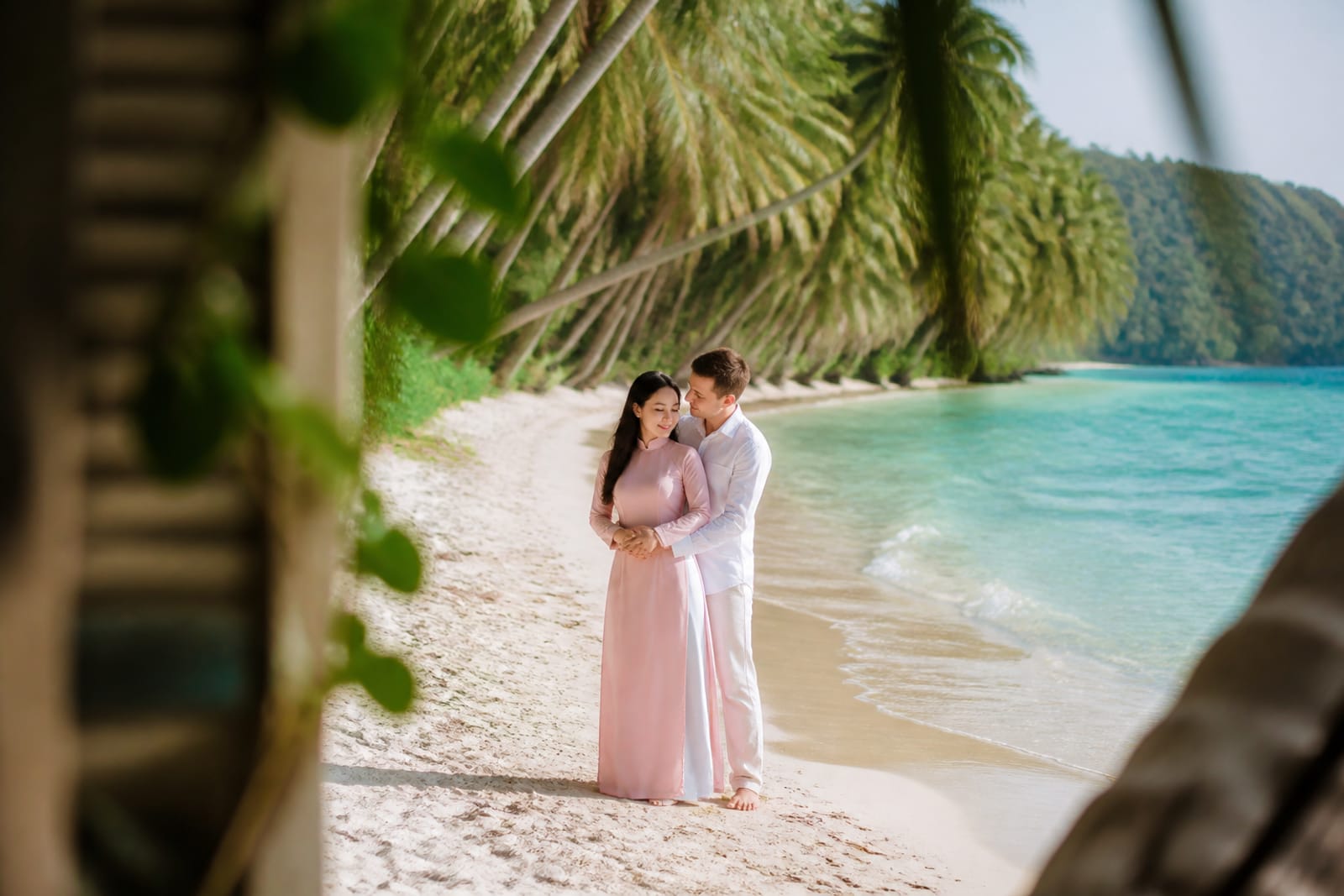
Ao dai and formal suits are the two outfits that survive Hon Thom's wind without looking disheveled. Ao dai works because the fabric flows—wind animates the silk or polyester, creating movement in photos without tangling or tearing. Heavy crepe ao dai (woven-tight fabric) clings even in gusts; lightweight silk or chiffon billow dramatically. Avoid ao dai with intricate beadwork on the back or long pendant ties—wind catches them, pulling the neckline and distracting from your pose. A well-fitted suit (jacket, no tie or bow tie) photographs sharp in cabin light and resists wrinkles during the ascent. Shirt underneath should be lightweight cotton or linen, not silk—silk clings to skin in cabin air and looks damp in photos. Avoid long sleeves if you're sensitive to heat; the cabin heats up as you ascend. Dresses (non-ao dai) are risky: chiffon flares unpredictably; satin catches glare and shows every crease. If a bride insists on a Western dress, choose a sleek sheath or A-line in matte fabric, no tulle. Pack a wrap or shawl—at the summit, it's cooler and wind-chill is real. Many couples bring a second outfit: ao dai for the ascent, suit or casual streetwear for island walks after descent. That extends the shoot time and gives you two moods on camera.
Timing the Light: Sunrise vs. Afternoon vs. Sunset
Sunrise at Hon Thom (roughly 6:00–6:30 am) occurs over jungle, not sea—the cabin faces southwest, so eastern light comes from behind and above, backlighting your silhouettes and the fog that often hangs over the canopy. Pros love this for moody, contoured portraits. Downside: you're climbing in dim light; makeup artists struggle with color matching outdoors. The cable car opens early enough for a 6:30–7:30 am window, but you'll need a local photographer and hotel pickup by 5:30 am. Afternoon (2:00–4:00 pm) gives you bright, direct light in the cabin—the sun is high, glare is harsh on the glass and faces look shadowed. Not ideal unless your photographer uses off-camera flash (rare in a moving cabin). Late afternoon (4:30–6:00 pm, depending on season) is the sweet spot: the sun drops to the horizon or behind the island, cabin light turns golden, and the sea glows. Sunset (5:30–6:30 pm in dry season, earlier in rainy season) offers the most dramatic colors—orange and purple in the sky, the couple framed against it through the cabin window. Trade-off: you have only 20–30 minutes of ideal light, and the cabin grows dim as you descend, so your photographer must expose for the sky, not your faces. If you want detail in your faces and the sunset, request a shoot that includes an island stop after descent—you can reshoot on solid ground while the last light lingers. Most cable car tickets include access to Hon Thom Island (Southern Island) and Hon Mong Tay (Northern Island); clarify entry times and closing with the cable car operator before booking your photographer.
| 時間段 | 光質 | 服裝表現 | 最適情景 | 挑戰 |
|---|---|---|---|---|
| 日出(6:00–7:30 am) | 逆光、霧氣 | 輪廓剪影 | 情侶的側臉、優雅姿態 | 妝容色彩難配、需早起 |
| 上午(8:00–11:30 am) | 清晰、偏冷 | 細節清楚 | 島嶼登山照、表情特寫 | 玻璃炫光、面部陰影 |
| 午後(2:00–4:00 pm) | 直接、刺眼 | 顯暗沉 | 登頂紀念照 | 高對比、需補光 |
| 傍晚(4:30–6:00 pm) | 金色、溫暖 | 膚色溫潤 | 情侶互動、海景背景 | 光線變化快、時間緊 |
| 日落(5:30–6:30 pm) | 紫橙色漸變 | 輪廓突出 | 天空戲劇感、剪影 | 面部欠曝、下山速度快 |
Dry season (Nov–Apr) keeps sunset times stable and sea calm; rainy season (May–Oct) brings afternoon downpours, unpredictable light and rough seas on the west side of the cable line. If you're booking in rainy season, expect rescheduling risks and ask your photographer about cabin condensation—it fogs glass and wrecks wide shots.
Makeup & Hair That Survive Wind and Altitude
Makeup for a moving cabin at 700 m faces three threats: wind cooling your face and drying makeup, cabin air (low humidity, recycled), and glare off the glass making strong products look cakey. A makeup artist who has worked Hon Thom knows to use matte foundations and powder-setting sprays instead of liquid finishers—they won't shine into the glare and won't streak if you sweat from the cabin heat during ascent. Eye makeup should be waterproof but not so heavy it clumps; wind will dry your eyes, and blinking hard in dim cabin light makes mascara look uneven in close-ups. Lips: long-wear liquid lipstick survives better than cream or gloss, which transfers to your partner's face and looks patchy in photos. Bring blotting papers and a powder compact—retouch between cabin rides and island walks. Hair is trickier. Loose waves or an updo works; braids catch wind and look messy. If you choose an updo, pin it flat to the head (not tall), secure with bobby pins and hairspray rated for humidity and wind—many Vietnamese hairsprays are formulated for tropical climates and hold better than Western brands. Avoid flowers or loose accessories; they'll blow into your face or fall. A simple pearl clip, comb or hairband that matches your outfit is safer. If you're wearing ao dai with loose shoulder fabric, ask the stylist to secure the back seam slightly so wind doesn't lift it over your head—it's a one-second fix and saves dozens of shots. Book a makeup artist who can travel to your Phu Quoc hotel or meet you at the cable car base; Cáo Studio – Makeup & Photoshoot operates in Hanoi, Ho Chi Minh City and Hoi An, so if you're based near those cities, you can book a team and travel to Phu Quoc. For shoots in Phu Quoc itself, ask a local photographer for makeup recommendations—they'll know artists who have worked the cable car and understand its unique demands.
Booking a Photographer in Phu Quoc (or Traveling to Cáo Studio)
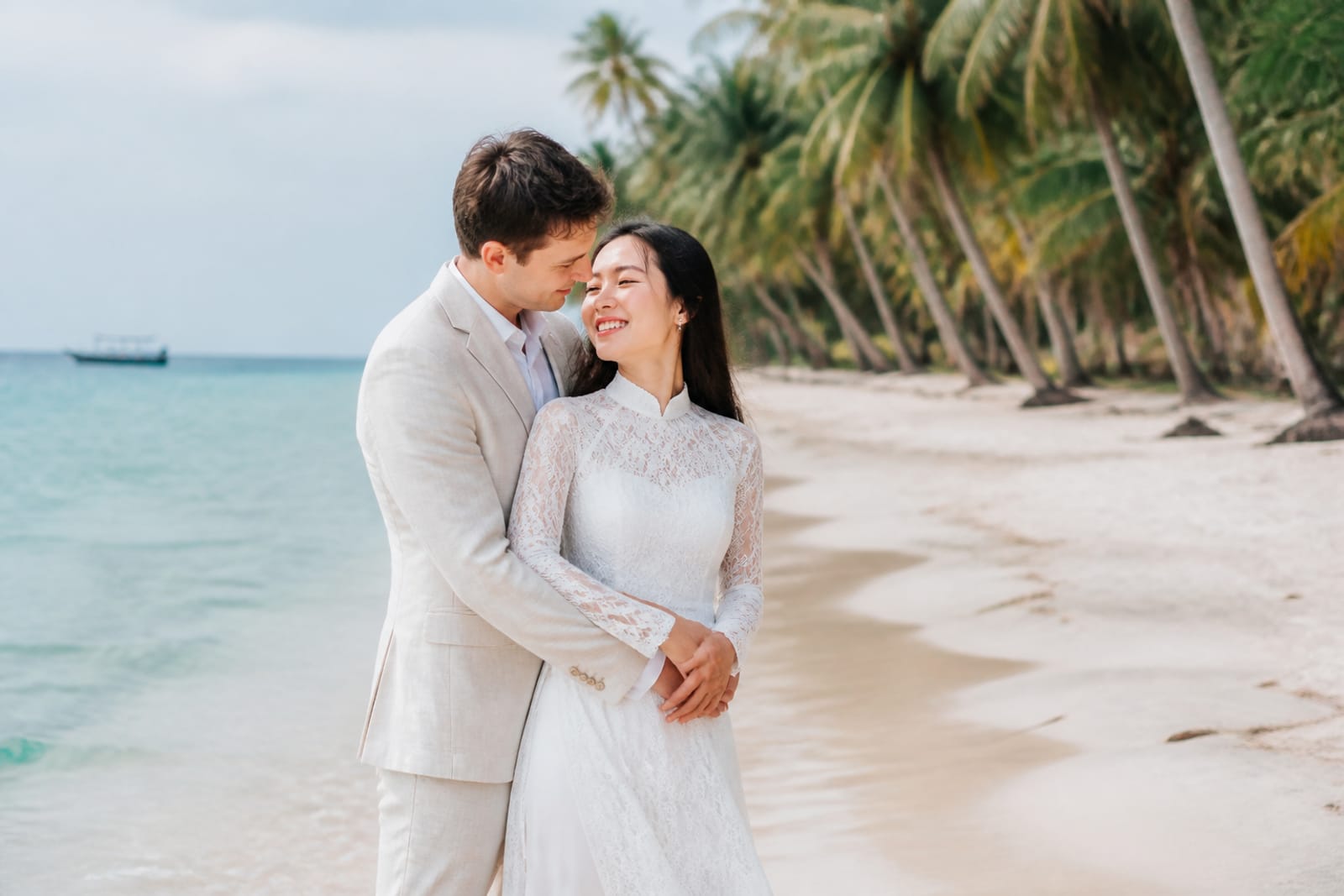
Most pre-wedding shoots at Hon Thom are booked through Phu Quoc tour operators or independent local photographers. To vet a photographer, ask for a portfolio of cable car work specifically—not just beach sunsets. Look for sharpness in cabin shots (wind blur is forgivable; focus blur is not), accurate white balance (your skin should look warm, not grey, under the cabin's mixed lighting), and at least one island walk or ground-level frame that shows your couple's full silhouettes and the landscape. A local photographer charges less than flying in a team from Hanoi or Saigon but may have limited experience with Western couple dynamics or editing styles. If you want consistency with your engagement or pre-wedding style, consider booking Cáo Studio's pre-wedding package—they work in Hanoi, Ho Chi Minh City and Hoi An, and you can coordinate makeup, outfits and a full day of shoots across multiple locations before or after your Phu Quoc cable car session. A Cáo Studio team can also shoot your rehearsal dinner or proposal at your hotel in Phu Quoc by special arrangement (ask on WhatsApp). When you contact a photographer, confirm: cable car entry tickets (are they included or your cost?), island time (which islands, how long?), weather backup date (what happens if it rains?), editing timeline (how many days until you see finals?), and outfit changes allowed (can you bring two outfits or change mid-shoot?). Ask if they've shot the cable car's night opening, Sunset Town or the Kiss Bridge (west-facing landmarks for golden-hour shots)—if yes, they know Phu Quoc's geography and seasonal light. Avoid photographers who give you a flat rate without confirming itinerary; Hon Thom varies wildly by wind, crowds and light—flexibility costs, and an honest photographer will quote accordingly. Request a WhatsApp consultation before payment so you can share mood boards and outfit ideas. Confirm arrival time at the cable car (weekday mornings are quieter than weekends) and how many photos you'll receive edited.
📸 Book on WhatsApp — pre-wedding shoots | 💄 Makeup & hair
Outfit Checklist: What to Pack and Wear
Primary outfit (worn in cabin):
- Ao dai (lightweight silk or chiffon) OR tailored suit (jacket optional at island)
- Undergarments that won't show through fabric in direct light
- Neutral shoes (white sneakers, ballet flats, or formal sandals—you'll remove them on the island for walking shots)
- Shawl or wrap (cooler at altitude; doubles as styling prop)
Secondary outfit (for island walks, if time allows):
- Casual streetwear (linen shirt, shorts, or cropped pants) OR second ao dai
- Flat walking shoes or sandals (island paths are rocky)
On-set touch-ups:
- Blotting papers
- Powder compact
- Lipstick or lip balm (matte long-wear type)
- Hairspray (travel-size)
- Deodorant (cabin heat)
- Sunscreen (reapply before island walk; UV is strong at 700 m altitude)
Coordination with photographer:
- Share outfit photos via WhatsApp 1 week before shoot
- Confirm photographer's color palette preferences (do they prefer jewel tones or pastels against sky?)
- Discuss any accessories or jewelry that reflect light (ask if rings, necklaces should stay or be removed)
- Ask photographer's recommendation for footwear on glass cabin floor (rubber soles grip better and don't slide in photos)
With makeup artist:
- Confirm makeup trial 3–5 days before if possible (Phu Quoc can be humid; trial shows how products hold)
- Request matte finishes and waterproof products
- Bring your own hairpins if you have fine hair (borrowed pins sometimes slip in heat)
- Discuss hairstyle with makeup artist together—they'll coordinate timing (updo takes longer, so plan schedule around it)
Weather packing (Nov–Apr, dry season):
- Light cardigan or blazer (cabin gets cold at altitude; sun exposure on island can burn despite cool cabin)
- Hat or cap (optional; can hide in an updo, reintroduce on island if you want shade)
- Sunglasses (glare off glass and sea is intense; remove before close-up portraits)
Weather packing (May–Oct, rainy season):
- Umbrella (compact, carry in cable car, use on island between shots)
- Waterproof wrap or rain jacket (ask photographer if it can be styled into shots or left off-frame)
- Waterproof mascara and lip stain (rain and humidity degrade makeup faster)
- Extra blotting papers and powder (retouch often in humid air)
Reserve weight in your bag for water (stay hydrated at altitude) and snacks (shoot times stretch, and blood sugar dips affect expressions and energy in poses).
💄 Makeup & hair at your hotel | 🌸 Ideas & lookbook
What to Check Before You Book
Photographer's experience:
- Portfolio includes ≥3 cable car cabin shots (not just island ground shots)
- Edited images show accurate color (skin tones warm, not desaturated)
- Whatsapp response time is ≤4 hours (reliability signals)
Your expectations match reality:
- Cable car ride is 15 minutes up, 15 minutes down—you're moving; static poses don't work
- Island time is usually 30–60 minutes; you won't recreate hour-long beach sessions there
- Cabin glass is large but reflective; some shots will have your silhouettes, not detailed faces
- Weather in Phu Quoc can change hourly in rainy season; confirm rescheduling policy
Logistics and cost factors:
- Are cable car entry tickets included in the photographer's quote or your cost?
- Does the quote cover parking, guide or island entry if required?
- How long is the full shoot (cabin + island + buffer time)?
- How many edited photos will you receive, and when?
- Is makeup artist booking separate or bundled?
- Do you travel to Phu Quoc or does a team travel to you?
For Cáo Studio shoots booked outside Phu Quoc:
- If you're in Hanoi, Ho Chi Minh City or Hoi An, book a pre-wedding session with Cáo Studio and plan a separate trip to Phu Quoc with a local photographer, or coordinate a hybrid shoot (team shoots in your city, you hire a Phu Quoc photographer for cable car, then fly back to Cáo Studio for couple portraits at a studio or second location).
- Makeup and hair can be arranged at your hotel in any city where Cáo Studio operates.
FAQ
What's the best season to shoot at Hon Thom cable car?
Dry season (Nov–Apr) offers calm seas, stable light and clear skies. Rainy season (May–Oct) brings afternoon downpours, unpredictable visibility and rough water—rescheduling risks rise. Humidity is high year-round in Phu Quoc; plan makeup touch-ups.
Can I wear a traditional Western wedding dress on the cable car?
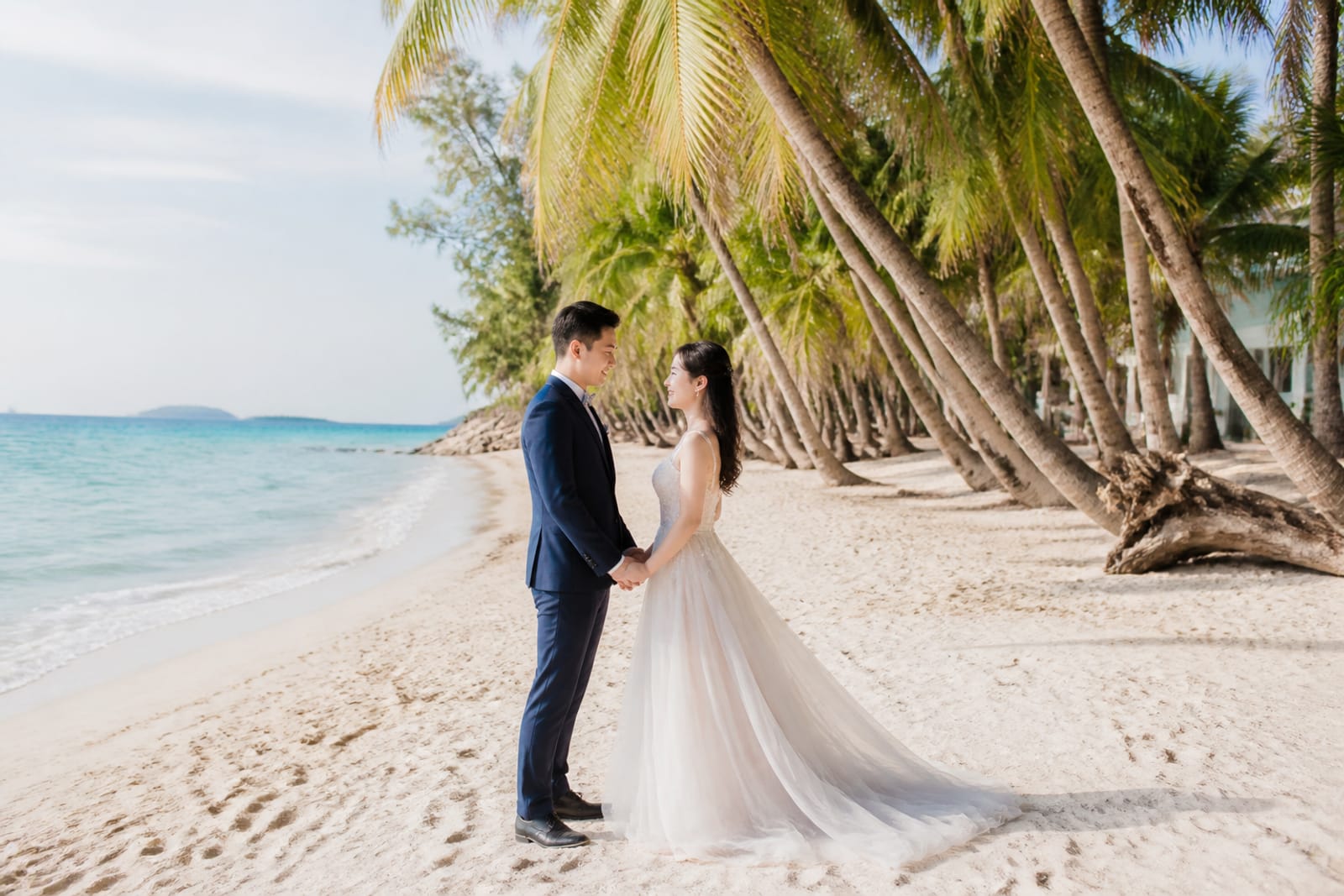
Unlikely. Cabins are small; long trains snag on seats. Heavy satin creases in heat. Chiffon balloons in wind. Ao dai or a sleek tailored suit are safer. If a dress is essential, choose matte A-line, no tulle, and bring a compact shawl for wrapping during descent.
How do I find and vet a photographer for Phu Quoc cable car shoots?
Ask for a portfolio of cable car work (not just beaches). Check that cabin shots are sharp, faces are warmly toned, and ground shots show the landscape clearly. Confirm they've handled wind, glare and moving-cabin constraints. Ask for WhatsApp reviews from previous couples. Request a trial WhatsApp consultation before payment.
What time of day gives the best light for couple portraits in the cabin?
Late afternoon (4:30–6:00 pm) offers warm golden light and avoids harsh glare. Sunset (5:30–6:30 pm) is dramatic but dims fast; your photographer must expose for sky, so faces may need a second reshoot on the island. Sunrise is moody but requires 5:30 am hotel pickup and makeup in low light.
Does Cáo Studio – Makeup & Photoshoot work at Hon Thom or Phu Quoc?
No. Cáo Studio operates in Hanoi, Ho Chi Minh City and Hoi An. For Hon Thom cable car shoots, book a local Phu Quoc photographer via your tour operator or a photography directory. You can book Cáo Studio for pre-wedding sessions in the three cities, and coordinate makeup and outfits separately—or hire a team to travel to Phu Quoc by special arrangement. Ask on WhatsApp for options.
What should I pack for a cable car shoot in terms of makeup and hair products?
Bring waterproof, matte-finish makeup, blotting papers, powder and long-wear lipstick. Pack hairspray rated for heat and humidity (tropical formulas work best). Bring water, sunscreen and a compact mirror. Your makeup artist will handle most products, but having backups prevents mid-shoot stress.
Can I do a cable car shoot and a second location shoot on the same day?
Yes. Cable car typically takes 4–6 hours (makeup, cabin ride, island walk, touch-ups). If booked early morning, you can descend by early afternoon and shoot at a beach or Sunset Town by late afternoon. Coordinate with your photographer about costume changes, makeup freshening and travel time between locations. This works well in dry season with stable weather.
How do I avoid looking washed out in cabin light?
Wear warm-toned fabrics (champagne, gold, terracotta ao dai; cream or blush suits). Request matte makeup with good skin-tone depth (not too light powder). Ask your photographer to use fill flash or a reflector if they can (difficult in a moving cabin, but some carry compact options). Avoid pure white or pale pink fabrics that compete with cabin fluorescence.
常見問題
What's the best season to shoot at Hon Thom cable car?
Dry season (Nov–Apr) offers calm seas, stable light and clear skies. Rainy season (May–Oct) brings afternoon downpours, unpredictable visibility and rough water—rescheduling risks rise. Humidity is high year-round in Phu Quoc; plan makeup touch-ups.
Can I wear a traditional Western wedding dress on the cable car?
Unlikely. Cabins are small; long trains snag on seats. Heavy satin creases in heat. Chiffon balloons in wind. Ao dai or a sleek tailored suit are safer. If a dress is essential, choose matte A-line, no tulle, and bring a compact shawl for wrapping during descent.
How do I find and vet a photographer for Phu Quoc cable car shoots?
Ask for a portfolio of cable car work (not just beaches). Check that cabin shots are sharp, faces are warmly toned, and ground shots show the landscape clearly. Confirm they've handled wind, glare and moving-cabin constraints. Ask for WhatsApp reviews from previous couples. Request a trial WhatsApp consultation before payment.
What time of day gives the best light for couple portraits in the cabin?
Late afternoon (4:30–6:00 pm) offers warm golden light and avoids harsh glare. Sunset (5:30–6:30 pm) is dramatic but dims fast; your photographer must expose for sky, so faces may need a second reshoot on the island. Sunrise is moody but requires 5:30 am hotel pickup and makeup in low light.
Does Cáo Studio – Makeup & Photoshoot work at Hon Thom or Phu Quoc?
No. Cáo Studio operates in Hanoi, Ho Chi Minh City and Hoi An. For Hon Thom cable car shoots, book a local Phu Quoc photographer via your tour operator or a photography directory. You can book Cáo Studio for [pre-wedding sessions](/zh-tw/pre-wedding-photoshoot) in the three cities, and coordinate makeup and outfits separately—or hire a team to travel to Phu Quoc by special arrangement. Ask on WhatsApp for options.
What should I pack for a cable car shoot in terms of makeup and hair products?
Bring waterproof, matte-finish makeup, blotting papers, powder and long-wear lipstick. Pack hairspray rated for heat and humidity (tropical formulas work best). Bring water, sunscreen and a compact mirror. Your makeup artist will handle most products, but having backups prevents mid-shoot stress.
Can I do a cable car shoot and a second location shoot on the same day?
Yes. Cable car typically takes 4–6 hours (makeup, cabin ride, island walk, touch-ups). If booked early morning, you can descend by early afternoon and shoot at a beach or Sunset Town by late afternoon. Coordinate with your photographer about costume changes, makeup freshening and travel time between locations. This works well in dry season with stable weather.
How do I avoid looking washed out in cabin light?
Wear warm-toned fabrics (champagne, gold, terracotta ao dai; cream or blush suits). Request matte makeup with good skin-tone depth (not too light powder). Ask your photographer to use fill flash or a reflector if they can (difficult in a moving cabin, but some carry compact options). Avoid pure white or pale pink fabrics that compete with cabin fluorescence.