/ao-dai-rental
Ao dai for wedding photos in Hanoi: renting, fitting, styling
Renting an ao dai for Hanoi wedding photos involves selecting a rental source (boutique, studio partner, or bespoke tailor), attending a fitting 1–2 weeks before your session, and coordinating color and embroidery style with your photographer's vision. Cáo Studio – Makeup & Photoshoot works with trusted rental partners across Hanoi's three branches to ensure your ao dai complements the location's light and your makeup; the studio can advise on fit under studio lighting and how fabric drapes during movement. Rental timelines vary by complexity: simple classics rent ready-to-wear, while intricate embroidered pieces need custom fitting. Book your rental early (2–3 weeks ahead) if your session falls in autumn (Oct–Nov), when Hanoi's soft light and mild temperatures peak and many couples choose this season.
Choosing where and how to rent your ao dai shapes not just the look of your Hanoi wedding photos, but the entire photoshoot experience. A well-fitted ao dai that suits your body, the season's light, and your photographer's style can elevate every frame—while a poorly coordinated rental can mean last-minute panic on shoot day. This guide walks you through the key rental options, fitting logistics, and styling decisions specific to Hanoi's climate and photography standards.
Why rental timing matters for Hanoi's wedding season
Most couples booking ao dai photoshoots in Hanoi shoot during autumn (October–November), when the city's light is soft and even, temperatures hover around 20–25°C, and the air is clear. During this peak season, boutique rentals book out 2–3 weeks in advance. If you're shooting in summer (May–September), heat exceeds 35°C and humidity is high; ao dai fabrics must breathe, and heavy embroidery absorbs sweat, so simpler, lighter silks work better. Winter (December–February) brings cool, overcast conditions ideal for jewel tones and metallic embroidery, but rental shops often close for Tet (Lunar New Year, late January–mid-February), and fitting appointments become rare. Booking your rental early avoids scrambling and gives the tailor time to adjust seams and hem.
📸 Book on WhatsApp — ao dai photoshoot
What to compare: three rental paths for Hanoi
| Rental option | Best for | Fitting timeline | Styling support |
|---|---|---|---|
| Boutique rental (dedicated ao dai shop) | Brides wanting classic or trendy styles | 1–2 weeks; same-day alterations possible | Limited; you choose the look |
| Studio partner rental (Cáo Studio connection) | Couples wanting photographer-coordinated color and fit | 1–2 weeks; studio advises on drape under lights | High; studio sees the dress before your session |
| Bespoke tailor (made-to-measure) | Brides with specific vision or non-standard sizing | 3–4 weeks; multiple fittings | Maximum; tailor and photographer can collaborate |
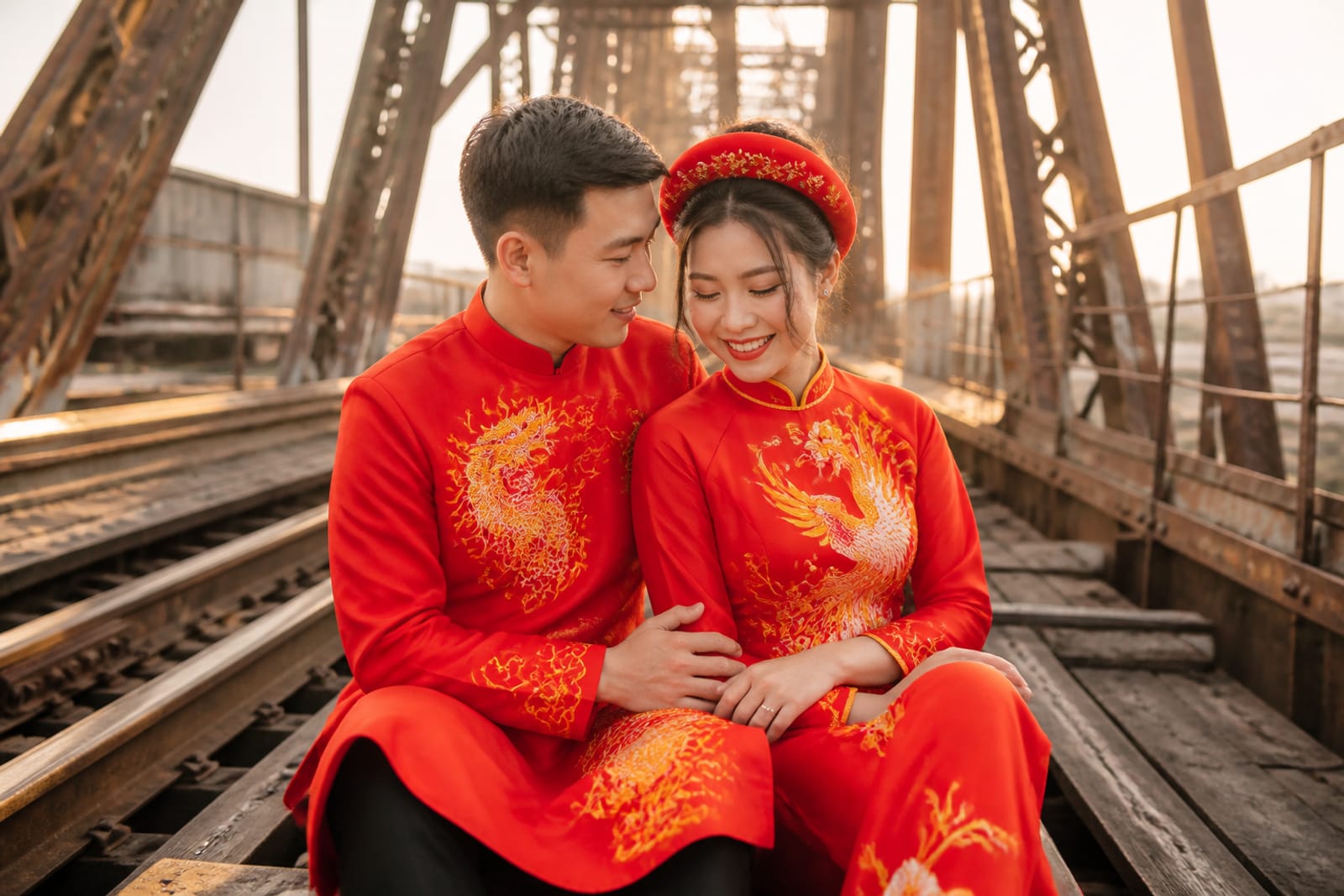
Boutique rentals are fast and affordable if you know exactly what you want: a classic crimson silk with gold threading, or a pale pink satin with minimal embroidery. Most Hanoi boutiques stock 20–50 pieces in standard sizes (XS to XL, occasionally custom) and can shorten or take in seams within days. Cáo Studio's recommended rental partners have worked with the studio's photographers and makeup artists, so they understand how fabrics photograph in Hanoi's natural light and how ao dai behaves during movement on location shoots (sitting in rickshaws, walking temple steps, kneeling for couple poses). Bespoke tailors suit couples with a clear aesthetic or non-standard body shapes; they usually need 3–4 weeks and charge more, but the fit is exact and the piece is yours to keep after the session.
Fitting: what to check before your shoot date
A proper ao dai fitting takes 30–45 minutes and must happen 3–5 days before your photoshoot so final tweaks can be made. Ask the rental shop or tailor to check these points:
- Length: The áo (top) hem should sit at your hip bone; the bottom edge of the quad (front and back panels) should kiss the floor by 0.5–1 cm when you stand still. If you plan to kneel for couple poses, measure the quad length while kneeling to avoid pinching.
- Neck and armhole: The ao dai neck is high and fitted; it should not gape or choke. Armholes should allow full shoulder rotation for posing.
- Side seams: These run along your ribs and should be snug but not tight—you need to breathe freely for a 2–3 hour session. Pinched ribs will show tension in your posture.
- Sleeve fit: Sleeves should be smooth from shoulder to wrist with no bunching. If you wear a watch or bracelets, mention this at fitting so sleeves can be adjusted.
- Undergarment compatibility: Ask if the rental includes a slip or corset. Some studios (like Cáo Studio) offer makeup and hair coordination; mention at fitting if your makeup artist will need to access your back or shoulders for touch-ups during the shoot.
Bring the shoes you plan to wear to your fitting so the quad length is accurate. If renting from a partner of Cáo Studio, mention your photoshoot date and location (Hoan Kiem Lake, train street, a temple, a hotel) so the tailor can advise on how the fabric will move in that specific environment.
Styling your ao dai to match Hanoi's light and season
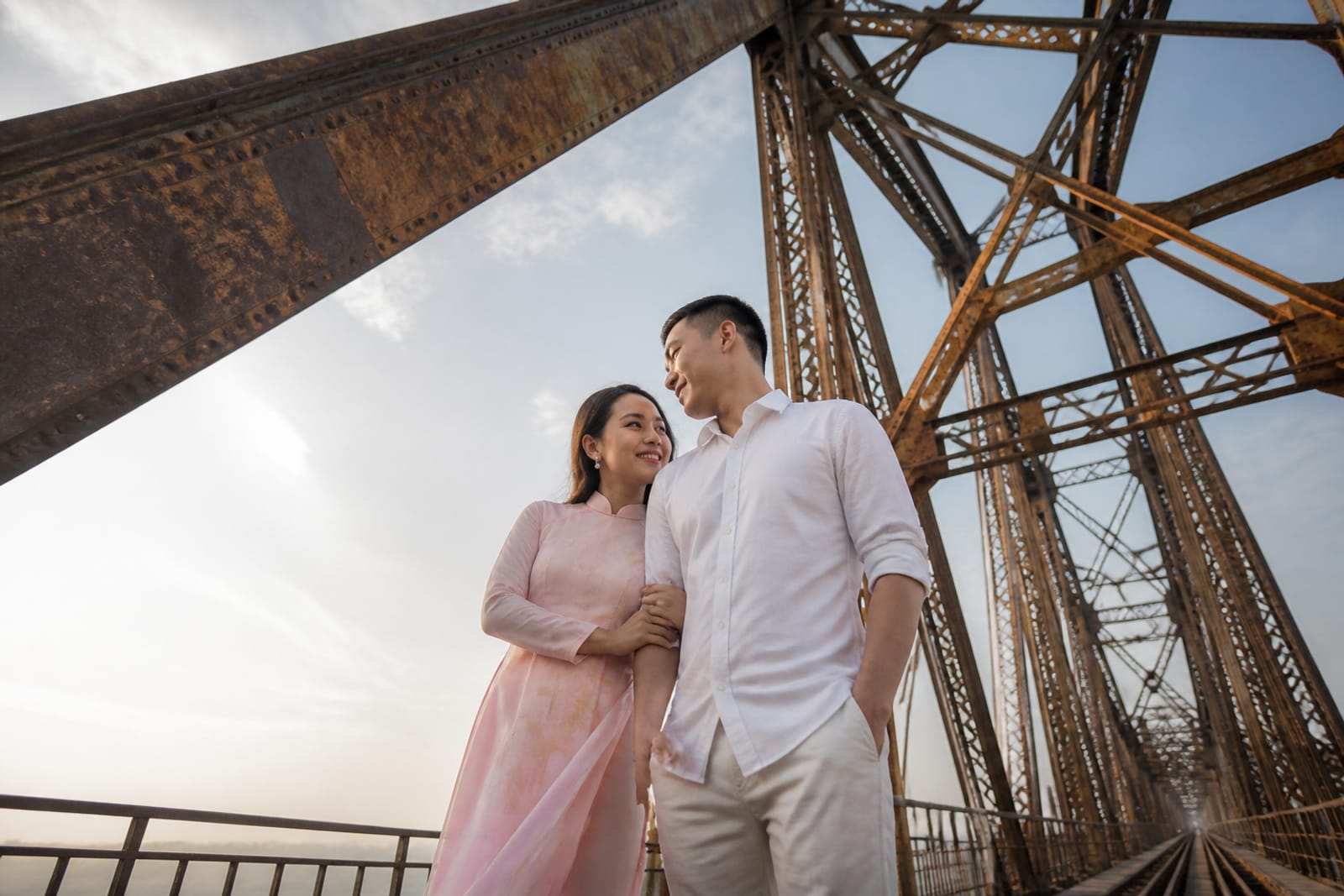
Ao dai color and embroidery complexity must work with Hanoi's seasonal light. In autumn, when the sun is lower and softer, deep jewel tones (emerald, sapphire, burgundy) and metallic embroidery catch the light without washing out. Pale silks (cream, pale pink, lavender) photograph beautifully in that season's golden hour (late afternoon, 4–6 PM). Winter's overcast skies suit brighter reds, blacks with silver threading, and bold embroidery because the flat, diffused light won't create harsh shadows. Summer's intense midday sun can bleach pastels; opt for saturated colors or shoot in shade (parks, temple interiors, covered streets).
Embroidery weight matters too. Heavy beading and sequins slow you down during movement and can cause sweat patches on light fabrics in humid months. If shooting in May–September, choose embroidery on the yoke and hem only, leaving the torso undecorated. Spring (March–April) brings humidity and haze; avoid ultra-pale silks that merge with grey skies—choose warm neutrals (cream, gold, peach) or jewel tones instead.
Work with your photographer when choosing your ao dai. Cáo Studio's team can advise on color and fabric weight during your booking consultation on WhatsApp—they know how each location's light (a pagoda's dim interior, a riverside's reflections, a hotel room's window light) will render your chosen ao dai. Bring a fabric swatch or photo of your shortlisted rentals to your WhatsApp conversation so the team can give real-time feedback.
Undergarments, comfort, and shoot-day logistics
Ao dai are worn over a long silk slip or undergarment (often included with rental or sold separately). The slip prevents the quad from clinging to your legs in heat or humidity. For a 2–3 hour couple photoshoot or wedding day session, wear breathable, moisture-wicking layers underneath: a lightweight cotton camisole or seamless tank top under the ao dai reduces sweat marks on silk. Avoid underwear with visible lines; many brides wear seamless briefs or, if the ao dai is loose, skip undergarments entirely (check with the rental shop first).
Shoes matter for comfort during long sessions. Traditional flat sandals or modern embroidered flats work well; avoid high heels unless your shoot is brief or stationary. If you plan to remove your shoes for temple scenes, mention this at fitting because the quad length must clear the floor even when you're barefoot.
On shoot day, allow 30 minutes for the ao dai to be steamed (most studios offer this; ask when booking). If your session includes makeup and hair at your hotel, ask the studio to coordinate the ao dai arrival time so you're not dressed too early—heat and humidity will wrinkle the fabric if you sit for 2 hours before shooting.
What to check before you book your rental
- Confirm the rental period. Does it include pick-up and drop-off, or do you collect and return? Some boutiques charge late-return fees.
- Check the condition guarantee. What counts as damage, and what's your liability? Most rentals accept minor wrinkles and thread pulls but charge for stains or torn seams.
- Ask for a fitting appointment. If the shop offers "one-size" rentals without fitting, the risk of poor drape or pinching is high. Book a shop that does in-person tailoring.
- Verify Cáo Studio coordination. If you're booking a couple photoshoot or pre-wedding session with Cáo Studio in Hanoi, ask on WhatsApp whether the studio has a rental partner you can use for coordinated styling. The studio operates three Hanoi branches and can recommend partners near your shoot location.
- Photograph the rental after fitting. Take clear photos of the fitted ao dai from front, back, and side before your shoot day as a record in case disputes arise.
For couples booking family photoshoots or proposal sessions where multiple family members wear ao dai, communicate group sizing and color preferences to the rental shop at least 3 weeks in advance so all pieces can be fitted together and coordinated.
FAQ
How far in advance should I rent my ao dai for a Hanoi wedding photoshoot?
Book 2–3 weeks ahead, especially if your session falls in October–November (peak season). For a bespoke ao dai, allow 3–4 weeks. Winter (December–February) can have closures around Tet, so book even earlier.
Can Cáo Studio recommend an ao dai rental shop in Hanoi?
Yes. Contact the studio on WhatsApp +84 338 762 340 with your shoot date and location. The studio works with trusted rental partners across its three Hanoi branches and can advise on fit, color, and fabric for your specific session.
What if my ao dai doesn't fit on shoot day?
Attend your fitting 3–5 days before the shoot so adjustments can be made. Bring your intended shoes and mention any movement constraints (kneeling, sitting in vehicles) at fitting. If last-minute issues arise, contact the rental shop and photographer immediately.
Which ao dai colors photograph best in Hanoi's autumn light?
Deep jewel tones (emerald, sapphire, burgundy) and rich reds photograph beautifully in autumn's soft, low light. Pale silks work too but require golden-hour shooting (4–6 PM). Metallic embroidery catches light well in overcast conditions.
Should I buy or rent an ao dai for my wedding photos?
Rent if you want variety, no storage burden, and expert fitting support. Buy if you plan multiple photoshoots, family events, or want to keep the piece as a keepsake. Cáo Studio can help you decide when you consult on WhatsApp.
Do I need a slip under my ao dai?
Yes, typically a long silk slip is worn under the ao dai to prevent the quad from clinging to your legs. Most rentals include this; confirm at booking. In summer heat, a moisture-wicking camisole under the slip reduces sweat marks on the outer silk.
FAQ
How far in advance should I rent my ao dai for a Hanoi wedding photoshoot?
Book 2–3 weeks ahead, especially if your session falls in October–November (peak season). For a bespoke ao dai, allow 3–4 weeks. Winter (December–February) can have closures around Tet, so book even earlier.
Can Cáo Studio recommend an ao dai rental shop in Hanoi?
Yes. Contact the studio on WhatsApp +84 338 762 340 with your shoot date and location. The studio works with trusted rental partners across its three Hanoi branches and can advise on fit, color, and fabric for your specific session.
What if my ao dai doesn't fit on shoot day?
Attend your fitting 3–5 days before the shoot so adjustments can be made. Bring your intended shoes and mention any movement constraints (kneeling, sitting in vehicles) at fitting. If last-minute issues arise, contact the rental shop and photographer immediately.
Which ao dai colors photograph best in Hanoi's autumn light?
Deep jewel tones (emerald, sapphire, burgundy) and rich reds photograph beautifully in autumn's soft, low light. Pale silks work too but require golden-hour shooting (4–6 PM). Metallic embroidery catches light well in overcast conditions.
Should I buy or rent an ao dai for my wedding photos?
Rent if you want variety, no storage burden, and expert fitting support. Buy if you plan multiple photoshoots, family events, or want to keep the piece as a keepsake. Cáo Studio can help you decide when you consult on WhatsApp.
Do I need a slip under my ao dai?
Yes, typically a long silk slip is worn under the ao dai to prevent the quad from clinging to your legs. Most rentals include this; confirm at booking. In summer heat, a moisture-wicking camisole under the slip reduces sweat marks on the outer silk.
Ao dai, makeup, hair and a local photographer in Hanoi or Saigon — one WhatsApp message.