/ao-dai-rental
Ao dai for wedding photos in Sapa: renting, fitting and styling
Sapa has no formal ao dai rental shops; most travelers bring one from Hanoi or Ho Chi Minh City, or rent online before arrival. Renting locally means asking your hotel or a tailor to loan or adjust a dress—expect 1–2 days lead time and limited choice. Fit matters in Sapa: the terrain is steep, wet and muddy, so the ao dai must allow walking without catching on roots or rocks. A photoshoot works best in the dry season (Mar–May, Sep–Oct), when morning mist clears by 6–7 am and light is soft on the valleys. Cáo Studio's Hanoi team can organize an ao dai photoshoot and arrange a Sapa session with a local photographer via WhatsApp consultation—bring the dress with you or rent one before you leave Hanoi. ---
What makes an ao dai work for Sapa mountain photos?
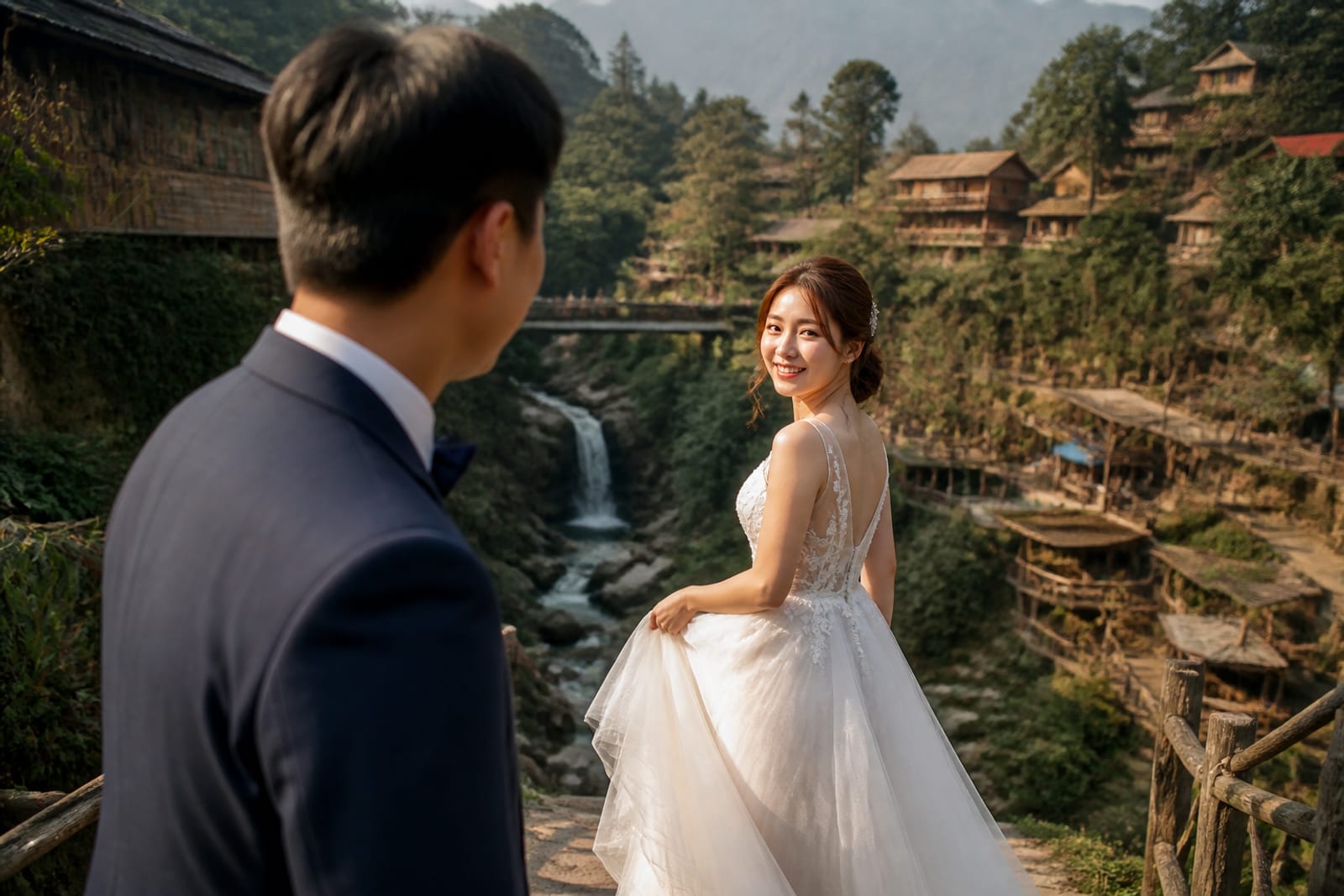
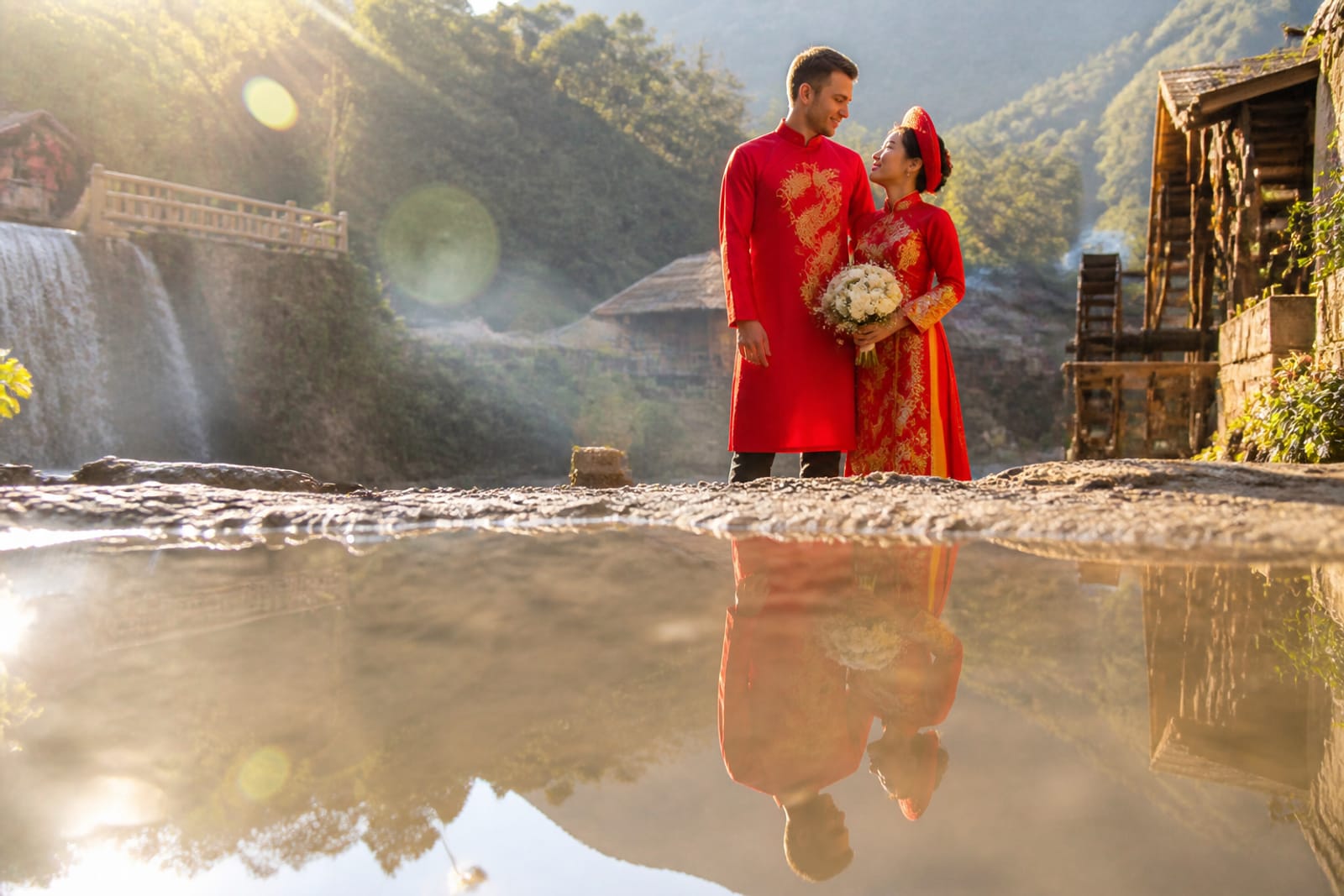
An ao dai in Sapa's landscape is visually powerful—the long silk lines contrast with mist, terraced rice and stone paths. But the dress must fit your movement, not restrict it. In Sapa, you'll walk on wet steps, cross narrow bridges and climb sloped terrain. A fitted ao dai that's too tight at the legs or too long will catch or tear; one that's loose enough to move often looks slack in photos. The key is a tailor's adjustment: shorter hemline (ankle-length rather than floor-trailing), a side slit that opens higher, and a fitted bodice that doesn't pull when your arms lift for balance. Light in Sapa peaks early—6–7 am for gold-hour mist, 8–10 am for clear valley shadows, midday is flat and grey. Photoshoots that account for this timing and dress mobility deliver frames that feel native to Sapa, not imposed on it.
📸 Book on WhatsApp — ao dai photoshoot
Where and how do you rent or source an ao dai in Sapa?
Sapa itself has no dedicated ao dai rental boutiques; the town caters to trekking and homestay travelers, not wedding photography. Your options are: (1) bring your own from Hanoi or Ho Chi Minh City; (2) rent online before departure and pick up in Hanoi, then carry it with you; (3) ask your Sapa hotel to connect you with a local tailor who may loan or adjust a dress (often same-day, but limited inventory); (4) rent from a Hanoi studio before your trip and have it shipped or reserved for pickup. Most photoshoot couples choose option 1 or 2 because fit is unpredictable with a stranger's tailor, and you have the dress for multiple days of shoots. If you rent in Hanoi from a specialist ao dai rental service (linked via WhatsApp), the studio can advise on weight, packing (roll gently in tissue, never fold creases) and arrival condition. Allow 5–7 days before your Sapa dates to collect and inspect the dress in Hanoi if you're flying in from overseas; if you're already in Vietnam, 2–3 days is workable. Local tailors in Sapa can do emergency repairs or hemming in 4–6 hours if needed.
How does season affect ao dai fit, styling and light in Sapa?
| Season | Best for | Light & weather | Fit considerations |
|---|---|---|---|
| Mar–May | Rich colour, clear mornings | Sunrise mist clears by 7 am; afternoon clouds roll in by 2 pm. Daytime 18–22°C. | Dress breathes; arm movement easy; no wind chill. Shoes must grip wet stone. |
| Jun–Aug | Green terraces, dramatic sky | Early mornings only (5–6 am); afternoon rain is daily. Temperature 16–20°C; humidity high. | Fabric clings when damp; long sleeves may feel heavy. Undergarments must dry fast or show sweat marks. |
| Sep–Oct | Golden rice harvest, cool air | Morning mist lingers; clarity peaks Oct. Temperature 14–18°C. Early starts yield best light. | Dress layers over long sleeves easily. Wind can be brisk; train or long sleeves can catch. |
| Nov–Feb | Rare clear days, cold mornings | Temperature drops to 8–12°C at dawn; frost possible Dec–Jan. Light is thin and hard before 9 am. | Cold makes fabric stiff and movement awkward. Layers under the ao dai are essential. Wind is common; secure the dress at the waist. |
The dry season (Mar–May, Sep–Oct) is ideal: light is directional, terrain is safest and the ao dai drapes naturally without clinging to sweat or cold stiffness. Mar–May offers lush green; Sep–Oct captures the harvest and is less crowded. Jun–Aug is wet and slippery; your dress hem will pick up mud, and light is flat after 8 am. Nov–Feb is cold—your photographer will need to shoot fast before your fingers numb, and the ao dai alone isn't warm enough for comfort during setup or breaks.
What to check before renting an ao dai for a Sapa photoshoot
Before you commit to a rental or bring your own ao dai to Sapa, confirm five details: (1) Length and hemline—ask the rental shop or tailor to shorten the hem to ankle length (not floor-trailing) so it clears wet steps by 1–2 inches; (2) Slit height—ensure the side slit opens to mid-thigh or higher so you can stride up terrain without the dress bunching; (3) Undergarment fit—tight leggings or slip shorts under the ao dai prevent bunching and lines from showing in photos; (4) Footwear grip—plan for wet, muddy surfaces; rubber-soled shoes or hiking sandals are safer than silk flats or heels; and (5) Fabric weight and seams—if you're renting, inspect the dress in person for loose seams, stains or thin silk that might tear on sharp rocks. If renting online, request photos of the back, slit, and hem before payment, and confirm a 2-day return window in case it arrives damaged. Ask the rental team to suggest "Sapa-ready" dresses that are already short-hemmed or have reinforced seams—many rental services have gear tailored for travel. Never commit a dress to a photoshoot in Sapa without wearing it on the actual terrain for 30 minutes first; rent one day early and do a short walk to test comfort and durability.
How do you book a photographer and coordinate timing in Sapa?
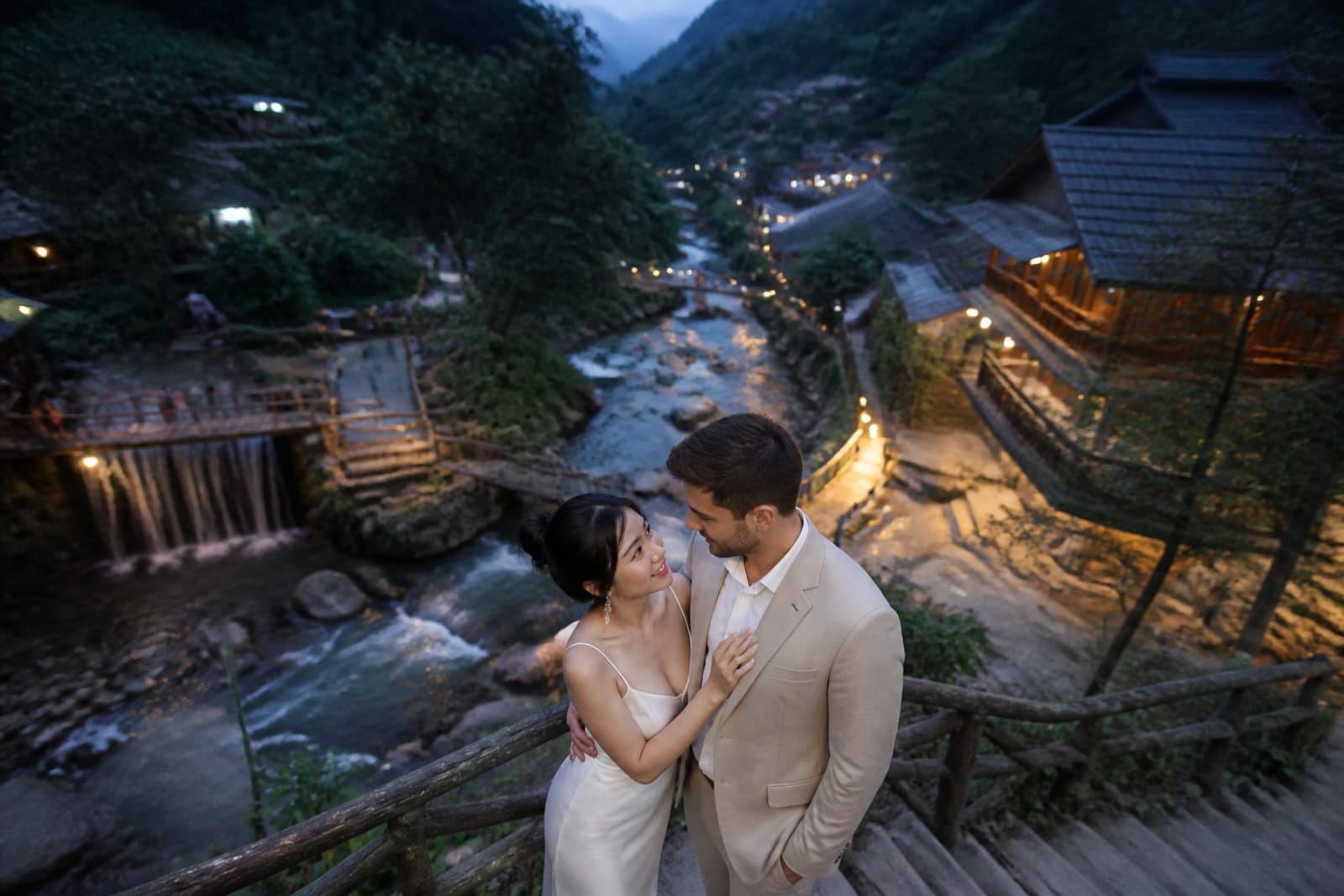
Sapa has no studio photographers; most couples hire a freelancer from the town (ask your hotel for referrals) or book a Hanoi-based team like Cáo Studio to coordinate a session via WhatsApp with a local partner. Cáo Studio's approach: you contact the studio on WhatsApp +84 338 762 340 before your trip, confirm your Sapa dates and aesthetic (mist, terraces, harvest, etc.), and the team connects you with a vetted photographer in Sapa or sends you a prep guide if you're hiring independently. The shoot itself demands early mornings—6–6:30 am starts are standard to catch mist before foot traffic arrives on the terraces. A typical session runs 2–3 hours (one location or two nearby spots), followed by 1–2 hours of travel time if you're heading to a more remote valley or market. Expect your edited photos 5–7 days after the shoot (turnaround is slower than in Hanoi or Ho Chi Minh City because the local photographer works solo and may not have high-speed internet). If you book through Cáo Studio, the Hanoi team handles styling, makeup and hair coordination before you leave the city; you travel to Sapa with the ao dai and a pre-shoot brief covering light, locations and outfit changes. This hybrid model—studio prep + local photog execution—ensures your look is consistent and your photographer understands your vision, even if they've never worked with you before. Confirm all timing and location logistics in writing (WhatsApp or email) at least one week before your Sapa dates; the town has no 24-hour support and poor signal in remote areas.
📸 Book on WhatsApp — ao dai photoshoot
---
Real challenges and how to avoid them
Mud and fabric care: Sapa's wet stone and terraced paths mean your ao dai's hem and lower sleeves will accumulate mud. Bring a damp cloth and dry it gently after each shoot; don't rinse with water (can shrink silk). If renting, disclose any soil to the rental shop when you return—most expect wear, but deep stains can trigger cleaning fees.
Wind and train discipline: Sapa's breeze, especially Oct–Feb, can billow the dress or flip the long back train during walking shots. A safety pin at the waist (hidden by the outer shirt) or a hair clip securing the train to your pants keeps the dress stable without looking staged in close frames.
Cold and comfort: Nov–Feb shoots require long sleeves or a thin inner layer; ao dai alone won't keep you warm during 2-hour sessions before sunrise. Undress just before the camera rolls and retreat to a jacket between shots.
Shoe traction: Silk-soled shoes or heels are unsafe and leave ugly prints in mud. Wear hiking sandals, rubber-soled flats or even socks and carry wedding shoes for close-up detail frames.
Communication delays: Your local photographer may not respond instantly to texts. Establish a WhatsApp group with your hotel's front desk, the photographer and yourself; the hotel can relay messages if signal drops.
---
Links to build your Sapa ao dai photoshoot
For makeup and hair, book Cáo Studio's hotel makeup and hair service before you leave Hanoi—ask on WhatsApp to coordinate transport to Sapa if you want the team to travel with you. Browse wedding and pre-wedding photoshoot options to compare single-session versus multi-day coverage. If you're considering an ao dai photoshoot as part of a larger trip, check vacation and solo photoshoot styling to see how ao dai fits into broader travel narratives. For broader ao dai rental guidance, visit the ao dai rental pillar page. If you're planning a wedding weekend in Sapa with multiple photo moments, explore couple photoshoot packages. Finalize your Sapa plan by reviewing Cáo Studio's Hanoi base, where you can rent the dress and coordinate the session.
---
FAQ
Can I rent an ao dai directly in Sapa town?
Sapa has no dedicated ao dai rental shops. Most travelers bring a dress from Hanoi or rent online before arrival and carry it with them. Some hotels can connect you with a tailor for emergency loans or adjustments (1–2 days lead time, limited choice). Book early via WhatsApp if you need help sourcing one before your trip.
What length ao dai works best for walking on Sapa's terrain?
Ankle-length (1–2 inches above wet steps) with a high side slit (mid-thigh or higher) prevents catching on roots or catching on terrain. Ask your rental shop or tailor to shorten floor-trailing dresses before you travel. Test the fit on actual steep, muddy paths for 30 minutes before the photoshoot.
Which month has the best light for ao dai photos in Sapa?
March–May (clear mornings, green terraces, 18–22°C) and September–October (golden harvest, cool 14–18°C) are ideal. Both offer directional sunrise mist and dry terrain. Avoid June–August (daily afternoon rain, flat light, damp fabrics) and November–February (cold, thin light, frost risk).
Do I need to hire a photographer in Hanoi or can I find one in Sapa?
Sapa has freelance photographers but no studios. Most couples book a Hanoi-based team via WhatsApp to coordinate styling and arrange a local partner, or hire independently and handle coordination themselves. Cáo Studio connects you with vetted local photographers and provides a prep brief to ensure vision alignment.
What shoes should I wear under an ao dai in Sapa?
Wear rubber-soled flats, hiking sandals or grip socks on terrain; silk-soled shoes or heels are unsafe on wet stone and leave ugly prints. Carry wedding shoes separately for close-up detail frames. Test footwear on wet steps before the shoot to confirm traction.
How long does it take to get edited photos after a Sapa photoshoot?
Expect 5–7 days (or longer) because local Sapa photographers work solo and may have limited internet. Studio-coordinated shoots from Hanoi often include faster turnaround if editing is done there. Confirm timing in writing before your session. ===CTA-BUTTON-LINES=== 📸 Book on WhatsApp — ao dai photoshoot 💄 Makeup & hair at your hotel 🌸 See the lookbook
FAQ
Can I rent an ao dai directly in Sapa town?
Sapa has no dedicated ao dai rental shops. Most travelers bring a dress from Hanoi or rent online before arrival and carry it with them. Some hotels can connect you with a tailor for emergency loans or adjustments (1–2 days lead time, limited choice). Book early via WhatsApp if you need help sourcing one before your trip.
What length ao dai works best for walking on Sapa's terrain?
Ankle-length (1–2 inches above wet steps) with a high side slit (mid-thigh or higher) prevents catching on roots or catching on terrain. Ask your rental shop or tailor to shorten floor-trailing dresses before you travel. Test the fit on actual steep, muddy paths for 30 minutes before the photoshoot.
Which month has the best light for ao dai photos in Sapa?
March–May (clear mornings, green terraces, 18–22°C) and September–October (golden harvest, cool 14–18°C) are ideal. Both offer directional sunrise mist and dry terrain. Avoid June–August (daily afternoon rain, flat light, damp fabrics) and November–February (cold, thin light, frost risk).
Do I need to hire a photographer in Hanoi or can I find one in Sapa?
Sapa has freelance photographers but no studios. Most couples book a [Hanoi-based team via WhatsApp](/hanoi) to coordinate styling and arrange a local partner, or hire independently and handle coordination themselves. Cáo Studio connects you with vetted local photographers and provides a prep brief to ensure vision alignment.
What shoes should I wear under an ao dai in Sapa?
Wear rubber-soled flats, hiking sandals or grip socks on terrain; silk-soled shoes or heels are unsafe on wet stone and leave ugly prints. Carry wedding shoes separately for close-up detail frames. Test footwear on wet steps before the shoot to confirm traction.
How long does it take to get edited photos after a Sapa photoshoot?
Expect 5–7 days (or longer) because local Sapa photographers work solo and may have limited internet. Studio-coordinated shoots from Hanoi often include faster turnaround if editing is done there. Confirm timing in writing before your session. ===CTA-BUTTON-LINES=== [📸 Book on WhatsApp — ao dai photoshoot](/book) [💄 Makeup & hair at your hotel](/makeup-and-hair) [🌸 See the lookbook](/lookbook)
Ao dai, makeup, hair and a local photographer in Hanoi or Saigon — one WhatsApp message.