services/ao-dai-photoshoot
Ao Dai Photos at Long Biên Bridge: Light, Timing & Booking Guide
Long Biên Bridge ao dai photoshoots work best in autumn (Oct–Nov) or early winter (Dec), when light is soft and the bridge is less crowded before 7 a.m. or after 5 p.m. At Cáo Studio, a director arrives with a stylist and makeup artist: you wear the ao dai, the team frames you walking, standing at the railings, and interacting with the bridge's geometry—not posed stiffly in front of it. Sessions take 2–3 hours on location; expect edited photos plus a short film within 48 hours. Early morning brings side light that flatters the fabric's drape; late afternoon gives warmer tones but heavier foot traffic. The bridge's steel lattice and iron railings frame ao dai well if you're positioned at the lower deck or near the pedestrian walkway. Avoid midday (harsh shadows across your face) and the wet season (May–Sep), when humidity and haze flatten color. ---
Why Long Biên Bridge for Ao Dai?
Long Biên Bridge is Hanoi's oldest and most visually complex bridge—the steel lattice, the Red River bend, and the riverbank create layers that frame ao dai fabric beautifully. The bridge's history also resonates; many travelers want that frame because it means something. The lower pedestrian walkway offers protection from traffic and softer sight lines than the road deck. Shooting here requires a permit from local authorities if you're a professional team with a camera rig; Cáo Studio manages this before your session. The choice to shoot at Long Biên is about the backdrop's cultural weight and its technical frame—geometry and light, not just "iconic landmark."
📸 Book on WhatsApp — ao dai photoshoot
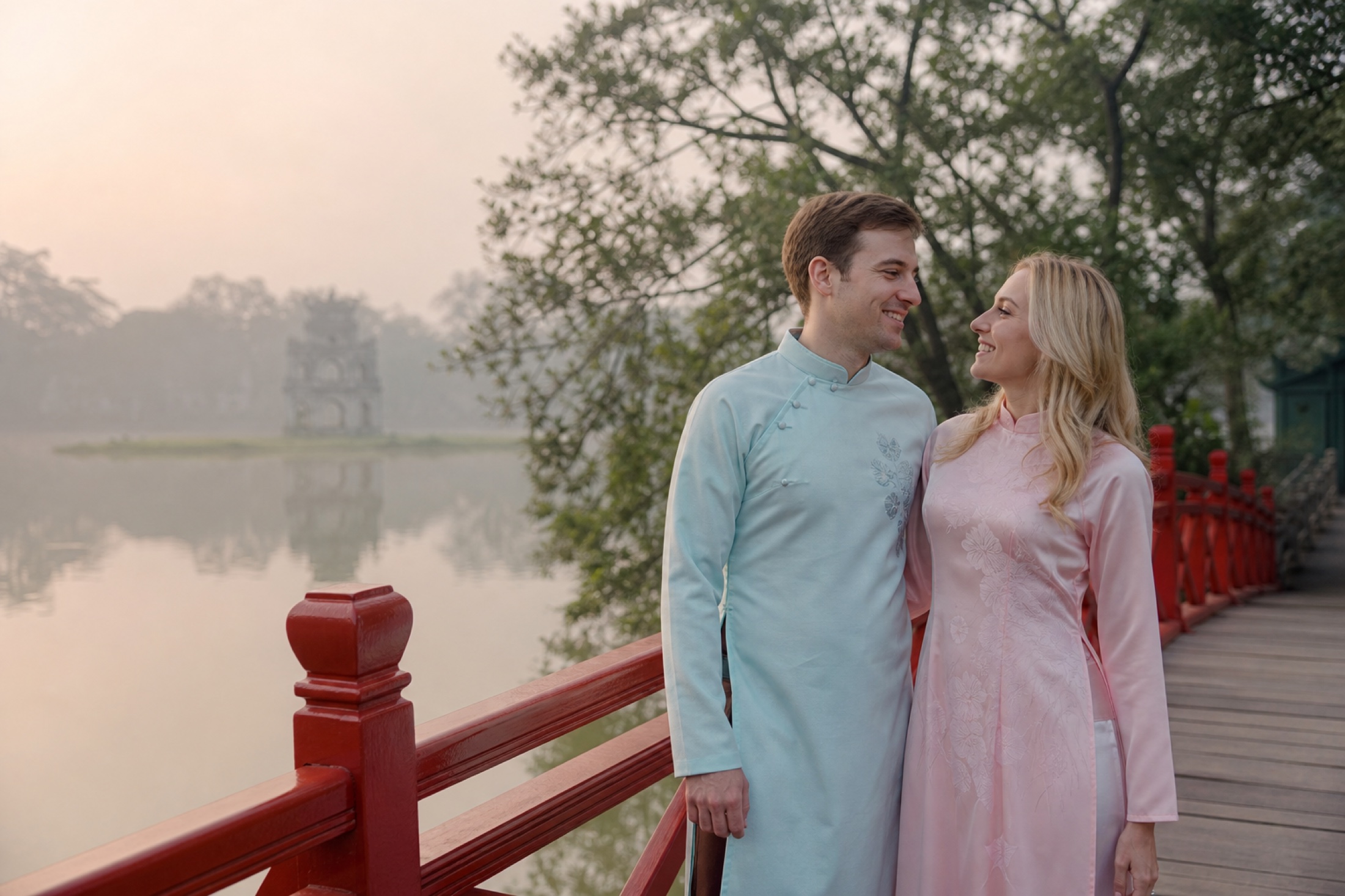
What Light Hours Actually Work at Long Biên?
Sunrise (5:45–7:00 a.m.) delivers soft, directional side light across the river; the bridge's iron shadows are long and sculptural. Before 6:30 a.m., foot traffic is minimal—cyclists and early commuters, easily avoided. Mid-morning (8:00–11:00 a.m.) brings harsh overhead light that casts hard shadows into your eye sockets and across the ao dai's pleats. Afternoon (3:00–5:30 p.m.) reverses the morning angle; you'll have warm, raking light if you position yourself facing west toward the approach ramp. After 5:30 p.m., the light softens but the bridge fills with evening commuters and tourists. In autumn and early winter, sunrise is later (after 6:00 a.m.) and the light stays soft longer—ideal for a 6:10–7:30 a.m. slot. Summer (May–Sep) sunrise is too early to coordinate (before 5:30 a.m.) and the light burns harsh within minutes.
How Do Season and Weather Affect Your Shoot?
| Season | Light Quality | Humidity & Haze | Crowds | Ao Dai Comfort | Best Timing |
|---|---|---|---|---|---|
| Oct–Nov (autumn) | Soft, directional, warm | Low, clear | Moderate | Drapes well; fabric light | 6:30–7:30 a.m. or 4:30–5:30 p.m. |
| Dec–Feb (winter) | Mild, often overcast | Low; some drizzle | Light | Layers under ao dai work | Pre-dawn or post-5 p.m. |
| Mar–Apr (spring) | Hazy; weak contrast | High; frequent mist | Moderate | Clinging sweat; heavy | Avoid midday |
| May–Sep (summer) | Harsh, flat at midday | Very high; humid downpours | Heavy (tourists) | Soaked, wrinkled | Not recommended |
Autumn (Oct–Nov) is Hanoi's photographic sweet spot: dry air, clear skies, mild temperature (around 20–25°C), and soft light. Winter (Dec–Feb) is cool but manageable if you wear layers under the ao dai; the risk is drizzle that dampens fabric and requires quick wringing and repositioning. Spring (Mar–Apr) brings haze that flattens the river's color and your face—not ideal. Summer (May–Sep) combines heat (often 35°C+), humidity, afternoon downpours, and typhoon-remnant wind gusts that tangle the ao dai and make editing for reflection in wet concrete difficult. If you're traveling to Hanoi outside Oct–Nov, book for early morning only and have a backup indoor option (hotel makeup and portrait, or covered alley backdrops).
Directed vs. DIY: What's the Real Difference at Long Biên?
DIY (you and a friend with a phone camera) offers flexibility and no cost beyond the ao dai rental—but you'll spend time posing, asking "does this look good?" and missing the bridge's best angles because you're focused on the phone's frame. You also can't stage the permit situation or manage foot traffic timing; police may ask you to move.
Cáo Studio's directed approach places a still photographer and a videographer on location with a stylist who arrived earlier with your ao dai and makeup artist. The director gives you clear, small actions: "Walk from the far railing toward camera, looking at the river—we'll shoot wide first." You're not holding a pose; you're moving through light while the team captures multiple angles and moments. The videographer records a short 30–90 second edit of the best takes, which arrives with the still photos 48 hours later. The cost factors are travel time (early morning at Long Biên requires the team to arrive by 5:30 a.m.), the permit, and the three-person crew. A DIY session is free beyond rental; a directed session costs more but returns coherent, cinematic frames and a film—not a folder of half-blurred or awkwardly posed stills.
Cáo Studio also handles seasonal and weather variables: if December drizzle arrives, the team knows which covered spots on the bridge still hold soft light; if May humidity makes the ao dai cling, they can reframe to emphasize the fabric's weight instead of fighting it. That local knowledge and adaptive framing is what changes "tourist photo" to "frame you keep."
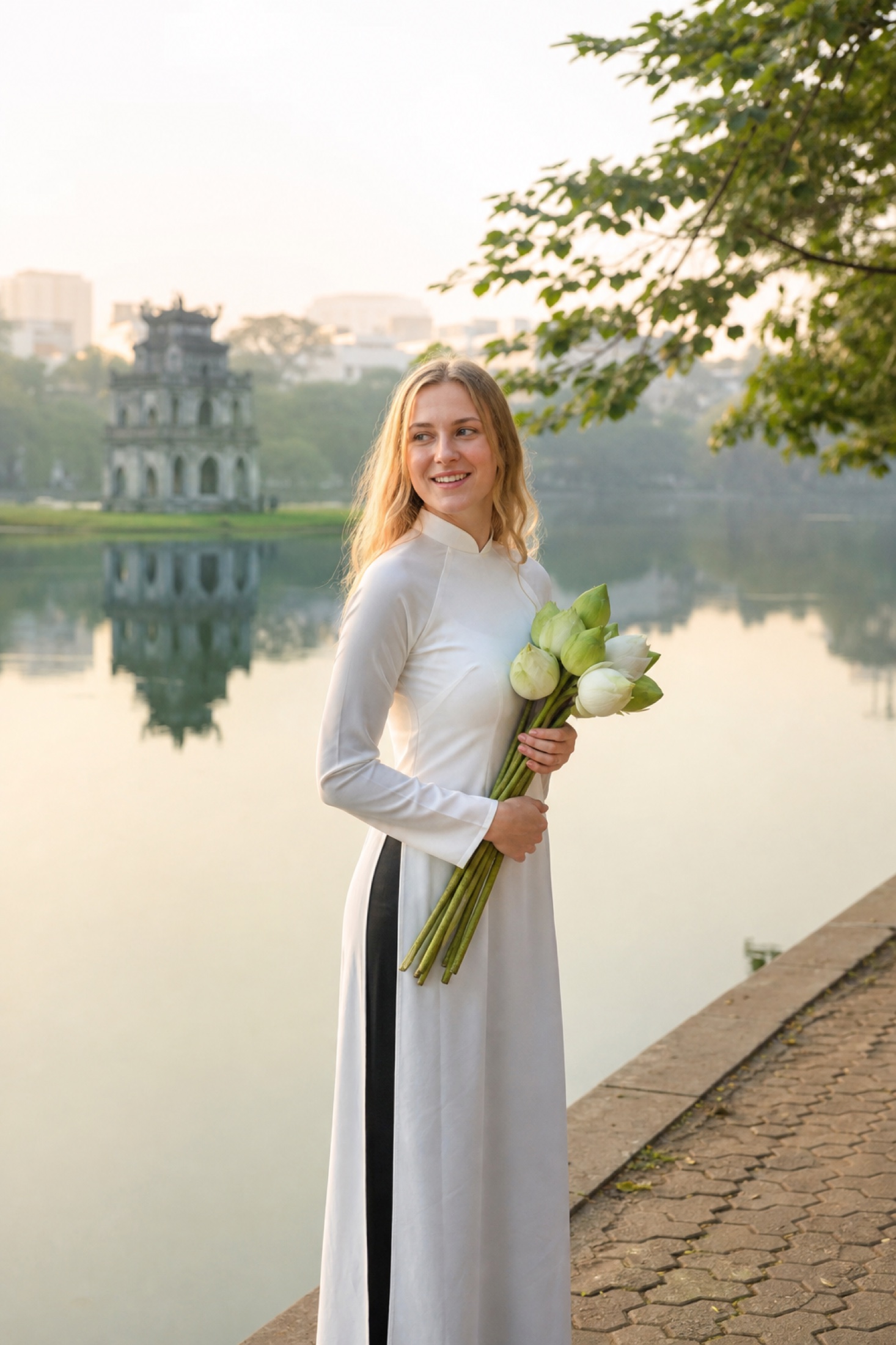
Outfit Prep: What to Wear Under, and How to Transport It
An ao dai is a tunic worn over matching silk pants, usually with a long silk slip underneath. At Long Biên, the wind—especially morning gusts off the river—lifts the ao dai's side panels unless you wear a fitted slip that anchors the fabric. Cáo Studio's stylist arrives with the ao dai, slip, and often a second outfit (a contrasting color or a lighter weight for afternoon light); she fits the slip and tunic while the makeup artist works. If you're renting an ao dai separately, ask the rental shop whether the slip is included and whether the fit is tailored or adjustable.
Transport the ao dai flat in a garment bag or hanging in a car; don't fold it overnight or the creases set. If you're staying at a hotel, confirm they have a dry-cleaning or steaming service available the evening before your shoot—wrinkles from luggage are sharp. The fabric (usually silk or silk-blend) shows water marks, so if there's any rain risk, ask Cáo Studio whether to bring a backup outfit or shoot indoors. Shoes are rarely visible in wide shots, so wear comfortable walking shoes you can slip off quickly if the frame calls for bare feet on the bridge's wooden or metal walkway.
What to Check Before You Book a Long Biên Session
Permit and local access: Cáo Studio manages the permit for professional filming; if you hire a solo photographer, confirm they've cleared this with authorities—Long Biên has restricted times and zones for camera rigs.
Timing commitment: Early morning (5:45–7:00 a.m.) requires you to meet the team with full makeup and hair done, or allow time for the makeup artist to work on-site. Confirm whether the quote includes on-site makeup and hair or if you're arriving pre-done.
Seasonal backup: Book your shoot in autumn (Oct–Nov) if possible. If you're traveling in winter or spring, confirm a backup indoor location—hotel makeup and hair in your room is a fallback if the bridge session is cancelled due to rain.
Outfit ownership: Clarify whether Cáo Studio supplies the ao dai or whether you rent separately and arrive with it. If you supply it, bring a second outfit (lighter weight or different color) for variety—the bridge's tones suit jewel colors and pastels more than saturated reds.
Editing timeline: Confirm the edited-photo delivery date in writing. Cáo Studio quotes 48 hours for digital files; if you need a printed album or physical prints, ask whether that's included or quoted separately.
Film and stills: Confirm whether you're receiving a short video edit, high-resolution stills, or both. Not all directed sessions include both; the quote should specify.
---
Comparing Your Photoshoot Options in Hanoi
If you're deciding between Long Biên Bridge and other Hanoi locations or session types, consider:
- Ao dai photoshoot: Long Biên is ideal if you want geometric, culturally resonant framing and early-morning light. If you prefer softer, more intimate settings (temple courtyards, back alleys, lotus ponds), alternative Hanoi sessions may suit better.
- Couple & family photoshoot: Long Biên's railings and width allow couples to stand side-by-side and walk together in wide shots—it's naturally composed for pairs. Families with children are trickier on the bridge's narrow pedestrian areas; consider indoor sessions or alley backdrops.
- Proposal & anniversary package: Long Biên is romantic at sunrise and historically symbolic—excellent for proposals. Anniversaries often benefit from warmer, softer light (sunset) but the evening bridge is crowded; ask Cáo Studio about alternative Hanoi locations for evening ambiance.
- Vacation & solo photoshoot: Solo travelers get striking frames at Long Biên because the bridge's geometry and your solitary figure create strong composition. Morning light is essential; afternoon solo shots risk looking isolated rather than peaceful.
---
FAQ
Can we shoot at Long Biên in the rain?
Light rain is manageable—the bridge's wet steel and your ao dai's reflection create moody tones. Heavy or constant rain dampens the fabric and requires wringing between takes. Ask Cáo Studio whether they have a backup indoor session included if rain cancels the morning shoot.
Do we need a permit to shoot at Long Biên?
Professional teams with camera rigs need a permit from Hanoi authorities. Cáo Studio handles this before your session. If you're hiring a solo photographer or shooting solo with a phone, check with local authorities—policies shift; better to confirm on WhatsApp with Cáo Studio beforehand.
What if we can't wake up for a 6 a.m. shoot?
Afternoon slots (4:00–5:30 p.m.) work but have heavier foot traffic and warm, raking light that's directional but less flattering if you're facing the wrong angle. Early morning is ideal; if you can't commit, consider an indoor hotel makeup and hair session or an alley shoot with more flexible timing.
How long does a Long Biên shoot take?
Typically 2–3 hours on location, including travel time to position, makeup touch-ups, and multiple outfit or angle changes. The team shoots in sequence: wide shots first (you walking or standing), then medium (you at the railing), then details (hands, fabric folds, facial expressions).
Can we bring our own ao dai, or does Cáo Studio supply it?
Cáo Studio can provide an ao dai as part of the session, or you can rent separately and arrive with it. Confirm in your WhatsApp quote whether the ao dai is included—if you supply it, bring it the evening before so the stylist can inspect fit and press it if needed.
When is the best time to book a Long Biên photoshoot?
Autumn (October–November) is ideal: dry, mild, soft light, low humidity. Book 2–4 weeks in advance to secure an early morning slot. If you're traveling outside autumn, book for the earliest available morning time and ask about backup indoor options. --- 📸 Book on WhatsApp — ao dai photoshoot Ready to shoot at Long Biên? Message Cáo Studio on WhatsApp to discuss your date, outfit, and early-morning timing. The team will confirm the permit, assign your crew, and send a quote within 24 hours.
FAQ
Can we shoot at Long Biên in the rain?
Light rain is manageable—the bridge's wet steel and your ao dai's reflection create moody tones. Heavy or constant rain dampens the fabric and requires wringing between takes. Ask Cáo Studio whether they have a backup indoor session included if rain cancels the morning shoot.
Do we need a permit to shoot at Long Biên?
Professional teams with camera rigs need a permit from Hanoi authorities. Cáo Studio handles this before your session. If you're hiring a solo photographer or shooting solo with a phone, check with local authorities—policies shift; better to confirm on WhatsApp with Cáo Studio beforehand.
What if we can't wake up for a 6 a.m. shoot?
Afternoon slots (4:00–5:30 p.m.) work but have heavier foot traffic and warm, raking light that's directional but less flattering if you're facing the wrong angle. Early morning is ideal; if you can't commit, consider an indoor [hotel makeup and hair session](/makeup-and-hair) or an alley shoot with more flexible timing.
How long does a Long Biên shoot take?
Typically 2–3 hours on location, including travel time to position, makeup touch-ups, and multiple outfit or angle changes. The team shoots in sequence: wide shots first (you walking or standing), then medium (you at the railing), then details (hands, fabric folds, facial expressions).
Can we bring our own ao dai, or does Cáo Studio supply it?
Cáo Studio can provide an ao dai as part of the session, or you can rent separately and arrive with it. Confirm in your WhatsApp quote whether the ao dai is included—if you supply it, bring it the evening before so the stylist can inspect fit and press it if needed.
When is the best time to book a Long Biên photoshoot?
Autumn (October–November) is ideal: dry, mild, soft light, low humidity. Book 2–4 weeks in advance to secure an early morning slot. If you're traveling outside autumn, book for the earliest available morning time and ask about backup indoor options. --- [📸 Book on WhatsApp — ao dai photoshoot](/book) Ready to shoot at Long Biên? Message Cáo Studio on WhatsApp to discuss your date, outfit, and early-morning timing. The team will confirm the permit, assign your crew, and send a quote within 24 hours.
Ao dai, makeup, hair and a local photographer in Hanoi or Saigon — one WhatsApp message.