/ao-dai-photoshoot
Ao Dai Wedding Photos at Cholon & Thien Hau Pagoda
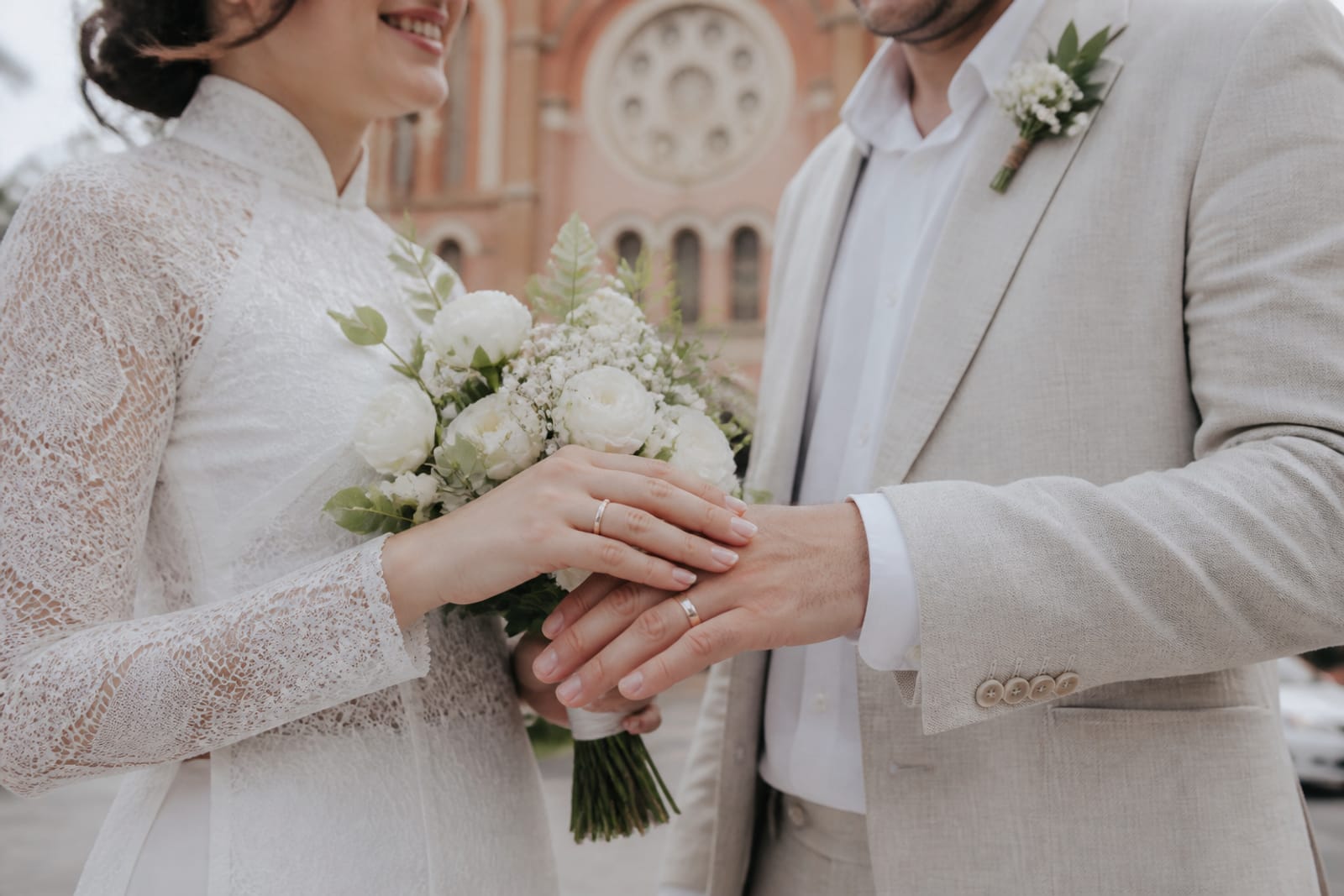
An ao dai wedding photoshoot at Cholon and Thien Hau Pagoda combines cultural depth with photogenic architecture in Ho Chi Minh City's oldest district. Sessions typically run 2–3 hours, mixing candid couple shots in the bustling market alleys, temple courtyards, and ancestral halls with structured portraits. Thien Hau Pagoda—active since 1760—requires respectful dress (shoulders and knees covered; avoid red if not marrying that day) and modest behavior; morning shoots (6:00–9:00 a.m.) avoid crowds and harsh midday light. Cholon's narrow lanes offer golden-hour colour around 5:00–6:30 p.m., but afternoon heat and motorbike density test stamina. Cáo Studio – Makeup & Photoshoot books these sessions with location knowledge, timing coordination, and on-site problem-solving (rain, sudden festivals, temple closures). No permit is required for the pagoda, but arriving early and hiring a local guide prevents disruptive photography and ensures authentic access to rarely-photographed interior shrines.
Cholon and Thien Hau Pagoda are the go-to pairing for ao dai wedding photography in Ho Chi Minh City. This article walks you through light, logistics, outfit choices, and booking decisions—so your session delivers both beauty and cultural respect.
Why is Thien Hau Pagoda the standout backdrop for ao dai wedding photos?
Thien Hau Pagoda's weathered coral-pink walls, intricate wooden prayer screens, and lantern-draped courtyards create unmatched depth for ao dai portraiture. The pagoda is Ho Chi Minh City's largest Cantonese-style temple, dating to 1760, so architectural detail rivals any studio. Incense smoke, morning light filtering through carved roof lattice, and rows of red prayer flags add authenticity you cannot fake elsewhere. However, the pagoda functions as a working place of worship—photographers must treat it as sacred space, not a set. You'll encounter real worshippers, especially early morning; this is not a disruption but part of the authentic frame. Thien Hau's interior (the altar hall and side shrines) stays quieter before 9:00 a.m., making pre-noon shoots essential for uncluttered portraits and respectful photography. Cáo Studio – Makeup & Photoshoot prioritizes timing coordination with temple staff to avoid peak prayer hours and secure access to lesser-photographed courtyards and shrines.
📸 Book on WhatsApp — ao dai photoshoot
What makes Cholon's street market so photogenic for ao dai sessions?
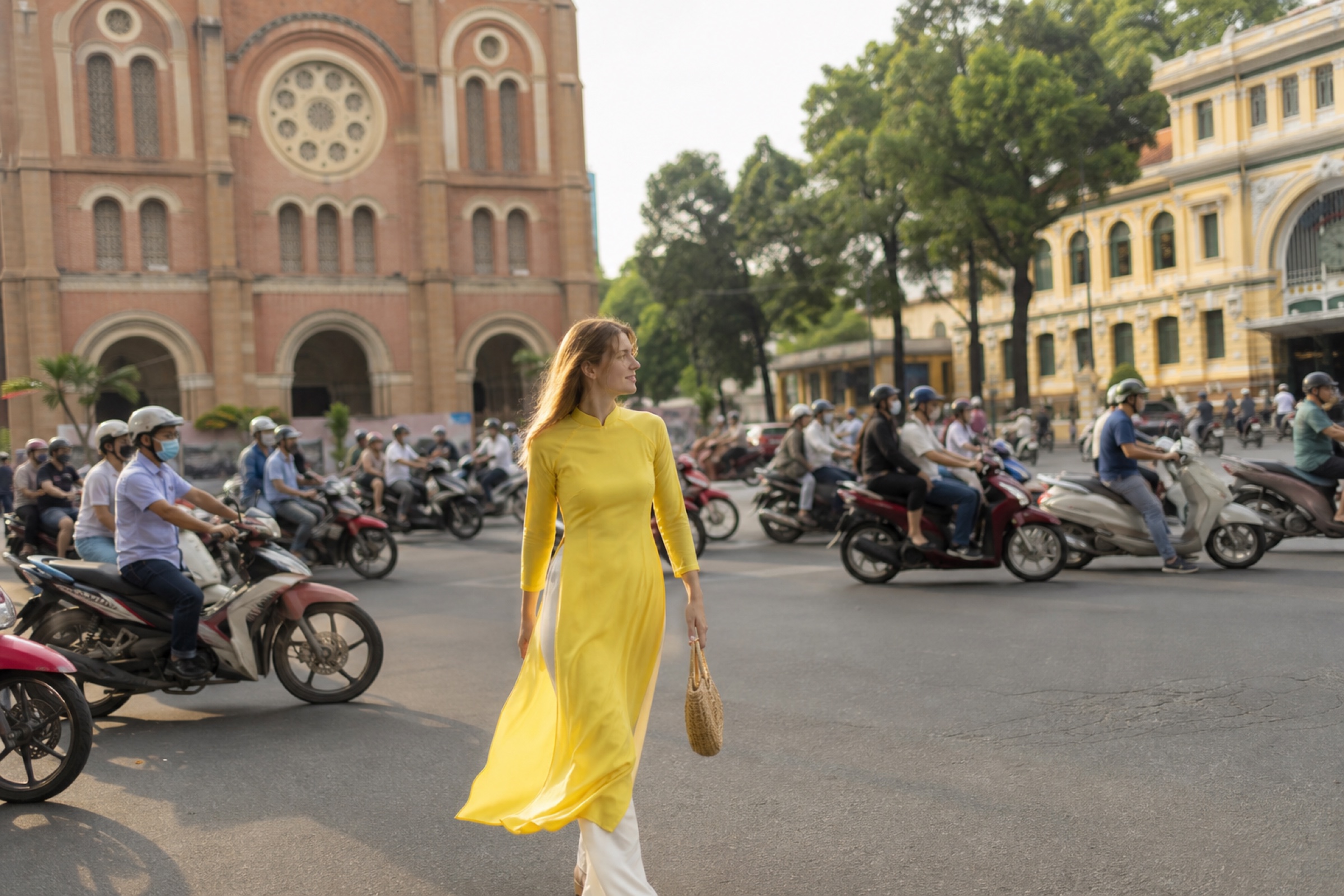
Cholon (District 5) is Ho Chi Minh City's historic Chinatown—a maze of narrow lanes, colonial shopfronts, herbal medicine signs painted in fading gold, and centuries-old textile merchants. The ao dai photographs extraordinarily well here because the fabric's silhouette contrasts sharply against weathered yellow building walls and dark wooden shutters. Thap Muoi Street and the alleys around Binh Tay Market offer dozens of frameable doorways, each with different colour tones and depth. Early-morning or golden-hour shoots (before 7:00 a.m. or after 5:00 p.m.) avoid crowds and motorbike chaos; midday is too bright and congested. Street vendors are used to tourists but not always photographers—a respectful introduction (or having your photographer speak Vietnamese) prevents unwanted attention and builds rapport. The market's narrow lanes mean only one or two people can stand beside the photographer at any moment, keeping sessions intimate. Cholon requires no entry fee and no permit; the district is public space, but respecting shopkeepers' time and privacy ensures smooth shooting.
How does seasonal weather affect outdoor timing and outfit choices?
Ho Chi Minh City's dry season (December–April) is ideal for ao dai wedding shoots: skies are clearer, humidity is lower, and morning light stays soft longer. January–February offer the most comfortable temperatures (around 25–28°C); May–November brings heavy afternoon downpours and oppressive heat (30–35°C). An ao dai is a full-length silk garment with no sleeves; in dry-season cooler mornings, brides feel comfortable; in wet season, the weight and humidity create fatigue by hour two.
| Season | Best for Thien Hau? | Cholon Light | Outfit Comfort | Why Choose It |
|---|---|---|---|---|
| Dec–Feb | Morning shots, clear skies | Golden hour longest | Silk feels natural, easy movement | Coolest, least rain |
| Mar–Apr | Early dawn only | Intense, brief golden hour | Heat builds fast; silk clings | Dry but getting hot |
| May–Nov | Avoid midday; early morning | Flat, grey mornings; golden hour sharp | Humidity, silk weight drain energy | Rain risk high; shoot 6–8 a.m. only |
Wet-season shoots are possible but demand an early start, a backup indoor location (temple interior or historic shophouse), and rain-ready styling (waterproof makeup, protective undergarments). Dry season lets you extend sessions to 3 hours without fatigue. Book your dates 2–3 months ahead if targeting December–February, when humidity is lowest and Tet (Lunar New Year, late January–mid-February) shuts many services for several days.
What do you wear under an ao dai, and how does it affect photo posture?
An ao dai sits on a silk or cotton underskirt (áo lót) that reaches the ankle; the outer tunic splits at the waist and falls to the ankle on both sides, creating the iconic vertical silhouette. For wedding photos, brides typically wear a flesh-toned or white underslip and a structured strapless or thin-strap white top underneath to prevent see-through fabric and allow arm movement in heat. Photographers must understand this structure: the tunic creates elegant lines whether the bride sits, stands, or leans; the split panels move independently, so walking shots reveal the underslip in ways that look intentional and graceful.
Incorrect undergarments (heavy cotton, visible elastic, incorrect colour) undermine the ao dai's visual impact. A bride should know her undergarments before the photoshoot—ask your photographer or tailor to advise. At Thien Hau Pagoda, brides often kneel for altar shots; a properly fitted underslip ensures the tunic drapes correctly without bunching. Cholon's street shots benefit from movement (walking, turning); an underslip that's too tight restricts stride, creating stiff poses. Cáo Studio – Makeup & Photoshoot advises brides on fit during the booking consultation on WhatsApp, so you arrive ready. If renting an ao dai, confirm the undergarments are included and try the full outfit (tunic + underslip + shoes) before the session day.
How do temple etiquette and crowds shape your photoshoot timing and location choices?
Thien Hau Pagoda observes daily prayer cycles: dawn prayers (around 5:00–6:30 a.m.), midday offerings (11:00 a.m.–12:30 p.m.), and evening prayers (6:00–7:30 p.m.). Shooting outside these windows minimizes interaction with worshippers but doesn't guarantee solitude. Lunar New Year (late January–mid-February) and Buddha's birthday (8th lunar month, roughly April–May) pack the pagoda; avoid these dates if seeking uncluttered shots. Visiting photographers must follow temple rules: no flash in the altar hall, no touching statues or prayer objects, and no posing on prayer mats or at the central altar unless invited by temple staff.
Practical steps: arrive 15 minutes early, greet the temple keeper or tour guide, explain your intent (a brief, respectful conversation goes far), and ask which areas permit photography. Thien Hau's side courtyards (where flower and incense vendors gather) offer equally stunning backdrops with fewer restrictions. Cholon has no such rules but demands street-smart timing: heavy truck deliveries occur 5:00–7:00 a.m.; lunch closures happen 12:00–2:00 p.m. The most photogenic light and calm lanes exist before 8:00 a.m. and after 5:30 p.m.
Should you hire a local guide, and how does that change your shoot?
Hiring a local guide (or letting your photographer do so) transforms a Cholon shoot from tourist navigation to cultural access. A guide knows which shopkeepers permit photography without negotiation, which alleys avoid heavy traffic, and which historic buildings offer interior shots (old merchant halls, apothecaries). Guides also speak Vietnamese, reducing miscommunication with temple staff and street vendors. The cost factors include the guide's hourly rate and time added to the session. For Thien Hau, a guide ensures you understand the pagoda's history and layout, enabling the photographer to compose shots around real stories (ancestor worship at specific shrines, the role of incense offerings) rather than generic temple aesthetics.
The downside: a guide adds a third person to an intimate couple's moment. Some pairs prefer the photographer alone and handle temple interaction themselves. Both approaches work; decide based on language comfort, cultural background, and whether you want historical context in your final images. Ask Cáo Studio – Makeup & Photoshoot on WhatsApp whether a guide is recommended for your dates and whether they can connect you with one. Many photography sessions in Cholon include a guide introduction as part of location planning.
Ao dai photoshoot: Cholon and Thien Hau versus other Ho Chi Minh City options
Cholon and Thien Hau Pagoda compete with other iconic Ho Chi Minh City locations—Binh Quoi Historic Site, Saigon River embankments, and Saigon Notre-Dame Cathedral. Here's what sets them apart:
Cholon + Thien Hau excels at:
- Authentic cultural immersion (real district, real temple, real worshippers).
- Warm, aged colour tones (coral, mustard, faded gold) that frame ao dai differently than colonial white buildings.
- No entry fees or permits, so budget stays low.
- Multiple micro-locations within walking distance (you're not shuttled between venues; the entire 2–3 hour session stays within a 1 km radius).
Trade-offs:
- Cholon is chaotic during business hours; you must shoot very early or late.
- Thien Hau requires respectful behaviour and timing; you cannot guarantee empty courtyards.
- Street-level uneven ground (worn tile, steps, drains) can trip ao dai hems or catch heels.
If you prefer a more controlled, manicured backdrop, consider Binh Quoi (a reconstructed historic complex with curated design) or Saigon River gardens; these offer fewer crowds and predictable light but less raw authenticity. Cáo Studio – Makeup & Photoshoot can advise on which setting matches your vision during your WhatsApp consultation.
What to check before you book your Cholon and Thien Hau photoshoot
- Confirm your dates 8–12 weeks ahead. December–February is peak season; availability shrinks fast.
- Ask your photographer about Lunar New Year and religious calendar closures. Thien Hau may restrict access during major festivals; avoid these dates unless you specifically want the cultural atmosphere.
- Discuss weather contingency. If you're booking May–November, ask what happens if rain arrives. Does the session move indoors (temple interior, nearby shophouse), reschedule, or pause for brief storms?
- Confirm makeup and hair coordination. An ao dai photoshoot often includes makeup & hair at your hotel before the session. Verify whether your photographer applies waterproof makeup and whether the style suits the ao dai neckline and temple lighting.
- Ask about outfit rentals. Do you bring your own ao dai, rent locally, or rent from Cáo Studio's ao dai rental? Rentals need 1–2 weeks' notice for custom sizing.
- Clarify what "session length" includes. Does 2 hours mean setup time + shooting, or shooting only? How many locations? How many edited photos? Check the FAQ and confirm details on WhatsApp.
- Request a sample itinerary. Ask your photographer for a timeline showing arrival, temple visit, Cholon walk, and wrap-up times. This prevents surprises and lets you plan your day.
---
FAQ
Do we need a permit to photograph at Thien Hau Pagoda?
No permit is required for personal or couple photography at Thien Hau Pagoda. Commercial or professional shoots benefit from advance notice to temple staff; your photographer should introduce themselves and confirm timing. Arrive early (6:00–7:00 a.m.) for the calmest access.
What happens if it rains during a Cholon photoshoot?
Morning or evening shoots in Ho Chi Minh City rarely face heavy rain outside May–November. If caught in drizzle, the ao dai may be photographed in the rain for dramatic effect, or the session can move under shophouse porches and covered alleys. Discuss rain backup locations (temple interior, historic building) when booking.
Can we extend a session to shoot both Thien Hau and Cholon in detail?
Yes, but it requires 3–4 hours and careful timing. Thien Hau (pagoda grounds and altar areas) takes 60–90 minutes; Cholon's best shots need 90–120 minutes across multiple lanes. Book a longer ao dai photoshoot session and ask your photographer to plan travel time between sites. This is practical only in dry season (Dec–Apr) when light remains soft.
Should we hire a guide, and what does that cost?
A guide adds cultural context and handles local communication, but is not mandatory. Cost depends on your photographer's network and local rates; ask Cáo Studio – Makeup & Photoshoot on WhatsApp for a recommendation and quote. Many photographers include a guide introduction as part of their service planning.
What if we are not marrying soon—can we still do an ao dai photoshoot at Cholon and Thien Hau?
Absolutely. Ao dai photoshoots work for couples, families, and solo travelers of any marital status. Cholon and Thien Hau settings are equally beautiful for anniversary sessions, family heirlooms, or vacation memories. Thien Hau staff appreciate respectful, non-commercial photography; frame your session as a cultural portrait rather than a wedding shoot.
When is the absolute best month to book a Cholon and Thien Hau shoot?
December, January, and early February offer the coolest, driest weather and shortest morning light (golden hour lasts longest). Avoid late January–mid-February if Tet (Lunar New Year) coincides; the pagoda closes for ceremonies and Cholon is busy with celebrations. March–April works well but gets hot; May–November is possible only for early-morning starts (6:00–8:00 a.m.) to avoid rain and heat. --- 📸 Book on WhatsApp — ao dai photoshoot | 💄 Makeup & hair at your hotel | 🌸 See the lookbook
FAQ
Do we need a permit to photograph at Thien Hau Pagoda?
No permit is required for personal or couple photography at Thien Hau Pagoda. Commercial or professional shoots benefit from advance notice to temple staff; your photographer should introduce themselves and confirm timing. Arrive early (6:00–7:00 a.m.) for the calmest access.
What happens if it rains during a Cholon photoshoot?
Morning or evening shoots in Ho Chi Minh City rarely face heavy rain outside May–November. If caught in drizzle, the ao dai may be photographed in the rain for dramatic effect, or the session can move under shophouse porches and covered alleys. Discuss rain backup locations (temple interior, historic building) when booking.
Can we extend a session to shoot both Thien Hau and Cholon in detail?
Yes, but it requires 3–4 hours and careful timing. Thien Hau (pagoda grounds and altar areas) takes 60–90 minutes; Cholon's best shots need 90–120 minutes across multiple lanes. Book a [longer ao dai photoshoot](/ao-dai-photoshoot) session and ask your photographer to plan travel time between sites. This is practical only in dry season (Dec–Apr) when light remains soft.
Should we hire a guide, and what does that cost?
A guide adds cultural context and handles local communication, but is not mandatory. Cost depends on your photographer's network and local rates; ask [Cáo Studio – Makeup & Photoshoot](/saigon) on WhatsApp for a recommendation and quote. Many photographers include a guide introduction as part of their service planning.
What if we are not marrying soon—can we still do an ao dai photoshoot at Cholon and Thien Hau?
Absolutely. Ao dai photoshoots work for [couples, families, and solo travelers](/vacation-photoshoot) of any marital status. Cholon and Thien Hau settings are equally beautiful for anniversary sessions, family heirlooms, or vacation memories. Thien Hau staff appreciate respectful, non-commercial photography; frame your session as a cultural portrait rather than a wedding shoot.
When is the absolute best month to book a Cholon and Thien Hau shoot?
December, January, and early February offer the coolest, driest weather and shortest morning light (golden hour lasts longest). Avoid late January–mid-February if Tet (Lunar New Year) coincides; the pagoda closes for ceremonies and Cholon is busy with celebrations. March–April works well but gets hot; May–November is possible only for early-morning starts (6:00–8:00 a.m.) to avoid rain and heat. --- [📸 Book on WhatsApp — ao dai photoshoot](/book) | [💄 Makeup & hair at your hotel](/makeup-and-hair) | [🌸 See the lookbook](/lookbook)
Ao dai, makeup, hair and a local photographer in Hanoi or Saigon — one WhatsApp message.