/ao-dai-photoshoot
Ao dai wedding photos at Cua Dai Beach: what works, what doesn't
Cua Dai Beach, a 5-minute drive south of Hoi An Ancient Town, offers open sky, wet sand mirrors and a quiet shoreline ideal for ao dai wedding photos—especially at sunrise or late afternoon. Cáo Studio – Makeup & Photoshoot runs appointment-based sessions here, where calm water reflects light beautifully in winter months (Feb–Aug is driest; Sep–Dec brings rain and typhoons). A typical shoot lasts 2–3 hours across rising and golden light. Avoid midday (harsh shadows, heat stress on silk ao dai), protect fabric from salt spray and sand, bring extra layers to stay warm in ocean wind, and time sessions around tides to access firm sand. Pre-wedding and wedding-day options exist; ask on WhatsApp for Hoi An availability and what's included. 📸 Book on WhatsApp — ao dai photoshoot ---
Why Cua Dai Beach works for ao dai wedding photos
Cua Dai Beach ranks as Hoi An's most practical beach location for couples: no permit is needed, parking sits 50 metres away, and the shoreline has natural windbreaks (dunes, sparse vegetation). The sand is firm near the waterline, supporting heels and avoiding the "sinking" problem of softer beaches further south. Sunrise delivers cool, even light; late afternoon gives warm tones and longer shadows without harsh overhead glare. Most importantly, the beach clears by early morning—photo crews rarely arrive before 9:00 a.m., and the first light window (5:30–6:30 a.m. in summer) is almost empty. Compare this to Instagram-famous Hoi An spots (Ancient Town, Japanese Bridge), which fill with tourists by 7:00 a.m. and require entry tickets.
Conclusion: Cua Dai's combination of ease, light quality and solitude outweighs its salt-spray risk if you plan fabric care ahead.
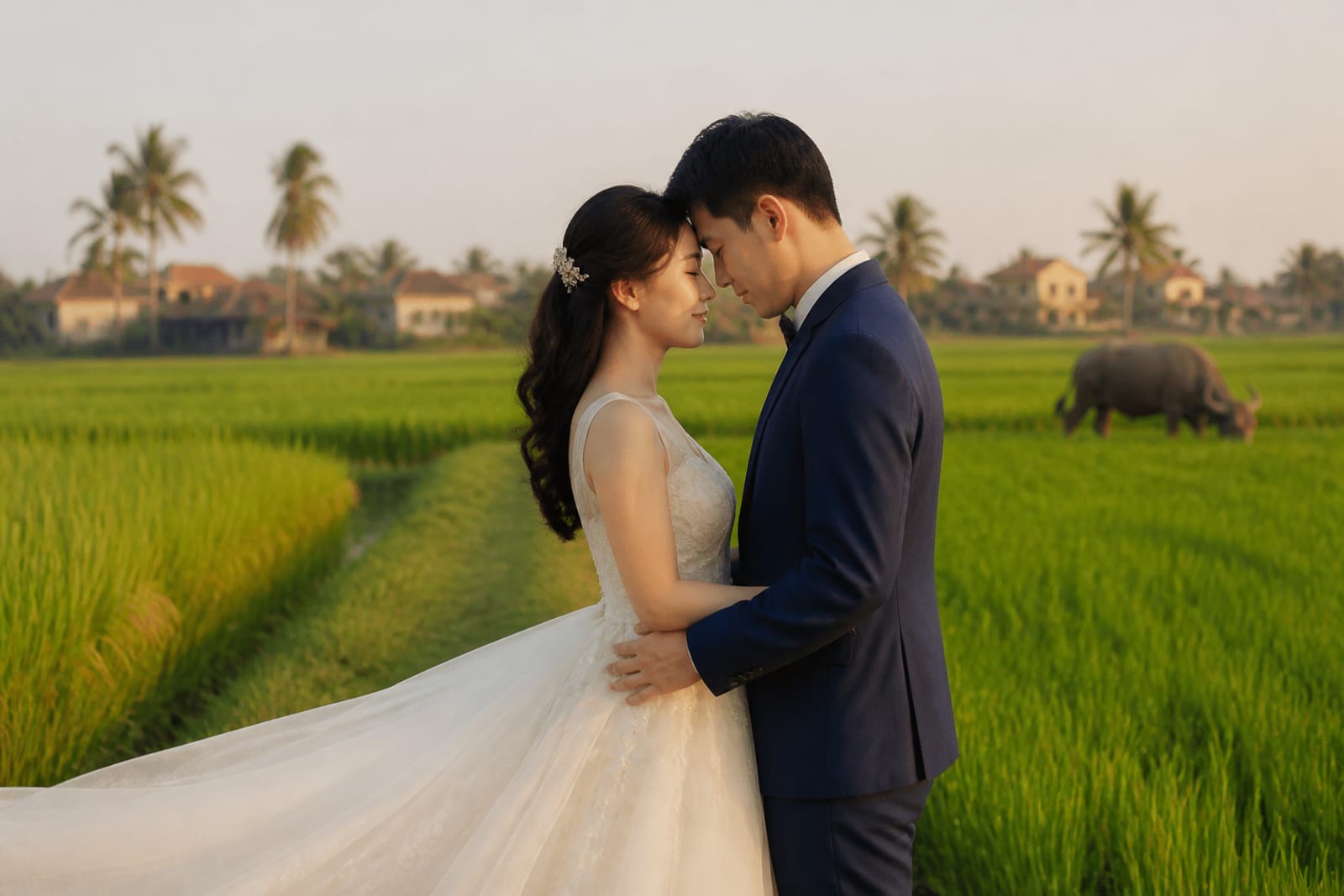
How light and season shape your shoot time
Hoi An's dry season (Feb–Aug) delivers reliably clear skies; sunrise (≈5:30–6:30 a.m.) produces soft, directional light that flatters ao dai silk without blown-out sky. By 8:00 a.m., light hardens; midday (11:00 a.m.–2:00 p.m.) is unusable—heat stress on fabric and faces, harsh shadows. Late afternoon (4:00–5:30 p.m.) restores warmth and depth, especially May–Aug when the sun sits lower. Rainy season (Sep–Dec) brings afternoon downpours (worst Oct–Nov); morning shoots are safer, but grey light requires careful positioning to avoid drab tones. Typhoons can cancel shoots with minimal notice Dec–Jan. Winter months (Dec–Jan) are cool and sometimes drizzly—bring windbreakers and moisture-proof gear for hair and makeup.
Conclusion: Book sunrise (Feb–Aug) or early afternoon (Dec–Jan) to guarantee usable light and avoid heat and rain.
Protecting ao dai from sand and salt on location
Salt spray corrodes silk finish and oxidizes metallic embroidery within hours if not rinsed. Sand embeds in seams and hems, causing long-term fibre damage. Before your shoot, apply a fine spray bottle of fresh water in your beach bag; after each setup move, rinse the ao dai's lower half and let it air-dry in shade (never wring silk). Wear a long, lightweight kaftan or shirt between shots—it shields the ao dai from wind-blown sand and cooling spray. Choose a semi-private cove (north end of Cua Dai, near the fish ponds) rather than the central strip, where fishing activity kicks up dust. Ask your photographer to position you upwind of the breaker line—wave mist reaches 20 metres inland on windy days. If your ao dai is rented, confirm salt-water rinse protocol with the rental shop before arrival; some charge cleaning fees.
Conclusion: Carry fresh water, dress between shots, and position upwind to keep fabric pristine.
Comparing beach shoot options near Hoi An
| Location | Best for | Light quality | Why it works (or doesn't) |
|---|---|---|---|
| Cua Dai Beach (5 km south) | Wedding couples, couples shoot | Sunrise excellent; late afternoon golden | Firm sand, quiet, no permit, tides create mirrors |
| An Bang Beach (North) | Alternative if Cua Dai is rough | Morning clear, afternoon wind | Windier, softer sand, fewer facilities |
| Hoi An Ancient Town streets | Photos before ceremony | Golden hour street light | Crowded after 7:00 a.m., entry ticket required |
| Cam Thanh coconut boats | Standalone intimate shoot | Dappled shade (tricky exposure) | Water-level intimacy, high operator skill needed |
| Local ponds (behind dikes) | Reflections, sunrise calm | Pristine mirror light | Private access easier, less salt exposure |
Conclusion: Cua Dai Beach balances accessibility, light and protection; book sunrise to avoid midday crowds and heat.
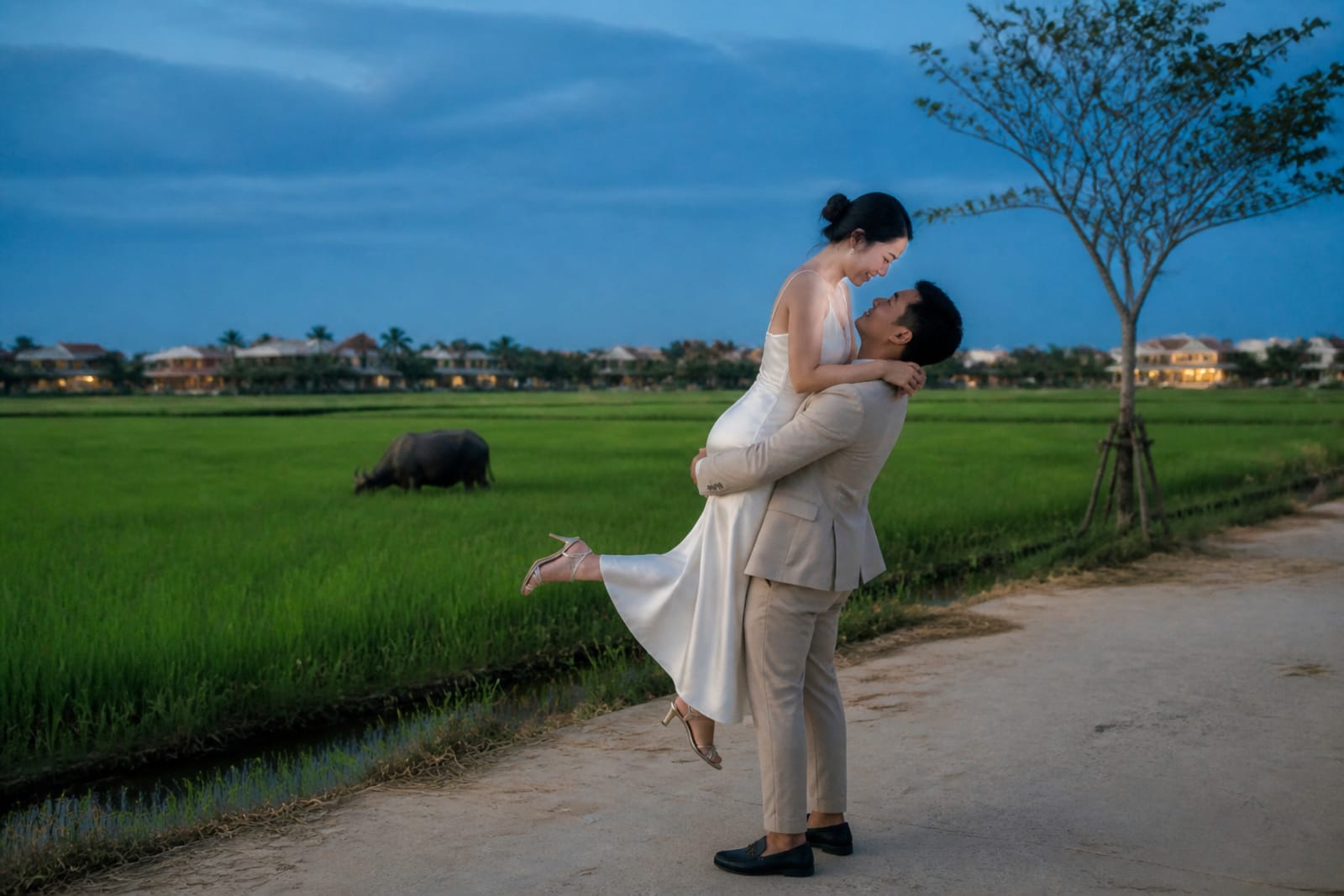
When to avoid Cua Dai and choose an alternative
Avoid Cua Dai if typhoons are forecast (Sep–Nov, especially Oct–Nov); waves close the beach to photography, and rain ruins makeup in minutes. If you're set on rainy-season dates, shift to indoor-outdoor hybrid shoots—sunrise at Cua Dai if skies clear, then pivot to Ancient Town streets or covered temple areas. High tide (≈6 hours of each 12-hour cycle) narrows the firm sand strip; check tide times locally before booking, and schedule shoots during low or rising tide. If your ao dai is heavily beaded or has a long train, avoid windy afternoons (4:00–6:00 p.m. in dry season)—fabric movement reads as blur in photos and beads catch sand. Strong sun allergies? Feb–Apr and Dec–Jan are your safest windows; May–Aug requires SPF reapplication every 2 hours.
Conclusion: Avoid Oct–Nov unless rain is acceptable; prioritize low tide, cooler months, and sheltered coves if fabric or skin is fragile.
Booking a Cua Dai Beach ao dai shoot with Cáo Studio
Cáo Studio – Makeup & Photoshoot handles Hoi An shoots by appointment; the team travels from Hanoi or Saigon. Confirm available dates, session length, and what makeup and hair services are included directly on WhatsApp. Most sessions include a pre-shoot consultation (fabric type, train length, embroidery material, weather contingency). Ask whether the quote covers: travel time from your hotel, equipment insurance for sand/salt exposure, number of edited photos delivered, and album design if you want prints. Clarify cancellation policy if typhoons arrive or tides are unexpectedly high. Bring a second ao dai or formal dress if you want variety—beach humidity and salt mean outfit changes take longer than expected. Confirm whether you're hiring a makeup artist for touch-ups on-site (sea spray lifts makeup faster than inland).
Conclusion: Book early, confirm every inclusion on WhatsApp, and budget time for outfit changes and weather pivots.
📸 Book on WhatsApp — ao dai photoshoot
---
What to check before you book
- Tide times: Request tide charts for your chosen date; schedule during low tide for firm sand and broad landscape backdrops.
- Ao dai care plan: Ask your rental shop (or wear your own) whether they cover salt-water rinse; confirm how the ao dai should be stored after your shoot.
- Sunrise logistics: Confirm your team's arrival time and parking access. Cua Dai has informal parking near the beach; arrive by 5:15 a.m. to secure a spot and position for sunrise.
- Weather contingency: Check the 10-day forecast before arrival. If rain is forecast, agree on an indoor alternative (Ancient Town, your hotel suite, or a covered pavilion).
- Makeup and hair on location: Beach sessions mean makeup touch-ups every 45 minutes. Book an on-site makeup artist or confirm the photographer can do simple repairs (powder, lip reapply).
- Fabric protection: Bring a beach bag with fresh water, a fine mist bottle, cotton towels, a lightweight kaftan, and moisture-proof bags for phones and electronics.
---
Related services and next steps
Looking for more than beach photos? Cáo Studio's couple photoshoot packages blend beach sessions with urban locations (Ancient Town, riverside). If your wedding is within days, hotel makeup & hair can prepare you on-site before traveling to the beach. Pre-wedding photoshoots often pair beach sunrise with temple or garden sessions later the same day. Wedding day photographer services cover ceremony and reception if Cua Dai is your venue's photo zone. Explore the full ao dai photoshoot pillar for inspiration, or browse the lookbook to see real Hoi An sessions in sand and light.
For Hanoi or Ho Chi Minh City weddings, Cáo Studio Hanoi and Cáo Studio Saigon offer similar beach and urban hybrids—ask on WhatsApp for your region.
---

FAQ
Do I need a permit to shoot at Cua Dai Beach?
No permit is required for personal photoshoots or small crew work. Commercial film production may need local approval; ask your photographer. The beach is public and free.
What's the best month to shoot ao dai at Cua Dai?
February–April offers cool weather, clear skies and green rice fields in surrounding areas. May–August is dry but very hot (35°C+); shoot sunrise or late afternoon only. Avoid Oct–Nov (typhoons, flooding, rain).
How do I keep my ao dai clean if sand gets everywhere?
Carry a spray bottle of fresh water and rinse the hem and sleeves after each pose. Wear a light kaftan between shots. Ask your rental shop whether they charge for salt-water cleaning.
Can we shoot during high tide?
Yes, but the firm sand strip narrows significantly. Low tide gives you the broadest, flattest beach. Check tide times for your date and schedule during low or rising tide for best results.
Is sunrise or sunset better for ao dai beach photos?
Sunrise (5:30–6:30 a.m., Feb–Aug) is calmer, cooler and less crowded; light is soft and even. Sunset (5:00–6:30 p.m.) is warmer but windy and attracts other beachgoers. Sunrise is more reliable and kind to makeup.
What if it rains on my shoot day?
Confirm your cancellation and reschedule policy with Cáo Studio before booking. Most teams can pivot to indoor locations (your hotel, Ancient Town covered areas, local pavilions) same-day if rain is brief.
FAQ
Do I need a permit to shoot at Cua Dai Beach?
No permit is required for personal photoshoots or small crew work. Commercial film production may need local approval; ask your photographer. The beach is public and free.
What's the best month to shoot ao dai at Cua Dai?
February–April offers cool weather, clear skies and green rice fields in surrounding areas. May–August is dry but very hot (35°C+); shoot sunrise or late afternoon only. Avoid Oct–Nov (typhoons, flooding, rain).
How do I keep my ao dai clean if sand gets everywhere?
Carry a spray bottle of fresh water and rinse the hem and sleeves after each pose. Wear a light kaftan between shots. Ask your rental shop whether they charge for salt-water cleaning.
Can we shoot during high tide?
Yes, but the firm sand strip narrows significantly. Low tide gives you the broadest, flattest beach. Check tide times for your date and schedule during low or rising tide for best results.
Is sunrise or sunset better for ao dai beach photos?
Sunrise (5:30–6:30 a.m., Feb–Aug) is calmer, cooler and less crowded; light is soft and even. Sunset (5:00–6:30 p.m.) is warmer but windy and attracts other beachgoers. Sunrise is more reliable and kind to makeup.
What if it rains on my shoot day?
Confirm your cancellation and reschedule policy with Cáo Studio before booking. Most teams can pivot to indoor locations (your hotel, Ancient Town covered areas, local pavilions) same-day if rain is brief.
Ao dai, makeup, hair and a local photographer in Hanoi or Saigon — one WhatsApp message.