/ao-dai-photoshoot
Ao Dai Wedding Photos at Hoi An Ancient Town: A Booking Guide
An ao dai wedding photoshoot in Hoi An Ancient Town is a half-day or full-day session capturing you in traditional Vietnamese dress against the town's lantern-lit architecture, wooden shophouses, and riverside paths. Cáo Studio – Makeup & Photoshoot, which operates in Hanoi, Ho Chi Minh City, and Hoi An by appointment (team travels), handles hair, makeup, and photography; the team meets you at your hotel or the Ancient Town entrance before dawn to shoot during golden light and avoid crowds. The best months are February to April (cool, dry, mild with green rice fields); May to August is very hot (often 35°C+) and requires sunrise-only shoots; September to December is the rainy season with typhoons and flooding in the Ancient Town (worst October–November). An entrance ticket is required to access the central area; light changes dramatically from 5:30 a.m. sunrise through midday glare to dusk when lanterns are lit. Avoid shooting midday, mid-season crowds, and heavy rain forecasts; instead, book early morning or dusk sessions in February–April for the clearest light and fewest people. 📸 Book on WhatsApp — ao dai photoshoot ---
Why is February to April the best time for Hoi An wedding photos?
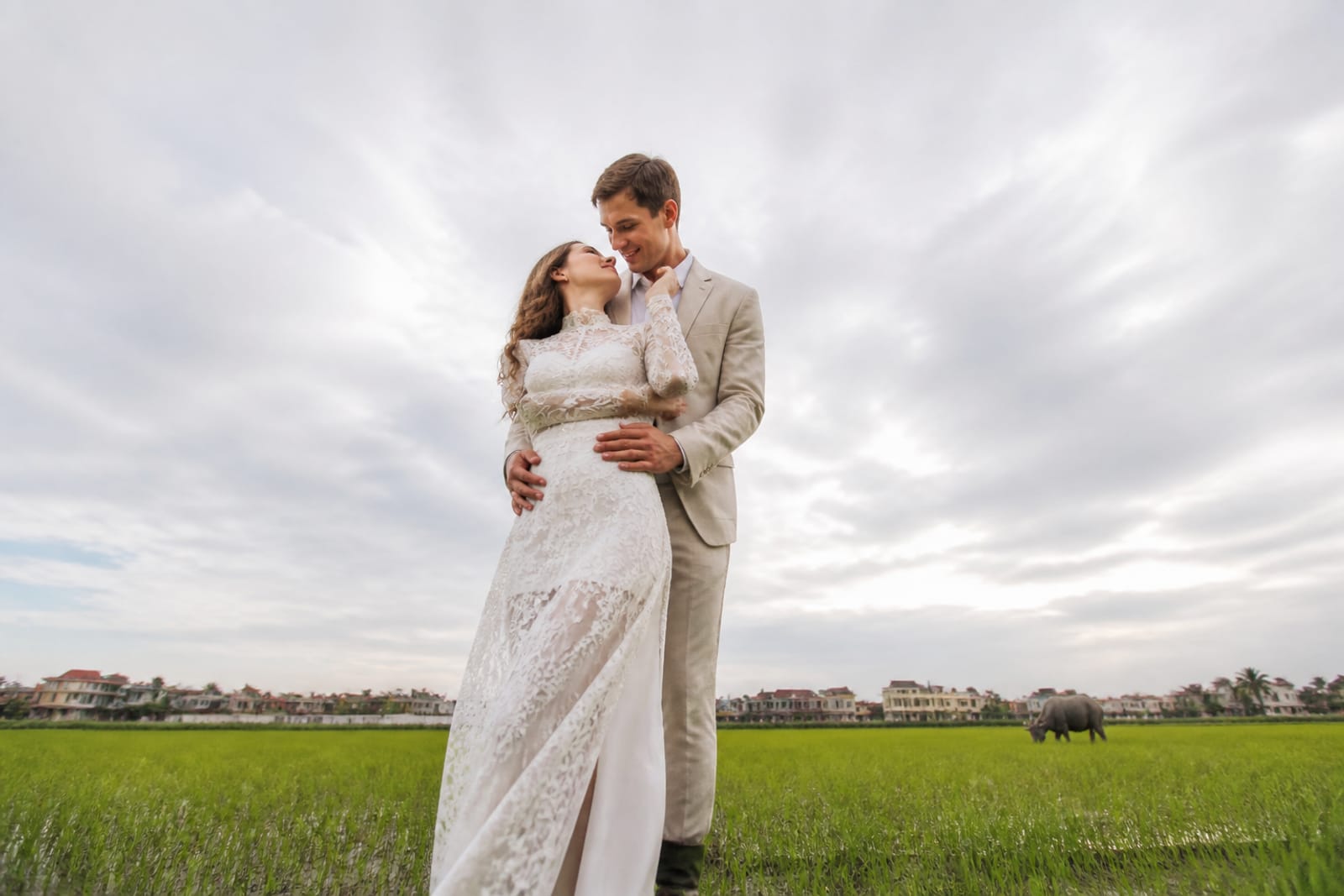
February to April delivers mild temperatures (22–28°C), clear skies, and dry conditions; the rice paddies outside town glow green, and morning light is soft gold rather than harsh white. Cloud cover is minimal, so backlit lantern shots at dusk work without overexposure. Humidity is lower than summer, so makeup and hair stay set through a full session. The main trade-off is moderate crowds just before Tet (late January–mid February) and increasingly hot afternoons as April progresses; schedule shoots for 5:30–8:00 a.m. or 4:30–6:30 p.m. to catch cooler hours and golden light. A session booked in February or March also reserves the team's time during peak demand.
What happens if I shoot in May to August?
May to August in Hoi An is extremely hot (35–38°C during the day) and dry, but afternoon heat makes poses uncomfortable and sweat affects makeup. Shoot only at sunrise (5:30–6:30 a.m.) when the Ancient Town is quietest and light is flattering; by 8:00 a.m., the sun climbs fast and shadows become harsh. The advantage is consistent dry weather—no rain delays—and fewer tourists early morning. Bring an umbrella for sun protection between location moves and plan outfit changes indoors at a nearby café. Evening shoots (5:00–7:00 p.m.) work but require careful skin and hair touch-ups; lanterns are lit by dusk, creating romantic amber tones. Summer suits couples willing to rise early and accept midday breaks.
Why should I avoid shooting in October to November?
October to November is the peak rainy season in central Vietnam, with typhoons and flooding common in Hoi An Ancient Town. Heavy downpours can occur without warning, and the Ancient Town's narrow lanes and low-lying areas flood (worst mid-October through mid-November), making certain photo spots inaccessible. Humidity is very high, causing makeup to run and fabrics to cling. Light is grey and flat, reducing contrast and lantern glow. If travel dates are fixed for October–November, postpone your ao dai session to December–January (cooler, drizzle instead of downpours) or book a makeup and hair session at your hotel and shoot just outside the flooded zones or in nearby gardens. Always check local flooding forecasts before committing a shoot date in this period.
Where in the Ancient Town should I shoot, and what light matters most?
| Location | Best Light | Best Season | Why It Works |
|---|---|---|---|
| Japanese Bridge (Cau Nhat Ban) | 5:45–6:30 a.m. sunrise; 5:00–6:30 p.m. dusk with lanterns | Feb–Apr or Dec–Jan | Iconic arch, water reflection, minimal crowds at dawn |
| Assembly Halls (Hoi An Museum area) | 6:00–7:30 a.m.; 4:00–5:30 p.m. | Feb–Apr | Red lanterns, carved wood doors, softer side light avoids glare |
| Riverside lantern docks | 5:30–6:30 p.m. dusk only | Feb–Apr, Dec–Jan | Lanterns lit by dusk, water doubles light, romantic amber tones |
| Clothing Shop Street (fabric district) | 6:00–7:30 a.m. | Feb–Apr, Dec–Jan | Pastel shop fronts, hanging silks, less touristy, intimate detail shots |
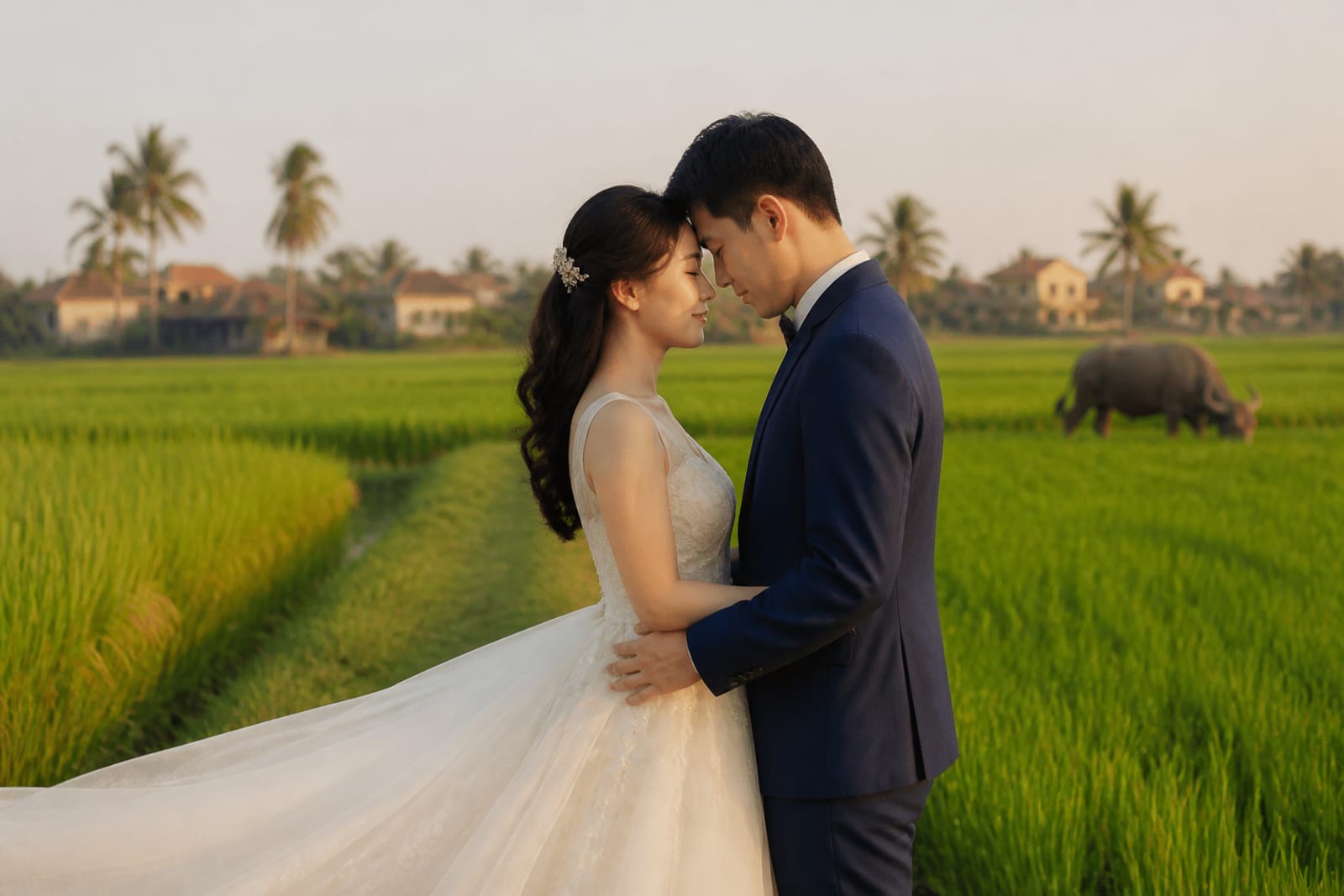
| Rice paddy fields (1 km outside town, accessed via motorbike guide) | 5:45–6:30 a.m. golden hour; 4:30–5:45 p.m. | Feb–Apr (green); May–Aug (harvested) | Natural backdrop, fewer tourists, requires local transport coordination |
Sunrise (5:30–6:30 a.m. depending on season) is the quietest and most flattering; the sun is low and warm, shadows are long and directional, and the Ancient Town feels calm before shops open. The Ancient Town entrance ticket is required; entry is typically permitted from dawn (check on arrival). Dusk lantern photography (5:00–6:30 p.m., lanterns lit by 6:00 p.m.) is romantic but requires fast film or tripod work to balance natural and lantern light; aim for 30-minute dusk "golden hour" just before full darkness. Midday (10:00 a.m.–4:00 p.m.) is the worst: glaring sun, harsh shadows under ao dai collars, and crowds make composition difficult. Booking with Cáo Studio includes the team's knowledge of timing and access; local photographers can scout locations but may lack sunrise-access protocols.
How does an ao dai wedding shoot work, and what do I need to prepare?
A typical ao dai wedding photoshoot spans 4–8 hours and includes:
- Morning prep (1.5–2 hours): the team applies makeup and styles hair at your hotel or on-site; discuss ao dai fit (what to wear under it, how tight the jacket is, comfort in humidity).
- Location shooting (3–5 hours): multiple locations in and around the Ancient Town, with outfit changes; the photographer directs poses and lighting adjustments; breaks for refreshment and touch-ups.
- Sunset/dusk bonus (1–2 hours, optional): lantern-lit sessions if booked.
Preparation before booking:
- Ao dai fit: most al dai are form-fitting; wear a smooth slip or undergarment with no visible panty line; check the rental or tailor's seams before shoot day (ask on WhatsApp for ao dai rental options at Cáo Studio).
- Shoes: flat, comfortable sandals or embroidered wedding shoes that allow walking on uneven ancient stone; heels risk twisted ankles on cobblestones.
- Skin & nails: get a manicure/pedicure 1–2 days before (polish chips risk visible flaws in close-ups); sunscreen the day before (not the morning of, to avoid makeup slipping).
- Hair length: if longer than shoulder-length, discuss updo vs. loose styles with the makeup artist when booking; loose hair in humidity requires daily hairspray or updo pins.
- Hydration: bring a water bottle; the team refills it between locations.
- Backup dates: book 2–3 potential shoot dates during your visit; if weather cancels one, reschedule immediately.
For international travelers, confirm booking on WhatsApp 3–5 days before arrival to finalize times, hotel pickup address, and outfit count. Cáo Studio coordinates with your hotel concierge for access and parking; the team handles all location timing and permits.
How should I choose between Cáo Studio, a local Hoi An photographer, and a DIY approach?
| Booking Option | Best For | Prep Time | What You Get | Booking CTA |
|---|---|---|---|---|
| Cáo Studio (appointment-based) | Travelers wanting professional makeup, hair, photography, and English-speaking guidance in one session | 1–2 weeks advance | Full team (makeup artist, hair stylist, photographer); hotel pickup; editing; same-day previews | 📸 Book on WhatsApp |
| Local Hoi An photographer | Budget-conscious couples; those wanting local knowledge and lower session cost | 3–5 days | Photography only; may include 1–2 outfit changes; local location tips; editing varies | Search "photographer Hoi An Ancient Town" + WhatsApp inquiry |
| DIY (smartphone or rented camera) | Adventure-focused couples; those on minimal budget; willing to accept variable photo quality | 1 week | Full creative control; no prep time; lower upfront cost; risk of missed shots and poor editing | Rent a camera + tripod locally; scout locations yourself |
Cáo Studio suits international travelers because the team speaks English, handles makeup and hair (eliminating language barriers at local salons), and manages timing for sunrise/dusk shoots when independent travelers often oversleep or miss light. The all-in-one approach reduces stress on wedding day. Ask on WhatsApp about session inclusions, editing turnaround, and file delivery. Local photographers work best if you're on a tight budget and comfortable directing your own poses; ask for references and examples of ao dai shoots in the Ancient Town before booking—light and composition quality vary widely. DIY shoots suit adventure travelers who enjoy photography; rent a tripod and use smartphone burst mode or a rented mirrorless camera; however, you'll miss candid moments while operating the camera, and editing ao dai colors (the rich reds, golds, and greens) requires skill.
Cáo Studio's key advantage is team expertise—the makeup artist knows which foundation shades flatter ao dai colors, the photographer knows exact sunrise timing and crowd patterns, and the stylist ensures your ao dai sits properly for 6+ hours. This removes guesswork on a once-in-a-lifetime day.
📸 Book on WhatsApp — ao dai photoshoot
---
What should I check before booking an ao dai wedding photoshoot?
- Booking confirmation: ask on WhatsApp for exact shoot date, time, duration, number of outfits, hotel pickup address, and cancellation policy; confirm you receive a written summary.
- Makeup & hair: clarify if these are included, how many touch-ups are included, and whether the artist works with your skin tone and hair texture (bring reference photos if unsure).
- Ao dai rental or bring-your-own: if renting, confirm the fit, delivery to hotel, and whether alterations are included; if bringing your own, check seam integrity and try it on under lights before shoot day.
- Editing & delivery: ask how many edited photos you receive, when files are delivered (e.g., within 2 weeks), and what format (digital files, prints, album options).
- Weather backup: confirm the rescheduling policy if rain or typhoon forecasts cancel your session.
- Entrance tickets: clarify whether the photographer pays the Ancient Town entrance fee or you do; ask to confirm the current price on the official Hoi An Ancient Town website.
- Travel to locations: confirm if transportation between locations is included or if you arrange it; some sessions require motorbike or car access to rice paddies outside town.
---
Seasons and light at a glance
| Month | Temperature | Crowds | Rain Risk | Light Quality | Recommendation |
|---|---|---|---|---|---|
| Dec–Jan | 17–23°C | Low–moderate | Drizzle/light showers | Cool, soft; some grey days | Good; book late Dec for dry light |
| Feb–Apr | 22–32°C | Moderate–high | Very low | Clear, warm sunrise/dusk gold | Best overall |
| May–Aug | 30–38°C | Moderate | Very low | Harsh midday; soft sunrise only | Shoot sunrise only; bring sun protection |
| Sep–Nov | 24–30°C | Low | High; typhoon/flooding worst Oct–Nov | Grey, flat; typhoon light unsafe | Avoid; if travel fixed, postpone shoot |
---
Related services and next steps
If you're booking a wedding ao dai photoshoot in Hoi An, you may also want:
- Pre-wedding & elopement sessions to extend your shoot to other Vietnam locations (Hanoi, Ha Long Bay, Da Nang).
- Makeup & hair at your hotel if you prefer to do glam shots before traveling to the Ancient Town.
- Wedding day photographer coverage if your actual ceremony is in Hoi An.
- Ao dai rental or suit rental to complete the look without packing.
- Wedding photo album or photo prints & frames to preserve your images after the session.
Cáo Studio operates in Hanoi, Ho Chi Minh City, and Hoi An by appointment; the team travels to Hoi An for shoots. See the lookbook for past ao dai sessions in the Ancient Town, and check pricing and FAQ for more details.
---
FAQ
What is the best month to book an ao dai photoshoot in Hoi An?
February to April are ideal—mild temps (22–28°C), dry skies, green rice fields, and minimal flooding. May to August requires sunrise-only shoots; October to November brings typhoons and ancient-town flooding. December to January is cool but often drizzly. Book 2–3 weeks ahead during Feb–Apr peak season.
Can I shoot in the Ancient Town without an entrance ticket?
No. An entrance ticket is required to access the central photo zones. Confirm the current price on the official Hoi An Ancient Town website. Some locations outside the ticketed area (rice paddies, river paths) do not require tickets but need local guide or motorbike access.
What should I wear under an ao dai during a photoshoot?
Wear a smooth slip or seamless undergarment to prevent visible panty lines; the ao dai is form-fitting. Avoid thick undergarments or bralines that create bumps under the jacket. Confirm fit with the rental tailor or makeup artist 2–3 days before the shoot.
How early do I need to wake up for a sunrise photoshoot?
Plan to wake at 4:30–5:00 a.m. for a 5:30 a.m. shoot start (depending on hotel distance from the Ancient Town). The team can pick you up as early as 4:45 a.m. Sunrise light lasts about 1 hour; early arrival captures the quietest, flattest light.
Will rain cancel my shoot, or can we reschedule?
Light rain (drizzle) may continue; heavy rain usually cancels for safety and image quality. Confirm the cancellation and rescheduling policy on WhatsApp when booking. Always have 2–3 backup dates in your itinerary, especially during the rainy season (Sep–Dec).
Do I need to rent an ao dai, or can I bring my own?
Both work. Renting offers variety and no packing burden (Cáo Studio can advise on rental partners); bringing your own means a sentimental outfit. Check seams, hem, and jacket fit 1–2 days before the shoot. Confirm with the team on WhatsApp if you're unsure about fit or style.
How many photos will I receive, and when?
Exact counts and delivery timelines vary by package. Ask on WhatsApp for the specific number of edited photos, file format (digital or prints), and delivery timeline (typically 2 weeks). Confirm whether touch-ups, album layouts, and retouching are included.
FAQ
What is the best month to book an ao dai photoshoot in Hoi An?
February to April are ideal—mild temps (22–28°C), dry skies, green rice fields, and minimal flooding. May to August requires sunrise-only shoots; October to November brings typhoons and ancient-town flooding. December to January is cool but often drizzly. Book 2–3 weeks ahead during Feb–Apr peak season.
Can I shoot in the Ancient Town without an entrance ticket?
No. An entrance ticket is required to access the central photo zones. Confirm the current price on the official Hoi An Ancient Town website. Some locations outside the ticketed area (rice paddies, river paths) do not require tickets but need local guide or motorbike access.
What should I wear under an ao dai during a photoshoot?
Wear a smooth slip or seamless undergarment to prevent visible panty lines; the ao dai is form-fitting. Avoid thick undergarments or bralines that create bumps under the jacket. Confirm fit with the rental tailor or makeup artist 2–3 days before the shoot.
How early do I need to wake up for a sunrise photoshoot?
Plan to wake at 4:30–5:00 a.m. for a 5:30 a.m. shoot start (depending on hotel distance from the Ancient Town). The team can pick you up as early as 4:45 a.m. Sunrise light lasts about 1 hour; early arrival captures the quietest, flattest light.
Will rain cancel my shoot, or can we reschedule?
Light rain (drizzle) may continue; heavy rain usually cancels for safety and image quality. Confirm the cancellation and rescheduling policy on WhatsApp when booking. Always have 2–3 backup dates in your itinerary, especially during the rainy season (Sep–Dec).
Do I need to rent an ao dai, or can I bring my own?
Both work. Renting offers variety and no packing burden (Cáo Studio can advise on rental partners); bringing your own means a sentimental outfit. Check seams, hem, and jacket fit 1–2 days before the shoot. Confirm with the team on WhatsApp if you're unsure about fit or style.
How many photos will I receive, and when?
Exact counts and delivery timelines vary by package. Ask on WhatsApp for the specific number of edited photos, file format (digital or prints), and delivery timeline (typically 2 weeks). Confirm whether touch-ups, album layouts, and retouching are included.
Ao dai, makeup, hair and a local photographer in Hanoi or Saigon — one WhatsApp message.